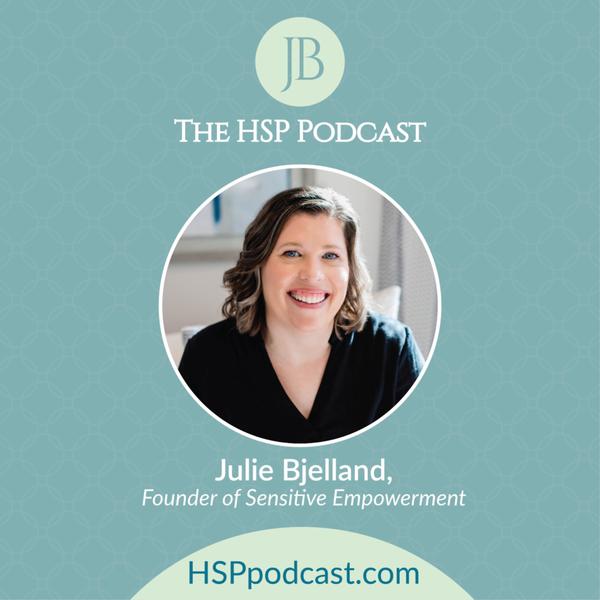
The HSP Podcast with Julie Bjelland
Julie Bjelland
Empowering highly sensitive people. Sharing all the ways you are needed and valuable in the world. As a sensitivity expert, psychotherapist, and founder of the online Sensitive Empowerment community, my mission is to help you reduce the challenges of having a sensitive nervous system so you can access the many gifts of this trait and thrive to your fullest potential. Explore all episodes and learn more at HSPpodcast.com Take the free Sensitivity Quiz, my free HSP Masterclasses, and explore all my HSP resources at www.JulieBjelland.com or SensitiveConnection.com
- 23 minutes 50 secondsHow Social Conditioning Teaches Women to Ignore Their Own Needs with Julie Bjelland, LMFT
How Social Conditioning Teaches Women to Ignore Their Own Needs
In this powerful and deeply validating episode, Julie explores how social conditioning shapes women’s lives in ways that often go unrecognized.
From an early age, many women are taught to be agreeable, accommodating, and easy to be around. Over time, this conditioning can lead to overriding, dismissing, or ignoring their own needs in order to maintain connection and avoid discomfort for others.
Julie explains how this pattern becomes automatic, how masking develops as a survival strategy in childhood, and the significant internal cost that is often invisible from the outside. She introduces the concept of capacity versus demand, helping listeners understand how chronic overload occurs when life demands exceed what the nervous system can sustainably manage.
This episode also explores why so many women are treated for multiple conditions such as anxiety, depression, burnout, and chronic health issues without recognizing the underlying pattern. Without understanding neurotype, needs go unmet, and the wrong framework is applied, often leading to ongoing suffering.
Julie shares how many women reach a breaking point where their system can no longer sustain the load, and how this moment often leads to the realization of an autistic neurotype, particularly in those with high-masking and internal presentations that have historically been missed.
She also discusses the lack of clinical training in recognizing autism in women, the limitations of deficit-based models, and why a shift toward a neurodiversity-affirming understanding is essential. Using the analogy of biodiversity, Julie highlights how different neurotypes bring valuable strengths when supported in the right environments.
Julie shares the exciting news of her upcoming clinical book, coming out in summer 2027, which will help clinicians better understand, identify, and support autistic women. This moment reflects a larger shift toward recognizing the gaps that have caused harm and moving toward more accurate, compassionate care.
This episode offers both clarity and hope, helping listeners understand their experiences in a new way and begin reconnecting with their needs, their nervous system, and themselves.
About Julie
Julie Bjelland, LMFT, is a psychotherapist, author, and founder of Sensitive Empowerment. She specializes in high sensitivity and adult-discovered autism, especially in women, with a focus on helping people understand their nervous system, reduce overwhelm, and build self-trust.
Julie is the creator of the Sensitive & Neurodivergent Community, a global support space offering connection, education, and resources for those exploring high sensitivity, autism, ADHD, and other forms of neurodivergence.
She provides autism assessments for women and offers a wide range of resources including courses, free classes, a top-ranked podcast, and educational content designed to support deeper self-understanding and meaningful change.
Julie is a proud neurodivergent and queer therapist who is passionate about shifting the conversation toward neurodiversity-affirming care. Her upcoming clinical book on autistic women will be published in summer 2027 and aims to transform how clinicians understand, identify, and support high-masking and late-discovered autistic women.
Learn more at JulieBjelland.com
17 February 2026, 6:19 pm - 52 minutes 52 secondsWomen 35–55: Why You Might Feel Like You’re Falling Apart
Many women ages 35–55 describe this stage of life as feeling like they are suddenly falling apart. Patience disappears, tolerance drops, exhaustion deepens, sleep becomes disrupted, emotions feel closer to the surface, and the body often hurts more than it used to. For sensitive, autistic, and neurodivergent women, this experience can feel especially intense and confusing.
In this episode, Julie Bjelland, LMFT, explores what is really happening beneath the surface. She explains how perimenopause and menopause affect the brain, nervous system, sleep, pain, and stress tolerance, why estrogen plays such a critical role, and why hormone testing often fails to capture what women are actually experiencing. Julie also discusses the widespread lack of menopause education among doctors, why women are so often dismissed or prescribed antidepressants instead of receiving hormone-informed care, and what current research is saying about hormone therapy.
This episode also explores why midlife can become a “perfect storm” for sensitive, autistic, and ADHD women, why masking often becomes unsustainable, and why so many women discover they are autistic during this stage of life. Julie shares why autism identification is often the missing piece that brings relief, compassion, and clarity, why standardized assessments frequently miss high-masking women, and how neurodiversity-affirming assessments can support deeper self-understanding.
If you’ve been wondering why everything suddenly feels harder, this episode offers validation, education, and hope. You are not broken. Your nervous system is responding to real biological and neurological changes, and understanding what’s happening can be the first step toward relief and more compassionate support.
🌿 Supportive Resources to Explore
Menopause Support for Sensitive and Neurodivergent Women
Learn about menopause, nervous system changes, and how to find menopause-informed doctors who understand sensitivity and neurodivergence.
https://www.juliebjelland.com/menopauseAutism Assessments for Sensitive and High-Masking Adults
Neurodiversity-affirming autism assessments, especially for women and adults who have learned to mask their differences.
https://www.juliebjelland.com/autism-assessmentsThe Sensitive Autistic Neurotype Resources
Free autism quiz, educational guides, and related toolsThe Sensitive & Neurodivergent Community
A supportive online space for sensitive, autistic, and neurodivergent adults to connect, learn, and feel understood.
https://www.juliebjelland.com/sensitive-empowerment-communitySensitive & Neurodivergent Therapists Directory
Directory of sensitive and neurodivergent therapists
https://www.juliebjelland.com/directory
Julie Bjelland, LMFT, is a psychotherapist, author, and the founder of Sensitive Empowerment. She specializes in working with highly sensitive, autistic, ADHD, and neurodivergent adults, with a particular focus on late-identified women and nervous system–informed care. Julie is known for her neurodiversity-affirming approach that centers lived experience, compassion, and deep understanding of how biology, hormones, and the nervous system intersect across the lifespan.
Julie is the host of The Sensitive & Neurodivergent Podcast, a top-ranked global podcast supporting sensitive and neurodivergent people around the world. She offers online courses, community programs, and autism assessments designed specifically for sensitive and high-masking adults, especially women navigating burnout, perimenopause, and major life transitions.
As an autistic and highly sensitive therapist herself, Julie brings both professional expertise and lived experience to her work. Her mission is to help sensitive and neurodivergent people move from self-blame to self-understanding, and to create a world where differences are recognized as strengths and supported with care.
Learn more at juliebjelland.com.
8 January 2026, 7:24 pm - 21 minutes 50 secondsThere Is Nothing Wrong With You: What Millions of Sensitive and Autistic People Are Discovering Together with Julie Bjelland, LMFT
Being highly sensitive or autistic has often been misunderstood, dismissed, or labeled as “too much.” Many of us grew up hearing painful messages that we were too emotional, too anxious, too quiet, too intense, or too sensitive for the world around us. In this special episode, therapist and author Julie Bjelland, LMFT, offers a powerful message of validation and belonging: there is nothing wrong with you.
This episode celebrates the global reach of the Sensitive and Neurodivergent Podcast, listened to in 193 countries, shared more than 98 percent of other podcasts, and with listeners staying longer than 96 percent of shows worldwide. These statistics tell a meaningful story. Sensitive and autistic people exist in every culture. Millions of us share similar experiences with sensory overload, emotional depth, empathy, exhaustion, masking, and nervous system sensitivity. We are not alone. We are a worldwide community.
Julie explains why so many highly sensitive adults are discovering they are autistic, especially women and those who were socialized to mask and overachieve. She explores the overlap between high sensitivity and autism, how outdated diagnostic criteria missed autistic women for decades, and why learning the truth about your neurotype often brings profound relief instead of fear. Understanding yourself replaces shame with clarity and self-compassion.
This episode also highlights why sensory sensitivity and sensory overload are among the most common struggles for sensitive and autistic adults, and why this topic became the most listened-to episode of 2025. Julie shares how sensory overwhelm impacts emotional health, physical health, relationships, and identity, and offers insight into how to care for your nervous system in ways that honor your neurodivergent wiring.
Listeners will find hope, science-informed validation, and a compassionate reminder that your brain and body make sense. Julie also shares her personal journey as a deeply sensitive person, her passion for neuroscience and brain training, and her mission to support sensitive and autistic people worldwide through education, assessments, courses, and community resources.
Whether you are highly sensitive, autistic, exploring your identity, or supporting someone who is, this episode offers a healing message:
✨ You are not flawed. You are wired differently. And your sensitivity is real, valid, and valuable.
Julie Bjelland, LMFT, is a psychotherapist, author, and global educator specializing in sensitivity, autism in women, and nervous system science. She is the founder of the Sensitive Empowerment Community and host of the Sensitive and Neurodivergent Podcast, listened to in more than 193 countries. Julie develops neurodiversity-affirming tools, assessments, and brain-training resources to help highly sensitive and autistic adults reduce overwhelm, increase self-understanding, and live with greater compassion for their neurotype. https://www.juliebjelland.com/
4 December 2025, 10:41 pm - 51 minutes 48 secondsThe Secret Loneliness of Sensitive and Neurodivergent Gen Z with Lara Rodwell
In this deeply heartfelt and validating episode, guest host Carol Roesler welcomes Lara Rodwell, founder of The Lonely Club and journalist, for an empowering conversation about autism, sensitivity, loneliness, and self-discovery.
Lara shares her personal journey through misdiagnosis, the loneliness that often follows, and how self-identifying as a sensitive autistic neurotype became a turning point toward self-acceptance. Together, Carol and Lara explore the challenges women face when they don’t fit the outdated models of autism diagnosis, and how finding accurate understanding can feel like a “homecoming.”
Takeaways
The origins and mission of The Lonely Club—creating safe spaces for young neurodivergent people.
Lara’s experience with misdiagnosis through the NHS and her later validation through Julie Bjelland’s autism assessment.
The loneliness many sensitive and autistic women experience when their traits are misunderstood.
The concept of the sensitive autistic neurotype as defined by Julie Bjelland.
Turning perceived “weaknesses” (like sensitivity or introversion) into strengths and creative power.
The generational struggle of being told “you’re too sensitive.”
How external diagnostic criteria often overlook women and non-male expressions of autism.
Advocacy for sensitive autistic university students and young adults navigating social challenges.
Reframing “lazy” or “avoidant” behaviors as signs of burnout, masking, or perfectionism—not lack of motivation.
The importance of self-compassion and self-advocacy in the neurodivergent journey.
Lara Rodwell is the founder of The Lonely Club, an online and in-person community designed to reduce loneliness among young neurodivergent adults. Through writing, events, and upcoming sensory-friendly drop-in spaces, Lara provides connection, safety, and belonging for those who often feel unseen. She can be reached at [email protected].
Follow her work:
- Website & Blog: https://lararodwell.journoportfolio.com/myportfolio/
- Lara's Post: Why Misdiagnosis Keeps Sensitive Autistic Women Lonely — and How Self-Discovery Changes Everything
Carol Roesler is co-author of the new children’s book series, The Adventures of Niko, the Highly Sensitive Dog and co-hosts “Intuitive Parenting” events inside the Sensitive Empowerment Community to support caregivers of sensitive little ones. As a volunteer Children's Librarian leading pre-K through 5th-grade reading groups, she often wished for books with characters that reflected the unique traits of bright, sensitive children. An introverted child, Carol’s favorite books were her best friends, inspiring the character Buttercup. Buttercup’s passion for research was inspired by Carol’s daughter, whose literary explorations discovered the unique, joyful dance of the blue-footed booby. This inspired the wonderfully extroverted character Blueberry. Carol is thrilled to collaborate with Julie in creating characters that celebrate being their authentic, unique selves! You can reach her at [email protected]. Get the book at juliebjelland.com/childrens-books
Links mentioned:11 November 2025, 11:04 pm - 54 minutes 16 secondsA Caring Conversation To Support HSPs with Dr. Judith Orloff
In this heart-centered conversation, Dr. Judith Orloff returns to the podcast to talk with host Carol Roesler about the gifts of being a highly sensitive person, her new children’s book The Highly Sensitive Rabbit, the role of empathy in healing, and practical tools for emotional regulation, self-love, and hope in a chaotic world. The interview was recorded live on a full moon inside the Sensitive Empowerment Community.
🗣️ Key Topics Discussed
✨ The inspiration behind The Highly Sensitive Rabbit and how it helps children and adults embrace emotional sensitivity
🐇 Why Aurora the rabbit represents every sensitive child (and the inner child in adults)
📚 Behind-the-scenes stories from Dr. Orloff’s book tour and live readings with children
❤️ How sensitivity is a superpower—not a flaw—and why it must be protected, not shamed
🧘 Empathy practices for regulating overwhelm and emotional intensity
🧠 The heart vs. the mind: how they work together and how to lead from the heart
💔 Healing from childhood messages like “you’re too sensitive” or “crybaby”
🛑 The importance of boundaries for highly sensitive people (and why the skunk in the book teaches them!)
🌕 Rituals of connection, including sending heart energy to others in pain
🔬 How to handle skeptics who dismiss intuition, energy work, or emotional sensitivity
- 🕊️ The Dalai Lama’s connection to Dr. Orloff’s newest book, The Genius of Empathy
- 🌍 Finding hope and joy even when the world feels overwhelming
Books Mentioned
The Highly Sensitive Rabbit — Children’s book for sensitive kids and adults
The Genius of Empathy — Includes foreword by the Dalai Lama
The Empath’s Survival Guide
365 Days of Self-Empathy
Positive Energy
Empath Empowerment Cards (Oracle deck)
6 November 2025, 6:56 pm - 20 minutes 5 secondsUnmasking the Sensitive Autistic Neurotype: Life-Changing Discoveries for Women with Julie Bjelland, LMFT
In this heartfelt solo episode, Julie Bjelland, LMFT, shares profound insights from her work with women discovering their autistic identity later in life. Many sensitive women spend decades feeling different, masking their struggles, and being misdiagnosed by outdated, male-centered assessments. Julie introduces the concept of the Sensitive Autistic Neurotype—a strengths-based way of understanding autism that validates lived experience and removes the stigma of “disorder.”
Through stories from her assessment work, Julie explores themes of masking, burnout, chronic health struggles, misdiagnoses, and the life-changing relief that comes with finally being understood. She also highlights the critical role of acceptance in childhood and the connection between sensitivity, autism, ADHD, and trauma.
This episode is a must-listen for late-identified autistic women, sensitive and neurodivergent individuals, and practitioners seeking to better support their clients. Discover how self-understanding can bring healing, self-compassion, and the energy to thrive.
More Info
Learn more about The Sensitive Autistic Neurotype
BIO
Julie Bjelland, LMFT, is a psychotherapist, author, and founder of the Sensitive Empowerment Community. She specializes in supporting highly sensitive and neurodivergent people, with a focus on the growing recognition of late-discovered autism in women. Julie coined the term Sensitive Autistic Neurotype to describe a strengths-based way of understanding sensitivity and autism, helping people shift from self-criticism to self-compassion.
Through her global courses, podcast, writings, and professional trainings, Julie has supported thousands of sensitive and neurodivergent people in over 190 countries. Her mission is to create a world where sensitivity and neurodivergence are seen as strengths to be celebrated.
Learn more at JulieBjelland.com and join the supportive global community at SensitiveCommunity.com.
13 October 2025, 1:21 pm - 11 minutes 35 secondsWhy Self-Employment Tests HSPs and How It Sets You Free
Do you feel called to work for yourself? In this episode, Willow explores the real path of self-employment for HSPs. The challenges, the breakthroughs, and the deep inner transformation that happens when you follow your truth. Discover why self-employment often tests us in the very areas we’re here to transform, how to stay true to yourself when things get hard, and why authenticity is the greatest freedom of all. If you’ve ever wondered whether you’re ready to take the leap, or what it really means to turn your sensitivity into your strength, this episode will help you see your path more clearly.
Bio & Links - Willow McIntosh
Willow is a facilitator, international speaker, and founder of Inluminance. He specialises in facilitating Highly Sensitive People (HSPs), to recognise their innate High Sensory Intelligence® An ability to perceive truth of self in others and the energetic patterns at play in their environment. His area of expertise is training HSPs to align their work and purpose with these unique perceptual gifts. Having facilitated change and transformation in thousands of HSPs for more than 9 years, he is committed to bringing the importance of the trait into mainstream awareness globally. Learn more at www.inluminance.com or book your free discovery call here - https://inluminance.com/book-a-call/9 October 2025, 1:15 pm - 56 minutes 48 secondsCelebrating Six Years of Connection in the Sensitive Empowerment Community
In this special anniversary episode of the Sensitive and Neurodivergent Podcast, guest host Carol Roesler leads a heartfelt celebration of the Sensitive Empowerment Community’s six-year anniversary. Joined live by members from around the world, Carol shares reflections, community stories, and heartfelt messages of gratitude for Julie Bjelland, LMFT — founder of the community and podcast.
Together, they honor the deep connections, personal growth, and life-changing experiences that have blossomed within this safe space for highly sensitive and neurodivergent individuals. Through live interactions, personal stories, and Julie’s guiding wisdom, this episode shines a light on what it truly means to belong, be seen, and thrive as a sensitive soul.
Links and resources mentioned in this episode:
- Free webinars WITH JULIE for the sensitive & Neurodivergent
- The Adventures of Niko, the Highly Sensitive Dog
- Podcast Episode: We Were Never Meant to Fit In with Julie Bjelland and Willow McIntosh
- Podcast Episode: Embracing Sensitivity: A Conversation with Dr. Judith Orloff
- Podcast Episode: Intuitive Parenting Creating Cozy & Joyful Spaces for Sensitive Children to Thrive
6 October 2025, 5:34 pm - 56 minutes 30 secondsEmbracing Sensitivity: A Conversation with Dr. Judith Orloff
In this enlightening conversation, guest host Carol Roesler and Dr. Judith Orloff explore the profound themes of sensitivity, empowerment, and the importance of nurturing sensitive children. They discuss Dr. Orloff's new book, 'The Highly Sensitive Rabbit,' which serves as a guide for both children and adults to embrace their sensitivities as superpowers. The dialogue emphasizes the need for support, understanding, and the role of sensitive individuals in creating a better world. Through personal anecdotes and insights, they highlight the significance of self-care, boundaries, and the journey of reparenting oneself to foster a loving and accepting environment for sensitive souls.
Takeaways
- Sensitivity is often misunderstood as weakness.
- Empowered sensitive individuals can change the world.
- Support is crucial for sensitive children.
- Quiet time is essential for sensitive souls.
- Setting boundaries is a vital skill for empaths.
- Reparenting ourselves helps heal past wounds.
- Children need to be celebrated for their uniqueness.
- Sensitivity can be a superpower when embraced.
- Empaths often feel the emotions of others deeply.
- Creating safe spaces for sensitive children is important.
Links mentioned in this episode:
- Dr. Orloff’s website: www.drjudithorloff.com. Here you can find the link to her newsletter that we spoke about as well as her book tour for The Highly Sensitive Rabbit, which is available to preorder before its release date of Oct 7.
- The Adventures of Niko, the Highly Sensitive Dog: A book series for sensitive & Neurodivergent children
- An interview with Niko and his friends
- The Sensitive Empowerment community
- Episode 130: The Healing Power of Being an Empath with Dr. Judith Orloff
For more episodes and resources from Julie Bjelland, visit JulieBjelland.com
29 September 2025, 2:46 pm - 49 minutes 29 secondsIntuitive Parenting Creating Cozy & Joyful Spaces for Sensitive Children to Thrive with Carol Roesler & Carolina Mariposa
In this special episode of the Sensitive and Neurodivergent Podcast, guest hosts Carol Ressler and Carolina Mariposa explore how parents and caregivers can create safe, supportive spaces for sensitive and neurodivergent children during life transitions—like moving to a new home, starting school, or welcoming a sibling. They share real-life examples of cozy nooks, sensory-friendly play areas, and calming rituals that help children regulate their emotions and feel secure. From crash pads and weighted blankets to twinkle lights, flower essences, and joyful pops of color, this heartfelt conversation offers practical, creative ideas to nurture sensitive kids. Whether you’re a parent, caregiver, or professional, you’ll find inspiration for making home a sanctuary that meets the unique needs of sensitive children—and yourself.
Links mentioned in this episode:
The Adventures of Niko, the Highly Sensitive Dog
Ted Talk: Where Joy Hides and How to Find It
For more episodes and resources from Julie Bjelland, visit JulieBjelland.com
19 September 2025, 2:39 pm - 11 minutes 20 secondsWhat Makes Us Different Is What Connects Us Most with Willow McIntosh
So many sensitive and neurodivergent people know the pain of trying to fit in, hiding parts of themselves to feel accepted. In this episode, we explore how our true power lies not in blending, but in embracing the unique way we see, feel, and sense the world. You’ll be invited to recognize your sensitivity as a natural design, a gift meant to connect you more deeply with life, others, and yourself.
About Your Hosts
Willow McIntosh is a facilitator, international speaker, and founder of Inluminance. He specialises in facilitating Highly Sensitive People (HSPs), to recognise their innate High Sensory Intelligence® An ability to perceive truth of self in others and the energetic patterns at play in their environment. His area of expertise is training HSPs to align their work and purpose with these unique perceptual gifts. Having facilitated change and transformation in thousands of HSPs for more than 9 years, he is committed to bringing the importance of the trait into mainstream awareness globally. Learn more at inluminance.com
Julie Bjelland, LMFT
Julie is a psychotherapist, author, and founder of Sensitive Empowerment. She specializes in high sensitivity and the Sensitive Autistic Neurotype, offering compassionate support through consultations, adult autism assessments, self-paced courses, and a global community. Her work includes a top-ranked podcast reaching listeners in 190 countries and a globally followed blog. Learn more at JulieBjelland.com3 September 2025, 5:31 pm - More Episodes? Get the App