🚀 From Google Podcasts to Moon FM in No Time: Your Hassle-Free Migration Guide
👉
A weekly podcast from the writers of rvfamilytravelatlas.com, focusing on topics that relate to RV family travel. We review campgrounds, discuss tips and tricks for traveling with kids, and answer our readers' most common questions. We also chat about food, gear, and those times when everything doesn't quite go as planned.
Utah is home to some of the most iconic landscapes in the United States, making it a bucket-list destination for RVers. While many know about Utah’s Mighty 5 national parks—Bryce Canyon, Zion, Capitol Reef, Arches, and Canyonlands—the state’s remarkable state parks often fly under the radar. In this guide and corresponding podcast episode (click on the media player above) , Ellen Broude shares all the details of her two-week RV adventure exploring both the Mighty Five and four incredible state parks: Kodachrome Basin, Coral Pink Sand Dunes, Goblin Valley, and Dead Horse Point. From jaw-dropping hikes to serene campgrounds, this journey showcases the best of what Utah has to offer.
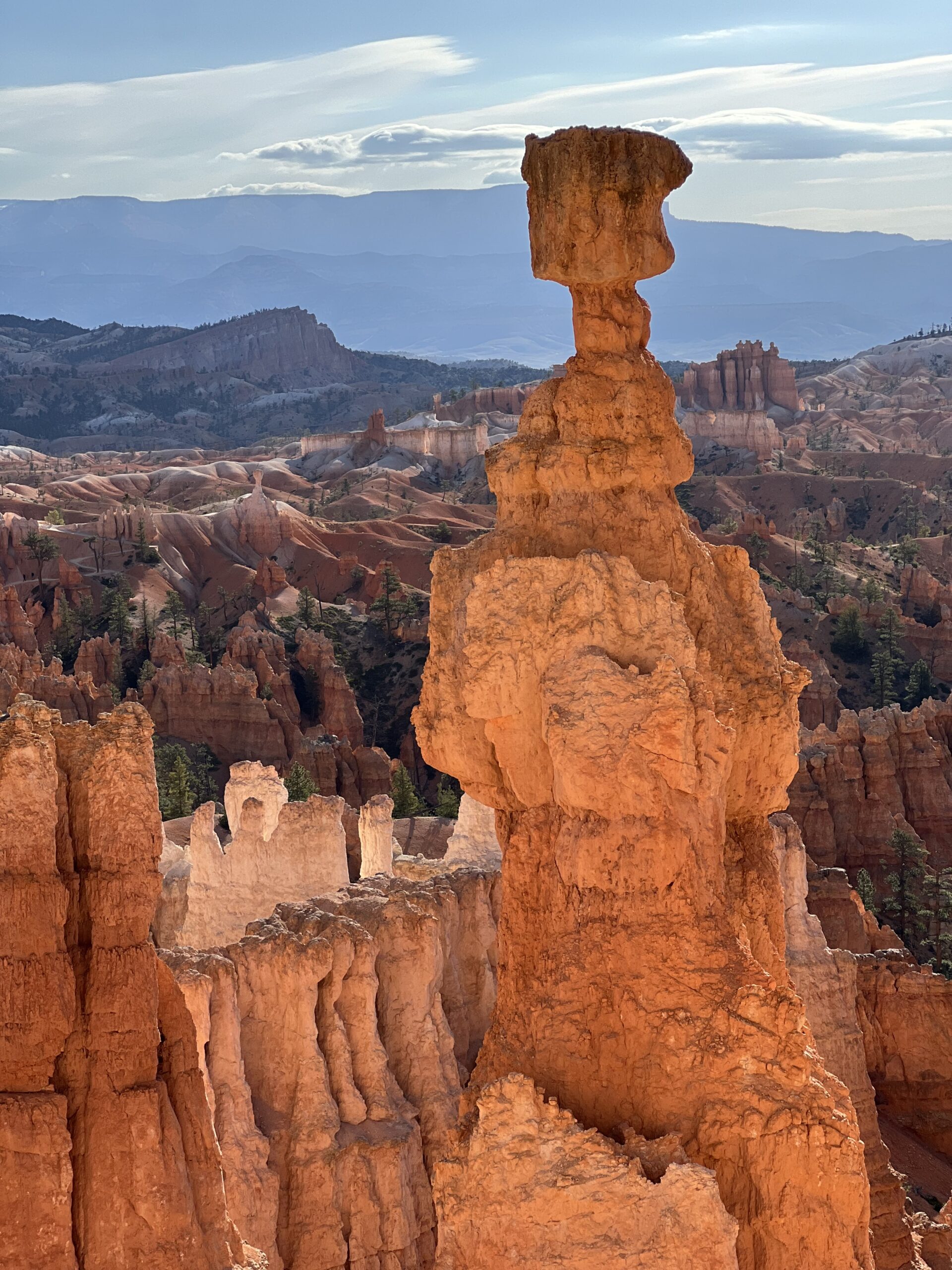
Photo By Ellen Broude
Bryce Canyon National Park is renowned for its otherworldly hoodoos—tall, thin spires of rock shaped by centuries of erosion. Home to the largest concentration of hoodoos on Earth, this park’s dramatic landscapes are particularly breathtaking at sunrise, when the light casts vivid hues of orange and red across the amphitheater. Whether you’re a first-time visitor or a seasoned adventurer, Bryce offers a wealth of unforgettable experiences.
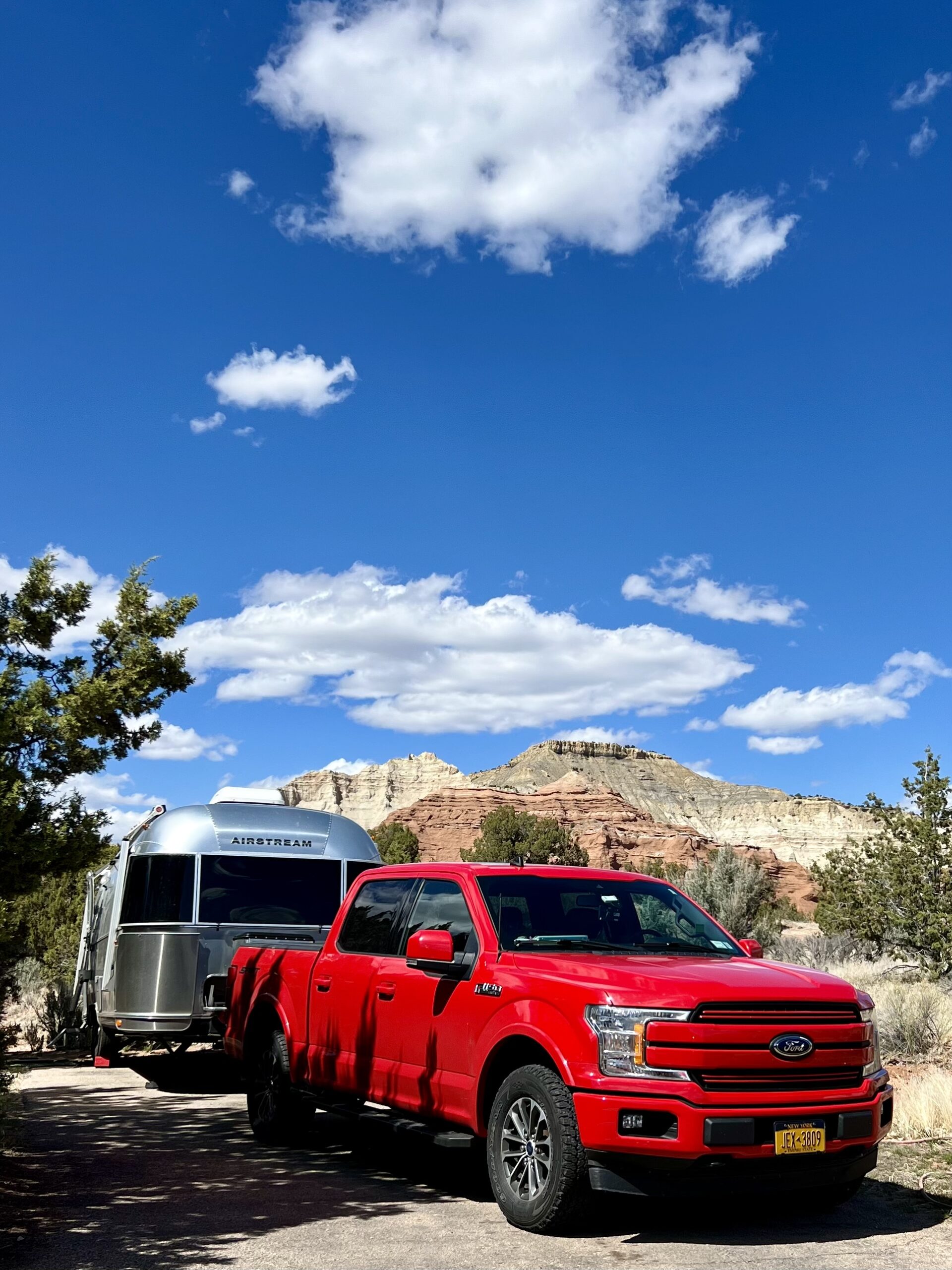
photo by Ellen Broude
Kodachrome Basin State Park serves as a base camp, located just 30 minutes from Bryce Canyon. Named by a National Geographic Society expedition in 1948, this park is famous for its vibrant rock formations and spires that tower against a bright blue sky—a photographer’s dream. This state park is every bit as grand as any of Utah’s Might 5.
Camp at the Basin Campground, which offers full hookups, clean facilities, and access to stunning hiking trails. On arrival, Ellen opted for an overflow site near the visitor center—a decision she was thrilled with. The site features epic views of the park’s rugged terrain and convenient access to amenities like Wi-Fi and ranger-led programs.
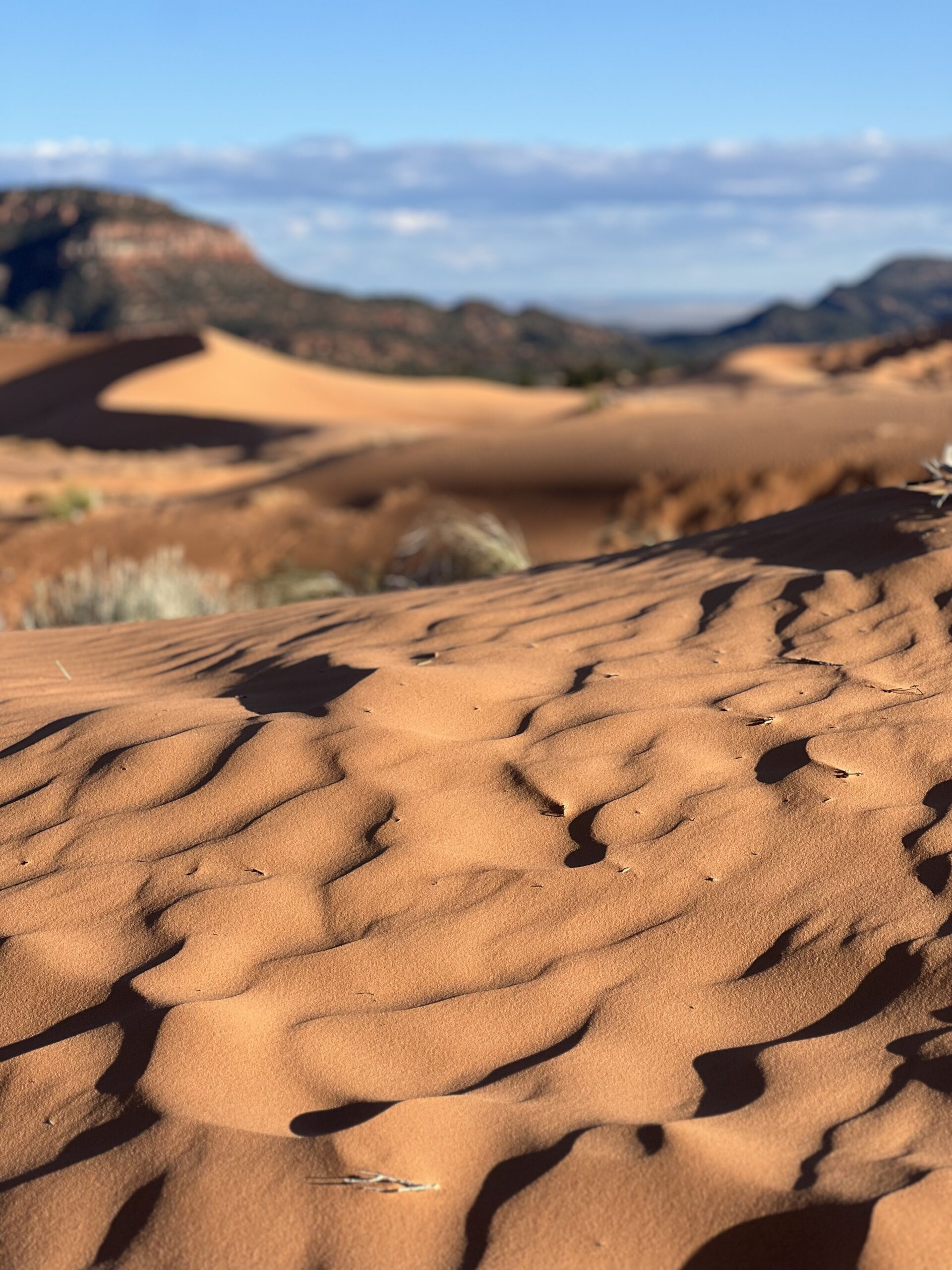
photo by Ellen Broude
Coral Pink Sand Dunes State Park is an impromptu overnight stop for Ellen, and it does not disappoint. Imagine Great Sand Dunes National Park, but on a smaller scale with pink-red sand. The park is a haven for ATV riders, with trails that wind through the dunes. Its full-hookup campground offers great Wi-Fi at the visitor center and easy access to these unique landscapes.
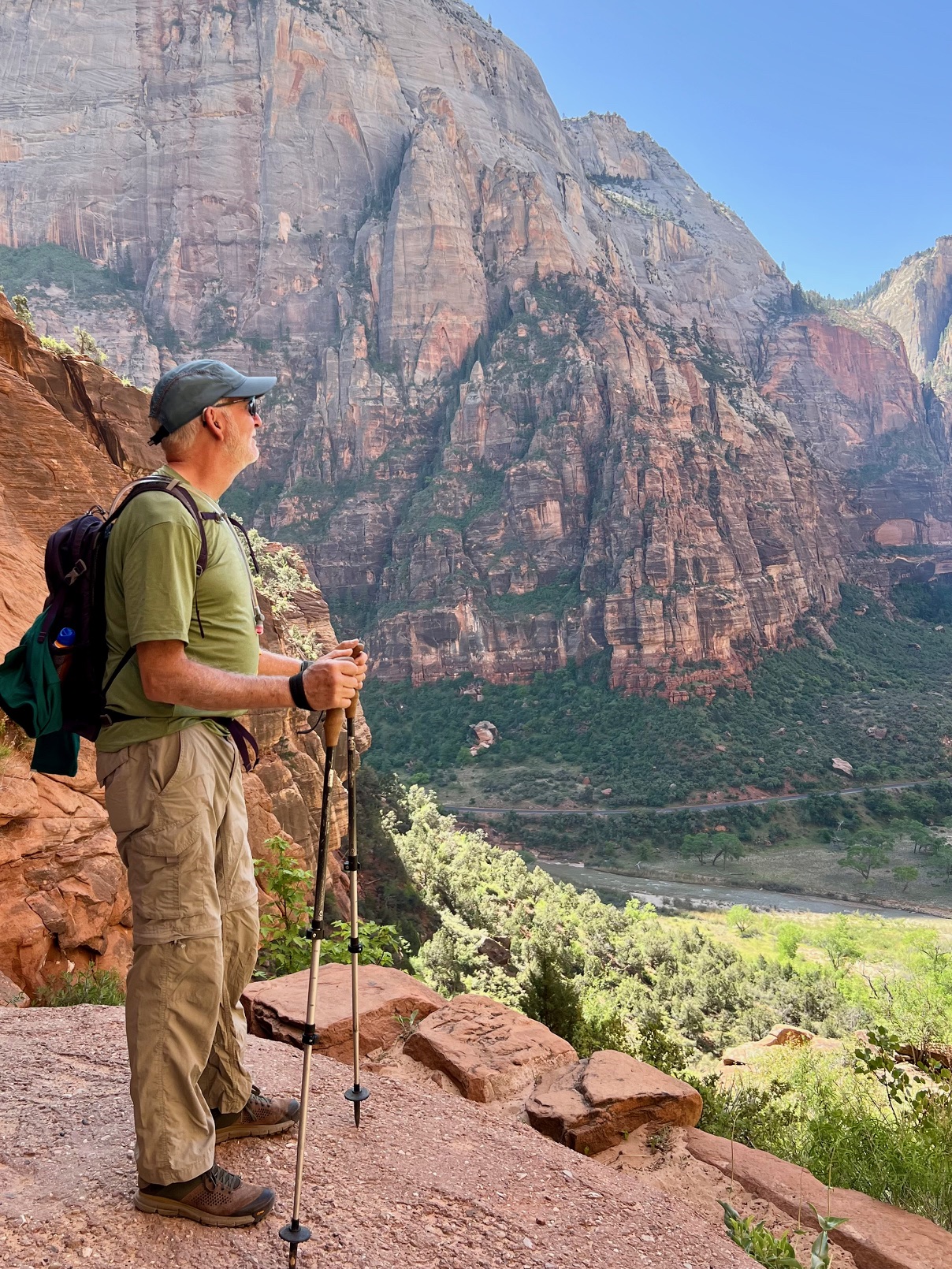
photo by Ellen Broude
Zion National Park is a mecca for outdoor enthusiasts, with its towering red cliffs, narrow slot canyons, and lush river valleys. This park is also home to a rich diversity of wildlife, including mule deer, California condors, and bighorn sheep. Visitors can immerse themselves in the beauty of the Virgin River as it carves through the canyon, creating a lush oasis amidst the desert. However, its popularity means planning ahead is essential. This may be the most crowded of Utah’s Mighty 5 national parks.
Stay at Zion River Resort, just outside Springdale. The resort’s full hookups, resort-style amenities, and proximity to the park entrance make it an ideal base camp. Note: Local water quality issues mean bottled water is recommended for both humans and pets.
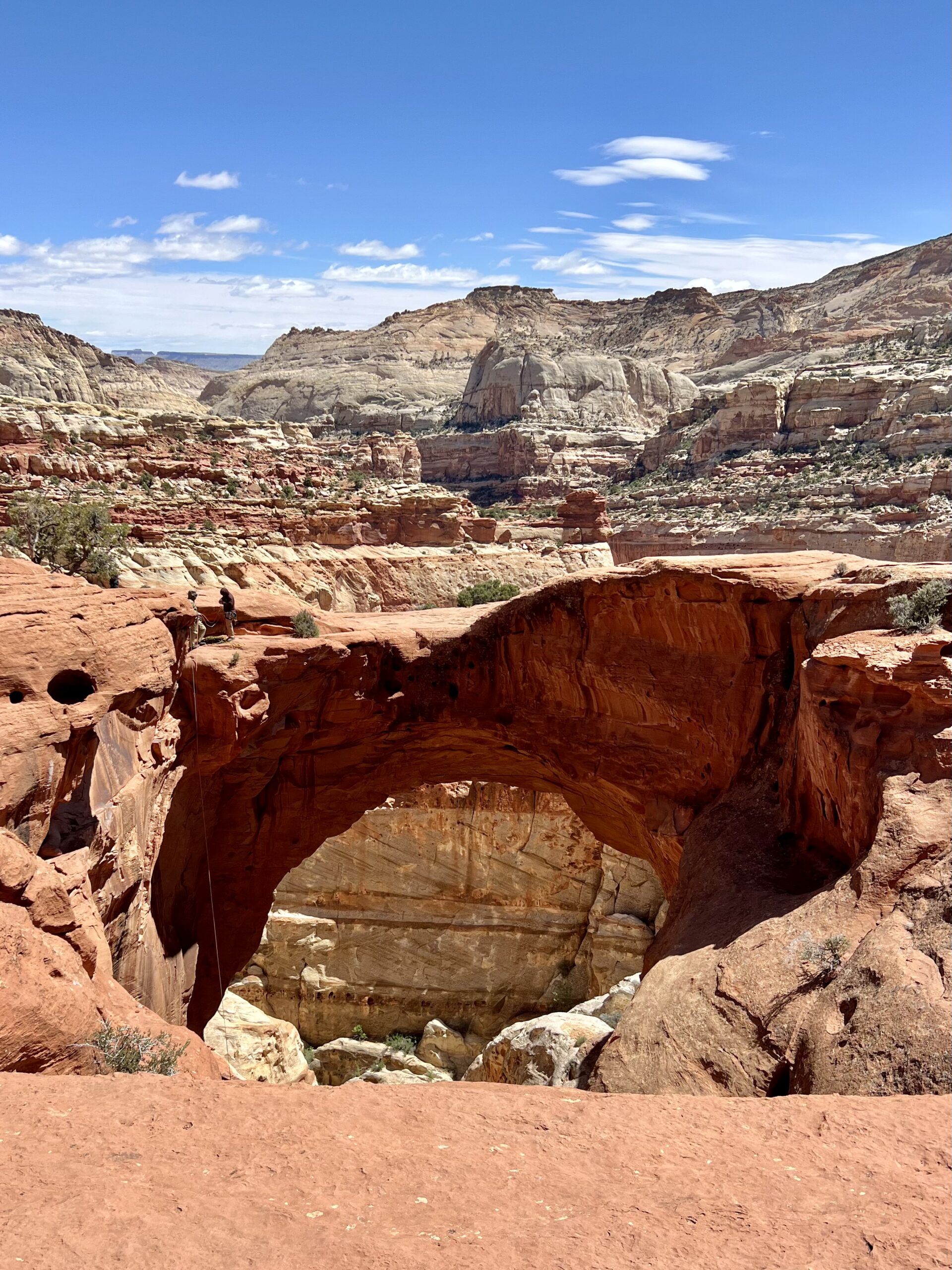
photo by Ellen Broude
Capitol Reef National Park is often considered the most underrated of Utah’s Mighty 5, but it’s a hidden gem with stunning rock formations and a peaceful ambiance.
Boondock at Beas Flats Road, a spacious BLM area just outside the park. The open space, scenic views, and sense of solitude perfectly complement Capitol Reef’s serene vibe.
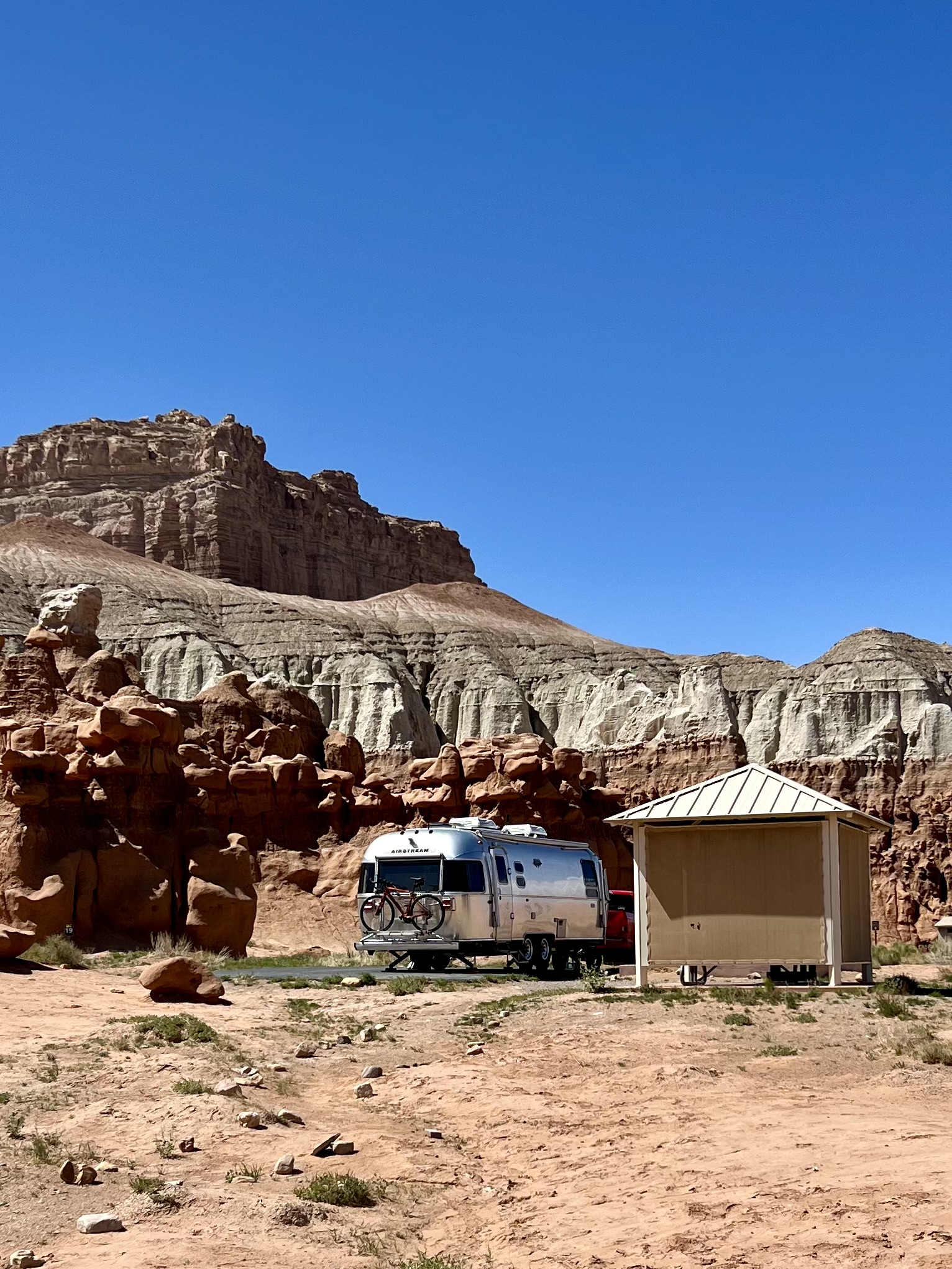
photo by Ellen Broude
Goblin Valley State Park is famous for its whimsical sandstone hoodoos, nicknamed “goblins.” Walking among these formations feels like exploring another planet.
Ellen scored a last-minute site at the park’s small campground, which featured shaded picnic shelters and breathtaking views. Exploring the goblin field is more like a leisurely stroll than a hike, making it accessible and enjoyable for visitors of all ages. Nearby yurts add a unique lodging option for non-campers.
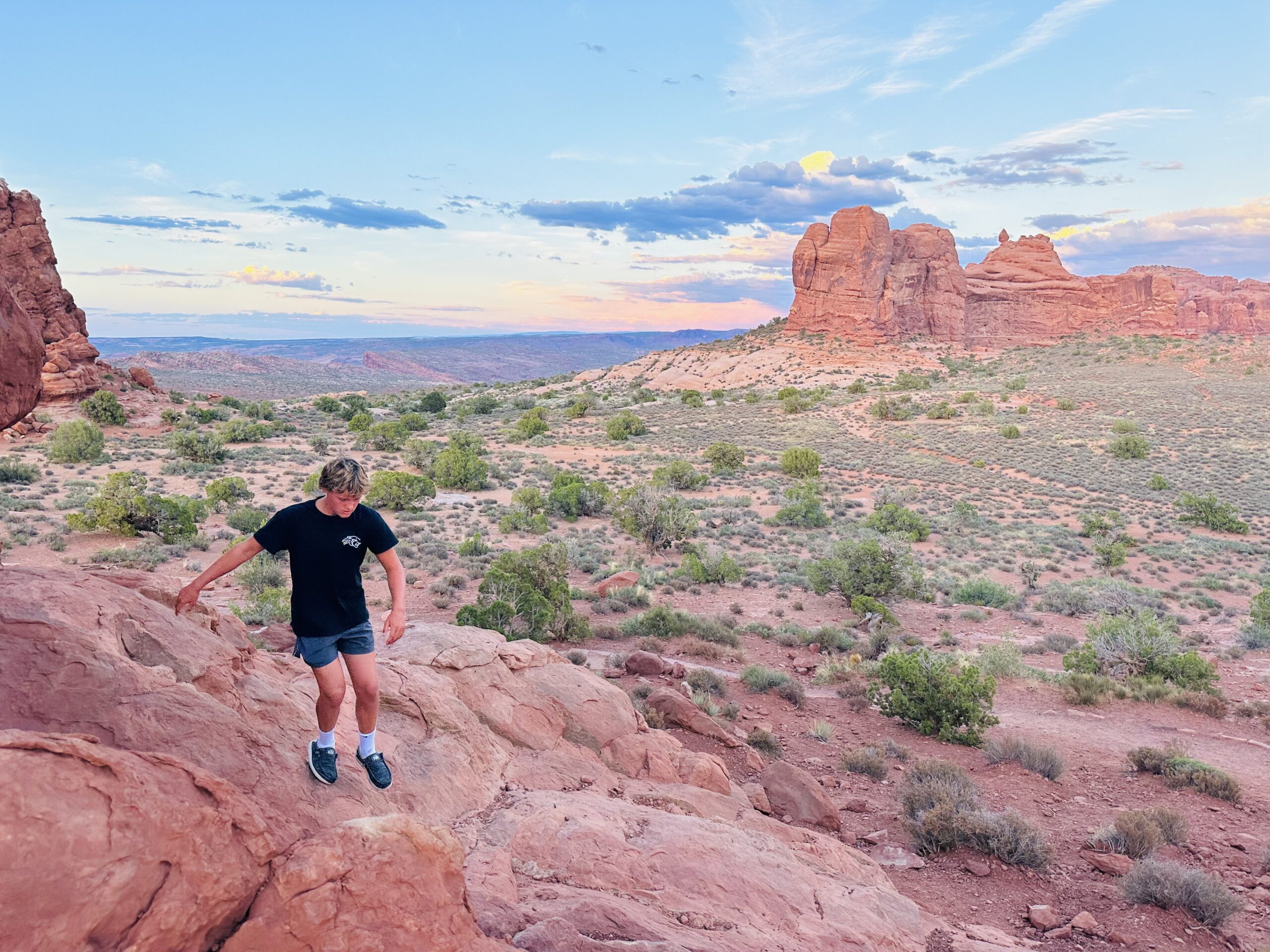
Arches National Park is a geological wonderland that captivates visitors with its incredible diversity of natural stone arches, towering spires, and balanced rocks. Located just outside Moab, this park offers a mix of short hikes and scenic drives, making it accessible for all types of adventurers. Arches is home to over 2,000 natural arches, each offering unique beauty and, of course, plenty of photo opportunities.
Stay at Sun Outdoors Arches Gateway. Its proximity to the park entrance makes it an ideal base for exploring.
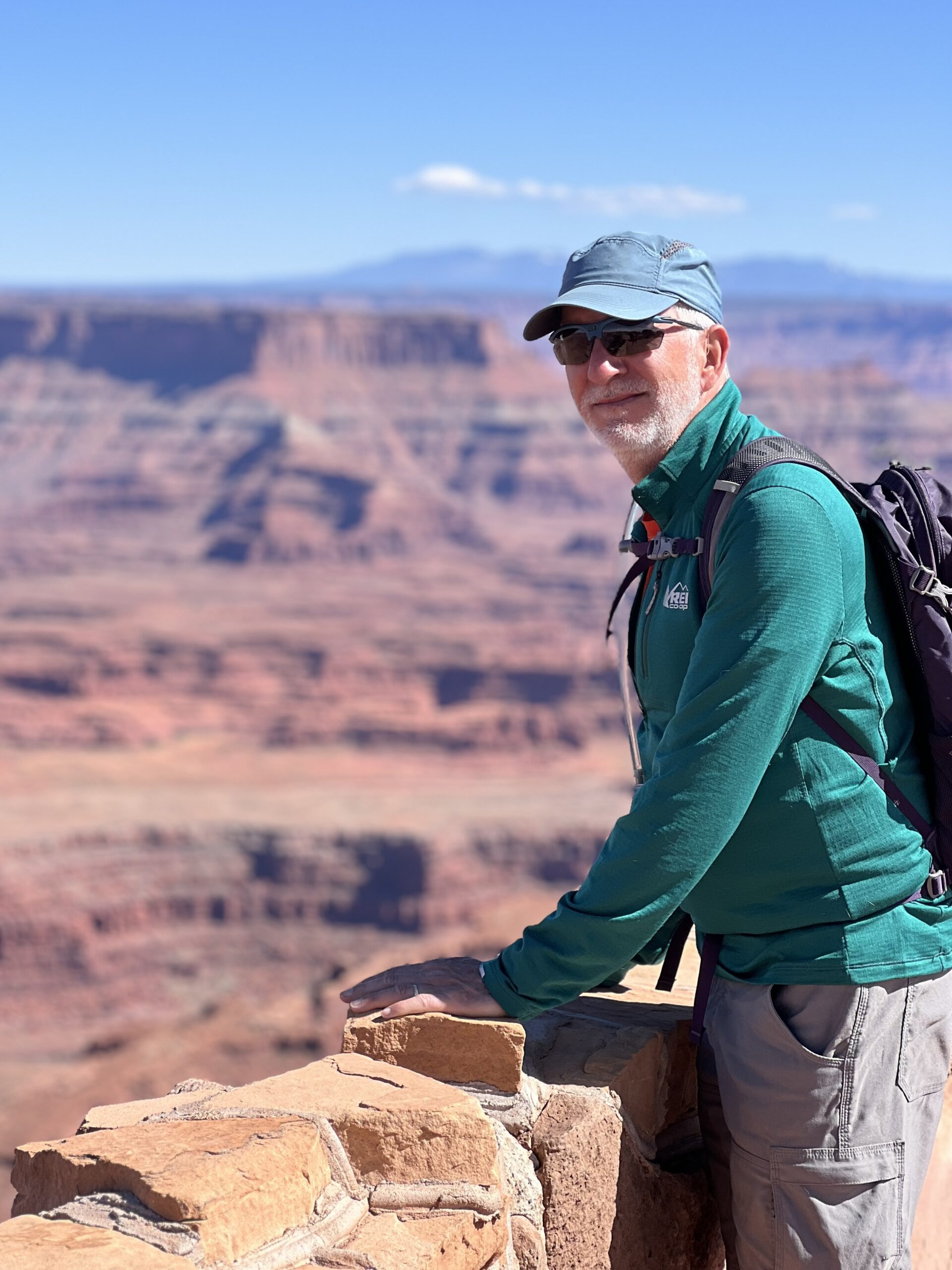
photo by Ellen Broude
Dead Horse Point State Park is a destination known for its panoramic views of the Colorado River’s iconic horseshoe bend and the sprawling canyons below. Visitors are treated to dramatic desert landscapes from several well-placed overlooks along paved walking paths. The park also offers interpretive exhibits that shed light on its natural and cultural history. Additionally, the park is a hub for mountain biking enthusiasts, featuring a network of trails catering to all experience levels. Dead Horse Point’s unique combination of accessibility, outdoor recreation, and stunning scenery makes it a must-visit stop near Moab.
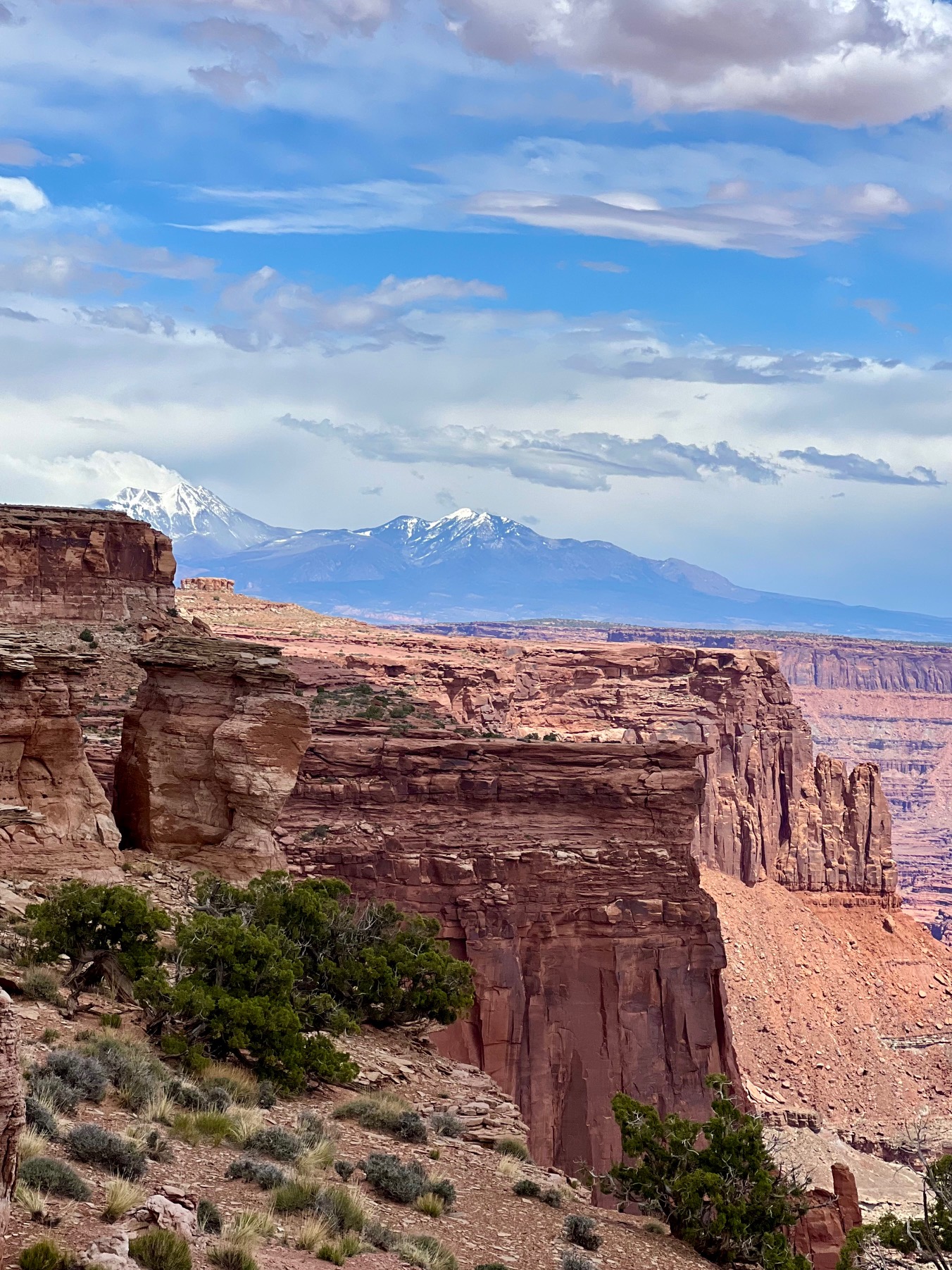
photo by Ellen Broude
Canyonlands National Park is divided into four unique districts: Island in the Sky, The Needles, The Maze, and the rivers that run through them. Each district offers distinct experiences, from the sweeping overlooks of Island in the Sky to the colorful spires and challenging backcountry trails of The Needles. Visitors can explore iconic landmarks such as the White Rim Road, a 100-mile off-road journey, or hike the park’s many trails to discover petroglyphs and dramatic geological features. Whether you prefer short day hikes or rugged adventures, Canyonlands delivers unforgettable scenery at every turn.
Ellen offered listeners a wealth of practical advice for navigating Utah’s national and state parks. Here are some of her best tips:
Utah’s Mighty 5 and state parks offer an unparalleled combination of natural beauty, outdoor adventure, and scenic camping. Whether you’re boondocking on BLM land or enjoying the amenities of a state park, this trip promises unforgettable memories.
Have you visited Utah’s Mighty 5 or its state parks? Share your favorite experiences in The RV Atlas Facebook group, or listen to the full podcast episode for more travel tips and stories!
The post An Epic RV Trip Through Utah (Utah’s Mighty 5 + 4 Amazing State Parks) appeared first on The RV Atlas.
This week on The RV Atlas podcast, we cover three topics that have recently been asked about in our private Facebook group: exploring Northern California with your RV, practical tips for RVing with teenagers, and advice on how to store and protect your RV during the winter months. Whether you’re planning a summer road trip, navigating the complexities of camping with teens, or preparing your rig for off-season storage–or doing all three at the same time–this podcast is packed with helpful insights from our own experience and advice from the larger RV Atlas community.
To listen–click on the media player above or subscribe to the RV Atlas wherever you get your favorite shows!
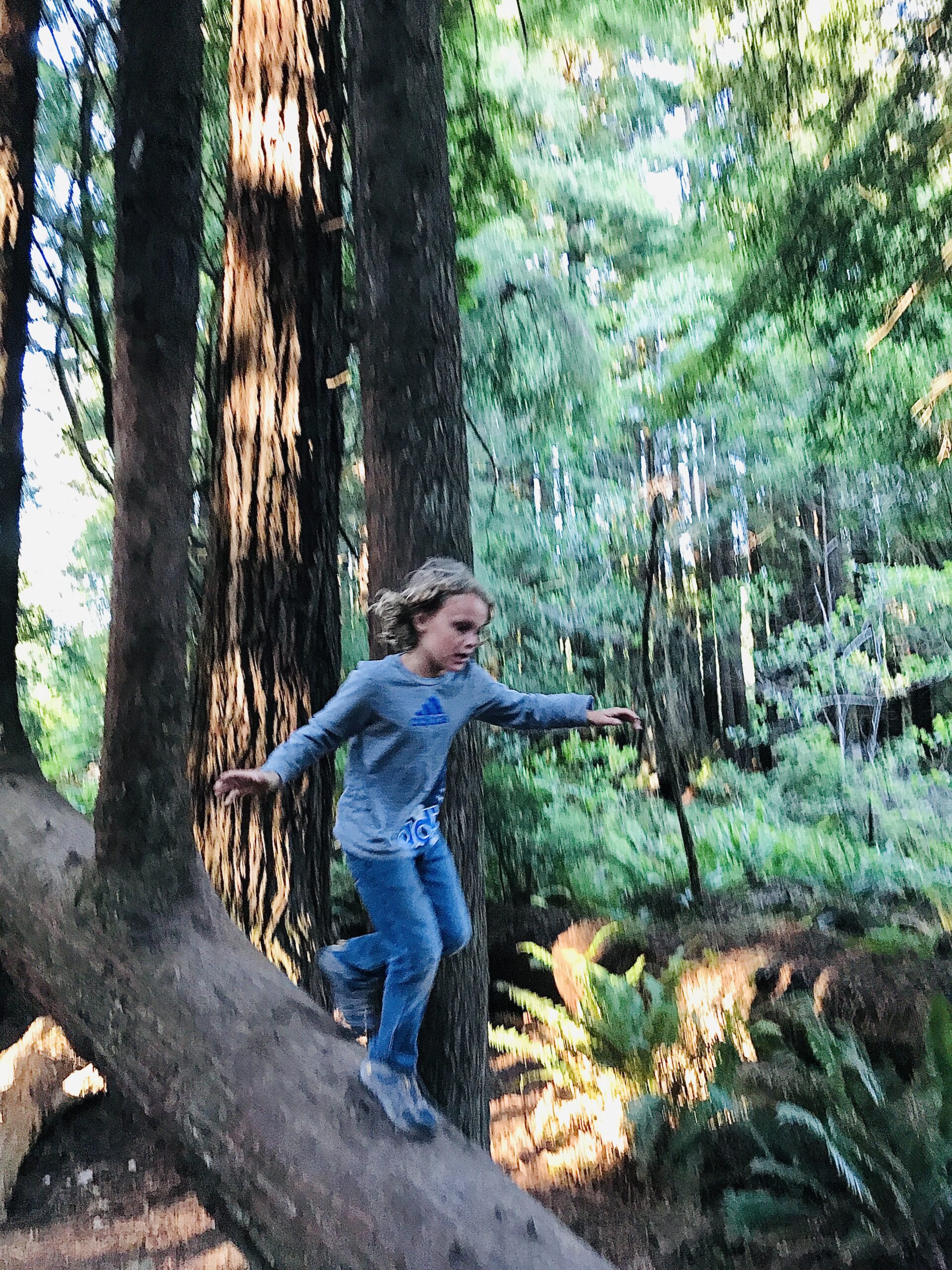
Northern California is a dream destination for many RVers, offering stunning natural beauty and unique attractions. When planning a trip to this region, the Redwoods National and State Parks should be at the top of your list. This combined system of parks is home to some of the oldest and largest trees on Earth and offers incredible hiking, wildlife viewing, and awe-inspiring landscapes.
Side Note: We have a whole chapter dedicated to this region in Where Should We Camp Next?: National Parks, so check it out for more detailed recommendations. We also have podcast episodes about the Redwoods–click here to listen.
When traveling with kids or teenagers, balance is key. Nature lovers will marvel at the grandeur of the redwoods, but after a few hikes, variety is essential to keep everyone engaged. Combine your visit with urban stops like San Francisco, where activities like attending a baseball game or exploring the city’s history can cater to a wide range of interests.
For adventure-seekers, activities like ATV riding, big-wave surfing observation, or ranger-led educational programs can create memorable experiences. We also suggest leveraging “set-jetting” opportunities—like visiting filming locations from Return of the Jedi—to connect kids with the destination in a fun and engaging way.
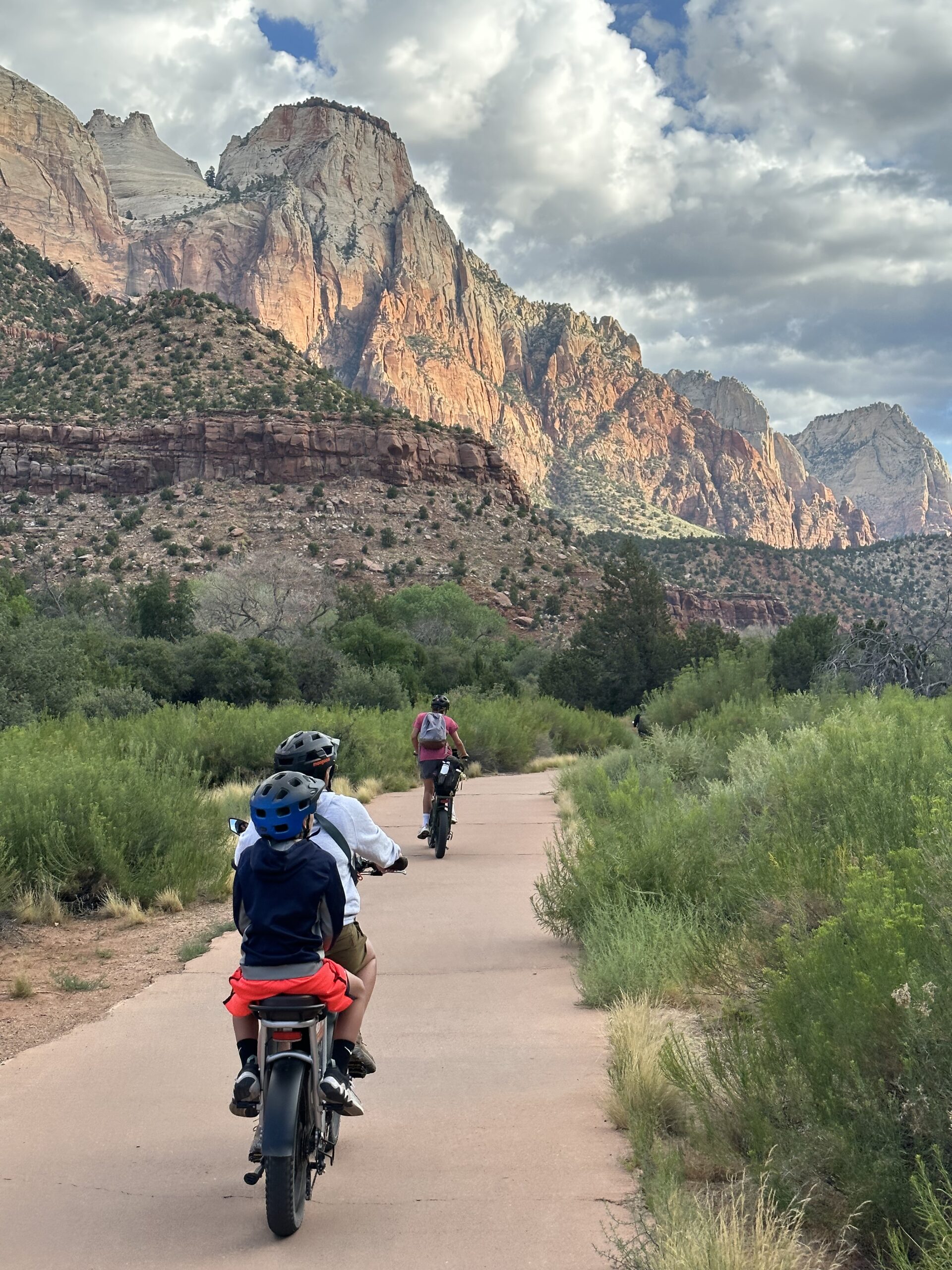
RVing with teenagers comes with unique challenges and rewards. Their busy schedules and evolving interests can make trip planning more complicated, but a few strategies can help you navigate this phase of family travel.
Remember, this phase of family life is fleeting. Keeping flexibility and humor is key to survival when RVing with teenagers.
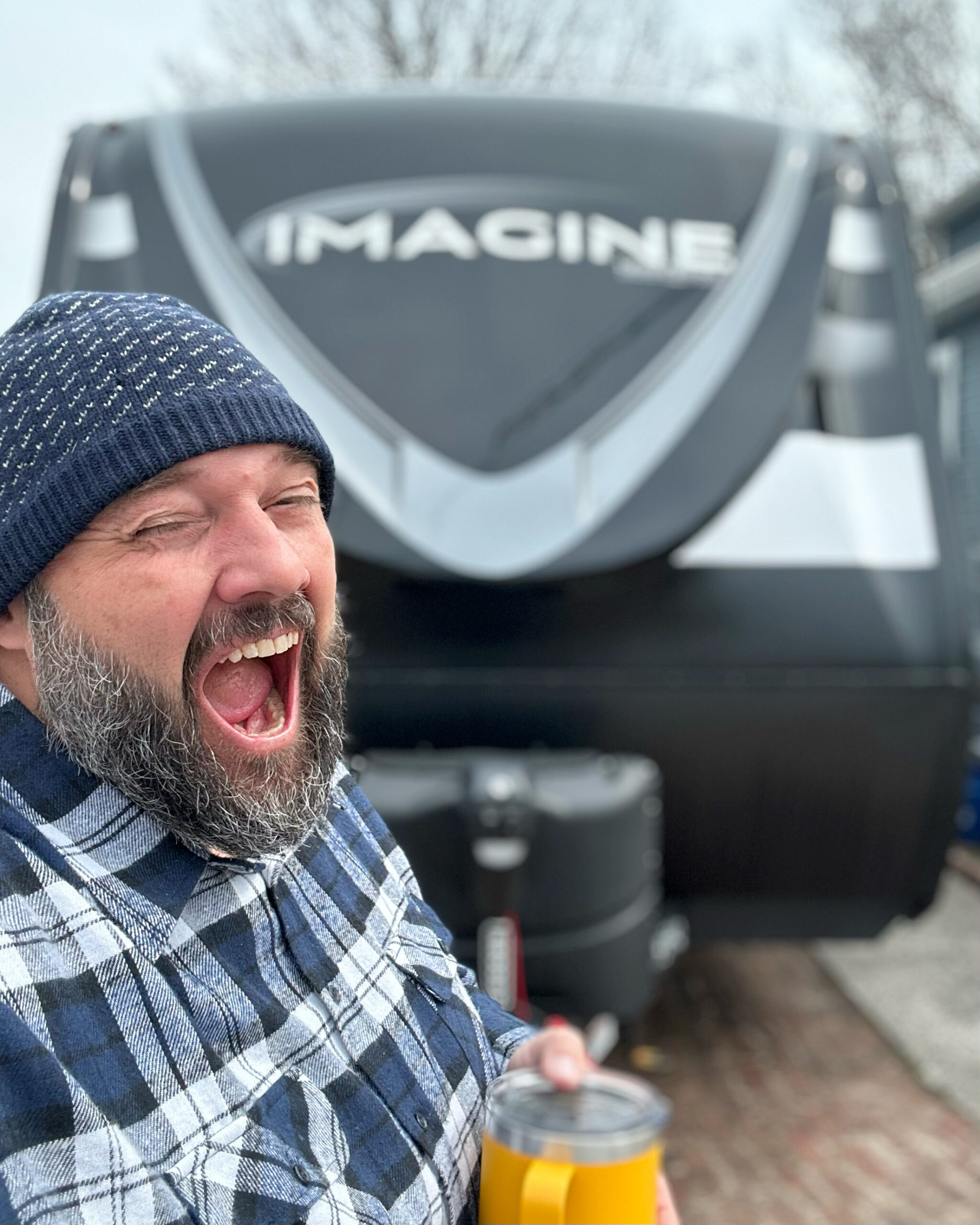
Proper winter storage is essential to protect your RV from harsh weather and extend its lifespan. While covering your RV can offer many benefits, there are important considerations to keep in mind.
If you plan to use your RV periodically during the winter—for camping or as a guest house—it might be more practical to skip the cover. However, be aware that this exposes your rig to the elements, which can accelerate wear and tear on exposed areas like the front cap. We personally use our RV extensively throughout the winter, so we don’t cover it. And the additional wear and tear is definitely worth the trade off for our family.
For large RVs, covering can be labor-intensive and requires proper storage for the cover when not in use. Weigh the effort and costs against the benefits to decide what works best for your situation.
Join the Conversation! Have more tips for RVing in Northern California, RVing with teenagers, or storing your rig? Share your thoughts in The RV Atlas Facebook group! Don’t forget to tune in to the full podcast episode for more in-depth advice and insights from our discussions.
The post California Redwoods, RVing with Teenagers, RV Covers: Yes or No? appeared first on The RV Atlas.
As the temperatures drop, many RVers are tucking their rigs away for the winter. But for a growing number of adventurous campers, winter RVing offers unique opportunities to explore serene landscapes, experience cozy camping, and embrace the quieter side of the camping season. In this week’s episode of The RV Atlas podcast, we dive into 15 Winter RVing TIps and explore Spacious Skies Campgrounds’ excellent winter offerings with co-founder Ali Rasmussen. Whether you’re a seasoned winter RVer or just winter-camping curious, this guide will help you prepare for your first–or next–winter camping trip.
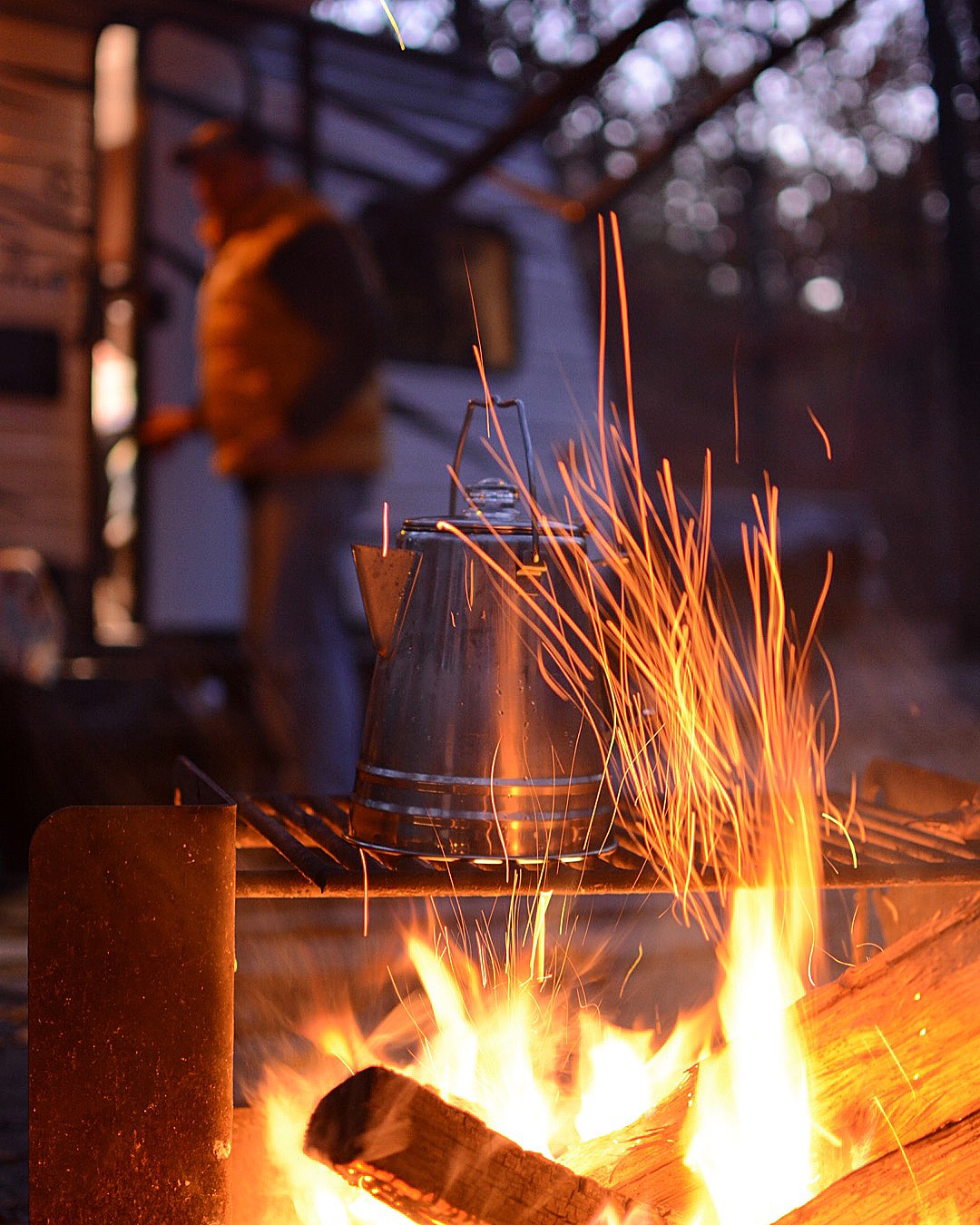
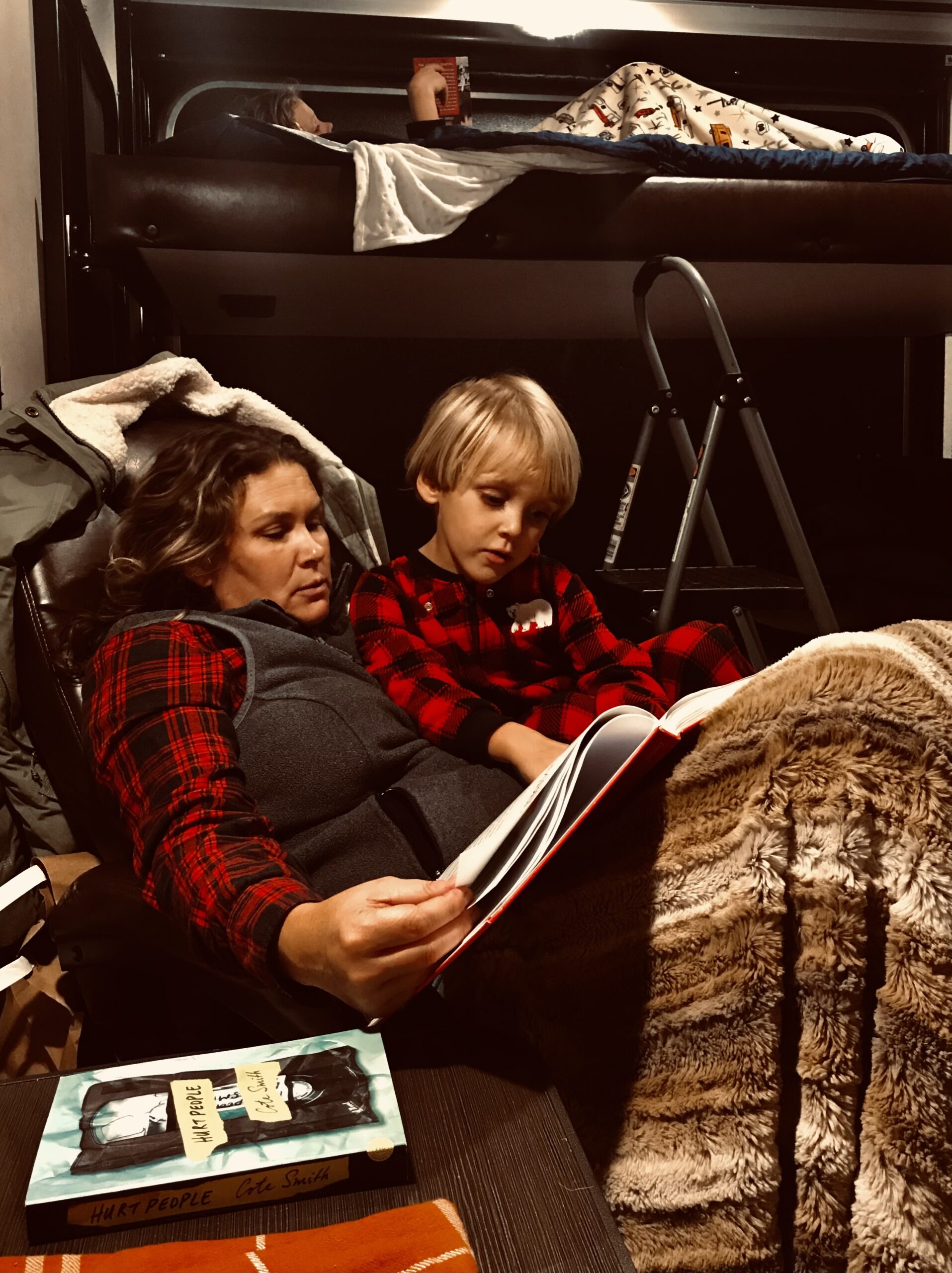
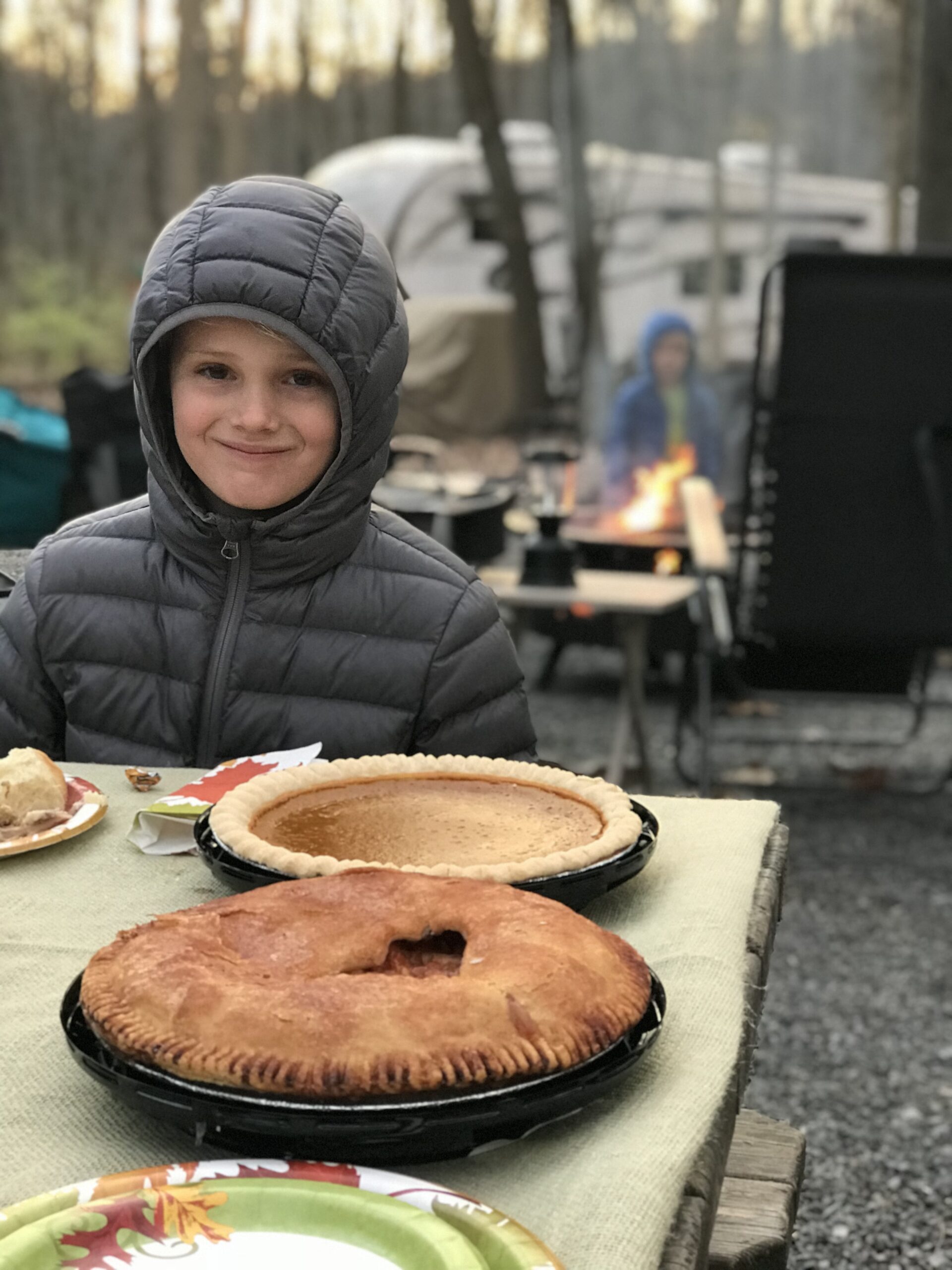
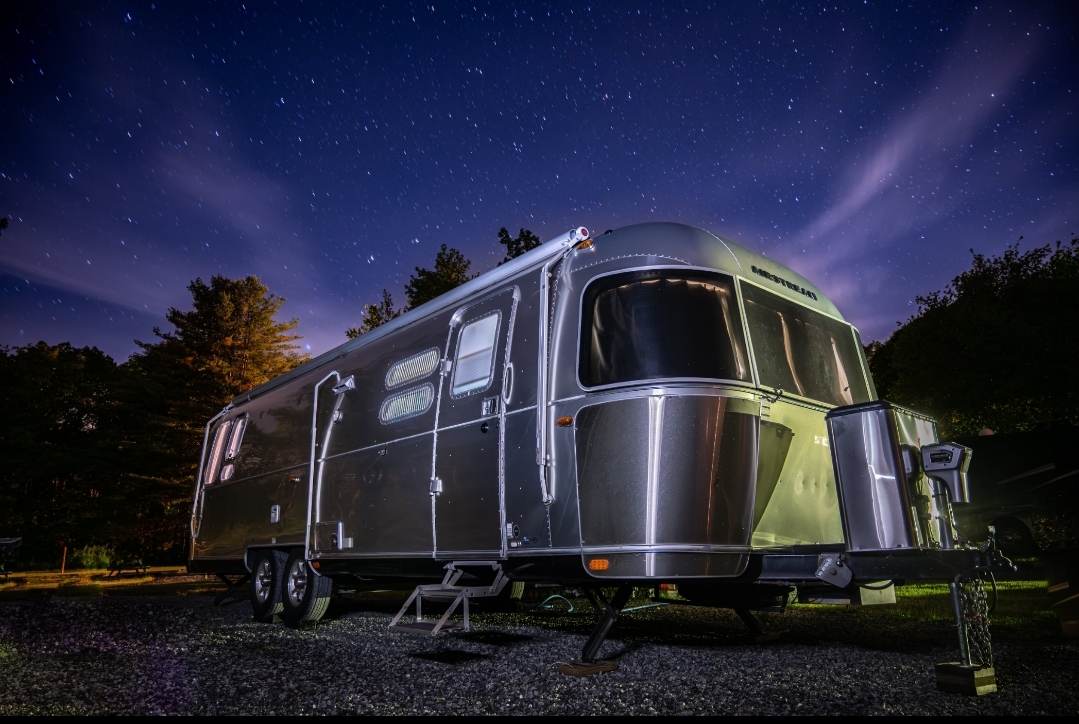
photo by Bill Sferrazza
Spacious Skies Campgrounds, a growing collection with 15 locations from Maine to Georgia, has nine campgrounds open during the winter. Ali Rasmussen, co-founder of Spacious Skies, shared highlights about their winter-friendly offerings. Here is sample of some of the campgrounds open for winter camping. Check their website for more options and complete details.
Spacious Skies offers flexible options, including weekend stays, monthly rentals, and winter seasonal sites, catering to both short-term visitors and long-term winter campers.
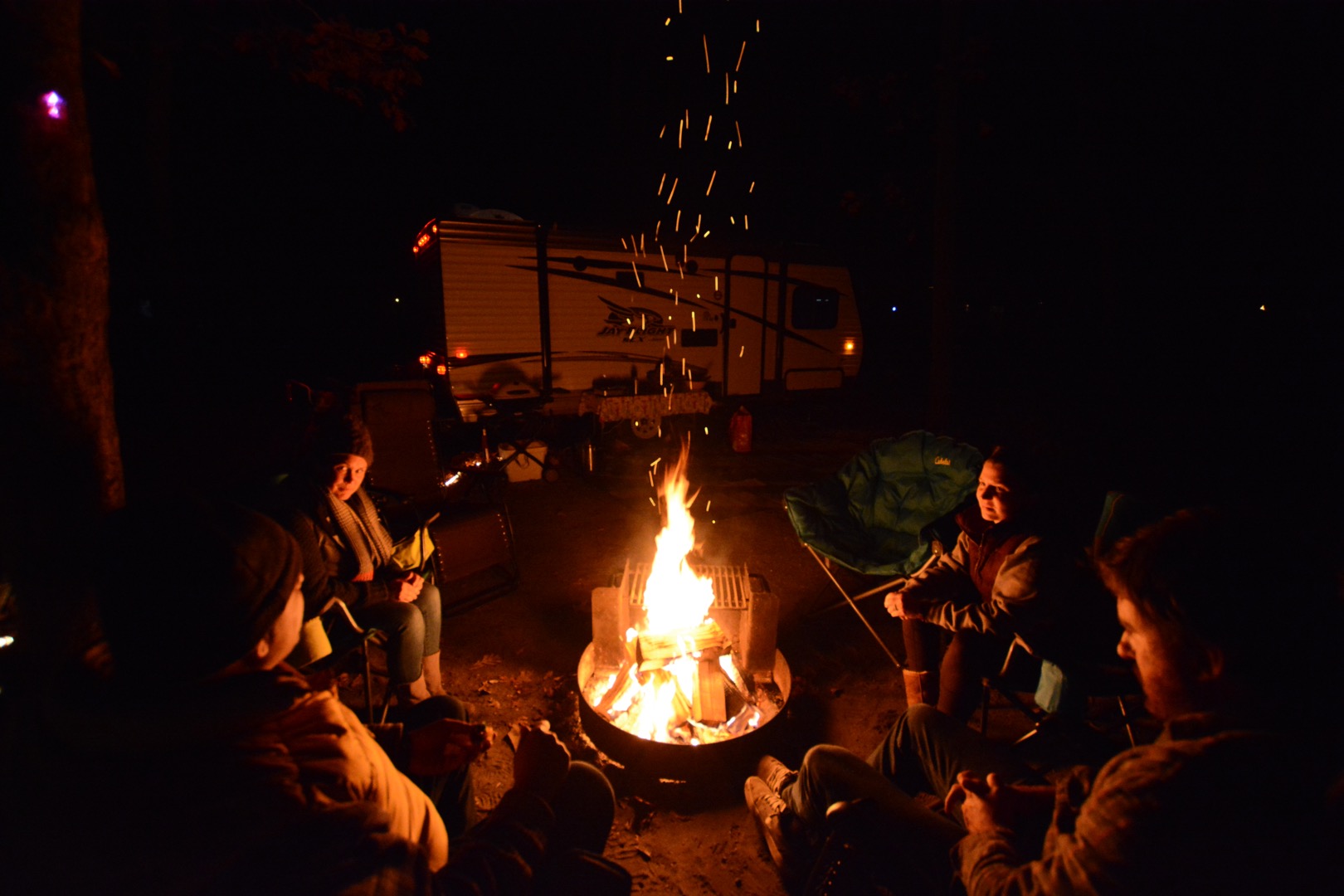
With the right preparation and planning, winter camping can be an exciting, new adventure. From utilizing these tips to discovering fantastic winter-friendly campgrounds like Spacious Skies, there’s no better time to explore the magic of the off-season.
What are some of your favorite winter camping destinations? Share your experiences in The RV Atlas Facebook group, and tune in to the podcast for even more winter camping inspiration!
The post 15 Winter RVing Tips + Winter Campground Locations with Ali from Spacious Skies appeared first on The RV Atlas.
This week on The RV Atlas, we explore two big topics: the current updates at Disney’s Fort Wilderness Resort and the top things RVers are looking for in 2025. From the magic of Fort Wilderness to RV storage challenges and campground innovations, we’re already excited about the year ahead of us.
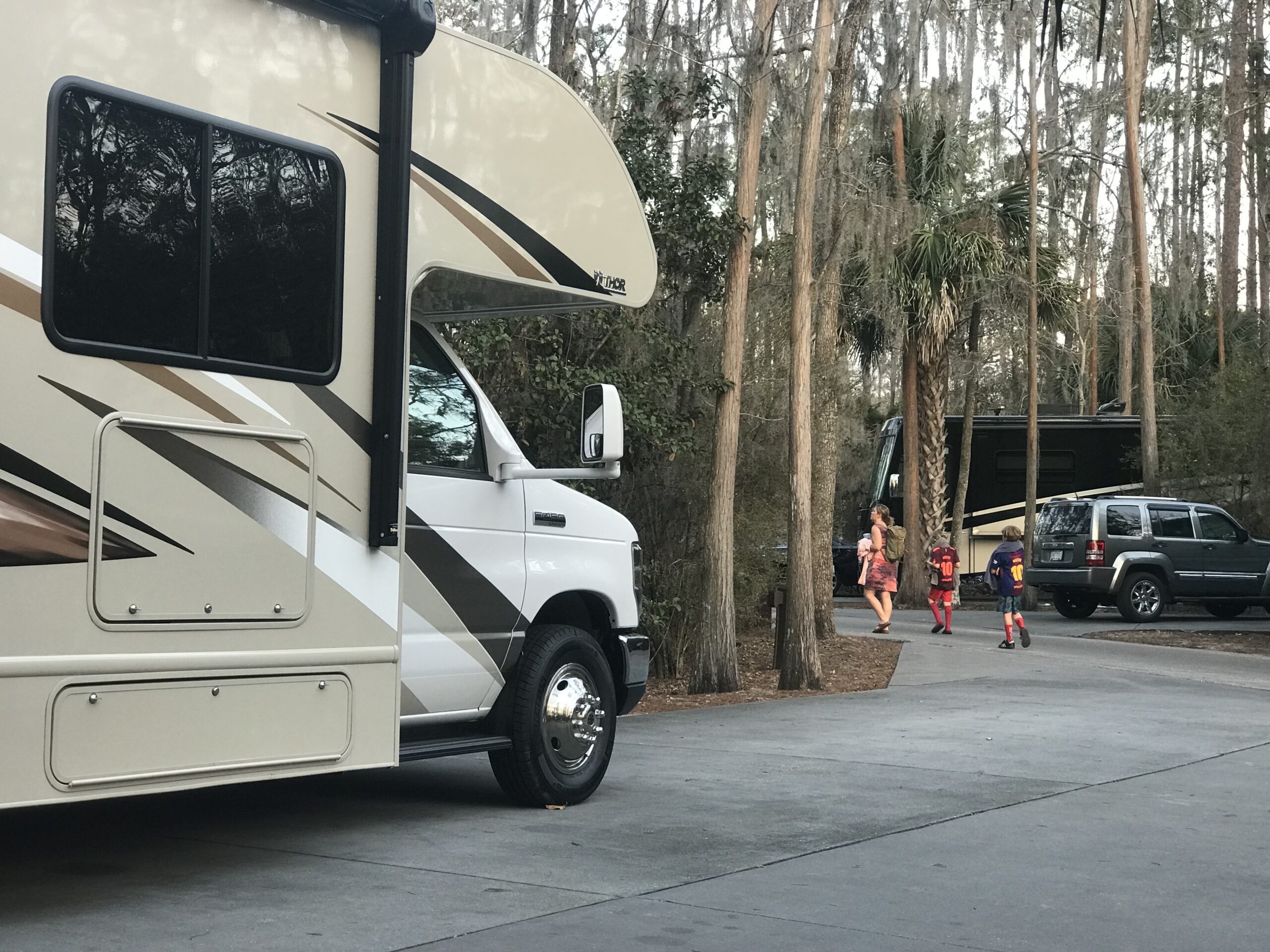
Why Fort Wilderness Stands Out
Fort Wilderness has long been celebrated for its ability to combine the best of two worlds: resort-level amenities and a peaceful, nature-filled environment. With its spacious sites and tranquil atmosphere, it’s hard to believe you’re just a short boat ride away from the hustle and bustle of Magic Kingdom. The resort offers activities like horseback riding, nature trails, and the beloved Chip and Dale campfire sing-along.
Concerns About Reflections Resort Construction
The construction of the new Reflections Resort next to Fort Wilderness, which resumed after a pandemic pause, has sparked mixed feelings. While Disney is known for blending new developments into the landscape, the cranes and construction noise near the Settlement area have affected the serene vibe. Once completed, the new resort could offer convenient dining and entertainment options for Fort Wilderness guests, but some worry it may permanently alter the campground’s charm.
New DVC Cabins at Fort Wilderness
The addition of Disney Vacation Club (DVC) cabins has replaced the older rustic cabins, creating a stir among Fort Wilderness fans. These new cabins feature:
Improved State Park Reservation Systems
RVers expressed frustration with the current state park reservation systems, particularly the issue of no-shows. We aren’t sure what the answer to this problem is, but it needs to be addressed for the health of the camping industry. We discuss a couple of options including:
Better RV Storage Options
Finding affordable and secure RV storage is a growing challenge. RVers are looking for:
Higher Quality RVs
Many RVers are hoping for a shift in manufacturing quality. The pandemic-era boom led to rushed production and diminished craftsmanship. As the industry stabilizes, there’s optimism for better-built RVs that offer long-term durability.
Affordable Campgrounds with Modern Amenities
RVers are seeking campgrounds that balance affordability with essential amenities, such as:
New campgrounds are opening across the United States, particularly in the Western region. We have a few on our radar that we are looking forward to hearing more about:
Exploring these new destinations not only offers exciting experiences but also supports the growing campground industry.
Join the Conversation!
What changes do you hope to see in the RVing world as we enter 2025? Share your thoughts in The RV Atlas Facebook group, and let us know your favorite new campgrounds or trends. If you missed last week’s episode, don’t forget to check out our Budget and Bougie Holiday Gift Guides for RVers!
The post Disney’s Fort Wilderness Then and Now + What Real RVers Want in 2025 appeared first on The RV Atlas.
Explore our bougie holiday gift recommendations for RVers! From luxury camping gear to premium outdoor gadgets, this gift guide highlights the best high-end items for RV enthusiasts who will pay to enjoy the finer things at the campground.
Welcome to part two of The RV Atlas Holiday Gift Guide! This edition is all about high-end, bougie gifts for RVers. If you’re looking to splurge on a special gift, these premium items deliver on quality, style, and functionality. Each item on this list has been handpicked for those who appreciate the finer things in camping and RVing. To check out our budget gift guide (part one) please click here.
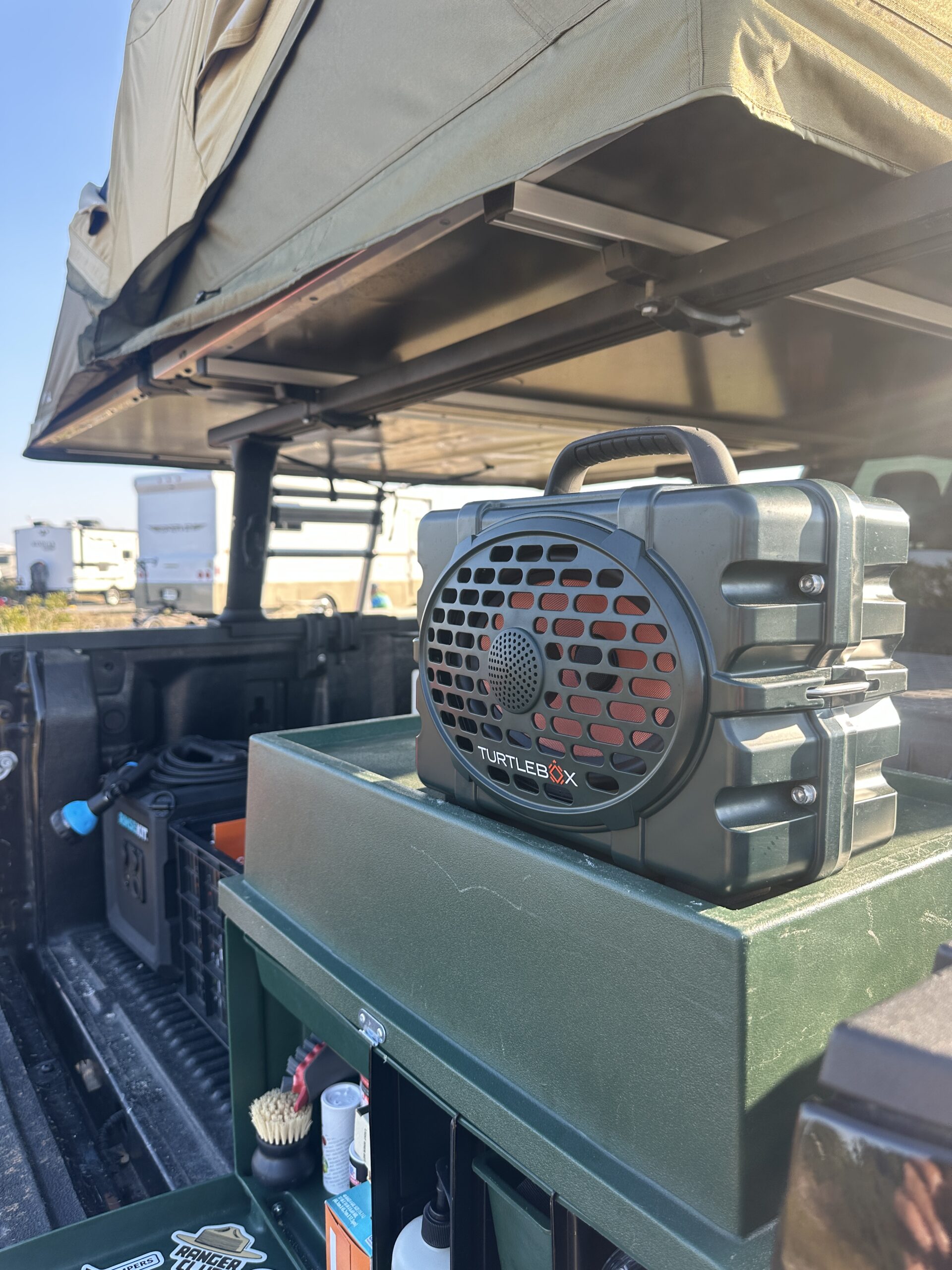
For the music lover, the Turtlebox Speaker offers powerful sound quality that’s waterproof, drop-proof, and built to last. With a rugged design and 25-hour battery life, it’s perfect for campfire gatherings or outdoor adventures. Plus, you can pair two speakers for true stereo sound. We have never tested a bluetooth speaker with better sound quality–or anything even close. Available on Amazon.
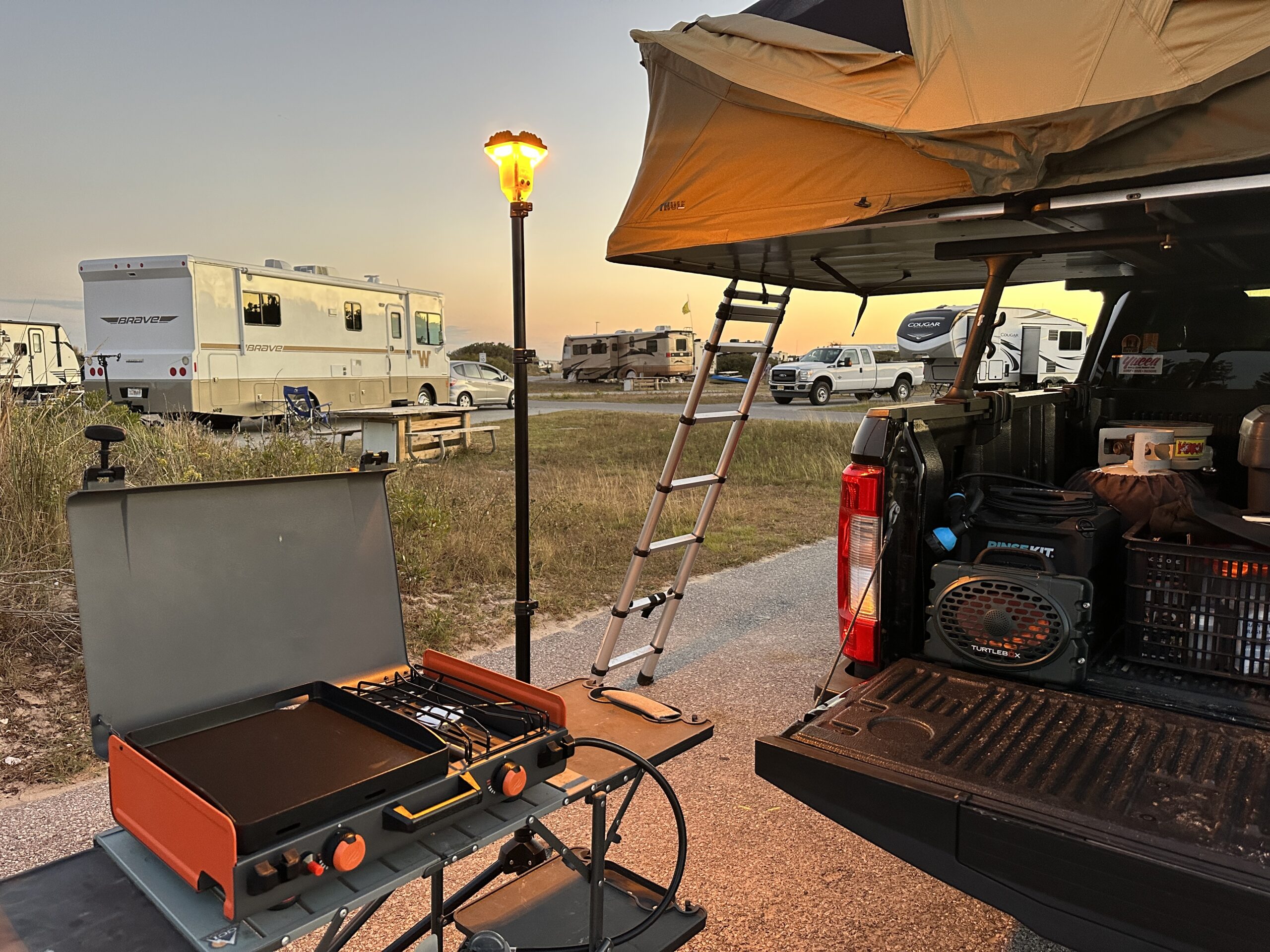
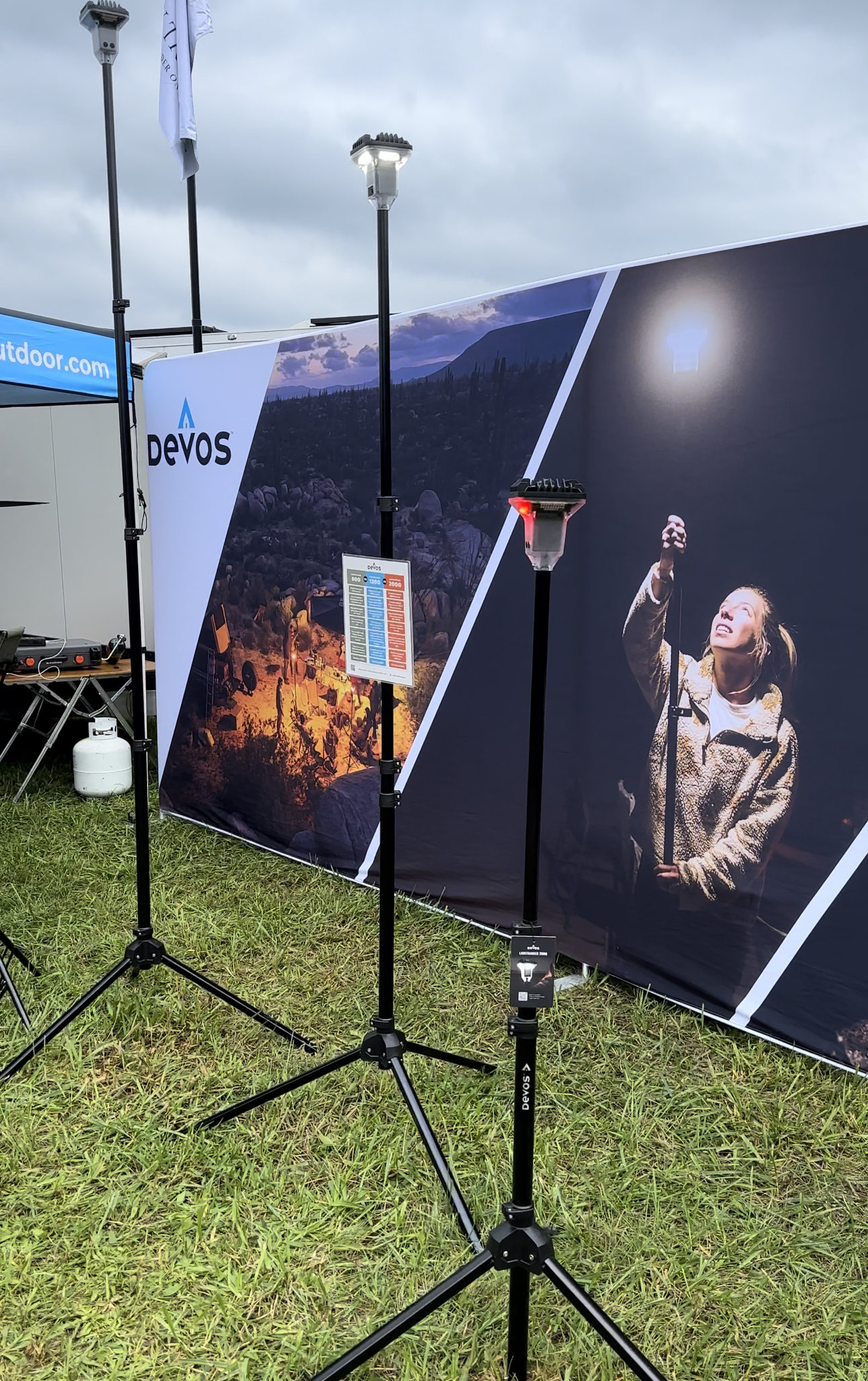
The LightRanger 2000 provides bright, adjustable lighting with a telescoping stand that extends up to 10 feet. This app-controlled lantern offers three colors and multiple light panels for customized illumination, making it ideal for night activities or a cozy camp atmosphere. The app is easy to use and the multidirectional light means you don’t need to blind your neighbors while lighting your own campsite. Available at Devos Outdoor.
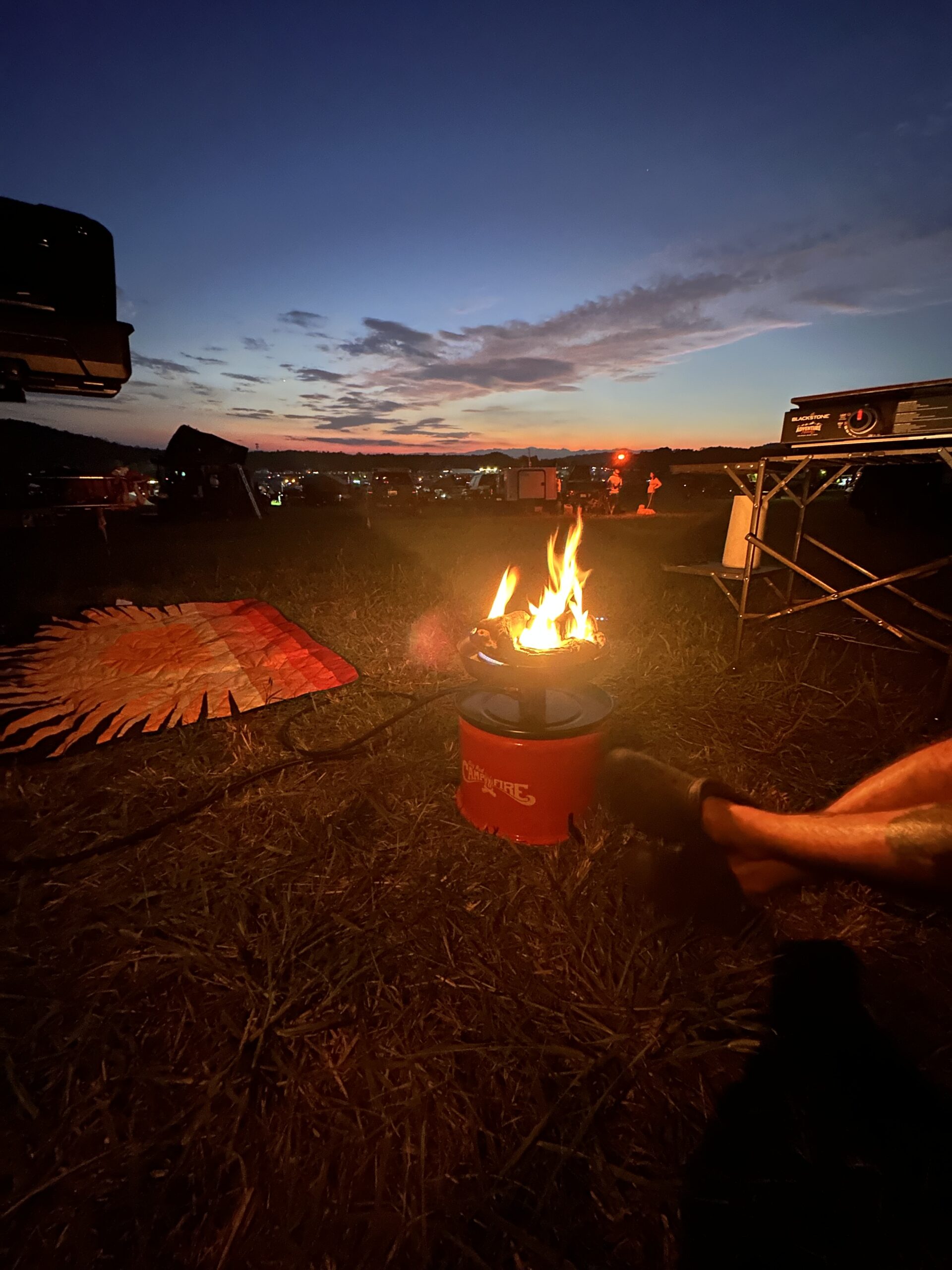
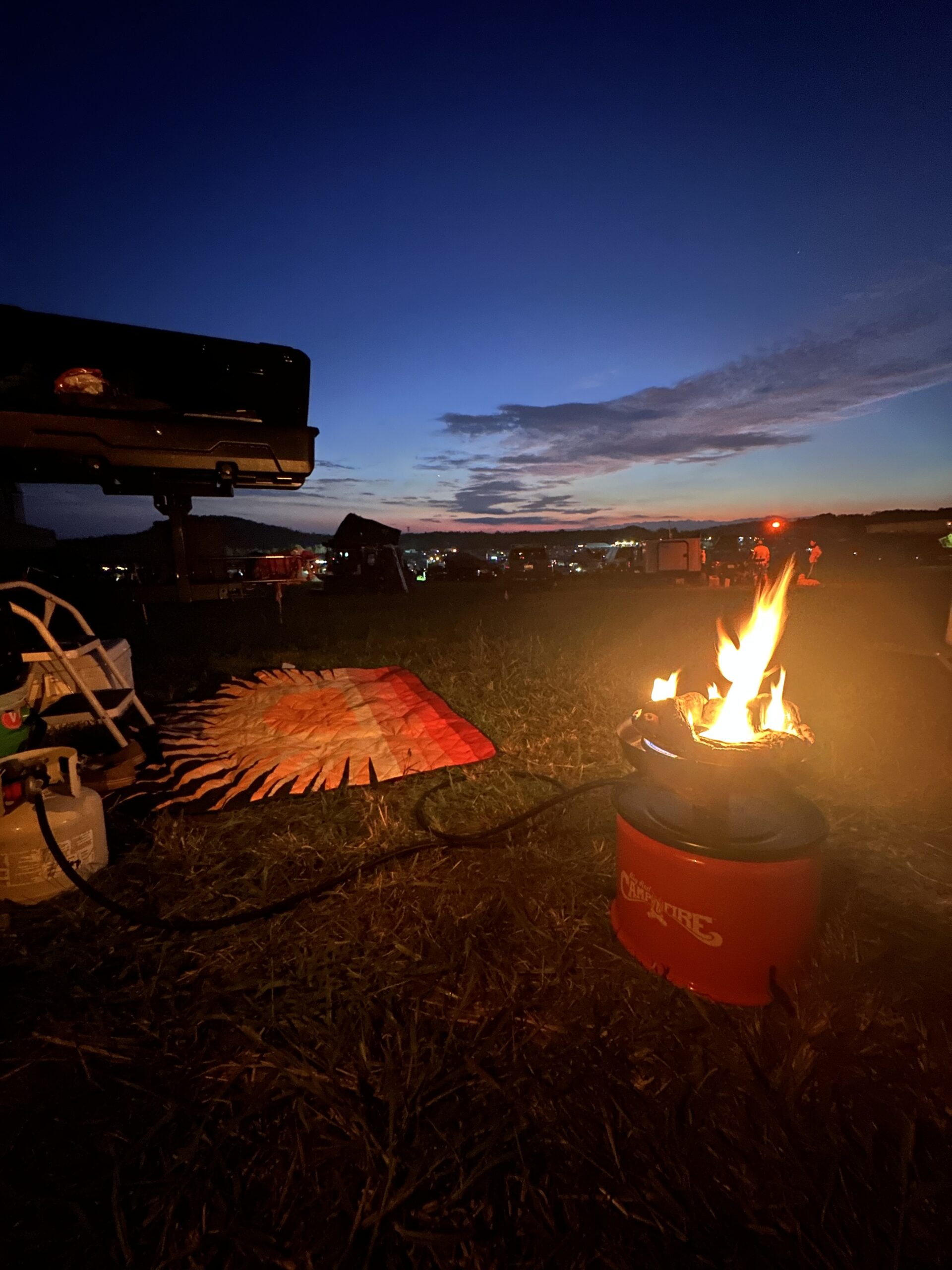
This smokeless, portable fire pit is a must-have for locations with fire bans. With a unique design where the lid doubles as a base, the Big Red Campfire elevates the fire for added warmth and safety, and a 10-foot hose keeps the propane tank away from seating areas. We used this at Overland East this year where wood burning fires are not allowed–and we used it during a burn ban at Assateague State Park–it was clutch in both situations. Available on Amazon.
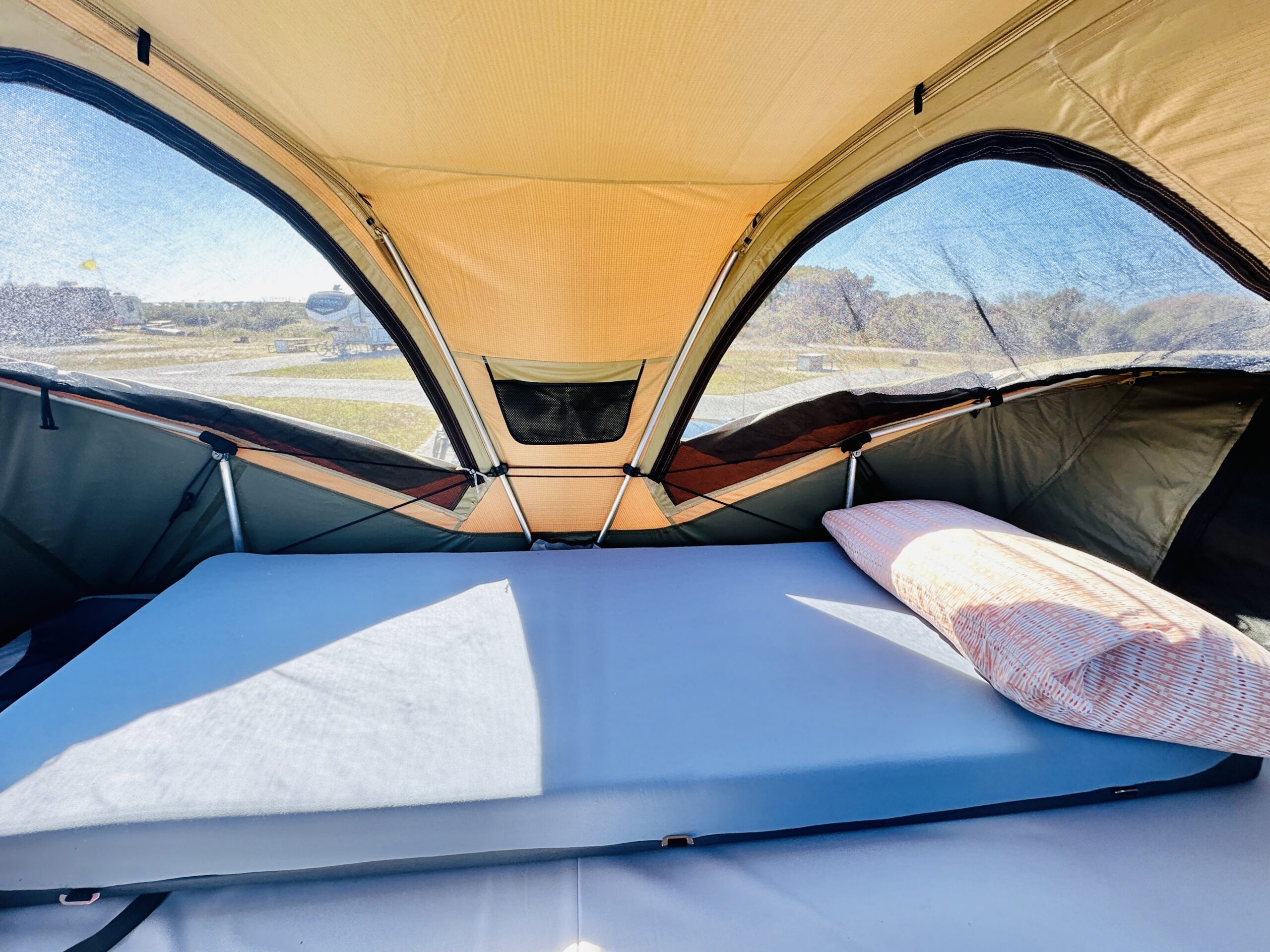
The Hest Foamy camping mattress offers plush memory foam comfort with a durable bottom, making it perfect for tents, rooftop setups, or as an extra RV mattress. Available in short, regular, and wide sizes, it’s easy to roll up and store for any camping adventure. The comfort is off the hook and so is the quality. We also love the little pocket for our wallet and cell phone at the top of the mattress. Available on hest.com and also available on Amazon.
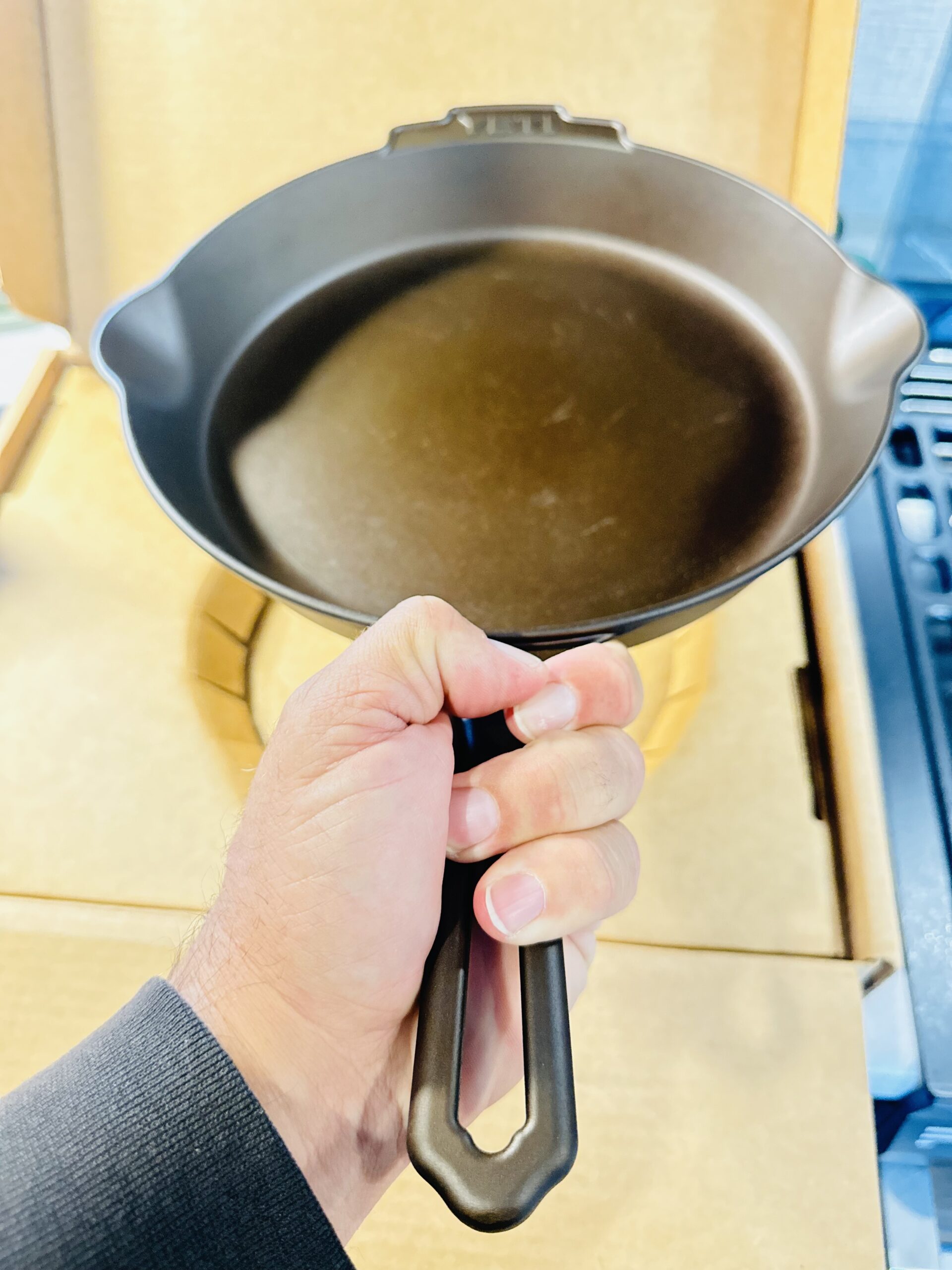
Yeti’s cast iron skillet, available in sizes from 8 to 12 inches, is a pleasure to cook on at home and at the campground over an open fire. This skillet has quickly become a favorite for cooking everything from cornbread to breakfast scrambles. Yeti recently purchased Butter Pat and these skillets are the next evolution of that high-end product. Many Butter Pat fans think this pan is even better than the original because the handle is longer (for campfire cooking) and it is more rounded and comfortable. Available at Yeti.
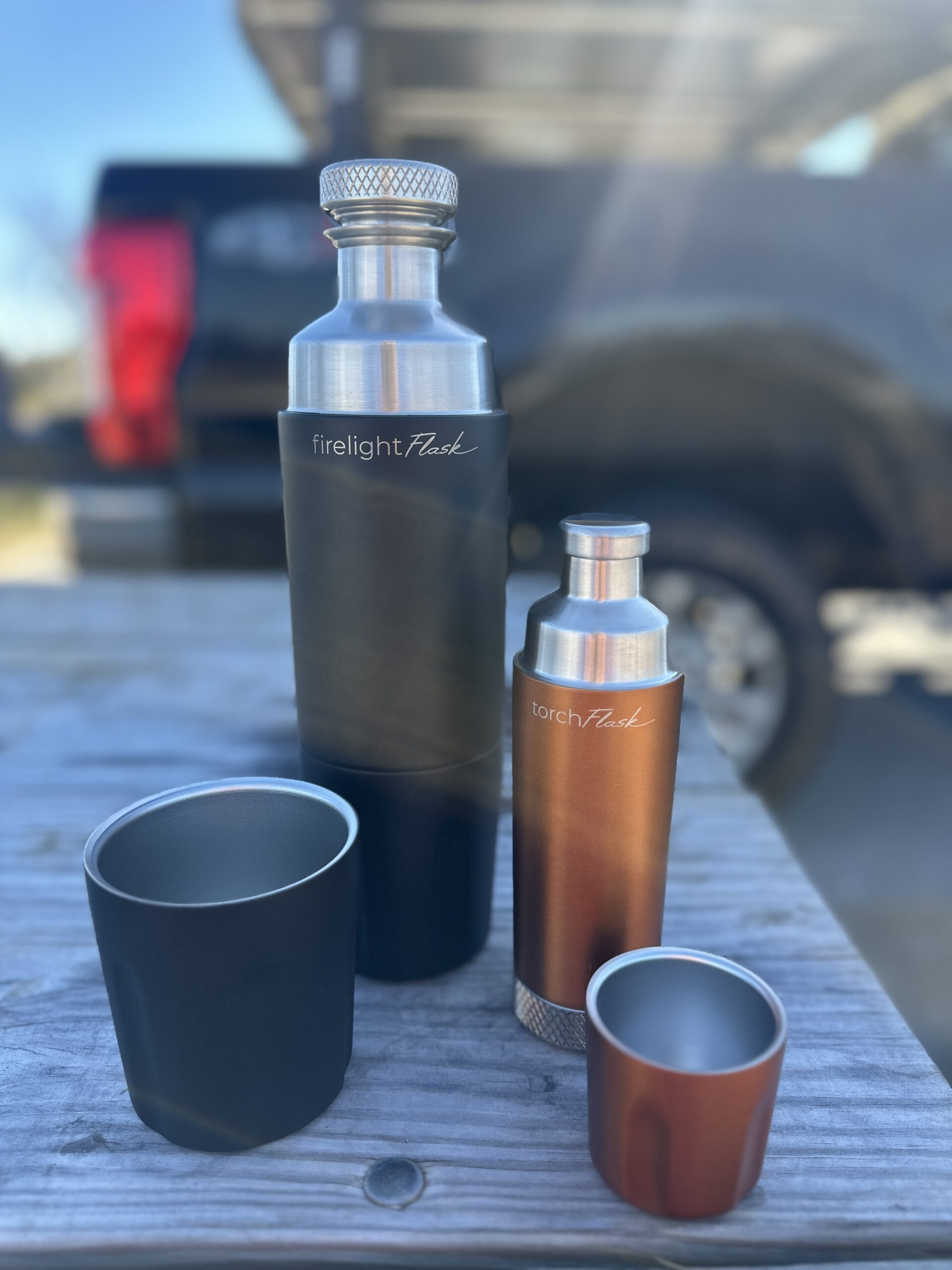
Elevate your camp drinks with the High Camp Firelight Flask, a 750ml flask that keeps beverages at the perfect temperature. With a magnetic dual-tumbler design and leak-proof seal, it is both stylish and functional for glamping trips or picnics in the great outdoors. These flasks are beautifully designed, highly functional, and super gifty. Available at High Camp
This 6-quart, enameled cast iron Dutch oven from Lodge brings beauty and versatility to any RV kitchen. Made in the USA, it’s perfect for stovetop-to-oven meals, and it comes in elegant colors like Cloud Nine and Smooth Sailing. This new series of American made enamel pays tribute to classic Americana in every aspect of its design which is stylish and functional. Available at Lodge.
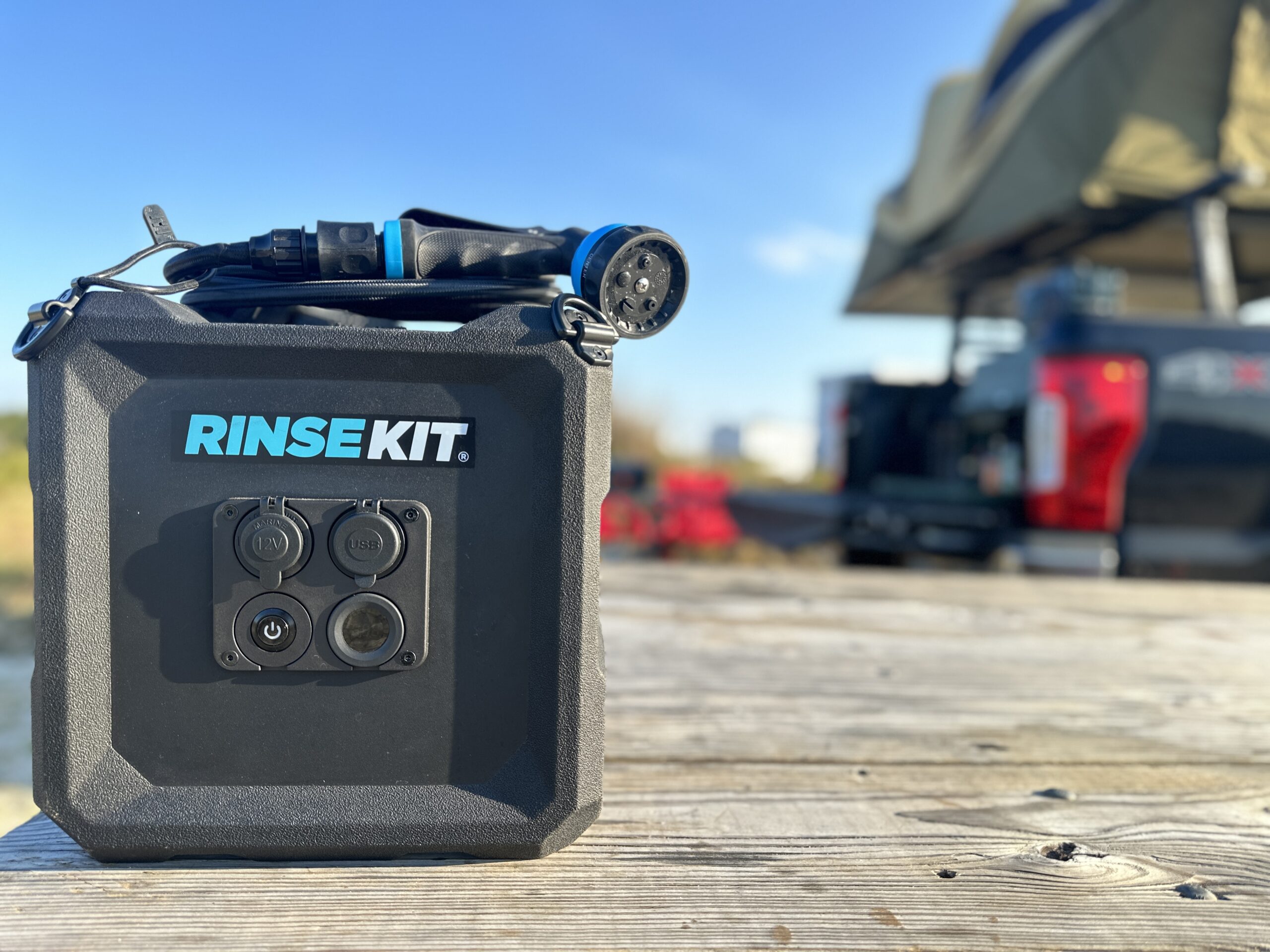
The RinseKit Cube is a 4-gallon portable shower that is much more than a shower! It is ideal for outdoor cleaning, whether it’s rinsing off after a hike, washing dishes, or cleaning up your kayaks or surfboards . It’s battery-powered pressurization makes it easy to use, and its durable build can handle rugged conditions–and the battery seemingly lasts forever. We keep the RinseKit Cube in our truck and use it almost every single day. Available at RinseKit
Check Out Our Budget Gift Guide! Looking for more affordable options? Don’t miss part one of our Holiday Gift Guide, where we share budget-friendly picks under $75. Also, join us in The RV Atlas Facebook group to let us know your favorite gift ideas this season!
The post Holiday Gift Guide Part Two: Bougie Gifts for RVers from $129 to $399 appeared first on The RV Atlas.
Welcome to part one of The RV Atlas Holiday Gift Guide! In this episode, we’re sharing budget-friendly gifts for RVers that are both practical and unique, all priced between $12 and $75. Whether you’re shopping for a camping buddy, family member, or even yourself, we’ve got you covered with items that bring a bit of extra joy and convenience to any RV adventure. And if you get something for yourself–we promise–we won’t tell anyone!
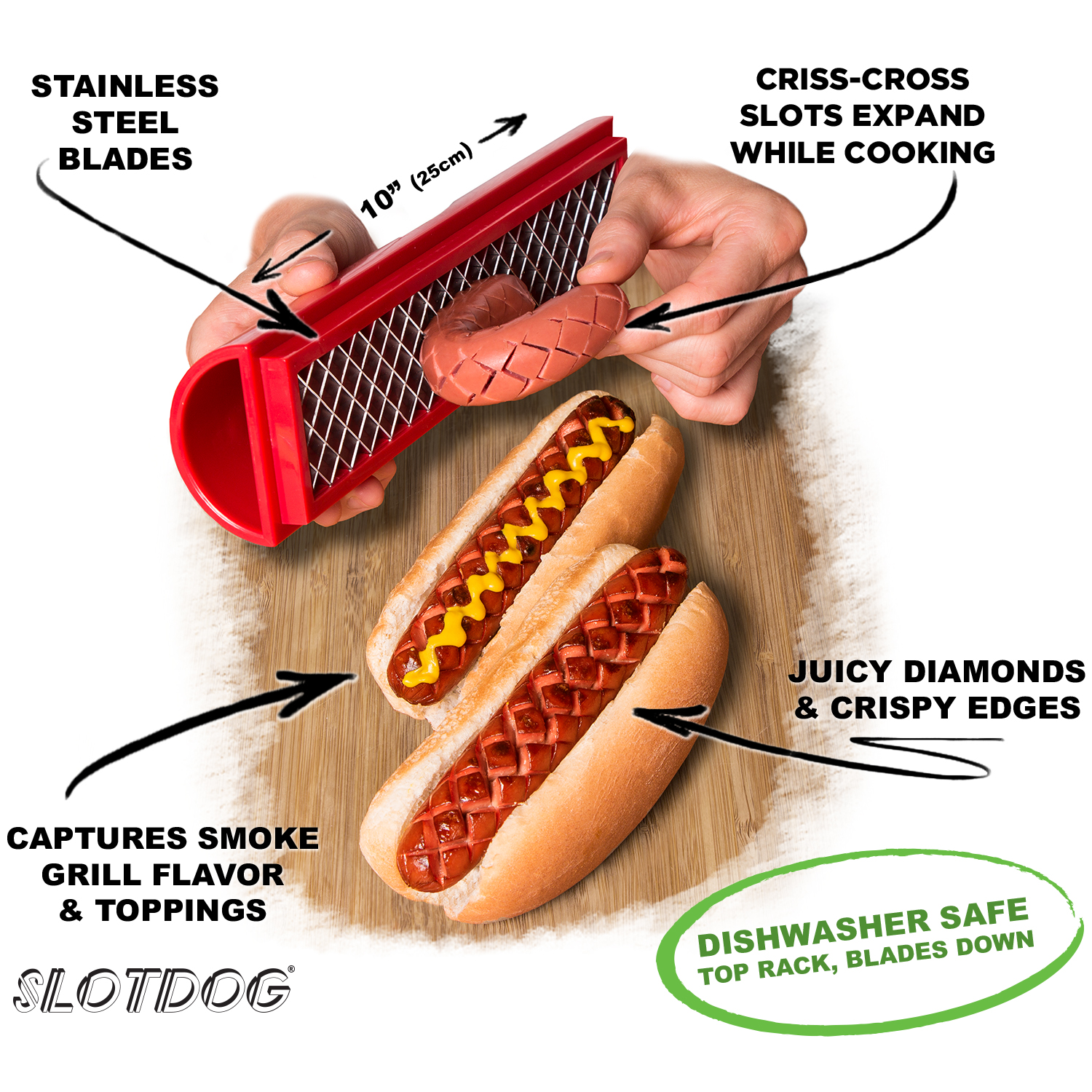
Perfect for the grill or griddle enthusiast, the SlotDog Hot Dog Slicing Tool takes hot dogs to a whole new level. This stainless steel tool creates a cross-hatched pattern, allowing for juicy, caramelized edges and better condiment coverage. It’s a fun addition to any camping kitchen and ideal for parties, tailgates, or cozy nights by the campfire. Available on Amazon
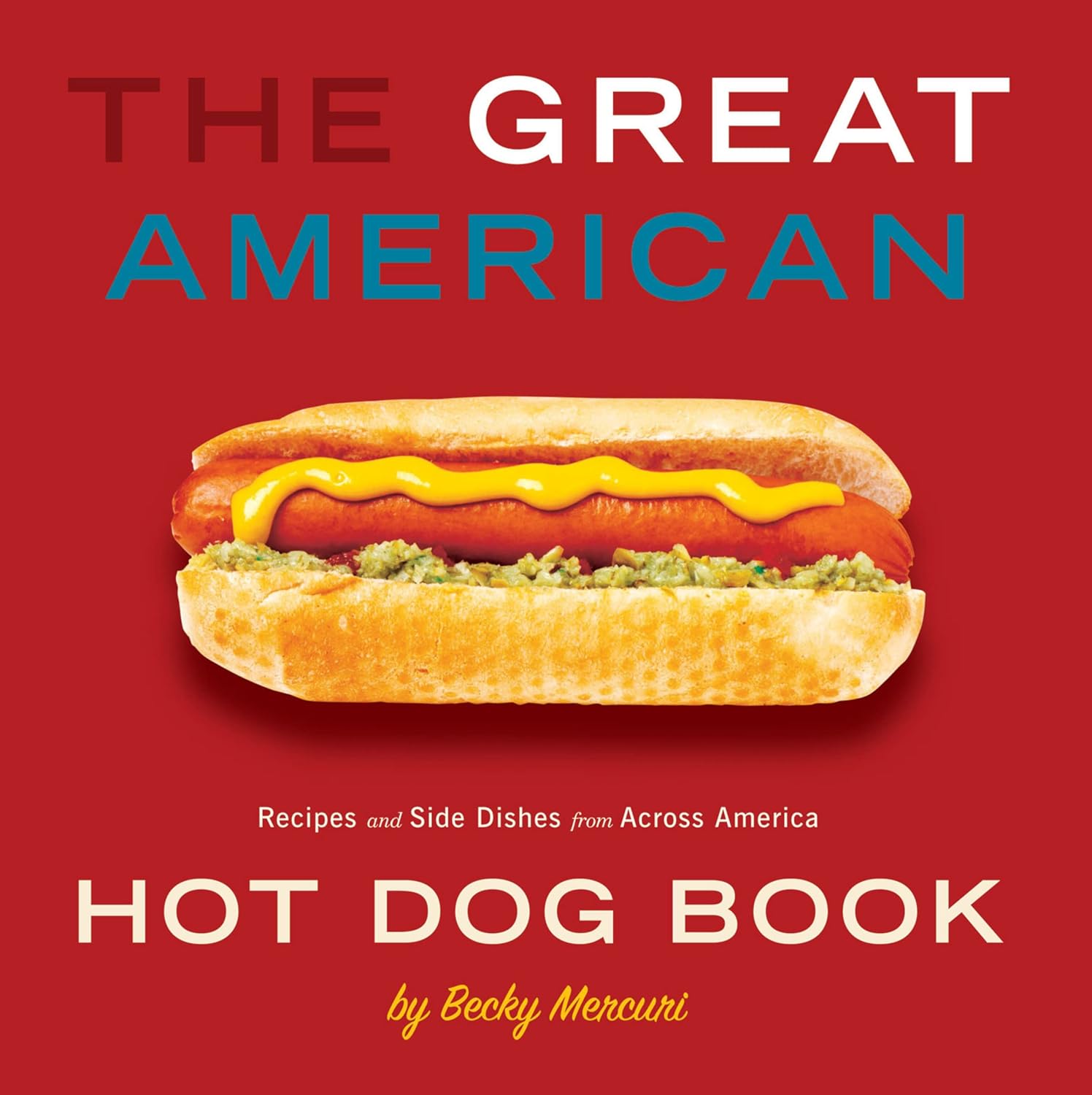
Pair the SlotDog with The Great American Hot Dog Book for a complete hot dog lover’s gift pack. This book features classic hot dog recipes from across the country, along with creative side dishes and sauces. It’s a simple, no-frills paperback with an array of recipes and historical tidbits and anecdotes that celebrate regional flavors. Available on Amazon
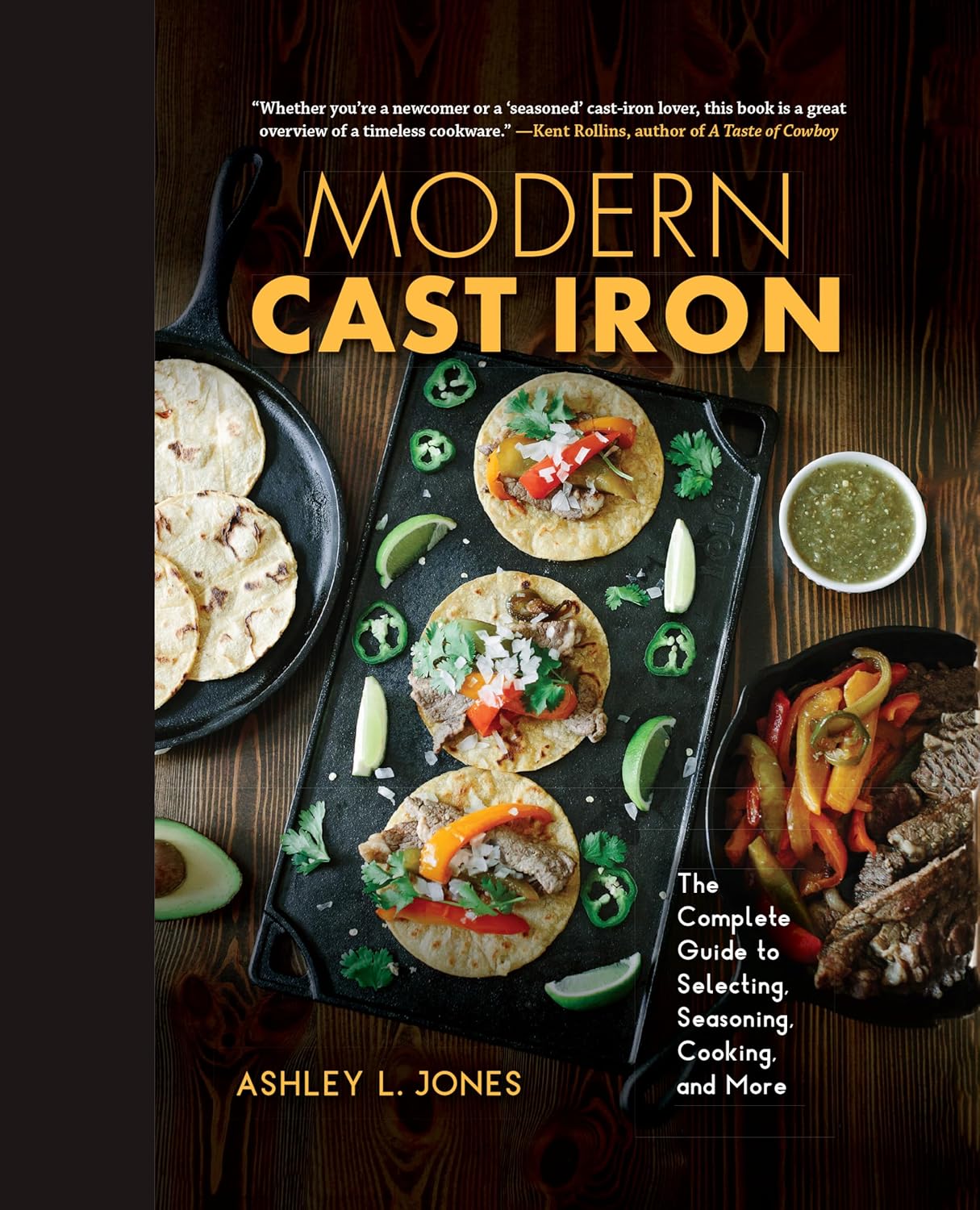
For the cast iron enthusiast, Modern Cast Iron is a comprehensive guide to selecting, seasoning, and cooking with cast iron. Packed with recipes, tips, and beautiful photos, this book serves as both an educational resource and a cookbook. It’s a thoughtful gift for RVers who enjoy cooking hearty meals on their skillets. Available on Amazon
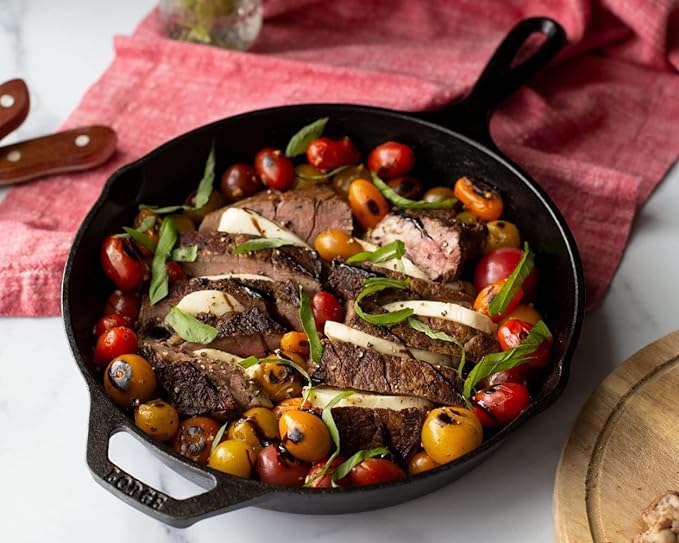
Pair Modern Cast Iron with the classic Lodge 10.25-Inch Cast Iron Skillet for a practical and affordable combo. Known for durability, this skillet is pre-seasoned and easy to maintain, making it a staple for any camping kitchen. Lodge Skillets are made in the USA in the great state of Tennessee and they are one of the great values in American camping. Available on Amazon
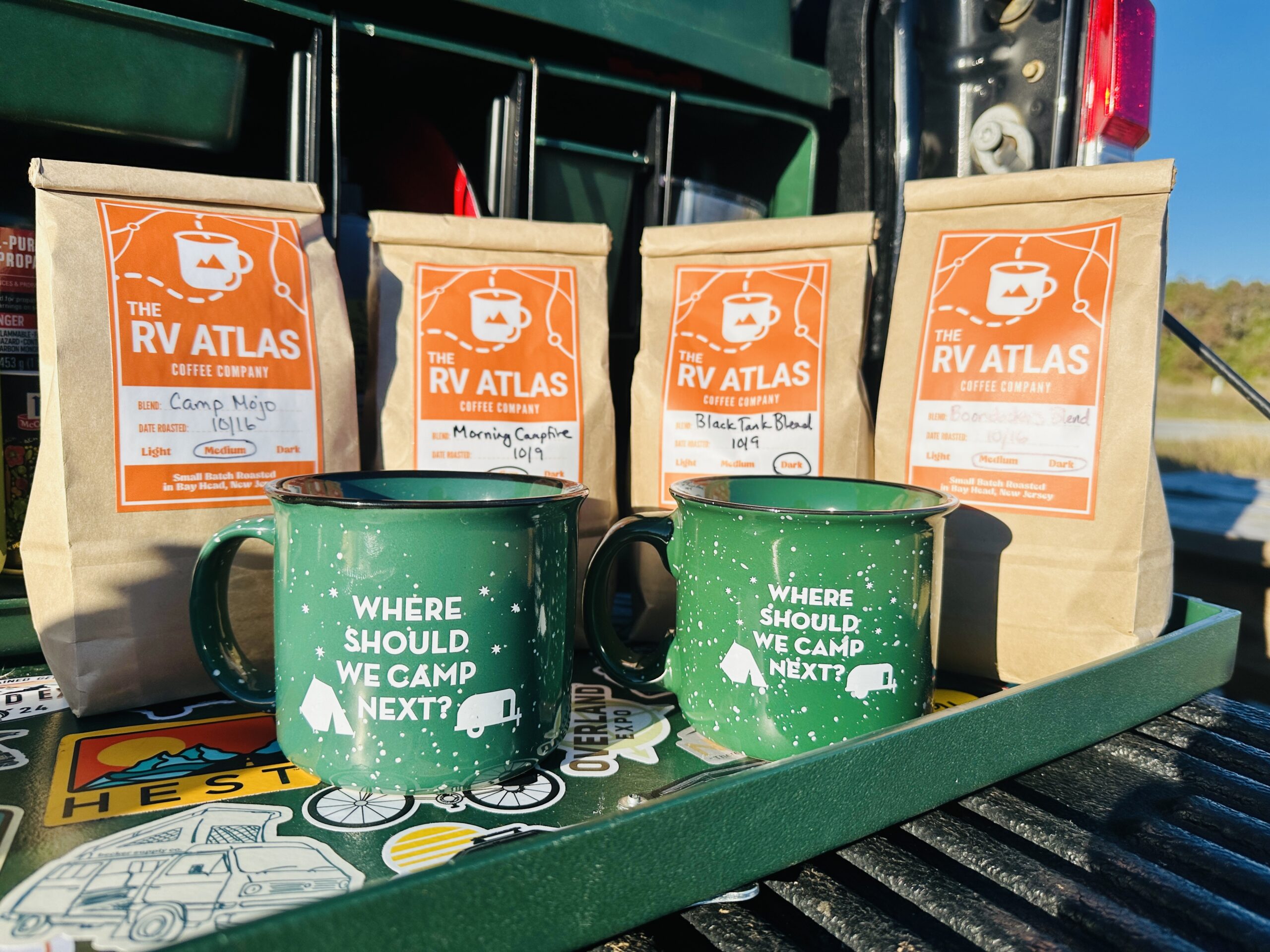
For the coffee-loving camper, gift a set that includes The RV Atlas signature coffee blends and two diner-style “Where Should We Camp Next?” mugs. This sampler features Black Tank Blend, Morning Campfire, Camp Mojo, and Boondocker’s Delight, providing a range of delicious brews for cozy mornings at the campsite. Available at The RV Atlas Camp Store
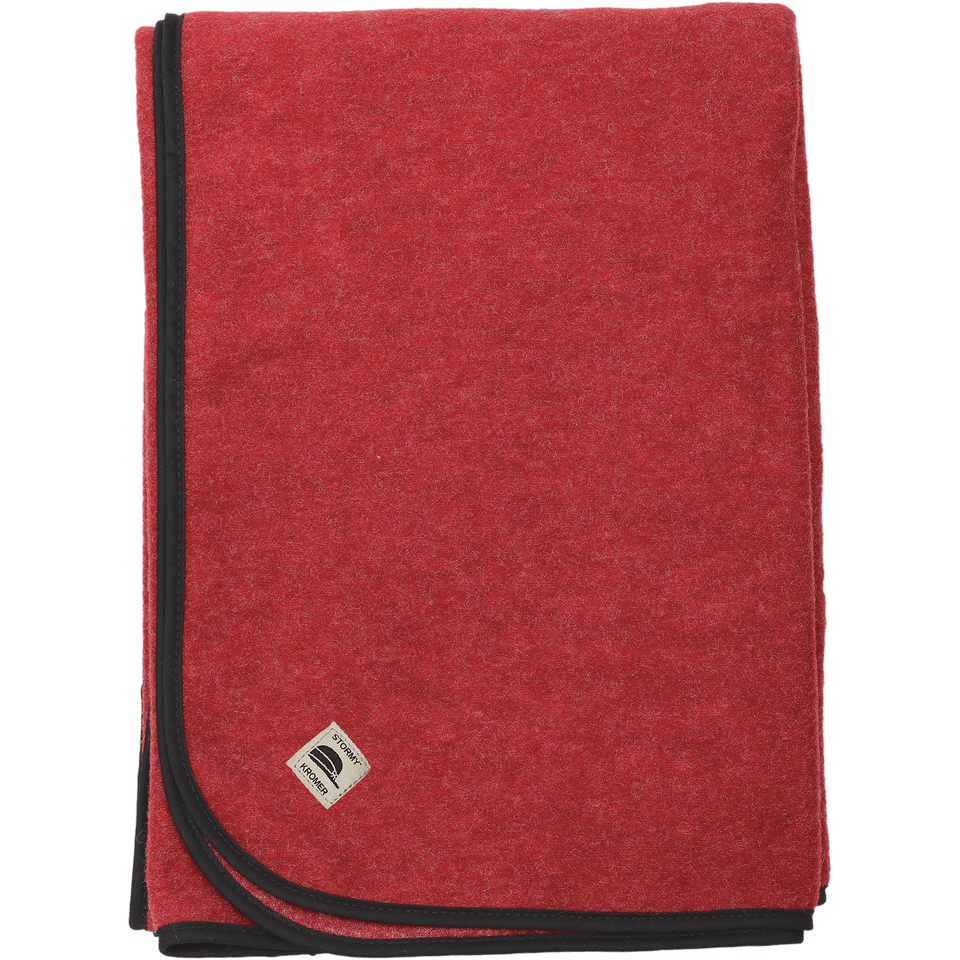
This USA-made wool blend camping blanket from the legendary Stormy Kromer (from Michigan’s Upper Peninsula) is ideal for chilly nights by the fire. Available in colors like Barn Red and Hickory, it’s soft, cozy, and machine washable. For those who love to read, pair it with a book for a thoughtful gift set. Available on Stormy Kromer’s website.
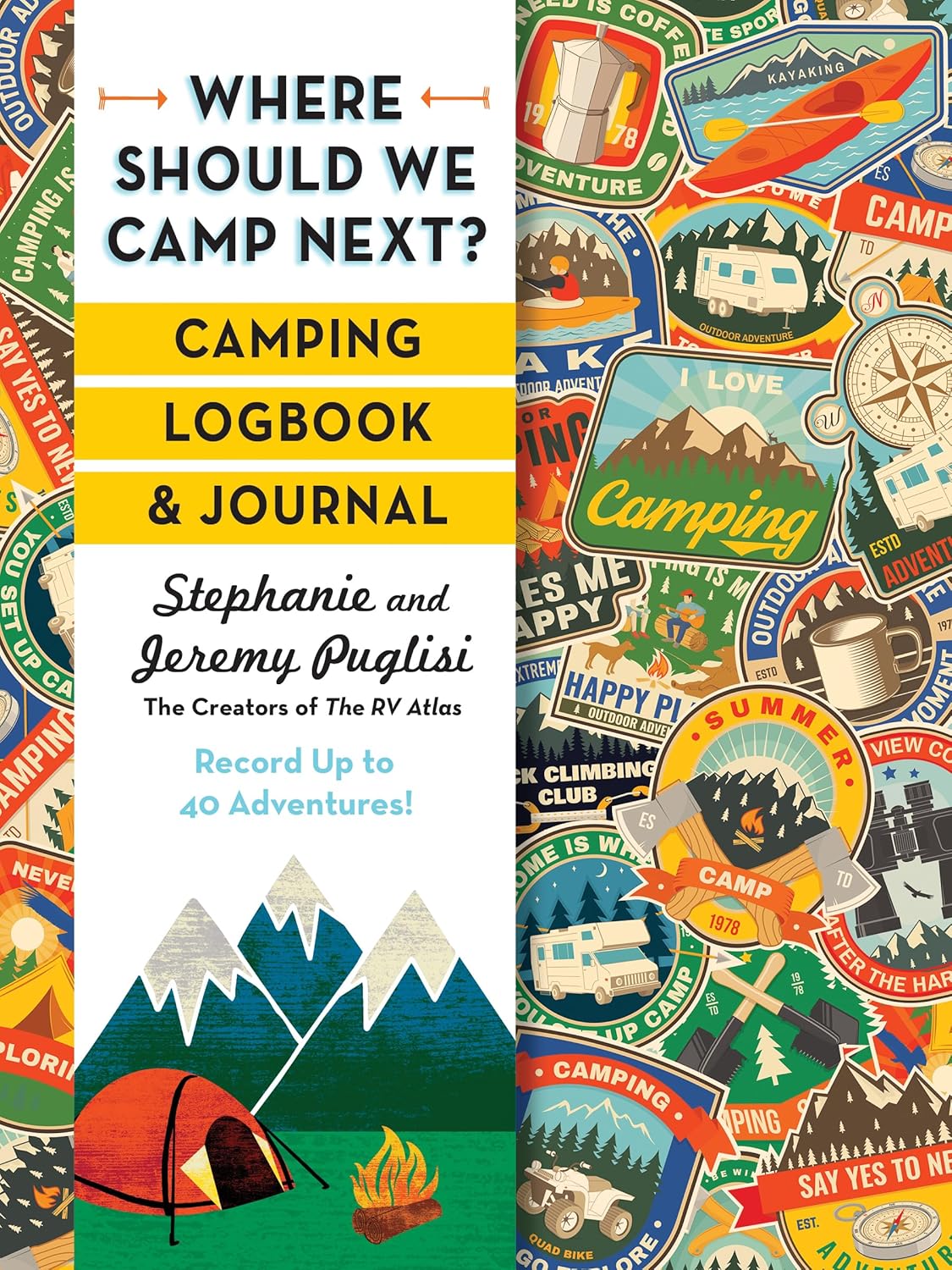
Record every special campfire memory! Have you been on so many camping trips, you can’t remember all the sites you’ve stayed at―or are you just planning your first camping trip and looking to capture every amazing memory? Do you need a better way to keep all the information about your camping vacations organized so you can keep track of all the details? Then this is the perfect journal for you! Available on Amazon.
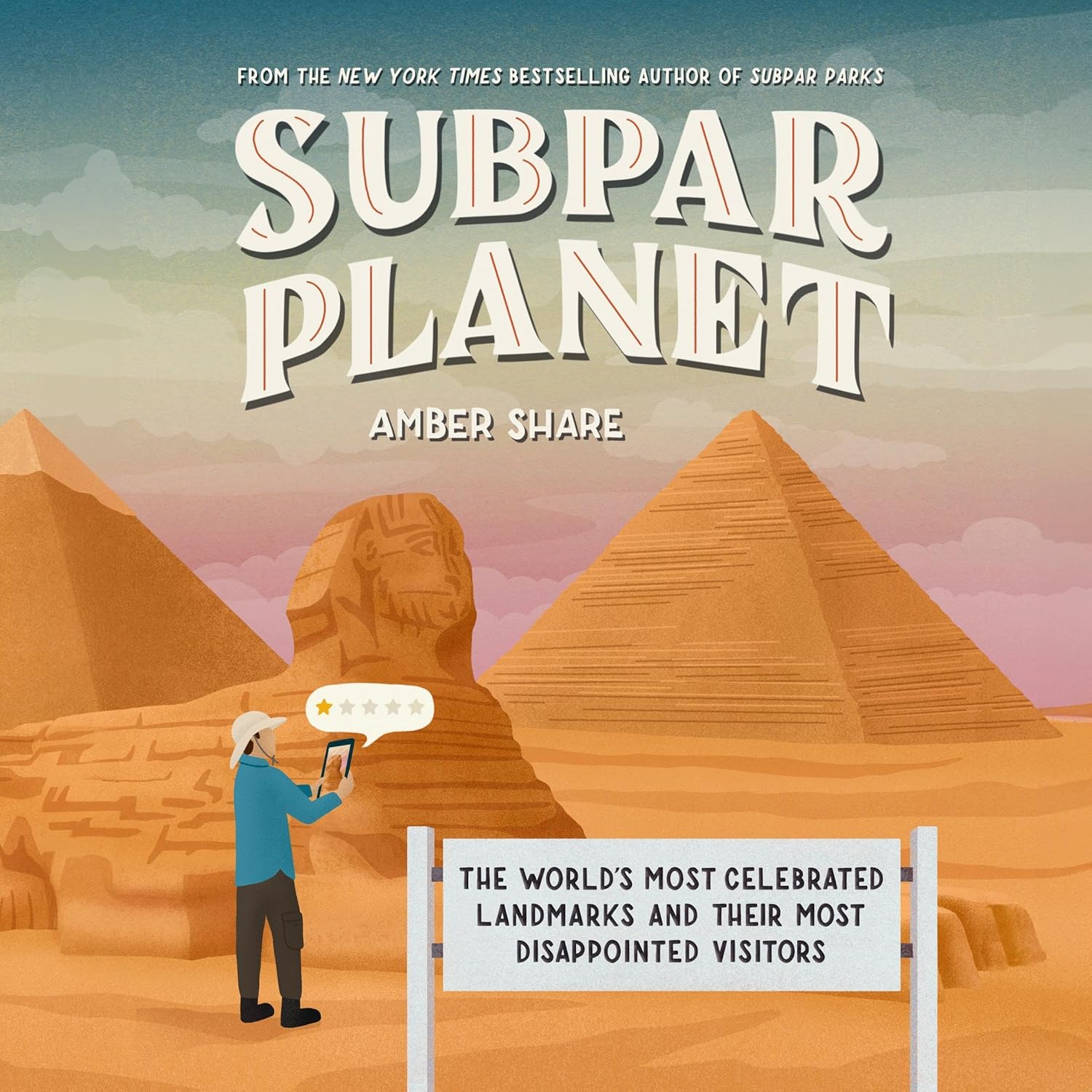
The follow up to Amber Share’s bestselling Subpar Parks does not disappoint–even though the included landmarks certainly did disappoint some of their most cantankerous visitors. Amber Share has turned her attention to world landmarks and the results are hilarious and charming and head-scratching all at once. Available on Amazon.
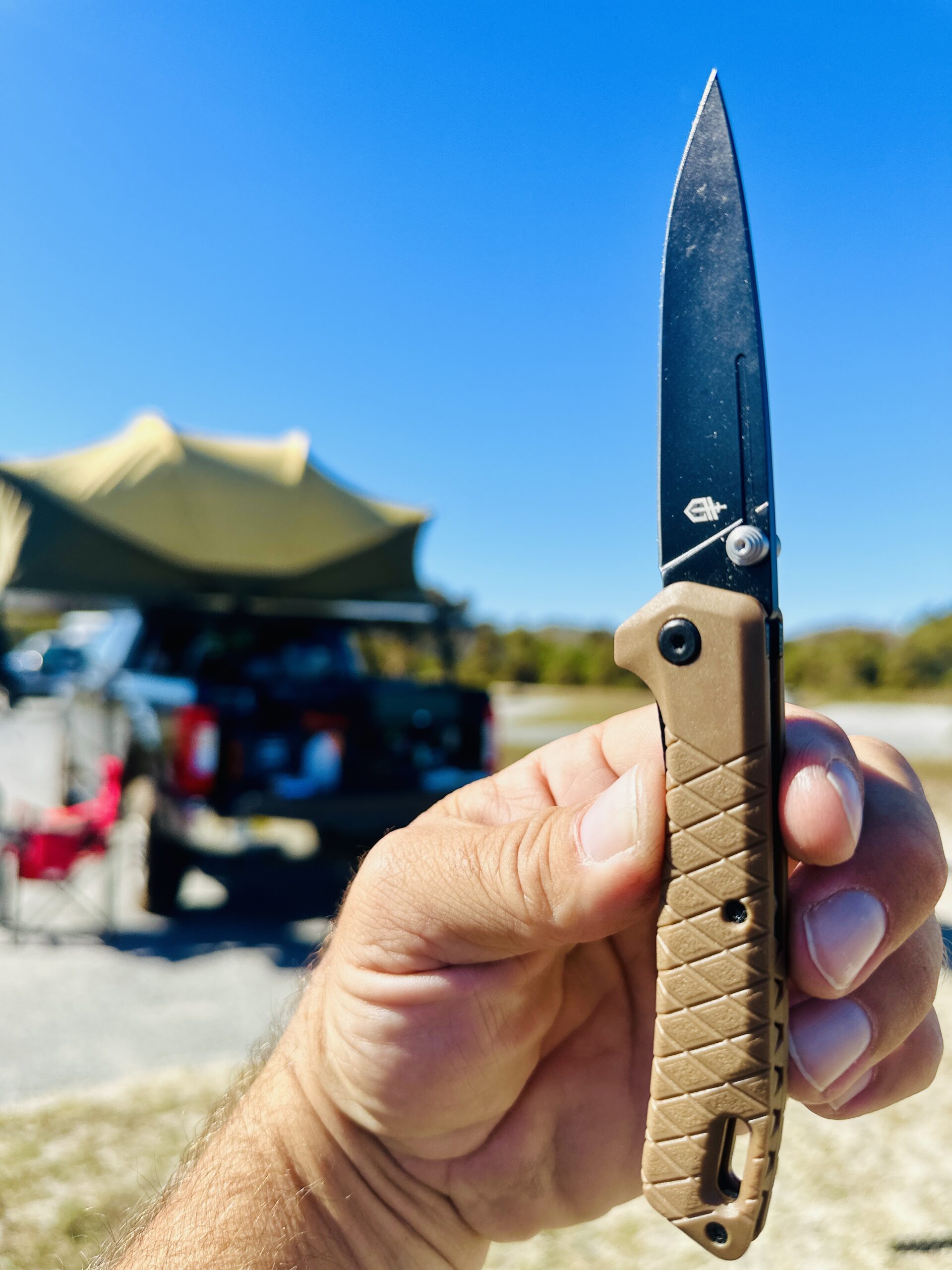
A compact, sharp, and affordable pocket knife, the Gerber Zilch is perfect for everyday carry. With a stainless steel blade and pocket clip, it’s convenient and durable, ideal for opening packages or cutting rope around the campsite.It also comes in a variety of attractive colors like Coyote Brown (pictured above). Available on Amazon.
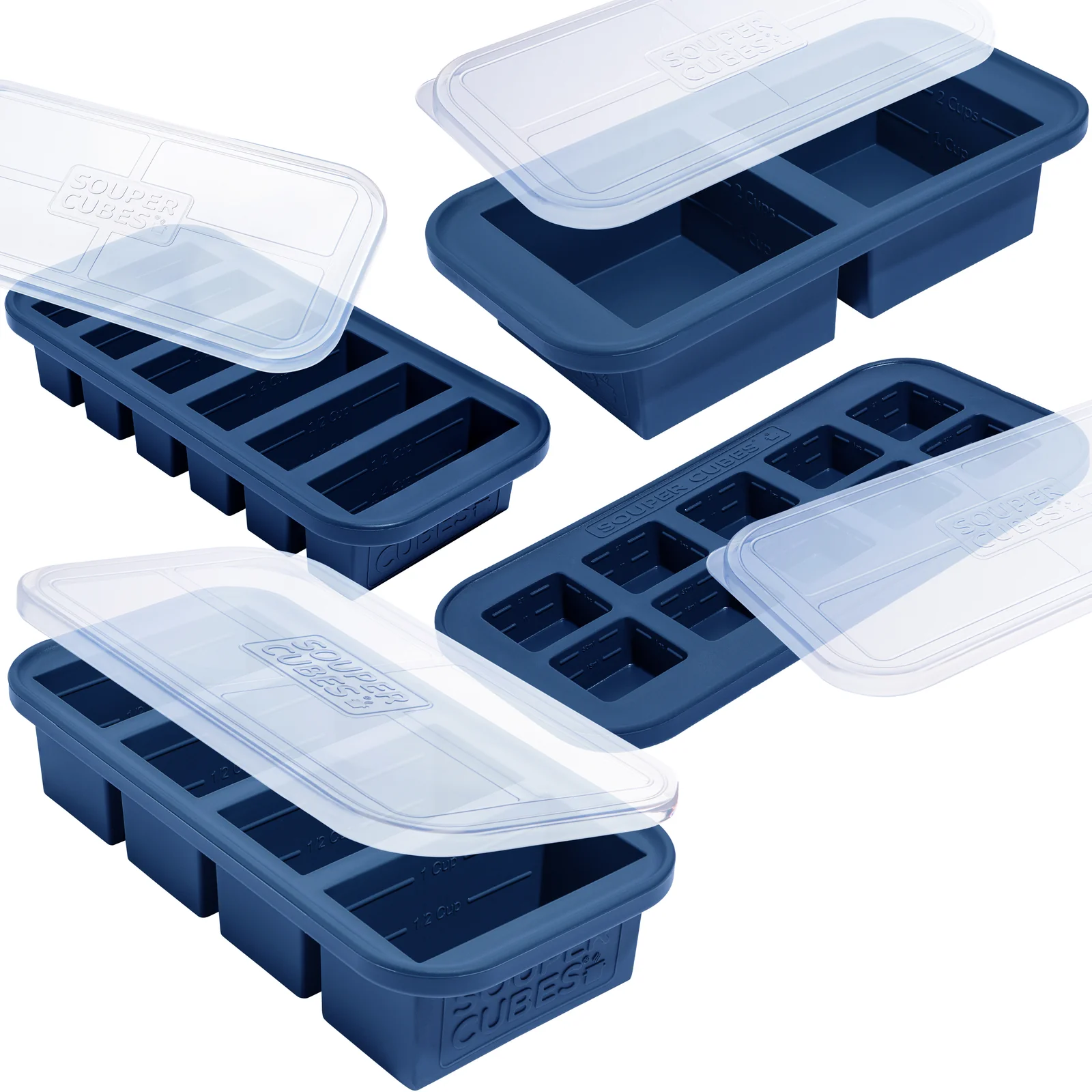
Help the meal-prepper in your life stay organized with Souper Cubes. These food-grade silicone trays come in various portion sizes and are perfect for freezing soups, sauces, or meal ingredients for easy prep on the road. BPA-free, dishwasher-safe, and compact, they’re perfect for storage in smaller RV fridges and freezers. Available on Amazon.
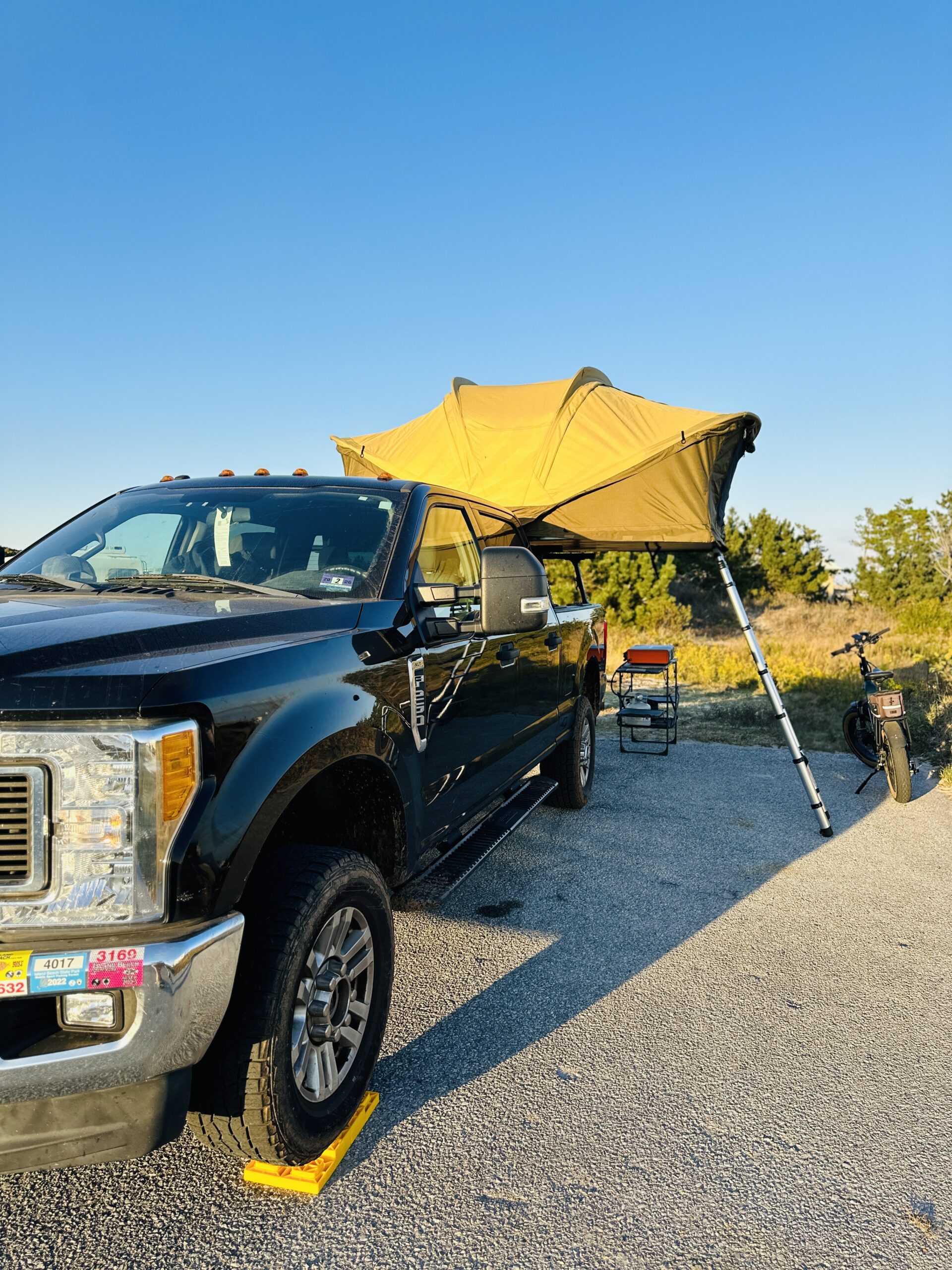
No more wood blocks! The Fasten Leveling Blocks offer a reliable, stackable solution for leveling an RV or truck on uneven ground. These compact blocks come with a carry handle and interlocking design, making them easy to store and essential for any RVer. Available on Amazon.
Join the Conversation! Don’t forget to check out part two of our Holiday Gift Guide, featuring more luxurious gifts for RVers. Join our community on the RV Atlas Facebook group and let us know your favorite camping gifts this season!
The post Holiday Gift Guide Part One: Budget Gifts for RVers from $12 to $75 appeared first on The RV Atlas.
In this week’s episode of The RV Atlas, we’re diving into a haunted RV road trip with locations across the United States that make for perfect road trip stops—especially as Halloween approaches! Shannon Minner, a ghost hunting and RVing enthusiast, shares her picks for the best haunted spots to visit by RV. From spooky plantations to eerie cemeteries, we’ve got the details on must-visit haunted sites, campground recommendations, and ghostly tales. So buckle up for a paranormal road trip adventure.
This is part two of a series that we started last October. To listen to Shannon’s first “Haunted RV Road Trip” episode please click here. Thanks to Shannon for providing notes on these locations and all of the photos below (unless otherwise noted). We look forward to having her back on the show for another haunted RV road trip episode next October!
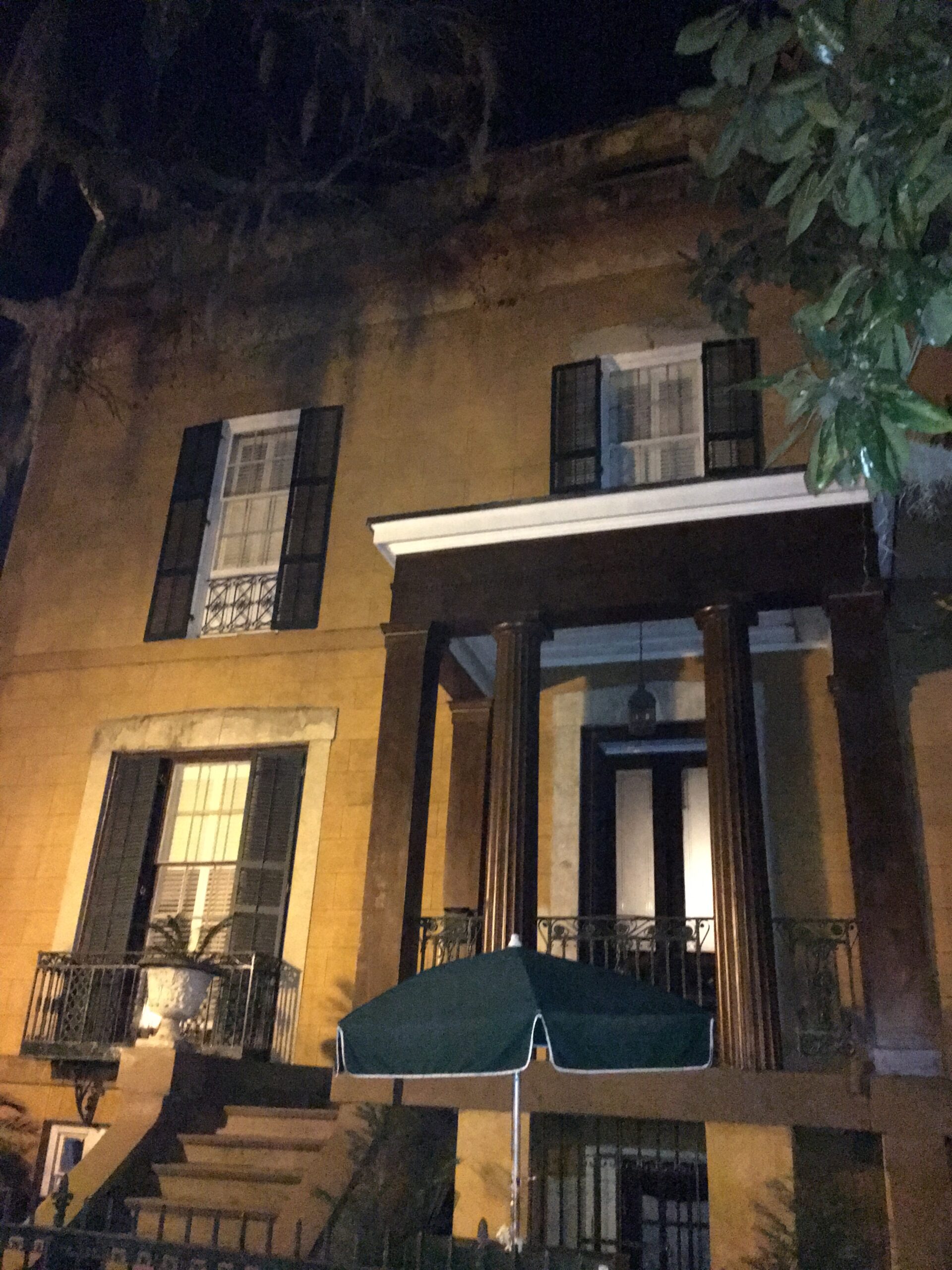
Savannah is one of the most haunted cities in America, rich in both history and ghost stories. Shannon shares some of her favorite haunted spots in this charming city, where almost every corner seems to have a story to tell. This is one of the best places in America for a haunted RV road trip.
For more haunted Savannah locations and book recommendations, including Historic Haunts of Savannah by Michael Harris, check out Shannon’s full list of spooky spots!
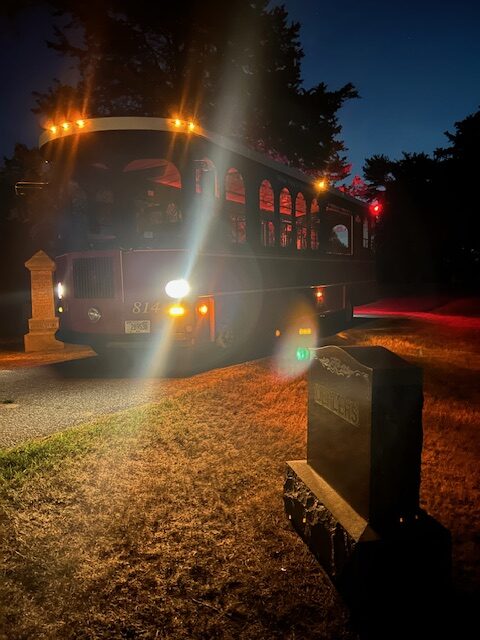
Known for its water parks and family attractions, the Wisconsin Dells also has a darker side, which Shannon explored during a ghost trolley tour.
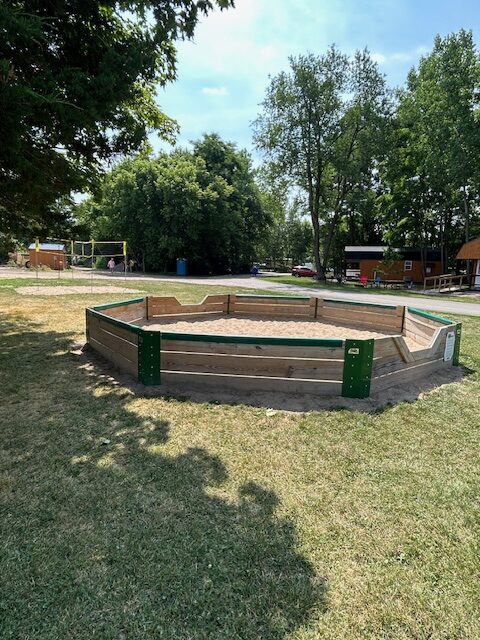
Skillet Creek Campground
For more spooky tales from the Dells, check out Paranormal Wisconsin Dells and Baraboo by Chad Lewis.
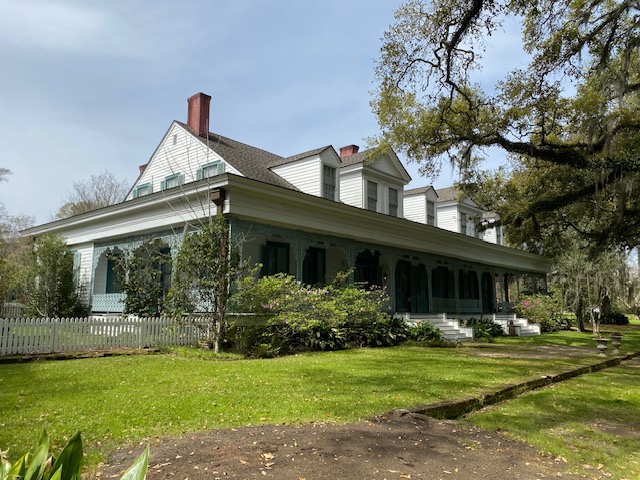
St. Francisville is home to one of the most notorious haunted locations in the U.S.—Myrtles Plantation, dubbed “America’s Most Haunted House.” Make sure to put this stop on your haunted RV road trip bucket list!
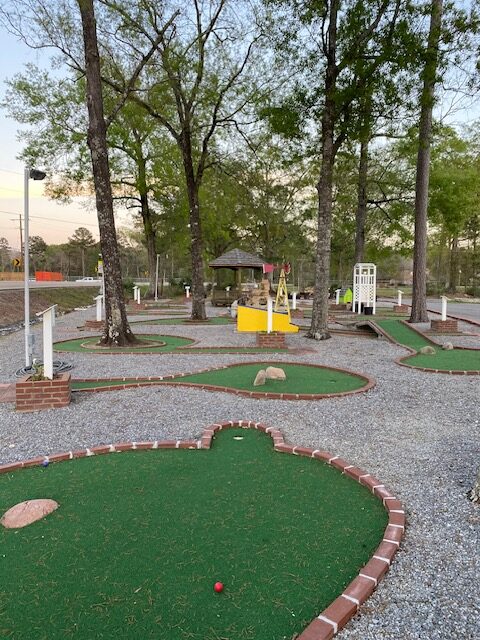
For a deeper dive into the history and hauntings of Myrtles Plantation, Shannon recommends The Myrtles Plantation: The True Story of America’s Most Haunted House by Frances Kermeen.
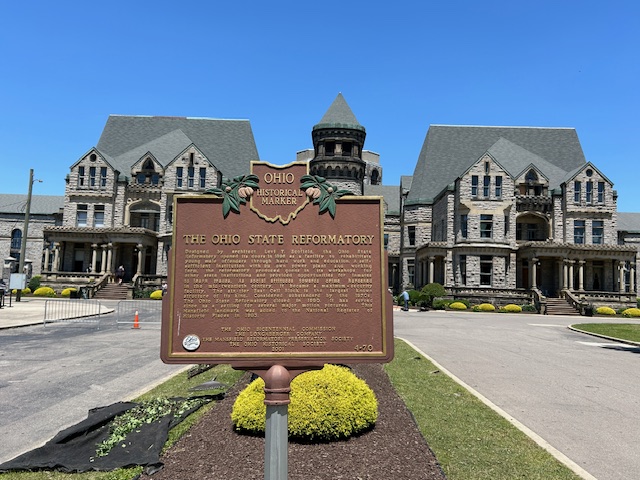
The Ohio State Reformatory is a former prison known for its haunted past and connection to the movie The Shawshank Redemption. Built between 1886 and 1910, the prison’s limestone structure is said to trap paranormal energy.

For reading material, Shannon suggests The Haunted History of the Ohio State Reformatory from the Haunted America series, or The Ghostly Tales of the Ohio State Reformatory by Emma Carlson Berne, a kid-friendly take on the haunted history.
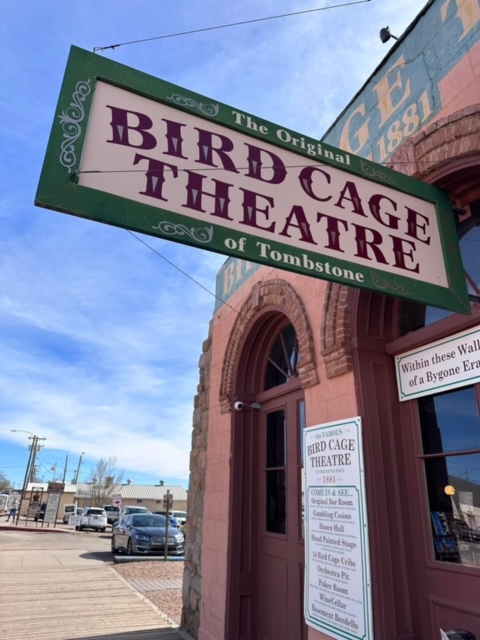
Photo by Robyn Heinrich
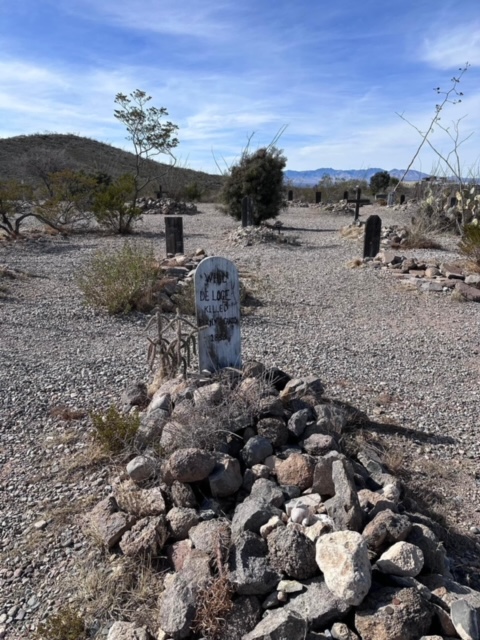
Photo by Robyn Heinrich
Tombstone is one of the most haunted locations in the Old West, with spots like the O.K. Corral, Birdcage Theatre, and Boot Hill Graveyard all rumored to be haunted by outlaws and gunfighters.
For more on Tombstone’s haunted history, Shannon recommends The Haunted Tombstone from the Haunted America series and Tombstone: The Earp Brothers, Doc Holliday, and the Vendetta Ride from Hell by Tom Clavin.
In addition to the haunted locations and campgrounds, Shannon shared several practical tips for planning your own haunted RV road trip:
Whether you believe in ghosts or not, these haunted destinations offer fascinating glimpses into America’s darker history, with plenty of opportunities for paranormal investigation. Shannon’s campground recommendations make it easy to plan an unforgettable RV road trip to some of the spookiest spots in the U.S.
Have you visited any haunted locations on your travels? Share your stories over in our friendly Facebook group, or tag us on social media @thervatlas with your favorite spooky road trip memories!
The post A Haunted RV Road Trip: Exploring America’s Spookiest Destinations (The Sequel) appeared first on The RV Atlas.
Overland Expo East, held in Arrington, Virginia, is more than just a trade show—it’s an immersive experience that brings together the best in overlanding culture, vehicles, and gear. Whether you’re an experienced overlander or someone looking to get into the hobby, this event offers something for everyone. This year’s expo was attended by over 14,500 people from 45 states and countries as far away as Argentina, Denmark, and New Zealand, creating an exciting atmosphere rich with international influence.
On this podcast episode, we explore the key highlights from Overland Expo East 2024: the camping experience, standout rigs, and must-have gear. By the end, you may be making your own Overland Expo reservations for 2025.
To listen to this week’s episode of The RV Atlas please click on the media player above or subscribe to the RV Atlas wherever you get your favorite podcasts.
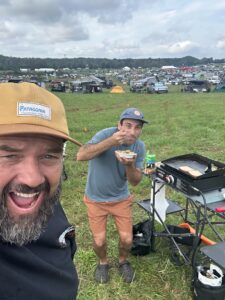
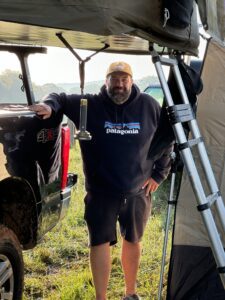
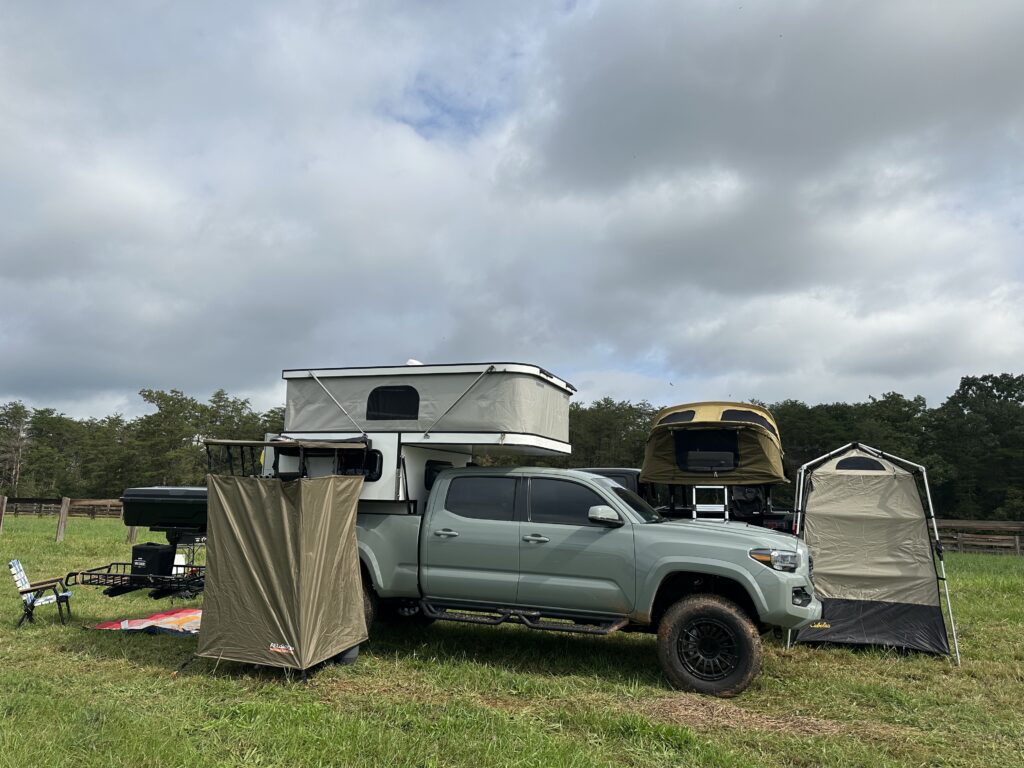
I attended the event and camped on-site, bringing my rooftop tent setup for a weekend of adventure. General admission camping at Overland Expo East costs $200 and covers camping from Thursday night to Monday morning, with full access to the expo. While the grounds were a muddy mess, thanks to recent heavy rains and the natural bowl shape of the venue, that didn’t dampen spirits.
My setup worked well despite the challenging terrain. I used a Thule rooftop tent(https://www.thule.com/en-us/rooftop-tents) and added comforts like a Cabela’s privy tent(https://www.cabelas.com/shop/en/cabelas-privacy-shower-shelter) and Camco’s portable travel toilet(https://www.camco.net/portable-toilets), which made camping in the humid conditions more manageable.
One of the benefits of Overland Expo camping is the ability to bring your own gear and truly test it in the elements, a key draw for overlanders. Campfires weren’t allowed, but propane fire pits, like the Big Red Campfire(https://www.campingworld.com/camco-big-red-campfire-propane-outdoor-portable-campfire-58164.html), filled the gap.
Next year, I plan to check out the upgraded camping area for better proximity to the vendors and bathrooms—a luxury that may be worth the extra cost, especially after seeing how challenging the conditions were this year.
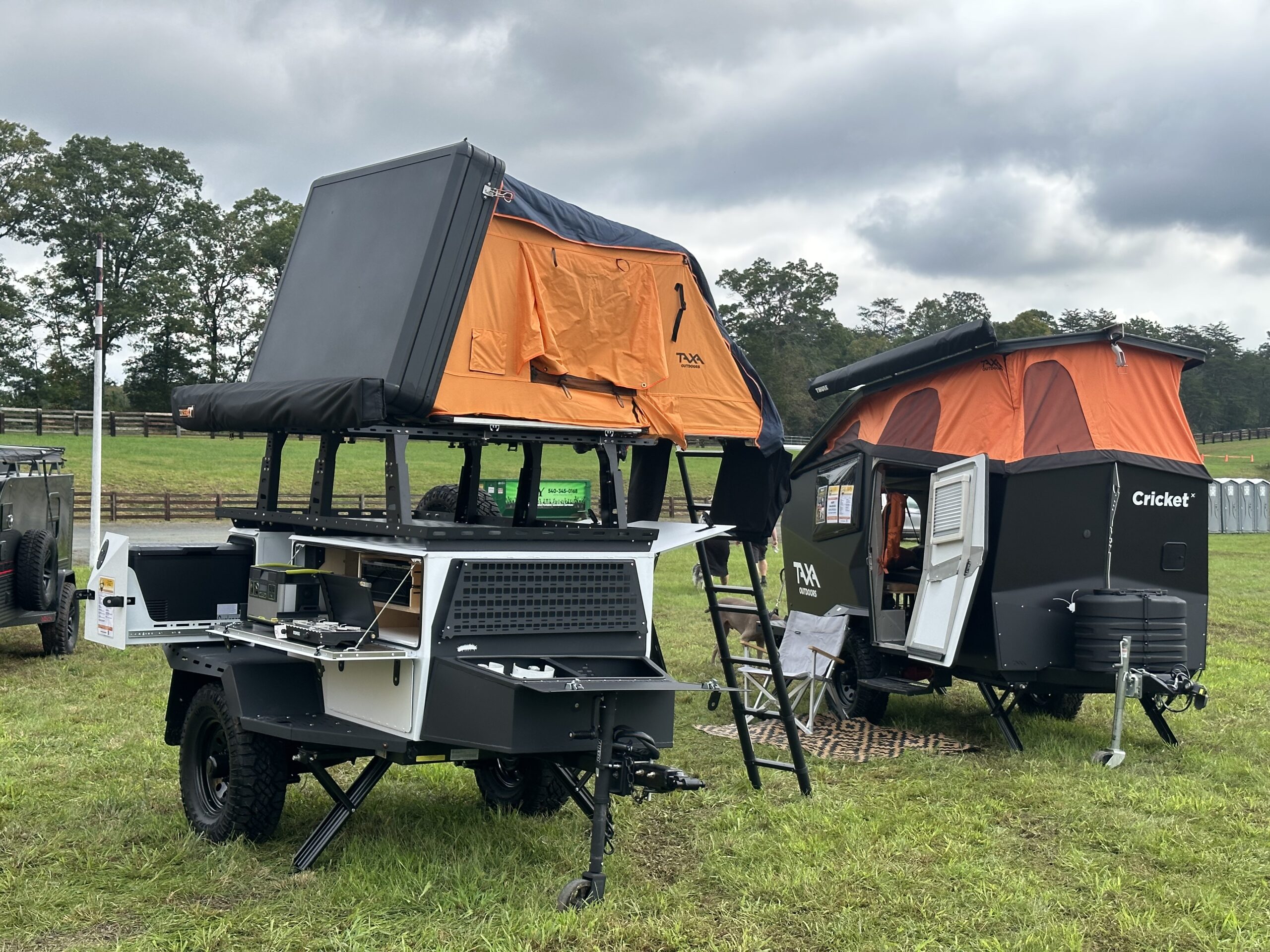
Overland Expo is known for showcasing a wide array of rigs, from compact teardrop trailers to serious overlanding trucks, and this year’s event didn’t disappoint. Several standout rigs caught my eye, including:
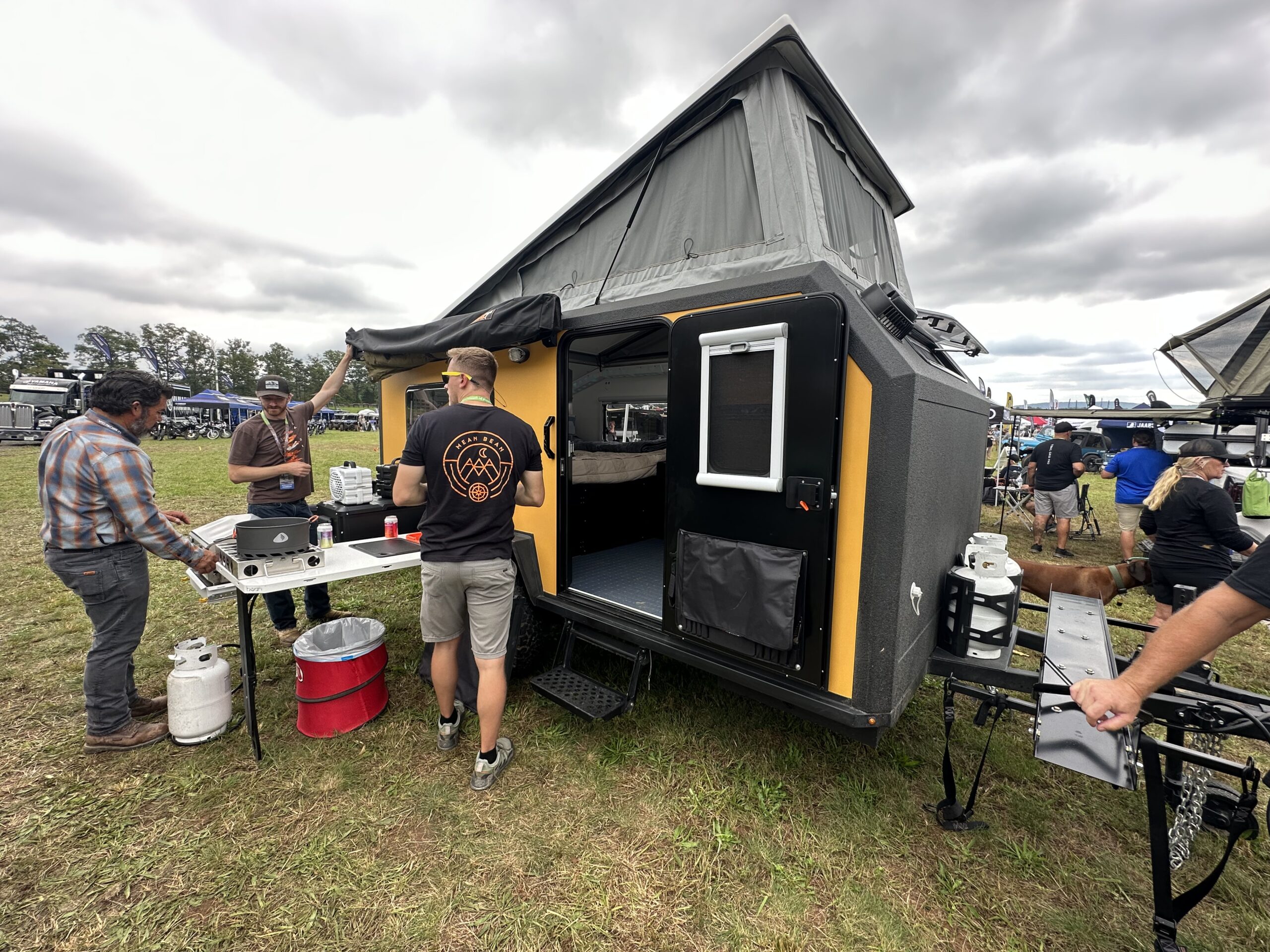
– Bean Trailers (Salt Lake City, Utah): These teardrop trailers, made of vibrant fiberglass, stood out for their unique designs and impressive outdoor kitchens. With models like the Bean Squared featuring pop-up roofs, these trailers are both functional and stylish, albeit with a price tag starting around $35,000 to $45,000.
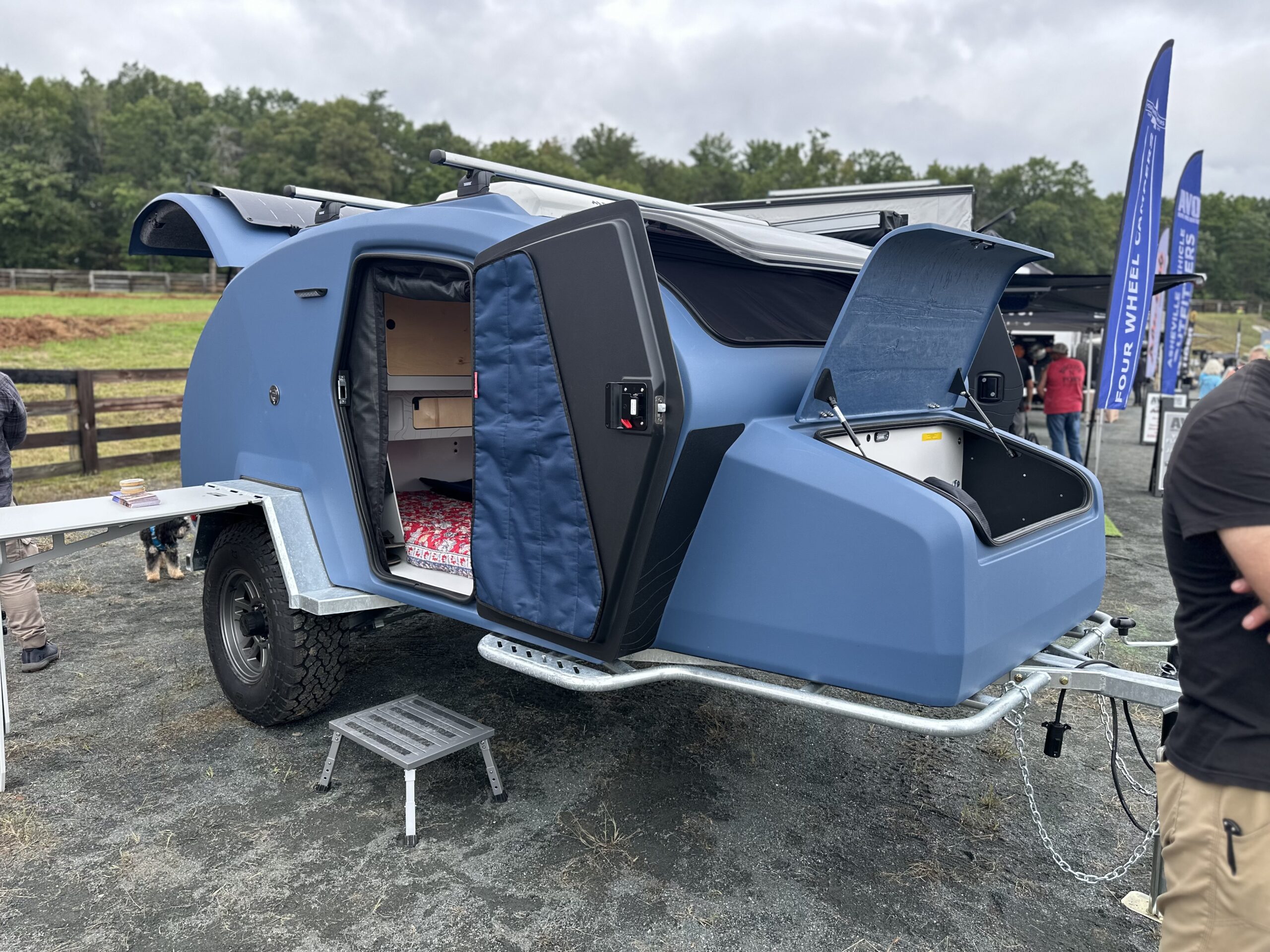
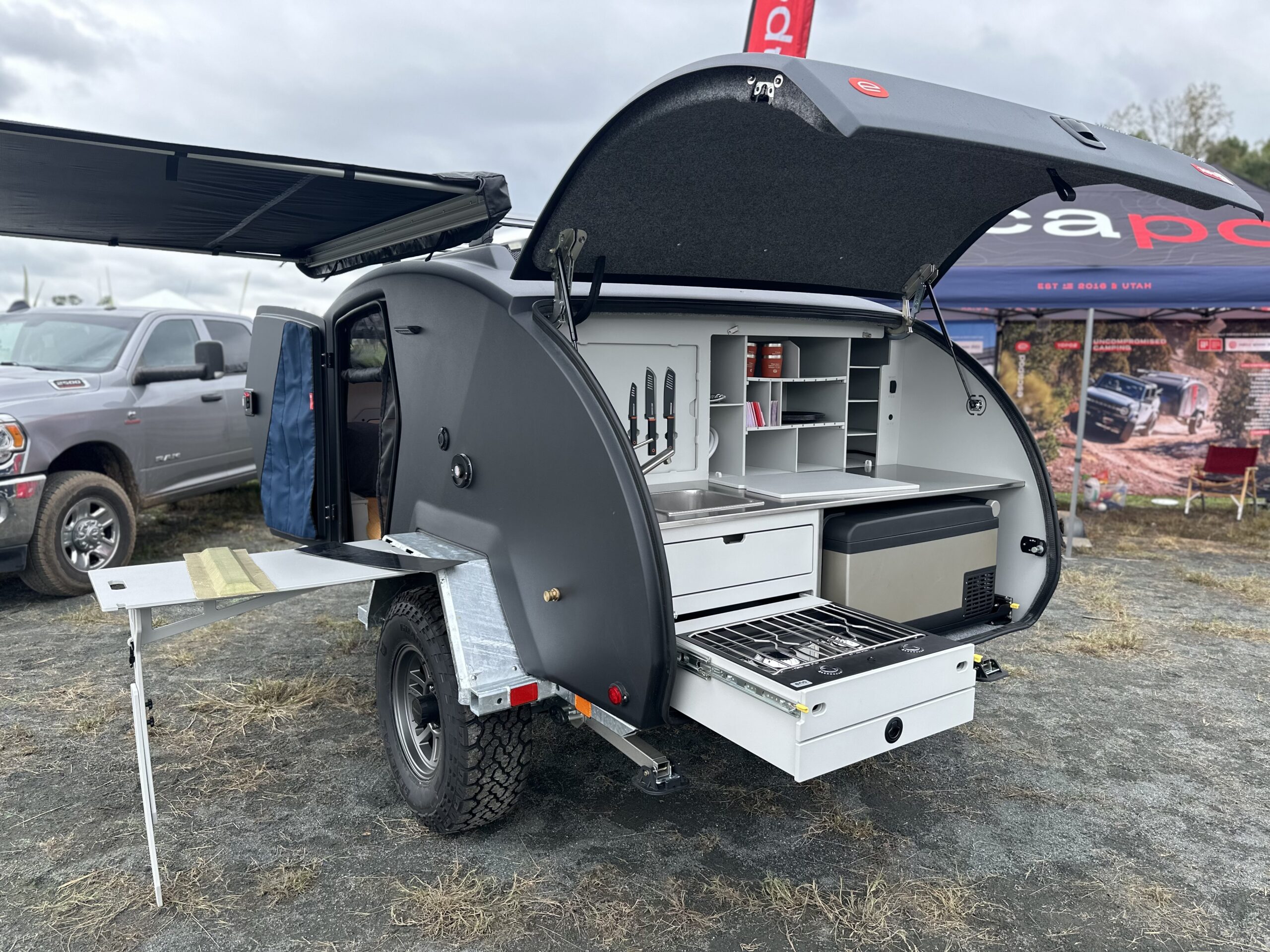
– Escapod Teardrops (Utah): Known for their craftsmanship and durable outdoor kitchens, these trailers offered another beautiful option for those seeking a compact, adventure-ready rig.
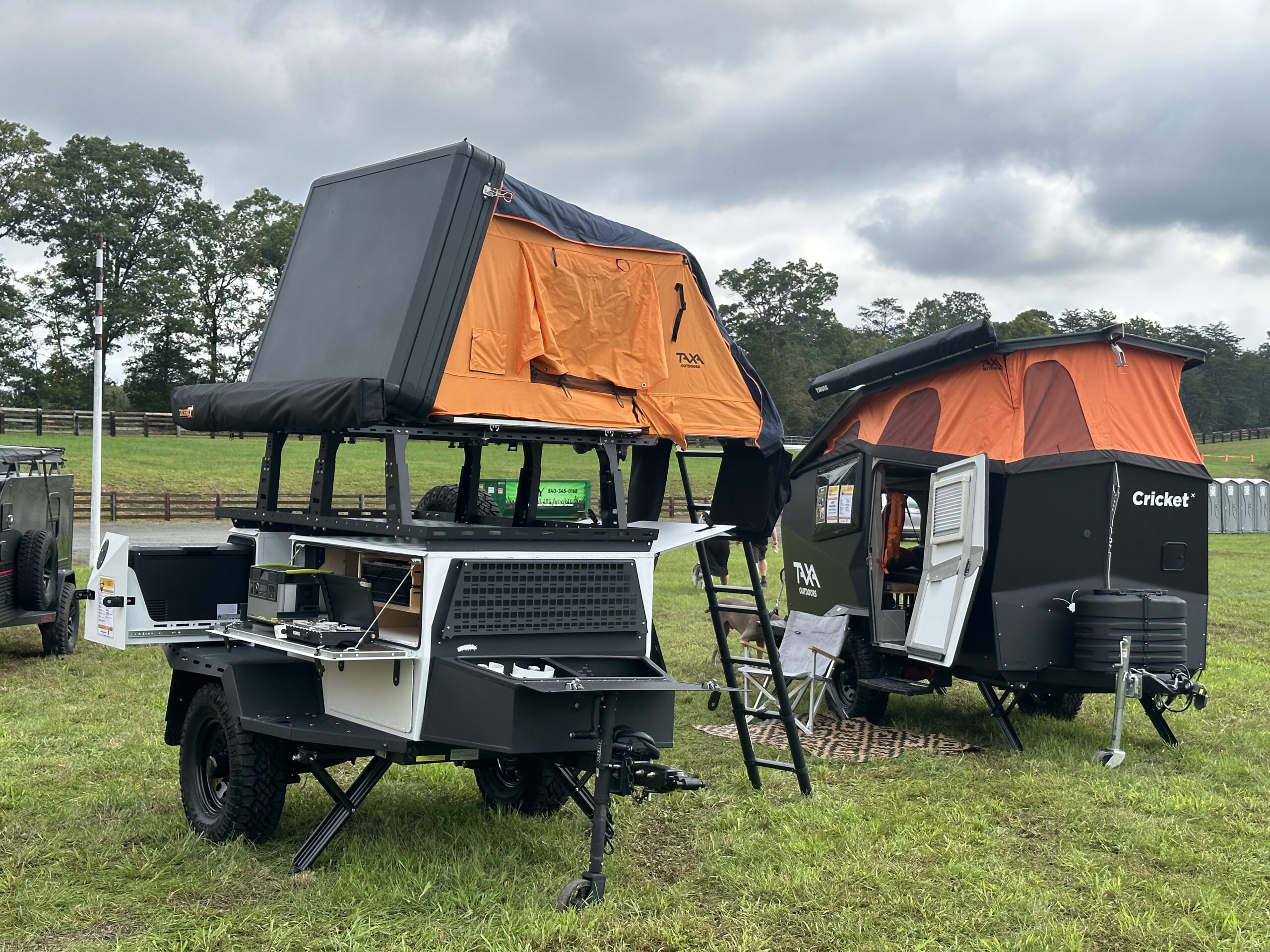
– Taxa Outdoors This company has become a staple in the overland community, with its Cricket and Woolly Bear models providing a lightweight, innovative option for campers. I’ve been a fan of Taxa since their debut at the Florida RV Super Show.
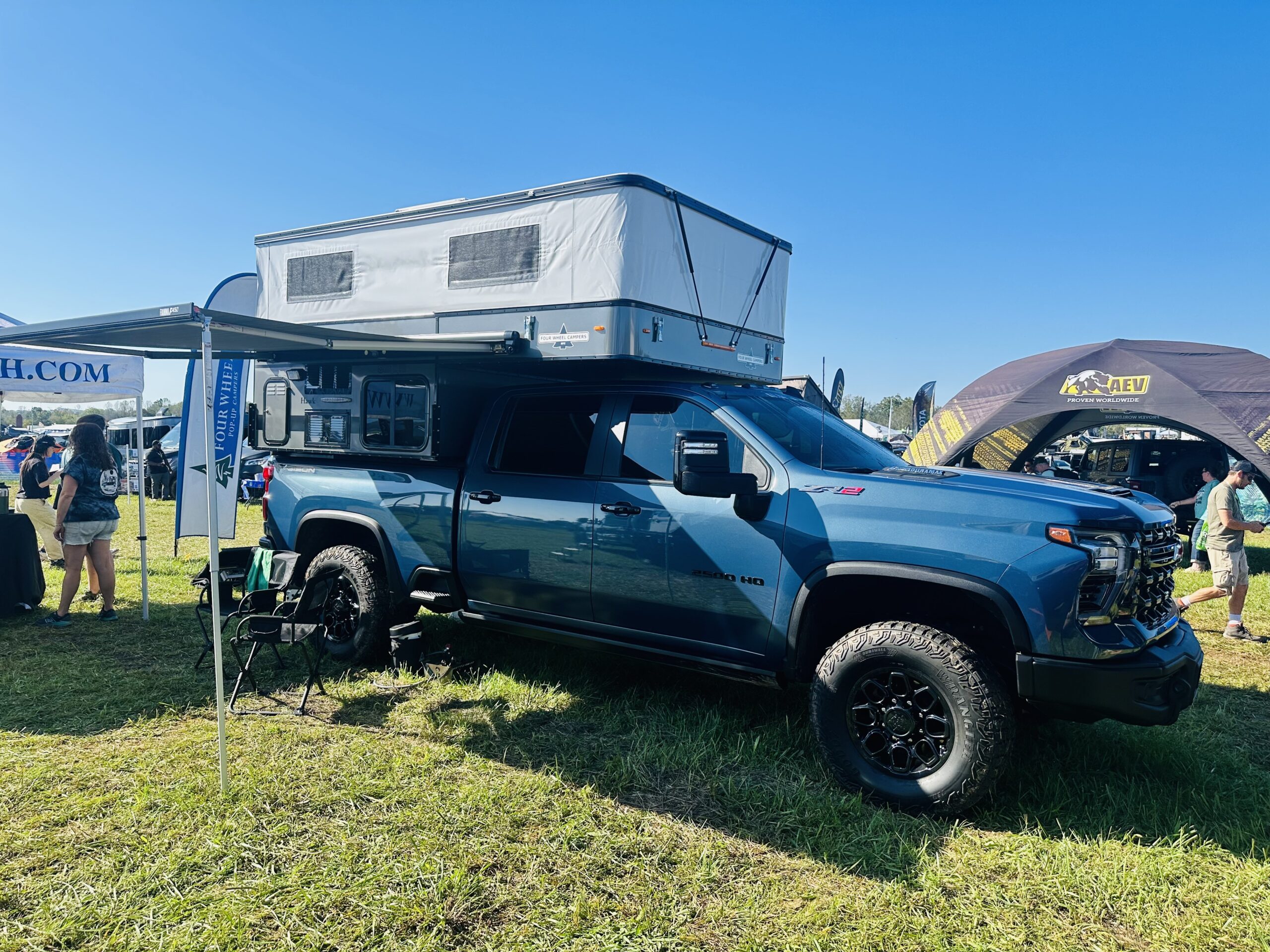
– Four Wheel Campers (California) and Scout Campers (Washington): These truck campers attracted a lot of attention, especially for their rugged capabilities and suitability for overlanding.
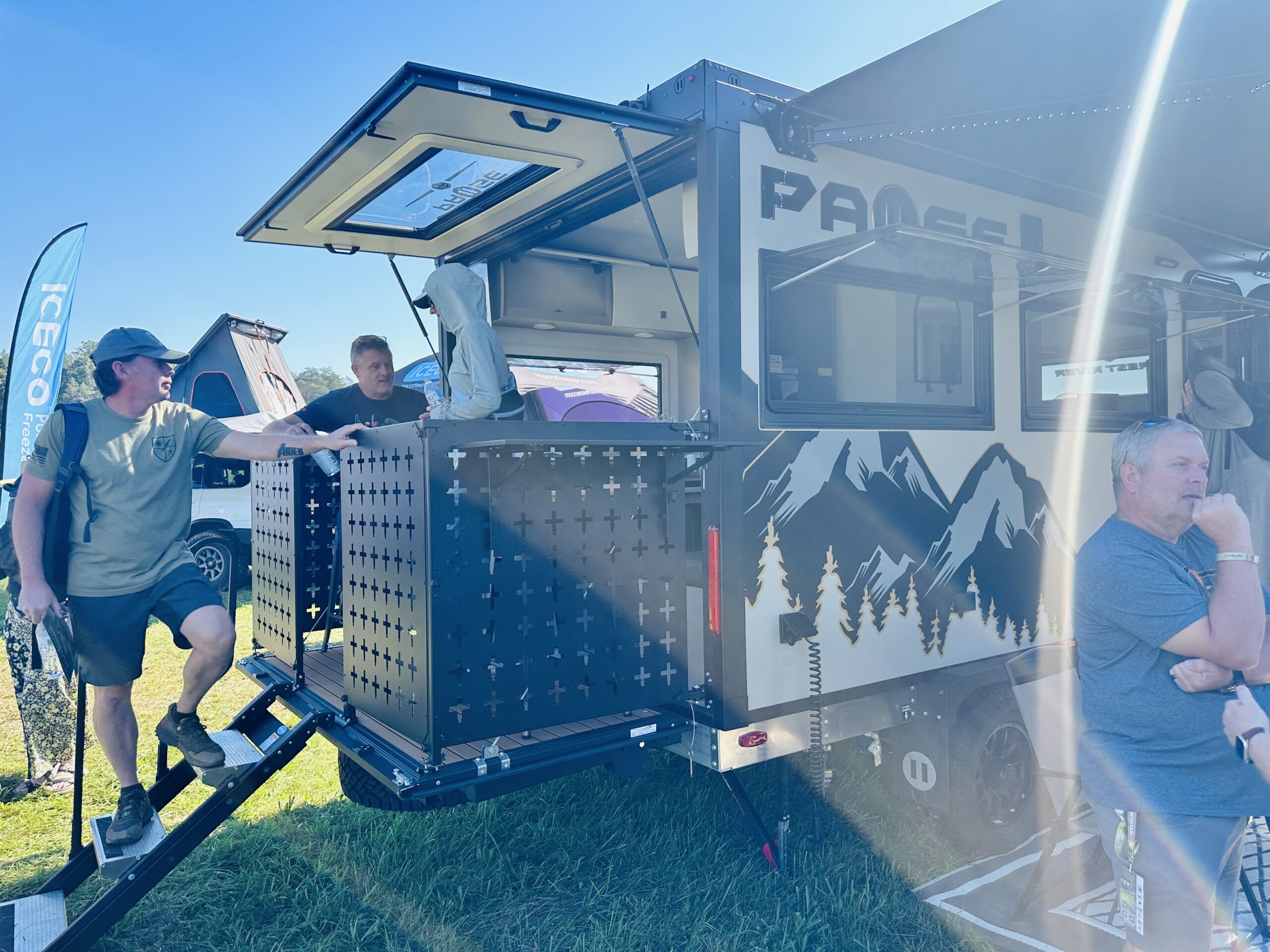
– Palomino Pause: Forest River’s overland trailer range was also a highlight, particularly the toy hauler, which had a crowd of admirers thanks to its spacious living areas and off-road readiness.
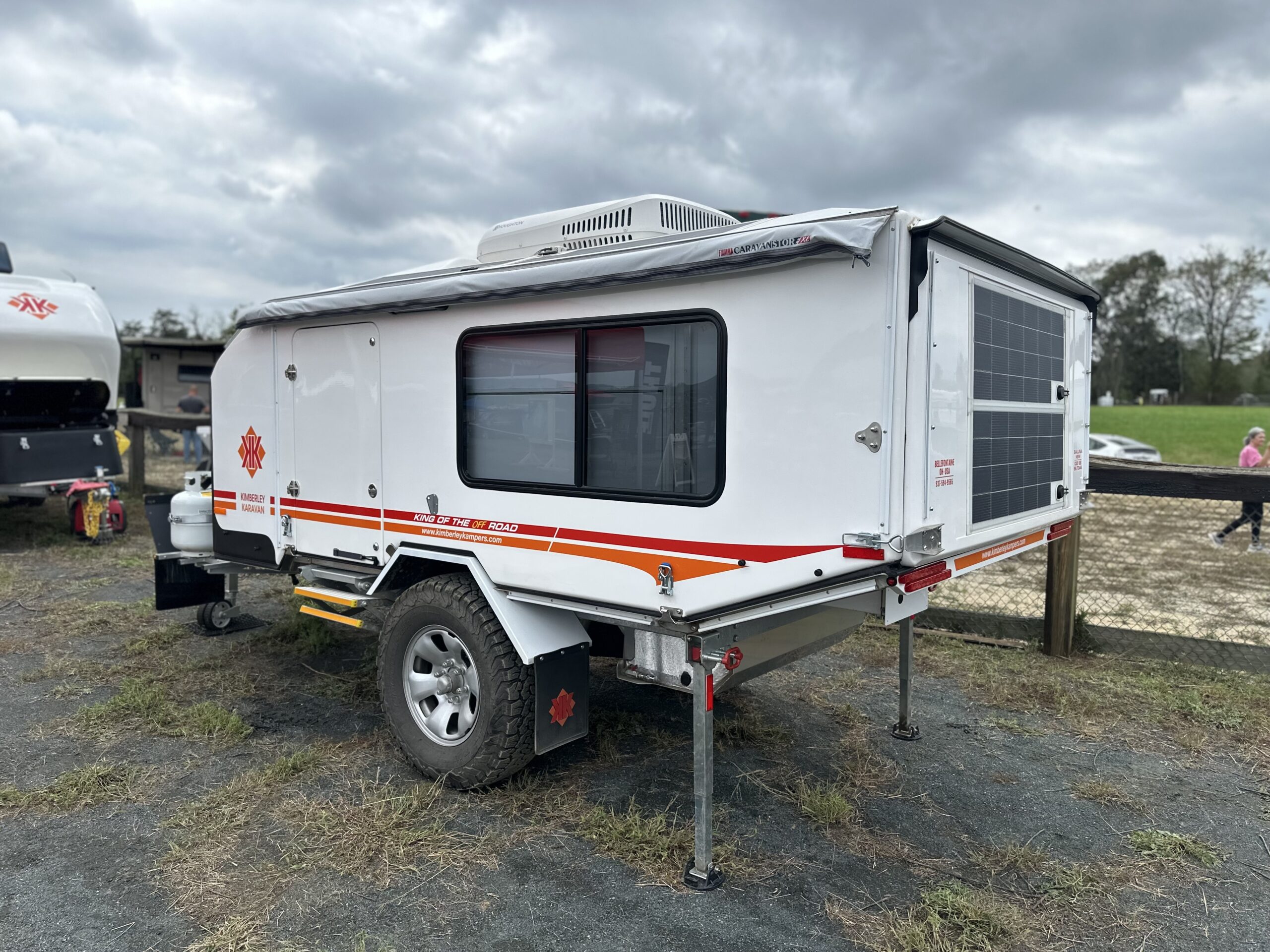
– Kimberly Kampers and Track Trailers: Imported from Australia, these high-quality trailers featured smart designs and were on display by their owners, giving visitors an authentic look at real-world setups.
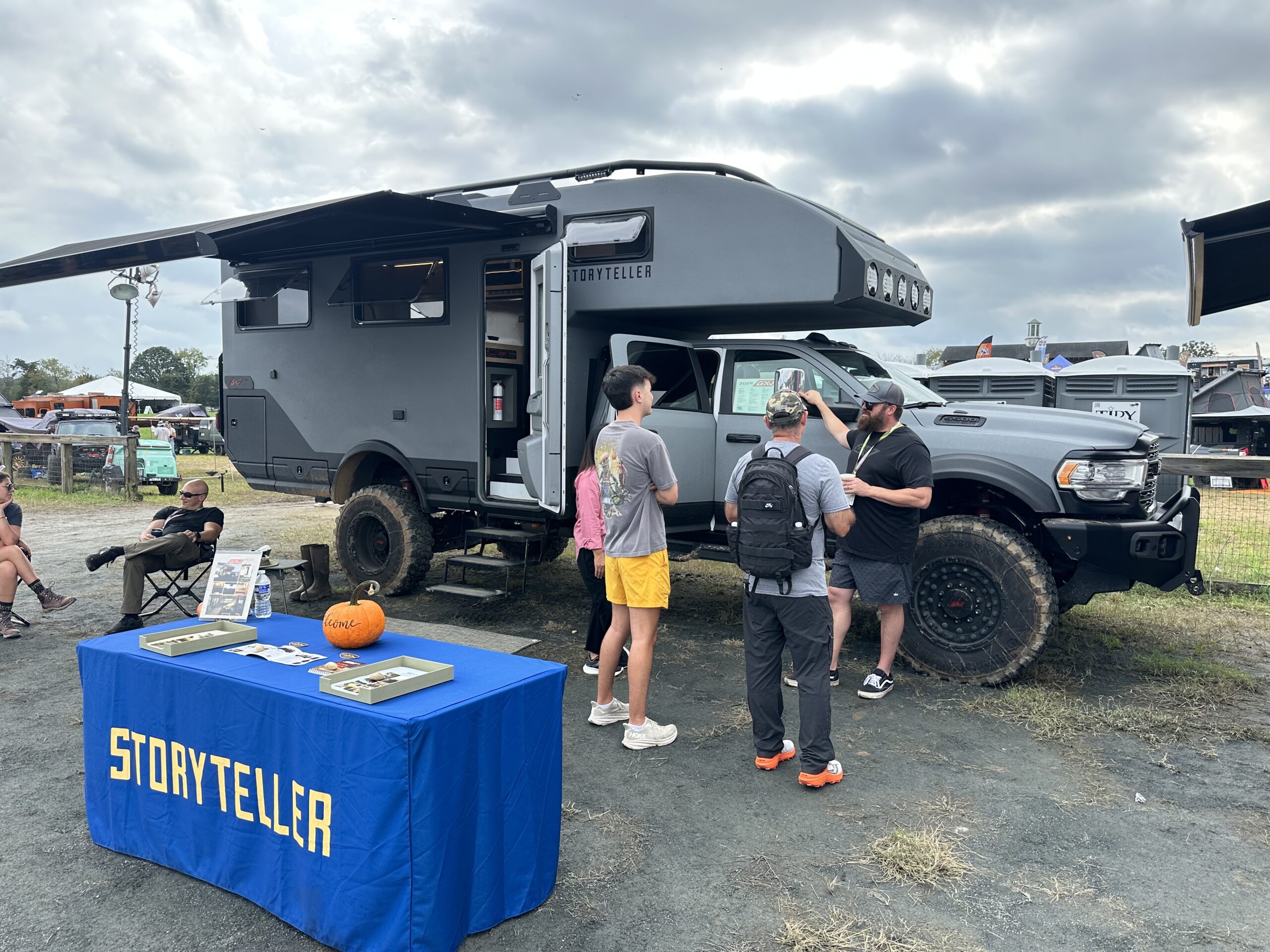
– Winnebago and Storyteller Overland vans: The van life culture was well-represented with these brands showcasing their adventure-ready models. These 4×4 vans are increasingly popular among overlanders who seek a blend of mobility and comfort.
What makes Overland Expo East different from traditional RV shows is the experiential nature of the event. Many of the rigs on display are owned by individuals rather than dealerships, allowing visitors to get a closer look at how people use and personalize their vehicles.
Overlanding is just as much about the gear as it is about the rigs. The Expo showcased a wide array of products designed for life on the road, with independent, family-owned companies stealing the spotlight. Here are a few of the must-have gear items that stood out:
– Devos Outdoors LightRanger Lanterns: These telescoping lanterns are ideal for both overlanding and home use. I’ve used them for everything from cooking outdoors to playing basketball at night. Their newest model, the Light Ranger 2000, offers even more brightness and functionality.
– Thule Rooftop Tents: My Thule tent, which I tested for Good Housekeeping, continues to be a reliable overlanding staple, providing comfort and ease of set-up on every trip.
– Timbren Axle-Less Suspension: This innovative suspension system is gaining popularity among overlanders for its ability to handle rough terrain without sacrificing ride quality.
– Hest Outdoors Mattresses: Designed with overlanders in mind, Hest’s mattresses and bedding products are perfect for those using rooftop tents or van setups. The brand is known for producing high-quality sleep solutions that cater to the outdoor lifestyle.
– Airhead Composting Toilet: A favorite among overlanders looking for an eco-friendly option, the Airhead composting toilet provides an efficient way to manage waste in off-grid situations.
– Benchmade Knives: Known for their quality, Benchmade knives were a hit at the Expo, even if the $200-$500 price tag was steep for some. I snagged a free hat, but I might be adding a knife to my collection soon!
– Garmin & Midland Walkie Talkies: Essential for any overlanding adventure, these products ensure you stay connected and safe in remote areas.
Overland Expo East 2024 offered a glimpse into the future of overlanding and RVing, with emerging trends and innovative products that are sure to make their way into the mainstream market. From the immersive camping experience to the awe-inspiring rigs and top-notch gear, the event was a haven for outdoor enthusiasts.
For anyone looking to explore the world of overlanding, this expo is a must-attend event. Whether you’re in the market for a new rig or just want to browse the latest gear, Overland Expo will provide you with inspiration for your next adventure.
Have you attended any of the Overland Expos across the country? Share your experience in the comments below or drop us a message on social media. We’d love to hear about your favorite rigs, gear, and moments from the event!
The post Overland Expo East Review (Camping, Rigs, Gear, and More!) appeared first on The RV Atlas.
This is part two of a two part series about RVing in Quebec with Gretchen Holcombe from Boxy Colonial on the Road. To check out part one about Montreal and the Montreal South KOA Journey please click here. To listen to this episode about Quebec City and the Quebec City KOA Holiday please click on the media player above or subscribe to the RV Atlas wherever you get your favorite shows. Or simply read on right here for Gretchen’s guest blog post.
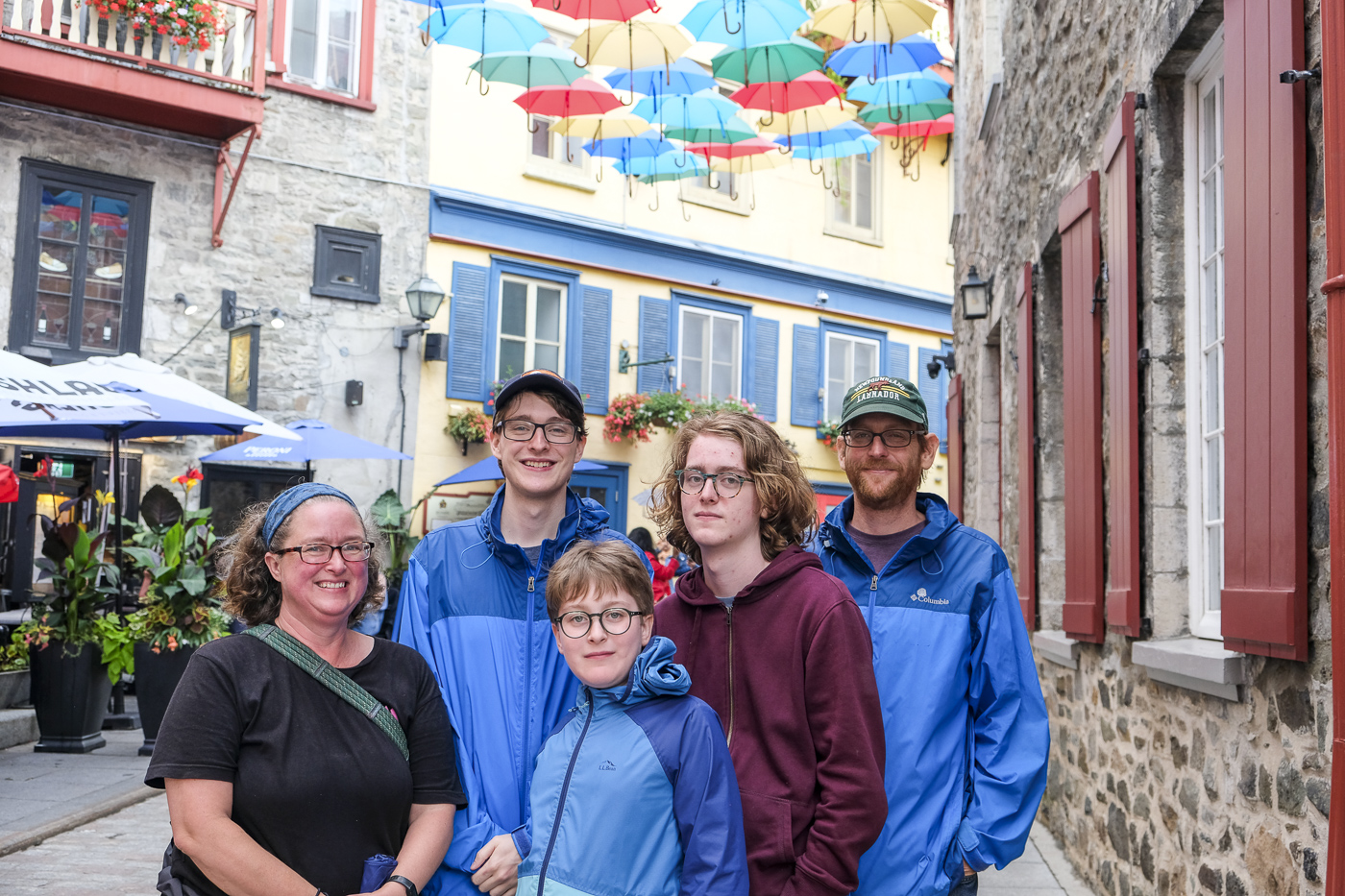
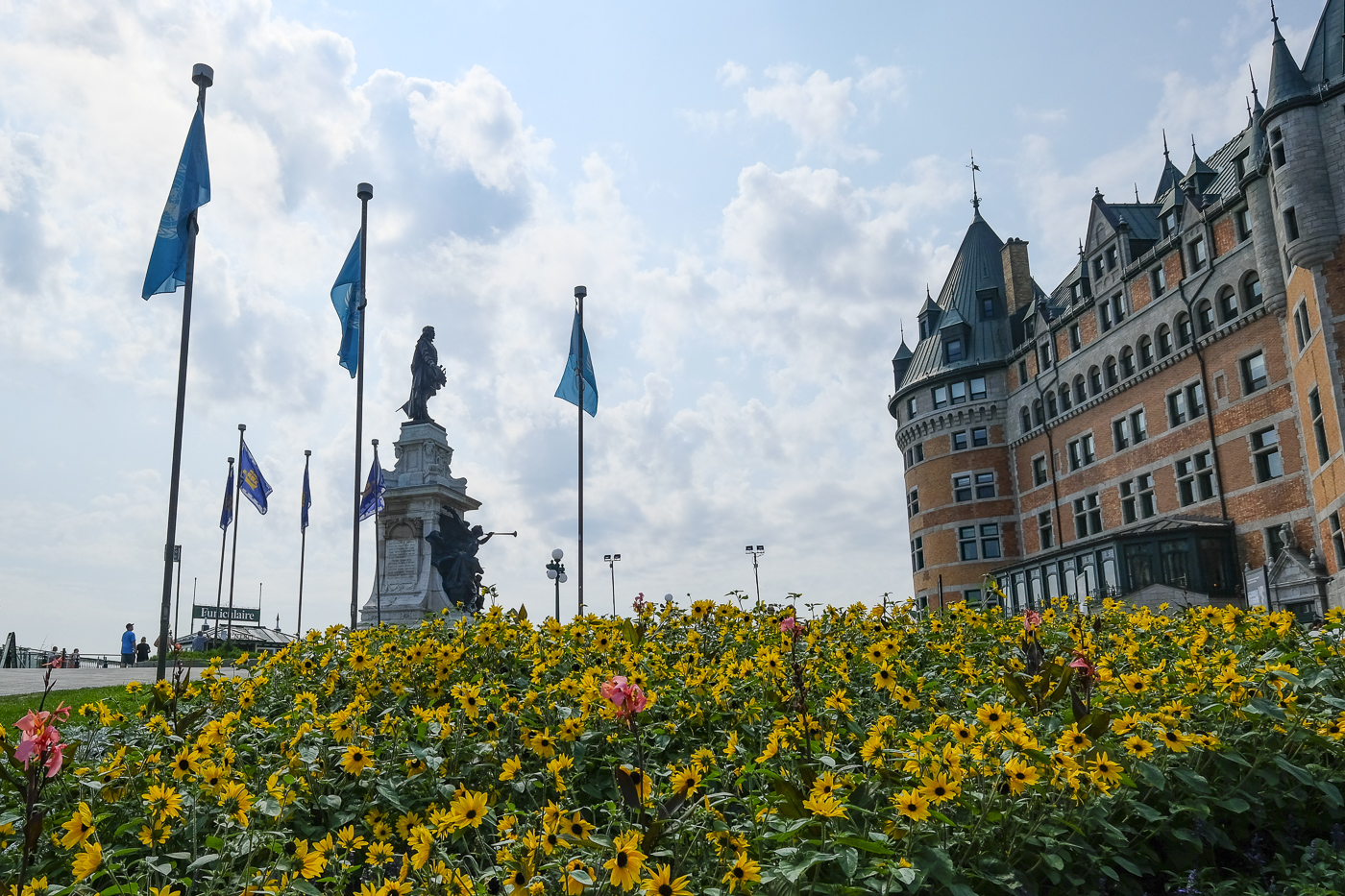
Old Québec City very much feels like something out of a fairytale version of an old European city…at least if you can manage to forget about all the tourists around you who are thinking the same thing. At times it can feel a little too perfect–as if you’ve accidentally gone to the World Showcase at Disney’s Epcot instead of to Canada. But there’s a lot of very real history and culture behind the picture perfect surface of Québec City, and our family loved our time here. We stayed at the Quebec City KOA Holiday during our stay here–and it served as a great basecamp for exploring the city.
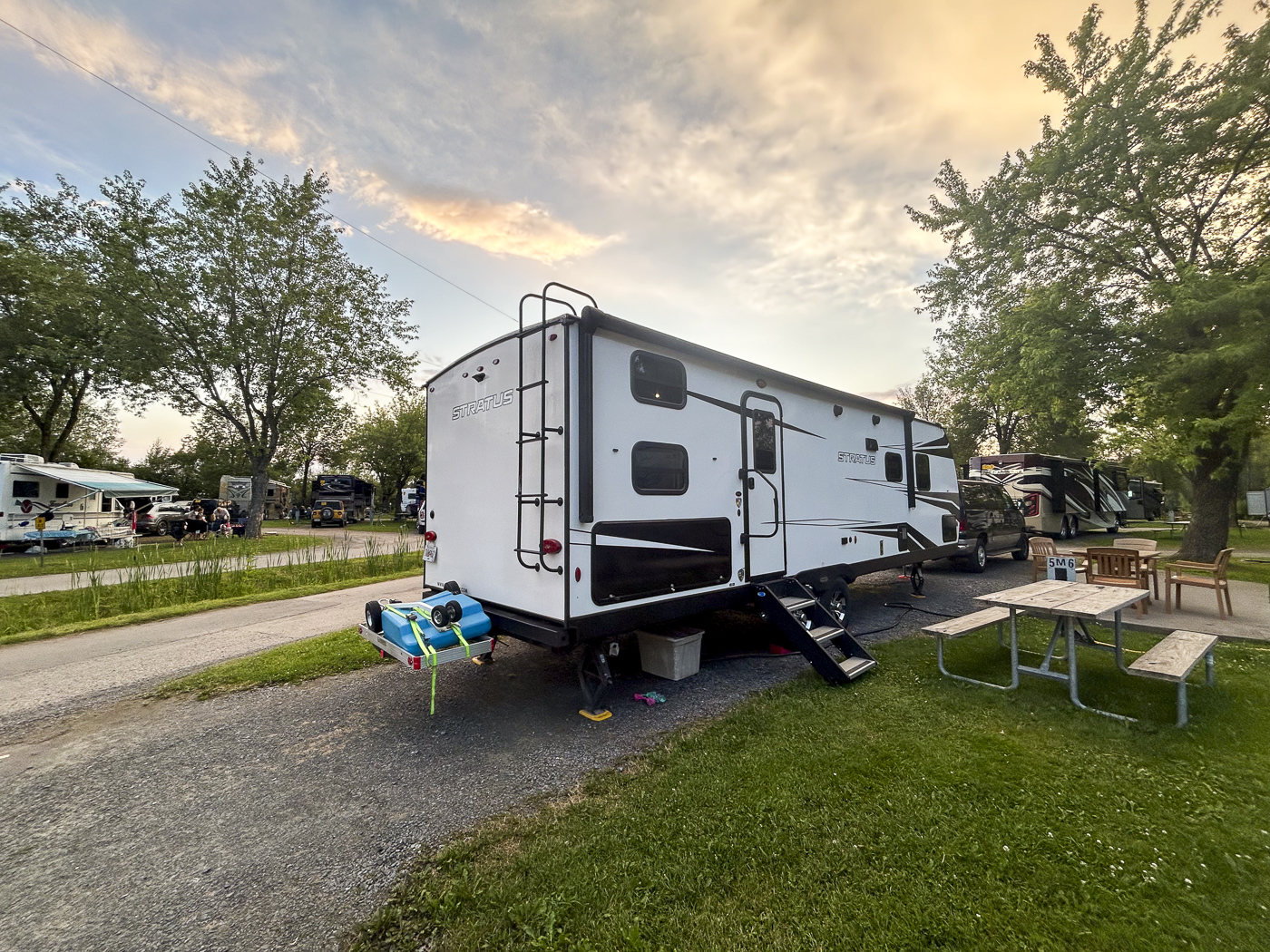
The Québec City KOA Holiday is just across the St. Lawrence River from Québec City, in the town of Levís. This is a great KOA with a helpful, bilingual staff, easy access from the highway, great proximity to Québec City, and lots of nice amenities to come back to after a day of touring.
The RV sites are mostly full hook-up gravel pull-throughs with pretty good sized yards. There are some patio sites, as well as a range of non-RV options, including rustic camping cabins and deluxe cabins. RV sites range from around $65 CAD up to over $100 CAD for patio sites.
The pool area is awesome, complete with water slides, a hot tub, and a splash pad area. There’s a communal fire pit in this area as well and lots of other indoor and outdoor communal spaces throughout the campground.
There are a lot of different options for getting into the city from the KOA. The campground runs a free shuttle every day, but it does need to be reserved a day in advance. We had planned to drive to the Levís ferry and take the quick ride across the river to the historic district, but we found out the the day we arrived that the ferry workers were striking and the ferry wasn’t running. So we ended up driving into the city every day, and this was actually surprisingly easy. It’s only about a 20 minute drive and traffic was never too bad. Driving and parking in Old Québec looked harrowing, however, so we parked in one of the large paid surface lots along the edge of town, which meant about 15 minutes of hilly walking to get to most of the sites.
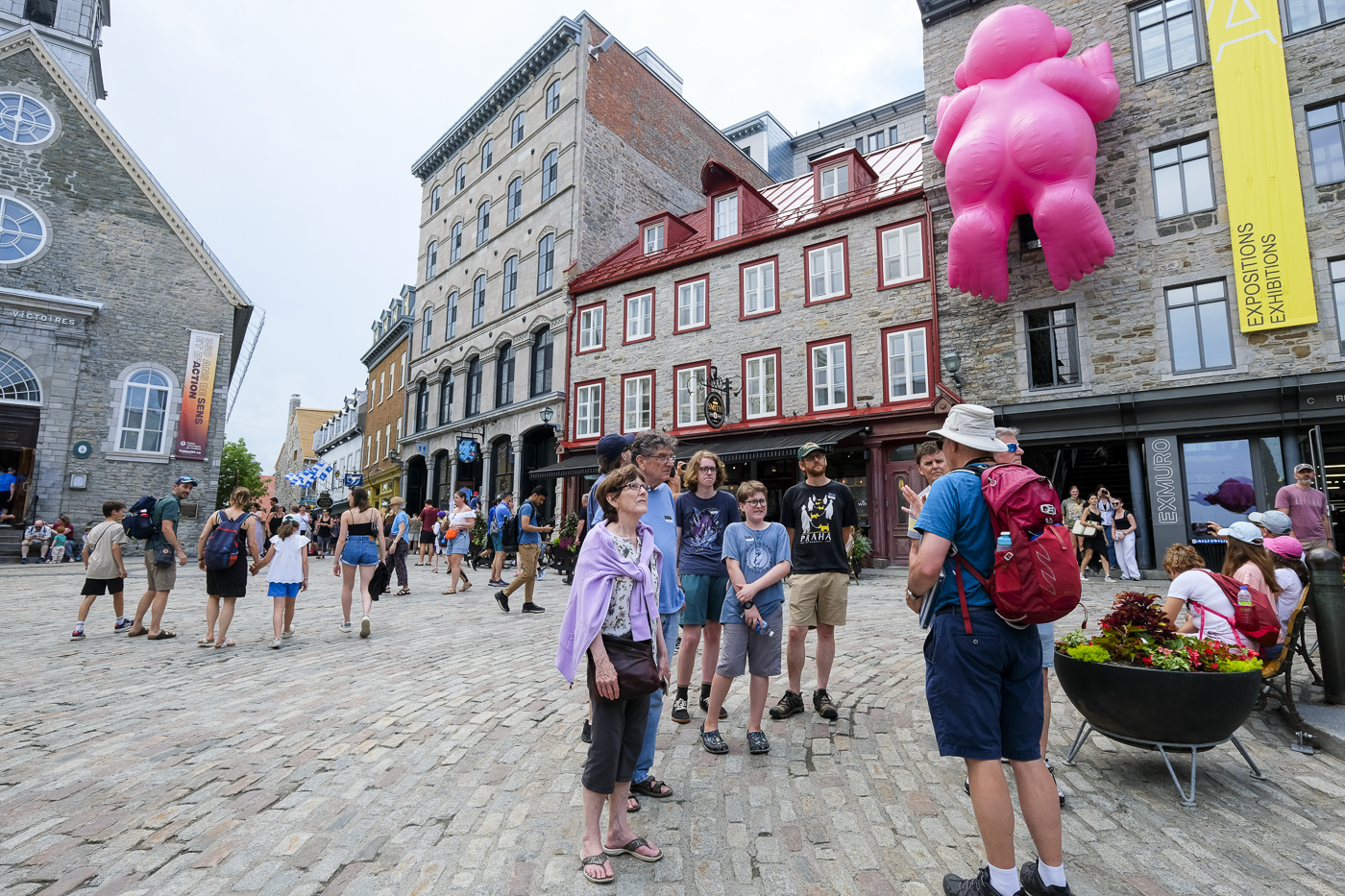
Old Québec is so compact and walkable, and so rich with stories and history, that we thought a walking tour would be a great way to get our bearings and learn about the city. We went with the 2 hour “Grand Tour” with Tours Voir Québec and were very happy with the company and with our guide, but there are other well-reviewed companies that offer similar tours (some with guides in period costumes!) We really enjoyed getting to hear about the city from the perspective of someone who lives there and to see some hidden spots we wouldn’t have found on our own.
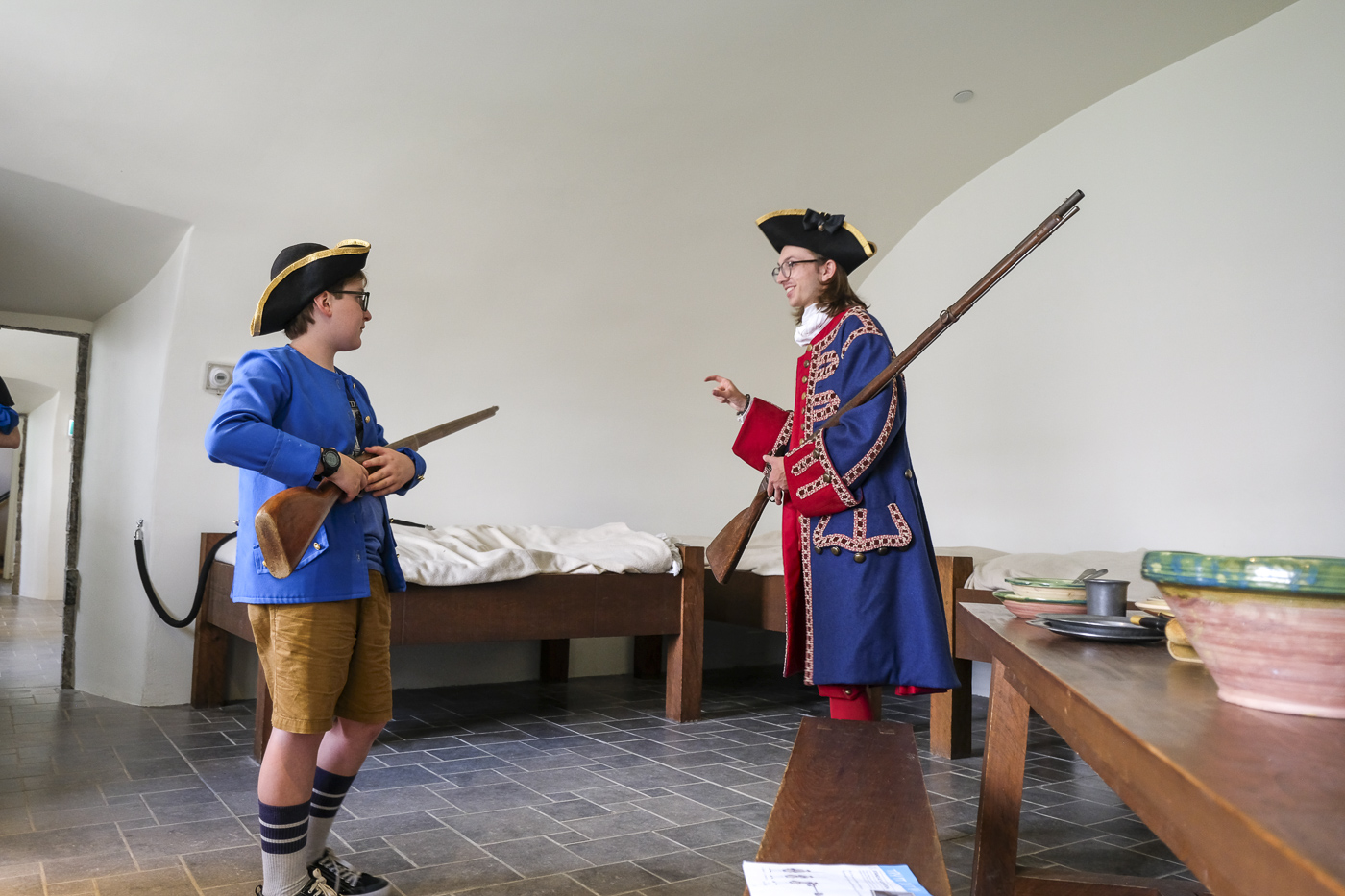
Old Québec became an Unesco World Heritage site in 1985, largely because it’s one of the oldest towns in North America with a mostly intact system of fortified walls surrounding it. This Parks Canada site offers a few different ways to explore the walls and learn more about them. They offer a two hour guided tour that sounds wonderful but isn’t recommended for younger kids, so we opted instead to head to the Artillery Park area so our 11 year old could do the interactive “legend of the talking walls” activity. He got to borrow a magic sword and complete a quest that took us along the walls and through the town, using our iphone to get clues. There’s also a museum about the history of the city and walls at Artillery Park and a self-guided tour (with costumed characters!) of historic buildings full of three centuries of military history.
I’m not sure there’s anywhere else in the world where you can take a tour of a building that has, over time, served as a jail, a college, and a library…but you can do just that at the Morrin Centre. Our guide first took us downstairs to see the creepy jail that dates to the early 1800’s (complete with a chance to be closed up in one of the cells) then took us back up to learn about the building’s college years and see the English-language library it’s home to today.
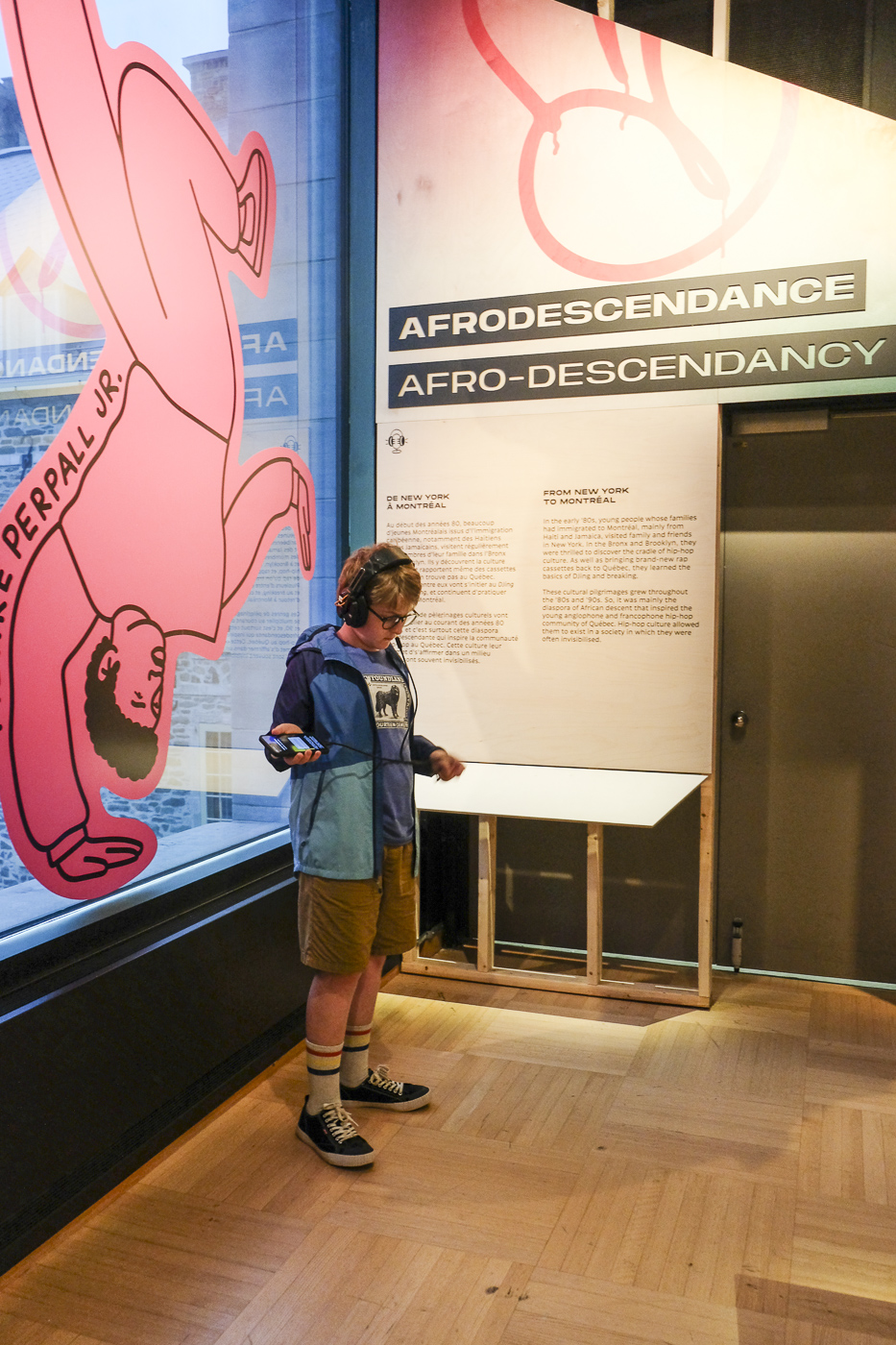
“Civilization” is a pretty broad theme for a museum, and the Musée de la Civilisation takes full advantage of it, with exhibits on everything from the Catholic diocese of Québec to professional wrestling. We enjoyed the “This is Our Story” gallery about the 11 Indigenous nations in Quebec and the sprawling “In Other Words, Quebec” exhibit. We especially loved “Word is Bond. The Sound of Rap Queb” where you borrow a set of headphones that plays a soundtrack for you as you go through the exhibit.
This nearly vertical cable car takes you from Lower Town to Dufferin Terrace. We thought the $5/person (cash only) price for a 30 second ride was a little steep (pun intended), but it’s a fun experience to do one time (and it saves you a trip on foot up the frighteningly-named Breakneck Stairs).
We highly recommend brunch at La Buche, which features Québécois cuisine including house-made rhubarb jam. We also enjoyed a dinner at the Parisian bistro-style Cochon Dingue. Finally, we loved the burgers and creative poutines at Le Chic Shack, in a historic house right by Dufferin Terrace.
The post RVing in Quebec Part 2 (Quebec City and the Quebec City KOA Holiday) appeared first on The RV Atlas.
On this week’s episode of the RV Atlas podcast we are excited to welcome Gretchen Holcombe from Boxy Colonial on the Road back on the show to talk about her big summer RV trip to Quebec. Her family stayed at the Montreal South KOA Journey and enjoyed several days in the most European of Canada’s great cities. To listen to Jeremy interview Gretchen please click on the media player above or subscribe to the RV Atlas wherever you get your shows. Or read on below for a guest post from Gretchen.
People often tout Montreal as “the most European of North American cities,” and indeed a walk along the cobblestone in the older parts of the city can make you feel like you’ve been transported both across the ocean and back in time. But Montreal also feels vibrantly modern and distinctly Canadian, and its location means it’s within easy driving distance for people in much of the US and Canada. Our family spent a few days in Montreal this past summer as part of a longer Canadian road trip, and we all left loving Montreal and wishing we could stay longer. We stayed at the Montreal South KOA Journey and it was a very good basecamp for our Canadian adventure.
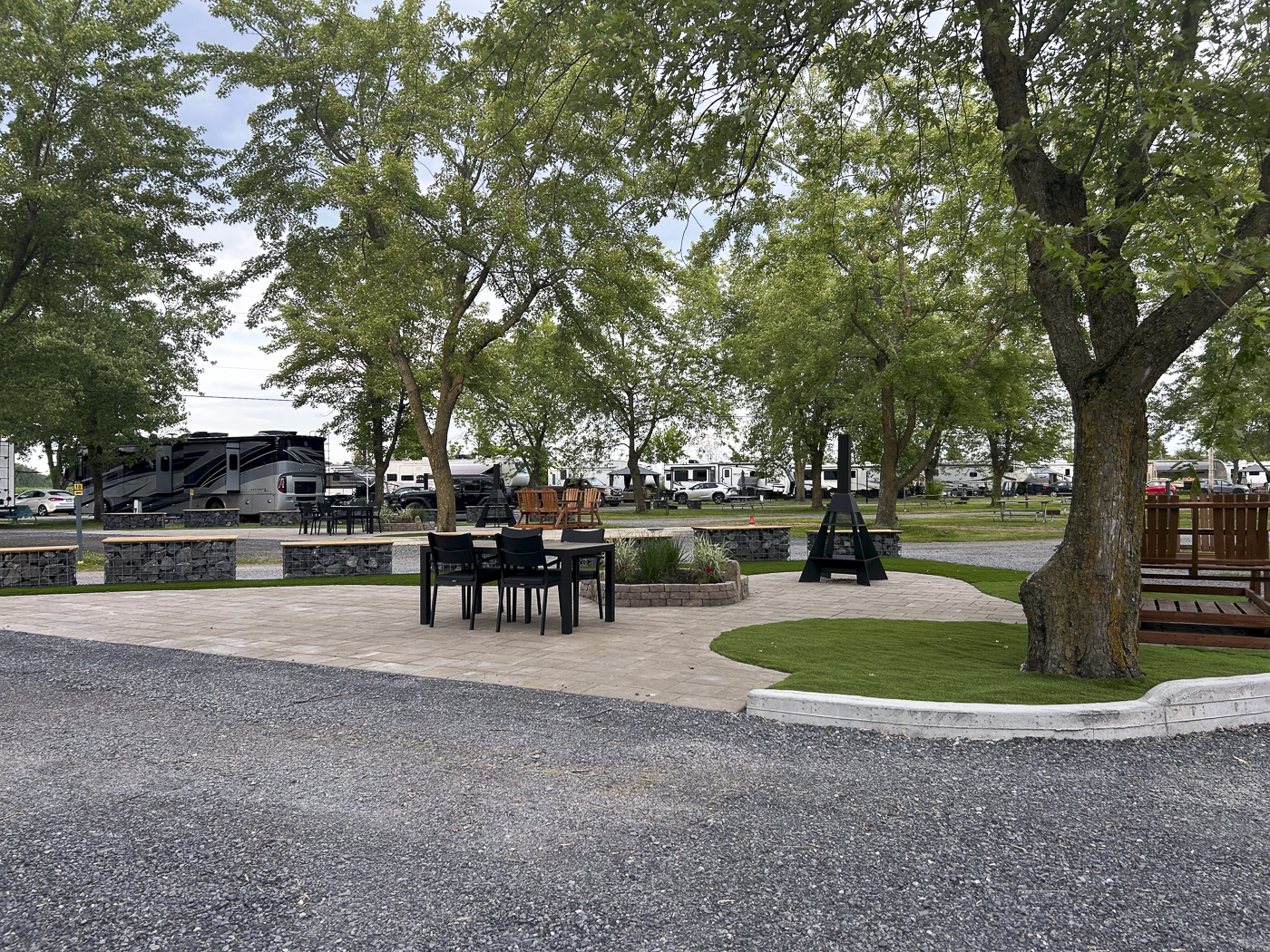
The Montreal South KOA Journey is 15 miles from the city and bills itself as the closest campground to Montreal. It’s big rig-friendly and easy to access from the highway. As first-time visitors to Quebec (and non-French speakers), we appreciated the friendly and helpful bilingual staff.
The sites are mostly a grid of standard gravel pull-throughs, but there are a good number of trees for shade and decent separation between the sites. Everything at this KOA is beautifully done and well-maintained: the bathrooms are nicely decorated and sparkling clean, there’s a small but lovely pool at the front of the campground, and the huge patio sites are probably the nicest I’ve ever seen. Sites start at around $70CAD for a basic pull-through and go up to over $100 for those patio sites.
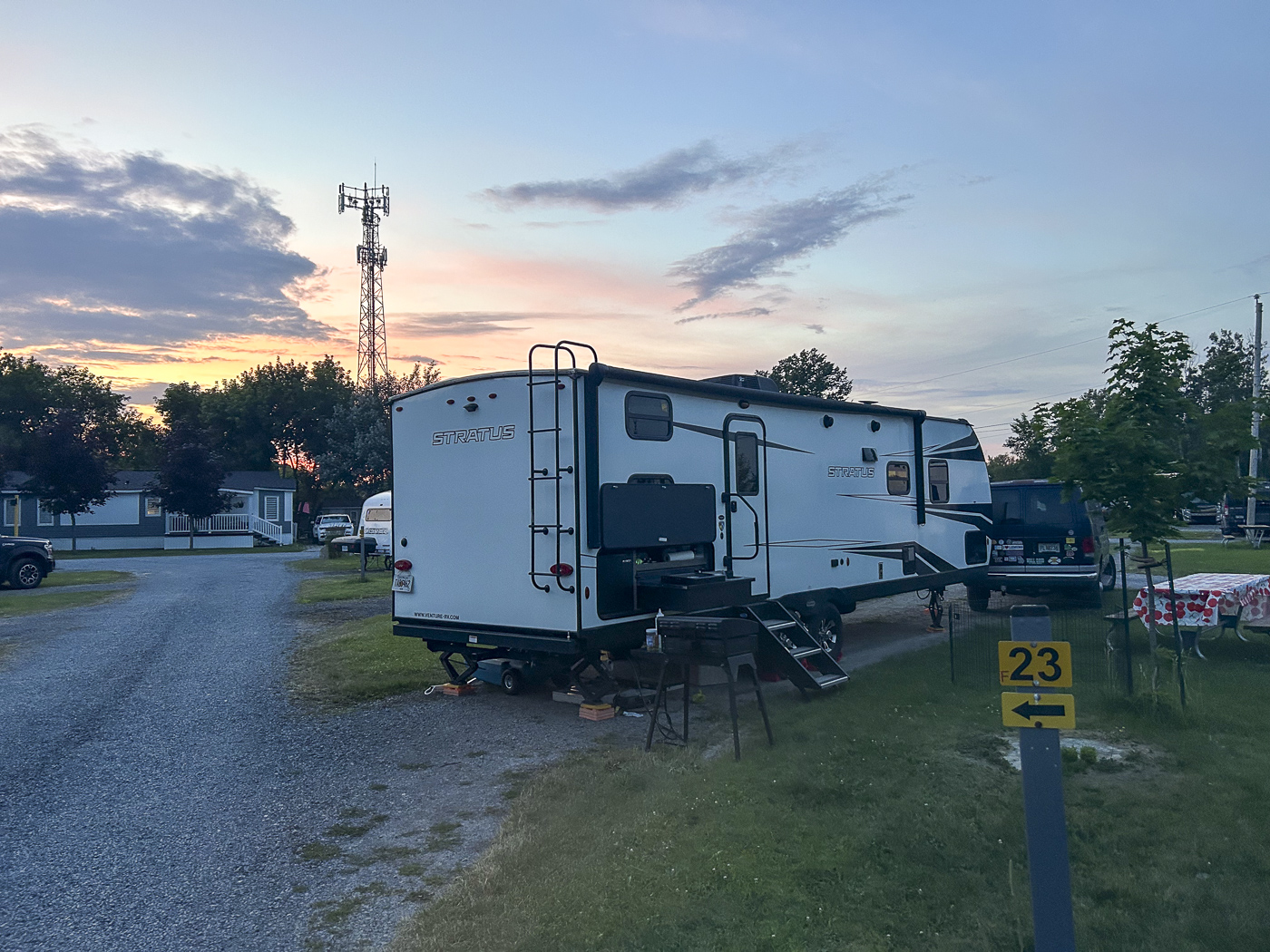
The biggest thing to think about with urban RVing, though, is always how to actually get into the city to see the sites. The drive into Montreal from the KOA can be less than 30 minutes, depending on when you go. We did make the drive once, but we found both parking and traffic to be big challenges, so we did most of our travel via Montreal’s excellent public transportation system. There are a few different subway and rail stations within easy striking distance of the KOA; we made the 20 minute drive to the REM Brossard Station and took the new light rail from there into the city. There’s plenty of surface parking at this station, the trains are clean and comfortable, and, as a bonus, you get wonderful views of the St. Lawrence River and Montreal’s skyline as you approach the city.
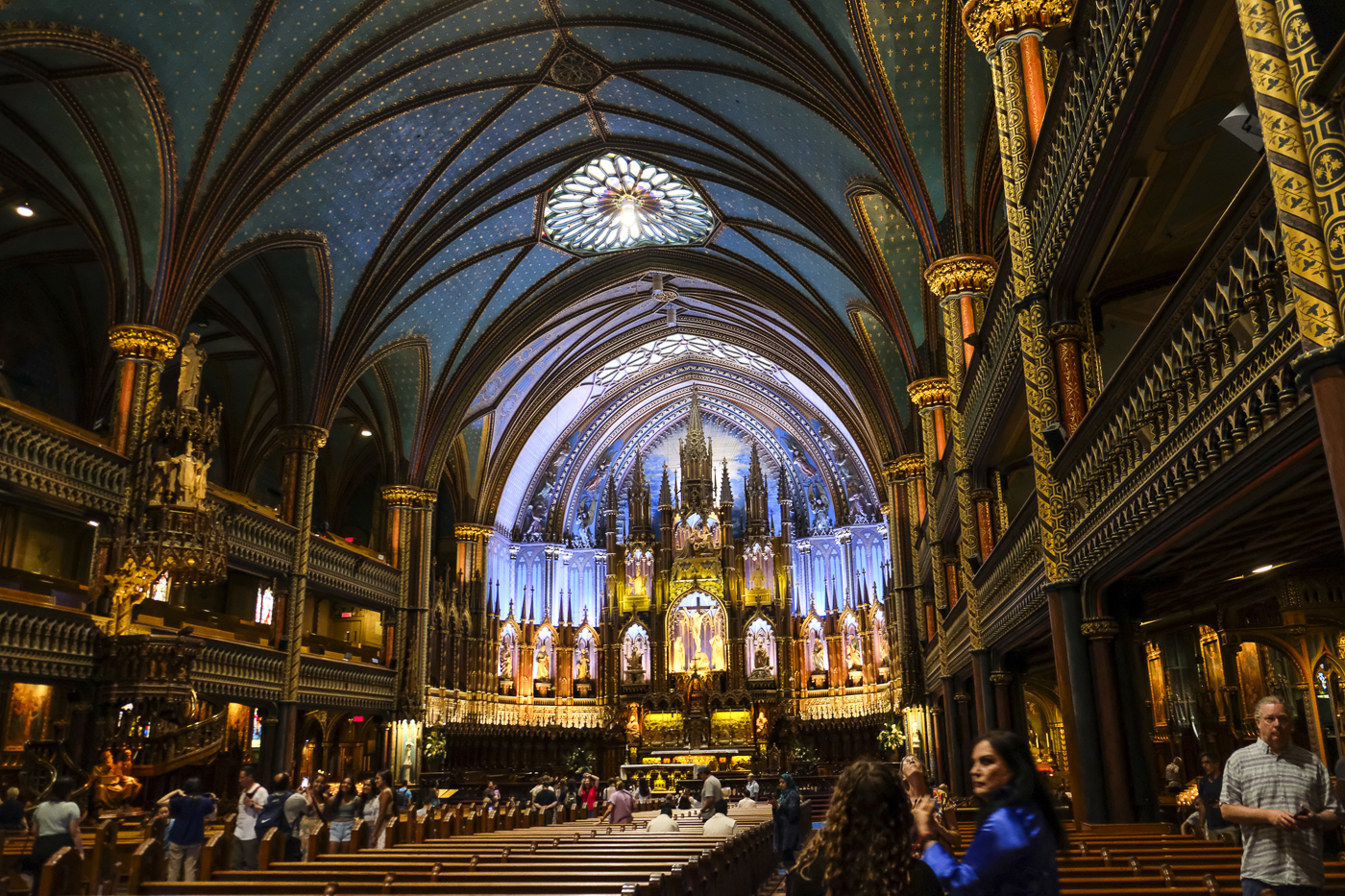
This impressive neo-gothic cathedral in the heart of Old Montreal dates to 1824 and is a must see for first time visitors to the city. It’s open to visitors for self-guided tours during the day and at night becomes a canvas for “the AURA Experience” light and music show. Our attempt to attend the nighttime show was thwarted by a power outage in the area, but we very much enjoyed gawking at the impressive art and architecture by day. The entire area is worth spending time exploring; Old Montreal is the part of the city that feels the most European, with its old buildings and cobblestone streets. It’s always busy, and there’s always something going on; we found public art and live music everywhere we turned.

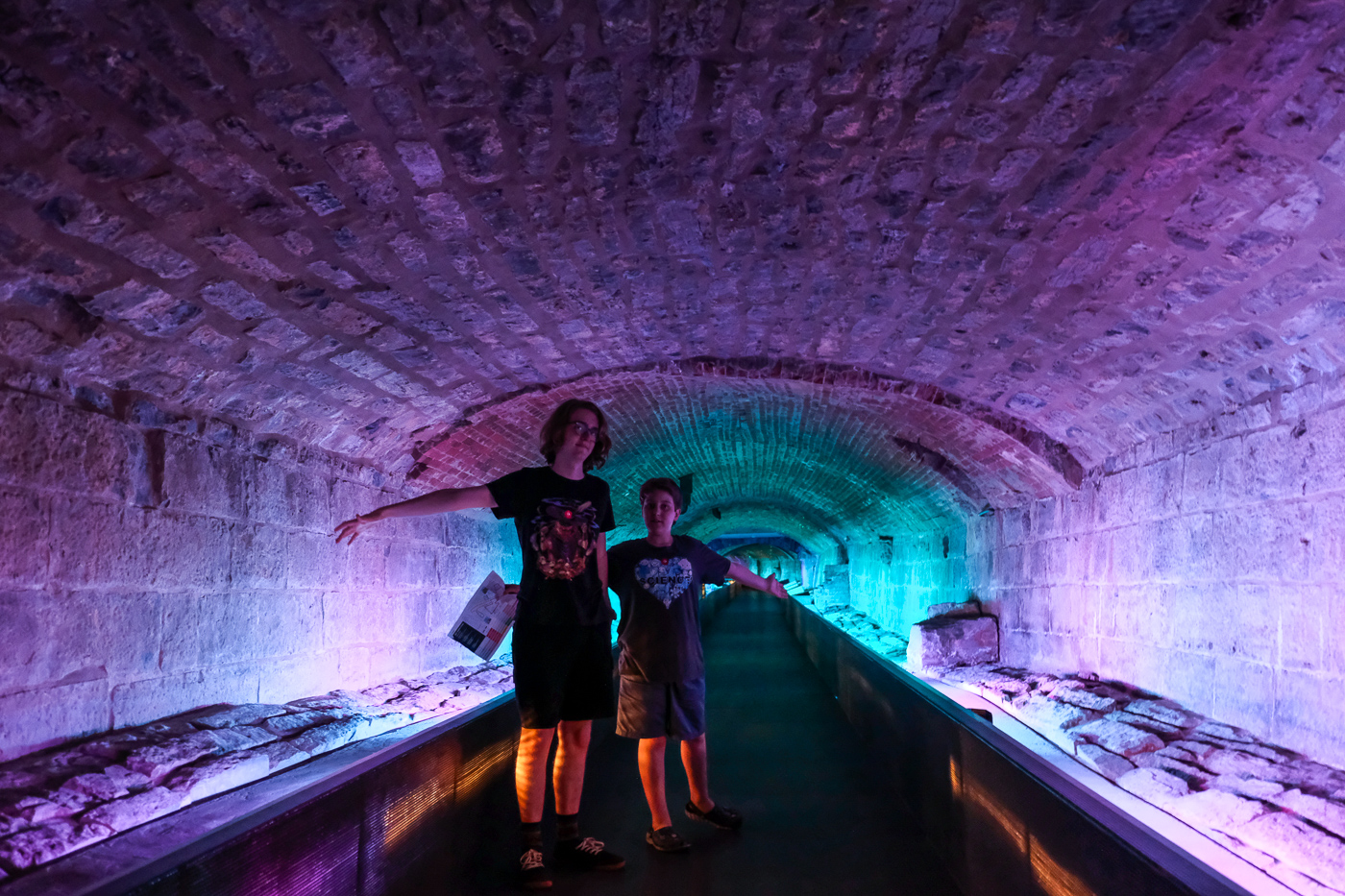
Pointe-a-calliere, Montreal’s museum of archaeology and history, might just be the coolest museum I’ve ever been to. It’s built on the site where the city’s first European settlers lived in the 17th Century, and the museum’s first level allows you to actually walk through the preserved archaeological remnants of the old city and see evidence of how it changed throughout its early history. Another exhibit preserves the remains of Fort Ville-Marie, the actual spot where the city was founded as a Catholic mission, under a glass floor that visitors can walk across. There’s an excellent multi-media show (in French and English) about the history of Montreal. Our eleven year old loved the immersive, hands-on “Pirates or Privateers” exhibit. And make sure to end your visit by going to the top of the museum’s tower for awesome views of the city.
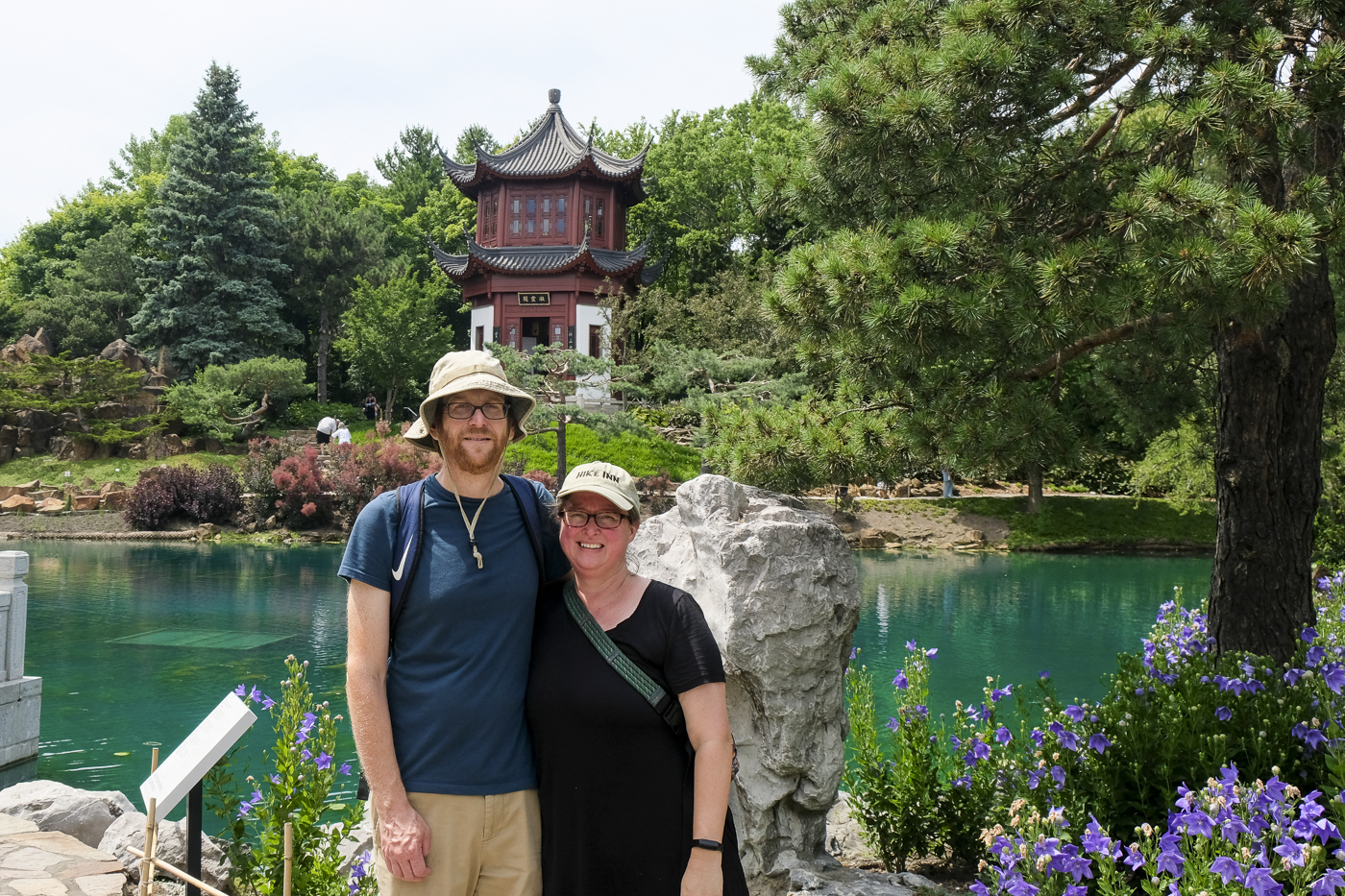
Montreal has a world-class botanical garden with twenty themed gardens to explore. We especially enjoyed the bonsai collection and koi pond in the Japanese Garden and the highly Instagrammable lake with bridges and a waterfall in the Chinese Garden.
Montreal’s maze-like art museum sprawls across a few different buildings, some connected via underground hallways. It’s Canada’s largest art museum and a great place to spend a few hours. We definitely didn’t get to all of it, but we saw a special exhibit on Flemish masterworks as well as checking out the extensive collection of Canadian art and a fun pop art gallery.
One could devote an entire vacation to exploring Montreal’s food scene, and sadly we didn’t get to sample as much as we’d have liked, but we did enjoy brunch one day at Maggie Oakes in the Old Port area. They have a great patio overlooking Place Jacques-Cartier, perfect for people-watching (and the food was good, too!) And then, just around the corner from the Museum of Fine Arts, we stopped in at Burger Bar Crescent, where the menu features some creative burger, poutine, and mac and cheese choices. Not as much people watching here, but it does have a great view of a giant painting of Montreal’s own Leonard Cohen on the side of the nearby building.
This is part one of a two part series about RVing in Quebec with Gretchen Holcombe from Boxy Colonial on the Road. To listen to part two about Quebec City and the Quebec City KOA Holiday please click here or subscribe to the RV Atlas wherever you get your favorite shows
The post RVing in Quebec Part 1 (Montreal and The Montreal South KOA Journey) appeared first on The RV Atlas.
We are back from the 2024 Hershey RV Show, and we have some trends, favorite RVs, and other show highlights to share!
First, we want to say thank you! We appreciated the many people who stopped our table who read the blog, listen to the podcast, or own our books. You are all so great! We love this little community. It was also great to meet so many new people!
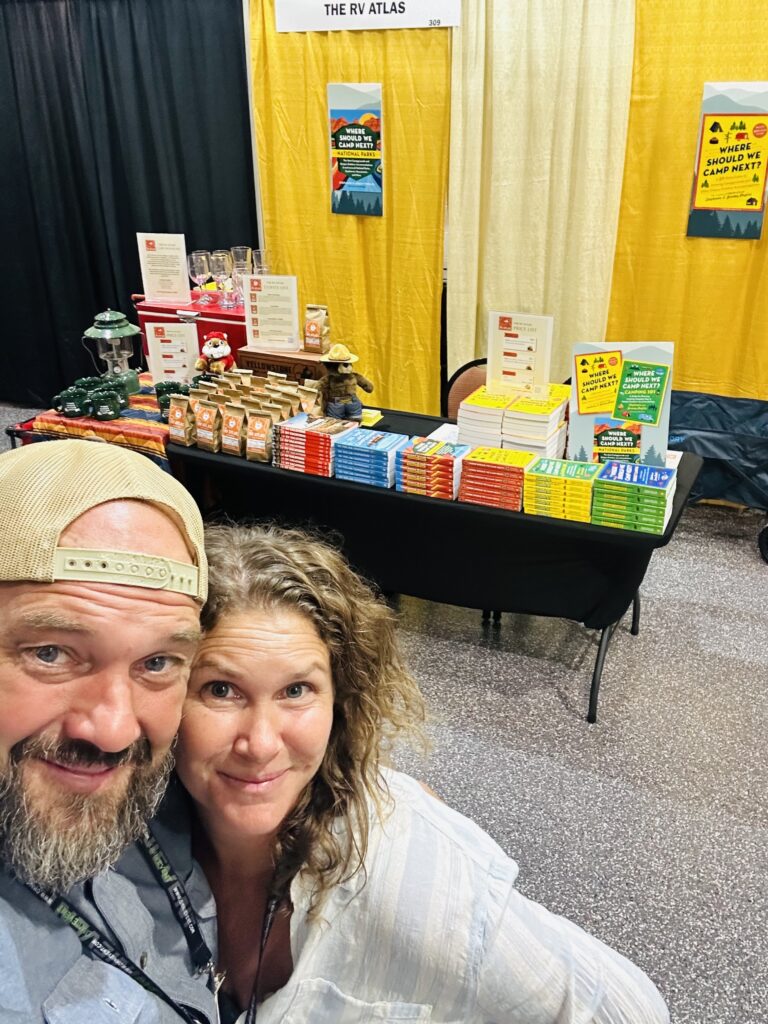
We also had fun sharing our “Where Should We Camp Next?” books and debuting our RV Atlas Coffee Company! Soon, you’ll have a chance to buy your very own bag of one of four special blends (Black Tank Blend, Camp Mojo, Morning Campfire, and Boondocker’s Delight). Check back in early October!
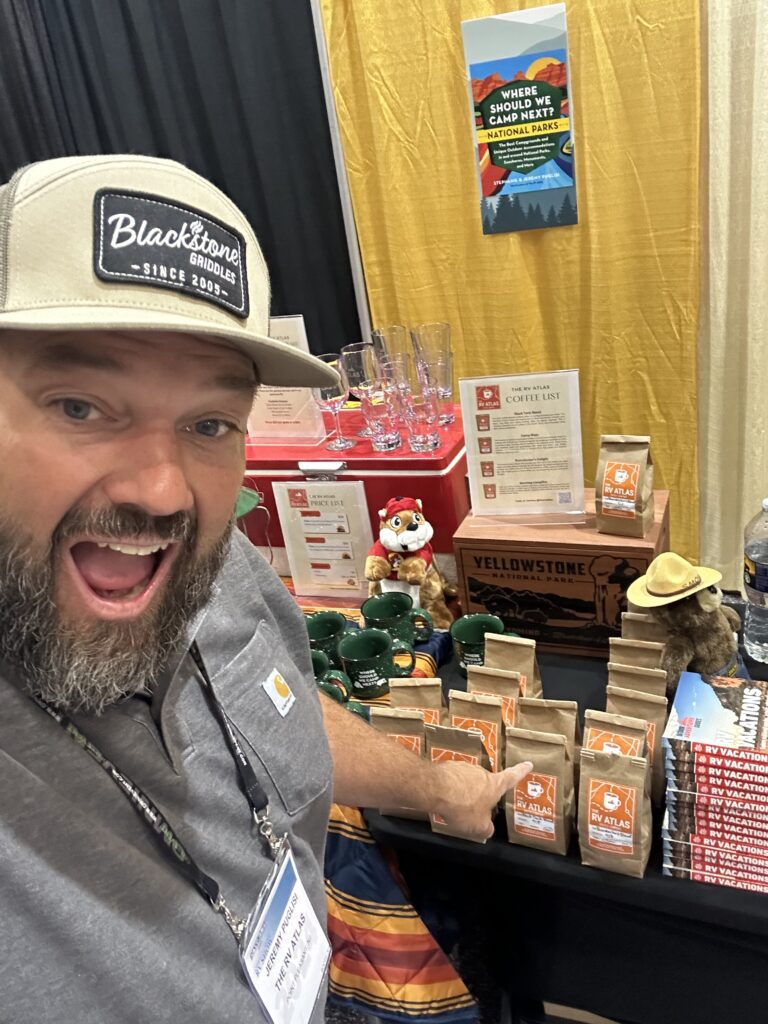
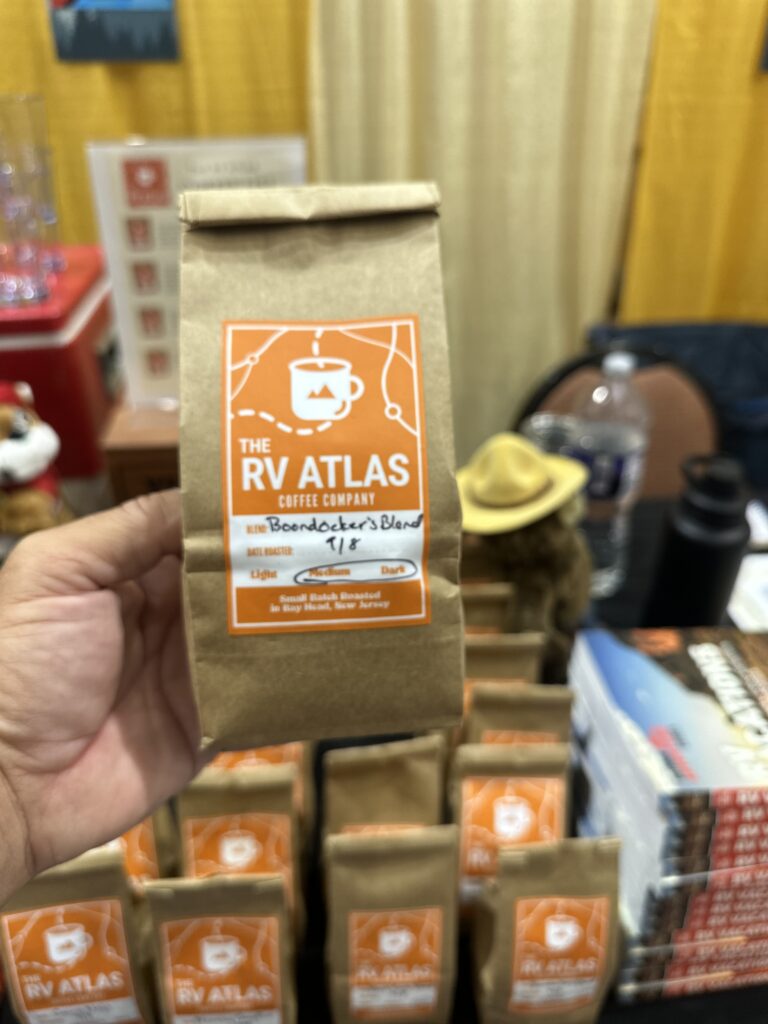
To hear more about the Hershey RV show, click play on the media player above–or look for The RV Atlas on your favorite podcast app!
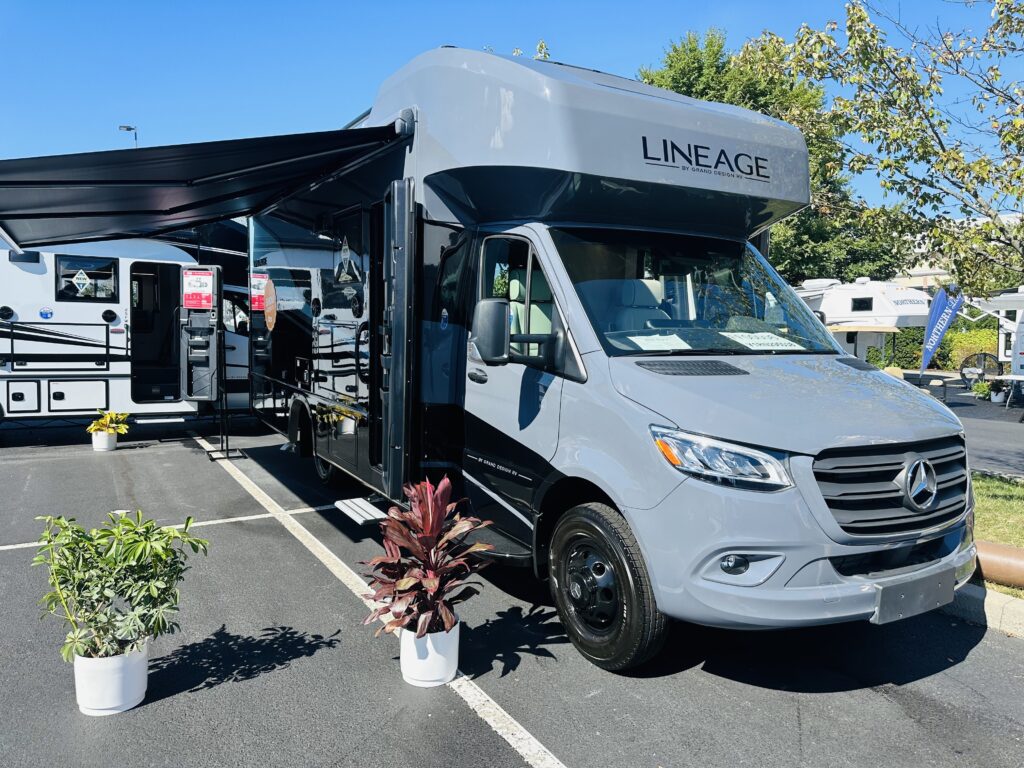
There is a LOT to see at the Hershey RV Show, and we tried to take it all in! Here are a few trends we noticed from the show:
Small, European-style motorhomes are becoming more popular. Of course, we may have noticed more of these because we fell in love with this style of travel on our Iceland trip. Either way, we really liked many of the petite Class Cs we saw at Hershey and the new features and floorplans. Grand Design’s new Lineage is a great example of this! We also swoon over Leisure Travel Vans.
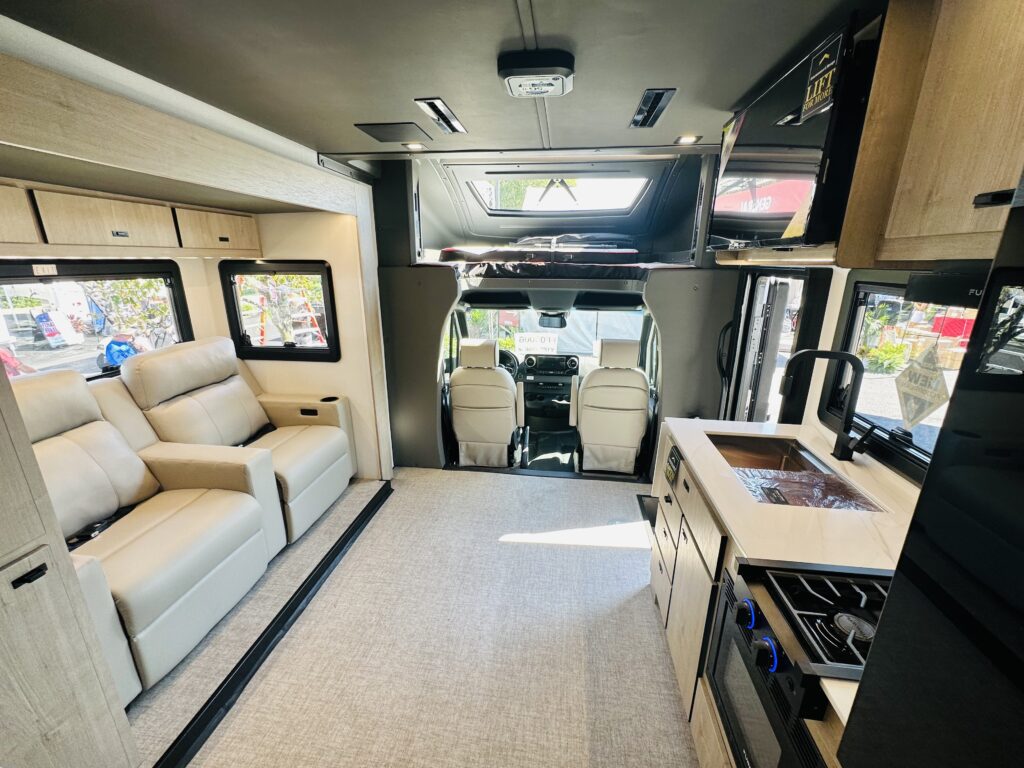
More manufacturers are doing off-site events in conjunction with the Hershey RV show. Space is tight at Hershey, and some manufacturers either can’t get a space or can’t get enough space, so why not take the party elsewhere? Some manufacturers offered treats and special deals to lure visitors to their off-site events. If you go in future years, look into these options, especially if you are looking for models, manufacturers, and dealers who won’t be at the show.
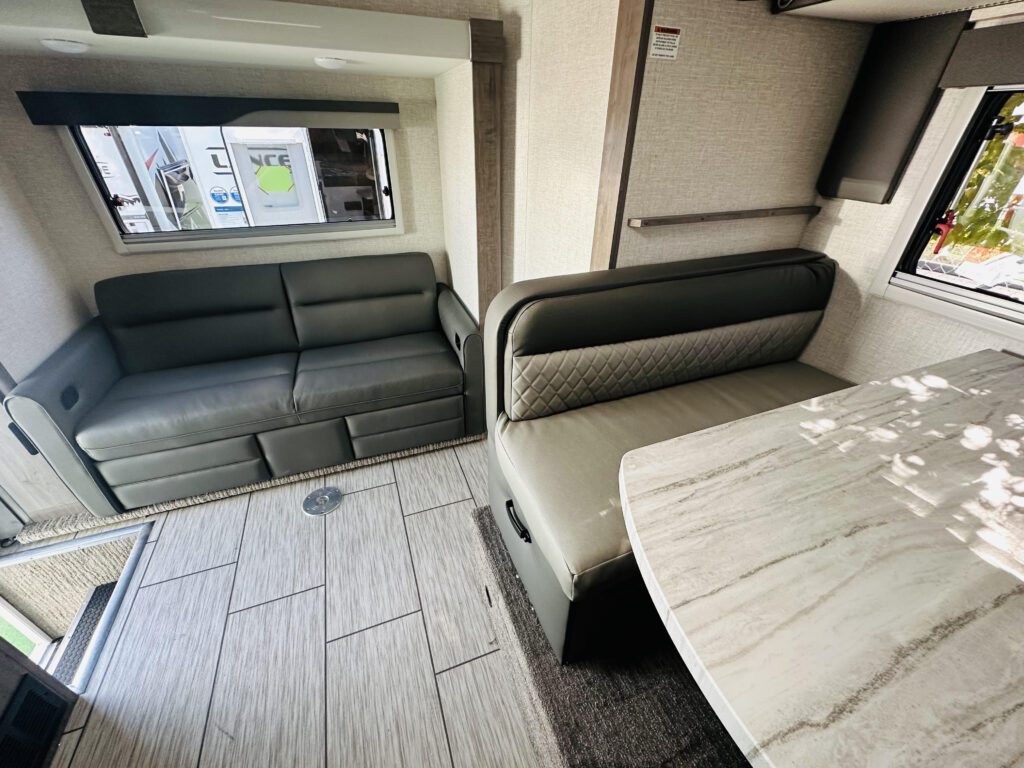
Pop-up, hybrid, and truck campers are not going away. Rumors have long been that these small segments of the RV market will die out, but they simply aren’t. They are small but mighty. We saw a lot of variety across these segments! Whether these are for the first timers or someone who wants to camp in something that feels like “camping,” these units still have a solid market.
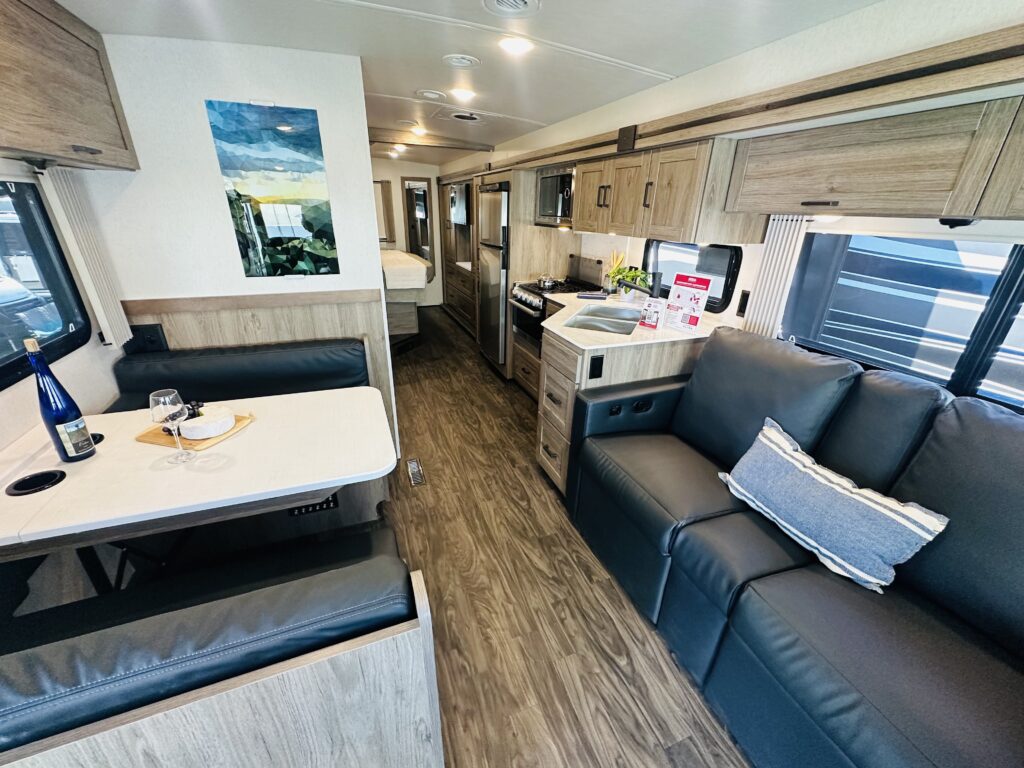
Independent custom van builders are on the rise. While there were only a few at Hershey, we’ve noticed this trend across the U.S. These people take popular Class B van chassis and build them out with custom interiors and amenities. There is a boisterous market for these independent upstarts who are doing really cool things!
People love their RVs and love RVing! It was so great to hear from so many people who were truly happy with their rigs. While the industry has faced some complaints about quality, especially in recent years, the majority of people who own RVs love them and keep buying them.
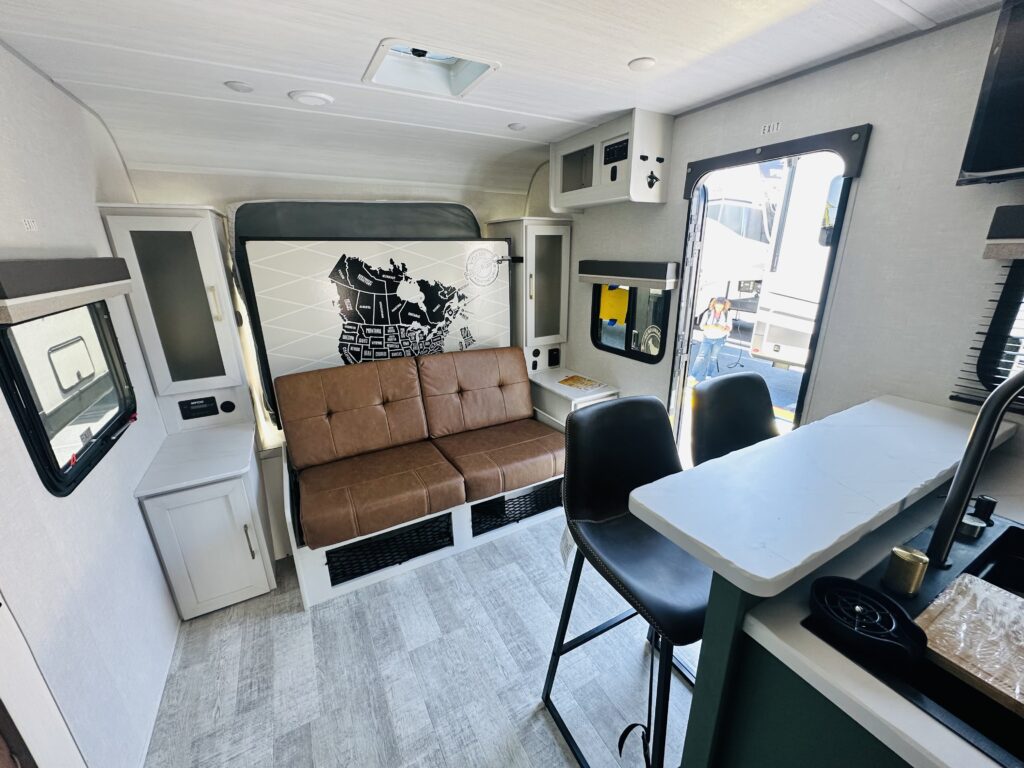
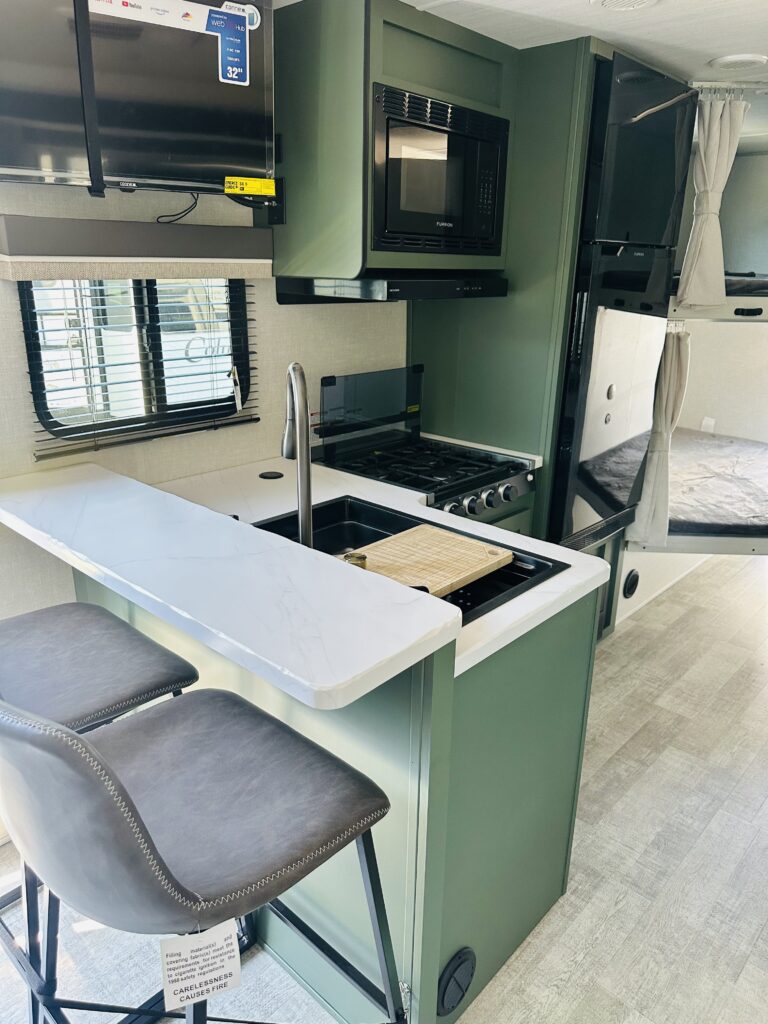
We saw so many great RVs at Hershey! While there weren’t a ton of new things that really stood out as innovative, manufacturers are continuing to improve on the tried and true, while adding awesome new features and designs. Here are just a few of our favorites:
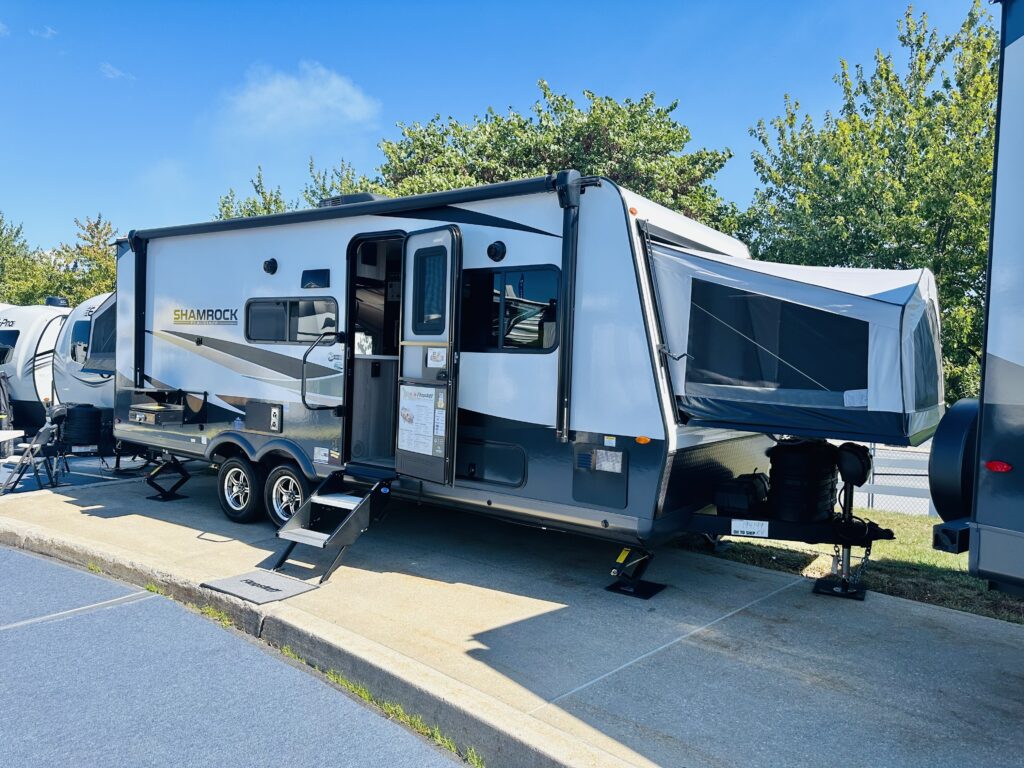
Each time we step in this three-bed hybrid model, we think, “We should have bought this!” The Flagstaff Shamrock 233S is an older floorplan that never ceases to impress us! It’s also available as the Rockwood Roo 233S.
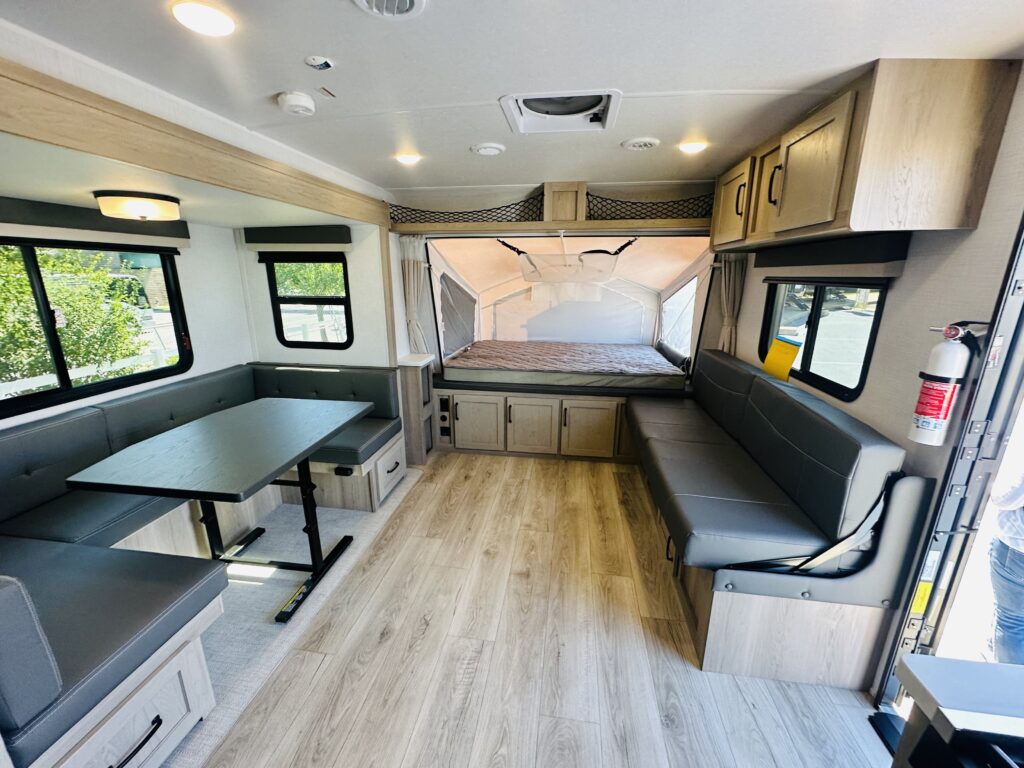
It’s impossible to find three queen beds in a 25-foot trailer…but that’s the magic of a hybrid! The 233S has three flip-out queen beds, giving you an unbelievable amount of sleeping space in a fairly short RV. It feels like a 32-foot model thanks to all of the space!
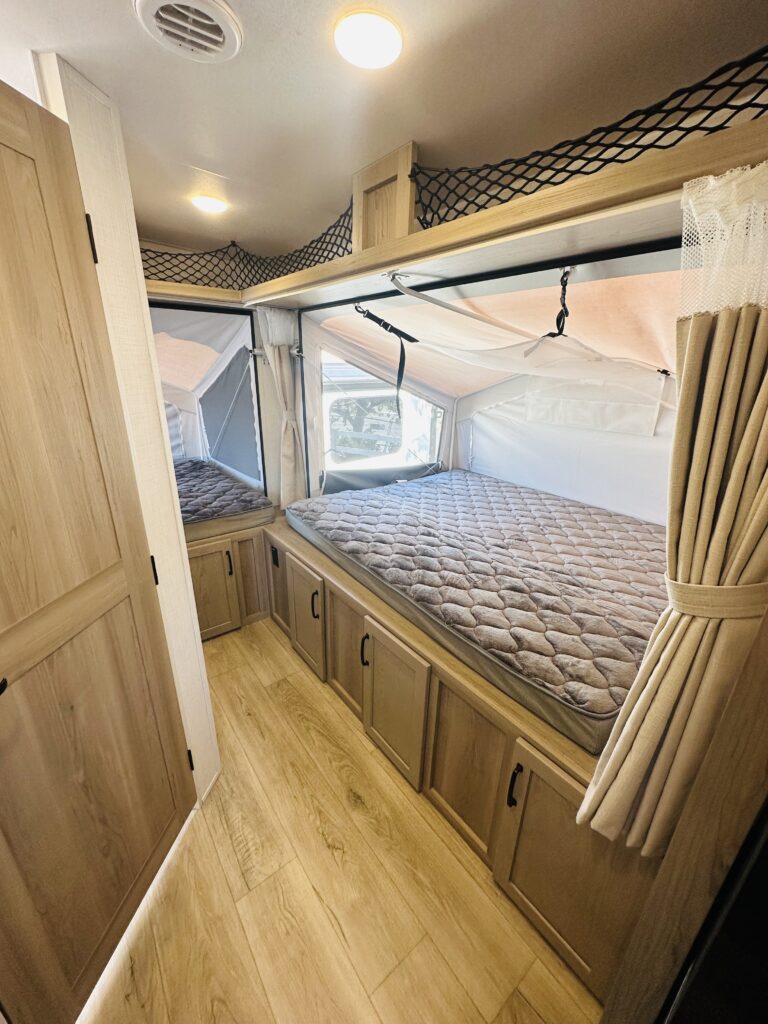
Plus, the hybrid beds still give you the connection to the outdoors that so many of us enjoy while camping! If you’re a family looking for a hybrid, check this one out!
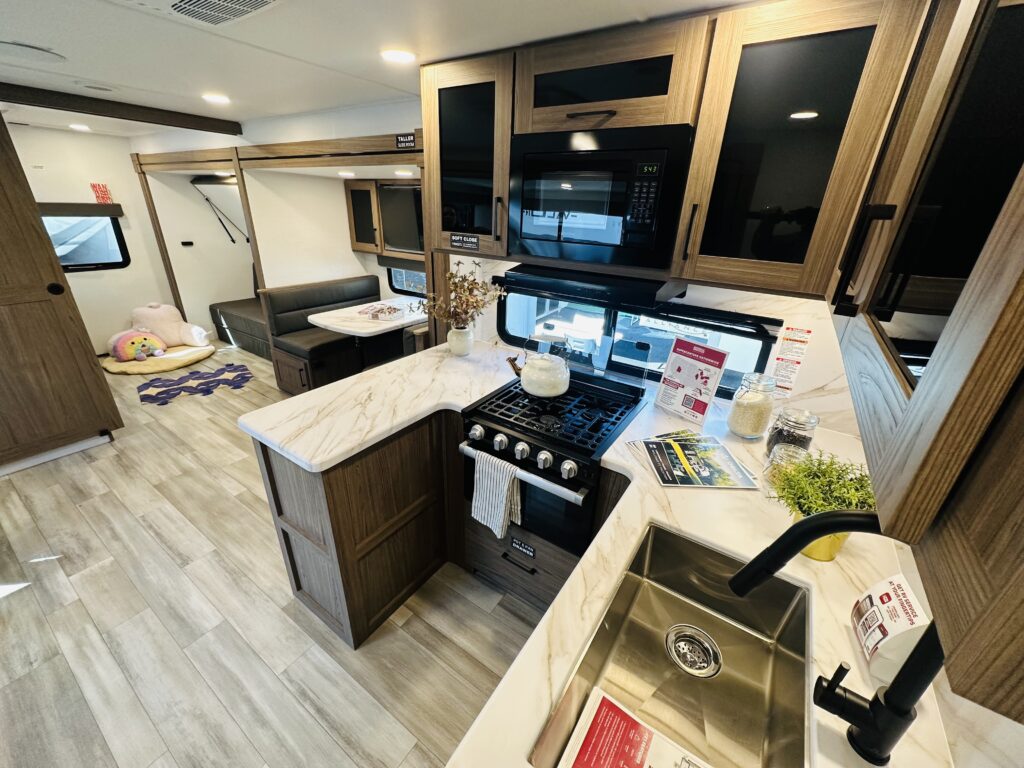
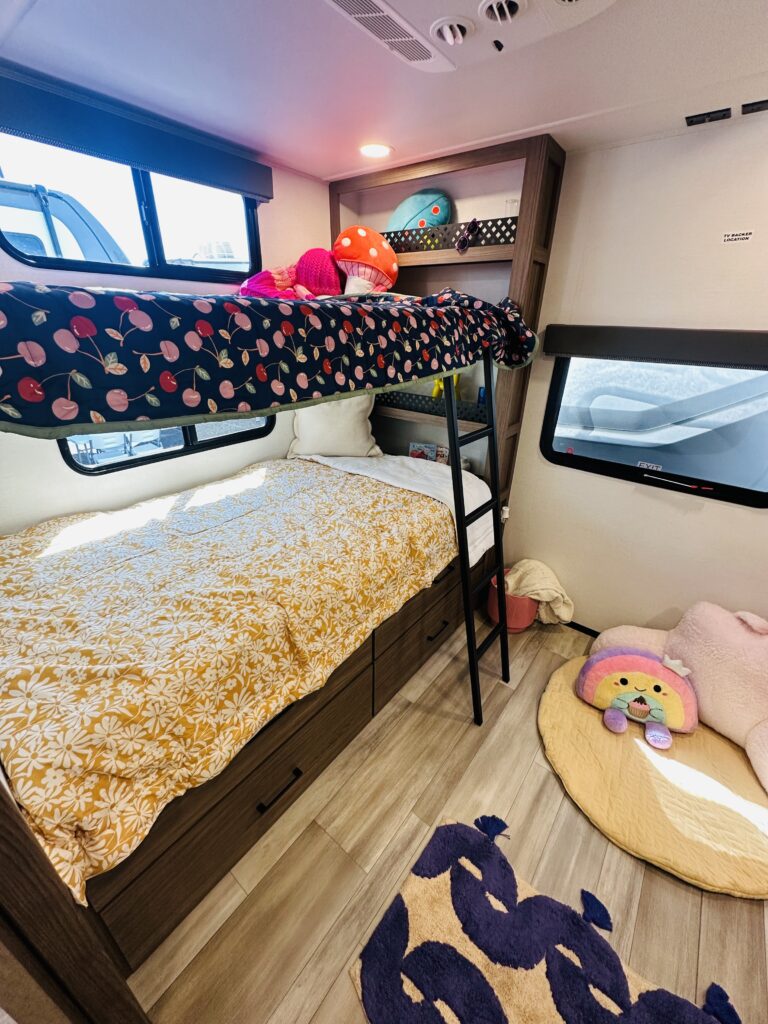
The Alliance Delta 321BH really impresses in so many ways! The layout is great, the bunkhouse is great, the kitchen setup is great, and the decor is really appealing. It is on the longer side, at nearly 37 feet in length.
If you’re tired of the gray and white interiors, make sure to check out Alliance trailers! They have a mix of dark woods and lighter flooring and walls, which feels light and fresh.
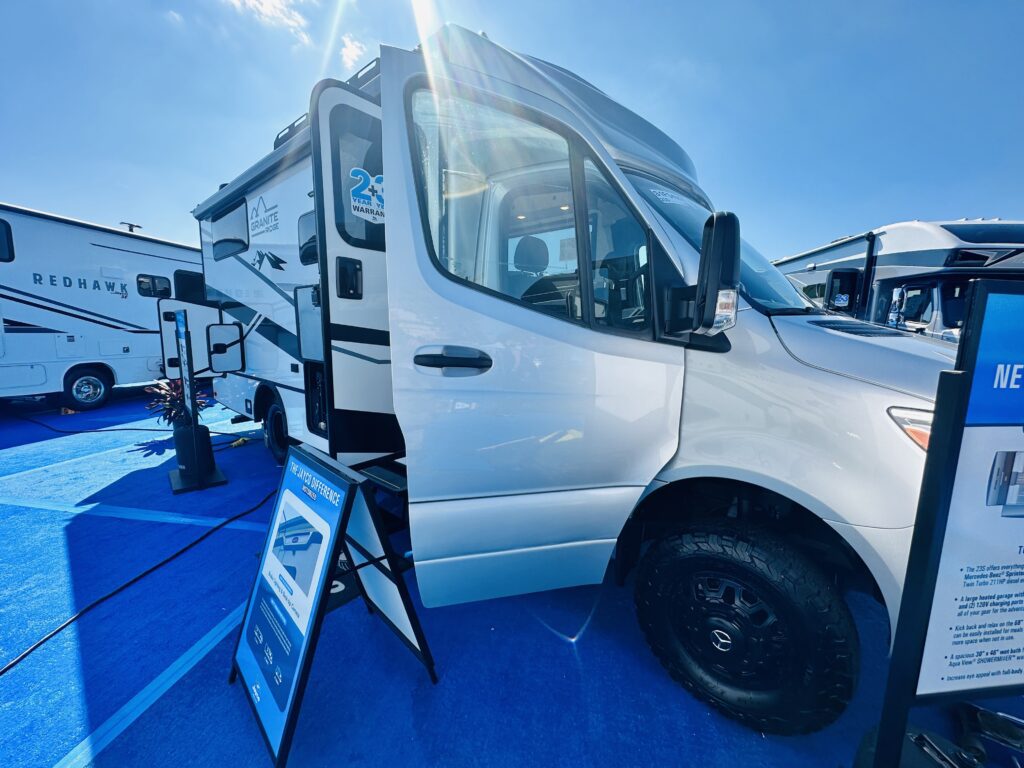
We spent a ton of time looking at the smaller Class Bs, as we mentioned above. Along with the Grand Design Lineage, the Winnebago EKKO series and the new Jayco Granite Ridge really hit the mark!

The rear twin beds are a game changer in a small space! You can add a cushion to the middle to make a king, or enjoy the ease of entry into the twins, with no need to climb over each other.
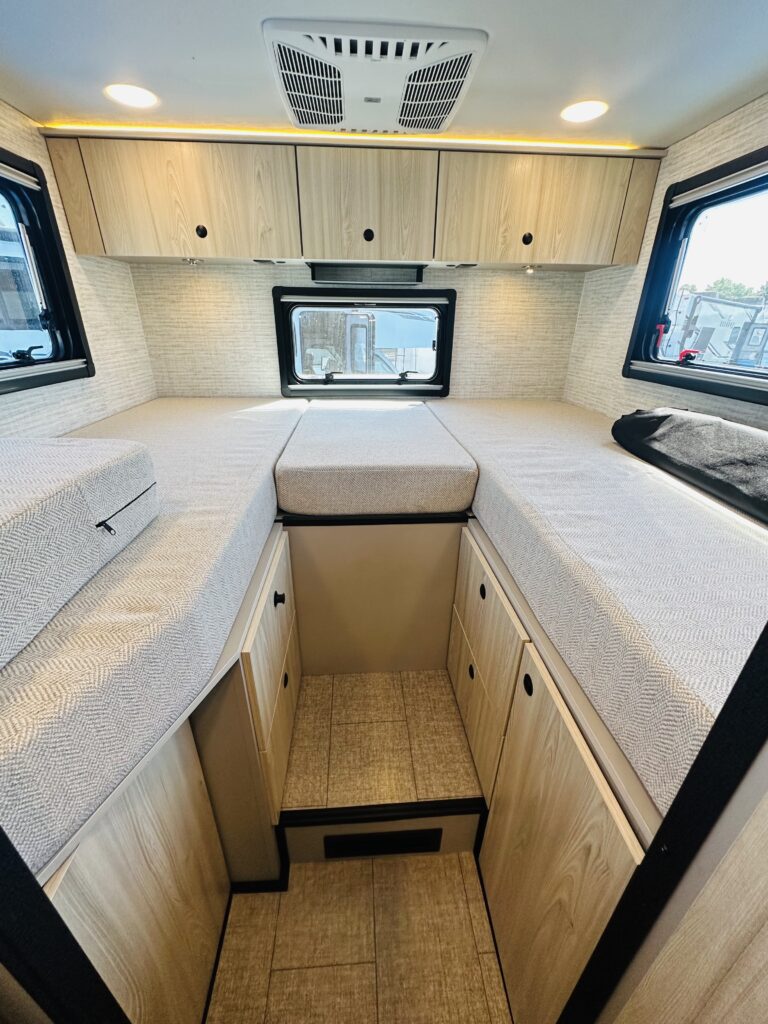
These “adventure” Class Bs are designed for off-grid camping and come with a lot of impressive amenities to make those stays comfortable!
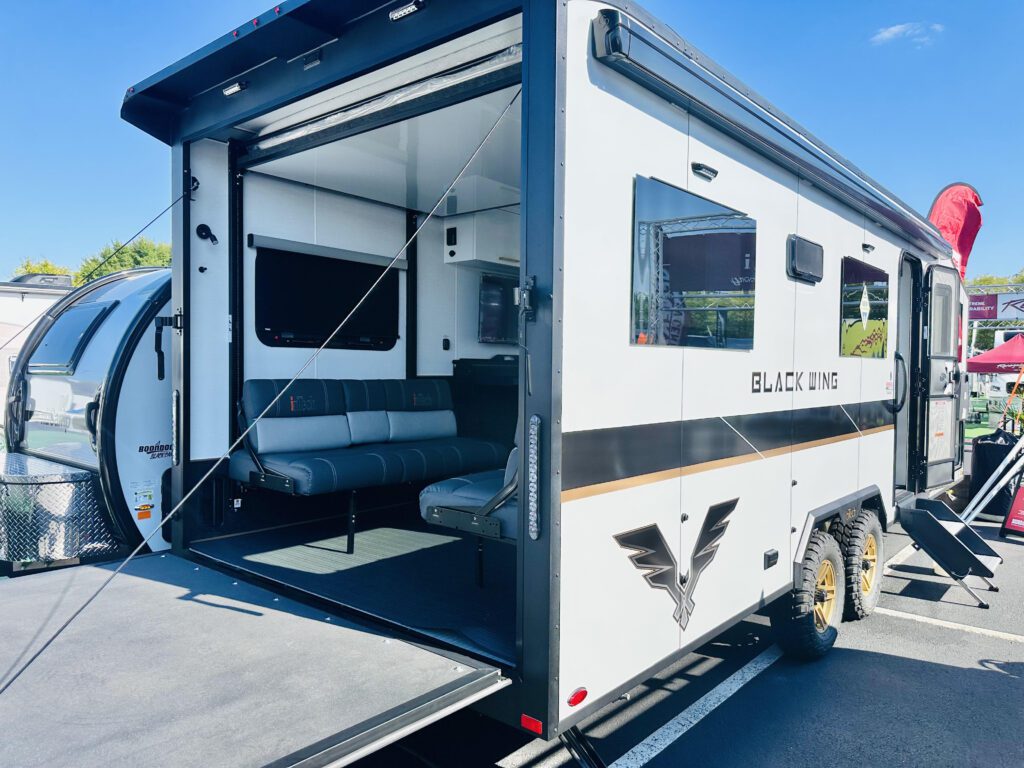
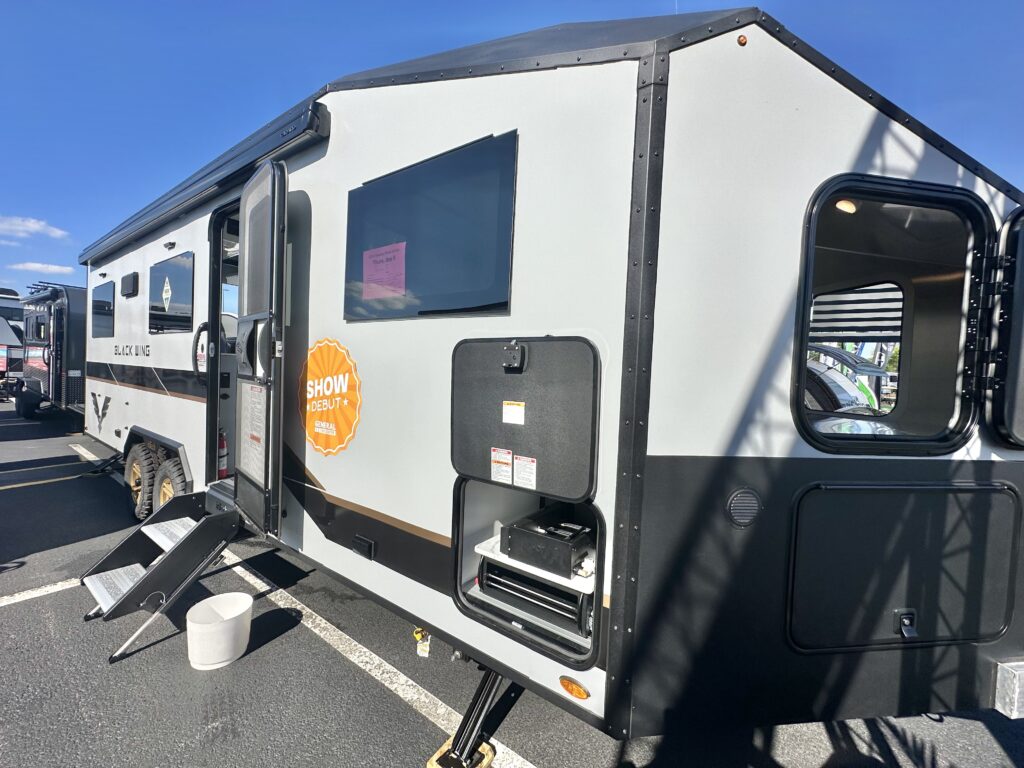
The inTech Black Wing toy hauler made its debut at the Hershey RV Show. We always love inTech’s designs. This one has a cool triangular front cap with two layers of storage, which you can see here:
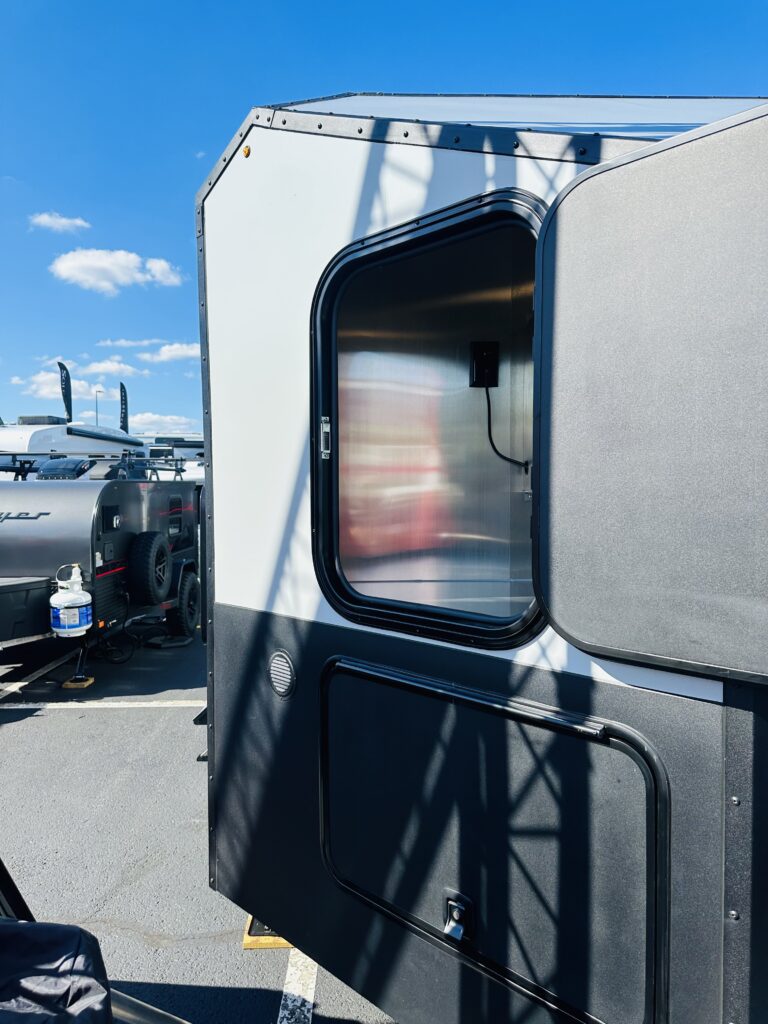
While the layout is relatively standard to what you’d expect in a toy hauler, inTech has some cool features, including the 40-gallon fuel station.
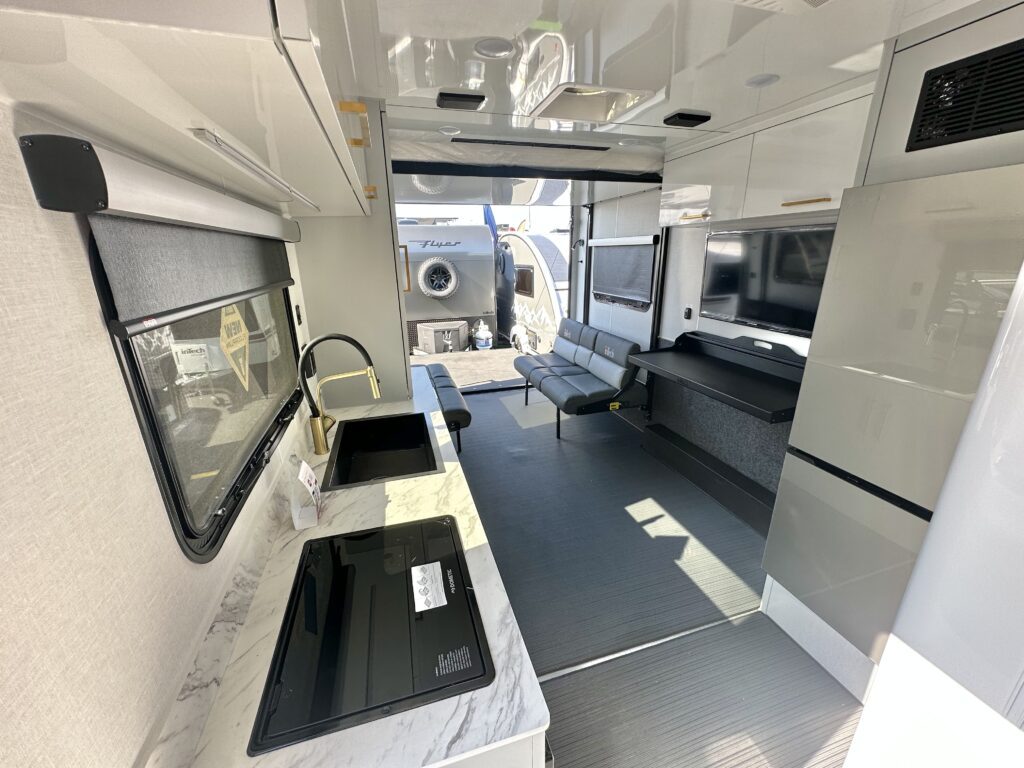
We really liked the interior, as it felt quite “lux” with sleek, gold hardware, glossy cabinetry, and more. This is a unique toy hauler because it puts those rugged off-grid components in such a sleek package!
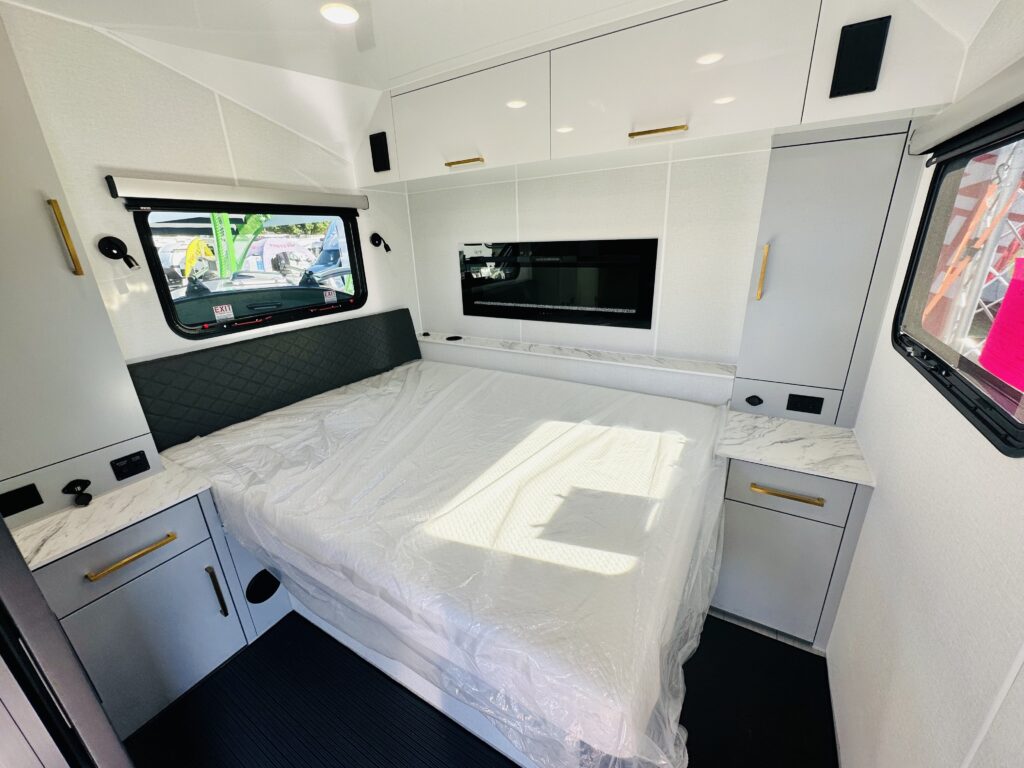
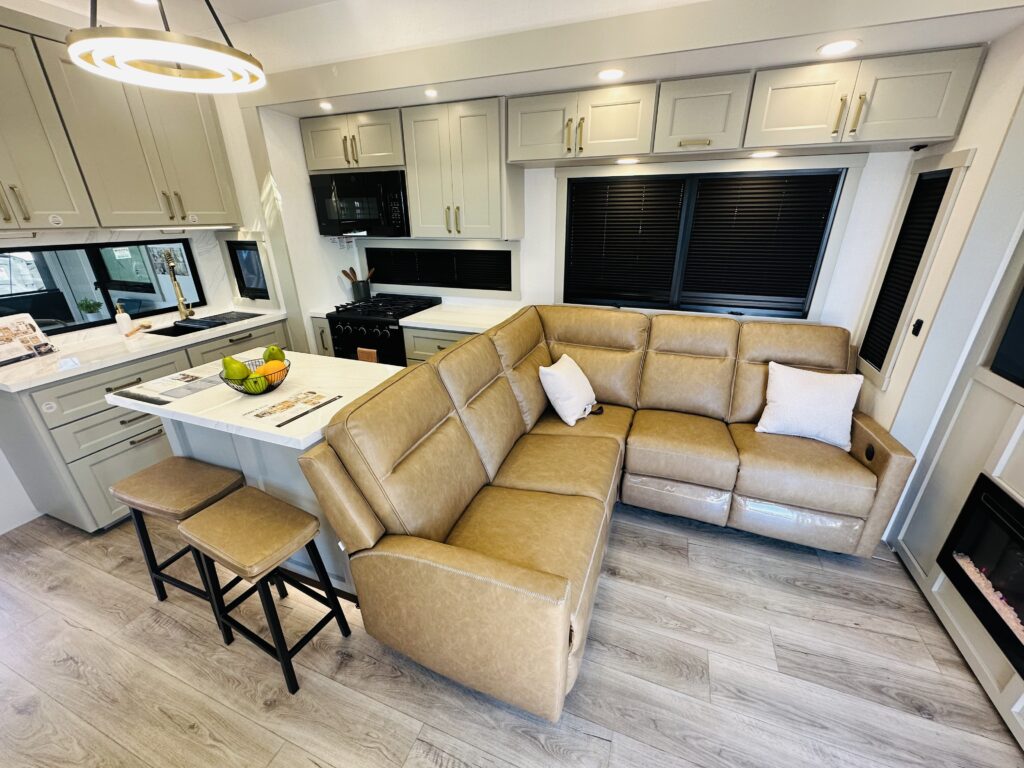
There’s a lot of hype around the Brinkley brand, and you really have to walk in one to fully get it! Wow. These do live up to their reputation.
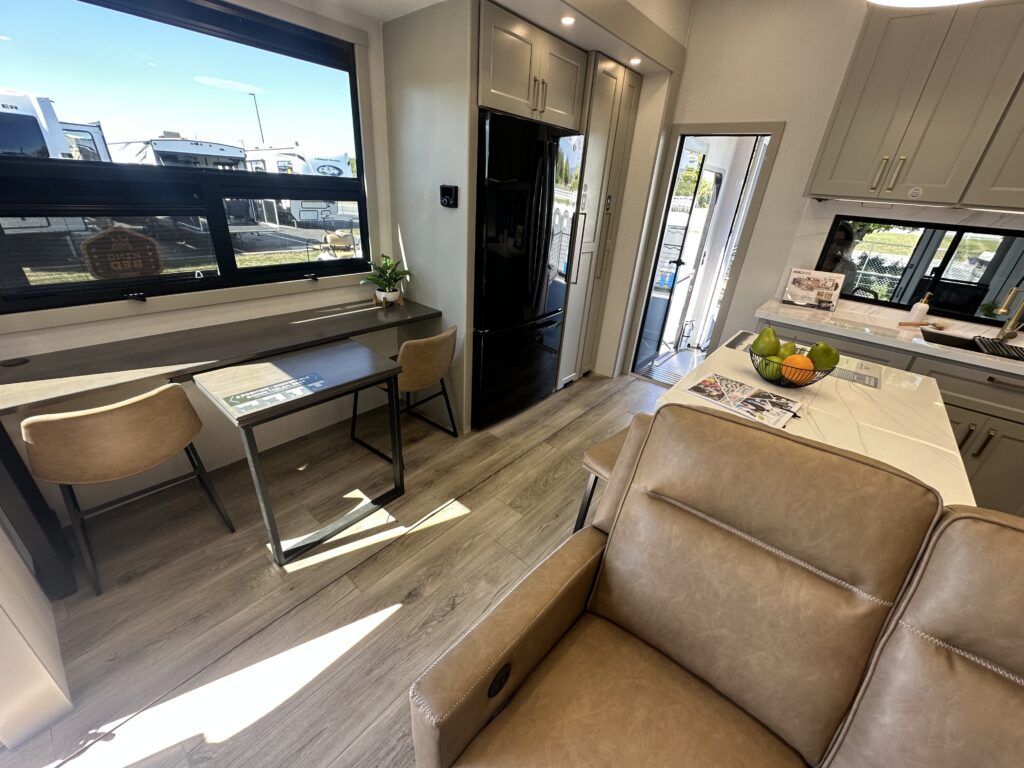
The Brinkley Model G is definitely impressive. The kitchens are made for people who truly love to cook. If you’re a foodie who wants a REAL kitchen, check out this manufacturer!
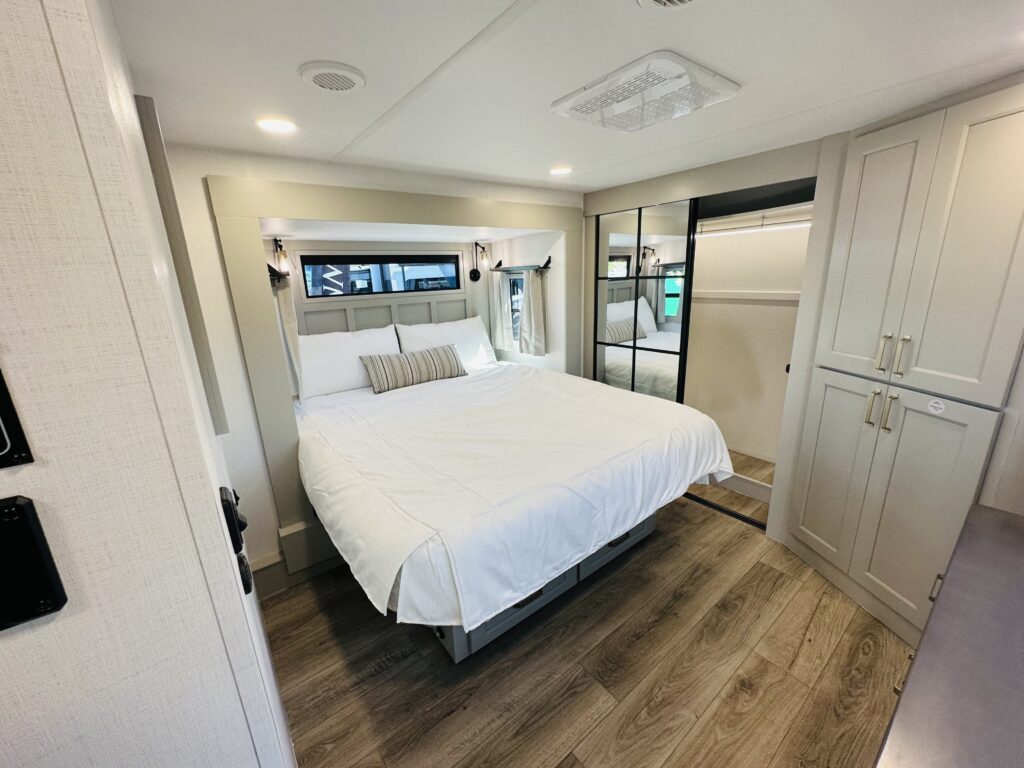
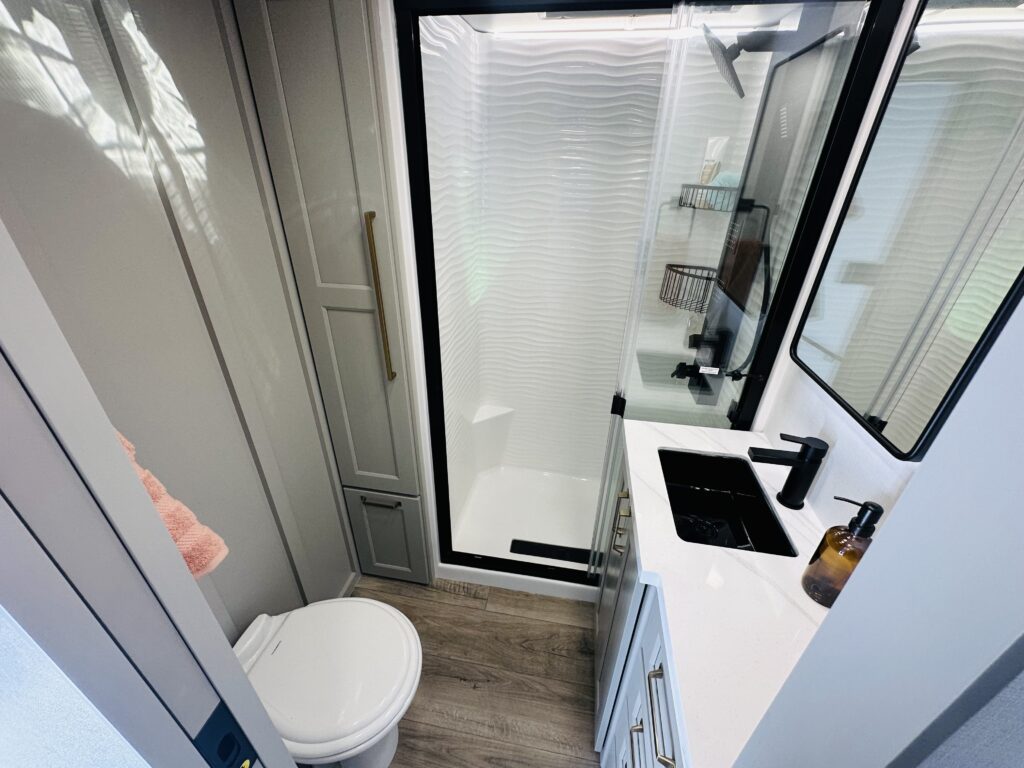
There’s no space wasted, and there are a ton of cool innovations you won’t find elsewhere, like flip-up countertops. One cool feature is that the garage of this toy hauler is really outfitted to be used in so many ways. It could be a work space, a party room (with a wet bar and wine fridge!), and/or a garage.
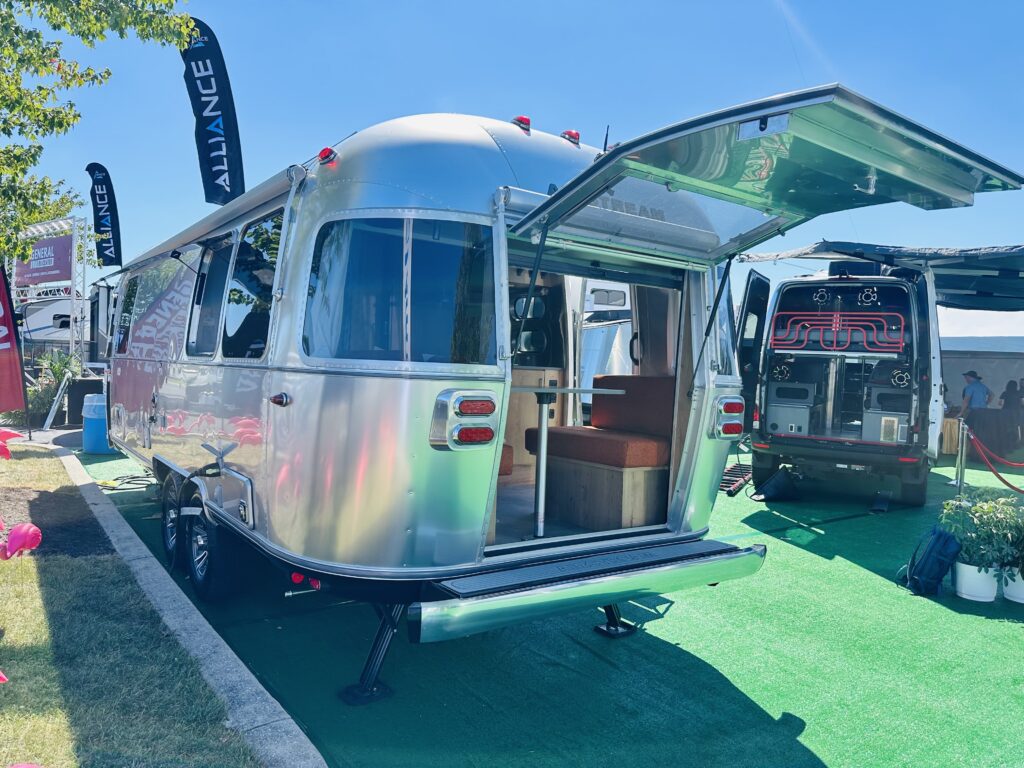
You really can’t go wrong with an Airstream. We really loved the Trade Wind 25FB‘s rear cargo door, which really makes us swoon! It lets in so much light and has a screen, so you can get a fresh breeze. We seriously spent a lot of time hanging out here since we loved this rear door!
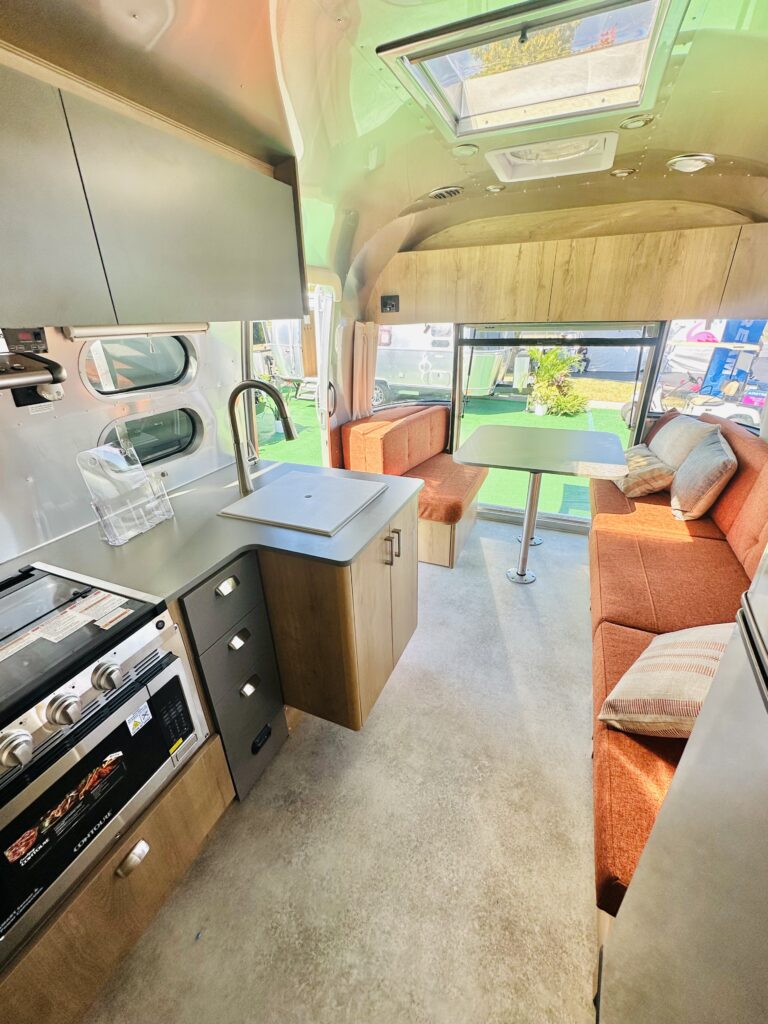
We also love the front twin beds!
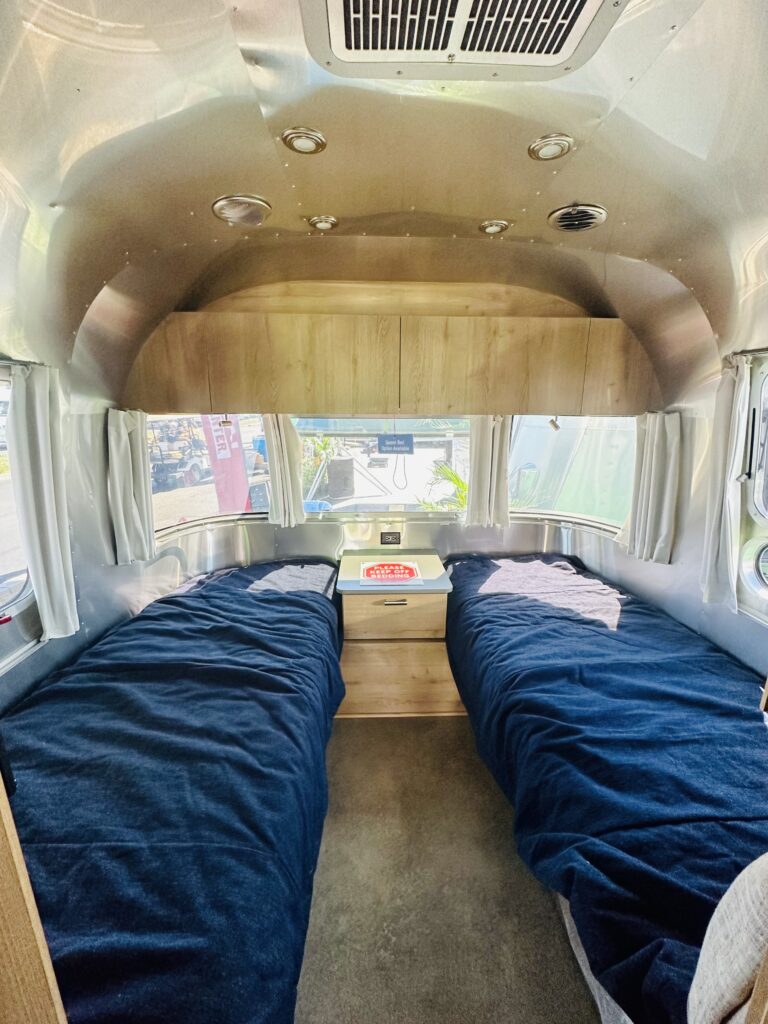
We saw many more great models than we’ve shared here! Head to our Instagram to find some model walkthrough videos on Reels. And look for us on TikTok, where we share more great RVing tips and tricks. Then, if you couldn’t make it to the Hershey RV Show, check out one near you, and let us know what rigs you loved!
The post 2024 Hershey RV Show: Trends, Favorite Rigs & Show Highlights appeared first on The RV Atlas.
Your feedback is valuable to us. Should you encounter any bugs, glitches, lack of functionality or other problems, please email us on [email protected] or join Moon.FM Telegram Group where you can talk directly to the dev team who are happy to answer any queries.
 Girl Camper
 Campground of the Week
 The RV Entrepreneur
 RV Miles Podcast
 RV Podcast