Swarfcast
Today's Machining World
Swarfcast is an extension of our popular blog, Today's Machining World, created for the community of the precision machining industry. We cover many types of topics that we feel our audience would find interesting such as manufacturing technology, robotics, entrepreneurship, business, politics, sports, and human interest stories.
- 34 minutes 7 secondsHow to Make Your Employees Want to Stay, with Adam Wiltsie–EP 130
Last week, I heard a story about an old customer of Graff-Pinkert who lost three key machinists because a shop down the street was paying more. It led me to make a post on Linkedin, asking if machinists and setup people were paid enough to attract young people to the machining field. On the whole, commenters vented that they were not compensated what they felt they deserved working in the machining industry. The post has 53 comments so far (I’m usually lucky to get one).
The big question is, are manufacturing jobs in the United States, machining jobs in particular, attractive enough to fill the labor shortage that everyone continues to cry about?
I thought back to one of my favorite podcast interviews, in which I spoke to Adam Wiltsie of Vanamatic, a 3-generation screw machine shop in Delphos, Ohio. In the interview, Adam told me that Vanamatic does not have a talent shortage and enjoys incredible employee retention, in part due to innovative recruitment strategies and flexible schedules. I don’t know what the company pays its employees, but Adam told me that when business came roaring back after the Covid-19 dive in 2020, Vanamatic raised wages $5 for all employees.
I spoke with Adam yesterday and he said that employee retention is even better than it was two years ago.
Even if you’ve memorized this story already, I recommend you check out the original blog and listen to the podcast. They’re good even a second time around!
Listen with the player at the bottom of the page or at your favorite podcast app.
View the podcast our YouTube Channel.
Follow us on Social and never miss an update!Facebook: https://lnkd.in/dB_nzFzt
Instagram: https://lnkd.in/dcxjzVyw
Twitter: https://lnkd.in/dDyT-c9hOriginal Blog
After Graff-Pinkert sold a second used Lico CNC lathe to Vanamatic, a 3-generation screw machine shop in Delphos, Ohio, I had a great conversation with Adam Wiltsie, the company’s Director of Operations. At that moment, I was quite envious of Adam—I was sitting at my desk in my office, while he was outside on a beautiful July Friday afternoon, waiting in line his local ice cream institution Dairy Hut.
Adam gets out of the office on Friday afternoons. He gets to tailor his work schedule, and contrary to what one might assume, this is not just a perk for members of the company’s leadership team. Vanamatic allows a flexible work schedule for all its 103 employees. Adam says this is a key reason why the company has not been suffering from a shortage of skilled people, that so many other manufacturing companies often complain about. In fact, 103 employees is a record number for the company, which happens to be located in a town of 6,000 people.
Vanamatic was founded in 1953 by Adam’s grandfather in Delphos, Ohio. Today, the company is run by a leadership team made up of Adam, his brothers Scott and Jared, Steve Schroeder and Dave Ricker. The company makes parts for a variety of sectors including automotive, aerospace, fluid power, agriculture, construction, fittings, and refrigeration. The majority of its machines are 8-Spindle VNA Conomatics— 1-5/8” and 2-5/8” capacity. For those unfamiliar with Conomatics, or “Cones” as they’re often called, think of an ACME-GRIDLEY but heavier and a larger tool zone. Adam says the company loves the machines because “they can push feed rates like no other.” Cones aren’t built anymore so Vanamatic has its own rebuilding program for the machines. The company also has CNC turning centers, a few other brands of multi-spindles, and 10 Lico CNC lathes—picture a sexy, beefed up 11-axis CNC Brown & Sharpe.
Adam is 42 years old, with three kids. He says having kids influenced his management style because it made him realize that every person works differently. Vanamatic’s management philosophy takes into account that all of the company’s employees have different requirements to bring out their peak performance and make them happy. Treating every individual employee uniquely bucks the traditional collective style of management in manufacturing companies, which Vanamatic had employed for the majority of the company’s life.
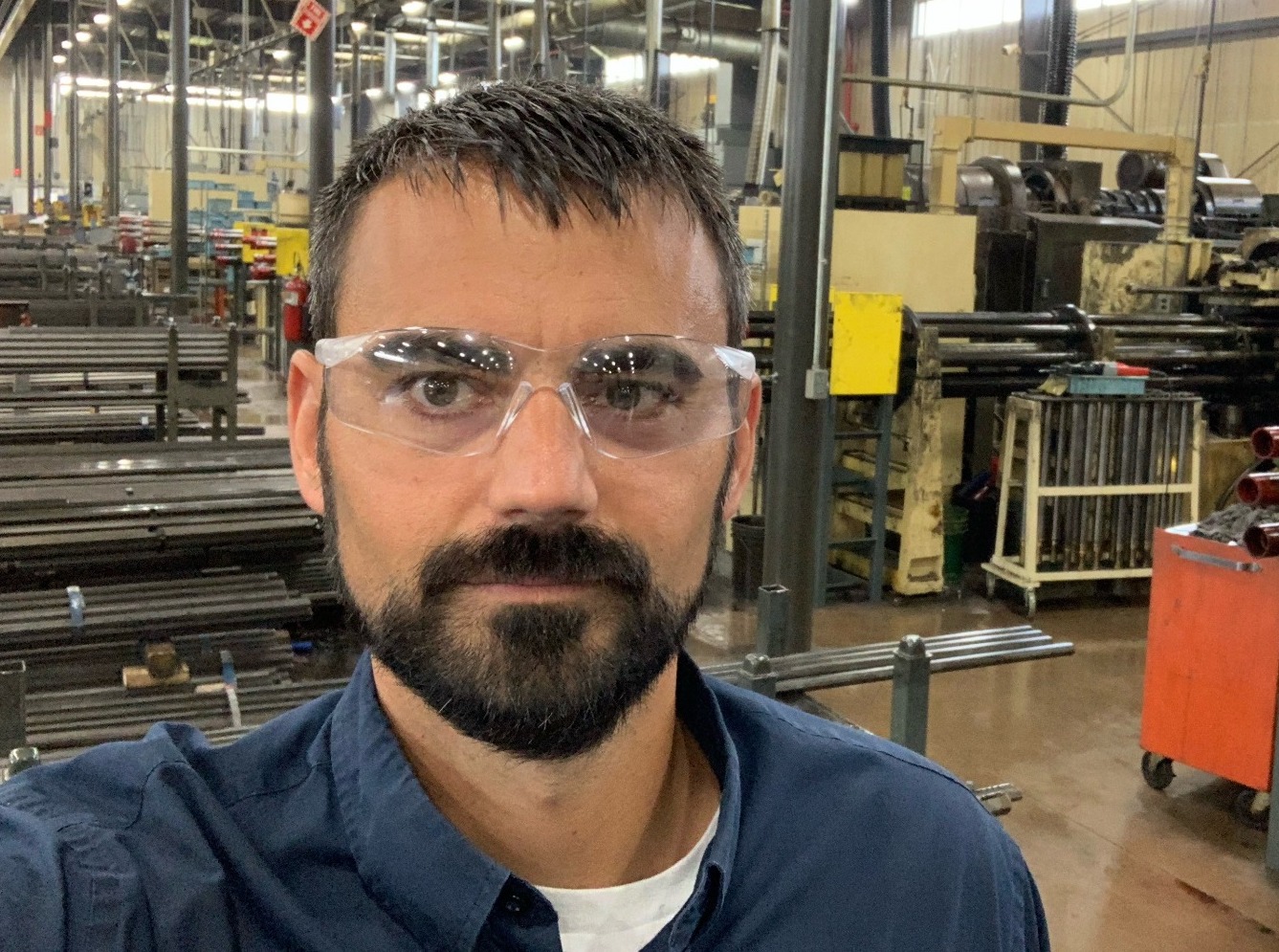 Adam Wiltsie, Director of Operations of Vanamatic
A while back, Adam and his brother Scott, head of Human Resources, implemented a management strategy called Start, Stop, Improve. Every year, they sit with each individual employee and ask them what they would start, stop or improve on a company level, a department level and an individual level. In the process, they learned that many people at the company desired a better work-life balance. They realized that by implementing flexible hours they could improve the lives of employees who prefer to be with their families at different times of day. Flexible hours could also accommodate employees who have hobbies or outside projects they want to pursue.
For most of Vanamatic’s existence, the company had a standard work week for every employee, of four 10-hour days and one 8-hour day. Fifteen years ago, the collective model was thrown out. Currently, all shop employees, aside from primary production operators, have the choice to work between 35 to 50 hours per week. Primary production operators can work 45 to 60 hours per week. Employees have the right to work within those ranges at their discretion without approval from supervisors. Every two weeks, the company takes a look at what work needs to be done and maps out a plan. Shop workers manage schedules amongst themselves to get the necessary work completed.
In the past, some of Vanamatic’s customers came to the company and demanded it implement a policy making its people work a minimum of 56 to 60 hours per week, but it refused to change its policy. Adam says loyal, happy, skilled employees are the essential element to keep the company successful, so it can’t afford to alienate or lose them. They take precedence over an annoyed customer.
Vanamatic’s management philosophy was a lifesaver in May of 2020, when its business fell 50%. The company gave its employees the choice to work 0 to 50 hours per week. It even laid off employees if they volunteered to be and then helped them sign up for unemployment benefits. When work came roaring back later in 2020, Vanamatic needed to get all of its people back fast. Instead of complaining about unfair competition against government assistance money, the company raised wages $5 above what workers were previously earning. Employees came back and felt valued. Now they are fueling Vanamatic to set a record pace for the company in 2021.
Question: Are machining jobs in the United States attractive enough to fill the labor shortage that everyone continues to cry about?
9 December 2025, 11:00 am - The Turnaround Formula, with Neil Lansing-EP 256
Today I’m talking to a guy who believes every company needs to be built to last—not just to flip.
Neil Lansing is a turnaround specialist who left private equity to bet his own money on small, underperforming businesses. He’s taken companies from 18 employees to over 400. From $2 million to $40-50 million in revenue. And when everyone else was laying people off in 2008, he told his refrigeration company’s team: “We need more clients.”
After transforming mom-and-pop service companies one after another, he found his final stop, Piedmont Machine & Manufacturing. At 67, he’s not looking for the next flip. He’s building something that will outlast him.
*************
Listen on your favorite podcast app using pod.link.

 .
.View the podcast at the bottom of this post or on our YouTube Channel.
Follow us on Social and never miss an update!Facebook: https://www.facebook.com/swarfcast
Instagram: https://www.instagram.com/swarfcast/
LinkedIn: https://www.linkedin.com/company/todays-machining-world
Twitter: https://twitter.com/tmwswarfblog*************
Link to Graff-Pinkert’s Acquisitions and Sales promotion!
*************
Interview Highlights
The Journey from Satellites to Shop Floors
Neil started as a satellite engineer at Hughes Aircraft, became a CFO of a publicly traded pharmaceutical company, then worked in private equity doing turnarounds and startups. But eventually he walked away from working with other people’s money to bet his own cash on small businesses. It wasn’t an easy mental shift. As he told me: “I remember the first time I did something. I was sitting there and I remember, now I’m not in corporate America, I’m not in these nice New York digs… I’m in some place where it’s like, my God, what did I get myself into?”
But then he told himself: “Quit crying, figure it out, make it work.”
The Five-Person Rule
One of Neil’s key insights is his management structure. Nobody has more than five direct reports. Not supervisors, not managers, not even Neil as owner. This tight span of control is how he grew his refrigeration company from 10-18 people to over 400 in six years while maintaining quality and accountability.
“Everyone has to do what we’re supposed to do,” he explains. “If we all do what we’re supposed to do and take the accountability of what we’re supposed to do, then it can work.”
Growing When Others Retreat
The 2008 financial crisis tested every business owner, but Neil’s response was counterintuitive. While the country was laying off 700,000 people a month, he gathered his top 10 guys and said: “We’ve just got to get more clients.”
By Christmas, they were bringing in all new work. Then their existing clients–Target, Publix, Costco – suddenly needed massive expansions. Neil went from laying off 40-50 people to desperately hiring them back plus another 40-50 more.
Why Manufacturing, Why Now
After several successful turnarounds, Neil decided manufacturing would be his next chapter. He bought Piedmont Machine in Concord, North Carolina, seeing opportunity where others saw decline. The company does Swiss machining for smaller diameter work and can handle parts up to 30 inches in diameter—from roller bearing components for landing gear to automated door systems.
He envisions growing his company to 80-100 employees, consolidating into a new 60-75,000 square foot facility, and implementing comprehensive training programs.
The Grinder’s Legacy
Neil calls himself a “grinder” – someone focused on day-to-day execution rather than just deal-making. His philosophy centers on personal responsibility: “If I don’t do what I’m supposed to do, then I can’t pay these people. And if I can’t pay these people, that means that we did it wrong.”
What drives someone to keep grinding at 67? Neil says it’s about legacy, not money. “Everything I’ve done, it still works. It still runs. If I do something and it goes under or it stops being in existence, then I feel like that’s not a good legacy. That means I didn’t do it right.”
Neil doesn’t know how to run a machine and doesn’t want to. He knows how to run a business with clear strategy, deep understanding of people, and balls, and he’s still betting big because that’s what real builders do.
1 December 2025, 11:00 am - 35 minutes 30 secondsRunning a “First Class” Cold Heading Company, with Joe Bennett-EP 135
Our guest on today’s podcast is Joe Bennett, Vice President of Sales at Seaway Bolt and Specials, a privately held cold heading company in Columbia Station, Ohio, founded in 1957.
In the cold heading process, coiled steel is cut into slugs, which are then hit multiple times, ultimately pounding them into a desired shape. The cold heading process is capable of producing several hundred pieces per minute. Some cold-headed products are net shaped blanks that are shipped to machining companies who then finish the parts.
Scroll down to read more and listen to the podcast. Or listen on your phone with Apple Podcasts, Spotify, or your favorite app.
Main Points
Seaway has historically focused on cold heading one product family, taper threaded pipe plugs ranging from 1/16” to 2” diameter. The pipe plugs are used in a wide variety of industries such as automotive, oil and gas, and agriculture, going into products like transmissions, pumps, compressors, and engines. Joe describes a threaded pipe plug as an inside out nut. It looks like a nut, but its threads are on the outside. They are produced by cold heading a blank followed by thread rolling. Seaway produces 100 million pipe plugs a year, exporting 30% of its production. A few years ago, the company decided it needed to make a new part family if it wanted to keep growing. Its team decided the logical course would be to cold head female tubular fittings to match its male pipe plugs.
To cold head its pipe plugs, Seaway uses machines called nut formers. To make the new tubular parts the company purchased three machines called parts formers, which have the capability to make more highly engineered parts than nut formers. Joe says the new machines stand two stories high, have the footprint of three conference rooms and weigh 400,000 pounds each.
The used machines cost several million dollars to purchase and will take millions more to rebuild. Joe says National produced around 18 of the type of 1.5” cold heading machines Seaway purchased. GM was their original owner, buying them new in the 1970s.
Prior to working at Seaway, Joe worked in sales for 10 years at a large cold headed parts distributor in the Columbus, Ohio, area. Six years ago, he took a job at Seaway because he preferred to work for a privately held, smaller company with around 70 employees, where he felt he could make a significant impact.
Joe beams about Seaway’s philosophy of running the company with a “first class” management style. He and the company’s owner, Ray Gurnick, offered to cover a roundtrip plane fare for me to come to the company and interview them in person. I unfortunately had to take a raincheck.
Seaway pays 100 percent of higher eduction costs for its employees. The company has three holiday parties a year and regularly brings in food trucks to celebrate company achievements. It offers profit-sharing and gives regular bonuses. Its shop bathroom has been redone in marble.
Seaway uses open book management, showing its employees the company’s financials on a quarterly basis. The purpose of open book management is to keep employees invested in the company’s success and guide them how do their jobs in the best way to maximize productivity. Also, including employees in the management process makes them feel valued, which can boost performance and satisfaction.
Every Friday, production at Seaway stops for the last half hour of the day so employees can clean the shop–cold heading shops happen to be notoriously filthy. Afterward, the quality department takes photos around the shop and reports to the various departments how well they cleaned up. Joe says that when visitors come to Seaway they are wowed by the shop’s cleanliness, but more importantly, the cleanliness creates a pleasant working environment for Seaway’s people.
Though Seaway is ambitiously expanding its product lines, the company does not aspire to be like its larger competitors. Joe says the company’s strategy is to do all the little things better than its competition. This will attract the best talent to work there, which in the end will lead to success.
Question: If you could buy any new equipment for your shop, what would you buy?
25 November 2025, 10:22 am - 12 minutes 2 secondsAnother AI Episode (But This One’s Actually Useful)-EP 255
The last six months I’ve been using AI to help me with everything from business negotiations to dealing with my kid’s pneumonia. It’s become a daily part of how I operate—at work and at home. The big difference between it and just googling is that you have a conversation with it.
Check out the video I made for my YouTube Channel, I Learned It on a Podcast!
What the Heck is AI Anyway?
If you’ve used ChatGPT or heard about it, you might still be wondering what it actually does. Wharton professor Ethan Mollick calls it “the world’s fanciest autocomplete.” Instead of just finishing one sentence, it can write full emails, answer complicated questions, or help you think through equipment problems.
Here’s the key difference: when you ask Google a question, you get a list of links. When you ask AI a question, you get a response—and then you can respond back. You’re having a conversation.
But you have to watch out—it can be completely wrong while sounding confident. I asked about health effects of eating eggs daily and got different answers depending on how I phrased it. It even sited a made up source! You have to stay sharp.
It Figures Stuff Out
The biggest shift is I’ve stopped Googling much. Instead of sorting through search results, I just ask AI and we work through problems together.
I’ve used it for oil stains on my pants—describing exactly how it happened, what cleaning supplies I have, when I can get to a washing machine. For business negotiations—discussing customer situations, to figuring out what to make for dinner, we discuss a game plan together. When I was lost at Frankfurt airport, I snapped a photo of German signs and uploaded it. ChatGPT told me exactly where to go like having a local guide.
The power isn’t in the first answer. It’s in the back-and-forth. AI asks follow-up questions I hadn’t thought of, suggests approaches I wouldn’t have considered. We figure things out together.
How You Get Good at Using AI
Don’t ask for one idea—ask for 200. Don’t ask for one way to write an email—ask for 30 variations and pick the best one.
This creates serendipity—lucky breaks that take projects in directions you didn’t expect. Recently, working with Claude on a video script, we went back and forth on different ways to explain AI’s value. Through that conversation, we landed on the perfect line: “It helps you figure shit out.”
I might have gotten there alone, but it would have taken a while. Together pretty quickly we found something that captured exactly what AI does in daily life.
My Creative Conflict
I’ll be honest. I sometimes feel conflicted using AI when I write. Sometimes it feels like having having a parent helping me with my homework who does too much. When Claude helps me write something polished that sounds like me, part of me thinks: “Did I actually write this?”
But here’s what I’ve realized: AI doesn’t replace the hard thinking. It removes friction. The ideas and judgment are still mine. It’s just easier now to get more ideas into the world. I think of it like jazz—sometimes it’s a trio with me, Claude, and ChatGPT all riffing together.
My Challenge to You
Spend 10 hours using AI for everything you ethically can in your business. Ask about pricing strategies, equipment decisions, customer communication challenges. But remember. It’s predicting patterns, not searching databases. When something doesn’t seem right, trust your instincts and double check.
Most importantly, don’t just ask one question and move on. Have the conversation. Ask for 50 ideas instead of 5. Push back when you disagree.
You’ll quickly discover what AI is surprisingly good at, and what it’s not ready for. More importantly, you’ll see how it changes the way you figure things out when you’re stuck.
Question: What’s your experience been with AI tools? Let me know in the comments.
For the original podcast that inspired my blog and video go to this link: Using AI to Think Better, Create More, and Live Smarter
18 November 2025, 11:15 am - 34 minutes 18 secondsCitizen CNC Swiss Lathes, with Marc Klecka
We’re seeing an uptick in the Swiss market on the Graff-Pinkert side of the business, particularly Citizen machines. In response, we thought now was a great time to share an interview Noah conducted in 2021 about Swiss-Type CNC machining. He talks to Marc Klecka, founder and president of Concentric Corporation, a prominent distributor of Citizen-Cincom CNC Swiss lathes in Cleveland, Ohio.
Read more below or tune in!
*************
Listen on your favorite podcast app using pod.link.
.View the podcast at the bottom of this post or on our YouTube Channel.
Follow us on Social and never miss an update!Facebook: https://www.facebook.com/swarfcast
Instagram: https://www.instagram.com/swarfcast/
LinkedIn: https://www.linkedin.com/company/todays-machining-world
Twitter: https://twitter.com/tmwswarfblog*************
Link to Graff-Pinkert’s Acquisitions and Sales promotion!
*************
Interview Highlights
Marc talks about his company, Concentric, which has been distributing Citizen Swiss machines for 31 years and Miyano for 10 years (after Citizen acquired the company). (2:20)
Marc gives his “5-year-old explanation” of Swiss CNC Machining (sliding headstock machining). He says the original technology of “Swiss style machining” was developed in Switzerland over a hundred years ago for producing high precision watch components. He says what differentiates CNC Swiss machining from conventional CNC turning is that a CNC Swiss machine grips the part with a collet and also supports the part with a guide bushing. This eliminates the vibration that normally occurs when machining bar on a a conventional CNC lathe. (3:00)
Marc says a traditional Swiss part has a length to diameter ratio of 3 to 1 or more because that is the point where you start sacrificing the rigidity and accuracy on a conventional CNC lathe. He tells a story about a Citizen customer who produced a 10-foot part out of aluminum tubing. (4:40)
Marc talks about the importance of running ground bar stock on Swiss machines, particularly for running lights-out. However, he says that says in the 31-year history of Concentric, he estimates that only 30% of the material run (in Swiss mode) on the machines he has sold has been ground bar stock. He says it is a misconception that Swiss Style CNC machines are only good for running ground stock. (7:25)
Marc says that during 2020 Concentric’s business did ok, but the pandemic made it more difficult to sell machines because it was harder to have in person contact with customers. (11:00)
Marc says that there are lots of good brands of machine tools on the market, but he sees the support and service of local distributors as something that sets Citizen apart. He says that many years ago Marubeni Citizen made a point of having all of its local distributors become self-sufficient for servicing customers. He says that all the Citizen sales engineers also are applications engineers. He says it is important to have sales people who can get in the trenches with customers to solve their problems. (12:00)Marc talks about Citizen’s proprietary LFV (low frequency vibration) technology, which is featured in many of the latest models. It enables operators to control the geometry of the chip coming off the machine using the machine’s CNC control. He says this capability is significant for manufacturers who want to do lightly attended or unattended machining. (17:20)
Marc talks about the significance of the medical sector for Citizen machines. He explains thread whirling for making long bone screws. He discusses a bone screw that was made on a Citizen featuring a laser that performed a cut on that part while still inside the machine (see video). (21:45)
Marc talks about diverse markets where he sees Citizens being used. He says during COVID-19 woodworking has become more popular and Citizen machines are making tools used for the art. Also, he says tattoos have become more popular during the pandemic and Citizen machines are making parts that go into the tattoo gun pens. He says demand continues to grow for parts for the electric car markets. (26:00)
Noah asks Marc tell him something he learned the week before. Marc jokes hat he learned it probably was not a great thing to break into the Capital building. He also said that he learned about the new LNS chip conveyors that are being put on some of the newest Citizen machines equipped with LFV technology. (31:00)
Question: Which Swiss machine do you prefer to use and why?
12 November 2025, 2:02 pm - 41 minutes 53 secondsRare Earths Aren’t Rare, with Julie Klinger-Ep. 254
“Rare earths aren’t actually rare, nor are they earths,” Julie Klinger told me. Julie is an associate professor at UW Madison and literally wrote the book on rare earth elements—Rare Earth Frontiers: From Terrestrial Subsoils to Lunar Landscapes.
I interviewed her last week, the day after Trump signed a rare earths deal with China, which had been threatening export restrictions. I knew from all the hubbub they were important for US national security and our supply chain, but I didn’t realize these elements seem to pop up in everything, including a ton of the materials used in precision machining.
*************
Listen on your favorite podcast app using pod.link.
.View the podcast at the bottom of this post or on our YouTube Channel.
Follow us on Social and never miss an update!Facebook: https://www.facebook.com/swarfcast
Instagram: https://www.instagram.com/swarfcast/
LinkedIn: https://www.linkedin.com/company/todays-machining-world
Twitter: https://twitter.com/tmwswarfblog*************
Link to Graff-Pinkert’s Acquisitions and Sales promotion!
*************
Interview Highlights
China’s “Monopoly” Isn’t What You Think
Rare earths comprise 17 chemically similar elements on the periodic table. Julie calls them “spice metals.” You add a tiny bit to glass, steel, or other alloys and they do amazing stuff. They make things lighter, faster, stronger, brighter. They’re in your iPhone, your car, your welding electrodes. Lanthanum-thoriated tungsten electrodes? That’s a rare earth element giving you arc stability.
The conversation got really interesting when we talked about China’s dominance. I thought rare earths are like oil—a coveted resource that various nations hoard. But Julie explained that rare earths are actually all over the Earth’s crust. China doesn’t have a geological monopoly; they have a processing monopoly.
Back in the ‘80s and ’90s, Western firms basically said “this stuff is too dirty and expensive to process here” and outsourced it all to China. Now China controls about 80% of global processing, and we’re worried they’ll cut us off.
But Julie says that might actually be good for us in the long game. When China announced export restrictions, she said the Financial Times called it “a gift to Western industry.” Why? Because it drives prices up, making it economically viable for companies outside China to get back in the game.
We’re Not in a Rare Earth Crisis
Julie also shared how measured China’s approach actually is. They have business interests to protect too. Chinese companies and joint ventures want to keep selling. If China plays too much hardball, those businesses might just pack up and leave. It’s not the zero-sum game the news makes it out to be.
We don’t need to panic about rare earth supply chains. The materials keep flowing because everyone wants them to. Also, we likely already have a decent amount in reserve, we just don’t know exactly how much.
Any real restriction would actually accelerate innovation in substitutes and domestic processing, things we’ve already figured out but haven’t scaled because Chinese supply has been so reliable.
What I found really interesting that many people aren’t talking about is that technology is already moving beyond rare earths. Julie told me that scientists have been developing rare-earth-free batteries and magnets for years. The solutions exist. They’ve just been sitting on the shelf because it’s easier to keep buying from China. If that supply ever truly gets cut off, we’d see these alternatives deployed almost overnight. It could be like when we restricted AI chips to China. Instead of crippling them, it pushed them to develop their own technology faster and more cheaply.
Question: What materials in your shop do you worry about sourcing?
4 November 2025, 11:00 am - 16 minutes 1 secondEp. 129 – Recruiting Long Term Shop Employees, with Bill Cox (Part 2)
In part 1 of my interview with Bill Cox, owner of Cox Manufacturing in San Antonio, Texas, Bill talked about the power of his company’s robust apprenticeship program.
But how does Cox Manufacturing get so many employee candidates, while most machining companies are dying to get any job applicants? Answer—the company has built a strategic recruiting program.
Scroll down to read more and listen to the podcast. Or listen on your phone with Apple Podcasts, Spotify, or your favorite app.Some of the company’s strategies for finding new employees are simple common sense, such as keeping good records of everyone who has applied to the company, which Bill says some companies actually fail to do. Cox Manufacturing also posts a large company sign advertising jobs available, which is visible from the highway to grab the attention of potential employees.
The company also likes to find new employees via referrals from current employees who often bring in job candidates who fit the company’s culture. It offers bonuses to employees when their referrals remain at the company for one month, six months, and a year.
Several years ago, Bill became the founding chair of an organization of manufacturers in his area, called the Alliance for Technology Education in Applied Math and Science (ATEAMS). Initially, the organization sponsored tours for students to visit the area’s manufacturing companies with the hope it would attract them to working in the manufacturing industry. After a short time, the organization realized that instead of giving tours to students, it was more effective to give tours to local high school teachers who could then promote careers in manufacturing to the students. Prior to COVID-19, the program had become so popular it had a waiting list. Bill says most of the teachers have never been inside a manufacturing facility before, so they often are amazed when they get tours of state of the art shops like his. I asked Bill if guidance counselors also come on the tours. He said unfortunately most of them have not been receptive to promoting careers in manufacturing but he hopes that will change one day.
Bill said one of his employees who surprised him the most was a middle-aged woman who prior to working at Cox Manufacturing had spent many years in the health care field. She started at the company deburring and inspecting parts but then applied to its apprenticeship program. He said the company was hesitant to hire her because in the past they have not had the most success hiring people trained in other fields, but she persisted, so the company gave her a shot. As an apprentice she excelled and progressed much faster than a lot of her younger male peers. In 90 days she was setting up CNC machines.
Bill remains wary of people already making good money in other careers who apply to work at his company. In the past, the company invested in several employees who stayed there a little while, but left when more lucrative opportunities became available.
Cox Manufacturing has a policy of not admitting candidates to its apprenticeship program if they are fully trained in a field where they can make more money and jobs are available. The aerospace industry often has a lot of layoffs, so in the past, aircraft mechanics came to work at Cox Manufacturing but then left when their more lucrative previous jobs again became available. The company has had similar experiences with employees who previously worked in the oil industry.
Bill’s advice for manufacturing companies who want to build their workforce is to think about their long term future. He says companies should develop in-house training programs and start recruiting young people even when they don’t need new employees. They should not hire employees out of desperation who are not compatible with a long term success strategy.
As I do with many guests, I asked Bill what he thinks of when hears the word “happiness.” He told me happiness means fulfilling one’s God given purpose, which is why when his company hires a person it tries to make sure the job is aligned with who they are and who they are designed to be.
Question: How do you make sure employees stay long term?
28 October 2025, 1:00 pm - 27 minutes 29 secondsEp. 128 – Building a Great Apprenticeship Program, with Bill Cox
Unlike the majority of machining companies right now, struggling to find enough skilled people to fulfill demand, Cox Manufacturing in San Antonio, Texas, boasts a continuous pipeline of new talent. In fact, Bill Cox, the company’s owner, says right now the company has a stack of applications for shop apprenticeships, of which he will pick an average of one for every 50 candidates.
Cox Manufacturing specializes in producing high volumes of turned parts. I’ve been to his facility several times and can vouch that it’s a treasure trove of some of the best European multi-spindle screw machines, CNC Swiss, and CNC turning centers. The company churns out 1.5 million parts every week, supplying sectors such as aerospace, firearms, defense, automotive and trucking, medical devices, and electronics.
Scroll down to read more and listen to the podcast. Or listen on your phone with Apple Podcasts, Spotify, or your favorite app.Bill’s father, William Cox Sr., started Cox Manufacturing 65 years ago. When he suffered a fatal heart attack when Bill was 12 years old, Bill’s mother took the lead of the company. After Bill attended college for a few years he came back to run the company with his mother. At that time the company had 18 employees, today, 45 years later, it has 185.
Twelve years ago, Cox Manufacturing put together an apprenticeship program that it registered with the Department of Labor. The program is made up of an education curriculum, much of it taken from the online platform Tooling U-SME, along with some proprietary content created by Cox Manufacturing.
The other component of the apprenticeship program is “on the job training,” which today people prefer to call “on the job learning” or OJL. Cox Manufacturing’s apprenticeship program spans over three years. Each year the company maps out requirements for the OJL and academic components it chooses from courses offered by Tooling U-SME. The company has implemented software to closely track the apprentices’ skillset progress. Training coordinators and supervisors facilitate the training.
Every time employees graduate from a year in the apprenticeship program they get a pay bump and a bonus week of vacation. Apprentices training to run CNC machines start at a wage of $15 per hour, while those training on cam multi-spindles start at $16 an hour. Bill says the company pays apprentices more money to learn cam multi-spindles because the machines are more complicated and less “sexy” than CNC machines. Even with the higher starting wage, it is a challenge for Cox Manufacturing to get people to choose the path of training on the cam machines. Bill says some people try to learn the cam machines but can’t get get the hang of them, yet then they try to work on CNC machines and excel. I asked Bill if the company likes to cross train people to run both cam and CNC machines. He said it is not the company’s normal policy. He likens running different types of machines to playing both the violin and the saxophone. But, he admits, anybody who can run a cam multi-spindle can run a CNC, just not always the opposite.
Apprentice candidates visit Cox Manufacturing three times before they are chosen for the apprenticeship program. They have to take a math test, which many people fail. It consists of 12 questions, including 2-place decimal addition and subtraction, along with three word problems. Candidates are also given an AcuMax Index personality profile to predict if they will work well in the company’s environment.
Bill says in as few as 90 days apprentices can do basic setups on a 5-axis Swiss machine. They will know metrology, how to read blue prints, change tools, make offsets, and install tooling. However, 90 days is not enough time for apprentices to learn to set up cam multi-spindles because the machines have no computers to make automatic adjustments and have so many more moving parts.
Bill says that low wages is one contributing factor in young people not choosing manufacturing as a career, but the greatest reason for the shortage of skilled workers in manufacturing is that businesses haven’t invested enough in the development of their workforces.
Question: Are cam screw machines sexy or ugly?
28 October 2025, 1:00 pm - 7 minutes 59 secondsHow to Persuade Anyone Before You Even Speak-EP 253
Last week another machinery dealer mentioned that being a family business was part of why she wanted to work with us at Graff-Pinkert. I don’t know if that was the deciding factor, but it reminded me that persuasion often happens before you say a word.
This concept of convincing someone before you even start making your pitch was coined “pre-suasion,” by bestselling author Robert Cialdini, one of the world’s leading experts on persuasion. I often use his techniques in our machinery business. Some of it just seems magical. (More blog under the video)
Check out the video I made breaking down the psychology behind this on my YouTube channel, I Learned It on a Podcast.
The 7 Principles (Restaurant Edition)
To understand pre-suasion, it’s important to learn about Robert Cialdini’s seven principles of persuasion—the reasons people say yes. One good way to explain them is through restaurants.
Reciprocity: There’s a great breakfast place in Chicago called Lou Mitchell’s, where they give you these great donut holes while you wait. You haven’t even ordered yet, but you already feel good about the place.
Scarcity: My local deli, Bergstein’s, only serves chicken soup with kreplach on Thursdays. That makes me crave it way more than if they served it every day.
Authority: When the menu says “Chef’s Favorite” or “James Beard Award Winner.” We trust experts’ taste.
Consistency: Restaurant rewards cards. Once you start earning points, you keep coming back to stay consistent with what you’ve started.
Liking: Good service, friendly staff. When the waiter notices your Cubs hat and says, “Hey, I’m a Cubs fan too.” You want to do business with people you connect with.
Social Proof: “Most Popular Item.” If everyone else is ordering it, it’s probably at least pretty good.
Unity: This is Cialdini’s newest principle. People want to do business with those they share an identity with. When a place says “Family owned since 1950” with walls full of family photos, it draws other families in.
Pre-Suasion in Action
According to Cialdini sometimes the most powerful influence happens before a conversation even starts. Researchers ran a study with an online furniture store. Half the customers saw a webpage with fluffy clouds in the background. The other half saw pennies. Same store, same products.
The cloud group bought furniture based on comfort. The penny group focused on price. When interviewed afterward, customers had zero awareness that background images had influenced their decisions. Crazy, right?
In college, my friend Ryan had the brutal job of calling alumni for donations. But Ryan understood pre-suasion instinctively, so he handled the task quite well. He’d ask alumni what they majored in and ask for advice on his own major choice. By asking for advice, he flipped the script. They went from being victims of a donation call to mentors.
Your Setup Matters
Before your next important conversation, whether it’s equipment negotiations, customer meetings, or personal conversations, think about the setup. If you’re designing a presentation or website, pay attention to the cues you’re showing. A single image or phrase can shape someone’s entire decision. That’s why I added “Family owned since 1941” to the top of our redesigned Graff-Pinkert website.
Before meeting with someone, do your homework. Figure out what they value, what they care about, and bring that into the conversation before you even make your pitch.
And a nice counterintuitive move: instead of trying to be helpful, flip it. Ask the other person for advice. You’ll be amazed how much that changes the dynamic.
Question: What’s the weirdest thing that’s influenced a customer’s decision in your business?
21 October 2025, 9:45 am - 38 minutes 10 secondsSuccess of a Woman in the Machining Business, with Aneesa Muthana—EP 33
On today’s podcast, we interviewed Aneesa Muthana, owner of Pioneer Service Inc., a CNC machine shop that features 26 Star CNC Swiss lathes. Aneesa shared her fond memories of being raised on the floor of a centerless grinding shop, M&M Quality Grinding, founded by her Yemeni immigrant parents. While other girls were playing with Barbie dolls, Aneesa relished learning to use micrometers and cleaning out oil tanks from Cincinnati centerless grinders. At 23 she left M&M, where she had once thought she would stay forever, and bought into Pioneer Service Inc. a Brown & Sharpe shop owned by her uncle.
Aneesa shared her views on a number of topics, including how women are treated in the machining industry, her preference to work with Star CNC Swiss lathes over Samsung and Brown & Sharpe machines, and the significance of the hijab she wears.
Question: Is being a woman in the machining industry an advantage or disadvantage?
14 October 2025, 3:19 pm - 10 minutes 32 secondsHow To Get Lucky (It’s Easier Than You Think)–EP 252
Today I’m going to tell you how to get lucky.
It seems like some people are always in the right place at the right time getting all the lucky breaks, while the rest of us watch from the sidelines. I often feel like I’m in that sideline category too. But as used machinery dealers, our business is fueled by luck, or as I like to call it, serendipity. So I’ve spent years figuring out how to make luck happen more often.
(Blog continues below video)
*************
Listen on your favorite podcast app using pod.link.
.View the podcast at the bottom of this post or on our YouTube Channel.
Follow us on Social and never miss an update!Facebook: https://www.facebook.com/swarfcast
Instagram: https://www.instagram.com/swarfcast/
LinkedIn: https://www.linkedin.com/company/todays-machining-world
Twitter: https://twitter.com/tmwswarfblog*************
Link to Graff-Pinkert’s Acquisitions and Sales promotion!
*************
Check out the video I made breaking down the whole story on my YouTube channel, I Learned It on a Podcast.Back in 2021, I was feeling sort of stuck. It wouldn’t be accurate to say I felt down on my luck, but it didn’t feel like I was getting the lucky break I needed either. Then one morning on my drive to work, I heard Christian Busch on The Next Big Idea podcast talking about his book The Serendipity Mindset.
Here was a UCLA business professor explaining that luck isn’t random. It’s something you can actively create. Busch says serendipity is about seeing something in the unexpected and then doing something with it, turning it into positive outcomes.
I was fascinated, but I was also excited that maybe this was the answer to being luckier, to getting more luck. I sent him an email asking if he would come on Swarfcast. He said yes. That conversation became one of my favorite episodes. But I didn’t realize at the time that the email itself was what Busch calls a “serendipity bomb.”
Serendipity Bombs
A serendipity bomb means casting a wide net instead of obsessing over one prospect. When I have an INDEX MS22-8 or a Doosan twin-spindle to sell, we try to contact lots of people who might be interested, even long shots. Most won’t respond, but we only need one buyer. Some people call this playing a numbers game, but lucky people do this all the time. It’s like throwing a Hail Mary. You only get the catch because you put the ball in the air.
Serendipity and Creativity
It was only a matter of time before I made an I Learned It on a Podcast episode about the podcast that introduced me to serendipity. For those new here, I Learned It on a Podcast is my YouTube show where I break down the best insights I find while listening to way too many podcasts. This concept has shaped how I approach business, relationships, and creative projects. So here’s the season finale, honestly, the episode I’ve been building toward since I started this show.
In his book, Busch quotes Louis Pasteur: “Chance favors only the prepared mind.” That’s the key to creative serendipity: being prepared to see potential in accidents and unexpected combinations. This whole show exists because dots connected over time.
Last August, feeling stale, my life coach Ginny suggested I get on YouTube. The I Learned It on a Podcast idea had been rattling around for years. I couldn’t find a co-host, so I made the first video on my own. Then I discovered AI could help write scripts, and my editor became a creative partner. All these separate elements connected into something I couldn’t have imagined a year ago.
Six weeks ago, shooting late and struggling with camera framing, I stumbled upon a video about creators making short, unpolished videos several days a week. I thought to myself, “I could make short raw videos about serendipity, and hopefully it wouldn’t take all my free time.”
So that night I shot the first serendipity video.
In the end, I’ve realized the biggest luck was discovering Busch’s book in the first place and realizing that not only could I become a good practitioner of serendipity, I liked telling others about it too.
Next time you listen to a podcast or read something or have a conversation where you learn something that could be important, be mindful. Think about it at the end of the day and write it down. Ask yourself: could this thing I learned today change my life, at least a little? If you believe it could, take action. Try using what you learned.
Will there be another season of I Learned It on a Podcast? I hope so down the line. We’ll see where the dots lead me. But for now, I’m launching a new series soon. I think I’m going to call it Serendipity Diary. That’s just what my nudge is telling me.
Question: What was a lucky moment that had a significant effect on your life?
7 October 2025, 10:04 am - More Episodes? Get the App