- Venice Film Festival 2026 winners: Woman Unknown takes the Golden Lion
The Venice Film Festival 2026 awards were led by Kvinde Ukendt (Woman Unknown), directed by Danish filmmaker May el-Toukhy, which received the Golden Lion for Best Film at the close of the 83rd Venice International Film Festival. Held between September 2 and 12, the festival concluded with the official awards ceremony on Saturday, September 12.
The main competition jury was chaired by Maggie Gyllenhaal and also included Kaouther Ben Hania, Daniel Blumberg, Francesco Casetti, Xavier Giannoli, Shahrbanoo Sadat, and Johnnie To. After considering all 21 films in competition, the jury awarded the festival’s highest honor to el-Toukhy’s film.
The Golden Lion was accompanied by a second major prize for Woman Unknown, with Mathilde Arcel receiving the Volpi Cup for Best Actress. The double recognition made the film the central winner of the closing ceremony and placed el-Toukhy’s work at the heart of the final verdict.
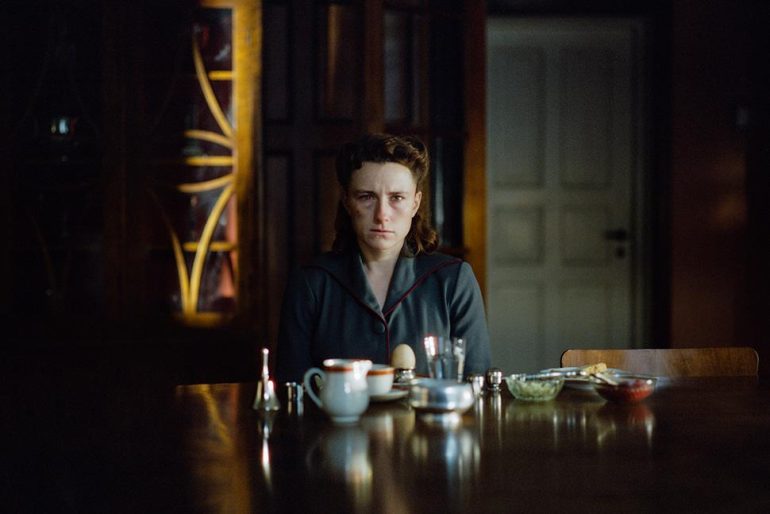 Mathilde Arcel in Woman Unknown
Possible Love, Dau, and NAZA among the Venice Film Festival 2026 winners
The Silver Lion Grand Jury Prize went to Ga-neung-han Sa-rang (Possible Love) by Lee Chang-dong, marking another major international festival result for the South Korean filmmaker. The film also received the FIPRESCI Prize in the main competition, earning recognition both in the official jury verdict and among international film critics.
Ilya Khrzhanovsky won the Silver Lion for Best Director for Dau. The award placed one of the festival’s most ambitious projects among the key titles of the main competition.
The Special Jury Prize went to NAZA by Yuval Abraham and Rachel Szor. The documentary was also repeatedly recognized by independent juries during the festival, sharing the Green Drop Award with Paolo Strippoli’s L’estranea (The Spiral), receiving the Cinema for UNICEF mention connected to the Leoncino d’Oro, and earning the Sorriso Diverso Venezia Award for Best Director Under 35.
The accumulation of official and collateral recognition made NAZA one of the most visible films in the overall awards landscape of the edition.
Acting and screenplay prizes at the Venice Film Festival 2026
Alongside Mathilde Arcel’s Volpi Cup, John Malkovich received the Volpi Cup for Best Actor for his performance in Martin McDonagh’s Wild Horse Nine.
The Best Screenplay award went to Stéphane Brizé, Coralie Amédéo and Olivier Gorce for Un bon petit soldat (A Good Little Soldier), directed by Brizé. The film also performed strongly among the collateral awards, receiving the Film Impresa Special Prize, the Interfilm Award for Promoting Interreligious Dialogue, and the Sorriso Diverso Venezia Award for Best Foreign Film.
The Marcello Mastroianni Award for Best Young Actor or Actress was presented to Malou Khebizi for Cédric Kahn’s 15/18 (A Place to Heal). The film also received the Italian Red Cross Award and the Lanterna Magica Award, extending its presence beyond the official competition prizes.
Together, these acting and writing awards gave the main competition verdict a broad geographical range, with recognition for European, Asian, and international productions across directing, performance, and screenplay.
Orizzonti at the Venice Film Festival 2026: a double win for The Children of the Monkey
The Orizzonti jury was chaired by Valérie Donzelli, alongside Peter Becker, Elizabeth Lo, David Pablos, and Barbara Ronchi. After screening 19 feature films and 13 short films in competition, the jury selected Un détour par Diane (Diane in the Loop) by Ann Sirot and Raphaël Balboni as Best Film.
Jacqueline Lentzou received the Orizzonti Award for Best Director for Mia Mera sti Zoi tis Tzo: Kefalaio Faidra (A Day in the Life of Jo: Chapter Phaedra), while La maison du vent (House of the Wind) by Auguste Bernard Kouemo Yanghu won the Special Jury Prize.
The latter also received the Lion of the Future “Luigi De Laurentiis” Venice Award for a Debut Film, making House of the Wind one of the notable multiple winners of the Venice Film Festival 2026.
Italy registered one of its strongest official results in Orizzonti with Tommaso Landucci’s I figli della scimmia (The Children of the Monkey). Riccardo Scamarcio won the award for Best Actor, while Landucci and Damiano Femfert received the prize for Best Screenplay.
Laleh Marzban was named Best Actress for Mohsen Gharaei’s Moragheb (Falling House), while the Best Short Film award went to Shaden Safieddine Tazi’s Quelques instants de bonheur (A Few Moments of Happiness).
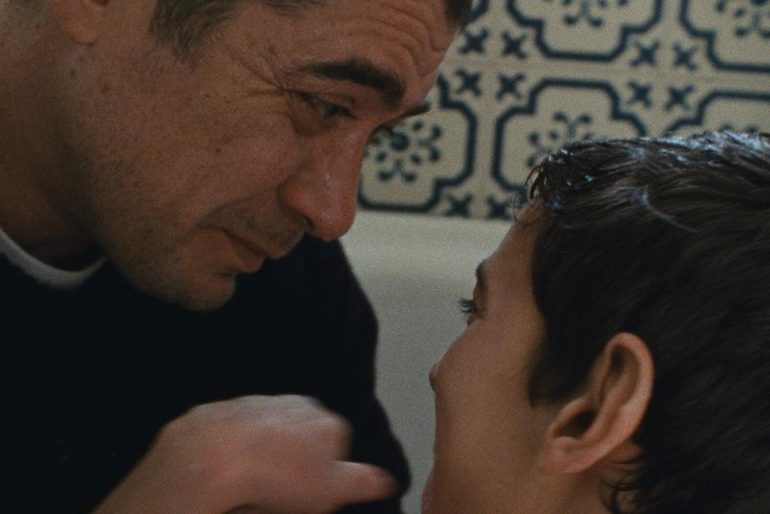 Riccardo Scamarcio in una scena de I Figli della scimmia
Debut film, Venice Spotlight and Venice Classics
The Lion of the Future “Luigi De Laurentiis” Venice Award for a Debut Film was awarded to La maison du vent (House of the Wind) by Auguste Bernard Kouemo Yanghu, selected by a jury chaired by Carolina Cavalli and also composed of Akinola Davies Jr and Ted Hope.
In Venice Spotlight, the Armani Beauty Audience Award went to Eu Contez (I Matter) by Alina Șerban, a Romanian, German and Belgian production.
Venice Classics recognised La lunga notte del ’43 (Long Night of 1943) by Florestano Vancini as Best Restored Film. The award was decided by a jury chaired by Daniele Vicari and composed of 24 cinema students selected through Italian university film programmes.
These sections expanded the scope of the Venice Film Festival 2026 awards beyond the main competition, acknowledging debut filmmaking, audience response and the preservation of film heritage.
Venice Immersive completes the Venice Film Festival 2026 awards
The Venice Immersive jury, chaired by Paul Raphaël and including Négar Motevalymeidanshah and Kate Voet, considered 30 projects in competition.
The Venice Immersive Grand Prize went to The Pigeon Ring by Shixin Tao and Yuqi Zhang.
The Special Jury Prize was awarded to Out of the Ashes by Rory Mitchell and Nonny De La Peña, while the Venice Immersive Achievement Prize went to Empire at Sea by Peter Flaherty.
The three prizes confirmed the section’s role within the wider festival programme, placing interactive and immersive storytelling alongside the feature films, shorts and restored works recognised across the official awards.
Collateral awards broaden the Venice Film Festival 2026 picture
The collateral prizes, awarded independently by critics’ associations, cultural organizations, cinema professionals and specialist juries, added another layer to the overall results.
Possible Love strengthened its position with both the FIPRESCI Prize for the Venezia 83 competition and the Arca CinemaGiovani Award for Best Film of the main competition.
Hirokazu Koreeda’s Look Back was one of the most frequently recognized titles outside the official jury. It received the CinemaSarà Award, the SIGNIS Award and the UNIMED Award, shared the Cinema & Arts Award for Best Film with Takashi Miike’s Shumei: The Living Legacy of Kabuki, and earned a special mention from Fanheart3.
Un bon petit soldat also accumulated several independent prizes, while 15/18 (A Place to Heal) received recognition connected to both social themes and younger audiences.
Italian cinema had a significant presence among the collateral awards. Marco Bechis’s Ritorno a Buenos Aires (Back to Buenos Aires) received the Francesco Pasinetti Award, while Vanessa Scalera was named Best Actress for Il fuoco che ti porti dentro (The Fire Within You) and Adriano Giannini Best Actor for Ritorno a Buenos Aires.
The Pasinetti Special Prize went to Alina Marazzi’s La ragazza con la Leica (The Girl with the Leica).
Giornate degli Autori and Venice Critics’ Week awards
The independent sections also delivered their own results during the Venice Film Festival 2026.
At Giornate degli Autori, the Director’s Award went to A veces me entra tristeza, otras veces rebelión (Sometimes Sadness, Sometimes Rebellion) by María Aparicio. Une femme aujourd’hui by Robért Guédiguian received the Europa Cinemas Label, while Nicola Sorcinelli’s Balcanica won the People’s Choice Award.
Balcanica also received the Carlo Lizzani Award, making it another film to appear across different independent juries.
At the Venice International Film Critics’ Week, Prima della guerra (Before the War) by Tommaso Usberti won the IWONDERFULL Grand Prize and the Luciano Sovena Award for Best Independent Producer.
The Critics’ Week People’s Choice Award went to Our Share of Sand by Shalini Adnani, while El fin de los tiempos (The End of Times) by Bibiana Rojas Gómez and Juan David Cárdenas received the Mario Serandrei Award for Best Technical Contribution.
Complete official Venice Film Festival 2026 winners list
Venezia 83
- Golden Lion for Best Film: Kvinde Ukendt (Woman Unknown), May el-Toukhy
- Silver Lion, Grand Jury Prize: Ga-neung-han Sa-rang (Possible Love), Lee Chang-dong
- Silver Lion for Best Director: Ilya Khrzhanovsky, Dau
- Volpi Cup for Best Actress: Mathilde Arcel, Woman Unknown
- Volpi Cup for Best Actor: John Malkovich, Wild Horse Nine
- Best Screenplay: Stéphane Brizé, Coralie Amédéo and Olivier Gorce, Un bon petit soldat
- Special Jury Prize: NAZA, Yuval Abraham and Rachel Szor
- Marcello Mastroianni Award: Malou Khebizi, 15/18 (A Place to Heal)
Orizzonti
- Best Film: Un détour par Diane (Diane in the Loop), Ann Sirot and Raphaël Balboni
- Best Director: Jacqueline Lentzou, A Day in the Life of Jo: Chapter Phaedra
- Special Jury Prize: La maison du vent (House of the Wind), Auguste Bernard Kouemo Yanghu
- Best Actress: Laleh Marzban, Moragheb (Falling House)
- Best Actor: Riccardo Scamarcio, I figli della scimmia (The Children of the Monkey)
- Best Screenplay: Tommaso Landucci and Damiano Femfert, I figli della scimmia
- Best Short Film: Quelques instants de bonheur (A Few Moments of Happiness), Shaden Safieddine Tazi
Debut Film, Venice Spotlight and Venice Classics
- Lion of the Future “Luigi De Laurentiis”: La maison du vent (House of the Wind), Auguste Bernard Kouemo Yanghu
- Armani Beauty Audience Award: Eu Contez (I Matter), Alina Șerban
- Venice Classics Award for Best Restored Film: La lunga notte del ’43 (Long Night of 1943), Florestano Vancini
Venice Immersive
- Grand Prize: The Pigeon Ring, Shixin Tao and Yuqi Zhang
- Special Jury Prize: Out of the Ashes, Rory Mitchell and Nonny De La Peña
- Achievement Prize: Empire at Sea, Peter Flaherty
The post Venice Film Festival 2026 winners: Woman Unknown takes the Golden Lion appeared first on Fred Film Radio.
13 September 2026, 2:22 pm - 6 minutes 59 seconds“Queer Edward”, interview with director Theo Rollason and film advisor Peter Tatchell
Presented out of competition in the Open section of the 83rd Venice International Film Festival, Queer Edward II is set in the spring of 1991, as queer life in Britain faces renewed attack and filmmaker Derek Jarman adapts Christopher Marlowe’s Edward II into a radical protest film. Built from never-before-seen footage shot by Seamus McGarvey on Jarman’s set, the documentary is about the refusal to separate art from life, politics from pleasure. Director Theo Rollason and activist and film advisor Peter Tatchell talk to David Mart about how the archive came to Rollason, Jarman’s legacy as a cultural revolutionary, the reclaiming of the word queer, and the rights their subjects fought for that are once again under threat today.
An archive that came looking for him
Asked why this story, for his first feature film, Rollason traces it back to the footage itself: “It’s an entirely archival film and the archive kind of came to me. I was working as an archivist and was asked to give an opinion about this footage that no one had seen for 35 years”. He describes the pull he felt toward one thread within it: “And very quickly, maybe slightly bigheaded of me, I thought this is an amazing film that needs to be made and I really want to make it because I feel a really strong attachment to a particular story within this footage about queer rights in the UK in the late 80s and early 90s which I felt was under told, hadn’t been told enough, certainly not to the extent that I was familiar enough with it”.
Derek Jarman, a polite revolutionary
Asked to explain Jarman’s importance to viewers who may not know him, Tatchell describes a figure both gentle and radical: “Derek Jarman was an incredible, innovative, pioneering cultural revolutionary. He was polite, charming, but a revolutionary in art, film, and many other forms”. And, he adds, that radicalism always carried a purpose beyond the work itself: “In his films he tried to not only produce great art but also to tell a social message, to have a moral purpose, and in particular to expand understanding and consciousness about the struggle of LGBT+ people, and that for him was really, really important”.
Reclaiming a word: “I am queer”
Asked how the meaning of the word queer has shifted since the period the film covers, Rollason describes a term still being contested at the time: “The period that we’re looking at in the film is kind of when queer was still being adopted as a word in the UK. It had come over from America and the Queer Nation, and it wasn’t at all without controversy”. He explains why Jarman embraced it, unlike the label that came before it: “He always had a difficult relationship with what was the gay community, that he always put in scare quotes, because he didn’t feel totally represented by it and it felt maybe too prescriptive for him at times. And I think queer as a term, as a reclaimed term, just felt like something exciting, something more expansive, and something that they could turn around and say, well, screw you if you’re going to call me queer, I am queer”. Tatchell adds that for Jarman the word pointed toward something larger than equality: “So for him, the use of the word queer was a defiant affirmation that he had a vision of something bigger and better, which would not only benefit LGBT+ people, but also straight people as well. So his idea of queer was beyond equality, equality plus, a transformation of society rather than a fitting into it”.
A backlash across the world
Asked whether the sense of progress on LGBT+ rights felt a decade ago is now being reversed, Tatchell lays out a global picture that is still far from won: “Even assuming the battle was won, it was only won in the West. There are still over 60 countries in the world that criminalize same-sex relations. 12 have the death penalty and 43 have various restrictions on trans people. So globally the battle is far from won”. He describes the backlash now reaching the West as well: “Even in the West the gains we’ve won are under attack and we are witnessing a backlash, particularly targeted at the trans community, but not entirely, and that is scary. The rise of the far right in Europe and the United States is a very, very frightening moment. It has echoes of a dark past and so far democracies are more or less holding the line, but things are very, very threatening”. A pressure, he adds, that reaches well beyond LGBT+ people: “I think not just LGBT+ people, but also Black and ethnic minorities, immigrants, refugees, Muslims, Jews are all feeling pressure”. For Tatchell, that is exactly what makes Jarman’s film still speak to the present: “In a sense Edward II, Derek Jarman’s film, was really a statement or a kickback against marginalization, in his case the marginalization of LGBT+ people, but also in a wider sense against all people who are marginalized, discriminated, and victimized”.
The post “Queer Edward”, interview with director Theo Rollason and film advisor Peter Tatchell appeared first on Fred Film Radio.
12 September 2026, 4:30 pm - 6 minutes 32 seconds“Listy-Letters from the Silenced Country”, interview with director Andrei Kutsila
Listy-Letters from the Silenced Country by director Andrei Kutsila, presented at Venice Film Festival, explores the realities of contemporary Belarus through personal letters from those who have experienced repression, imprisonment, and exile. The project is included in Venice Open and sheds light on a country where freedom of expression remains severely restricted.
The significance of “Listy-Letters from the Silenced Country” in portraying Belarusian life
Kutsila emphasizes that his own forced exile following the 2020 protests deeply influenced his desire to tell stories from Belarus. With many friends still inside the country facing imprisonment or hiding, he felt a moral obligation to give voice to those silenced by the regime. The film’s focus on letters allows for an intimate glimpse into the lives of political prisoners and exiles, offering a deeper understanding beyond conventional reporting.
Using letters to access personal stories
Kutsila explains that letters serve as a bridge to the private worlds of individuals living under authoritarian rule. Unlike news reports or human rights documentation, letters reveal emotional depth and personal perspectives. He spent years exploring innovative ways to present these letters visually, aiming to preserve their intimacy while making them accessible on screen. He believes that this approach allows viewers to engage with the stories on a human level, fostering empathy and awareness about Belarus’s ongoing struggles.
The perspective of Andrei Astapovich, real-life protagonist
A key element of Listy-Letters from the Silenced Country is the inclusion of Andrei Astapovich, a former Belarusian investigator who defected and sought asylum in Poland. Kutsila underscores how vital it was to incorporate a voice from inside the system, someone who chose to break away rather than conform. Developing Andrei ’s story involved years of close collaboration, during which Kutsila learned about the moral dilemmas faced by insiders. He sees Andrei’s example as a testament to the possibility of individual resistance, even in the most oppressive circumstances.
The post “Listy-Letters from the Silenced Country”, interview with director Andrei Kutsila appeared first on Fred Film Radio.
12 September 2026, 3:50 pm - 5 minutes 55 seconds“Guria”, interview with director Levan Koguashvili and producer Boris Frumin
Guria, by director Levan Koguashvili, presented in Venice Spotlight at Venice Film Festival, is a black-and-white tragicomic story set in Western Georgia during the tumultuous period following the collapse of the Soviet Union. Director Levan Koguashvili and producer Boris Frumin discuss how the film captures a complex era through a blend of humor and seriousness, emphasizing authenticity and human relationships.
The cultural and historical context behind “Guria”
Koguashvili explains that the inspiration came from real stories he heard from people living in Georgia during the 1990s. He wanted to portray that decade not just as a time of hardship, but also as a period filled with warmth, irony, and human resilience. Koguashvili emphasizes the importance of recording life in Georgia as it truly was, respecting the reality of his country and its people, rather than resorting to fictionalized or exaggerated depictions. Frumin adds that their goal was to represent the everyday struggles and moments of joy that defined that era, offering an authentic window into Georgian life during a turbulent time.
Balancing tragedy and comedy in “Guria”
Koguashvili and Frumin reveal that their approach to storytelling was heavily influenced by Italian neorealism, which combines elements of tragedy and comedy. They believe that cinema should reflect the full spectrum of human experience, especially in difficult times. In Guria, humor is a vital tool to explore survival and human connection without diminishing the seriousness of the characters’ struggles. Koguashvili notes that the film’s mix of comedy and tragedy aims to offer a nuanced perspective on Georgian society, emphasizing the resilience and kindness of its people.
The importance of real human relationships in “Guria”
A key aspect of Guria is its focus on genuine human interactions. Koguashvili and Frumin point out that the film’s strength lies in its ability to bring to life the everyday decency and warmth of Georgian society, making the audience connect emotionally with the characters’ journeys. Through this authentic depiction, Guria reminds viewers of the enduring human spirit amid hardship.
The post “Guria”, interview with director Levan Koguashvili and producer Boris Frumin appeared first on Fred Film Radio.
12 September 2026, 2:48 pm - 8 minutes 42 seconds“I Matter”, interview with director Alina Şerban and producer Carla Fotea
I Matter by director Alina Şerban, presented in Venice Spotlight at the Venice Film Festival, explores the life of Rebecca, a Roma girl growing up within Romania’s child protection system, drawing on Şerban’s own experiences. Alina Şerban and Carla Fotea, the film’s producer, discuss the complex process of transforming lived realities into compelling cinema that aims to foster understanding and challenge stereotypes.
The personal journey behind “I Matter”
Şerban explains that her childhood was initially privileged before she experienced life within a Roma community and a children’s home, which profoundly shaped her perspective. She emphasizes that her goal was not to tell only her story but to incorporate the voices of others she worked with, including young people from orphanages. Her research involved creating short documentaries and theatre pieces to better understand what her younger self needed to hear, ultimately weaving these insights into the film’s fabric. Şerban highlights that I Matter is a multi-layered narrative, built from diverse perspectives, to enrich its emotional depth and authenticity.
Navigating cultural representation and unlearning discrimination
Şerban discusses the importance of self-awareness in storytelling, especially when it involves marginalized communities. She reflects on her own process of unlearning stereotypes and shame associated with her Roma identity, which she previously internalized due to harmful portrayals in media. Her wants to present a humanized image of Romani people, moving away from exoticized stereotypes and instead offering a nuanced portrayal that allows for multiple identities within Roma culture.
The collaborative and ethical approach to production
Fotea shares that the production process spanned over four years, during which the team closely collaborated with young people from Romania’s child protection system. The team grappled with questions of cultural appropriation and the ethics of storytelling, ultimately supporting Şerban’s vision while respecting the community’s voice.
The post “I Matter”, interview with director Alina Şerban and producer Carla Fotea appeared first on Fred Film Radio.
12 September 2026, 2:17 pm - 8 minutes 49 seconds“Too much Sugar”, interview with director Robert Greene
Too Much Sugar, by Robert Greene, included in the Orizzonti selection, is a documentary with a peculiar story behind it. We had a chat with the director to know more about it and about his lead character.
A documentary in a collaborative form
Robert Greene explains that the collaborative form is one he’s been followed and developed over several films. It started with an encounter with Ryan and an idea and one of the best titles he ever heard. 6 kids, 5 different women, in and out of prison since when he was a kid. There was a lot there that needed to be told. So we really wanted to dive in and that’s how we started. And actually, Ryan on screen is a huge persona, he’s interesting, it’s fascinating, is um strong and also kind of very touching.
The rebirth of a man
Robert knows what Ryan is. He’s a guy who went to prison for getting into fights. Most people just write him off. They both come from similar backgrounds. Robert Greene knows a lot of guys like Ryan. When you meet him, you know, you just know there’s like this kindness and this willingness to try to keep moving forward and be better, especially if there’s a camera present. The camera could sort of make him feel like a hero but also make him understand mistakes that he’s made. It could do both things at once. I think that was, that was what we needed to happen.
The need to become a good man and a good father
Ryan has to be a better father because he didn’t have a father. So he’s like he’s projecting on, on his kids and in his life. Robert Green knows form personale experience that when you grow up without a father one ends up making that the focus of your life. Real fatherhood is making space for other people. And it took a while for Ryan to learn that. The film that has also a kind of therapeutical aspect because on the story of Ryan’s best friend, AccRite. He lost his kid by murder and it was Ryan to convince him to use the media of cinema to heal.
Working with non actors
Robert Green knows how much non actors want to do good. in this case though he thinks they’re all really compelling on camera and some of them are quite good actors. The most important thing is to understand that this is coming from a place of dreams. This is coming from a working class family who is using movies and thinking about movies like their dreams. They’re thinking about movies like movies represent a way to have a different life. And so when one understands that, seeing them deliver comedic lines that were written for them, there’s a yearning in that and a fun in that, that is more preferable than some method acting.
The post “Too much Sugar”, interview with director Robert Greene appeared first on Fred Film Radio.
12 September 2026, 2:11 pm - 5 minutes 54 seconds“Union Town”, interview with director Barbara Kopple and producer Hannes Hosp
Union Town by director Barbara Kopple, presented in Venice Open at the Venice Film Festival, powerfully revisits the ongoing struggles of organized labor in America, highlighting the persistence of workers’ rights issues despite decades of change. Director Barbara Kopple and producer Hannes Hosp discuss the relevance of the film in today’s socio-political climate and its potential to inspire global awareness.
The enduring fight for workers’ rights in “Union Town”
Kopple reflects on her return to themes of labor activism after many years, comparing her new film to her earlier work on “Harlan County, USA”. She emphasizes that, although tactics have evolved, the core issues remain the same: fair pay, safe working conditions, and respect on the job. Kopple highlights how the film portrays the ongoing battle against union-busting strategies, which include significant financial investments and aggressive tactics aimed at silencing workers. She notes that the film captures scenes that confront viewers with the realities faced by workers today, showing that the fight for dignity at work continues.
The making of “Union Town” and its political significance
Hannes Hosp explains that the decision to produce Union Town was driven by Kopple’s longstanding commitment to labor issues and the opportunity to shed light on current struggles. He shares that gaining access to workers was challenging, especially given the risks faced by those willing to speak out. Despite these obstacles, many workers, including undocumented individuals, chose to share their stories, motivated by a desire to push for change.
The power of documentary cinema to influence society
Kopple and Hosp see Union Town as more than just a film; they view it as a historical document that captures a pivotal moment in the labor movement. They highlight the potential of cinema, especially documentary filmmaking, to shape public discourse and inspire activism, emphasizing that the enduring value of documentary cinema lies in its ability to record reality and motivate societal change.
The post “Union Town”, interview with director Barbara Kopple and producer Hannes Hosp appeared first on Fred Film Radio.
12 September 2026, 12:33 pm - 6 minutes 20 seconds“A Day in the Life of Jo: Chapter Phaedra”, interview with director Jacqueline Lentzou
A Day in a Life of Joe: Chapter Phaedra by director Jacqueline Lentzou, presented in Orizzonti at the Venice Film Festival 2026, follows a seemingly ordinary day in the life of a 15-year-old boy in suburban Athens, gradually revealing deeper existential themes.
The transition from the ordinary to the cosmic in “A Day in a Life of Joe: Chapter Phaedra”
Jacqueline Lentzou discusses her latest film, A Day in a Life of Joe: Chapter Phaedra explaining that her film reflects her own way of experiencing life, caught between the tangible and the intangible. She describes her worldview as being inherently in-between, where the boundary between the real and the cosmic is blurred. Lentzou emphasizes that the universe, including the cosmic, is intertwined with everyday life, making the magical aspects of her film feel natural rather than fantastical. She highlights how the film’s narrative explores this interconnectedness, especially through the character of Joe, who often slips into dreamlike states that feel more real than reality itself.
The influence of meditation and inner worlds on Lentzou’s storytelling
The director’s inspiration for portraying the dreamlike and mystical elements of the film stems from her personal meditation practices. She believes that inner worlds contain a richness and authenticity often overlooked in conventional storytelling. Her experiences with meditation have shown her that what we perceive as dreams or surreal moments can sometimes be more truthful than waking life. This perspective led her to craft a narrative where dreams and reality coexist, questioning what is truly real and emphasizing the importance of inner experience.
A Day in a Life of Joe: Chapter Phaedra and its connection to real events
Lentzou shares that the film was partly inspired by a tragic event in Athens in 2008, when a 15-year-old boy was killed. She wanted to portray a day in the life of a young person unaware of their impending death, emphasizing the innocence and vulnerability of youth.
The post “A Day in the Life of Jo: Chapter Phaedra”, interview with director Jacqueline Lentzou appeared first on Fred Film Radio.
12 September 2026, 12:05 pm - 9 minutes 2 seconds“Until the Day Ends”, interview with director Jelena Maksimović and actor Andrija Krivokapić
Until the Day Ends, presented in Orizzonti at the Venice Film Festival, is set against the backdrop of student protests and political divisions in contemporary Serbia. Director Jelena Maksimović’s film explores themes of youth, political activism, and personal transformation.
The autobiographical roots of “Until the Day Ends”
Maksimović explaines that her personal experiences heavily influenced the film, blending real-life memories with fictional elements to create a vivid portrayal of youth in Serbia. She aimed to depict the complexities of adolescence and the desire for freedom amid political unrest, emphasizing that her approach was to fictionalize her experiences rather than produce a documentary. The film’s narrative reflects her interest in capturing the emotional truth of a generation caught between tradition and change.
Exploring political resistance and youth activism through personal relationships
Until the Day Ends focuses on the love story between Lena and Stefan that serves as a lens to examine societal divides. Maksimović highlightes that the characters represent contrasting social backgrounds and political beliefs, one involved in anti-government protests, the other from a more privileged, conservative environment. She wanted to show how relationships and solidarity can challenge preconceptions and open new horizons for young people. Andrija Krivokapić shares that his character Stefan reflects the circumstances many young men face, shaped by environment and social pressures. He revealed that his own background in Belgrade influenced his portrayal, and that working on the film helped him understand his character’s motivations more deeply.
“Until the Day Ends”‘s visual language
Maksimović emphasizes that the shift from scenes of urban conflict to open natural landscapes creates a space for reflection and the possibility of escape, both physical and political. This transition is reinforced by the film’s visual language, which moves toward more expansive compositions and a slower pace, evoking a growing sense of hope and possibility.
The post “Until the Day Ends”, interview with director Jelena Maksimović and actor Andrija Krivokapić appeared first on Fred Film Radio.
12 September 2026, 11:29 am - 6 minutes 6 seconds“What Belongs to Others”, interview with director Grzegorz Dębowski and producer Agnieszka Skalska
What Belongs to Others by director Grzegorz Dębowski, presented in Orizzonti at the Venice Film Festival 2026, explores a few days in the life of Kasia, a woman involved in break-ins, and delves into themes of loneliness, human connection, and deception.
Using genre conventions to explore intimacy
Director Grzegorz Dębowski explains that the film begins with a tense, crime-driven atmosphere but gradually shifts focus toward more personal and spiritual themes. Inspired by Korean filmmakers known for genre mixing, Dębowski keeps viewers engaged while gradually revealing deeper aspects of human relationships. The narrative centers on Kasia’s complex emotional world, which unfolds through her interactions during these few days. Producer Agnieszka Skalska adds that her initial connection to the script stemmed from its compelling storytelling and the empathy she felt for Kasia. She emphasizes that the film’s rhythm aligns with Kasia’s character development, making her growth feel authentic and compelling.
The paradox of deception and emotional truth in What Belongs to Others
Dębowski reflects on the intriguing idea that Kasia’s lies about her identity serve as a pathway to emotional honesty. He notes that modern society often involves people pretending or hiding aspects of themselves to be accepted, which inspired the film’s exploration of deception. Kasia’s ability to forge connections through her falsehoods reveals a paradox: sometimes, fiction or lies can uncover deeper truths about human needs for love and belonging.
The character of Kasia and the film’s social roots
Skalska highlights that her support for the project was rooted in the script’s strong social commentary, particularly about urban loneliness and the hidden lives within homes. The film was written with a specific actress in mind, Monika Sabina Kwiatkowska, whose presence adds a layer of inspiration to the project. What Belongs to Others challenges audiences’ perceptions of morality and connection, making it a timely reflection on contemporary society.
The post “What Belongs to Others”, interview with director Grzegorz Dębowski and producer Agnieszka Skalska appeared first on Fred Film Radio.
12 September 2026, 10:50 am - 6 minutes 7 seconds“Lovers in the Blue Night”, interview with director Anuparna Roy and actress Neelima Sharma
During the Venice Film Festival 2026 we spoke with director Anuparna Roy and actress Neelima Sharma for the film Lovers in the Blue Night, which was presented in the Orizzonti section of the Festival. The directors returns to Venice after winning the Best Director Prize in the Orizzonti section last year, with the film Song of the Forgotten Trees. Continuing the exploration of the themes of migration, identity, and desire in her new feature as well, this time through the stories of four characters navigating life in a rapidly changing India.
The interview
During our interview on FRED Film Radio, director Anuparna Roy explains that her new film Lovers in the Blue Night marks a thematic evolution from her previous work, focusing on the internal and external journeys of her characters. While her earlier film was indeed set within the confines of a cramped Mumbai apartment, this new work takes viewers into the bustling city streets, following multiple characters in transit and emphasizing that migration is a political act, driven by the desire for dignity and personal freedom
Director Anuparna Roy also agrees that her latest film shares a thematic link with her previous project, Songs of Forgotten Trees, by examining the city and migration, describing the characters here as seeking to live authentically, fighting against societal constraints to find their own space and identity. For her, portraying these personal battles was more important than depicting the city as a mere backdrop.
Neelima Sharma added reflecting on her character, who in Lovers in the Blue Night embodies the universal human craving for love and acceptance. She shares that her own experience of living in Mumbai for three years resonated deeply with her role, as she, like her character, is still searching for her place. Anuparna Roy added that the film explores the daring to desire, especially for working-class characters who are often denied the same rights to love and self-expression as others, highlighting that her own background influenced her storytelling as well, aiming to portray the characters’ inner struggles with empathy and authenticity.
The post “Lovers in the Blue Night”, interview with director Anuparna Roy and actress Neelima Sharma appeared first on Fred Film Radio.
12 September 2026, 9:20 am - More Episodes? Get the App