- Some of the best comics of 2017
Well, damp sack of Krampus, 2017 has sucked, huh? But it turns out that in between the crying and general existential dread, comics creators have still found time to pen responses to the rising ambient horror, or delightful escapes from it.
We've been on hiatus for a while, and there's no best-of podcast this year. But apparently Roger wrote his 2017 list anyway. Muscle memory or something, we don't know.
Anyway, here's a quick roundup of the books we really, really liked, out of the reading we did get round to in 2017
Pantheon - Hamish Steele

Mythopoeia with the mind of a smutty schoolboy. Calling this an irreverent retelling of Egyptian myth doesn't quite cut it. This book is a big daft delight.
The art style is this brash, side-on valley-of-the-kings-papyrus pastiche, via Saturday morning cartoons (leading to an amazing visual gag), and it covers the (mis)adventures of the ancient pantheon. From Atum wanking the world into being to the rise of man.
It helps that the source material really is that weird - this is a well-researched piece, and also the funniest thing I have read in years. Pantheon has pitch-perfect comic timing and a real ear for change-of-register gags.
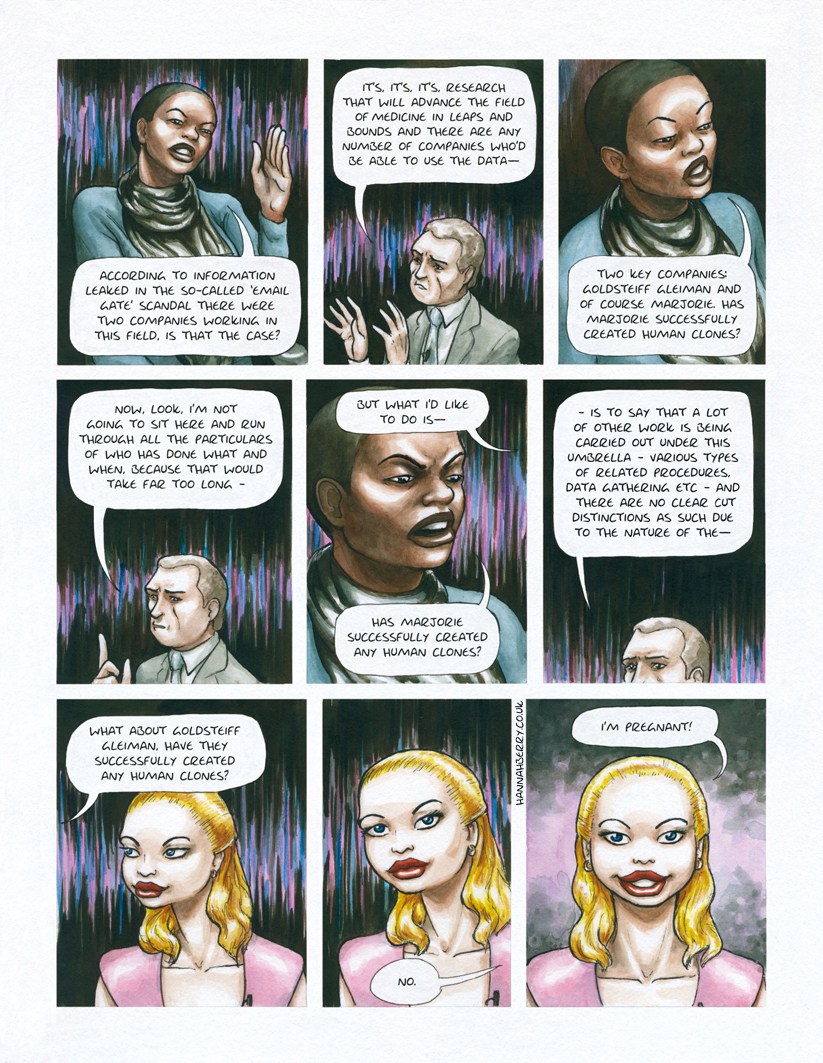
Livestock - Hannah Berry

You know how we mentioned that the world is like a special recursive trash fire somehow made of other trash fires? This is a response. An indignant howl at the sickness of where we might be headed and the injustices of quite how.
A government department just let slip that they quietly legalised human cloning in a PFI blunder, and are now trying to clear up their mess. The public of course are more interested in the antics of suspiciously squeaky-clean, childlike, and on-message pop star Clementine Darling.
Livestock really lets its world emerge, without ever feeling quite hectoring or overly on-the-nose. It's interspersed with social media splashes and tabloid fragments, and it opens deep in its own celeb-culture narrative, letting the reader slowly realize (and want to scream at its characters for not caring about) what's going on. It's brilliantly constructed.
Hannah Berry's visual style here is soft, really letting the faux-cheery plastic monstrosity of it all unwind as you read. It's things astonishingly loudly unsaid, around completely plausible cynicism. It's media manipulation, energy companies lionized like sports teams, people like fungible meat. Read it with a stiff drink, but read it.
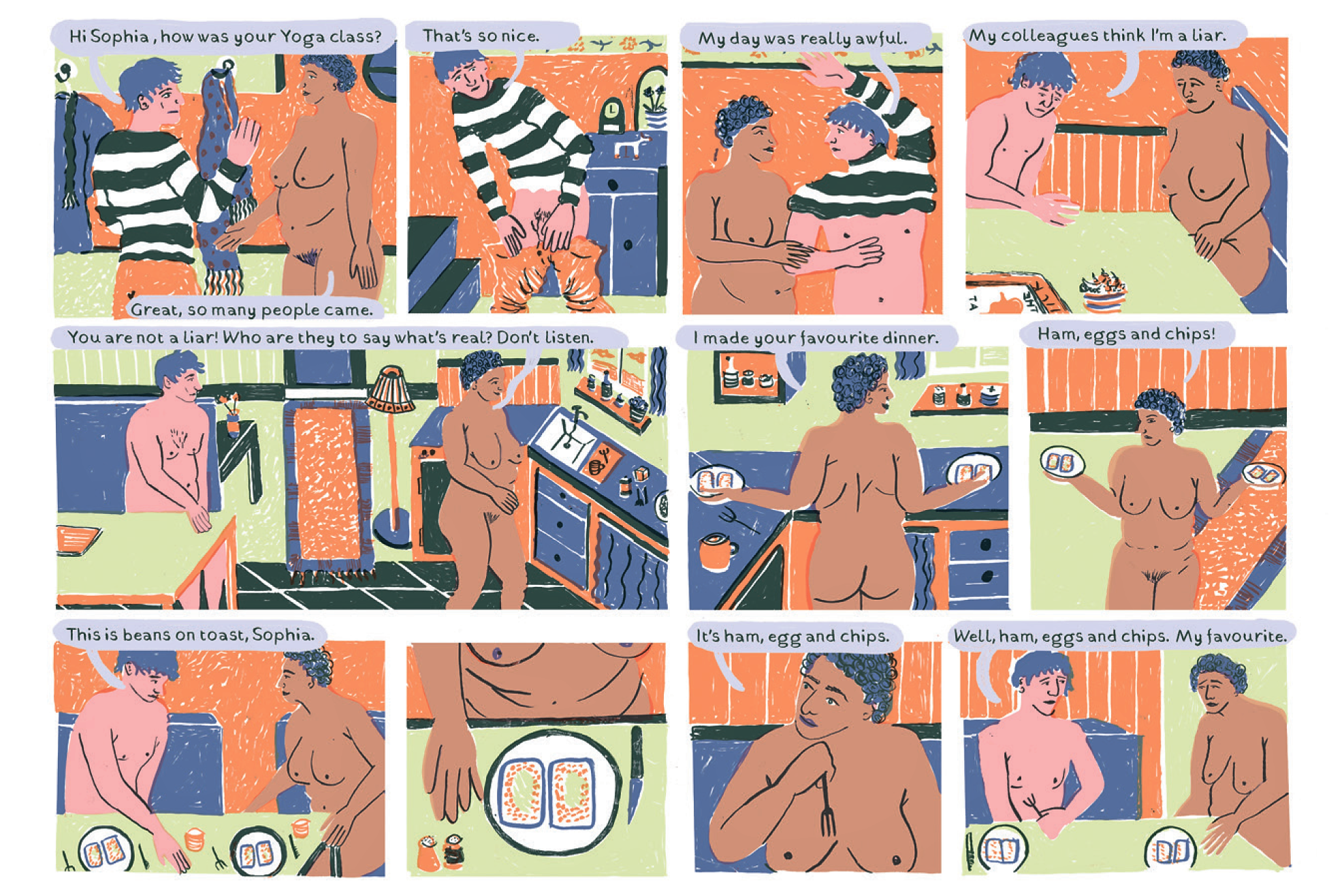
Something City - Ellice Weaver

Beautiful life-vignettes in a colourful pseudo-pace. Ten intertwined stories in a strange city. We reviewed it here, and enjoyed it tremendously.
In particular, Weaver's visual style here feels really fresh. Layered-up screen prints give a feels that's both blocky/architectural and loose and casual. Again, check out the review for a bit more.
The Backstagers - James Tynion (writer), Rian Sygh (artist)

Actually lovely. You entirely can do sincere charm while winking to the reader a little and this does that. Who'd look backstage at a high school drama club? Surely the techies and prop makers couldn't be up to anything as interesting as the actors?
Yeah, so, obviously there's an interdimensional portal to a world of confusing wonder and mild peril that must be kept at bay by endearing misfits. And such endearing misfits. Did I mention lovely? Backstagers is warm and kind, and kinda queer and inclusive. It's got a cartoony feel occasionally breaking into intricacy, and really good use of light. We did a podcast on what feels like a new wave of sincerity and this was front and centre in my picks.
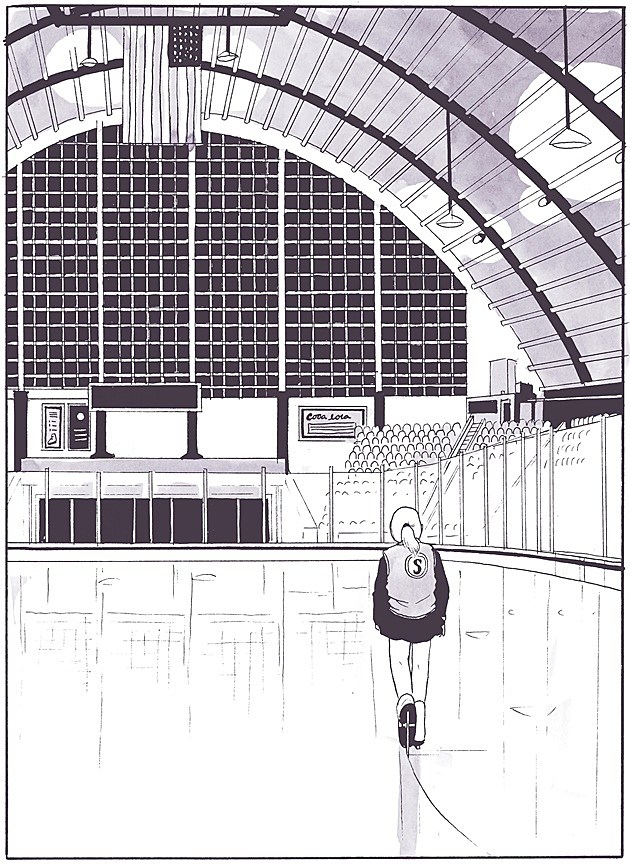
Spinning - Tillie Walden

Tillie Walden excels at filling little spatial scenes with emotion and felt life. Her figure skating memoir is no different. Changing high schools, the pressure of competition, coming out and finding first loves, it's all there with her charged use of light and shade, and the movement of space around her.
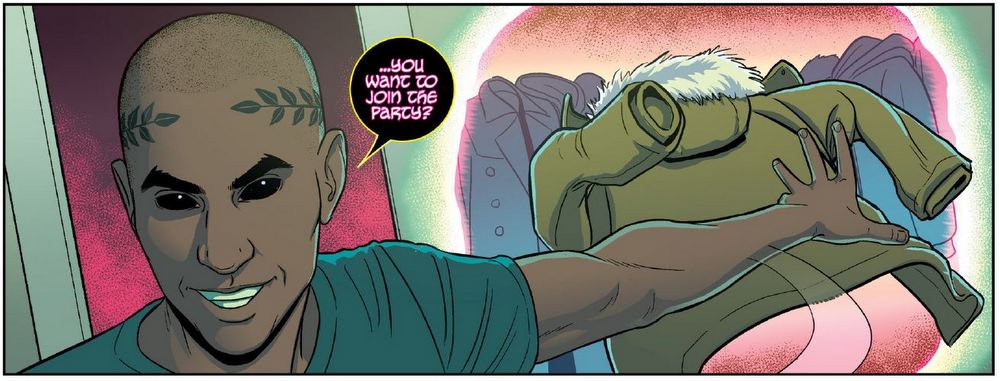
Godshaper - Simon Spurrier (writer), Jonas Goonface (artist)
It's a neo-dustbowl bluesman future future. Technology doesn't work, and money doesn't exist, but everybody has their own personal god. Or almost everybody. Also, the colours are gorgeous.
Spurrier has a history of bloody nailing high concept and this is no exception.
It's the story of Ennay, a "godshaper" - a pariah with no god of his own, but the ability to shape the gods of others, and Bud, a god (fittingly) without a person. Also: a kind of weird fantasy skiffle/blues/something alt music genre, mobsters, pansexual nomads, and beautifully, gloriously weird visuals. A little bit like Carnivàle but funny and not relentlessly depressing.
Things everybody else thinks are great but we haven't read yet
Well, if anyone wants to buy us presents...
- The Interview - Manuele Fior
- Generational change against first contact with aliens.
- Boundless - Jilian Tamaki
- Short stories. Identity. Culture.
- You & a Bike & a Road - Eleanor Davis
- Cross-country bicycle travelogue.
What? Of course it's just Zainab's list.
Still good!
The series we already loved and have carried on loving this year:
- Injection - Warren Ellis (writer), Declan Shalvey (artist), Jordie Bellaire (colours)
- Harrow County - Cullen Bunn (writer), Tyler Crook (artist)
- Paper Girls - Brian K Vaughan (writer), Cliff Chiang (artist)
- Black Monday Murders - Jonathan Hickman (writer), Tomm Cocker (artist)
- The Unbeatable Squirrel Girl - Ryan North (writer), Erica Henderson (artist)
Other lists
Don't just take our word for it. Look:
- Broken Frontier's 2017 awards
- Gosh Comics' 2017 list
- Zainab Akhtar's list of comics to watch out for, from January
- For a change, the Guardian's list isn't just this year's Jonathan Cape release list
So, yeah, 2017 had some comics, huh. What did we miss? Can haz comments?
30 May 2018, 8:53 am - 32 minutes 5 secondsEpisode 75 - Thought Bubble 2017
We're (most of us) back from a slight hiatus because it's NERD PROM again and we're at Thought Bubble 2017 in disconcertingly sunny Leeds. With special guests (probably) and new comics (yes) and ellipses (someone stop me)!
23 September 2017, 5:42 pm - 1 hour 24 minutesPodcast 74 - Southern Gothic

In which our heroes find quite a lot to say about a genre that barely exists in comics.
Southern gothic persists as a genre in all other mediums, so why is that deliciously swampy style so under-represented in comics? An investigation brought to you by big words, a fetish for Spanish moss, and that half-glimpsed face at the window of the ol' plantation house.
Episode 74 - Southern Gothic DownloadWe talked about:
- Iceman - Sina Grace and Alessandro Vitti
- Winnebago Graveyard - Steve Niles, Alison Sampson, Stephane Paitreau
- The Unsound - Cullen Bunn, Jack T. Cole
- Grass Kings - Matt Kindt and Tyler Jenkins
- The Stone Heart (Nameless City Vol.2) - Faith Erin Hicks, Jordie Bellaire
- Bulletproof Coffin: The 1000 Yard Stare - Shaky Kane and David Hine
- Godshaper - Si Spurrier and Jonas Goonface
- Black Hammer - Jeff lemire and Dean Ormston
- Harrow County - Cullen Bunn and Tyler Crook
- Will O' The Wisp - Tom Hammock and Megan Hutchinson
- Swamp Thing - Alan Moore, Stephen Bissette et al
- Wet Moon - Sophie Campbell
Apologies for the occasional spurt of someone else's voice on the background of this one. Some people just don't know how to use their indoor voice.
Have we missed something obvious? Tell us in the comments so we can read it because looking forward to Snagglepuss is a sad state of affairs.
4 July 2017, 7:57 am - Podcast 73 - Spinoffs and Franchises
Spin-off! Is there any word more thrilling to the soul and/or corporate wallet?
This week we read a bucket of franchise-extension comics. From flaccid extrusions of long-spent IP, to comics an actual person might actually want to read, we talk about whether spin-off comics can be any good (yes), how it all works (it's complicated), and which ones are just utter, utter shite (surprisingly: not Pokémon).
Find out more about the "beautiful teat filled with dollars".
29 May 2017, 8:18 am - Something City - Ellice Weaver
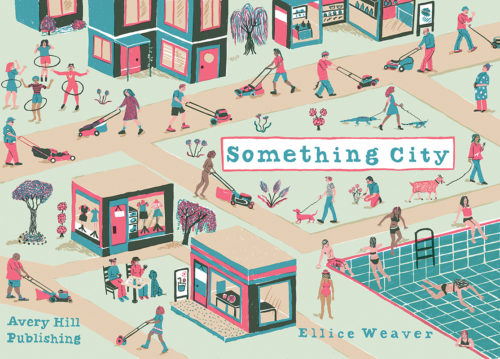
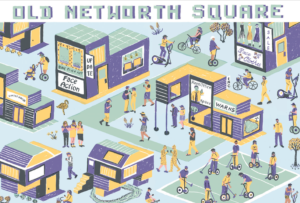
Ellice Weaver's Something City sets ten powerful character vignettes in a strange, colourful, segmented non-place. One of the most immediately striking things about it, though, is the layout design. From its city-plan view to the landscape orientation, there's a focus on space and place.
Something City explores connection/disconnection by proximity. There's quiet withering in the suburbs, ostracism and irony, alienation by technology - all the Vermillion Sands stuff, but without quite the lackadaisical beach-surreal tone.
It's pretty great.
It's fitting that a book that imagines a city should feel so architectural. The cover and chapter-dividing pages suggest some uncanny version of a coffee-table book about fifties suburbia. They're top-down isometric, but wilfully non precise. There's shades of Where's Wally - pages crammed with people and in a colour palette that's both unified and mucking about with background salience. The eye doesn't slide off it exactly. It's too Matisse-y posed-naïve for that. But it's crowded, somewhere between joyous and visually uncomfortable.

The isometric view persists, dividing the book into chapters. Each community segment is distinct, with its own feel and colours. And from them we pull to the lives inside, also landscape oriented, the length of the reading line across the page inviting a bit more visual consideration of the whole thing than a vertical flick-down for dialogue.
The city plan frames the book as spatial, and the page structure pulls us back to that, suggesting through arrangement and juxtaposition. We're invited to read the pages as rooms, but also as moments within them. It's sequential through dialogue, but the mood is often simultaneous, a stretched instant in a place.
Meanwhile, the line style sits in uneasy truce with the layout. It's painty, coloured like screen print, with almost a paper cut-out feel, and no edging. The only hard lines are the gutters, or the edges and corners of homes, streets, and furniture. The hard-edged architectural is jostled in with more loosely shaped bodies, and dogs and burgers and plants. Occasional text boxes butt in, sometimes speech, sometimes narration. It's gloriously messy, and the figures are expressive.
Detail, too:

That panel's doing a lot of work. I love the speech bubble, partly outside the scene, almost a caption, but trailing weakly down. The character talking, weakly, to her feet?
This is all used to tell ten little personal stories (intertwined, of course) against the constraints of space and community. Each of them is set in a different part of town, whizzing us through the Amish Community (looser, gentler lines) where a girl flees for modernity in a cobbled-together David Bowie costume; the doctor reluctantly trying nudism in the Free Body Culture Club; some pure Black Mirror techno-social satire in the Old Networth Square tech enclave; a downtown binge; and looped through it all, the thread of Jo Walker, what she did, the consequences and the town's reactions.
 There's a little of Adamtine there, in its treatment of justice by public opinion, anger, ostracism, and the range of survivors' emotions. Something City isn't a horror book, but it does engage with how a community reacts to what it sees as justice not being done, and how both a victim and the person responsible for a tragic act (in this case of culpable negligence) might feel and struggle to live.
 Juxtaposition and disconnection again. People don't fit in their suburban bubbles (it's a little like Transmetropolitan's "reservations", far less lurid), and struggle to connect with those around them. Jo unwittingly moves to the same town as the victim of a savage dog attack she was equally unintentionally responsible for. A new age guru co-opts Dr Jenn's rejection as enlightenment, and the penultimate story (spoiler below) features one of the most brutal, aching-or-maybe-joyous micro relationship slices I think I've ever seen:
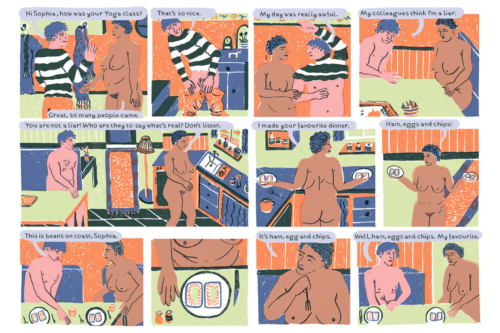
I suppose you could see what you want in there, and it's on me that I see visceral tragedy over beauty. But it's down to Something City that the range is there to offer that tension. Damn, I'm a sucker for a salient ambiguity.
Something City is out in May, published by Avery Hill.
Ellice Weaver makes comics, zines, and paintings. There's a great interview with her on Broken Frontier, here.
Note: The lovely folks at Avery Hill sent us a digital copy to review. Nowt else changed hands, and as with all review submissions, we only cover it if we like it.
10 May 2017, 6:55 pm - The Gods of The Wicked and the Divine - part 2
By now, all 13 of the gods of the latest recurrence have been revealed (yes, we'll get to that), as well as a few extras from past cycles. So we're overdue for an update.
Spoilers? Damn straight, spoilers.
We covered previously revealed gods: Lucifer, Baal, Woden, Amaterasu, Sakhmet, Morrigan, Baphomet, Minerva, Innana, Tara, Ananke, and Susanoo (1923) in an earlier post.

This is loosely based on WicDiv #1-28 and the 1831 stand-alone story Modern Romance (eighteen-thirty-oneshot?).
So, who's who who's new?
Dionysus

The dancefloor that walks like a man. Bacchus to the Romans, he's easy to think of as a jolly, tubby party god. Dionysus is god of wine and grape harvest, drama, ritual madness, and springtime fertility. But WicDiv didn't pick comedy Bacchus. This is a younger, leaner Dionysus, something more like the ephebic trickster of Greek drama.
His emblem is a grape bunch of little pills, and he looks like an archetypal raver kiddie. Gillen, naturally, points us to Spaced.
Cults of Dionysus have appeared on and off at least as far back as the pre-Greek Minoan period (about 2000 bc), and his worship has a consistent element of mystery and the ecstatic.
Dionysiac mysteries (the practice of his cults) blended dance, frenzy, drugs, booze and trance states in their worship. There was an outsider element, too - sexual and social transgression, and a hint of danger.
 In Euripides' The Bacchae, Dionysus (a young god, with human relatives) is decried by Pentheus, ruler of Thebes - and his cousin - as both a fraud and a public menace. His response doesn't do much to address the latter: he initiates the women of the town into the ranks of his most hardcore followers, the Maenads, and in their frenzy they tear Pentheus apart with their bare hands. Imagine cleaning up after that party.
In WicDiv, Dionysus is a good guy(ish) with something moving under the surface. Laura calls him "the best of them" and he does not leap to agree. Self-proclaimed as a lover not a fighter, he tries to keep his hivemind safe in #21's face-off at Valhalla. But he mucks in with Amaterasu's cult and Woden's experiments, and it's worth remembering he's a god with strong underworld associations. Mythically, one who visits the underworld, and one of few that have brought souls back.
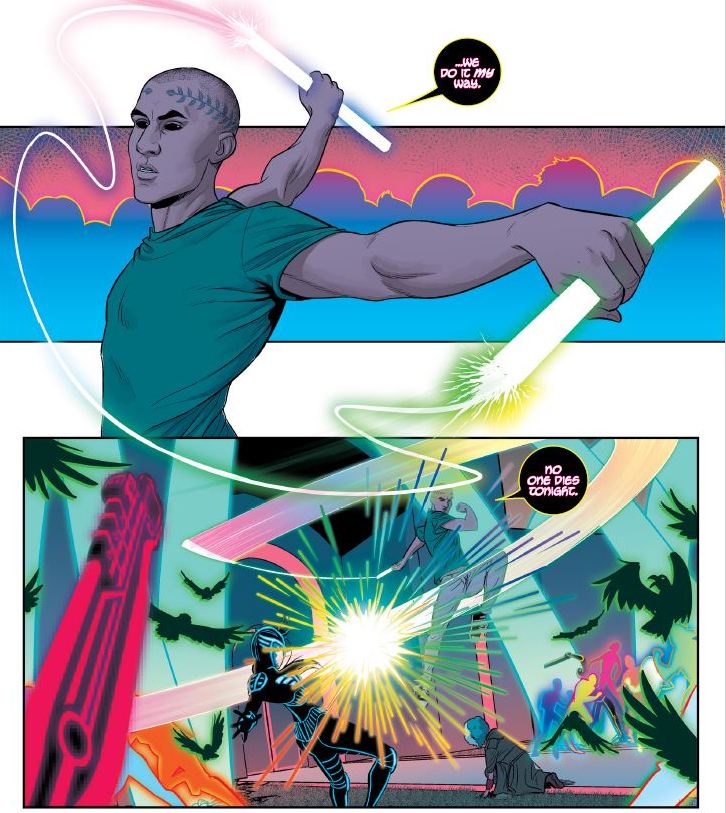
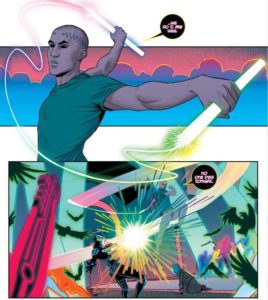
So far, The Wicked and the Divine has shown us a Dionysus with an undercurrent of danger, rather than full-blown bloody bacchanal. He pops his signature Thyrsus staff as neon nunchaku at Valhalla, but we don't see it elsewhere.
In Greek tragedy, the Dionysiac is often set in opposition to the Apolline. That is to say - kind of - chaos vs order. They're different takes on the ideal of kouros - smokin' hot muscle twinks, basically; one side all Preppy College Boy, the other all Scuzzy Sk8r Boi. Apollo is prophecy, fate, and structure. Dionysus is more free-for-all: emotive and chaotic. The impulses frequently clash in Greek literature, and it's picked up in Hegel and Nietzsche's respective takes on tragic theory.
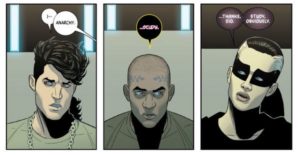 Interesting then, that Gillen and McKelvie's Dionysus, while emotive and ecstatic, feels far less chaotic, even explicitly choosing study over anarchy in #26
Also conspicuously absent: relentless penises.
Dionysus is a dick god. Not like Woden. Like, he's just all about the dicks. They're his symbol, and they're everywhere in his representations. Some of his followers would wear giant strap-ons in religious ceremonies and processions. Bring that one back, I say - really spice up the church fete.
Urdr & The Norns

Like Baphomet and Lucifer, The Norns are in the not-quite-gods camp. Imagine the Greco-Roman fates, but Norse. They're three (usually) powerful giants who sit at the foot of the world-tree Yggdrasil, keeping it watered from the well of Uror.
Seen as law makers and arbiters of fate, one reading which might be particularly interesting for WicDiv is that they set the length (as well as course) of mortal lives.
In this recurrence, their symbol is Yggdrasil, and it's deliciously fitting that Urdr should be Cassandra. Prophetic gods are a nice echo for her name, as is their journalistic investigation of the pantheon.
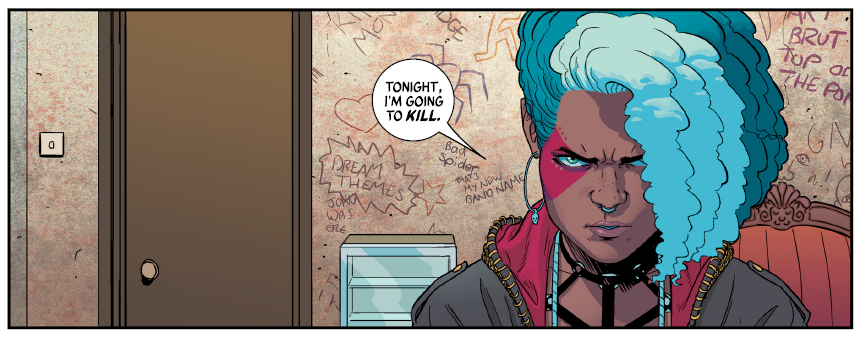
Unlike Amaterasu, Lucifer, and especially Woden, Cass attempts to keep her name, rather than leaning on "Urdr". She's cast by the others as the token grown-up, and is, frankly, done with their nonsense. She gest some of the very finest "what is this fresh crap" reaction beats:

There's a lot of really interesting identity stuff cohered around Cassandra/Urdr. It's dissected brief in her fight with Woden over his cheap crack about their apotheosis and previous identities, versus her transition. Her discomfort at having to perform the role of Urdr is palpable, as is her discomfort at the crowds just not getting it.
A skeptic become a god, with the name of a disbelieved prophet, disbelieved in turn when she tries to tell the world there are no gods and there is no prophecy. Tough gig.

In the Snorri Sturluson version of Norse myth (a 13th century monastic compilation of the old tales) there are many Norns, drawn from many races. In particular, from men, dwarves, and elves. This may give us the visual touchstone for Verdani and Skuld - one willowy, one shorter and broader.
She was the last good to be "found" by Ananke, or at least so we thought until we met...
Persephone

Issue 11: exploded head on the cover, 12 gods revealed, "It's going to be ok" on the flyleaf. Boom. Laura is Persephone. Persephone is dead. Grab a pomegranate and strap in.
Persephone's pretty well known as a concept: a stolen celestial daughter, spending half (sometimes a third of) her year in the underworld, her absence/return signifying the transition of winter into spring.
She's also deeply entangled with one of classical Greek religion's oldest mystery cults, and has back-story continuity arguments that make Madelyne Pryor look like some weaksauce Spot's First Walk intelligibility.
Persephone was a daughter of Demeter, goddess of harvest and agriculture. She was abducted by Hades, ruler of the underworld. In searching for her, Demeter created a great drought and famine, pressuring Zeus to intercede, and leading to hades granting Persephone's return. As ever with these wily deific bastards, there was a catch.

Persephone didn't read the fine print before snacking down on a juicy pomegranate, and having eaten the food of the underworld, she was bound to remain there. In this case, for one month for each seed eaten (4 or 6, depending on who you believe).
So far, so harvest myth. But it does get wibbly.
Four months of Persephone in Hell just about gets you the drought of a Greek summer. But her return rites are celebrated at the beginning of spring, as part of a rebirth/fertility cycle. The Eleusinian cult probably grafted together Persephone with earlier Minoan harvest goddesses, Demeter with ur mother figures. Other mystic takes on Persephone mix in the nature goddess Kore, so it gets kinda mangled.
Above ground, Persephone is all vegetation and plenty, and a bit better know. But her role in the underworld shouldn't be downplayed. She ain't sitting around down there.
 As queen of the underworld, Persephone is probably fused with the older, weirder figure of Despoina. Think: birth, death, and a whole load of must-be-appeased nature worship. In her cult it was forbidden for the uninitiated to speak her name, a tradition that clung to the chthonic Persephone. She presides over the dead, and in the tradition of Orpheus, metes out judgement.
 WicDiv picks this up heavily, in particular associating her with the idea of "the destroyer", which is one possible etymology of her name. Her nascent cult, too, won't name her. She likes it. She has root and vine powers, is potentially stronger than the other gods, can drag people down to the underworld, and shows this dual aspect with her flashes of skulls-for-pupils.
In #11 she apparently dies. In #18, she's back. In a basement dive bar, of course. We later find out that she spend months hanging out in the underworld with Baphomet. Moping, fucking, planning.
A lot gets hinted at. Ananke expected her back, but no so soon, and her status is debated by the remains of the pantheon. In a millennia-spanning set of ninety year cycles of renewal, it seems unlikely that a Persephone figure - heretofore hidden - has no significant role to play.
Nergal (Baphomet)

We spilled some ink last time on godhood as identity performance in WicDiv, and shit just got recursive. Baphomet comes from recent-ish demonology, and only get the goaty horn business in the 1800s. There's something fishy about him as one of the WicDiv gods (we covered this in part 1) and he certainly seems twitchy.
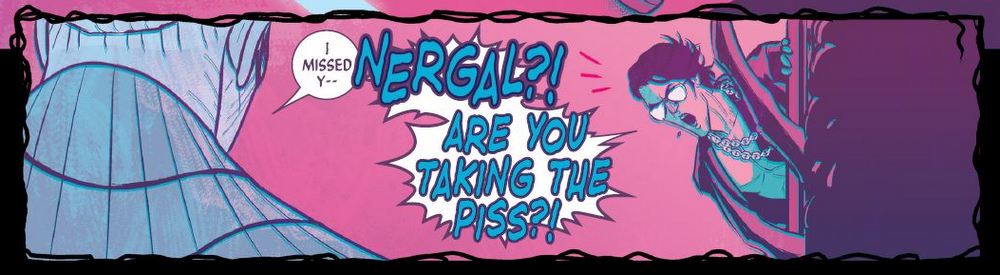
In the underground with Persephone, Baphomet tells us his origin story as... Nergal?
No, me either, a bad rendition in the Hellboy movie notwithstanding.

He's... Baphomet with lion bits? Certainly explains the teeth. Except emblematically it should probably be a fighting cock, and - look the whole thing's a joke about nobody knowing who Nergal is, and Baphomet still having to LARP as a god, even post ascension to actual godhood.
But that doesn't mean it isn't interesting.
Nergal is a Sumerian/Mesopotamian figure, and so could go back a couple thousand years BC. There's a nice irony there with Baphomet being a relatively modern invention. There are plague associations, and he's depicted variously as a lion or a chicken. In this case, a string of "raging cock" jokes seem appropriate.
Nergal's a sun god (with war aspects) who became an underworld god, perhaps via a sunset association. This makes him a fire god of the underworld, and you can picture the character as written scrabbling around for a fit before coming up with Baphomet, probably via early Christian mystics and demonology.
The figure was co-opted there as a demon, perhaps by 18th century occultist.
Niche.
Hades (1831)

On the one hand (ahem) it's a two-page appearance in a one-shot side story. On the other, it is a new god, so here's the quick version.
Hades is king of the underworld in Greek mythology, and here represented as John Keats, the original teen emo poet.
In his writers notes, Kieron Gillen hangs this off Keats' poem This Living Hand:
This living hand, now warm and capable
Of earnest grasping, would, if it were cold
And in the icy silence of the tomb,
So haunt thy days and chill thy dreaming nights
That thou wouldst wish thine own heart dry of blood
So in my veins red life might stream again,
And thou be conscience-calmed — see here it is—
I hold it towards you.That's pretty on-brand for Keats. Check out Ode to a Nightingale one of his better-known bits of gothing about.
It's easy to mock Keats for what feels like melodrama, and if I had another couple hundred words to spare, I would. But his work is also gorgeously sensual, with a real ear for rhythm and cadence. The morbidity is fascinated, dream-like. Through all of its florid verbal garishness, there's something to Keats that I resent myself for responding to.
We don't get much of him in the 1831 special. As with his factual counterpart, Hades here dies in Rome. Keats of tuberculosis, Hades, of Ananke sticking a knife in his heart.
Mythically, Hades was both the god and the realm. The land of the dead and its ruler. Not a satanic figure, and not presiding over a hell, per-se. Hades officiated more than he tormented, and was never quite a tempter or a figure of evil. As a Death figure he is implacable, and like Persephone it could be taboo to name him.
In The Wicked and the Divine Hades' main role is to get his hand cut off, which is then used by Lucifer to create a necromantic golem on the shores of Lake Geneva. We have very little sense of him, but it may be salient that at least some of Hades is potentially still out there, and in a universe that contains an unexpected return of Persephone.
...and bonus Pink Woden?

Totes the monster from the 1831 story, right? (The eighteen-thirty-onester). Well, maybe. What could you make from the hand of Hades, a squeeze of Morrigan and Lucifer, and a heaping tablespoon of Woden?
"Pink Woden" is briefly glimpsed in #14, as part of the remix issue's original art parenthesis. Woden is talking to someone, and with what could even be earnestness or affection. A Valkyrie he actually likes? Someone to monologue to? Or something more complex entirely?
Now, a couple of the other gods have multiple aspects, some maybe everyone's favourite neon MRA dickhead is only part - or rather half - of the story. If Nergal can call himself Baphomet, and given Ananke explicitly calls Green Wooden "the pet of a god" in #14, well, might we not wonder about Huginn and Muninn (Knowlwedge and Memory, Odin's raven spies/pets)? Or Geri and Freki (similar, more bitey, wolves), if thought and memory have a bit too much finesse for the character as seen?
Some fan theories say Pink Woden is Laura's sister. I could buy that for the emotional punch, but it would lack the mythic heft. I absolutely cannot buy that the 1831 monster is a thread that won't be picked up again, either. Throw in the colours, and my money's on the monster.
But I wouldn't bet against wolves or ravens. If we fancy getting proper twitchy, well, there's Baphomet's "idea golems", introduced just before we find out about Woden's dead mother, and as he talk about reverse-engineering the other gods' powers. Pink Woden, in the tiny glimpse we have, is not unlike one of the Valkyries, and dead-mum simulacrum would be weirdly on-brand for both Woden as presented, and a comic that's so knowingly post-Buffy.
If it is the eighteen-thirty-onester (not sorry), there's a lot of quite exciting fanwank on the table. The best way to ensure Lucifer would do a thing was pretty much to warn him not to, and then give him the bits, so we can be pretty sure than Ananke was at least basically cool with the monster's creation. We know she's lonely, we know she talked to Robert Graves, and we know she's writing to someone at the end of #28. Someone colour coded with pink sparkles, perhaps?
Enough speculation. Whaddya reckon - mummy, monster, magic raven?
7 May 2017, 4:07 pm - 1 hour 9 minutesPodcast 72 - Gods
Don't call it a GodCast.
Actually don't, that sounded far better in my head. We're talking gods and mythology in comics, with drive-by reviewing of Hamish Steele's Pantheon, a revisit of The Wicked and the Divine, and a bunch of other stuff along the way because we're good to ya.
Benevolent, even.
4 May 2017, 8:35 am - 59 minutes 54 secondsPodcast 71 - More Comics By Women
Y'know that shade over half the population who make about ten percent of Big Two comics, probably about half of the rest, and whose work gets about five percent of the attention? Yeah, those folks: women?
You remember women, right - the ones who don't get to say "I done made a comic" without some internet dickdribble making death threats.
In the spirit of celebrating great work (and of not being that guy), this week we're spotlighting a bunch of comics with female creators.
14 April 2017, 8:00 am - 1 hour 9 minutesEpisode 70 - Big Weird Sci Fi

Back, back again to the stranger edges of sci fi. We ponder whether sci fi has preemptively shifted to reflect our garbage fire times, or whether our reading habits have just taken a turn for the cynical.
Because of the garbage fires.
Episode 70: Big Weird Sci-Fi DownloadWe covered:
- Black Monday Murders - Jonathan Hickman and Tomm Coker
- Those Fucking Dinosaurs (I have no idea where to find this, let us know if you spot it)
- Descender - Jeff Lemire and Dustin Nguyen
- Harrow County - Tyler Crook and Cullen Bunn
- Mare Internum - Der-shing Helmer
- Dept.H - Matt Kindt and Sharlene Kindt
- Quantum Teens Are Go! - Magdalene Visaggio, Eryk Donovan, Claudia Aguirre
- The Firelight Isle - Paul Duffield
- Leave Me Alone - Vera Brosgol
- Deep Space Canine - Comic Book Slumber Party (full list of contributors here)
- Trees - Warren Ellis and Jason Howard
- Injection - Warren Ellis, Declan Shalvie, Jordie Bellaire
- The Wild Storm - Warren Ellis and Jon Davis-Hunt
- Sex Criminals - Matt Fraction and Chip Zdarsky
- Warm Blood - Josh Tierney, Saskia Gutekunst, Joysuke, Winston Young, Naomi Franquiz, Marina Julia, Olivier Pichard (so far)
- Epicurean’s Exile - Leia Weathington and Jack Cole
- Monstress - Marjorie Liu and Sana Takeda
- Kaijumax - Zander Cannon
7 March 2017, 9:05 am - 1 hour 15 minutesPodcast 69 - Revisiting The Past

They say that the past is a foreign country, and as British citizens we are therefore left with an extremely limited window of opportunity to go there without a visa. We're looking back at books we loved, formative experiences, to see how they stack up now. Also: other comics! Is a hotdog a sandwich? More!
Episode 69: Revisiting the Past DownloadWe read:
- Dirt - CJ Reay
- The Marionette Unit - Azhur Saleem, James Boyle,Warwick Johnson-Cadwell
- Paper Girls - Brian K Vaughan, Cliff Chiang, Matt Wilson
- On the Wings of the World: Audubon - Fabien Grolleau and Jeremie Royer
- Motor Crush: Babs Tarr, Brenden Fletcher, Cameron Stewart
- Immortal Iron Fist: Ed Brubaker, Matt Fraction, David Aja
We Revisited:
- V for Vendetta - Alan Moore, David Lloyd, Steve Whitaker, Siobhan Dodds
- Watchmen - Alan Moore and Dave Gibbons
- Daytripper - Fabio Moon and Gabriel Ba
And hey, why not listen to We Will Fix You? All the us, none of the comics, several jokes. Is good. You listen.
9 February 2017, 9:10 am - 1 hour 4 minutesPodcast 68 - Comic Shops

We really expected to just talk in gushing tones about our favourite comic shops and then come up with some great ideas for how we'd run our own.
So of course we're ranting about the comics Direct Market. But also some other stuff!
Episode 68: Comic Shops DownloadWe read:
- Mare Internum - Der-shing Helmer
- Black Panther: A Nation Under Our Feet - Ta-Nehisi Coates and Brian Stelfreeze
- Trees - Warren Ellis and Jason Howard
- The Arab of the Future - Riad Sattouf
- How to Understand Israel in 60 Days or Less - Sarah Glidden
- Critical Chips - Zainab Akhtar and various authors
- The Can Opener’s Daughter - Rob Davis
Comic shops we talked about:
- Gosh (London)
- Page 45 (Nottingham)
- Niche (Huntingdon)
- Dave's Comics (Brighton)
- OK Comics (Leeds)
19 January 2017, 9:22 am - More Episodes? Get the App