- 1 hour 36 minutesTMSIDK 030: Tom Scioli and Ed Piskor on being professional comic book artists
Tom Scioli is co-writing, drawing, coloring, and lettering the monthly comic book series, Transformers vs. G.I.Joe. His other comics include Godland, American Barbarian, Final Frontier, and Myth of 8-Opus. Ed Piskor is the author/artist of the Hip Hop Family Tree – a weekly comic strip on Boing Boing and an ongoing book series that chronicles the history of hip hop in comics form. He is also the creator of Wizzywig.
They share a studio in Pittsburgh. We visited their studio to talk about what it’s like being professional comic book artists, selling their work, nostalgia, research, color theory, anger management, and "skewmorphism!"
23 August 2014, 12:45 am - 58 minutes 40 secondsTMSIDK 029 Cartoonist Paul Hornschemeier
Tell Me Something I Don't Know is Boing Boing's podcast featuring artists, writers, filmmakers, and other creative people discussing their work, ideas, and the practical side of how they do what they do.
The animation project Giant Sloth, starring Paul Giamatti, could be described as Night at the Museum meets Eraserhead. In this episode, we discuss the making of this animated short with its creator, Paul Hornschemeier. He tells us how the cast came together, what the transition from comics to filmmaking and television is like, and how social media has helped him draw more. He's currently raising funds to complete Giant Sloth.
Paul Hornschemeier is a cartoonist, writer, artist, designer, animator, and filmmaker. His thought-provoking books include Mother, Come Home, Three Paradoxes, Life with Mr. Dangerous, and Artists Authors Thinkers Directors. He animated the opening credits for IFC's Comedy Bang Bang. Keep up with Hornschemeier online at Forlorn Funnies. He posts a new drawing every day on the Daily Forlorn tumblr.
23 June 2014, 9:43 pm - 1 hour 13 minutesTMSIDK 028 Artist Vanessa German's ARThouse
Vanessa German is a "http://pavelzoubok.com/node//1687”>multidisciplinary artist and poet. She has done TEDx talks at MIT, Harvard, and Pittsburgh. She lives in Homewood, a Pittsburgh neighborhood that The Rachel Maddow Show called, "One of America’s Most Violent Neighborhoods." In response to that violence, German began inviting children to make art with her on her front porch. This club quickly outgrew her front porch and she found an empty house and dubbed it ARThouse. You can donate to her project here.
ARThouse is important. We need it because it provides a safe, creative environment for children and neighbors to come together, to experience the power and energy of their creative minds. It is doubly, tripley, quadruply important because all of this good happens in a neighborhood that most people don't hear about unless something violent and tragic has occurred. It is important because the children in this neighborhood demanded it. Insisted upon having a space that they could walk to, to be safe, to be creative, to have fun, to discover and express themselves.
20 May 2014, 1:28 am - 59 minutes 51 secondsTMSIDK 027: cartoonist and zinemaker Nicole Georges
Nicole Georges is a cartoonist, writer, zinemaker, teacher, aerobics instructor (?), and pet portraitist. When she was a child, Georges’ mother and family told her that her father died when she was a baby. When she was 21, a palm reader told her that her biological dad was still alive. She called conservative talk show host Dr. Laura for some advice. She chronicles what happened next in her graphic memoir, Calling Dr. Laura.
Based in Portland, Georges has been making comics and zines including “Invincible Summer” for over a decade. She also teaches at the Independent Publishing Resource Center, which provides access to tools and resources for creating independently published media and artwork. Georges tells us about teaching Riot Grrl history and zinemaking to teenagers, and finding value and self-empowerment through self-expression. When we talked to Georges, she was in the middle of a 9-month fellowship at the Center for Cartoon Studies in White River Junction, VT.
16 April 2014, 8:30 pm - 1 hour 56 minutesTMSIDK 026: Teenager X
Two years ago, we recorded a conversation with 16 year-old high school student. Not someone famous, but someone who is, to you, a random teenager. So that he could feel free to speak candidly about friends, school, and culture, we gave him the pseudonym Teenager X. He told us about being more tech-savvy than his teachers, he described his hectic schedule, he vented frustrations about learning to drive, and shared a funny anecdote about being kicked out of an online Metal Gear game.
Two years later, we revisit Teenager X. He's 18 now and mere months away from high school graduation. He talks about high school "busy work", modern jazz, and nerd culture. He tells us about a brief stint reviewing rom-coms for his high school newspaper and ponders his plans for life after high school, work, college, and girls.
4 April 2014, 5:59 pm - 48 minutes 30 secondsTMSIDK 025: Stephanie Buscema
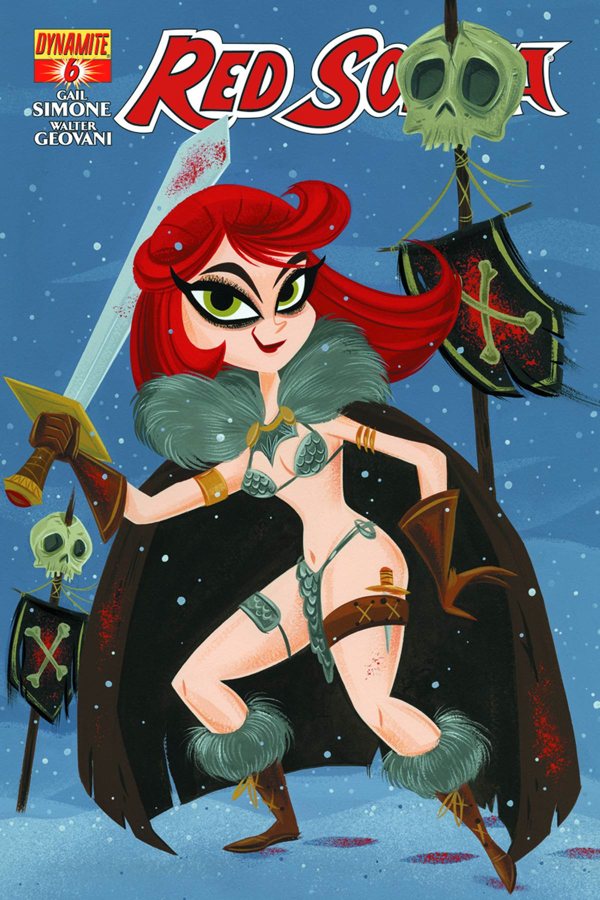
Stephanie Buscema is a painter, illustrator, cover artist, and comic book artist. She studied cartooning and illustration at the School of Visual Arts in New York. In our conversation, she tells us what it was like to grow up with artist role models in her family. We discuss the influence and importance of illustration greats Mary Blair and Marie Severin. Stephanie walks us through her process for creating killer Red Sonja comics covers, and talks about the benefits of working on a variety of projects in different formats, and the sacrifices necessary to be a working artist.
Also: We've got a T-shirt bearing TMSIDK's smart aleck logo! Challenge people with your shirt to tell you something you don't know. Everyone loves a know-it-all.
5 March 2014, 11:42 pm - 2 hours 34 minutesTMSIDK 024: Bill Boichel, owner of Copacetic Comics
Bill Boichel is the owner and proprietor of Copacetic Comics, one of the greatest comic books stores ever. They are located in Pittsburgh, PA, and specialize in independent comics, music, film and literature. Bill has worked in comics retail for over 35 years, and has seen comic books go from disposable entertainment found on newsstands to an art form that is now accepted in galleries, museums and universities.
In this episode, Bill discusses the significance of Carl Barks and his impact on the American comics community. We talk about Barks' challenges with creator's rights, and similar struggles faced by artists like Jerry Siegel, Joe Shuster, and Jack Kirby. Bill ponders today's comics landscape and history. We survey Copacetic Comics' extensive inventory of small press comics and find out how Bill manages to keep up with such a dynamic and diverse art form. You can experience an online version of his store at copaceticcomics.com, where Boichel posts extensive reviews and promotes the books he carries. But the best way to experience it, and it's worth the trip wherever you are, is to find your way to Pittsburgh and visit in person.This episode of TMSIDK is sponsored by Warby Parker. Try out 5 pairs of prescription eyeglasses for free and get three-day shipping with the offer code TELLMESOMETHING.
21 February 2014, 2:39 am - 1 hour 3 minutesTMSIDK 023: Elana Schlenker
Elana Schlenker is an independent graphic designer and art director based in Brooklyn. Print magazine honored her on their 2013 New Visual Artist list - a prestigious annual distinction that recognizes the industry’s top 20 creative talents under the age of 30. Schlenker is the publisher and creator of Gratuitous Type, a pamphlet of typographic smut.
This episode, we ponder the phrase “unspecialized practice” and try to decide if it’s a positive description for one’s work. We consider the differences between zines and magazines, the contemporary state of magazine publishing, Helvetica vs. Comic Sans, and the virtues of collaboration compared to DIY. Elana Schlenker tells us about studying marketing and studio art, rather than graphic design and walks us through the process of designing It’s Time to Move – writer/cartoonist Peter Wieben’s and photographer Dominic Nahr’s harrowing first-hand account of the Egyptian revolution through their text, drawings, and photos.
This episode is brought to you by Audible, the leading provider of audiobooks. Download a free ebook, on us, and get an extended free trial of the service by using this link.
4 February 2014, 9:33 pm - 54 minutes 55 secondsTMSIDK 022: Eric Shiner, director of Andy Warhol Museum
This episode is brought to you by Audible, the leading provider of audiobooks. Download a free ebook, on us, and get an extended free trial of the service by using this link.
Tell Me Something I Don’t Know is Boing Boing's podcast featuring artists, writers, filmmakers, and other creative people discussing their work, ideas, and the practical side of how they do what they do. In episode 22, we speak to Eric Shiner, Director of the Andy Warhol Museum in Pittsburgh, PA.
"To Give Voice to Those That Don't Have It" and "Making the Anomalies of Society Into the Paradigms of Society" are among his responsibilities as the museum's director. Over the past twenty years, Andy Warhol's popularity has soared. Shiner talks with us about Warhol's legacy, about exhibiting the museum's collection in the Middle East, China, and Japan, and about engaging fans of the legendary pop artist through social media and interactive technology (on-site at the museum, and online).
In 2013, Shiner curated the Armory Focus portion of the Armory Show. He spoke with us about the commercial side of the art world. He explains, "Warhol himself saw absolutely no separation between art and business."
Finally, Shiner discusses the impact of the internet on the art world and how he finds new and exciting artists.
(The opening music in this episode is by Artificial Human.)
24 January 2014, 7:11 pm - 59 minutes 36 secondsTMSIDK 021: John Peña
Tell Me Something I Don’t Know is Boing Boing's podcast featuring artists, writers, filmmakers, and other creative people discussing their work, ideas, and the practical side of how they do what they do. In episode 21, we speak to multi-disciplinary artist John Peña. Each day for the last five years, he has made a drawing about some aspect of his day. He calls this project Daily Geology, and presents it online in a form that resembles a webcomic. We talk with John about how he makes a living as an artist, comic artist Julia Wertz’s artist statement, faking happiness until you are actually happy, teaching, and the business of art education.
7 January 2014, 8:30 pm - 1 hour 3 minutesTMSIDK 020: Joe Lupo and the The Invincible Iron Man
In this episode of Tell Me something I Don't Know, we speak with Joseph Lupo, a printmaker and professor at West Virginia University. His work focuses on how writers and artists communicate through comics. For more than a decade, he has deconstructed and examined a single volume of The Invincible Iron Man comic book: Volume 01, Issue 178, published in 1984.
"It is a different kind of superhero issue for a few reasons," says Lupo. "For one, never in this story does the superhero Iron Man ever directly appear. Also, this issue is split into two different story lines."
Using that single issue as source material, he invited 23 nationally-recognized artists to create new work inspired by that original comic. The result: a curated group exhibition, "Shame of the City: Deconstructing and Reconstructing Comic Book Narratives," which opens at Future Tenant in Pittsburgh on December 13, 2013.
We speak with Lupo about the show, and what we can learn about communication from studying comics.
11 December 2013, 3:41 am - More Episodes? Get the App