- 25 minutes 16 secondsGiving Carbon Fiber Scrap a Second Life – Interview with Mike Graham
This week, we revisit a conversation with Mike Graham, founder and president of Real Carbon, about upcycling carbon fiber prepreg scraps into finished products. They specialize in producing high-quality, custom carbon fiber tubes and UAV parts using cutting-edge technologies and advanced materials.
On this episode, we’ll discuss how manufacturing leftovers can become a valuable resource, creating opportunities to reduce waste and put advanced materials to work in new applications.A chemist with decades of composites experience, Mike brings a practical perspective on custom carbon fiber product development. This replay highlights the ingenuity behind finding new uses for composite materials—and turning scrap into opportunity. You can learn more at https://realcarbon.com/uncategorized/real-carbon-has-upcycled-carbon-fiber-pre-preg-scrap-into-a-finished-product/
The post Giving Carbon Fiber Scrap a Second Life – Interview with Mike Graham first appeared on Composites Weekly.
22 October 2026, 4:27 pm - 26 minutes 10 secondsJEC Startup Booster Turns 10: A Decade of Innovation and What’s Next – Interview with Benjamin Debusschère
This week, Benjamin Debusschère joins the show. Benjamin supports emerging technologies by driving initiatives such as the Startup Booster competition and the JEC Innovation Awards. These programs provide visibility, networking, and business opportunities for entrepreneurs and companies willing to transform the composites landscape.
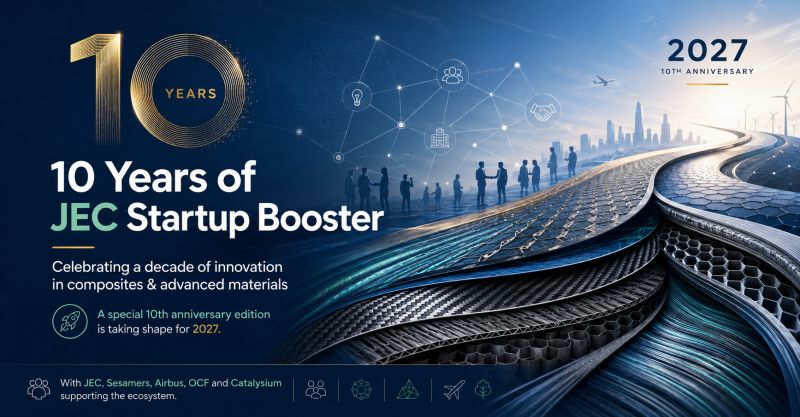
With 2027 marking the Startup Booster program’s 10th anniversary, our conversation looks at its evolution, the challenges facing emerging companies, and the role industry partnerships play in bringing new technologies to market.
We’ll discuss what makes a startup stand out, how the program helps founders connect with potential customers and investors, and the opportunities emerging across materials, manufacturing, digital tools, and recycling. We also look ahead to the anniversary and what JEC and its partners envision for the program’s next chapter. The entry deadline is October 19th.
Learn more at https://www.jec-world.events/program/startup-booster.
The post JEC Startup Booster Turns 10: A Decade of Innovation and What’s Next – Interview with Benjamin Debusschère first appeared on Composites Weekly.
13 October 2026, 5:44 pm - 25 minutes 23 secondsFrom Roadmap to Reality: Advancing Continuous Fiber Additive Manufacturing – Interview with Steven Floyd and Clark Patterson
Returning guests Steven Floyd and Clark Patterson joined the show to discuss progress on the America Makes–funded Affordable and Agile Composite Additive Manufactured Structures (AACAMS) roadmap effort. As the project nears completion, we explore the gaps limiting adoption, manufacturers’ requirements, and priorities that could guide future research and investment.
Clark also shares his work with Azista USA to integrate extreme-temperature composite materials into additive manufacturing platforms. We discuss the opportunities for high-temperature polymer composites, carbon/carbon, and ceramic matrix composites—and the challenges of turning promising materials and processes into reliable production capabilities.
You can learn more by visiting https://www.americamakes.us/america-makes-awards-udri-450k-for-aacams-project-call.The post From Roadmap to Reality: Advancing Continuous Fiber Additive Manufacturing – Interview with Steven Floyd and Clark Patterson first appeared on Composites Weekly.
12 October 2026, 3:35 pm - 1 hour 20 minutesInterviews from Day 2 at CAMX 2026
On this episode, we feature all of our conversations from day 2 at CAMX 2026 in Atlanta, GA.
These include interviews with:- Matthew Hartman of Loop Technology
- Gil Cooper of Plataine
- Marcy Offner of WCI
- Eimear O’Carroll of Lios
- Yves Cordeau of Avient Corporation
- Tom Sharrock of James Cropper
- Daniel Neumann of ACMA
- Paul Zwicklhuber of ENGEL
The post Interviews from Day 2 at CAMX 2026 first appeared on Composites Weekly.
3 October 2026, 12:48 pm - 1 hour 44 minutesInterviews from Day 1 at CAMX 2026
On this episode, we’ll be featuring all of our conversations from Day 1 at CAMX 2026 in Atlanta, GA.
These include interviews with:
- John Kehoe of Boaz Partners
- Kevin Wyss of Avadain Graphene
- Joe Stanish and Donald Paquet of L&L Products
- Haley Marie Keith of First Graphene
- Geert Pierloot of Summa
- Bryan Beimel of Pulflex Technologies
- David Leach of Composite Material Solutions
- Matthew Pech and Tom Cranford of Lindau Chemicals
- Vipen Kumar of ORNL – Discussing Multiplexing Extrusion System (MExS)
- Kelvin Fu. Co-Founder of CarbonForm Inc.
- Markus Brzeski of A+ Composites
The post Interviews from Day 1 at CAMX 2026 first appeared on Composites Weekly.
1 October 2026, 6:40 pm - 28 minutesBeyond Prototypes: How Caracol Is Scaling Robotic Composite 3D Printing for Complex Parts
Joining the show this week is Francesco De Stefano, co-founder and CEO of Caracol, a company using robotics and large-format additive manufacturing to help manufacturers rethink how they build large, complex parts.
Founded in Milan in 2017, Caracol is a leading industrial 3D printer manufacturer and large-format additive manufacturing technology provider. Since 2015, their founders have pursued the idea of overcoming the limits of existing manufacturing technologies, combining technological innovation with an industrial vision to respond to their clients’ production needs.
On this episode, we’ll explore where this technology is delivering practical value, what’s holding back broader adoption, and how more localized manufacturing could reshape composite production.
You can learn more about Caracol by visiting https://www.caracol-am.com.The post Beyond Prototypes: How Caracol Is Scaling Robotic Composite 3D Printing for Complex Parts first appeared on Composites Weekly.
17 September 2026, 7:29 pm - 14 minutes 50 secondsLife Critical. Mission Critical. Composites: The Future of Norplex-Micarta with CEO Mike Gromacki
On this episode, Mike Gromacki revisits the show to discuss some of the latest news at Norplex-Micarta. Now 10 months into his role as CEO there, Mike is helping shape the company’s next chapter around a clear focus: “Life Critical. Mission Critical. Composites.”
We’ll discuss what that means for their capabilities, the markets they serve, and growth opportunities and projects that help point the way forward.
For more than a century, Norplex-Micarta has engineered thermoset composite solutions that protect people, enable critical systems, and withstand demanding environments across infrastructure, transportation, defense, and industry.
We’ll also look ahead to CAMX, discussing the CEO Forum, featured programming on the show floor, and the General Session.
You can learn more about Norplex-Micarta at https://www.norplex-micarta.com. They’ll be exhibiting at CAMX at Booth M18.The post Life Critical. Mission Critical. Composites: The Future of Norplex-Micarta with CEO Mike Gromacki first appeared on Composites Weekly.
11 September 2026, 3:52 pm - 24 minutes 27 secondsSoundBounce and The Future of Acoustic Materials: Interview with Rhona Togher of Lios
On this episode, Rhona Togher, CEO and co-founder of Lios, joins the show. Lios is an Irish company developing advanced materials to tackle unwanted noise and vibration.
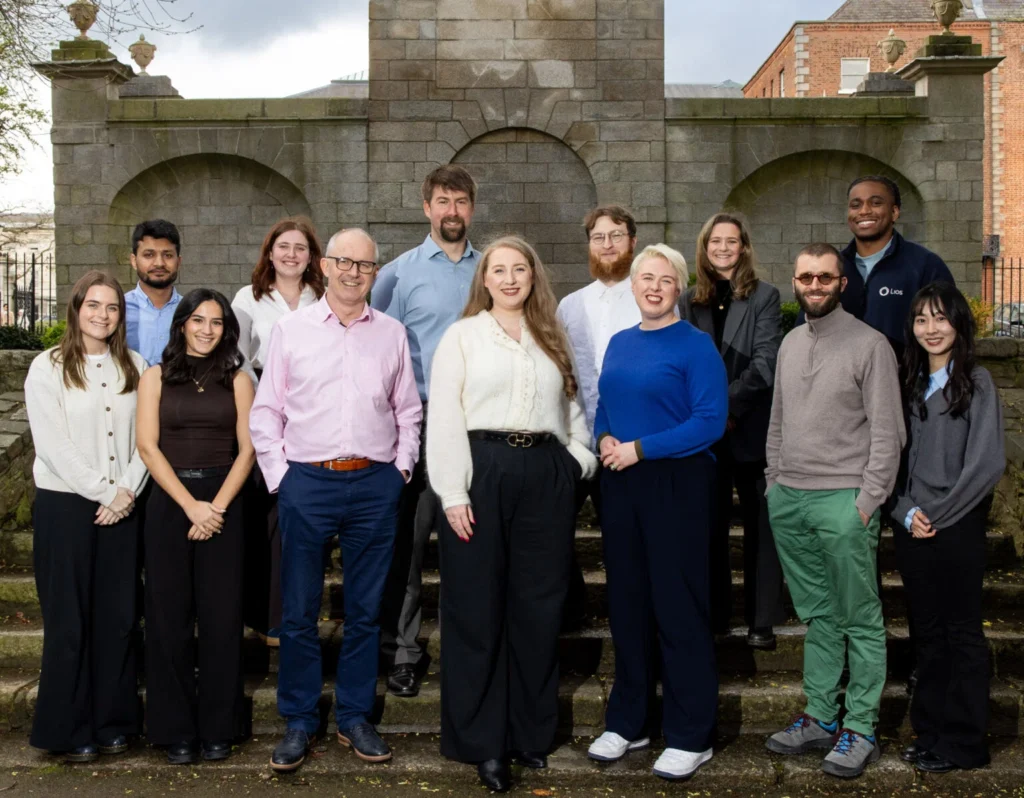
Its flagship technology, SoundBounce, takes a different approach to acoustic insulation—combining a responsive material with a cellular structure to address difficult low-frequency noise without the weight and bulk of conventional solutions.
On this episode, we’ll explore the science behind SoundBounce, its potential applications in automotive, aerospace, and construction, and Lios’ work with the European Space Agency.
You can learn more at https://lios-group.com/soundbounce.The post SoundBounce and The Future of Acoustic Materials: Interview with Rhona Togher of Lios first appeared on Composites Weekly.
8 September 2026, 11:55 am - 24 minutes 47 secondsHow Former SpaceX Engineers Are Turning Grass into Carbon-Negative Structural Panels
On this episode, Nathan Silvernail joins the show. He is the co-founder and CEO of Plantd—a company reimagining how structural building materials are manufactured. Before launching Plantd, Nathan spent nearly a decade at SpaceX, where he helped develop advanced manufacturing systems for the Crew Dragon spacecraft. He is now applying that same engineering mindset to one of the world’s oldest and most resource-intensive industries: construction.
Plantd has developed a process that transforms fast-growing perennial grass into high-performance structural panels designed to compete directly with conventional wood-based products such as OSB. Using an automated, modular, all-electric manufacturing system, the company aims to produce building materials that are stronger, more moisture-resistant, and better for the environment.

We’ll talk with Nathan about the technology behind these grass-based panels and Plantd’s vision for creating a new generation of sustainable composite materials. You can learn more by visiting https://www.plantdmaterials.com.
The post How Former SpaceX Engineers Are Turning Grass into Carbon-Negative Structural Panels first appeared on Composites Weekly.
3 September 2026, 1:01 pm - 25 minutes 23 secondsCAMX Is Coming: Here’s A Smarter Strategy for Trade Show ROI
With CAMX just a few weeks away, it’s a perfect time to revisit one of our previous conversations with Daniel Murphy of Alcove Media on a topic that every exhibitor should be thinking about: how do you actually generate business from a trade show?
Many companies invest tens of thousands of dollars exhibiting at events, but simply showing up with a great-looking booth doesn’t guarantee a return. On this episode, we’ll discuss how companies can be much more strategic about their trade show investment.
The post CAMX Is Coming: Here’s A Smarter Strategy for Trade Show ROI first appeared on Composites Weekly.
1 September 2026, 3:08 pm - 47 minutes 32 secondsCatalyzing the Future of Composites: From Innovation to Investment- Interview with Yannick Willemin
Joining the podcast this week is Yannick Willemin. Yannick is the founder of Catalysium, a deep-tech consultancy supporting startups, SMEs, and investors across the composites and advanced materials ecosystem.
He brings nearly two decades of experience spanning materials engineering, manufacturing, business development, corporate strategy, startups, and investment. His work touches nearly every part of the composites value chain—from materials and manufacturing technologies to recycling and end-use markets including aerospace, automotive, sports, luxury, and energy.
Through Catalysium, Yannick helps technology companies identify markets, build strategic partnerships, acquire customers, and turn promising innovations into sustainable businesses. On the investment side, he works with business angels, venture capital, private equity, and other investors, conducting due diligence, helping them better understand the opportunities—and risks—behind deep-tech companies.
You can learn more about Catalysium by visiting https://catalysium.ch and check out their videos at https://www.youtube.com/@CompositesCatalyst.
The post Catalyzing the Future of Composites: From Innovation to Investment- Interview with Yannick Willemin first appeared on Composites Weekly.
20 August 2026, 9:43 pm - More Episodes? Get the App