- Quick Pimps: GI Bleeding
This is a common topic to be pimped on in Emergency Medicine. This pathology is not uncommon, can manifest with varying signs and symptoms and is associated with a high mortality. This topic is extremely important to understand, not only because of its occurrence rate and related mortality, but because the actions taken immediately in the Emergency Department can have a significant impact on patient course and outcome.
This topic is full of clinical pearls, interesting pharmacology, practical decision tools and my favorite…pseudoaxioms!
Quick Pimps: Acute GI Bleeding PDF Preview
Disclaimer: this cartoon is meant to say NG tubes are safe. Their efficacy is up for debate.
 29 October 2013, 10:43 pm
- Monitoring Critically Ill Patients
Vital basics on vital signs and other signs that are vital.
Our goal in medicine is to gather and organize data, interpret that data and ultimately make decisions in the prevention, diagnosis, and management of disease. The initial part of this system is to ensure that adequate and correct data is collected and interpreted with knowledge of the process and shortcomings that the data was collected with.
Discussion includes vital signs, pulse oximetry, blood gases, capnography/end-tidal C02 (ETC02) and more. It is important to recognize where vital signs can trick you, how to deal with pulse oximetry latency and how blood gases and ETC02 can be interpreted in the setting of shock.
https://didacticsonline.com/wp-content/uploads/2013/08/monitoring-critical-patients.mp3Monitoring Critically Ill Patients PDF
•Meyers CM, Weingart SD. Critical Care Monitoring In The Emergency Department. Emergency Medicine Practice. 2007;(9)7:1-23.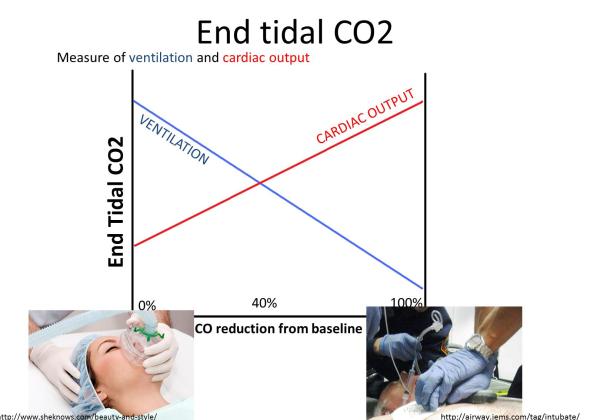
Assali AR, Herz I, Vaturi M, Adler Y, Solodky A, Birnbaum Y, Sclarovsky S. Electrocardiographie criteria for predicting the culprit artery in inferior wall acute myocardial infarction. Am. J. Cardiol. 84(1); 87-9
Ding ZN, Shibata K, Yamamoto K, Kobayashi T, Murakami S. Decreased circulation time in the upper limb reduces the lag time of the finger pulse oximeter response. Can J Anaesth. 1992 Jan;39(1):87-9.
Goldberg AL. Electrocardiogram in the diagnosis of myocardial ischemia and infarction. In: UpToDate, Ganz, LI (Ed , UpToDate, Waltham, MA, 2013.
Goldberger AL, Stein PK. Evaluation of heart rate variability. In: UpToDate, Ganz, LI (Ed), UpToDate, Waltham, MA, 2013.
Elert, Glenn (2005). “Temperature of a Healthy Human (Body Temperature)”. The Physics Factbook. Retrieved 2007-08-22.
Ellender TJ, Skinner JC. The use of vasopressors and inotropes in the emergency medical treatment of shock. Emerg Med Clin N Am. 26 (2008) 759-786
Jin x, Weil MH, Tang W, Povoas H, Pernat A, Xie J, Bisera J. End-tidal carbon dioxide as a noninvasive indicator of cardiac index during circulatory shock. Crit Care Med. 2000 Jul;28(7):2415-9.
Kelly G (December 2006). “Body temperature variability (Part 1): a review of the history of body temperature and its variability due to site selection, biological rhythms, fitness, and aging”. Altern Med Rev 11 (4): 278–93. PMID 17176167.
Levin T, Goldstein JA. Right ventricular myocardial infarction. UpToDate
Mackay MH, Ratner PA, Johnson JL, Humphries KH, Buller CE. Gender differences in symptoms of myocardial ischaemia. Eur Heart J 2011;32:3107-3114.
Mackowiak, P. A.; S. S. Wasserman, M. M. Levine (1992-09-23). “A critical appraisal of 98.6 degrees F, the upper limit of the normal body temperature, and other legacies of Carl Reinhold August Wunderlich”. JAMA 268 (12): 1578–1580. doi:10.1001/jama.268.12.1578. PMID 1302471. Retrieved 2007-08-22.
Marino, Paul. The ICU Book, 3rd Edition. Ovid Technologies, Inc. 2006
Mateer, J.R., et al. Continuous pulse oximetry during emergency endotracheal intubation. Ann Emerg Med 1993;22(4):675-9.
Meyers CM, Weingart SD. Critical Care Monitoring In The Emergency Department. Emergency Medicine Practice. 2007;(9)7:1-23.
Reeder GS, Kennedy HL, Rosenson RS. Overview of the acute management of ST elevation myocardial infarction. UpToDate
Ryan TJ, Reeder GS. Initial evaluation and management of suspected acute coronary syndrome in the emergency department. UpToDate
Prause G, Hetz H, Lauda P, Pojer H, Smolle-Juettner F, Smolle J. A comparison of the end-tidal-CO2 documented by capnometry and the arterial pCO2 in emergency patients. Resuscitation. 1997 Oct;35(2):145-8
Polielinicio SD. Use of inhaled nitric oxide in the treatment of right ventricular myocardial infarction. Am. J. or Emerg. Med. 29;473.e3-473.e5
Spalding MB, Ala-Kokko TI, Kiviluoma K, et al. Inhaled nitric oxide effectively decreases right heart afterload following right heart infarct in pigs. Scand Cardiovasc J 2001;35(1):45-9
Weingart S. Physiology of oxygenation. Emcrit audio podcast
11 August 2013, 7:24 pm - Acute respiratory distress syndrome (ARDS)
Rob Kawa discusses Acute respiratory distress syndrome.
https://didacticsonline.com/wp-content/uploads/2013/07/ards-podcast.mp316 July 2013, 9:15 pm - Mutiple Endocrine Neoplasias (MEN syndromes)
“Oh, this is definitely MEN syndrome….but which one?”
No matter how many times I have memorized these syndromes I feel like the information is gone after a week. I looked around for helpful study tips but since most use a combination of “this many Ps and that many Ms”…yet everything is a P or M, I was lost.
I made this diagram because I am a visual learner and it only seemed right to point out that there are only a few differences. I hope this helps for boards. This seems to show up on every USMLE and COMLEX.
23 June 2013, 4:07 pm - Osteopathic Approach for Palliative and Hospice Care
Rob Kawa talks palliative care in this podcast. This is a great talk going over lots of Osteopathic principles as well as techniques. This should also help those out there with a COMLEX exam coming up. Enjoy!
https://didacticsonline.com/wp-content/uploads/2013/06/osteopathic-approach-to-palliative-care.mp311 June 2013, 1:17 pm - Quick Pimps: Approach to Rheumatic Patient
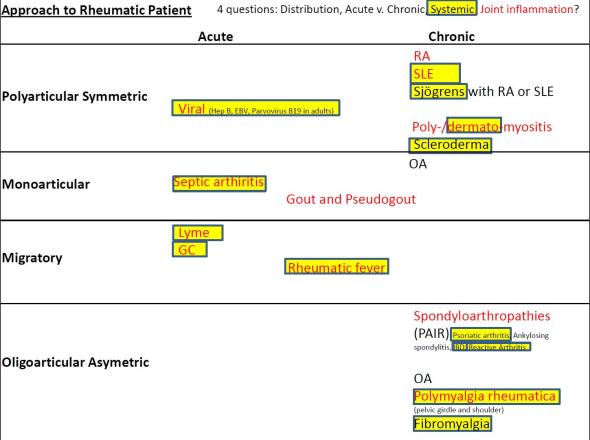
Here is a quick overview of many rheumatologic pathologies. My goal was to create a quick visual aid to assist in differential diagnosis and managing the dreaded rheumatology board question. I plan on editing and adding to the form so I welcome any comments.
 8 June 2013, 6:55 pm
- Quick Pimps: Criteria and Rules Quick Reference Sheet
I am working on a few podcasts but in the meantime I thought I’d share a new sheet that is helping me during my Internal Medicine rotation. It is a work in progress so let me know about any corrections or additions you can think of.
 28 March 2013, 12:10 am
- Thank for a great 2012!
Happy New Year!
DidacticsOnline is growing thanks to its great followers. Thank you for the comments and support! Please email with any comments or suggestions.
Stats from 2012:
4,329 films were submitted to the 2012 Cannes Film Festival. This blog had 18,000 views in 2012. If each view were a film, this blog would power 4 Film Festivals
The busiest day of the year was November 20th with 348 views.
How did they find you?
The top referring sites in 2012 were:
Some visitors came searching, mostly for didactics online, didacticsonline, didacticsonline.com, brandon masi parker, and prolotherapy.
Where did they come from?
77 countries in all! Most visitors came from The United States. The United Kingdom & Canada were not far behind.
3 January 2013, 12:56 am - Quick Pimps: Causes of Postoperative Fever
Postoperative fever is an extremely common finding and therefore an extremely common topic for med students to be pimped on. Fever is found in as many as 91% of post-op patients. It is most often benign and self-limited and a normal physiologic response to the trauma of surgery. However it can be due to a variety of causes, some benign and some life threatening.
- Ws mnemonic
- POD 1-2: Wind– Pneumonia, Aspiration, PE (NOT ATELECTASIS…listen to podcast for more details)
- POD 3-5: Water– UTI
- POD ~5: Walking– DVT, PE
- POD ~7: Wound– Surgical Site Infection
- POD >7: What we did– Line infections of drug/blood product reactions at any time
- POD >10: Wonder Where?- Deep Abcess
Causes of Postoperative Fever Podcast
Evaluating postoperative fever: A focused approach. By James C. Pile MD
https://didacticsonline.com/wp-content/uploads/2012/10/postoperative-fever.mp329 October 2012, 7:03 pm - Ws mnemonic
- How to present a patient (Oral Case Presentations)
Oral case presentations (OCPs) are an integral part of the medical student learning experience and more importantly the team aspect of patient care. In this podcast I sit down with Dr. Natasha Bray DO, Director of Medical Education at Broward Health Medical Center, to discuss some tips for presenting a patient, the common mistakes made by students, and to hear an example from a master of the art of presenting.
How to Present a Patient Podcast
30 September 2012, 9:56 pm - Quick Pimps: Treatment of Hyperkalemia
Quick Pimps is a new series where I will quickly discuss topics that medical students are commonly “pimped” on. This first episode I will discuss the treatment of hyperkalemia. I will rapidly go through an overview of the treatment and then go more extensively in to details on the different treatment modalities.
Treatment of Hyperkalemia Podcast
Treatment of Hyperkalemia Powerpoint
https://didacticsonline.com/wp-content/uploads/2012/08/tx-of-hyperkalemia.mp320 August 2012, 12:35 pm - More Episodes? Get the App


