- 30 minutes 5 secondsPurpleCar Park: Interview with Oliver Burkeman, Author, The Antidote: Happiness for People Who Can’t Stand Positive ThinkingDo you find yourself clenching in anger when someone tells you to "think positive?" Do you bite your tongue when your too-perky boss gives you a motivational book for the holidays? You need The Antidote: Happiness for People Who Can't Stand Positive Thinking. Hear how Oliver Burkeman found a very unlikely but very sane and realistic path to happiness, sans sap.21 December 2012, 10:05 pm
- 40 minutesPurpleCar Park: Richard Settersten and David Spinks

Not Quite Adults. Author Interview on PurpleCar Park
Dr. Richard Settersten pulls in to PurpleCar Park to discuss his new book (along with writer Barbara Ray): Not Quite Adults: Why 20-Somethings Are Choosing A Slower Path to Adulthood, and Why It’s Good for Everyone.
Dr. Settersten holds a Ph.D. in Human Development and Social Policy from Northwestern University. He is currently on the Faculty of Oregon State University, where he holds the chair of the Hallie Ford Center for Healthy Children and Families.
Also pulling in to PurpleCar Park we have a young entrepreneur, David Spinks. Mr. Spinks is a founder Blogdash.com, a service that focuses on blogger outreach. Along with other projects like Scribnia.com and his own personal blog whatspinksthinks.com, David is a founder and host of the Under 30 Professionals group. The #u30pro chat on Twitter on Thursday nights is a vibrant conversation for Millennials by Millennials on topics that effect their lives.
Stop what you’re doing, pull the car over and listen in to Rick and David talk about young people, jobs, finances, cohabitation, class struggles, living at home, marriage and family, college, graduate school and more.
Full transcript available, in pdf form below.
For those of you interested in listening to more on the subject of fulfilling jobs, why companies are stuck in the 1950’s models, meaningful careers and motivation, please check out the PurpleCar Park episode with Dan Pink, about his book DRiVE: The Surprising Truth about What Motivates Us. You can find that episode on iTunes or click here.
Buy the book:

More reading:
Colleges That Profit, Students Who Don’t: Philly Daily News
Click to continue to download or see this episode’s transcript:
setterstenandspinkspurplecarparktranscipt
The entire transcript, pasted here in full:
This is a transcript from Christine Cavalierʼs podcast called PurpleCar Park. In this episode of the podcast PurpleCar Park, Christine Cavalier interviews author Richard Settersten about his latest book with writer Barbara Ray, Not Quite Adults: Why 20-Somethings Are Taking A Slower Path to Adulthood and Why It’s Good for Everyone. Also interviewed in this podcast is David Spinks, founder of Blogdash.com and founder of the Under-30 Professionals group and the corresponding Twitter chat #u30pro. If you use any part of this transcript, please credit Christine Cavalier and www.purplecar.net. The APA Magazine style citation is as follows:
Cavalier, C., M.Ed. (2011, March 23). PurpleCar Park Podcast by Christine Cavalier: Interview with Richard Settersten and David Spinks. PurpleCar Park: Interview with Richard Settersten and David Spinks, 1, [fill in which page you quoted from here]. Retrieved [fill in the date you found the transcript here] from the World Wide Web: http://www.purplecar.net/wordpress/wp-content/uploads/2011/03/setterstenandspinkspurplecartranscript.pdf .
(Music)
Introduction (by The Matthew Show)
It’s time to put on the brakes and pull into PurpleCar Park, your stop for book reviews, author interviews, and thoughts about the act of reading in our super-digital, data-driven world. Hosted by Miss PurpleCar herself, Christine Cavalier.
CHRISTINE CAVALIER:
Welcome Everybody. It’s Christine Cavalier, from PurpleCar Park. Today on our show we have Dr. Richard Settersten. Dr. Settersten holds a Ph.D. in Human Development and Social Policy from Northwestern University. Dr. Settersten is currently on the Faculty of Oregon State University, where he holds the chair of the Hallie Ford Center for Healthy Children and Families. He is the author, along with writer Barbara Ray, of Not Quite Adults: Why 20-Somethings Are Choosing a Slower Path to Adulthood, and Why It’s Good for Everyone.Welcome, Dr. Settersten.
RICHARD SETTERSTEN:
Thanks, Christine.CHRISTINE CAVALIER:
Also today we have a young entrepreneur, David Spinks. Mr. Spinks is a founder Blogdash.com, a service that focuses on blogger outreach. Along with other projects like Scribnia.com and his own personal blog whatspinksthinks.com, David is a founder and host of the Under 30 Professionals group. The #u30pro chat on Twitter on Thursday nights is a vibrant conversation for Millennials by Millennials on topics that effect their lives.Welcome Mr. Spinks.
DAVID SPINKS:
Thank you so much.CHRISTINE CAVALIER:
Let’s explain very quickly what a Twitter chat is, David.DAVID SPINKS:
Sure. A Twitter chat is just gathering sometimes it’s weekly, sometimes bi-weekly or monthly, ours is once every week, where people pretty much all gather on Twitter. They all follow one hashtag (#), in our case it’s #u30pro, and you pretty much just have a discussion. We ask questions on a specific topic each week. And everyone answers and discusses it. If you go to meetup.com/u30pro, there’s our meetup page everywhere there. So, you can sign up for whatever city you’re in and you know we’ll be doing a lot more in all different cities.CHRISTINE CAVALIER
You welcome all professionals of all levels, I assume?DAVID SPINKS:
Yeah, we encourage all professionals, young or older, or experienced or not experienced. The idea is to bring in and have a really good discussion, so it’s really valuable to have more experienced professionals in there to provide insight from their experience and to just give advice where applicable. And they get a lot of value out of it too, because they learn from young professionals about how often they like to jump from job to job, or how to apply for jobs. And they can just kind of give them an idea of what young professionals are doing today.CHRISTINE CAVALIER:
Not Quite Adults by Richard Settersten and Barbara Ray. Why 20-Somethings Are Taking A Slower Path to Adulthood and Why It’s Good for Everyone. This book basically goes over a lot of research and a lot of anecdotal stories from people in the field. Is it mostly from surveys?RICHARD SETTERSTEN:
That’s right. So, the MacArthur Foundation brought together, well, about a dozen of us from different fields, Sociology, Psychology, Economics, Public Policy, to take fresh look at what’s happening in the period of life between 18 and 34. In a way, they were so forward-thinking. There’ve been some big shake-ups in this period of life, especially when it comes to things that we normally think about as traditional markers of adulthood, like leaving home, finishing school, finding work, getting married, having kids. Right? Those are all kind of big sociological markers that matter a lot to the well-being of a society.So we analyzed about 2 dozen major national surveys, sometimes going back as long as a hundred years, if you look at the census, for example. And then we also draw on in-person interviews with about 500 young people, in 5 different sites across the US. And the in-person interviews, the anecdotes as you say, really help bring those stories to life.
CHRISTINE CAVALIER:
And what would you say is the general temperature out there for the 20-Somethings or the Millennials?RICHARD SETTERSTEN:
Yeah, so you know, this is exactly why we wanted to write this book. There was so much that seemed socially relevant here, that we, you know, we wanted to take some of our messages to the streets, to kind of help young people, their parents, educators, policy makers, kind of all understand what’s going on and what to do about it. And one of the major factors for us was that, there’s so much negative conversation in the public about young people today. And yet, so much of our research evidence really runs counter to it!And so it was a major impetus to kind of, say, “Here’s an amazing amount of evidence that can really shatter so many of the assumptions that we’re quick to make about young people today.”
CHRISTINE CAVALIER:
Right. And you talk in the book about swimmers and treaders. What’s a swimmer and what’s a treader?RICHARD SETTERSTEN:
The typical swimmer is a young person who’s got, say strong support of their parents. It’s not just about money, I mean, it is about money to some degree, but it is especially about guidance and emotional support, good sense of their futures, really strategic decisions that are a good match to their skills and abilities. And they got a good sense from how to get from here to there.In contrast to the swimmers, the treaders are, you know, probably not the kind of kids who, in an earlier era, would have gone to college. They’ve heard that college is “The Way”. They’re not sure where it’s all going, or what they want to do. Maybe they’re moving through lots of majors or switching institutions, or going from a four-year to community college.
Often these are first-generation college students who, who might have support of parents, let’s say, but whose parents don’t really have the know-how about how to get into and make it through college.
CHRISTINE CAVALIER:
Right.RICHARD SETTERSTEN: Those are kids who are treading hard, who say skipped college are working. I mean, very often these, the kids who are treading are in really low paying service work, that comes with no benefits, or that has really limited opportunities for moving up. They’re having trouble making ends meet, in getting through the days, letting alone having enough to raise a family on. Right?
CHRISTINE CAVALIER:
Right.RICHARD SETTERSTEN:
These are the kinds of kids that we really want to turn attention to to figure out what we can do to improve of the routes they’re on.CHRISTINE CAVALIER:
And David, how did your own education work out?DAVID SPINKS:
Yeah, so, for me, college was always something I knew I was going to do. I definitely wasn’t raised in a wealthy family but we did OK. And my parents were definitely the types who were always extremely supportive, and wanted me to succeed and wanted me to go to college, get a good job and do well in my career.So I went to college right after high school. Did the 4 years. Went to a state school. It was all pretty straightforward. When I got to college, you know, I really didn’t know what I was going to do. And I know, Rick, you spoke a little about how some students will just jump around from major to major, they don’t have a clear set of goals.
I mean, in my experience, no student, no young person really has a very clear understanding of like, “Alright, I need to do this and this and this and this, and I’ll be happy.”
RICHARD SETTERSTEN:
Right.DAVID SPINKS:
Everyone’s just kind of figuring out their way as they go. For some people, it clicks sooner than others. There’s some, like, I switched majors a couple of times, I started off undeclared, then I went to Policy Sci, then I ended up in Business. Then I ended up sticking in Business, without having any real idea of what I wanted to do with it. I know a lot of other friends or other students that ended up having to stay in college an extra year or finish still not knowing what they want to do.CHRISTINE CAVALIER:
Dr. Settersten, Rick, you say it’s “Why 20-somethings are choosing a slower path to adulthood.”
Do you really think it’s a choice?RICHARD SETTERSTEN:
No. That’s a great question, Christine. No. For so many young people, of course, it’s not a choice. I think the public, in evaluating young people, often assumes that you know, the course they’re on are all just about the choices they’re making, and if they are not doing well: “Well, they’ve simply made bad choices,” right?CHRISTINE CAVALIER:
But David makes a really good point. Many of us did not finish on time because of a major switch here and there.RICHARD SETTERSTEN:
Oh yeah, exactly. And I think the main thing David pointed to is also. There are a couple of things that happen. 1. We all eventually found our way. So even if we start college unsure about where we’re going, the critical thing is that young people have kind of permission to explore the things that they want to explore. To eventually find the things they feel passionate about and then lock into. This is the kind of more general point. That I’ve also been making about young people. I don’t know why we expect young people to have their lives all together in these sort of neat, tidy packages.CHRISTINE CAVALIER:
When they start out college, right.RICHARD SETTERSTEN:
Exactly. When the rest of us, who are well outside this period, know that, you know, adult life ain’t like that. I mean, much of adult life is not neat and tidy! I think we do young people a disservice when we somehow expect them to have it all together.So indeed the point is we also need to find ways to, to kind of shape college environments, let’s say, shape work environments, that young people are in, so that they also have permission to explore those things. This is also the point about taking a longer course that, to the extent that young people can make really strategic decisions. That have time to explore, you know, what works for them, what they’re passionate about.
In the long haul, those are good things, because they end up, you know, hooking into relationships and hooking into work that’s meaningful for them, that brings them more satisfaction and joy.
CHRISTINE CAVALIER:
The economy is kind of putting these you know, younger people at home. David, have you ever lived at home after school? Was that an assumed thing? Did a lot of your friends do that?DAVID SPINKS:
So, it’s not an assumed thing. I think that people when they finished college, they are going to see what kind of opportunities they have. And they are going to make a decision based on that.CHRISTINE CAVALIER:
Mmm-hmmmDAVID SPINKS:
For me, I moved right to Philadelphia, like a week after I graduated. I was given an opportunity to work for this start-up, with Scribnia, actually when they first started. I don’t know, it’s a long story on how it become my project. But I was hired by them when I left college, and I moved right to Philly for that summer. As soon as that summer was over, I was there for like, summer contract, like a 3 month contract. As as that was over, I actually did go back home and lived with my parents for about a year, and saved up money.And then I actually just moved into New York City in October now that I have money saved up, and I really do think I did it the right way, because I feel a lot more comfortable, financially. I love my parents, I love my family, but I did not want to move back home.
CHRISTINE CAVALIER:
Rick, what do you think about this?RICHARD SETTERSTEN:
Yeah, this is great. David, again, not to say you’re specific instance fits a profile, but (laughs) But it kind of does.CHRISTINE CAVALIER:
It’s typical, it’s a little typical.RICHARD SETTERSTEN:
Well especially among- you know, what’s becoming really normative now is for college graduates to come home for a spell, just to regroup. To figure out, to not just take, the first job that comes along but spend some time searching, to take a little time out, again to regroup, figure out what you want, to play the market a little bit. So that as you’re moving into work and through multiple work positions, you’re, you know, again, kind of making more strategic choices about what you’re doing and where it’s all going.So, it’s become pretty normal to do that. You know, Christine, you mentioned the economy, and that is another big factor here. On the one hand, the economy has not suddenly created a slower course. I mean, what the economy has done and the economic recession has done is that it’s really just heightened the set of patterns that have been in the works for a while now.
I think it’s left young people and they’re families really much more acutely aware of economic strain. It’s changed the kind of options that so many young people and their families have in front of them, what parents might have expected, to say, to provide to their young adult, might suddenly have changed. Or the kind of options young people, again, have in front of them might have changed.
But I think living at home has become in part more permissible because of the economy. Because people can kind of point to something out there to say “You know, because things are really crummy on the outside, I’m making a decision to stay at home.”
You know, there’s still a lot of shame around living at home in our society, but I think the economy, becomes a kind of a safe thing to point to, and what our work is showing is that living at home can be a really smart economic decision. You know, if it allows people to be in school, or to take apprenticeships or internships or if it allows them as David was saying, to save some money so that you have a stronger launch when you do go. Living at home keeps a whole lot of young people out of poverty. And again, from our vantage point, that’s a great thing.
CHRISTINE CAVALIER:
Right, in the book you said, 18, between the ages of 18 and I think it was 23?RICHARD SETTERSTEN:
24CHRISTINE CAVALIER:
50% of them are living at home?RICHARD SETTERSTEN:
Yeah. The thing about living at home, to keep in mind, some parents freak out.CHRISTINE CAVALIER:
Right, and your book is kind of about, “You know, calm down. It’s actually quite a trend.”RICHARD SETTERSTEN:
It is.CHRISTINE CAVALIER:
It’s the parents that you’re writing for, right? Because they don’t seem to be so upset with these economic decisionsRICHARD SETTERSTEN:
Right, well, we’re not just writing for parents of course, we’re writing to young people and to educators and all kinds of audiences, I think, who are just kind of interested in and affected by what’s going on in this period, but the living at home point, so much of this action sorts itself out by the late 20s. The highest proportions of course come on the early end, the 18 to 24, and they March downward pretty seriously as you move through the late 20s and early 30s.The other thing to remember about living at home is, if you’re talking about quote “kids” who are you know, well into their 30s and beyond their 30s, quote “kids who are living at home” often it’s more about the parent, (laughs) than it is about the kids.
We’re quick to assume that there’s something dysfunctional about that kid, but so often, it’s also for the parents. This is especially true in families where there has been divorce and young people especially with moms feel a sense that you know of obligation to stay there, a desire to stay there To protect, to be available, you know I think there are all kinds of reason in families that prompt young people to stay at home or to come back later. And I guess the main point is that often it’s not just about the kid.
CHRISTINE CAVALIER:
Oh. Interesting. David, what do you think about that?DAVID SPINKS:
I see a lot people that graduate college going home because they don’t have a job, and they don’t really have many other options. At the same time, I’ve seen other ones who have jobs and just don’t want to live at home, and they move. I went to school upstate New York. A lot of people wanted to come down to live in New York City and they would move down. One of my roommates now, he doesn’t have much saved up. He’s working a lot while he’s here. And it makes it a little more difficult, because he doesn’t have that cushion where he stayed home for a while and saved up.RICHARD SETTERSTEN:
Hmmm-mmmDAVID SPINKS:
There are all different kinds of reasons. For me it was financial. I can see the value in saving up that money first and creating that cushion for myself. I actually was working while I was living home I didn’t mention before. I was working remotely, on Scribnia, with my partner. So I was bringing in an income and I was able to save on rent and food, and all that, that stuff I didn’t have to spend money when I was home. But I did actually also contribute financially. And I would give my parents money for food and for certain things so that I could start paying my own way. I’d start paying my cell phone bills; I would start paying things I always had paid for while I was at college. Anything I could start taking on myself, I would do that.RICHARD SETTERSTEN:
Yeah, that’s great. Also. A very typical of what’s happening in this period and David mentioned a couple things. Just friends kind of waiting it out to get a job, A Job not even the right job.CHRISTINE CAVALIER:
Right.RICHARD SETTERSTEN:
And you know, the bottom line is that, you know, it does take longer today to find jobs that allow you to live independently and for later to raise a family on. It takes more resources to get launched today. Especially when you add in the cost of college, but layering in the higher cost of housing and cost of living, more generally especially in major urban environments, like the kind of you all are talking about.That’s just really important for older generations to keep in mind. The world is not the same as it was when they became adults.
CHRISTINE CAVALIER:
This just amazes me, David, that you and your peer group, some of them anyway, can get along with their parents. (laughs) you know?DAVID SPINKS:
(laughs)CHRISTINE CAVALIER:
You can live at home and everybody’s OK with that. There seems to be a different kind of parent than in generations past.DAVID SPINKS:
I mean, you know, in all these generational discussions, and I have it a lot because of everything I’m involved in with #u30pro, we discuss these things a lot amongst ourselves. And I really think it’s important to realize this, yeah, generations can be different, but its more of a result of the environment, the world around us, than who we are.I think people, regardless, of when we’re born, you know, we’re still people. If other generations were in this same exact position as us, I’m willing to bet that you’d see very similar trends.
RICHARD SETTERSTEN:
David, you’ve made our point exactly. I mean, you know, again, the major impetus for writing the book was to kind of stop pointing fingers at young people and instead to kind of get a much clearer and more nuanced sense of how the world around us has changed. And why it is we can’t simply take old models of life and try to make them work in today’s world, when today’s world has done an about-face relative to just a couple decades ago.Parents can’t give young people advice based on the world that they knew. They, we have to give young people advice based on the world that now is. It’s a place where we can get so hung up as older generations just need to somehow believe that they were different. And somehow need to believe —
CHRISTINE CAVALIER:
Right (laughs).RICHARD SETTERSTEN:
That they did it the right way, and if only young people today did it that way, they’d be better off.DAVID SPINKS:
Yeah (laughs)RICHARD SETTERSTEN:
The worst thing we could do is give young people advice based on, on a model of life that just no longer exists.CHRISTINE CAVALIER:
I almost feel like they don’t need any advice. They’re so smart, and they’re so savvy.DAVID SPINKS:
(laughs) if only that were trueCHRISTINE CAVALIER:
If only that were true, right? But what about days of old, when a multi-generational house was the normal thing? Is this different from that?RICHARD SETTERSTEN:
Christine, that’s such a great point. Yeah, we say have this obsession with this kind of quick-start, lock-step life, is something that really emerged after World War II. We do young people a disservice, when we, when we try to evaluate, using benchmarks that are out of date. We’re kind of trapped in the middle of the last century. (laughs)CHRISTINE CAVALIER:
It’s mid-century, right? (laughs) It’s kind of like a 1950s kind of model.RICHARD SETTERSTEN:
Exactly. And the decade immediately thereafter. Economic opportunities were ample, and you know, the higher education was still largely reserved for the elite, there were places to hook young people in who weren’t college bound, into the economy and to productive work. And the social norms of the time right?I mean, thinking about living at home, as a simple example. It would have been horrifying to live at home–
CHRISTINE CAVALIER:
Horrifying! Right!RICHARD SETTERSTEN:
(laughs) at that time in life at that time in history. I think it’s so important that we cast our lenses back to before World War II, because, it’s then that you see that so much of what young people are now struggling with, they have, they almost have more in common with their peers who are moving into adulthood who are moving into adulthood of the early part of the century, I mean, over a hundred years ago, than they do with their most immediate peers just a decade or two ago.And the living at home point is a great example of that, rates of living at home with parents and with extended family members were much higher in the decades before World War II, than they are now.
CHRISTINE CAVALIER:
Right. It’s strayed away from that. We’re actually thinking about not downsizing our houses but actually getting bigger ones, so we can house parents. You know? Because we’re sandwiched in between parents and kids now, and it used to be that you, as your kids got to be 18, they left. And you know, went for college, and I’m thinking you know what, I said to my husband the other day I think we might think about a bigger house, after I read your book actually.RICHARD SETTERSTEN:
Oh great, he’s going to pin it on me (laughs)CHRISTINE CAVALIER:
(laughs) Yeah, he is going to pin it on you. Because I read your book, because I do a lot of generational research, I’ve just been watching the trends, as you’ve been watching the trends, and I just think, well, you know what? This house really isn’t big enough for four adults. It’s great for maybe kids, maybe some teenage years, but an actual adult? I mean, David, did you feel like it was like a teenager when you were at home? Or did you feel like you were another adult living in the house?DAVID SPINKS:
I definitely felt like I was another adult living in the house, but our house definitely wasn’t very big, so we were definitely very on top of each other. I’d kind of be stuck in my room (laughs)CHRISTINE CAVALIER:
Right, working on your laptop (laughs)DAVID SPINKS:
Right, my desk would be in my room, my bed would be in my room, I’d have friends who would come over, we’d hang out in my room, and if we wanted to go to the kitchen, I’d have to explain my day to my mother. (laughs)CHRISTINE CAVALIER & RICHARD SETTERSTEN: (laughs)
DAVID SPINKS:
It definitely starts to weigh on you and that’s why after a year, I was like, “Alright, I’m moving out.” You know, my parents would have loved for me to stay longer. Like, they loved having me home. They having me there and close. I don’t know if its as much the size of the house that matters that just the concept that you can and need to set out and live on your own and start fending for yourself.RICHARD SETTERSTEN:
It’s important to recognize as your both noting that family relationships have changed. The relationship between parents and kids is different today than it once was. And most of the time it’s closer and more connected. New kinds of kids don’t just come about out of the blue, right? I mean, they’re produced by new kinds of parents, who’ve actively wanted to establish a different kind of relationship with their kids. And David’s point is his parents also quite liked having him there, or at least you think they did (laughs).CHRISTINE CAVALIER:
Right. I find a lot of parents with older kids love having them home.RICHARD SETTERSTEN:
We focus so much on what kids get from parents and usually the public conversation is about what kids take from parents.CHRISTINE CAVALIER: (laughs) Right.
RICHARD SETTERSTEN:
But we have to also recognize the fact that young people in, also, give something to their parents. It might not be financial. We’re quick to focus on what kids take financially. But we’re, we’re not as often focused on what kids are also providing to parents in emotionally and other domains. And I think it gets back to your point, Christine, about the implications of this, for later, for aging. Do these kind of closer and more connected relationships now between young people and their parents mean that these young people will also want to take care of their parents, more direct care of their parents when their parents become old? And this is a crystal ball question, but I think it’s an important one, in that, you people today may be receiving a lot of support from their parents but it may really pay off for parents many decades down the road.CHRISTINE CAVALIER:
Let’s turn to a more serious note: The fear of the college loan. Investing in college is a good idea, but there are some dark sides to this equation. And one of them is predatory lending. It would be more towards what you called the treaders, the kids who may be looking for a professional-level job, not going to college, looking into maybe going to a remote online college or a community college. And there are forces at work that try to get them to loan money for educations that they may not finish and probably won’t finish.But you talk about what’s a good investment and what isn’t a good investment. How are these kids going to know when the college debt isn’t a good investment?
RICHARD SETTERSTEN:
Right. So, I think you’re absolutely right Christine in pointing to some of these, oh, almost boutique kinds of schools, art schools, chef schools, but then of course the explosion in online degree getting. That’s made the made the calculation even more complicated.I have heard a good bit about the sort of predatory nature of some of those institutions. I think you’re right. They’re preying on the kids who are, in a way, most vulnerable. They’re probably not seeking to attract kids who would’ve gone into top tier public institutions or Ivy Leagues. They’re not seeking to go after kids who seem well positioned for four year degrees. They’re going after other pockets of young people.
There is a kind of desperation, it seems, among young people in that group because they don’t know where else to go. And if they think they’re not well-positioned to get into a well-known or sure thing schools, they’re exploring other options. They’ve heard this message: “College is the way to better life” and they start to think, “A college degree will pay at all costs.” And it doesn’t. A college degree, as we say in the book, pays well if you finish. And that’s where we see lots of striking out, right? Where young people are stepping up, they’re giving it a shot, but they’re failing miserably. And if they’ve taken out debt but then don’t have the degree in hand that gives them access to kind of position on the job market that will help them pay it off, they’re in big trouble.
They are also in trouble if they take out debt that’s not in line with their potential earnings. And this is a place where there is a connect with the kind of schools they are talking about. If you’re going to be a teacher, if you’re going to be a social worker, don’t take out 80 thousand dollars of loans because it will be impossible for you to pay it off.
The amount of debt that you take out has to be in line with your potential earnings when you get out. And that’s a place where many young people are falling down hard.
CHRISTINE CAVALIER:
David, did you take out any college loans if I may ask?DAVID SPINKS:
I am one of the very few fortunate ones, my parents were actually able to support me through college. I did have some money I earned throughout my life that I had earned that contributed to it, but it certainly wasn’t enough to cover it. Pretty much the deal for me was if I went to a state school, that would be a lot cheaper and my parents could pay for it. And if I didn’t, then I would have to pay for it, if I went to a private school. So, it didn’t, it made that decision very easy for me. (laughs)CHRISTINE CAVALIER:
Oh really? it wasn’t disappointing? you didn’t have your eyes set on, like, some boutique private school or…?DAVID SPINKS:
I mean, I checked out a bunch of private schools, but the option of not having a big student loan definitely outweighed, you know, this need for private school. The SUNY schools are pretty popular, and a lot of people went to SUNY schools, we going to SUNY schools and I knew they were really good ones. I pretty much just applied to all the best ones. I pretty much only ended up applying to state schools because I just kind of took a look at the whole situation, thought that’s what would be best. I’m very happy that I did that.RICHARD SETTERSTEN:
David, that’s a great example again of of of a key point we’re making in the book and that is that you we say sometimes the the Corolla is just as good the Mercedes. (Laughs)DAVID SPINKS:
(laughs)CHRISTINE CAVALIER:
(laughs) It gets you where you want to go, right?RICHARD SETTERSTEN:
It gets you where you want to go! It’s a smart, economic decision. David, the kind of decision making that you’re talking about with your parents and considering the alternatives, this is exactly what we’re saying is a smart thing to do. Sometimes the cheaper alternative that’s maybe one notch or even two notches down on the prestige ladder will not make a a meaningful difference in the quality of your life later on. And it’s so important to keep in mind that we shouldn’t have this mentality that we should go after the the highest priced or the most known institution at all costs.
And in fact, you know, again, this is fear of debt, and the public has the sense of how that young people today are reckless in their spending, and we find quite the opposite. That, there’s a kind of fear of debt, that young people actually don’t want to be irresponsible. And we’re worrying especially in this economy that young people and their families will underinvest in themselves today because they are worried about debt.Some college debt can be good as long as its smart. David’s really just help make that point.
DAVID SPINKS:
I was going to say, I definitely have a lot of friends who are still paying off student loans and who continue to pay off students loans a long time. You know, I was, I was very fortunate in that I had that option and these students don’t have that option.And then you know to a lot of students who went to these big private schools and took out loans and spent a ton of money on it and you know some of them hated it. Some of them ended up leaving, some of them, graduated and really regretted that taking that leap. Other ones loved it. You know, it depends who it is, it depends what school it is; It’s just what you make of it. You can go to a small state school and you can go to a big popular private school; It’s what you make of it.
We speak a lot about the quality of college education in general in #u30pro, and you know, for a lot of people, college isn’t even about– it may be where it starts off it’s about education, and you know, going to the best place, but when you leave, it’s really just about the experience you had there. It teaches how to live life on your own. Teaches you how to be independent. As far as actual education most students think that they really don’t learn much they think that they’re really don’t going to learn anything that’s going to be valuable in life is just through experience and so they take much more out of the experience they get in college than the actual education or the prestige of it.
I think a lot of it is people see these like, big investment bankers, who like, the only way you can get into these kinds of jobs where you’re making a ton of money is with the awesome you know Harvard degree or something like that. And so, I think a lot of these big success stories are you see students who are making a lot of money as a result of what seems to be where they went to college, is some of that influences students before they’re really able to understand the point of going to college.
RICHARD SETTERSTEN:
And that may be less about what you learn in college as you said, but more about the kinds of networks you get hooked up in, and the kinds of opportunities that come from them, later on.CHRISTINE CAVALIER:
Right. And I haven’t seen any rubric or measurement out there about that. I do see you know, the numbers of like, you know, the earnings of Harvard as opposed to University of Pittsburgh, where I went grads. But they don’t take into consideration the family networks that were already existent. Now David, do you feel that people you feel that people your age are talking a lot of graduate degrees? in their careers? or is that something that you would pursue?DAVID SPINKS:
Absolutely everyone is talking about it. It’s definitely something that everyone is curious about. Maybe they’re not sure if they need to do it or not. I mean of course there are those careers where you have to do it, for some teachers, or some accounting majors and things like that, you have to graduate school, so it makes it very easy. The thing with a lot of graduate schools is, once you go there, its pretty much in stone. Like, that’s what you’re doing for the rest of your life.I have a friend who went to school for Chemistry, and he wants to be a Chemist. He knows if he wants to really pursue this career, he has to go to graduate school first. I mean, if he ends up doing it, that’s what he’d doing. You know, he has to decide whether or not that’s what he wants to do for the rest of your life now, and it makes it definitely very difficult.
RICHARD SETTERSTEN:
Yeah.CHRISTINE CAVALIER:
It’s a heavy decision. That seems to be heavy, you know?RICHARD SETTERSTEN:
Right.DAVID SPINKS:
Well you know, it’s tough. If you are going to invest that much time and money to do something like that, you really have to be confident that that’s what you want to do.CHRISTINE CAVALIER:
It is definitely a decision to make later in life. Average age of graduate students is rising, right Rick?RICHARD SETTERSTEN:
It is. You know, you mentioned what we’ve seen on college campuses across the nation, is that, since the economy started to sour we’ve seen enrollment up both in the undergraduate level and especially in graduate programs. That reflects the kinds of decisions that David’s talking about. About whether having a degree, an undergraduate, or graduate, will give you an edge on the market later, maybe it provides a moment to kind of rethink your career and where you’re going.David’s other point about his friend the chemist. (laughs) is–
CHRISTINE CAVALIER:
Yeah.RICHARD SETTERSTEN:
It’s also a great example of how heavy these decision can seem for young people. That is that young people who are in relatively good positions and have you know, have multiple pathways they might go down, feel heaviness about locking in. Because the necessarily means you have to let go for now anyway you know, the other things you might otherwise do. You know, that that for real for young people today. I think especially as they’re exploring what they might like to be, or what they might like to do. The locking in can be hard for those who, um, that seem to have ample, ample options.CHRISTINE CAVALIER:
It’s a heavy decision to kind of weigh. Careers don’t the go same way that they used to go. This: you were always a log cutter or you were always a plumber or you were an IBM man, remember that like image? We don’t have those types of jobs anymore. Like you, you, don’t get to have a career that’s in the same company anymore. You know?RICHARD SETTERSTEN:
RightCHRISTINE CAVALIER:
Times have changed. Hiring managers look at resumés and they see 10 years at the same company, it can actually hurt you. “Why aren’t you out there trying different things?” “Why aren’t you out there learning? Why are you stagnating for ten years at one company?”DAVID SPINKS:
I mean, we spoke a lot about this a lot too. It’s interesting. I think it differs from person to person. Some people feel a little bit more comfortable in a structured environment where they know where they are going. For me, I get bored very quickly. That’s why I love being an entrepreneur and running my own business because every day’s different. Working for a company doing the same thing for a long time, or even, you know, even if you’re working with a ladder, it’s hard to say.If you’re not constantly being motivated, and you’re not constantly thinking creatively and doing something new, it’s something that can weigh on you pretty quick. And I think that’s definitely something that will change as we grow and you know we start building families and we have more bills to pay. You know, structure, and having a steady source of income becomes a lot more important. Right now we just have the world ahead of us, right? For me, personally, staying on one thing for too long almost seems like it’s a disservice to myself.
RICHARD SETTERSTEN:
You know you mentioned the issue of lifetime jobs. Those are a thing of the past for all of us., not just young people who are back neat tidy package problem (laughs) that we talked about earlier. We all have to recognize that the kind of movement we’re seeing among young people through jobs the shorter duration of time spent in jobs is something that’s a reality for everybody now, not just young people. It’s important to keep that in mind.In the book, we talk about job hopping and job shopping. The job hopping is often among those who without college or professional degrees. They are moving from job to job for very little in terms of financial incentives. Sometimes 15 cents or 20 cents more an hour for these young people is enough for them to make a jump to a different job. The job shopping, you know, much more along the lines of what David is talking about, you know, we’re saying is a smart professional strategy. Basically these are people who are kinda are are looking to be satisfied in their work, they’re looking to have work that’s that’s sort of providing some special skill or experience that’s going to help them over the long haul. They’ll jump to another position when the time comes for them to go and to learn something new. These are the people who want meaning and they also want some balance between work and life.
And they’re also people like David said who who are doing contingent work or contract work. This isn’t about loyalty; it’s really about the fact that, the whole model of work is, again, changing fro everybody.
CHRISTINE CAVALIER:
David mentioned marriage and family, and you talk about, in the book, how this is getting put off.RICHARD SETTERSTEN:
On the marriage and family front, it’s totally different now. I mean, what we show is that among the people who are doing well, marriage and parenting are not abandoned but they are delayed. And the sense among young people today is that you, you have to be an adult to get married. That’s different from just a couple decades ago,CHRISTINE CAVALIER:
RightRICHARD SETTERSTEN:
where people might have partnered pretty early and they became adults together. There’s “me” time that comes before “we” time, (laughs) as we say in the book.CHRISTINE CAVALIER:
(laughs)RICHARD SETTERSTEN:
And the “me” time is important in the sense that you know as long as young people are building skills, credentials, experiences, that are bringing meaning to their life, that help them on a on a forward path, an intentional delay of marriage and parenting are good things. I mean, if you take in time to figure out what you want and need in a partner, if you have time together as a couple before kids arrive, those things mean stronger marriages and better parenting down the road, no question.CHRISTINE CAVALIER:
Cohabitation rates are different now, and we can’t know, for a little while yet, what’s that’s going to do in terms of long-term marriages. I think it’s super smart. I think that could only lead to longer marriages and deeper relationships. Time will tell.RICHARD SETTERSTEN:
Yeah you know so what we’re seeing is that with each graduating high school senior cohort the majority of young people now say they expect to cohabit at some point. It’s just part of the course. What we show in the book is that cohabitation starts to mean something different if you’re kind of middle class and you have a college education than if you’re sort of working class or from a poor family and and you don’t have college. Among the middle class and those with higher higher ed, cohabitation becomes a kind of trial run for marriage, and there’s growing acceptability around living together. It doesn’t involve kids, and it often does end in marriage for those for those groups. For kids from working class and poorer backgrounds and those without college, it’s different. We call it “serial cohabitation”: often they move from one cohabiting relationship to another; often children do uh emerge along the way, and usually these don’t end in marriage. And so, the the experience of cohabitation is just inherently different, depending on, depending on your background and depending on a college degree.CHRISTINE CAVALIER:
And the book covers it all very well and it makes it makes it very easy to understand for anybody of any generation. So, Not Quite Adults by Richard Settersten and Barbara Ray, Why 20-Somethings Are Choosing a Slower Path to Adulthood and Why It’s Good for Everyone.And today we today we had young entrepreneur David Spinks a founder of Blogdash.com
Thank you very much Rick and David!
DAVID SPINKS:
Thank youRICHARD SETTERSTEN:
Nice to talk, David, too.DAVID SPINKS:
Yup. Pleasure.CHRISTINE CAVALIER:
Thank you very much.Outtro:
CHRISTINE CAVALIER:
PurpleCar Park theme music and announcements provided by The Matthew Show. Critically acclaimed original and independent music. Please check it out at TheMatthewShow.com(music)Lyrics, Office Part II by The Matthew Show
“The doors stay open but the seats stay filled,
the lid is childproof, but the people stay pilled,
the price has gone up for the prison yet to build,
The doors are wide open but church stays filled.Work out.”
24 March 2011, 2:12 am - 36 minutes 54 secondsPurpleCar Park: Interview with Steve Garfield, Author of Get Seen

Pull into PurpleCar Park, a podcast by Christine Cavalier
Mr. Steve Garfield stops in to PurpleCar Park to discuss his book, Get Seen: Online Video Secrets to Building Your Business. Steve is an “internet old-timer” who started doing video in way back in 2004, when there wasn’t user-generated video content on the web. We talk about how Steve got started with online video, some video projects he’s done for businesses, “citizen reporting”, what’s happening with Qik and Skype, and what he sees coming in the future.
Stop what you’re doing, pull the car over and listen in to my friend Steve talk about his step-by-step guide to unlocking the secrets of successful online videos.
Show Notes:
Steve’s WebSite, Stevegarfield.tv, Steve’s UStream, SteveGarfield.tv on Facebook
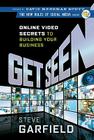
Shop for Get Seen in Indie BookstoresGet Seen: Online Video Secrets to Building Your Business on Indie Bound
@DavidWadeWBZ on Twitter, NetSquaredPhilly, ChrisPirilloUstream, ThePulseNetwork, Seesmic, Qik, Skype, Blip.tv, YouTube, SxSW, Wayne Sutton
Of Interest:
Skype and Qik:
http://qik.com/blog/qiks-acquisition-closed/Skype CEO on Qik Deal All Things Considered.
http://www.npr.org/2011/01/17/133002370/Skype-CEO-On-Qik-Deal?ft=1&f=1049PurpleCar Park notes:
music and intro provided by The Matthew Show: http://thematthewshow.com/
Transcript after the jump.
In pdf: PurpleCarParkSteveGarfieldtranscript
Here is the full transcript:
(Music)
Introduction (by The Matthew Show)
It’s time to put on the brakes and pull into PurpleCar Park, your stop for book reviews, author interviews, and thoughts about the act of reading in our super-digital, data-driven world. Hosted by Miss PurpleCar herself, Christine Cavalier.
CHRISTINE CAVALIER:
Well, people the Internet has changed the world, and the Internet is changing. Posting live and recorded video is easier than ever. So, today on PurpleCar Park we’re talking with video expert Steve Garfield, author of Get Seen: Online Video Secrets to Building Your Business, published by Wiley. Based in Boston, Steve started his first regular video blog in 2004, and now lectures on new media at Boston University. He speaks and consults around the country. In Get Seen, Steve tells organizations how video can push their business into the world of new media. Welcome, Steve!STEVE GARFIELD:
Well It’s so good to be here and talk to you again.CHRISTINE CAVALIER:
Yes. It is nice to talk to you. And let me first offer up some transparency to our listeners and say that you and I know each other.STEVE GARFIELD:
We do.CHRISTINE CAVALIER:
We do, we met at Podcamp Philly in 2007.STEVE GARFIELD:
Yup. Which will always be, in my mind, one of the best podcamps ever, because back then it was when the podcamps were still kind of small. And that was a really nice little small one and you got to meet a whole lot of people. And there were a lot of great people there.CHRISTINE CAVALIER:
Yeah, I wish we could just have that again. (laughs)STEVE GARFIELD:
You know, the meeting of people, and the smallness of it. And it was really a pre-cursor to how I like to run tweet0ups up here in Boston. I like to give people the opportunity to kind of mingle and give them a quiet space to talk. You know, that Podcamp Philly is something that I always think back on on how well it was done.CHRISTINE CAVALIER:
Do you think connecting locally and in person is important?STEVE GARFIELD:
Oh yeah, I think that’s extremely important. It’s huge! It’s funny that you mention that, I wasn’t thinking of including that in the book, but that’s one of the main things I love about the social media sphere. Especially video.So when I started video blogging, January first, 2004, there really was no video blogging. Everybody was doing text blogs, and I thought, why hasn’t anyone taken video and put it in a blog? That would make it so much easier to share. So, I made up a new blog and I called it Steve Garfield’s video blog, and I put video on there. All my stuff is at stevegarfield.com if your listeners want to find it.
And then I found Jay Dedman in New York who was doing the same thing. He reached out to me and we started a yahoo group. He started it. And we had two or three people trying to figure out how to easily put video on the web, how to do video blogging, and the group grew to 100, 200. YouTube didn’t start until mid-to-late 2005, so we were way ahead of the curve, figuring all this stuff out. And the point that I’m getting to is about how we were fooling around with video and putting it out and we were all watching every single video that each of us put up. And I was doing videos with my wife, what we did on the weekend, showing us cooking. And everybody else was doing the same kind of thing.
You really got to know the other people by watching their videos. And then when the video bloggers first started meeting each other, we had this really interesting experience, which was like, “Wow, I feel like I already know you.”
CHRISTINE CAVALIER:
I agree, I feel like when you see a video blog, you really do get to know the person and their mannerisms, and how their facial expressions work. Just what they find interesting to put on the web, like you and Carol were doing cooking. You know, you like to cook and you do these things together and it’s not all that big of a deal, it’s just you know this is my everyday life. And the fact that people’s everyday lives are something to document is just so interesting. It’s storytelling in a very casual, very small way, and it can add up to a really big story.STEVE GARFIELD:
You know, these are little moments that we’re sharing and putting up on the web, and taken all together they make a big story. And that’s one thing that Jay Dedman was also in the video group always talked about. He called it “moment showing” It’s capturing all these small moments, but then having them as an archive, he liked to say, for future generations, your kids, your grandchildren, they can then look back and see, “Oh, what was life like back then?” You get a real sense of what it was like.A few years ago when we were going strong with this weekly video, Carol and I did the “Carol and Steve” show.
CHRISTINE CAVALIER:
Uh-huhSTEVE GARFIELD:
The goal was one video a week. So we did one a week for a whole year. 52 episodes. We just, whatever we did on the weekend, we did a video on it. One of the ones I did was shoveling snow.CHRISTINE CAVALIER:
Yup.STEVE GARFIELD:
And I was shoveling, and shoveling. And I had fun editing these things together. I was always practicing and learning how to shoot, too, as part of doing these things. I had a point-of-view camera from the shovel’s point of view of the show being shoveled.CHRISTINE CAVALIER:
(laughs)STEVE GARFIELD:
(laughs) That was just fun for me. But then I got feedback, and the comments, and this is part of where the community and the feedback, and the comments and the relationships all come together. People from all around the world, from different parts of the world, that don’t have snow, for some reason or another, it was the first time they had seen snow. One teacher showed it to their whole class.CHRISTINE CAVALIER:
Wow.STEVE GARFIELD:
To show them what a snow-blower was like, and how it worked, and you know, just giving them a view on what life was like, let’s say, in America.Another one that I just remembered was I did this one food shopping, and I stuck the camera on the shopping cart. Like I showed the supermarket and I went down the aisles and it was really kind of fun.
CHRISTINE CAVALIER:
And I saw one of those and I was actually on, I was talking to you, because you were streaming.STEVE GARFIELD:
Oh I live-streamed from the supermarket? I do everything in the supermarket, it’s really fun. On that one, someone from Paris did a video of her little shop around the corner, where it’s like a little butcher shop, and all the food is hanging from the ceiling. She’s like “Here’s my shop!” And she showed me, you know, her life. And that’s what brings the whole world closer together.CHRISTINE CAVALIER:
That’s why you’re kind of interesting because you can see the snow really is something to video. You know? Something so obvious to someone who lives in Boston: snow.STEVE GARFIELD:
Yeah.You make connections around the world with it. And actually turned out to be an educational thing. How did you see the world like that? How did you learn how to step back and look at the world as something interesting instead of something you just take for granted?
STEVE GARFIELD:
I had, so I had an interest in photography from when I was little. And you know, my father had the family camera and he just gave it to me one day. And so I started looking through the lens all the time. On our family vacations, and taking pictures, I just loved it. You know? And I just loved the whole process of taking photos so it started really from photography.CHRISTINE CAVALIER:
I think a lot of us in new media are big photography hobbyists. It seems.STEVE GARFIELD:
Oh yeah, especially now with the iPhone and sharing from the device you shoot with. You know? If you follow on me on Flickr, you know that I love beer. (laughs)CHRISTINE CAVALIER:
(laughs) Yeah.STEVE GARFIELD:
You know. And I’m always trying to get the best shot of whatever beer I’m drinking. When I post my photo to Flickr from my phone, it automatically does a tweet, so anybody who’s following me on Twitter, and I have like, 23,000 people, there’s a subsection of those people who are also huge beer fans.CHRISTINE CAVALIER:
Right.STEVE GARFIELD:
“Oh, look at that beer” or “That beer!” or “I like this beer.” And that brought me to stevegarfield.tv, and I’m doing it on this network called the Pulse Network, which is right here in Boston. And it’s a live show and that’s something new that you know, I’ve experimented with all different types of video like shoot the video and edit it, and then post it. And then I’ve done live-streaming with Qik on my cell phone. And I ended up becoming an investor in that company, and then I do live-streaming with Ustream and LiveStream, and now I’m doing this show. It’s stevegarfield.tv. Every Thursday at 2 on the Pulse Network.I walk in, sit down, and do a live show. I’m totally loving this. It was called social shopping. I went to the local whole foods. I’m in the beer aisle. What kind of beer should I buy?
And then I got, like, at least 15 tweets back, within minutes.
CHRISTINE CAVALIER:
Right.STEVE GARFIELD:
All these different beer selections from you know, the followers, the people who know that I like beer. They know what I like. They’re all giving me suggestions. So I did a video. I bought about 10 different beers. And then I did some video of that. And then I came home and I did like an unboxing where I took each beer out, one after another, and I said, “Hey, this person suggested this beer.” And here’s the beer. I showed all the beers, then I showed the tweet of the person that suggested that beer.That’s like you asked a question about how do I see things. I saw that as kind of this really cool opportunity to film it, and video it, and incorporate into this show, and incorporate social media into the whole thing.
CHRISTINE CAVALIER:
That’s so much fun. I hope you didn’t drink all of your beer at once.STEVE GARFIELD:
Uh, no. Some of these beers are, ummm, pretty alcohol-heavy. (laughs)CHRISTINE CAVALIER:
(laughs). I thought you were going to say collectors items!What do you think is changed in the last four years about video online?
STEVE GARFIELD:
Well the number one way it’s changed is, the ability for people to record video is just like on almost every device they have in their pocket, especially with the iPhone and the newer ability to just click a button and say “Put on YouTube.”CHRISTINE CAVALIER:
Right. It goes quick.STEVE GARFIELD:
Yeah, but you know, we never had that. I mean, for years, I was talking to Apple and asking them to make iMovie easier to be able to say, “Post to YouTube” and now it has it, but for like, 3 years, it never had it. Then it finally got that. So, the ability to shoot on a device and then share it. Like, online immediately, from the device you record with? That is, just totally huge.CHRISTINE CAVALIER:
And that’s asynchronous, right? So that’s not live-streaming like Qik.STEVE GARFIELD:
No. Just record and then post.CHRISTINE CAVALIER:
So Qik is now, I guess, going to be integrated with Skype? What do you know about this whole deal?STEVE GARFIELD:
Well, ummm,CHRISTINE CAVALIER:
Skype just acquired Qik it seems.STEVE GARFIELD:
Yeah. Skype bought Qik, and what they like about Qik is all of the archiving and social media sharing that Qik does. So when you think about Skype, it’s like, a phone call, you do a skype call, and it’s, and you can do a skype video call, but there have to be third party ways to like record these things. We had considered this as a video skype call, so you asked me, “Well, how would I record that?” Everybody has that same question, because it’s not really integrated into Skype. And what Qik has, is automatic archiving of the videos that you shoot.So, what I would see in the future is when you do a Skype call, like if we were on video Skype together, when we hang up, that call would be archived. Then, Qik also has social media sharing, so when I go live on Qik, it automatically tweets out. So anybody could watch that live stream. And then it also has features where I can put in my YouTube username and password. When I’m done livestreaming, it will automatically put a copy over on YouTube. So all of those social media archiving in sharing features of Qik, Skype, is going to bundle into Skype. I think that’s some awesome features that’s going to make it easier for more and more people to do better video, and share it even more easily that you can today. It’s crazy.
CHRISTINE CAVALIER:
Right. Do you think businesses will end up piling up the video? I’m wondering, umm, if Skype and Qik, do you think they are going to after that market?STEVE GARFIELD:
Uh, either they are or third parties are. I actually talked to one recently and they have technology that transcribes all the audio of everybody that’s on the call. It captures all the topics and throws them into a database. Then you can go back and search, and you know, hear all, everything that was said.So I think that’s going to happen. I think another big push is transcription of video. YouTube has something like that. There are some other sites. And there’s some laws that were just enacted for access that require transcripts to be made of videos, so a lot of this is happening now.
I’m sure it’s going to get a lot easier. In the book I talk about how to make your videos more easy to be found through SEO, search engine optimization, and one way is to do a transcript of everything that was said in the video. Put that in the description. So when people over on Google and they’re searching for things, your video will pop up. So I think all that is going to happen. Whether Skype and Qik do it, or third parties do it, it’s all being worked on.
CHRISTINE CAVALIER:
The transcription is such a logical thing. Of course the transcription is going to help you boost your search result numbers. Especially with the new Google algorithms, because they’re a little bit smarter, and they can see what’s real content and what is just SEO content.STEVE GARFIELD:
Sometimes I’ll go to a video. Or it’s like, hey I’m on Twitter, and someone tweets something out. Maybe this week it’s something about CES. “This company announced this cool new blah blah things. Click the link” and all it is is a video. I’m like, Well, you know… can’t I just? Why don’t even say what’s in the video? They don’t even give me a little description.That was one of the early, early, early benefits of video blogging. Because you would put video in a blog post, and then be able to write all the text along with it. That was like the whole beauty of it. That’s why I always think, transcript is obvious idea for me. It just makes total sense to have really great descriptions for people who visit each visit video blog post.
A lot of the places that I put my video now are YouTube and on Facebook, too. One thing I’ll do is post a video to YouTube and then I’ll grab its link and go over to Facebook and post it. Then maybe say a little something about it. I find that the interactivity and the community and the comments and the feedback that I get on Facebook are great. It’s just, there’s so many people who I’m connected with over on Facebook as opposed to my blog. I think a lot the community and interaction is happening over on Facebook these days.
CHRISTINE CAVALIER:
Do you think with Facebook and just generally online, you talk a little bit in the book about citizen journalism.STEVE GARFIELD:
So, actually, I’m not really using the term “citizen journalist.” I was in the beginning because that’s what everybody was calling it. But I tend to call it now more “citizen reporter.” I called it “reporting by wandering around.” (laughs)CHRISTINE CAVALIER:
(laughs) Right.STEVE GARFIELD:
Because all I was using was a cell phone and :happenstance broadcasting” I even called it was another thing. Because Journalism is important. You research things, and you add your opinion, you craft the story, or you don’t add your opinion, depends on what kind of story you’re writing. But you’re there, something happens, and you’re like, “Woah, I have a way to accord this, like, right in my pocket!”So you whip out your camera and you hit “record.” And then, you don’t even have to pass it to the TV crews or the local TV stations, you can take that moment and then send it to YouTube and send it to Facebook. Then it can be shared. You can email a link to the news and say “Hey, this happened. I was there. I captured that moment!” So–
CHRISTINE CAVALIER:
But wait. Let me interrupt you there for a second if you allow me. What about people keeping track of their content there though? What happens when a major news organization that are ad-sponsored, like an NBC or a CNN, takes your video that you’ve put out online. What do you suggest that people do with that?STEVE GARFIELD:
That’s a huge issue. We even, I think, had a big blog post back and forth with that, didn’t we?CHRISTINE CAVALIER:
Yeah.STEVE GARFIELD:
Maybe it was about photos. Because that’s a huge issue right now, about compensation and content. Can they use your video and how much of it could they use, and do they need to compensate the person who shot it?One of my huge pet peeves is when they, someone does exactly what I just said, they take their video and they put it up on YouTube. Then I’m watching the nightly news, and then the nightly news comes on and they say “Oh, and look, here’s a picture of that fire, and this video’s from YouTube.”
Ugh. I was so mad because they never said the person’s name at least to give credit, you know, for capturing it.
CHRISTINE CAVALIER:
Let alone paying for it. Just some credit.STEVE GARFIELD:
I know. Let alone. I know! But I just finally found out the reason. What this one person who works at a news station told me. There’s some type of regulation that says whenever you show content on TV, you need to say the source site that you got it from. So, the requirement is that they have to say, “From YouTube” or “from Facebook” so that’s something that they’re required to do.CHRISTINE CAVALIER:
But they’re not required to do any more than that.STEVE GARFIELD:
They’re not. It would be nice if they additionally said, “From YouTube, shot by Steve Garfield” to give credit. So now that I have my weekly live show, I can totally see the, how fast-moving this whole thing is, and how hard it is to get everything together, and get your whole team giving enough credit.What we do on the Pulse Network, when we show a YouTube video, we don’t just show the video, they show the YouTube site too, so the YouTube person’s name is there. You know, right above the video, where it says their username. So it’s always giving credit for the content when we show it.
So, you know, at least we’re doing that. I think that broadcast TV has a way to go. I know that I worked for, well I didn’t work for, but we had a local newspaper here. And they were encouraging bloggers to send in articles and stories and photos. They couldn’t really compensate us for doing it, but what they would do is, they’d be able to get tickets to like, sporting events and things, or shows. So the people who were interested in covering sports, they would give you, like, tickets to an event, then you could go cover it. Or, they would get access as media to certain events. So the different bloggers that started in stories, they could let them get into things that they normally wouldn’t get into. So it was more of a partnership between the blogger and the media outlets. So, I think those things can work really well.
One of the really great examples of that is the CNN iReport. Where you choose to send your stuff in to CNN and then they can put it on air. But you’re giving them, you know, permission to put it on TV.
The local stations in Boston here, a lot of them are embracing social media and have social sharing sites where you can submit your stuff. But I mean, that’s cool, and I like that they’re doing that, but I think the even better way to do that is for you to just tag your content with the station name. During our recent storm, one local station, WBZ, did that really well. They just said, just hashtag your stuff #wbz and we’ll see it.The anchor, he was on the air for 8 hours straight, during this last, the big blizzard we had. @davidwadeWBZ, that’s his Twitter name. And he had his phone on air and he was just reading tweets out. And people, and so I was tweeting him, people were tweeting him, he tweeted me back. It was really engaging the audience in a way that doesn’t always happen on local news.
So, on my show, that’s what I’m trying to experiment with is, engaging the viewers live. We have people Skype in, or tweet in, and I’m just experimenting with the whole thing. And it’s still all really, really new. The whole idea of compensation is really cloudy.
I think it’s easier if the media is paid for. Like, if someone says, I want to buy this YouTube video to show it on my station, if news station do that. Or they want to buy the rights to the photo. They want to buy rights to show it on their station. Or they want to buy rights to distribute it. I know that on Flickr, Getty is now on there. You can click a little button, “If you want to use one of my photos” and Getty will help get you money.
I don’t think any of the TV stations are really thinking about how to compensate people for their content.
CHRISTINE CAVALIER:
No.STEVE GARFIELD:
You know, that’s something that I think we’re still working out, figuring it out.CHRISTINE CAVALIER:
Yeah. We’ll get there down the road.We just had a Netsquared Philly meeting that talked about public access television. Some public access stations here in Philadelphia actually offer people training on video.
STEVE GARFIELD:
Yeah.CHRISTINE CAVALIER:
People can look this up in their local area. Yeah, free training, on editing software, video shooting, the airing time.STEVE GARFIELD:
That’s a great place to get trained in your local community, is these public access stations. And that’s the where I learned a lot of my video. I went for years in public access, and they taught me camera, editing, lighting, sound, directing.CHRISTINE CAVALIER: Really? I did not know that. I just thought you were always just “Steve Garfield!” (laughs)
STEVE GARFIELD:
(laughs) Oh, yeah, I had, over on public access, actually I have to dig out the tapes and put some of this old stuff on, but that’s where I learned. I was there for like, 10 years. This was, you know–CHRISTINE CAVALIER:
Really?STEVE GARFIELD:
I learned everything. I had this show–CHRISTINE CAVALIER:
In Boston?STEVE GARFIELD:
Oh, actually, yeah. Well, it was in Peabody up on the North Shore, and then when I moved to Boston, I did it in Boston, too. I had this show called “The Steve Show.” That’s funny, because now it all comes back around at some point all over again.CHRISTINE CAVALIER:
Yeah.STEVE GARFIELD:
But I learned all that. It’s a great way to learn stuff. And then when I moved to Boston, I ended up teaching some public access classes on how to do video.But in the book, it’s a step-by-step guide on how to do things. A lot of times you’ll see articles or books where it’s like, “OK!” and it’s all theoretical, or all just like “Blah, blah blah,” all talk, talk, talk.
In my book, it’s a little bit about that, but then it’s practical advice. Like, “Here’s exactly how you would use iMovie. And here’s exactly how you would save it. And here’s exactly how you take that movie and you put it on YouTube” with the Step by Step guides. One, Two, Three, Four. “It’s 4 steps to do this. Go do it.” Here’s like, 6 steps to livestream with Ustream.
In the book I have a ton of interviews of people who are successfully doing this things. Like Chris Pirillo. He livestreams on UStream all the time. So if you read his chapter and you’re like, “Wow, I might want to do livestreaming.” You can go to the Ustream section and learn exactly step by step.
And then I give examples on how to shoot, how to do interviews, some examples on how to edit, and then where to put it, and then even if you don’t want to shoot with the camera, I give examples of how to screencasting. How to record your screen. Right?
CHRISTINE CAVALIER:
Right? And that would be very useful, I would think, for businesses.STEVE GARFIELD:
Yeah. There’s just like a ton of great stuff in there. People love it as a really good guidebook or handbook or workbook you might call it, on how to actually do things.CHRISTINE CAVALIER:
And I like the fact that you don’t forget about the archiving too. Like, that’s kind of important. Because you know, you don’t want to lose your work. This has come up for people like you and me who have been early adopters, because Seesmic has shut its video-chatting doors. You don’t realize how important it is to keep these things somewhere locally on your harddrive, or on you know, an external harddrive, until you realize you can’t get to them.STEVE GARFIELD:
Yeah.CHRISTINE CAVALIER:
So, and there’s a lot of video on there that I really, really want with my daughter very young, and she’s talking. There’s one that I actually did take time to download where she’s talking about this cute boy in her class. She’s in 2nd grade or something at the time, maybe even first, very small.And I just realized, wow, you know what? There’s a flotsam and jetsam that I left on Seesmic, but there’s a lot of gems, too.
STEVE GARFIELD:
Yeah.CHRISTINE CAVALIER:
Go ahead.STEVE GARFIELD:
No, exactly. Archiving’s important. And you know, I, it came, it was important to me. When I just had this dinner for Councillor Tobin and his chief of staff emailed me and said, “Hey, can you just put all his videos on a disk?”CHRISTINE CAVALIER:
All of them?STEVE GARFIELD:
I thought, does he know what kind of request that is? (laughs)CHRISTINE CAVALIER:
(laughs)STEVE GARFIELD:
I can’t just– It’s gonna take me like…CHRISTINE CAVALIER:
Days!STEVE GARFIELD:
8 hours, I mean this– or more. This is like, a huge request. Then I thought, well, how many years have I been doing this? 5 years. How many harddrives have I had over the past 5 years?CHRISTINE CAVALIER:
Oh, dear.STEVE GARFIELD:
I have them like, on the floor. I have 3 that I’m using now, but there are 3 on the floor in my office, and then there were 4 more in the back bedroom, and there are probably 5 down the basement. All old stuff. So, that would be a crazy, crazy job. My wife was like, “You’d better archive your projects, because other people are going to ask for theirs.”So what I did was, in this case, I had them all on Blip.tv.
CHRISTINE CAVALIER:
Oh, interesting.STEVE GARFIELD:
Which is where I hosted all those videos. Over on Blip.tv, I can go to my dashboard and see all my videos. Then I can click in there, and I can just save the original file.CHRISTINE CAVALIER:
Right. Are you doing that every single time? We didn’t realize that Seesmic wasn’t going to be around forever. What’s your contingency?STEVE GARFIELD:
Where unlike YouTube, where you need this like, 3rd party little plug-in thing to get you videos, the point here with Blip is that you have access for all your original files.CHRISTINE CAVALIER:
Right.STEVE GARFIELD:
I went through, and you know, downloaded them all to this external drive, and I had them all on a dvd and it worked out for me fine, pretty easily, and it only took me a few hours. And for Seesmic, which was a video conversation site, which you click a button to record, say your little thing, and then stop, and the video went out there. Then people could reply to you with a video. It was brilliant and it was a video conservation, and there was a whole community and relationships that were built there. So when I heard that Seesmic was shutting down. I was like, Woah, there’s some videos on there that I would like to save. Actually, what happened was, at the time when I was working with Qik, to do the livestreaming, I also talked to Loic over at Seesmic and I had them hook up together. I don’t know if you remember, but you could do –CHRISTINE CAVALIER:
I do. Yeah.STEVE GARFIELD:
You could do a Qik video and have it save over on Seesmic. When I was doing some of that Obama campaigning in Boston, Qik lost a couple of my videos when they switched servers.CHRISTINE CAVALIER:
Ouch.STEVE GARFIELD:
And I emailed them over there, “What happened to those?” And they were lost. So then I went over to Seesmic and grabbed them from there, so they had them.CHRISTINE CAVALIER:
Oh, that’s a really good point.STEVE GARFIELD:
So I went over to Seesmic, so what I did was, I downloaded the ones that were important to me down to disk. That’s how I did it. So I guess, I would say, when you’re done with a project, a good thing would be to just burn your videos to a CD and then file them away. For some clients, I’ve done that. Actually, a lot of clients. I used to use mini dv tapes. So, when I was done with all the whole project, I would save back on to mini DV tapes, their final thing.CHRISTINE CAVALIER:
Ah.STEVE GARFIELD:
So I have drawers full of mini-dv tapes. But the thing is, over the years, hardly anyone ever asks me to go back for an archive. Now, my main archive place would be, sad to say, the online sites where I have saved things just once, so Blip, or YouTube, are where they are.CHRISTINE CAVALIER:
Right. Well, you know, you have to be willing to let them go. The things that are important, you have to definitely make time to put them externally somewhere.STEVE GARFIELD:
I had a client, where I went in, this is a good project for a business: What they wanted to do was use video blogging to share the expertise of their company. They have all these different disciplines in there. I went in and interviewed like 50 people. What they do is their a non-profit which helps other non-profits. They help them in human resources, accounting, fundraising, green practices, all these different things.Under each discipline, they have a person that would consult with a non-profit to help them. So I went in to each person and they would give me, like, you know, 4 or 5 to 10 tips and they would do these, these were all little video blog posts. They said, “Hi, I’m this person, and when you’re thinking about End-of-year records keeping, here’s the different things you need to think of.” Those were each of the videos we did.
Part of this experience of video taping, all these 50 people for businesses for thinking and doing something like that, was kind of a secret audition. Like, they after seeing all the 50 people on camera, then they could pick, OK you did excellent, we want you to be the video person for the company.
CHRISTINE CAVALIER:
Oh, interesting.STEVE GARFIELD:
But they didn’t tell them ahead of time.CHRISTINE CAVALIER:
Right.STEVE GARFIELD:
So no-one’s really pressured to to be good, but then, obviously some people are …CHRISTINE CAVALIER:
Stand out.STEVE GARFIELD:
Yes, stand out. So we did that. But the point of this story is that recently they came back to me and they said, “You know, ummm, we have a new guy in here and he’s an editor and we want to grab all those videos, and some of them we want to re-edit a little. Can we have all that?”CHRISTINE CAVALIER:
Oh, wow.STEVE GARFIELD:
Like? I mean? That was a lot. This is what I did for them: I said, “OK, what I can do is give you everything, all the raw footage, all the final edited pieces, all the graphics, everything. And I will include in it the cost of buying the firewire one terabyte disk.” Which was $197. Which is really nothing.CHRISTINE CAVALIER:
Yeah, it’s pretty cheap.STEVE GARFIELD:
Because otherwise I would’ve had to take each thing and back it up to a DVD or a CD. It’s a mess. All I did was buy a firewire drive, and I took all the things off of a — I had it strung over a number of different drives. I just hooked each of the drives when I was working with when I was working on it, and I dragged everything and dropped it over to the new drive and then I gave them the drive.CHRISTINE CAVALIER:
Yeah.STEVE GARFIELD:
And that was great. They were really happy. And off they go. So now they have all their final footage. The way drives are so inexpensive now, I just would just keep buying more drives, and put stuff on there.CHRISTINE CAVALIER:
Right. You know, they’re cheap and they’re small, and honestly, years later, you will definitely want the footage, whether you’re an individual or a business. So, it’s not like the web or text that you can just kind of archive and, or other third party sites archive the web as well as Google. I agree, I think it’s just best to buy the terabytes. Disk is cheap, as they say, right?STEVE GARFIELD:
Yeah, exactly. And it’s getting cheaper. It’s like, so cheap, it’s unbelievable. There’s also this thing, it’s like a toaster kind of thing, where you hook it up to your mac, and you just take the raw drive and you plug it in to the top.CHRISTINE CAVALIER:
Oh right, so you can just keep the raw drives. Yeah.STEVE GARFIELD:
You can just buy cheap, yeah. I haven’t done that yet, but a friend of mine does that. It’s kind of a fun idea.CHRISTINE CAVALIER:
Yeah, that is kind of fun. Plus the fact that the smaller the drive, the better it is, in terms of keeping it, physically in your house.STEVE GARFIELD:
Yup.CHRISTINE CAVALIER:
But anyway, thank you so much. Where can people find you?STEVE GARFIELD:
People can find me at stevegarfield.comCHRISTINE CAVALIER:
Are you going to be anywhere speaking sometime soon?STEVE GARFIELD:
The next really big thing is SouthbySouthWest (SxSW). I’m speaking at these — it’s Wayne Sutton, he’s organizing this whole section on video. It’s the 15-minute talks.CHRISTINE CAVALIER:
That sounds fun.STEVE GARFIELD:
I’m going to be down there, and I’m going to be talking about 6 ways of recording video that you probably never thought of. (laughs)CHRISTINE CAVALIER:
Oh! That sounds informative, actually.STEVE GARFIELD:
SxSW is the best.CHRISTINE CAVALIER:
Awesome! Thank you so much Steve Garfield, author of Get Seen: Online Video Secrets to Building Your Business. Thank you so much.STEVE GARFIELD:
Christine, it was great talking with you. Hope to see you soon!CHRISTINE CAVALIER:
I hope to see you soon in person.STEVE GARFIELD:
Ok, Bye.CHRISTINE CAVALIER:
Ok, Bye.Outtro:
PurpleCar Park theme music and announcements provided by The Matthew Show. Critically acclaimed original and independent music. Please check it out at TheMatthewShow.com(music)Lyrics, Office Part II by The Matthew Show
The doors stay open but the seats stay filled,
the lid is childproof, but the people stay pilled,
the price has gone up for the prison yet to build,
The doors are wide open but church stays filled.Work out.
SHOW NOTES
Show Notes:
Steve’s WebSite, Stevegarfield.tv, Steve’s UStream, SteveGarfield.tv on Facebook
Get Seen: Online Video Secrets to Building Your Business on Indie Bound
David Wade, WBZ, Twitter, Net Squared, Philly, Chris Pirillo, Ustream, The Pulse Network, Seesmic, Qik, Skype, Blip.tv, YouTube, SxSW, Wayne Sutton
Of Interest:
Skype and Qik:
http://qik.com/blog/qiks-acquisition-closed/Skype CEO on Qik Deal All Things Considered.
http://www.npr.org/2011/01/17/133002370/Skype-CEO-On-Qik-Deal?ft=1&f=1049PurpleCar Park notes:
music and intro provided by The Matthew Show: http://thematthewshow.com/
19 January 2011, 3:13 pm - 42 minutes 56 secondsPurpleCar Park: Interview with Dr. Dan Ariely, Author of The Upside of IrrationalityChristine Cavalier of PurpleCar.net interviews Dr. Dan Ariely, author of Predictably Irrational and The Upside of Irrationality. Find out how CEO's deflate workers, how online dating is inherently flawed, and how storytelling helps convey your message. We talk about Dr. Ariely's latest book, released in June 2010, The Upside of Irrationality: The Unexpected Benefits of Defying Logic at Work and at Home.20 July 2010, 2:35 am
- 21 minutes 56 secondsPurpleCar Park: Interview with Author Daniel H. Pink
NYT best-selling author Daniel H. Pink stops in to talk about his new book, DRiVE. We talk about why companies are stuck in the 1950s when it comes to reward and motivation theories. Find out what a “For Benefit” company is, why Wikipedia and open source are so huge, and what you can do to motivate yourself and your employees in the best way possible.
Interview: Author of DRiVE: The Surprising Truth About What Motivates Us, Daniel H. PinkYou can find out more about this book and others by Daniel Pink at his website, http://www.danpink.com/.
Intro of PurpleCar Park provided by The Matthew Show. Check out the independent and intelligent music website at http://www.thematthewshow.com/.
PurpleCar Park:
Woah there, Speedy! Slow down and pull over to PurpleCar Park, a podcast where you can settle in to author interviews, book reviews, and discussion about the act of reading and writing in our super-fast, hyper-digital world.
Unlike most book reviewers and author interviewers in traditional media and on the internet, I take the time to read and study the book. Listen in and you’ll notice the difference. Welcome to PurpleCar Park!
14 April 2010, 9:52 pm - INTERVIEW: Dalton Conley, Ph.D., author of Elsewhere, U.S.A.
Today I interviewed Dr. Dalton Conley, Professor of Sociology and Chair of the Sociology Department at NYU. Dr. Conley is author of several books, most notably his memoir and social commentary, Honky. Dr. Conley and I sit down to talk about his new book, Elsewhere, U.S.A.: How We Got from the Company Man, Family Dinners, and the Affluent Society to the Home Office, BlackBerry Moms, and Economic Anxiety [Pantheon Books, New York 2008]. Please see my review of the book here.
PurpleCar Park: Interview with Dalton ConleyShow notes:
Erving Goffman: Front Stage/Back Stage theory Behavior in Public Places: Notes on the Social Organization of Gatherings
My Parents Joined Facebook
The Protestant Ethic and the Spirit of Capitalism by Max Weber
Tim Ferriss The Four-Hour WorkweekDr. Conley’s book on birth order: The Pecking Order: A Bold New Look at How Family and Society Determine Who We Become
Dr. Conley’s Wikipedia.org page
File: mp3
Length: 26 minutes, 05 seconds
Size: about 12 Mb
Host: Christine Cavalier
Guest: Dalton Conley
PurpleCar Park:
Woah there, Speedy! Slow down and pull over to PurpleCar Park, a podcast where you can settle in to author interviews, book reviews, and discussion about the act of reading and writing in our super-fast, hyper-digital world.
Unlike most book reviewers and author interviewers in traditional media and on the internet, I take the time to read and study the book. Listen in and you’ll notice the difference. Welcome to PurpleCar Park!
20 July 2009, 1:25 am - More Episodes? Get the App
