MissionsPlace
Unknown
Bringing technology and missions together to finish the Great Commission
- Missions, Technology, and the Way Forward
The World Wide Web has been with us for over 20 years now. And a lot has happened in that time! For better or worse, the way we communicate with one another and the world around us has changed. Google, Facebook, Twitter, YouTube, LinkedIn… the list could go on and on.
So, what does this mean for missions? Anything? If you’re on this site you probably realize it’s pretty important. It may take some time to learn and adjust to online communication, but we think it’s worth it! Missions newsletters up on church bulletin boards are good, but there’s so much more that can be done. We want to see people get excited about missions and get connected to what God is doing around the world.
While there are undoubtedly some negative consequences to technology, there’s also great opportunity. Here’s a look at just a few of the benefits of using web technology to share your story:
Communicate More Effectively

Sharing your story and connecting to your supporters has never been easier. In the past missionaries would leave their country not knowing when or if they would return. Now we can share videos and send text messages in ‘real time’. Keeping an online journal of your joys, struggles, and prayer requests helps keep your supporters in the loop.
When supporters feel connected to what a missionary is doing they’re more likely to stay invested. They’re more likely to keep giving, keep praying, and keep sharing the missionary’s story with their friends. Here’s an example of just that from Love Global Foundation: Joanna & Simon met missionary Kevin Knight during their vacation to Cambodia. They were so moved by the work they saw that they started following Kevin’s story on his web page, donated to his work, and threw a fundraiser, asking their wedding guests to donate instead of buying gifts! They were able to stay connected and get their friends involved too. That leads us to the next point…
Make Giving Easy
Without connecting with Kevin on his missionary web page, Joanna & Simon may never have donated. Even if they had, it would have been difficult for them to ask their friends to give to Kevin’s cause. By using giving technology online, supporters are able to give easily and even set up monthly giving.
Web technology allows your story to be shared over and over again. You can even use it to recruit fundraisers for your cause. Supporters can share your story through social media, host a fundraiser, and ask their friends to give to your mission. As supporters become more engaged in missions, missionaries can spend less time fundraising and more time serving where they’re called.
Share Ideas
We all know missions work can be tough. Connecting with other missionaries, sharing prayer requests, and learning from those who have gone before us can make things a bit easier. That’s what’s so great about MissionsPlace.com. At Love Global, we send out a weekly fundraising tips email. There’s lots of other great sites out there too! Join a couple mailing lists or ask your friends which websites are their favourite.
Moving Forward
New technology offers a lot of potential for missions today. And you don’t have to be a computer wizard to see results. In 20 years the web has changed a lot and going forward I think we can only expect this trend to continue.
Do you use technology for your mission work? We’d love to hear your thoughts!
For a full list of Love Global resources, go here. Interested in signing-up? Go to www.applyloveglobal.com.
2 May 2013, 10:57 pm - Some Foundations of Fruit Bearing
In John 15:8, Jesus points to “much fruit” as proof that we are His disciples. In that one chapter we find that abiding, asking, and obeying—as well as joy and God’s Word—are all tied to fruitfulness.
For more than three decades I have been active in “mission strategy”—helping less fruitful missionaries learn from and apply what God is blessing elsewhere.
God has seen fit to use mission strategy in significant ways, but I have been gradually understanding that this emphasis on learning from others does have a down side—feeding our inclination toward striving in human effort and wisdom, which can lead to a variety of bad fruit:
- Joyless Workaholism—which undermines our testimony of the abundant life Jesus promises,
- Humanistic Efforts—advocating what can be accomplished if we would all just• “adopt the right disciplines,”
• “work together,” and
• “employ more effective strategies,” - Self-directed Service—guided by our own best reasoning, and
- Judgmentalism—toward those whose calling may be different from our own.At this juncture, I find several foundations even more important than “mission strategy” for bearing fruit.
A RELATIONSHIP, NOT JUST A TASK
Sometimes we approach world evangelism and the global needs as if Jesus gave us an impossible task and then left us to our own devices. (Such thinking generally produces the bad fruit listed above.)
Jesus calls us primarily to follow Him (Mt 4:19), promising to be with us (Mt 28:20) and to give us a counselor (Jn 14:16) to guide and empower us.
To bear fruit, we must live in the reality that God is glorifying Himself by involving the most unlikely people—us—in the most impossible of missions:
• reconciling the world to Himself (2 Co 5:19) and • destroying the devil’s work (1 Jn 3:8)!
In contrast with popular appeals to respond to the world’s needs, God is not dependent on us to accomplish His purpose, as if He needs our help.
The amazing reality is that God has prepared each of us to complement one another in good works He prepared in advance for us in HisStory.
Why? Because He delights in our growth, and in our fellowship with Him in His purpose!
Only as God is with us can we bear such fruit!
HEARING AND OBEYING
The most important thing you or I (or anyone in the world) can do today, regardless of our circumstances, is to listen to God and obey Him. This realization can turn prayer times from a recitation of our requests into intent listening to accurately understand our King’s assignment for us for today.
Of late I am thus spending the bulk of my prayer time simply waiting on my King’s direction each morning until I sense that He has covered his agenda for me.
Only in obeying God’s voice will we bear fruit!
MEDITATING ON GOD’S WORD
Psalm 1:1–3 carries a spectacular promise (which I memorized and started applying in college): The person who meditates day and night on God’s Word will be prosper in everything he does.
Joshua 1:8 clarifies that meditating on God’s Word empowers obedience, and it is obedience that leads to prospering.
Further exploration into the Hebrew ties this concept of prospering to “pushing through” in the good works God prepared in advance for us to do. So meditating on God’s Word is a powerful foundation for fruit bearing.
Jesus is God’s Word made flesh, so there is a deep connection between our meditating on God’s Word and Jesus being “with” us. As Jesus abides in us through our meditation on God’s Word, He is with us in ways that are truly supernatural.
Only as Jesus’ words abide in us will we bear fruit!
THE REVELATION OF JESUS
The revelation of Jesus as the all-sufficient Lord of HisStory is foundational to relationship, to hearing and obeying, and to meditating.
WORLDVIEW CHANGE ISN’T ENOUGH
Mission strategists talk rightfully of the need for “worldview” change—the replacement of false core beliefs with truth—as the essential basis for transforming both individual lives and whole societies. Such terminology is helpful toward understanding the gospel’s intended impact, but it is often misread in ways that reinforce our Western weakness for measuring maturity by knowledge rather than obedience.
Some have observed that, as a result, we in the West are “educated beyond our obedience.”
OBEDIENCE ISN’T ENOUGH
Inspired by Gary Chapman’s The Five Love Languages, many have noted that God’s “love language”—the way He prefers to be loved—is obedience (the heart of worship). There is plenty of scriptural evidence that our King delights in loving obedience, and that love for our King can’t help expressing itself in obedience. Yet obedience doesn’t guarantee right motivation.
In Jesus’ day, the masters and self-appointed police of obedience were the scribes and Pharisees. The Hebrew people as a whole would have said, with the elder son in Lk 15:29: “All these years I’ve been slaving for you and never disobeyed your orders.”
Yet as Jesus confronted His people with God’s intent to bless the Gentiles as well as the Jews, Jewish resistance to accepting the “prodigal nations” reflected Israel’s lack of love for God.
SOLITARY REVELATION ISN’T ENOUGH
The Holy Spirit’s revelation of Jesus as Savior leads lost individuals to a changed worldview, and this bears fruit in loving obedience.
However God’s revelation to us is progressive, and the busier we get, the more likely we are to ignore the uncomfortable revelation God wants to give us.
I am far more likely to welcome confirming truth— which affirms my current thinking and behavior—than to embrace correcting truth—which challenges my thinking or behavior. This is one reason “solitary Christianity” is not only unbiblical, but also unfruitful.
 THE REVOLUTIONARY REVELATION
Of all the life-changing insights I have received or seen others embrace, one stands out as most elusive and yet most essential for multiplied fruitfulness: The revelation and abiding awareness of Jesus, not just as the Lord of my story, but as the LORD of the Story— of all HIS Story.
Consider three stages a believer may go through in their revelation of Jesus:
STAGE ONE: PERSONAL SAVIOR
The basic gospel revelation comes in understanding that “Christ died for our sins according to the Scriptures, that he was buried, [and] that he was raised on the third day according to the Scriptures”
(1 Co 15:3–4). This revelation leads us to welcome Jesus into our story and expect Him to improve it; which He does.
But without further revelation, this leaves us stuck in a self-absorbed caricature of Christianity.
STAGE TWO: GLOBAL SAVIOR
Many Christians are further transformed by the revelation of God’s intent to engage all of His people to disciple all nations (Mt 28:19) and so bless all earth’s peoples (Gn 12:3).
This revelation can lead to significant service, but without further revelation, the revelation of God’s concern for the world can leave us with a “driven” feeling of responsibility for an overwhelming “task,” resulting in a burdened life of straining to get everyone to do “all we can” toward serving the needs of a broken world.
STAGE THREE: ETERNAL SAVIOR
With the revelation of Jesus as the Lord of HisStory, we can
• let go of needing to have clear long-range plans and direct our own destiny, and
• walk joyfully with Jesus, by faith rather than by sight, together with others, to prosper in the good works He prepared for us in advance (Ep 2:10).
25 January 2012, 6:56 pm - Perspectives on the World Christian Movement
It’s that time of the year again! Across the country thousands of people just like you are registering for a 15 week class that will forever change the way they see the world and their place in it. Get threaded into the biggest story of all time. Perspectives will open the eyes of your heart with fresh knowledge and understanding of God’s unchanging purposes and why they’re relevant to your life.
Perspectives on the World Christian Movement is taught by 15 instructors in 15 weeks, hosted by churches and universities across the nation. Perspectives helps believers from all walks of life see how they can get threaded into God’s story of redeeming people from every tribe, tongue, and nation to Himself. From Genesis to the prophets, Jesus Christ to the early church, and Constantine to today, you will see how God has been moving, how the global Church has responded, and what the greatest needs in world evangelization remain today. It isn’t a class about missions, but a course on how every believer can be intimately woven into the story of God using His people to be a blessing to all the peoples of the earth.
The Course is Divided into Four Sections
Biblical
With striking clarity, Perspectives illuminates God’s unchanging promises as they unfold from Genesis to Revelation. You may never read your Bible in the same way when you experience how Jesus threads believers like yourself into His epic story.
Historical
Christian history is wrought with the immeasurable power of God. From Abraham to today you’ll walk in the shoes of believers who have paved the way and set the stage to thread us all into God’s story.
Cultural
Through Christ Jesus we will eventually see the expressions of the New Testament church thriving among every nation, tribe, people and language. You will experience how God is threading diverse peoples into His story in culturally relevant ways.
Strategic
There are endless opportunities to help complete the Great Commission. Getting threaded into the story is about discovering practical and strategic opportunities to leverage your passions, training and expertise for His glory at home or abroad.
Classes Are Starting Now!
Wondering what your life purpose is? Want to do something meaningful with your life? What better way to start the new year than to learn how to be a part of God’s strategic plan for the world! If you are looking for direction this is the place to find it.
Classes begin this month (January), so find a class nearby and register now! Most locations let you register and attend the first one or two classes for free, so there is nothing to loose. And if no classes are available in your area, check out Perspectives Online.
Perspectives has changed my life, and I’m sure it will change yours as well. I challenge you to take a small leap of faith and register. You’ll be ruined for the ordinary!
2 January 2012, 5:12 pm - Just Give up Already
If you have been a Christian from an early age, you may feel the binding, guilty power of never surrendering. We read John Foxe’s Book of Martyrs, or Jim Elliot’s story, and commit in our minds to the Lord that we will never turn tail or throw up our hands. We look down (while not actually casting judgment, of course) on those who have said they would forsake all, but didn’t last two nights in the mission field. We say we are not of this world; we are different. We hold ourselves to a higher standard. We value tenacity and steadfastness, but have we unwittingly tapped into stubbornness and self-reliance?
It takes a unique type
 of person to go out onto the mission field. Most bright-eyed cross-cultural s go into their life vocation expecting hardships and trials. No thought of the American Dream. The mission field is life’s ultimate sacrifice! Offense Alert: As missionaries have we allowed ourselves to become the caricature?
Determination and steadfastness are admirable. Stubbornness and unwillingness to yield to wisdom is not. If you have been raised in the church, you may be the kind of person who believes it is important to follow through and to not be wishy-washy. Don’t mistake changes in seasons as surrender.
We are on a great journey. We are currently on the planet Earth. It is a temporal place. It’s dusty, gritty, noisy, but full of miraculous life. We are travelers with works to do. As we have our hands in the work, God may call us to new assignments somewhere else on this big round rock. When He does, it may not look like our current assignment is complete. That’s okay. One plants, another waters (1 Cor. 3:6-9), right?
Even though we consider ourselves vagabonds in these lands, we still seem to take ownership of things we don’t own. A ministry assignment can become a possession if we are not careful. A missionary task can become an identity if we wear it too tightly.
As workers on the mission field, we must learn to grip the plow firmly while still holding it loosely in our hands. Give up. Give up your right, your entitlement to a mission. It was never yours to begin with. You were never the one that could bring it to completion anyway. Perhaps the Lord will allow you to see the fulfillment of your task. Perhaps not. Either way, we are called to duty and we are not promised to see the fruits of our labor in this lifetime.
So, what if you are called to “move on”? What if you are called to surrender your time with a people or location? Upwards and onwards! What if people think you gave up or pooped out? If people falsely judge your devotion to a task, that mistake is between them and God. You are called to be obedient and not defend your orders from your Commander.
Give up, already. Just give it up. Surrender yourself to your loving God. Yield your plans and ideas to the Lord Jesus Christ. You are a part of His master plan for the world. Enjoy the ride.
5 October 2011, 4:03 am - The Passion in the Haystack: Dealing with Discouragement
 Sometimes we think it can’t happen. We live our every day lives; how could that ever change our little corner of the world? Let alone all corners of the world? How can so few people- the small percentage that care about global missions- change the dynamics of a city? Of a region? Transform an entire unreached people group by introducing them to Jesus?
Being a missional person, these thoughts often tend to get me down. I get a little antsy. This antsyness transposes into a powerful form of squirmyness. I start getting so discontented with the life I live (yes, which God directed me to live) that I feel horrible. I start to believe that surely I am not making a difference. At least not enough of a difference. And I am undoubtedly not making a difference over there! I become so frustrated I am not making sufficient tangible progress, it takes everything in me to not book a ticket to some other country. Anywhere else just must be more exciting! Yet then my bank account and husband pull me down to the reality that this might not be the best play. Depression quickly ensues.
Being a passionate person and one who tends to define my spiritual life by what I accomplish, the above process is not abnormal for me. In fact, I would say that five years ago my life was defined by this cycle. At least once or twice a month I would try to run (what I thought) was the opposite way of complacency. Maybe you are not like me. But as I am writing to the minority of Christians who actually care about world missions, I would be surprised if you have never similar experienced a frustration. Or at least asked those first questions- can we really change things?
My pastor often says tension is a good thing. I see nothing wrong with feeling frustrated that you are not making enough of a visible difference. There is no problem with evaluating where you are, even if you just asked God yesterday, “are you sure I should be doing this?” Feeling these tensions helps us realign ourselves with God.
Sometimes the revolution that we stand for seems ridiculously impossible. It can be so discouraging. Here we are, scattered people, trying to make God famous everywhere. We at least have the assurance that God cares more than we do and He is on our side. That’s nice. That last sentence should have smacked all the discouragement out of me, but it didn’t. You see, it is a very realistic thing to feel discouraged while working in missions. We can know facts about God, but until we start to really believe that He is at work, working through people like us, these facts don’t touch the heart of the matter (which is actually deeper than our brains).
So, let me tell you a story involving a haystack. There was once was a haystack in Massachusetts in the early 1800’s. I am sure it was like most haystacks. Actually, I am not very-well acquainted with the nature of haystacks, but I do believe this one differed from the typical stack of hay in that it had a cave-like feature in it or something so that people could huddle under it. One day, some college students (who were probably still wonderfully naive enough to believe they could do anything) were out taking a walk. While walking, they were caught in a storm and so they took refuge in this haystack.
These guys were Christian young men. In fact, one of them was very passionate, named Samuel Mills. He became a Christian at age seventeen after his family had been praying for years that he would come to believe in Jesus. They were also praying that he would choose to give his life to missions, which was something that people just didn’t do at the time. In fact, a notable guy in Europe, William Carey, had just recently gotten the missions ball rolling, by saying that we should tell other people in the world about Jesus. Supposedly, the Christian church leaders there responded to this with the attitude of “If God wants to save the heathen He can do it without your help, or ours.” In other words, going to the heathen in that time period was about as popular as it is today to live among our Muslim terrorist buddies or North Korean communist friends. Not so popular.
Back to Mills. So, while sitting in the haystack, Samuel Mills and his friends started to talk about how God directed in the Bible that it was actually their responsibility to bring the message of Jesus to all people. After they talked about it for a little while, they began to pray together in the rain in the haystack. Not just for themselves, but for the nations of the world.
This moment these guys had together in that haystack became a catalyst for something. Actually, not just “something,” but became what is now known as the Haystack Movement. The movement is the same revolution we stand for today. These young guys, who that day were huddled together in the rain, created the first student missionary society in America, dedicated to making God famous world-wide: The Society of the Brethren. Don’t worry though, that was actually a cool name for this cool secret club. This then became the catalyst for another group: The American Board of Commissioners for Foreign Missions. This was the first missions agency in America. It gets much better than this- the legacy of amazing world changing things that happened through this group. But, as I am already impressed (and because this is getting long), I will stop here.
Lets review quickly: This one passionate guy started praying with his buddies. These guys caught his passion, then spread it to others. From this, basically the whole American movement of missions was born. I love the way this started, some parents praying for their son. In fact, it started long before that, from one mediocre conversation to another. One idea, one verse that was read, one person who translated the Bible- all the way back to Paul, and before that, obviously to Jesus. It would just be amazing to see the thread the Holy Spirit has woven throughout time. Regardless, because of Mills’ transparent passion the whole world as we know it today has been drastically altered. He just happened to talk about it with his buddies, waiting for a storm to clear in a haystack. If God can use that . . . !
Stories, these testimonies of God working in average people, is what makes the truth make its home in our hearts. God cares, God is working, God is with us. One of the best way to handle discouragement is to process it with God, and He will respond by showing you who He is. After all, God doesn’t just care about bringing the gospel to the ends of the earth. He cares about deepening His relationship with you. He cares about you knowing His character and trusting Him again for another lackluster missional day. If you’re working to make Jesus well-known, while actively seeking God, you are doing the right thing. There is a battle of lies around you to keep you from these two most simple tasks.
Throughout the Bible God was always asking His people to set up these little things- monuments, holidays, events, stone-piles. He was having His people write on their door frames, tie things to their foreheads, and even had them drinking wine in communion to help them remember Him! Its no secret why God had His people do these things. He knows that we forget who He is and how He has moved. He wants us to remember so we can believe that He has not stopped yet. So, when you are discouraged, do something to help you remember how God has moved before in history and be reminded that He is doing it again, with us. Maybe, just maybe, it as simple as anchoring our eyes on God once again. This will keep us from being swept away by the tides discouragement we are guaranteed to be pummeled with as we try to bring Jesus to the ends of the earth.
Learn more about Samuel Mills and the Haystack movement here or here.
This was a guest-post by Elisa Johnston of The Average Advocate
8 June 2011, 10:00 pm - Amazing Video of Uncontacted Tribe
This week some amazing pictures and footage was released that shows uncontacted Indians on the Brazil-Peru border in never-seen-before detail. It is the first-ever aerial footage of an uncontacted community in the amazon.
The footage was filmed by the BBC in collaboration with the Brazilian government, for the new BBC 1 ‘Human Planet’ series (broadcast 3 Feb). The whole story can be found here.
The obvious question raised is how do we bring them the Gospel, and who will do it? Survival International is using this footage as part of their campaign to protect these natives and keep them uncontacted. While I am completely for protecting their rights and their land, how do we balance that with our Great Commission command to bring the gospel to every nation (ethnic people group)? We must obey God’s command, but there are many issues to consider if they are to be contacted, like diseases, loss of culture, language, etc. How will we reach them?
For more thoughts on reaching primitive tribal peoples and the problem with Survival International’s idealizing of primitive cultures, see our previous post.
4 February 2011, 9:21 pm - A Vision For The World – Lesson 2
This is lesson two in a series of 6 lessons on world missions and the Great Commission. The purpose of this series is to convert you into a “World Christian”. It is our hope that after taking these lessons your eyes will be opened to see the Bible in a new and revolutionary way, and have a new understanding of God’s purposes for the ethne of the world, and the part you are called to play in reaching them with the Gospel of Christ.
In lesson 2, we will go through the New Testament from Matthew to Revelations, seeing God’s strategy, the Great Commission, revealed through the life of Christ and the early church. The best way to do this lesson is to click play on the slideshow below, click the fullscreen button, sit back, and take in God’s heart for the world!This lesson was recorded at Grace Temple Missionary Baptist Church in Lompoc, California on Aug. 3rd, 2010.
You may also download the podcast:
Download MP3
[podcast]http://media.missionsplace.com/1/files/teachings/A%20Vision%20For%20The%20World%20-%202.mp3[/podcast]If you enjoyed or learned something from this teaching, please let me know in the comments. And please subscribe to the podcast to get this and future teachings delivered to your iPod or other MP3 player.
Look for lesson 3 next week!
28 September 2010, 6:58 pm - A Vision For The World – Lesson 1
This is the first in a series of 6 lessons on world missions and the Great Commission. The purpose of this series is to convert you into a “World Christian”. It is our hope that after taking these lessons your eyes will be opened to see the Bible in a new and revolutionary way, and have a new understanding of God’s purposes for the ethne of the world, and the part you are called to play in reaching them with the Gospel of Christ.
In lesson 1, we will start with going through the Old Testament from beginning to end, seeing God’s strategy, the Great Commission, revealed and begun even before the time of Christ Jesus. The best way to take this lesson is to click play on the slideshow below, click the fullscreen button, sit back, and take in God’s heart for the world!
This lesson was recorded at Grace Temple Missionary Baptist Church in Lompoc, California on Aug. 3rd, 2010.
You may also download the podcast:
Download MP3
[podcast]http://media.missionsplace.com/1/files/teachings/A%20Vision%20For%20The%20World%20-%201.mp3[/podcast]If you enjoyed or learned something from this teaching, please let me know in the comments. And please subscribe to the podcast to get this and future teachings delivered to your iPod or other MP3 player.
Look for lesson 2 next week!
18 September 2010, 6:37 pm - The Movie “Avatar” and Missions
Last night I watched the movie Avatar, which if you have not yet seen it is amazing. James Cameron did a great job in creating a believable alien world of plants, animals, and a native population called the Na’vi. In fact it is so real and beautiful that many people (including me) find themselves wishing they could go to this world and live among the native population like the main character.
While thinking about the Na’vi and how real they seemed, a thought crossed my mind that made me see how unrealistic their portrayal actually was. And this little omission highlights a part of our worldview that has an interesting impact on the subject of missions.
So what was missing to make the Na’vi people unrealistic? In one word, “sin”. Avatar, along with just about every Hollywood movie about native peoples paints a picture of perfection and romanticizes their primitive way of existence. “Dances With Wolves” and “The Gods Must Be Crazy” are some similar movies that come to mind. A primitive tribe living in perfect unity with nature and each other, battling the outside corrupting forces of the civilized world trying to destroy their little paradise. But where is the sin nature that is deep in the heart of every people? Where is the greed, jealousy, hate, and other ills that plague every society?
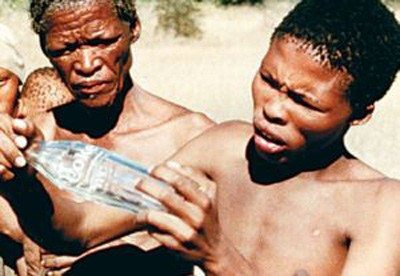
 I think these movies are simply a manifestation of our western culture. We believe that all the evils of this world and associated guilt are a product of our modern society, and if we would just leave the natives alone they could remain in their utopian society undisturbed. A perfect example of this is the movie “The Gods Must Be Crazy” where the bushmen tribe lives in perfect harmony until a coke bottle drops from the sky and everyone starts fighting over it. Could that really be true? I say no. Every society struggles with the affects of sin. While it is true that the symptoms may be different from culture to culture they still exist. While a civilized society may have to deal with the affects of murder, theft, adultery, and drugs, a primitive culture is often plagued by violence, murder, fear of evil spirits, starvation, and even a host of preventable or curable diseases due to lack of access to modern health care. I submit that while exposure to the modern world may have an affect on culture (Cultural Materialism), it does not have a corrupting affect on the morality of that society. Sin is sin, and different tools to commit it do not change that fact.
[youtube]http://www.youtube.com/watch?v=HN3EecB9fGM[/youtube]
Putting the complicated anthropological aspects of this aside, how does it apply to missions? The term “Missionary” has gotten a bad rap due to them being perceived through history as being destroyers of cultures. Unfortunately that reputation has been earned due to faulty understanding of mission’s purpose and the desire to “civilize” the savages. But forgoing those historical issues, missionaries by and large have brought huge benefits to primitive societies across the world. Water wells, modern medical care, and improved farming technology are just a few examples of the humanitarian benefits missions has had. But of course the most important thing missionaries have done is bringing the Gospel of Jesus Christ to lost and dying peoples who had no access to the truth before.

I think about the unreached Bonda people of Orissa, India. If you were to assume that their incredibly primitive and isolated way of life was a paradise that should remain untouched you would be sadly mistaken. In reality their society is plagued by shame due to the belief they’ve been cursed, drunkenness, and incredible violence. In fact their population has been shrinking due to the incredibly high murder rate resulting from their culturally accepted drunkenness, violence, and depression. Are they better off left alone? I don’t think so! They are in desperate need of the redemptive power of the gospel in their lives and society as a whole. And I have no doubt you will find similar situations in all the remaining primitive tribal cultures of the world.
 In recent years a number of organizations have sprung up as a result of this romanticizing of primitive native peoples. Groups like Survival International are gaining more political power as western governments and the United Nations side with their worldview. While these groups play an important role in protecting the rights of tribal peoples, they often are in fierce opposition to missionaries. They are helping governments around the world to write laws closing off unreached peoples to the gospel. And all this is a direct result of this faulty worldview about tribal people.
In summary of all these thoughts, I think it is very important to recognize this emerging view as exposed by Hollywood. The romanticizing of native cultures is both dangerous and damaging to those peoples. It can block us from seeing their extreme and urgent need for the truth of the gospel. It is also a driving force behind the changing attitudes toward missionaries among the governments of the world. It is important to keep this in mind lest you fall prey to the belief that they would be better off left alone. Every people needs Jesus, and no matter what the world says it is our responsibility to give them the opportunity to meet him.
- What are your thoughts on the corrupting influences of the outside world on tribal peoples?
- Have you ever found yourself romanticizing tribal cultures?
UPDATE:
Here’s a very interesting article that addresses the folly of Western anti-modernists »16 May 2010, 6:05 pm - Adoniram Judson: Advice to Potential Missionaries

Adoniram Judson
Adoniram Judson was a famous missionary to Burma(Myanmar) during the mid 1800’s. He is known to be the first American missionary to be sent to foreign lands, and was instrumental in the formation of the first American denominational missions organizations. He also translated the first Burmese Bible and his story has been an inspiration to millions.
In reading about Judson I came across a letter that he wrote to a missionary association in America with ten bits of advice for those considering missions. I thought some of these were very interesting and useful to those involved in missions today. Here they are, and I have highlighted the most interesting and convicting points:
First, then, let it be a missionary life; that is, come out for life, and not for a limited term. Do not fancy that you have a true missionary spirit, while you are intending all along to leave the heathen soon after acquiring their language. Leave them! for what? To spend the rest of your days in enjoying the ease and plenty of your native land?
Secondly. In choosing a companion for life, have particular regard to a good constitution, and not wantonly, or without good cause, bring a burden on yourselves and the mission.
Read Judson’s incredible marriage proposal letters»
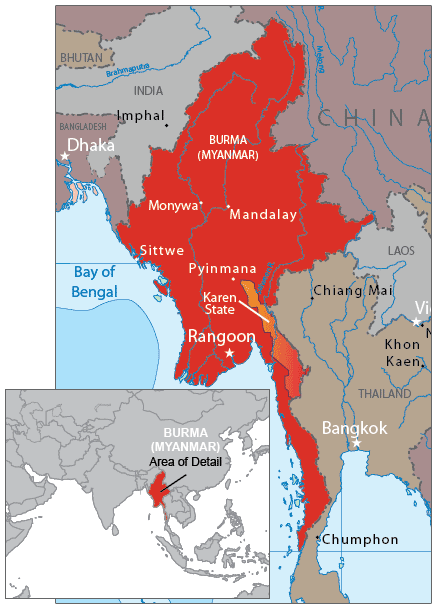
Map of Burma
Fourthly. Take care that the attention you receive at home, the unfavorable circumstances in which you will be placed on board ship, and the unmissionary examples you may possibly meet with at some missionary stations, do not transform you from living missionaries to mere skeletons before you reach the place of your destination. It may be profitable to bear in mind, that a large proportion of those who come out on a mission to the East die within five years after leaving their native land. Walk softly, therefore; death is narrowly watching your steps.
Fifthly. Beware of the reaction which will take place soon after reaching your field of labor. There you will perhaps find native Christians, of whose merits or demerits you can not judge correctly without some familiar acquaintance with their language. Some appearances will combine to disappoint and disgust you. You will meet with disappointments and discouragements, of which it is impossible to form a correct idea from written accounts, and which will lead you, at first, almost to regret that you have embarked in the cause. You will see men and women whom you have been accustomed to view through a telescope some thousands of miles long. Such an instrument is apt to magnify. Beware, therefore, of the reaction you will experience from a combination of all these causes, lest you become disheartened at commencing your work, or take up a prejudice against some persons and places, which will embitter all your future lives.
Sixthly. Beware of the greater reaction which will take place after you have acquired the language, and become fatigued and worn out with preaching the gospel to a disobedient and gainsaying people. You will sometimes long for a quiet retreat, where you can find a respite from the tug of toiling at native work — the incessant, intolerable friction of the missionary grindstone. And Satan will sympathize with you in this matter; and he will present some chapel of ease, in which to officiate in your native tongue, some government situation, some professorship or editorship, some literary or scientific pursuit, some supernumerary translation, or, at least, some system of schools; anything, in a word, that will help you, without much surrender of character, to slip out of real missionary work. Such a temptation will form the crisis of your disease. If your spiritual constitution can sustain it, you recover; if not, you die.
Seventhly. Beware of pride; not the pride of proud men, but the pride of humble men — that secret pride which is apt to grow out of the consciousness that we are esteemed by the great and good. This pride sometimes eats out the vitals of religion before its existence is suspected. In order to check its operations, it may be well to remember how we appear in the sight of God, and how we should appear in the sight of our fellow-men, if all were known. Endeavor to let all be known. Confess your faults freely, and as publicly as circumstances will require or admit. When you have done something of which you are ashamed, and by which, perhaps, some person has been injured (and what man is exempt?), be glad not only to make reparation, but improve the opportunity for subduing your pride.
Eighthly. Never lay up money for yourselves or your families. Trust in God from day to day, and verily you shall be fed.
Ninthly. Beware of that indolence which leads to a neglect of bodily exercise. The poor health and premature death of most Europeans in the East must be eminently ascribed to the most wanton neglect of bodily exercise.
Tenthly. Beware of genteel living. Maintain as little intercourse as possible with fashionable European society. The mode of living adopted by many missionaries in the East is quite inconsistent with that familiar intercourse with the natives which is essential to a missionary.
In regard to your inquiries concerning studies, qualifications, etc., nothing occurs that I think would be particularly useful, except the simple remark, that I fear too much stress begins to be laid on what is termed a thorough classical education.
Praying that you may be guided in all your deliberations, and that I may yet have the pleasure of welcoming some of you to these heathen shores, I remain
Your affectionate brother,
A. JUDSON
Maulmain, June 25, 1832
You can read his complete letter here.
I encourage you to read about the life of Adoniram Judson and his ministry to the Burmese people. I can hardly keep from crying as read of the sacrifices he made to bring the Gospel to Burma in his biographies.
You can read an excellent biography here.
16 September 2009, 7:00 pm - Debt: Enemy of Missions
Imagine that you suddenly received a calling to be a missionary. God has been working on your heart and maybe you even know that you are going to be a missionary in India. So now its time to start making plans. Oh, wait. What about the $300 car payment, $1,100 mortgage payment, $35,000 student loan, and the $5,000 in credit card debt?
Debt. It has become a culturally acceptable part of the western world. Who buys a car with cash? Many of us could never imagine owning a car without a car payment. And it has become surprisingly uncommon to spend less than you make these days! Starting in 2005 Americans actually had a negative savings rate, meaning that on average they spent more than they made.
“…The borrower is servant to the lender.”
Proverbs 22:7We have all read this verse but do we really understand it’s implications? Debt is slavery! We all have felt sorry for those who are enslaved to addictions like drugs and alcohol, but being in debt is comparable because it forces people to do things they don’t want to do. Do you know someone who is forced to work at a job that they hate just so they can cover the bills? Or maybe they wish they could work less overtime and be free to spend time with their family. They are slaves to their job because they chose the cheap thrills of instant gratification instead of living within their means. So what if God calls you to missions while you are in a similar situation? If you are in debt you are trapped! You have already given up your freedom to debt and are not ready to leave when He desires to send you. You either have to wait a few years while you pay off your debt, or somehow unfairly place your debt burden on your supporters.
I am convinced that debt has been a common tool of the enemy to keep numerous workers off of the mission field. Many people are excited about the call of God on their lives, but get overwhelmed when they consider all their unpaid bills and the financial hole they have to dig themselves out of. This leads to discouragement and often people walk away from the vision God has called them to. How much closer to fulfilling the Great Commission would we be if all who were called to the mission field were financially ready to go?
The purpose of this article is not to condemn or discourage those in debt, but to serve as a warning and a call to action. I write this from personal experience. My wife and I have been working hard for a year and a half now at paying off our own credit card debt. In our case the debt came not from frivolous purchases, but a lack of financial wisdom and preparation. What shouldn’t have been an emergency became one and went on the credit card.
The Warning

Making The Last Car Payment
If you are one of the few who have no debt, consider yourself blessed! You can start right now to build a strong financial foundation for your life and ministry with careful budgeting and self-discipline. You have the freedom that few do to be able to bless the nations with both your money and time. And if God calls you to go to the nations, you will be free to pick up and go! I caution you to be careful to avoid getting caught up in the status quo and allow debt to creep into your life. I guarantee that the temptation will come someday to take out that car note or lease. When your car breaks down or the new baby is coming you don’t have to give in to the pressure that you need a new car. Learn how to drive free and retire rich »
Beware of credit cards! This may seem at odds with my post of how I manage to fly for free, but we are very cautious with that (we shred our cards after the required purchase, they never go in our wallet). In general, credit cards are not worth the risk for the benefits they provide (miles, points, cash back, etc). Even if you use them for your everyday purchases for a reward and always pay it off each month, the statistics show that the credit card company will get their money from you someday. A large percentage of people end up carrying a balance after Christmas, paying interest until spring. Do you have a sufficient emergency fund? If you get laid off or the AC breaks you won’t believe how fast the balance on that card will grow! Having a credit card just for “emergencies” is a quick ticket to debt because 100% of us will have an “emergency” in the next year or two. That’s what a savings account is for. You don’t “need” a credit card either. A debit card with the Visa or MC logo on it will work just fine for pretty much anything.
I want to instill a healthy fear in you to avoid debt like the plague. Our western society and popular culture is telling us that debt is a normal part of life. The pressure to “keep up with the Joneses” is strong but remember that the “Joneses” are broke. They’re living paycheck to paycheck trying to keep up with all the payments on everything they own! Be different. Learn to recognize and value the freedoms you have without debt in your life. Not just financial freedom, but things like not being a slave to your job and the freedom to give time and money to God’s mission. Avoiding debt is also the beginning of building personal wealth so you can be a greater blessing to the nations!
Call to Action

For the majority of us who are shouldering debt, it’s time to get in action! No more paying minimum payments, living paycheck to paycheck, following the current. Lets get rid of this debt so we can be free for God to use us how and where He wants.So where do you start to get financially free? There are many books and programs that try to draw you in with advertisements that they can get you out of debt or have your debt canceled. Most are scams. Some might work on paper when you do the math, but when practically applied rarely work because they only treat the symptoms. The answer is really simple when it comes down to it. Self-control and self-discipline. That is why I recommend Dave Ramsey and his program, as he is the only voice I’ve heard that deals with the source of our debt problem and does it from a Christian perspective.
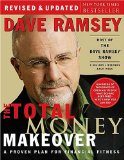
Dave has a simple plan to get free from debt and build wealth so you can give like never before. My wife and I have been following it for a year and a half and now and we should be debt free by the end of the year if we stick to the plan! You can visit Dave’s site for more information here. I also highly recommend getting his “The Total Money Makeover: A Proven Plan for Financial Fitness
” book, as it’s the best tool for getting out of debt you could have. Get some discipline, work hard and faithfully, and before you know it you will be free!
Conclusion
I hope by now you have learned to see the seriousness of debt and how it is keeping missionaries and so many Christians from achieving the full potential that God has called them to. Make a commitment now to see debt for what it is and choose to live a life of freedom, not allowing anything to get in the way of the ministry Christ has called us to!
Therefore, since we are surrounded by such a great cloud of witnesses, let us throw off everything that hinders and the sin that so easily entangles, and let us run with perseverance the race marked out for us.
Hebrews 12:1 – NIV
Another article on debt and missions.
Images:
Credit Cards by Andres Ruedacutting loose by SqueakyMarmot
24 July 2009, 9:41 pm - More Episodes? Get the App