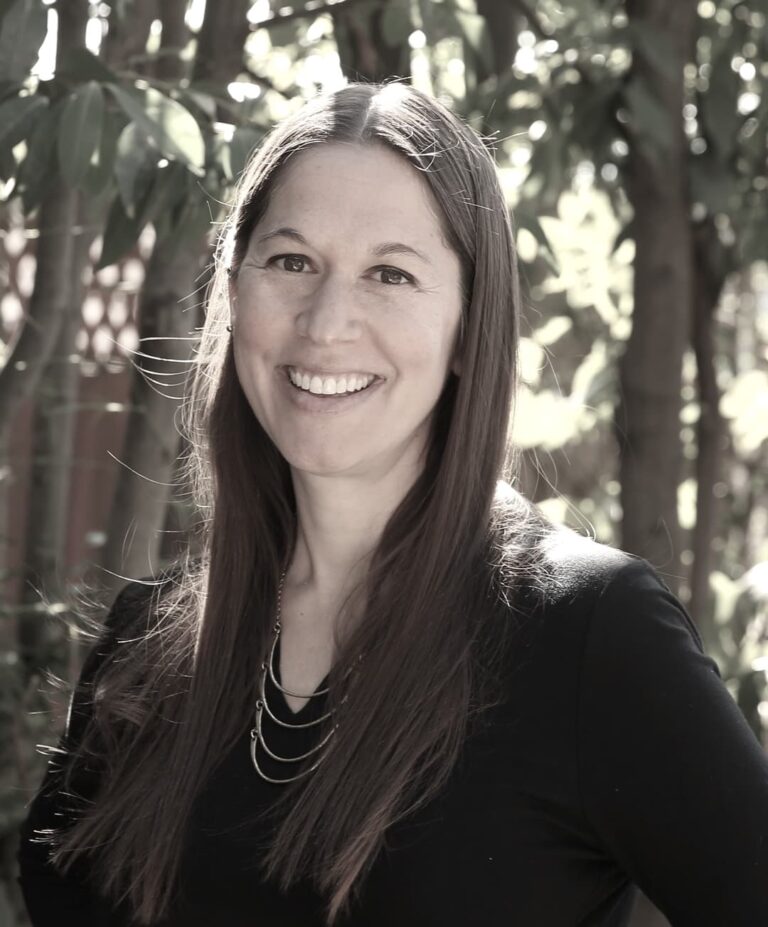
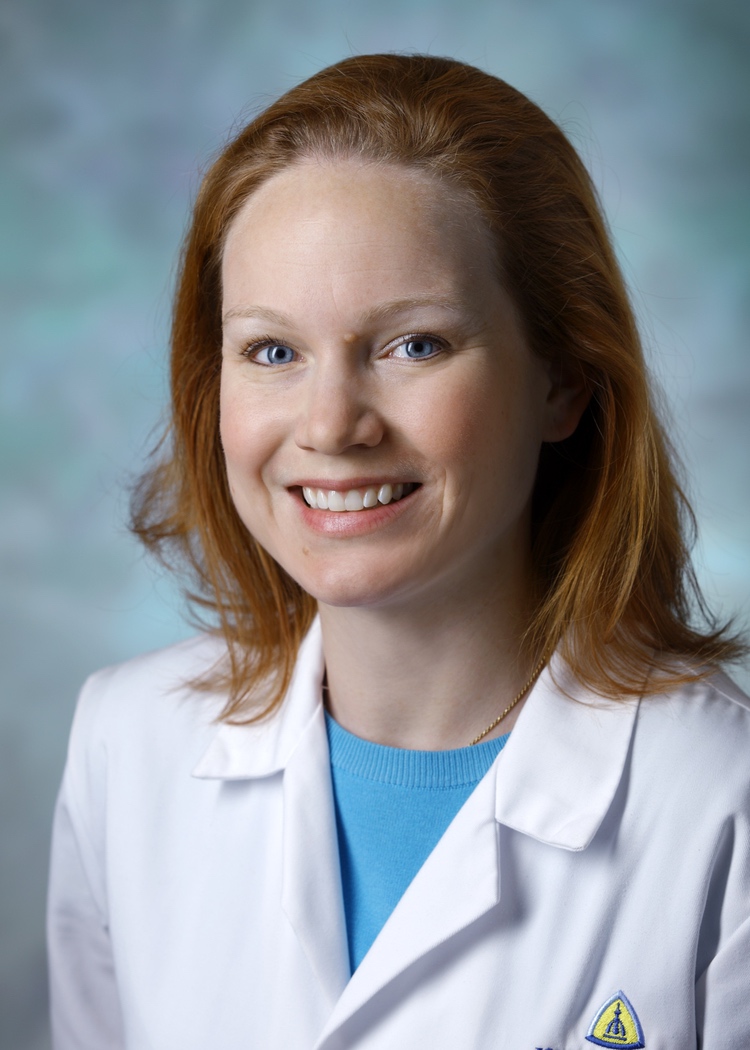
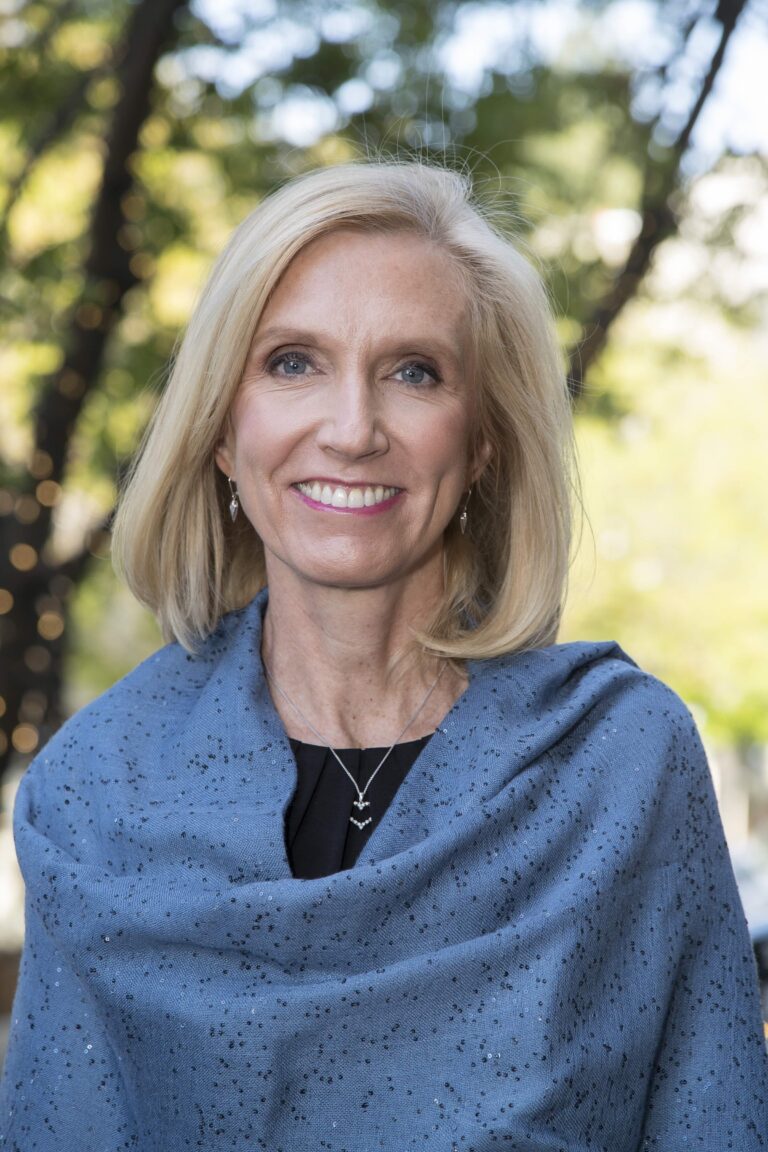
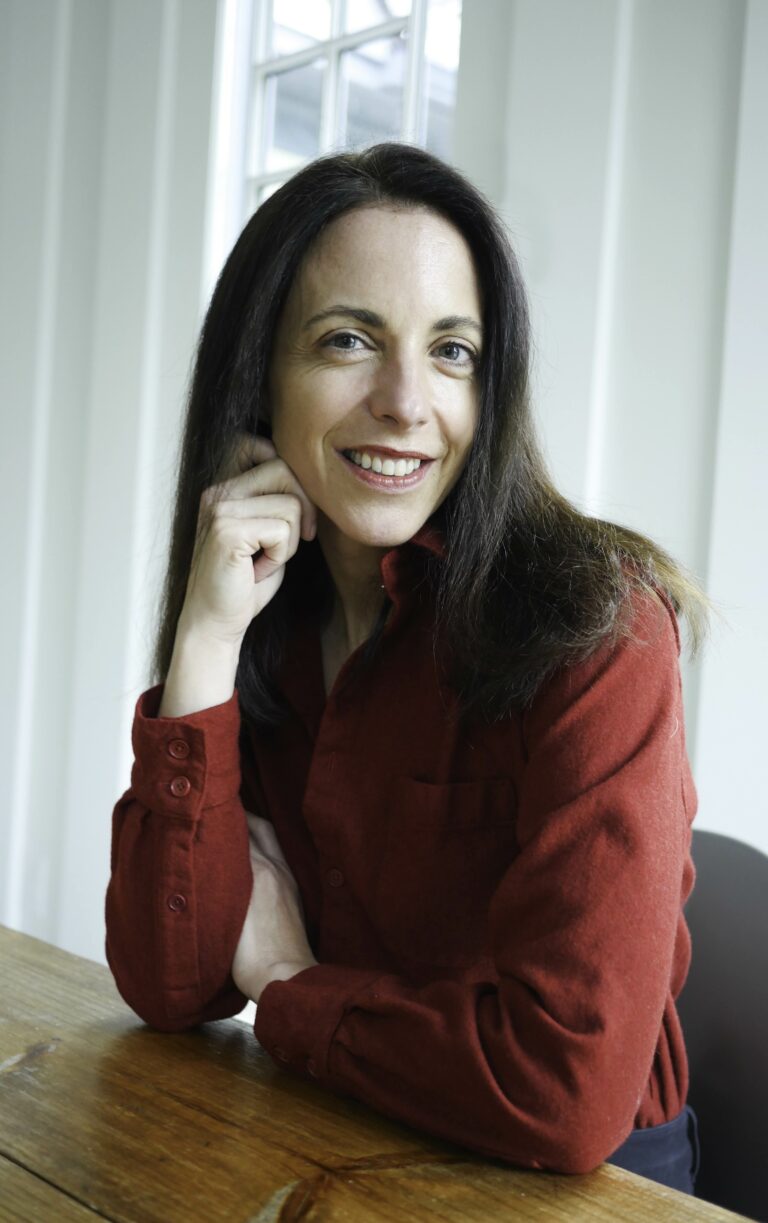
The People's Pharmacy

Joe and Terry Graedon

Empowering you to make wise decisions about your own health, by providing you with essential health information about both medical and alternative treatment options.

  • 1 hour 5 minutes
    Show 1455: Common Culprits: How Infections Trigger Chronic Diseases

    When doctors talk about infections, they are usually referring to acute situations in which the immune system gets overwhelmed by a virus such as influenza or chickenpox. Infections also result from the interaction of bacteria with the immune system, as in the case of pneumonia or sepsis. These can be crises, but they are relatively short-lived, resolving one way or the other within a few weeks or at most months. Could infections trigger chronic diseases? Our guest, evolutionary biologist Dr. Paul Ewald, thinks they do.

    At The People’s Pharmacy, we strive to bring you up to date, rigorously researched insights and conversations about health, medicine, wellness and health policies and health systems. While these conversations intend to offer insight and perspective, the content is provided solely for informational and educational purposes. Please consult your healthcare provider before making any changes to your medical care or treatment.

    How You Can Listen:

    You could listen through your local public radio station or get the live stream at 7 am EST on Saturday, Dec. 13, 2025, through your computer or smart phone (wunc.org).  Here is a link so you can find which stations carry our broadcast. If you can’t listen to the live broadcast, you may wish to hear the podcast later. You can subscribe through your favorite podcast provider, download the mp3 using the link at the bottom of the page, or listen to the streaming audio on this post starting on Dec. 15, 2025. It can be found under the photo at the top of the page.

    How Infections Trigger Chronic Diseases:

    Investigating the origins of chronic diseases requires a great deal of patience and the ability to examine several different areas that might be relevant. Over the past few decades, the technology for evaluating genetic contributions has improved greatly. What we have learned is that most chronic conditions are associated with a range of genes that each add a small amount of risk.

    To get further insight, we have to look at the environment. This broad area includes topics as far ranging as sunshine, stress and nutrition. In particular, we need to look at the pathogens present in any given environment, as they could play an important role in our health.

    Scrutinizing the environment is not enough. To understand the impact on disease, we need to know more about human behavior within that environment. How much sun exposure do the patients get? Are they sleeping? Where do they spend most of their time, and with whom? These all will help us understand the link to pathogens.

    What We Have Learned About the Microbiome:

    Over the past several decades, scientists have learned a great deal about the microbiome. The original conception of gut bacteria has been enriched with the understanding that almost every part of the human body has its own microbiome, almost as unique as a fingerprint. These collections of microbes live in harmony–or disequilibrium–with microbes from the environment. Some of these may be beneficial. Others undoubtedly are harmful, and we call them pathogens. How do pathogens trigger chronic diseases?

    How Does the Body React to Pathogens?

    When pathogens are detected, the immune system responds. Often, that comes in the form of macrophages, immune cells that circulate in the blood and attack the pathogens. Even a type of microbe that normally cohabits peacefully with the others in its space can cause trouble if it becomes too numerous or goes out of bounds. One example is Porphyromonas gingivalis. It’s usually found in the mouth. If it gets too exuberant there, it can cause gum disease. Worse, though, the macrophages dispatched to deal with P. ginigivalis anywhere in the body can end up collecting in atherosclerotic plaque in arteries (Signal Transduction and Targeted Therapy, May 23, 2025).

    Another example of pathogens causing unexpected trouble is Clostridium (or Clostridioides) difficile (C. diff). These bacteria can live among other gut microbes and you might not even know they were there. But if the microbiota become disturbed, from a course of antibiotic treatment, for example, C. diff can proliferate and cause terrible diarrhea that may be very difficult to treat. Studies indicate that C. diff has evolved so that the strains in hospitals are now more likely to be resistant to antibiotic medications.

    Alzheimer disease seems like a chronic condition rather than a complication of infection. Certainly, researchers have been examining genetic predispositions for the accumulation of beta-amyloid plaque in the brain. Yet Alzheimer disease is associated with microbes such as Chlamydia pneumoniae and P. gingivalis. Could flossing your teeth to reduce your chance of periodontal disease also help lower your risk of Alzheimer disease? Recent research has shown that older people receiving the shingles vaccine are less likely to be diagnosed with dementia. Perhaps amyloid plaques in the brain are part of an immune response to infection.

    Has Long COVID Shifted Our Perspective on Chronic Disease?

    Several decades ago, The People’s Pharmacy interviewed Dr. Paul Cheney, then of Incline Village, Nevada, about his patients with chronic fatigue syndrome. He believed at the time that epidemiological patterns of this mysterious illness pointed to an infectious origin. Years have passed, and no pathogen has been identified to satisfy the criteria as THE cause of myalgic encephalomyelitis (ME/CFS).

    Recently, though, millions of Americans have been struggling with a condition that seems rather similar. The only difference is that we know their symptoms began with a COVID-19 infection. Long COVID is difficult to treat. Patients suffering with this condition appear to be afflicted with a serious chronic disease. Researchers have not always found evidence of persistent infection with the SARS-CoV-2 virus. Nonetheless, in most cases a COVID infection was clearly the origin. How has that changed our attitude toward the possibility that infections trigger chronic diseases?

    Other Mystery Conditions:

    As we contemplate the possibility that infections trigger chronic diseases, we should not overlook chronic Lyme disease. Most infectious disease experts insist it isn’t an infection. Some even resist the idea that people are suffering. Dr. Ewald suggests that perhaps the inability to identify pathogens in the wake of Lyme disease is due to using old techniques.

    The pathogens don’t show up on these tests, but that could be because they are hiding. Will newer techniques reveal them? What about the possibility that diseases like arthritis or schizophrenia are caused by pathogens in some cases? The evidence is tantalizing. Dr. Ewald urges us to look at the chronic phases of infection as well as the acute phases.

    This Week’s Guest:

    Paul Ewald, PhD, is an evolutionary biologist, specializing in the evolutionary ecology of parasitism, evolutionary medicine, agonistic behavior, and pollination biology. He is currently a Professor of Biology at the University of Louisville. Professor Ewald is a pioneer in evolutionary medicine and infectious disease research. He has challenged conventional wisdom on the causes and prevention of many chronic diseases with his idea that many diseases of unknown origin are the result of chronic low-level infections, which has ultimately been shown to be correct for a wide range of diseases to date. He is the author of Evolution of Infectious Disease and Plague Time: The New Germ Theory of Disease.

    The People’s Pharmacy is reader supported. When you buy through links in this post, we may earn a small affiliate commission (at no cost to you).

    Paul Ewald, PhD, describes how microbes evolve

    Paul Ewald, PhD, describes how microbes evolve

    Listen to the Podcast:

    The podcast of this program will be available Monday, Dec. 15, 2025, after broadcast on Dec. 13. You can stream the show from this site (the arrow inside the green circle under the photo at the top of the page) and download the podcast for free. In this week’s extra episode, Joe asks Dr. Ewald how to get specialists to consider the possibility that infections may be at the root of many chronic conditions.

    Download the mp3, or listen to the podcast on Apple Podcasts or Spotify.

    11 December 2025, 9:43 pm
  • 1 hour 7 minutes
    Show 1454: Stopping Airborne Viruses: Simple Steps to Cleaner Indoor Air

    Do you worry about things you can’t see, smell or taste? Most of us don’t. Yet particles we can’t detect with our five senses are often present in the air we breathe. They have the power to make us sick. How can we achieve cleaner indoor air so that we have less chance of coming down with a serious infection?

    At The People’s Pharmacy, we strive to bring you up‑to‑date, rigorously researched insights and conversations about health, medicine, wellness and health policies and health systems. While these conversations intend to offer insight and perspective, the content is provided solely for informational and educational purposes. Please consult your healthcare provider before making any changes to your medical care or treatment.

    How You Can Listen:

    You could listen through your local public radio station or get the live stream at 7 am EST on Saturday, Dec. 6, 2025, through your computer or smart phone (wunc.org).  Here is a link so you can find which stations carry our broadcast. If you can’t listen to the broadcast, you may wish to hear the podcast later. You can subscribe through your favorite podcast provider, download the mp3 using the link at the bottom of the page, or listen to the stream on this post starting on Dec. 8, 2025.

    The Importance of Cleaner Indoor Air:

    When we talk about air pollution, the image that may arise is factories belching dark plumes of smoke. While the particles generated by industrial processes can be dangerous for our health, sometimes the greatest danger is from particles we can’t see.

    The COVID-19 pandemic brought this into sharp focus, as we realized that people who had not yet begun to experience symptoms could be spreading infectious viruses. But the need for cleaner indoor air is not limited to COVID, or even to an epidemic like measles or the flu. Many infections spread primarily on viral particles wafting through the air. We are reminded of this every winter, as cases of influenza start to rise. But respiratory syncytial virus, human metapneumovirus and dozens of rhinoviruses and coronaviruses that cause colds also travel on the air. So do measles viruses.

    Our guest, Dr. Linsey Marr, is one of the country’s leading environmental engineers. She got interested in airborne transmission of infection even before SARS-CoV-2 appeared. Then, with COVID, it became clear that the advice to the public about maintaining 6 feet of distance was inadequate to protect people from coming down with the infection. It was developed based on an outdated understanding of how infectious particles travel.

    Can You Tell If Indoor Air Is Contaminated?

    Given the extremely small size of viral particles, we might have to use our imagination to understand how they could be present. We can’t smell viruses. But if you imagine someone smoking a cigar in the room, you know that the smell will linger for quite a while after the smoker has left. Viral particles can float around like the smell of cigar smoke, which is why they can still be present even after an infected person has left the space.

    This viral behavior means that the riskiest places are those where many people congregate, especially during a season when infections are spreading. Think of grocery stores, hospitals, or athletic event venues. Wearing a tightly fitted N95 or KN95 mask could provide some protection (especially if others also wore masks). It is not a magic bullet, though. Japanese people accept mask protocol during flu season, and they have still experienced the spread of influenza. In the US, it is very unlikely that most people will accept wearing masks, even if it could help reduce their risk of infection.

    While we can’t measure viral particles in the air without complicated equipment, we can use a simple relatively inexpensive piece of equipment to check the ventilation in a space with multiple people. It is called a carbon dioxide (CO2) monitor. Because people exhale CO2, high levels of this harmless gas indicate lots of people breathing in the space without much ventilation. Fresh outdoor air runs about 400 ppm CO2. Once indoor air reaches 1,000 ppm or higher, you may want to take action.

    Moving Toward Cleaner Indoor Air:

    Ventilation:

    Improving ventilation would be very advantageous. Most public places should strive to achieve at least 4 to 6 air exchanges per hour. More sensitive spaces such as health care facilities might benefit from a higher level of ventilation.

    Filtration:

    The other way to deal with airborne viruses is through filtration. Home air handling systems could be equipped with a high-efficiency particulate arresting (HEPA) filter. This is ideal, but it may not be practical in every space. Ordinary air filters carry a MERV number such as 8, 11 or 13. Higher numbers indicated better filtration capacity. In general, you’d want to use the highest MERV number your HVAC system will tolerate. Too high a number can create too much pressure and cause problems.

    What if you don’t have access to the filters for your air? That is the case for many apartment dwellers who have to share their air with everyone else in the building. One affordable option is to build and use a Corsi-Rosenthal box. It can be assembled at home for $50 to $70 and it works quite well to provide cleaner indoor air in the space where it is operating. Dr. Marr describes how to build one. Here is a link to our interview with Dr. Corsi, including instructions on building a Corsi-Rosenthal box.

    Elimination:

    Another step toward cleaner indoor air might be to utilize ultraviolet (UV) light as a disinfectant. A unit that uses germicidal UV at a wavelength of 250 nanometers needs to be tucked into air ducts. That wavelength can damage eyes and skin. New technology is being developed using a slightly different wavelength of 222 nanometers. While still germicidal, it is supposed to be safe for human eyes.

    This Week’s Guest:

    Linsey Marr, PhD, is a professor of civil and environmental engineering at Virginia Tech, where she leads the Applied Interdisciplinary Research in Air (AIR2) laboratory. Her research group focuses on the dynamics of biological aerosols like viruses, bacteria, and fungi in indoor and outdoor air. Marr teaches courses in environmental engineering and air quality, including topics in the context of global climate change, as well as health and ecosystem effects. She has been thinking and writing about how to avoid airborne viral transmission since the pandemic began, as in this article published in Environment International (Sep. 2020). Photo by Peter Means, courtesy of Virginia Tech.

    LInsey Marr, PhD, expert on how to avoid airborne viral transmission through better ventilation

    Dr. Linsey Marr of Virginia Tech. Photo by Peter Means, courtesy of Virginia Tech

    Dr. Marr mentioned her publication, with many colleagues, advocating for cleaner indoor air in public buildings. Here is a link.

    Joe Graedon conducted this interview, as Terry was unavailable.

    Listen to the Podcast:

    The podcast of this program will be available Monday, Dec. 8, 2025, after broadcast on Dec. 6. You can stream the show from this site and download the podcast for free. This week’s episode contains some additional discussion of outside air, including the dangers of smoke from wildfires, along with particulates from car tires or microplastics.

    Download the mp3, or listen to the podcast on Apple Podcasts or Spotify.

    Transcript of Show 1454:

    A transcript of this show was created using automated speech-to-text software (AI-powered transcription), then carefully reviewed and edited for clarity. While we’ve done our best to ensure both readability and accuracy, please keep in mind that some mistakes may remain. If you have any questions regarding the content of this show, we encourage you to review the original audio recording. This transcript is copyrighted material, all rights reserved. No part of this transcript may be reproduced, distributed, or transmitted in any form without prior written permission.

    Joe
    00:00-00:01
    I’m Joe Graedon.

    Terry
    00:01-00:05

    And I’m Terry Graedon. Welcome to this podcast of The People’s Pharmacy.

    Joe
    00:06-00:27

    You can find previous podcasts and more information on a range of health topics at peoplespharmacy.com. How do you catch the flu, COVID, or cold? Such respiratory infections are transmitted through airborne viruses. This is The People’s Pharmacy with Terry and Joe Graedon.

    Terry
    00:34-00:46
    Dr. Linsey Marr is one of the country’s leading experts on air quality. She was among the first scientists to identify airborne transmission as a problem during the COVID pandemic.

    Joe
    00:46-00:51
    Dr. Marr will tell us how we can improve the quality of the air we breathe.

    Terry
    00:51-00:58
    Do you know how well the air in your home is filtered? What about the air quality at school, at work, or in your doctor’s office?

    Joe
    00:59-01:07
    Coming up on The People’s Pharmacy, how cleaner indoor air reduces your risk of infection.

    Terry
    01:14-02:16
    In the People’s Pharmacy Health Headlines: viruses are on the move, through the air and on surfaces. Subclade K type A H3N2 influenza is spreading. People catch it primarily by inhaling invisible viral particles. Public health authorities are worried that current influenza vaccines may not protect well against this new variant.

    The other virus that’s causing a lot of misery is norovirus, also known as stomach flu, the cruise ship virus, or the winter vomiting bug. It’s one of the most easily transmitted infections because just a few particles can make you very sick. Wastewater scan shows a significant uptick in the last couple of weeks. If anyone in your household starts throwing up or having diarrhea, you’re at risk of catching this virus. That’s because it can be transmitted through the air. There is no vaccine or effective treatment against norovirus.

    Joe
    02:17-03:31
    Nutrition experts have been arguing about fat for decades. Starting in the 1980s, Americans were encouraged to follow a low-fat diet. Instead of using butter, people were told to use vegetable oil. Saturated fat was the enemy because it was thought to clog coronary arteries. Hydrogenated vegetable oils were promoted because they had no cholesterol. And seed oils, such as peanut, corn, and safflower oils, became popular because they, too, were low in saturated fat.

    In recent years, though, researchers became concerned that hydrogenated vegetable oils contributed to atherosclerosis. And now, researchers at the University of California, Riverside, report on an experiment with soybean oil. Mice fed on soybean oil developed obesity more easily than those fed coconut oil. The investigators identified a liver protein that determines how the body handles linoleic acid, a major component of soybean oil and some other vegetable oils. They point out that many processed foods contain soybean oil, which could be contributing to the obesity epidemic.

    Terry
    03:32-04:51
    Diet can play an important role in controlling blood sugar for people with type 2 diabetes. A study published in the American Journal of Clinical Nutrition demonstrates that slowly digestible starch can be very helpful. Because this slowly digestible starch is metabolized over a long time, it does not lead to spikes in blood glucose or insulin.

    Investigators recruited 51 people with type 2 diabetes and randomly assigned them to diets either high or low in slowly digestible starch. For three months, the volunteers kept track of their blood sugar with continuous glucose monitors. They also met with dietitians for nutritional and culinary counseling.

    Those whose diets were high in slowly digestible starches such as peas and beans, nuts and seeds, and whole grains had less dramatic changes in blood sugar. Both groups lowered their levels of HbA1c, a medium-term measure of blood sugar. Those on the diets rich in slowly digestible starches actually got their A1c below 7%, which was the target. The researchers believe this offers an effective and accessible strategy to help people with type 2 diabetes gain control.

    Joe
    04:52-05:44
    Australia’s equivalent to the Food and Drug Administration is called the Therapeutic Goods Administration, or TGA. Like the FDA, it monitors drug safety. Recently, the TGA issued a new safety warning to people using GLP-1 drugs such as semaglutide, tirzepatide, liraglutide, and dulaglutide. These drugs have become household names such as Ozempic, Wegovy, Mounjaro, and Zepbound.

    The TGA is concerned about reports of suicidal thoughts and behaviors associated with these medications. The regulatory agency is urging doctors to monitor patients for the emergence or worsening of depression, suicidal thoughts, or behaviors, and or any unusual changes in mood or behavior.

    Terry
    05:45-06:17
    Residents of several states are being warned to stay indoors because of poor air quality. High levels of ozone or fine particulates too small to see are making breathing dangerous in many places. You can check your local air quality index at the website airnow.gov. And that’s the health news from the People’s Pharmacy this week. Welcome to the People’s Pharmacy. I’m Terry Graedon.

    Joe
    06:17-06:27
    And I’m Joe Graedon. We’re entering cold and flu season, except there are lots of other pathogens circulating in the air we breathe.

    Terry
    06:27-06:41
    We can’t see them because they’re much too little. Infectious agents such as respiratory syncytial virus, human metapneumovirus, pertussis, and mycoplasma pneumoniae can cause a lot of misery.

    Joe
    06:42-06:57
    And let’s not forget that SARS-CoV-2 has not disappeared. This year, a new variant of influenza A, subclade K, is making people sick, and the flu shot may not protect us as well as we’d hoped.

    Terry
    06:58-07:26
    To find out why air quality matters, especially when pathogens are circulating, Joe talked to Dr. Linsey Marr. She’s a professor of civil and environmental engineering at Virginia Tech, where she leads the Applied Interdisciplinary Research in Air Laboratory. Her research group focuses on the dynamics of biological aerosols like viruses, bacteria, and fungi in indoor and outdoor air.

    Joe
    07:28-07:32
    Welcome to the People’s Pharmacy. It’s so nice to have you back, Dr. Linsey Marr.

    Dr. Linsey Marr
    07:33-07:37
    I am thrilled to be here, to be back on the People’s Pharmacy. Thanks so much for having me again.

    Joe
    07:37-08:21
    Well, you know, unfortunately, Terry can’t be with us today, but I am so pleased to find that you have received so many awards and recognition for the work that you have put in over the last five years, especially with regard to COVID. I mean, you are an environmental engineer, you’ve been involved in bioengineering for a long time. And it seemed like COVID was just waiting for somebody with your expertise to come along. Can you tell our listeners what is an environmental engineer and how did you get interested in aerosol viruses? Cause you were into this field before there was COVID-19.

    Dr. Linsey Marr
    08:23-09:22
    Right. Environmental engineers dedicate their careers to ensuring that we have a clean and healthy environment, whether it’s in the natural environment and also in the built environment. The built environment [is] buildings and roads and other infrastructure.

    And so, for example, some environmental engineers focus on clean water. You know, we take it for granted that you can turn on your tap and get clean water that is safe to drink. But that wasn’t always true. And that development was thanks to the work of environmental engineers. Another example is that of clean air.

    Air in the U.S. used to be much dirtier in the 1970s. It was heavily polluted by dirty cars and the steel industry and other sources. And environmental engineers are the ones who kind of recognize this and helped lead, I guess, research and actions to help clean it up.

    Joe
    09:22-09:36
    Now, I’m saying that COVID changed your world, but you were already in this field. You were already interested. Tell us how COVID did make a difference in your life.

    Dr. Linsey Marr
    09:37-10:51
    Yeah, I had been studying viruses in the air since about 2008 or 2009. And I got into it mainly, well, for a couple reasons. One, I had been studying traditional particulate pollution in the air. As I mentioned, environmental engineers study air pollution. And then a second reason is that I had a child in the end of 2007, and he had started daycare and was getting sick all the time.

    So I really became both fascinated and frustrated by the rapid spread of disease in daycare centers. And so I started reading up on this and found out that we really didn’t know as much as it seemed. And what I did read about how the flu spreads between people, some of it just didn’t really make sense with my understanding of how particles move through the air.

    And so my research group started out by going into daycare centers, a health center on campus, and airplanes. We collected air samples, really particles in the air, and analyzed those and found the flu virus present in like half of them. And it was in small enough particles that they would stay in the air for a long period of time, float around, and people could breathe them in. And after several hours, they could breathe in enough to become infected.

    Joe
    10:51-11:15
    So you were already beginning to suspect that viruses could float on the air. And then along comes COVID. And the CDC and the World Health Organization, all these public health experts were saying six feet. As long as you’re, you know, eight feet away from somebody who’s infected, you’re home free, no worries. And you are going, whoa, whoa, wait a minute.

    Dr. Linsey Marr
    11:16-13:01
    Yeah. All of a sudden, all the research I had been doing for the previous 10 years really was here. And I had been studying this because I was worried about a new flu pandemic. It wasn’t flu, but it turned out to be a coronavirus. And then there was this constant messaging about, oh, stay six feet away from people and that’ll protect you.

    And I knew from what I had been studying that that was likely not true. And it was based on some older, let’s say, kind of dogma or kind of, yeah, just dogma about how respiratory viruses transmitted, that it was mainly in these large droplets that people cough or sneeze into your face big enough to see. And they’re large enough and heavy enough to fall to the ground within six feet of anyone who coughed them out. So that, if that were true, then if you stayed at least six feet away, then there would be no way that you could come in contact with these, the viruses being emitted by other people.

    But it turns out that, you know, based on research I had done earlier and putting together a lot of studies that other people had done, even going back to the 1940s, I knew that people, whether they’re infected with a respiratory virus or not, but that they emit respiratory particles of all sizes, both those large wet ones when you cough, but also smaller stuff when you talk. And even some people when they breathe. And based on older studies, I knew that the virus could be present in those across the whole size range and could also survive in those.

    And so the idea of the six-foot distancing, to me, it just didn’t sound like enough. I think it was due to a misunderstanding about how this type of virus would transmit.

    Joe
    13:02-13:43
    What surprises me in retrospect is that the six-foot rule kind of lasted a long time. It made no sense. And I kept wondering, well, where did it even come from? But I think your research and your colleagues’ work demonstrated pretty effectively that these viral particles could float through the air not for a few minutes and not for six feet, but for a long time and a greater distance, a much greater distance. So when did we finally begin to recognize that, Yeah, six feet wasn’t going to be the answer.

    Dr. Linsey Marr
    13:44-16:17
    I think it was a gradual series of kind of research studies and also observations of super spreading and other types of events that helped us realize that six feet wasn’t enough. And I should say that six feet is helpful because it does keep you kind of farther away from the most concentrated plume. If you imagine somebody’s talking, there’s a kind of a plume of air coming out as if they’re smoking a cigarette and you want to stay away from that. So six feet is good for staying away from that, but it’s not going to absolutely protect you from breathing in those smoke or other respiratory particles.

    But there were a number of things that happened. So one was that there was that the outbreak in the Skagit Valley Chorale in early March of 2020, I believe, where there was a choir that went through a rehearsal and maybe one or two people were were infected. They didn’t feel quite well. The group, you know, knew that there was this new virus around. And so they avoided shaking hands, touching each other. And yet still something like over 80% of the members of the choir became infected after that practice.

    So that to me was one sign of, oh, this thing is probably in the air because it’s really hard to infect that many people just by touching the same doorknob. Even if everybody did touch the same doorknob, you know, after the first few people touch it, you know, any virus that was on there will probably be gone, have been removed.

    So that was one thing. And then there was a study that came out of China in a hospital where they did aerosol particle sampling with the types of instruments, the same types of instruments that my group uses, and they found virus in the very small particles. Now, it was the viral RNA, like its genetic signature, it wasn’t infectious virus. And so some people said, oh, well, it’s not infectious. That doesn’t prove anything. But, you know, we know that it’s hard to, it’s really hard to maintain infectious virus when you’re sampling from air. So that was another hint that it could be there.

    And then there were, there were additional studies. Finally, I think later that summer, there was a group that sampled air in a hospital where there were patients, and it was more than six feet away from their beds. And they used a newer sampling device that is gentler and help better keep the virus infectious. And they discovered a lot of infectious virus in the air in those samples.

    Joe
    16:18-16:59
    So there was enough evidence that accumulated over those first year or two that people began to recognize. But they didn’t really want to believe it. And in a sense, there was like, well, we don’t want a mask because that’s a pain in the neck. And we aren’t going to change our heating and air conditioning systems. And so nobody really knew what to do about it, including, I think, a lot of the public health people.

    We just have about a minute left before we take a break. But have we learned from COVID? Have we made changes that are significant so that it won’t happen again?

    Dr. Linsey Marr
    16:59-17:33
    I think we have learned there’s a totally new discussion about transmission of viruses through the air that used to be completely absent or was reserved for really special cases. But I think now it’s understood to be widely applicable to colds and flus.

    And then, for example, I think the CDC, Centers for Disease Control, had a new website where they recommended a certain amount of ventilation, minimum ventilation in rooms. And so that’s progress. That’s something that did not exist before.

    Joe
    17:34-17:45
    Well, when we come back after this break, let’s talk about progress and what we need to do in the future to prevent another pandemic.

    Terry
    17:45-18:02
    You’re listening to Dr. Linsey Marr, Professor of Civil and Environmental Engineering at Virginia Tech. She leads the AIR2 Laboratory, which focuses on the dynamics of biological aerosols, like viruses, bacteria, and fungi, in indoor and outdoor air.

    Joe
    18:02-18:07
    After the break, we’ll learn about other pathogens in the air besides viruses.

    Terry
    18:07-18:13
    Researchers pay attention to the size of the particles that are wafted around indoors. How do they affect our health?

    Joe
    18:13-18:19
    If you have to spend time where there might be a lot of pathogens in the air, are there ways to protect yourself?

    Terry
    18:19-18:25
    Which places are especially dangerous? Are some public places we should be extra cautious?

    Joe
    18:25-18:29
    Air filters might help. How could we improve ventilation and filtration?

    Terry
    18:39-18:42
    You’re listening to The People’s Pharmacy with Joe and Terry Graedon.

    Joe
    20:40-20:43
    Welcome back to The People’s Pharmacy. I’m Joe Graedon.

    Terry
    20:43-21:01
    And I’m Terry Graedon.

    Joe
    21:01-21:20
    Air quality is important for health, but public health experts have not required landlords to install high-efficiency filters or UV lights to eradicate pathogens. Is there anything we can do to monitor air quality and protect ourselves from airborne pathogens?

    Terry
    21:21-21:47
    I was on assignment out of town and could not participate in this interview with Dr. Linsey Marr. She is one of the country’s leading experts on indoor air quality. She’s focused her research on the dynamics of biological aerosols such as viruses, bacteria, and fungi. Dr. Marr is professor of civil and environmental engineering at Virginia Tech and leads the AIR2 Laboratory.

    Joe
    21:48-22:24
    Dr. Linsey Marr, we’ve been talking about COVID, a virus, but there are all kinds of pathogens that float in the air besides viruses like influenza and COVID, SARS-CoV-2. Tell us about the size of the particles, whether it’s a bacteria or whether we’re talking fungi or some other pathogen, and how all of the stuff that’s in our environment, whether it’s inside or outside, may affect our health.

    Dr. Linsey Marr
    22:26-23:54
    Yeah, there’s a whole… world of microscopic organisms in the air around us. And bacteria are around one micron in size. And to put that in perspective, a strand of your hair is probably 50 to 100 microns in diameter. So imagine something that’s one-fiftieth to one-hundredth that size. Fungi might be that size or a little bigger. Viruses are maybe smaller than that bacterium. Maybe like the coronavirus and flu viruses are around 0.1 microns. So one-tenth the size of the bacterium.

    But those things do not float around naked. They’re released from a respiratory tract or with bacteria. It might be splashed out of water somewhere, blown out of soil. And so it’s carrying, there’s a particle that is carrying the virus or bacterium or fungi, but often it also, usually it carries other things from that fluid. So like our respiratory fluid, your saliva, sure, it’s liquidy, but if all that water evaporates, you’re left behind with a lot of salts and proteins and other organic material. And in fact, that amount of material, you would have almost like 100,000 times as much of that other material, mucousy, salty stuff, than you would the amount of virus in it.

    And so these things are all around us. They’re very tiny. We can’t see them, but they’re there.

    Joe
    23:55-25:53
    Well, you know, you’ve used the metaphor of smoke. And I think it’s really, you know, it’s a great example. If you enter a room where somebody has been smoking a cigar, you will know it instantly because it smells. You probably won’t see the smoke, especially if they were in the room maybe 30 minutes before you walked in and they had left. But the idea that there are still those smoke particles floating through the air and you can smell them, that kind of is a wake-up call that whenever we walk into any room, almost anywhere, there are going to be particles, especially if there are a lot of people in that room.

    And I think of concerts. I think of sporting events, basketball season, and thousands of people all screaming their lungs out, some of them sneezing. And I’ve seen your video that you’ve shown with people sneezing, and it’s really scary. And so there are a lot of venues where you’re going to be breathing in a lot of different pathogens.

    And the question is, why are some people more likely to get sick than others? We got a lot of email from people who said, oh, I don’t worry about that stuff because my immune system is so good. I take lots of vitamins and nutrients and I can ward off anything. And then I’m thinking, yeah, but what about norovirus? If you walk into a bathroom where somebody threw up or had diarrhea, there are going to be norovirus particles floating through that public restroom. Or what about influenza? Or just, you know, there are so many kinds of pathogens out there. So I guess the question becomes one of, we can’t see this stuff, but it’s there, how do we protect ourselves?

    Dr. Linsey Marr
    25:54-27:53
    We covered a lot in that question. So let me, that’s a great question. Let me go back to the cigar. So what we are smelling is often the gases that are in there, not the actual particles. Although if the gases are present, there may still be a few smoke particles around. And then in terms of kind of particles in the air all around us, there’s even in a room that appears clean, a typical amount of particles in the air, and this is not just like microbial stuff, but just total particles of all kinds, is you would have like a thousand particles per cubic centimeter. And a cubic centimeter is roughly the size of a sugar cube.

    So you take a big deep breath in and you’re breathing in like a million particles. And a lot of those come back out, but some of them do deposit. And some of them are salts and other organic material and lots of different materials. Only a small fraction of them are actually microbes. And an even smaller fraction of those are actually pathogens.

    And so how do we protect ourselves in these types of places where they’re all around us? Well, the fact that the pathogen is in the air and you breathe it in is only one part of the equation of whether you’re going to get infected and sick or not. Because indeed, your immune system plays a big role here in trying to fight off these pathogens. And that response is going to vary hugely from individual to individual. And that’s outside my area of expertise. But, you know, I work with people who know a lot more about that. And that certainly plays a big role.

    And then, you know, how do you protect yourself if you are, let’s say, immunocompromised or you’re on a big, important trip and you don’t want to get sick? Well, you know, for things in the air, you would want to wear a high quality mask, a respirator, something like an N95 that, you know, fits well, especially when you’re in around other people and in crowded, poorly ventilated areas.

    Joe
    27:55-29:02
    And then, let me interrupt… let me interrupt you right there, Dr. Marr, because Americans hate masks. That’s pretty clear. People in other countries, South Korea, for example, China, they’re more than happy to wear masks. But here it’s like, no way. It’s an invasion of my personal freedom.

    And, you know, when you get on an airplane, you have to walk through that passageway where I suspect there’s very little in the way of ventilation. And if there are a lot of people getting on the plane, you’re going to be standing in line and you’re breathing everybody’s air. And even on the airplane, it may not be as well filtered as a lot of people would like it to be.

    So the culture of masking seems not going to work here in the United States. As soon as people could stop wearing a mask, they did. And people who do wear masks, people sometimes look at them like, “What’s the matter with you?” So how do we change that culture, or is it impossible?

    Dr. Linsey Marr
    29:03-29:55
    Yeah, clearly, you know, American culture is not into wearing masks. That’s for sure. There’s other things we, you know, I don’t know if we how to change that culture, you know, that maybe if we get celebrities wearing them and it becomes cool, that would help get some, you know, advertisers on this to shift the view.

    But in the meantime, there are a lot of other things that we can do regarding cleaning the air. As you mentioned, you know, when you’re in the jetway, I’ve, you know, I’ve carried around a little sensor to kind of get a sense for where, where’s the air best ventilated or not. And actually on the jetway, I think because one end is pretty open to the air, you do get decent airflow through there. On the airplane, of course, it’s recirculated, but it’s also very well filtered at the same time.

    Joe
    29:56-30:19
    What are the most dangerous places? Since I assume you’ve been using a CO2, a carbon dioxide monitor, what have you discovered in supermarkets, in doctor’s offices, in pharmacies, wherever you may go and test? Where do we need to be especially cautious?

    Dr. Linsey Marr
    30:19-31:06
    Yeah, I’ve seen the highest numbers in things like restaurants, certain types of restaurants, poorly ventilated ones and crowded ones. Supermarkets, not so much, although I tend to go to the big stores that have really high ceilings and they’re not totally packed with people.

    Buses, I would say, I see higher levels. Some classrooms, I’ll see higher levels. So the higher level is an indicator of poor ventilation because carbon dioxide is in our exhaled breath. You do see higher levels on airplanes, but you have to remember that that air is running through filters every two or three minutes. And those filters will remove particles.

    Joe
    31:07-31:47
    Well, speaking of filters, because obviously there are a lot of places where we go where you really can’t test the way you have with your portable CO2 monitor. When you walk into a restaurant, what would you like to see if you had the power to influence public health authorities to actually improve filtration? And then maybe we can talk about how we can start using ultraviolet to kill some of these viruses and bacteria that are floating in the air.

    Dr. Linsey Marr
    31:48-32:16
    I would like to see, and maybe you wouldn’t be able to see it because it would be hidden in the docks and also in the walls, but good filtration systems with the air being circulated a lot of times through that filtration system, and open windows if the weather’s conducive to it so that the air in that restaurant feels as fresh as it does outdoors.

    Joe
    32:18-32:27
    It sounds like Florence Nightingale, you’re sort of adopting her recommendations from more than 100 years ago.

    Dr. Linsey Marr
    32:28-32:36
    She was onto it. She knew what she was talking about. I mean, she observed people getting sick in hospitals and knew how to reduce that.

    Joe
    32:36-33:05
    The only trouble is that most of our public buildings these days are sealed very tight to be energy efficient. And so it’s not always possible to open those windows. Should public health authorities be testing, investigating, making recommendations, and then perhaps requiring public establishments to actually improve filtration and ventilation?

    Dr. Linsey Marr
    33:06-34:23
    Yeah, this is something that a group of scientists and other organizations are working on. I mentioned earlier that the CDC now recommends a minimum ventilation rate of four to six air changes per hour in public spaces. And there was a, I attended an event at the United Nations General Assembly a couple of weeks ago that was intended to raise the profile and spur more action for cleaner indoor air.

    And so that, you know, some places will do this voluntarily, but really the way that we get it more broadly installed is through standards and regulations like we do for fire safety. And so we have, you know, a group of scientists has talked about and written a paper that appears in Science about the need for air quality, indoor air quality guidelines and regulations that are widely implemented.

    You know, it’s not going to change overnight, but I’m hoping that this starts the discussion and that maybe, you know, 10, 20, 30 years from now, our building stock takes a long time to turn over, but we’ll start designing buildings that are designed not just for energy savings and thermal comfort, but also for good indoor air quality.

    Joe
    34:23-34:46
    Well, at the present time, we can’t always tell. And so what about one of those portable carbon dioxide monitors? Should people be carrying them around with them when they go, for example, into a restaurant or into their local pharmacy? And if the numbers are too high, and what would that be? Maybe turn around and change their mind about going in.

    Dr. Linsey Marr
    34:48-35:34
    Yeah, if you’re someone who’s really concerned about getting sick from respiratory viruses, you could carry one of those around and keep an eye on it for numbers over roughly 1,000 parts per billion. That would be an indicator that the place is not well ventilated. They could, though, have good filtration, which would remove pathogens from the air. So maybe you see that high number, you turn around and go out, or maybe you carry a mask with you and you put on your mask.

    So I did hear that I think stores in Japan were required to display their CO2 levels in the window. Something like that would be really helpful for people to be able to see from the outside, oh, what’s it like in there? And then they can decide whether to go in or not.

    Joe
    35:35-35:56
    Oh, that’s a cool idea. I love that idea. You know, having a little electronic sign that says, OK, your CO2 levels here are under 600. It’s like breathing outside air. And then everybody feels, okay, I can go in. And if they’re over 1,000 or 1,500, you say, uh-uh, I’m not coming in today. Don’t thank you.

    Dr. Linsey Marr
    35:56-36:01
    Yeah, I should correct myself also. I think I meant 1,000 parts per million PPM.

    Joe
    36:01-36:19
    That sounds right. Now, one of your colleagues, Dr. Corsi, has come up with a filtration system that’s inexpensive. Not something you can carry around with you, mind you, but something that people could have in their homes or in their offices. Tell us a little bit about that.

    Dr. Linsey Marr
    36:19-38:01
    Yeah, it’s called the Corsi-Rosenthal box, and it acts as a very effective portable air cleaner or filtration unit. Some people call them air purifiers. But it basically mimics what a $200 piece of equipment does for, I don’t know, $60 or so to buy what you need. So one item is a box fan. And then you would also need, let’s see, that’s one, four filters, like kind of those rectangular HVAC filters that you might put into your air conditioning system, you might replace them. And then you tape them together, and you set it on the floor.

    So you have this box, this cube, that’s where it’s like the box fan is sitting on top. And it’s pulling air through those filters and then ejecting it out of the top. And what you’re getting out of the top is pretty clean air.

    And what’s interesting is that those filters do not have to be HEPA level. So HEPA is high efficiency particulate air filters. Those remove 99.9% or more of particles in the air. They can be slightly less efficient because this thing moves so much air. So even if I have, let’s say I do have a HEPA filter, If I’m barely moving any air through it or trickling a little bit of air through it, it’s not actually cleaning that much air.

    But with the Corsi-Rosenthal box, also called the CR box, it’s moving a ton of air through there. So even if it’s only filtering out like 95% of particles, that air is going to go back through the filter and it’ll remove another 95% of the particles. So you get this, you get a benefit of having a high airflow rate through those. And again, it’s inexpensive and you can make it yourself.

    Terry
    38:01-38:42
    You’re listening to Dr. Linsey Marr, Professor of Civil and Environmental Engineering at Virginia Tech. She leads the Applied Interdisciplinary Research in Air, the AIR2 Laboratory. It focuses on the dynamics of biological aerosols like viruses, bacteria, and fungi in indoor and outdoor air.

    Dr. Marr teaches courses in environmental engineering and air quality, including topics in the context of global climate change, as well as health and ecosystem effects. She’s been thinking and writing about how to avoid airborne viral transmission since before the pandemic began.

    Joe
    38:43-38:54
    After the break, we’ll find out about the air filters in your home. Do you have a HEPA filter? We’ll also find out about how to interpret MERV numbers.

    Terry
    38:54-38:59
    How well do HEPA filters work? And how often do we need to change them?

    Joe
    38:59-39:05
    Could you kill airborne viruses with UV radiation or ozone? Is that a practical and safe way to go?

    Terry
    39:05-39:10
    Are there any UV systems commercially available for places like hospitals? What about homes?

    Joe
    39:11-39:18
    Dr. Marr will share her list of worrisome airborne pathogens. Flu and measles are obvious. What about norovirus or TB?

    Terry
    39:28-39:31
    You’re listening to The People’s Pharmacy with Joe and Terry Graedon.

    Joe
    39:40-39:43
    Welcome back to The People’s Pharmacy. I’m Joe Graedon.

    Terry
    39:43-40:01
    And I’m Terry Graedon.

    Joe
    40:01-40:18
    Air quality is always important for good health, but because we can’t see pollution or pathogens, we tend to ignore the air we breathe. How would you know about the quality of the air you breathe in your local supermarket, bank, or pharmacy?

    Terry
    40:18-40:40
    Ventilation and filtration are the cornerstones for maintaining air quality indoors. Do you know what kind of filter your air handling system uses? What about at your doctor’s office? When asked why he robbed banks, Willie Sutton said that’s where the money is. When you go to an urgent care clinic or a doctor’s office, that’s where the germs are.

    Joe
    40:41-40:56
    Most people have stopped wearing face masks, and they’re optional at many health facilities. But COVID is still with us, along with influenza, RSV, metapneumovirus, and many other airborne pathogens.

    Terry
    40:57-41:43
    To learn how to improve air quality indoors, Joe spoke with Dr. Linsey Marr. She’s a professor of civil and environmental engineering at Virginia Tech, where she leads the Applied Interdisciplinary Research in Air, AIR2 Laboratory.

    Her research group focuses on the dynamics of biological aerosols like viruses, bacteria, and fungi in indoor and outdoor air. Dr. Marr teaches courses in environmental engineering and air quality, including topics in the context of global climate change, as well as health and ecosystem effects. She’s been thinking and writing about how to avoid airborne viral transmission since before the pandemic began.

    Joe
    41:44-42:25
    Dr. Marr, you were talking a little bit about the Corsi… is it Rosenthal box? And how you can do it yourself for a relatively modest amount of money, but you could also put a better filter in your heating and air conditioning system, whether it’s an office building where there are lots of people or whether it’s your home. What are the best filters? You’ve mentioned the HEPA filter, H-E-P-A, but there are also MERV filters. And I’ve never quite got the numbers right. So if you could explain filtration a little more, we’d be grateful.

    Dr. Linsey Marr
    42:25-44:23
    Yeah. MERV stands for Minimum Efficiency Reporting [Value]. I can’t remember exactly what it is. Everyone just calls it MERV. And if you go to a big box store like Home Depot or Lowe’s, they’re going to have filters with their own numbering system on them in terms of how good the filters are. But they should also, you should be able to correlate that with the MERV scale. And the MERV scale is kind of standardized and a higher number is better.

    And so it goes all the way up to, I think, 17, which is like HEPA equivalent, um, it starts at one. So I would say, you know, kind of your, and the higher number indicates that it’s going to remove more particles. It has higher filtration efficiency. So the highest ones are going to remove over 99% of particles. And then the lower MERV numbers are really just there to protect your HVAC system from leaves and other big, you know, maybe hairballs from your cat and prevent those from going in.

    And so, you know, home systems might have something like a MERV 4 or 8 filter. If you’re getting into commercial buildings, they might have had 8 or 11. But since the pandemic, I think we’ve realized that, oh, having a higher filtration efficiency or better quality filter is, you know, going to give us healthier air for people. And so I think buildings that can are moving more towards MERV 13 or MERV 14 filters.

    Now, one caveat here is that the higher efficient, the higher MERV filters that are better removing particles also create a bigger pressure drop. It’s a little harder to push air through those, pull air through those. And so your air handling system needs to be able to handle whatever that filter you put in. So you need to kind of check and make sure your air handling unit is okay.

    So for example, we tried this in my house. We tried to put in a higher MERV number filter, but then the system stopped running. It gave me a fault. And so I realized, okay, we’re creating too much pressure drop. We’re asking our fan to do too much work. And so we had to go back down.

    Joe
    44:25-45:04
    So as people begin reinstalling new HVAC systems, whether it’s in an office building, in a supermarket, in a big box store, or at home, they should in the future, hopefully with public health encouragement, design systems that can handle those higher efficiency MERV filters so that we’re up around MERV 13 or above. And how well do they work? Do they really capture enough, let’s say, viruses and bacteria to make a difference? And then how often do they need to be changed?

    Dr. Linsey Marr
    45:06-46:16
    Yeah, once you get up into MERV 13, 14, you’re removing over 80 percent, 90% of particles in the air. And so that’s helpful. But that’s kind of in the mixed air that’s throughout the whole room and throughout the whole building.

    Now, we think it’s not clear, but it’s some of the research we’re doing with humans and animals. We think that in a lot of cases, transmission occurs in these closer face-to-face interactions. And in that case, the filter doesn’t help as much because that’s like the whole room air. It’s got to go through the HVAC system and come back before the, and it doesn’t have the chance to do that when you’re talking face-to-face with someone.

    So in that case, you need other strategies. But as far as the filters, yes, absolutely. If you’re upgrading your HVAC system, you should be thinking about getting one that can handle the higher efficiency, higher MERV number filters. And then depending on the system. They may recommend filter changes every quarterly, every three months, or maybe semi-annually, so every six months, but it depends on the system. Yeah.

    Joe
    46:16-46:41
    Let’s move beyond filtration and ventilation because that goes along with the filtration. You want to have fresh air being introduced into your system, but let’s talk about killing those bacteria and viruses. What about ultraviolet light? Are there safer systems? What about ozone? Give us an update on how we can purify the air.

    Dr. Linsey Marr
    46:43-49:11
    Right. You had mentioned UV before. And so UV works by killing the viruses or bacteria. It actually messes up their genetic material, DNA or RNA. And so this has been used for decades, a certain type of UV light called germicidal UV, which is at a certain wavelength, 254 nanometers for those who are interested.

    The issue with that type of UV light is that it is dangerous for us to look at and it’s bad for our skin to be exposed to it. So those types of systems can only be installed inside air ducts where people are not going to be seeing it and their skin won’t be exposed to it. Or they’ll install it in kind of these upper air systems at the ceiling if they have a high enough ceiling and it’s pointing upward so nobody gets directly exposed to the light.

    Now, there’s a newer technology called FAR-UV, and that’s at a different wavelength, 222 nanometers instead of 254. And that is really intriguing because it still kills off viruses and bacteria. And it’s also considered to be eye safe and skin safe. Like it can’t penetrate through the very outer layer of cells in our eyes and skin.

    And you mentioned ozone. So UV of any kind can generate ozone also because UV, you’re adding UV light and that generate that kind of can can photolyze or cause chemical reactions with the oxygen and other compounds in the air.

    Ozone is bad for us. We have health standards for ozone. And so there’s there’s kind of a trade off here of, well, you have the benefit of killing off pathogens, but you may be generating a small amount of ozone. And, you know, it’s still in the research phases of whether there’s a net benefit and what any long-term effects might be of exposure to far UV.

    But it does show a lot of promise. Certainly in laboratory studies, it really effectively kills off pathogens. And, you know, I think of it like we use UV in our drinking water for drinking water treatment in some places instead of chlorination to kill off pathogens. And so this is something, oh, well, we do that in our water. We could do that in our air to kill off pathogens in the air so that we don’t have to breathe them in.

    Joe
    49:12-49:27
    Are there systems now available for, let’s just say, hospitals, for example, or for people’s homes if they wanted to install a UV system? And how would they know if they’re safe? That is to say, not putting out too much ozone.

    Dr. Linsey Marr
    49:28-50:25
    Yeah, I’ve seen there are vendors out there selling far UV lights that you can put in your home. They do recommend that you put them in certain locations in the room. And they have been testing them for ozone. There’s ways you can estimate through there. I know one has a kind of a model where you could put in the dimensions of your room and how many lights you want to put in and what the resulting increase in ozone would be.

    So again, we still don’t know what that trade-off is between, okay, you’re removing pathogens from the air, but you’re increasing ozone a little bit. And it’s not just ozone, but the ozone can react and other things that the UV light generates can react with things in the air and produce byproducts that maybe are potentially more harmful and can also produce particles in the air, interestingly.

    Joe
    50:26-51:10
    So it sounds like we don’t yet have a magic wand to be able to purify our air and make everybody safe so they don’t have to think about transmission of pathogens. And while we’re talking about pathogens, if you could just run down the list of things that concern you, because we’ve heard a lot about measles over the last couple of years and how there’s been quite a spread of measles. I do worry about norovirus. I know a lot of people go, oh, that’s just a cruise ship thing, and you can’t possibly get it by breathing. It’s just by touching handrails, for example. But if you could run through some of the pathogens that concern you, please.

    Dr. Linsey Marr
    51:11-52:59
    Certainly. Norovirus is, oh, it’s memorable. I think we don’t know if norovirus transmits through the air. There have been some interesting studies where there was one in Australia in a performing arts locale where the students were going and someone threw up on the carpet. And the next day, a group of students went there and they walked past this spot on the carpet, which had been dried, but I guess not fully cleaned up. And then several students got sick the next day from that stomach bug. So yeah, we don’t know. I wouldn’t be surprised if [norovirus] can transmit through the air. I’m guessing because it’s a gastrointestinal thing, it’s more from touching, but again, we don’t really know.

    Other things that are, you know, things that cause the common cold are rhinovirus and adenovirus. Those almost certainly go through the air, although adenovirus can also cause gastrointestinal issues. There’s other coronaviruses. There’s four seasonal types of coronaviruses in addition to SARS-CoV-2, which caused COVID-19. Those can cause colds. We’ve also recently discovered that something called human metapneumovirus is more prevalent than we thought. And that’s just another one of these respiratory viruses that causes colds.

    Flu, we should definitely not ignore because that still leads to an average of over 30,000 deaths per year. I think last year was bad. There were 100 or 200 maybe kids who died from it. So we should not forget about flu. Measles, unfortunately, is making a resurgence due to under-vaccination. And that, everyone knows, travels through the air and is very, very contagious.

    Joe
    53:00-53:21
    And I worry about something that seems out of the ancient past, and that’s tuberculosis. I remember talking to an infectious disease expert who said, yeah, TB is not gone. And if somebody is infected, they can spread it pretty fast. Thoughts about tuberculosis?

    Dr. Linsey Marr
    53:22-54:45
    Yeah, I think, you know, I have heard of some cases in the U.S. It’s often in those living in less sanitary conditions and who don’t have regular access to health care because there are treatments, but it requires vigilance, I would say, for the treatments. And so tuberculosis is caused by a bacteria, bacterium that travels through the air.

    For sure, we know that this is one of the kind of very well-known, well-accepted airborne diseases because the way it infects is that it has to get down to deep in the lungs because that’s the only place where there’s the right types of cells with the right types of receptors for the tuberculosis, for the bacterium to infect.

    Now, another one that we, you haven’t mentioned is Legionella, which I think cases are increasing that’s partly due to greater awareness of it. But this is something that transmits from, not from person to person, but more from water and you inhale it. And so that can be through, you know, it was named after an event in a meeting of the Legionnaires, I think in Philadelphia in the 1970s, but that can be through water that’s contaminated.

    There’s outbreaks that have been noted in New York City that are linked to cooling towers on top of buildings where the bacteria grows and then it gets aerosolized in the cooling tower and then can spread throughout the neighborhood.

    Joe
    54:45-55:02
    Dr. Marr, we’re just about out of time. We have about two minutes left. What are you doing for your family and for your students? And what are you recommending to your colleagues when it comes to reducing the likelihood of catching some of these pathogens that we’ve been talking about today?

    Dr. Linsey Marr
    55:04-55:45
    As we mentioned, the carbon dioxide sensor is a good tool. I recently had a colleague who asked me about high levels he was seeing in his office. And we did a little bit of investigation, were able to figure out that air was coming from the hallway and classrooms into his office.

    And so, you know, they consulted with the facilities department to try to look into that. They talked about potentially installing an exhaust fan. So, you know, if someone in my family is sick, we will often try to run the exhaust fans, we bring out our portable air cleaner, the HEPA filter unit and kind of it follows that sick person around the house, wherever they happen to be, to try to clean the air and reduce the chances of other people getting sick.

    Joe
    55:47-56:00
    And recommending our listeners should be masking when they’re going into places where there’s the likelihood of people having influenza and colds and other kind of respiratory infections?

    Dr. Linsey Marr
    56:01-56:27
    Certainly during the respiratory season, if you want in the wintertime, if you’re really concerned about getting flus or colds, you’ve got an important event coming up. Masking is going to be probably one of your best defenses, whether that’s traveling on an airplane or you’re in a really crowded area, dense with people. And it seems like the it’s small, the space is small and it’s poorly ventilated, that that will definitely help reduce your risk.

    Joe
    56:29-57:06
    Dr. Marr, we’ve been talking about inside air. Let’s talk about outside air. There’s been a lot of smoke in the air because of forest fires. There has been a lot of other kinds of contaminations. You have looked at a lot of kinds of contaminants in a lot of other places, whether it’s ozone or particulates, even [fluorocarbons or] hydrocarbons. Tell us about outside air and why we should be concerned about it.

    Dr. Linsey Marr
    57:07-58:13
    Outside air is, you know, obviously when we’re outside, we’re breathing that. And a lot of our indoor air actually comes from outdoors. And so, you know, highly polluted outdoor air can come indoors and then we’re breathing it indoors.

    So outdoors, there’s things like ozone in the summertime is generated from industrial emissions and also things from motor vehicles and even vegetation contributes to that. We have particles, which are probably the biggest cause of health, have the biggest health impacts in the U.S. and many parts of the world. And those can be generated by combustion and other processes. Interestingly, a lot of them are generated also by reactions involving gases that form particles. And let’s see, you mentioned fluorocarbons. Those are not directly, they don’t directly impact our health, but they can get high into the atmosphere and react with ozone that’s protective, that’s good up there. And so reduce our protective layer of the ozone.

    Joe
    58:14-58:50
    I’ve got one that just struck me a couple of weeks ago: Tires. I mean, you know, there are millions of automobiles and trucks on the road, and we always have to replace our tires after 30, 40, 50,000 miles. And I got to thinking, well, what happens to all of those chemicals and all of that material that is in our automobile tires? Where do they end up? Do they end up in the air? Do they end up in the earth? And how far are they?

    Dr. Linsey Marr
    58:50-59:34
    That’s a great question. In fact, one of my colleagues here at Virginia Tech is looking at that exact question. And he told me a startling statistic about the number of pounds that your tires reduce because of all the tire wear particles when it’s running on the road.

    And so a lot of that, if it’s big, chunky, that’s just going to stay on the ground and then it gets washed into our soils or into our bodies of water. Some of it does get into the air. We know that. And so it contains organic compounds and metals and other things. It’s not going to stay in the air forever. Everything in the air eventually has to come back to Earth. But yeah, people are breathing that stuff in, especially, I think, near roadways. But it’s and I think we don’t it’s something we’re still learning more about.

    Joe
    59:35-01:00:01
    And last, microplastic or nanoparticles of plastic or those itsy bitsy little tiny pieces of plastic are everywhere, and they’re in us. Your thoughts about plastic as part of the air, we don’t think of it as something that we breathe because we think, oh, they’re too big, but it seems like plastic is just pervasive.

    Dr. Linsey Marr
    01:00:02-01:00:37
    Yeah, the microplastics are definitely there. They’re going to be worn down into pieces smaller than we can see. They’ve been detected. I had a student who was doing a project in a school and collected dust samples and found lots of microplastics in them.

    I think I’m concerned about those, especially because of some of the health studies I’ve seen where you find plastics in the brain and it might be associated with dementia. This is, yeah, it’s an emerging pollutant that I think deserves a lot more attention because it’s something new that we didn’t have nearly as much 50 years ago and really none of 100 years ago.

    Joe
    01:00:38-01:00:43
    Dr. Linsey Marr, thank you so much for talking with us on The People’s Pharmacy today.

    Dr. Linsey Marr
    01:00:44-01:00:46
    Thanks so much for having me. It’s been a real pleasure.

    Joe
    01:00:47-01:01:27
    You’ve been listening to Dr. Linsey Marr, Professor of Civil and Environmental Engineering at Virginia Tech. She leads the Applied Interdisciplinary Research in Air, AIR2 Laboratory, which focuses on the dynamics of biological aerosols like viruses, bacteria, and fungi in indoor and outdoor air.

    Dr. Marr teaches courses in environmental engineering and air quality, including topics in the context of global climate change as well as health and ecosystem effects. She’s been thinking and writing about how to avoid airborne viral transmission since the pandemic began.

    Terry
    01:01:28-01:01:37
    Lyn Siegel produced today’s show. Al Wodarski engineered. Dave Graedon edits our interviews. B.J. Leiderman composed our theme music.

    Joe
    01:01:37-01:01:45
    This show is a co-production of North Carolina Public Radio, WUNC, with the People’s Pharmacy.

    Terry
    01:01:45-01:02:03
    Today’s show is number 1,454. You can find it online at peoplespharmacy.com. That’s where you can share your comments about this episode. You can also reach us through email, radio at peoplespharmacy.com.

    Joe
    01:02:04-01:02:24
    Our interviews are available through your favorite podcast provider. You’ll find the podcast on our website on Monday morning. The podcast this week has some extra information about outdoor air, especially when it comes to smoke or forest fires. You’ll also hear about particulates from car tires and microplastics.

    Terry
    01:02:25-01:02:47
    At peoplespharmacy.com, you could sign up for our free online newsletter to get the latest news about important health stories. When you subscribe, you get regular access to information about our weekly podcast. We’d be grateful if you’d consider writing a review of the People’s Pharmacy and putting it on the podcast platform you prefer.

    Joe
    01:02:47-01:02:50
    In Durham, North Carolina, I’m Joe Graedon.

    Terry
    01:02:50-01:03:26
    And I’m Terry Graedon. Thanks for listening. Please join us again next week. Thank you for listening to the People’s Pharmacy Podcast. It’s an honor and a pleasure to bring you our award-winning program week in and week out. But producing and distributing this show as a free podcast takes time and costs money.

    Joe
    01:03:27-01:03:36
    If you like what we do and you’d like to help us continue to produce high-quality, independent healthcare journalism, please consider chipping in.

    Terry
    01:03:37-01:03:41
    All you have to do is go to peoplespharmacy.com/donate.

    Joe
    01:03:41-01:03:55
    Whether it’s just one time or a monthly donation, you can be part of the team that makes this show possible. Thank you for your continued loyalty and support. We couldn’t make our show without you.

    4 December 2025, 6:42 pm
  • 1 hour 2 minutes
    Show 1336: How the Antiviral Gut Tackles Pathogens from the Inside Out (Archive)

    This week our guest is gastroenterologist Robynne Chutkan. She explains how keeping our digestive microbiota in good health can help our immune systems fight off pathogens from the inside out.

    At The People’s Pharmacy, we strive to bring you up to date, rigorously researched insights and conversations about health, medicine, wellness and health policies and health systems. While these conversations intend to offer insight and perspective, the content is provided solely for informational and educational purposes. Please consult your healthcare provider before making any changes to your medical care or treatment.

    How You Can Listen:

    You could listen through your local public radio station or get the live stream at 7 am EST on Saturday, Nov. 29, 2025, through your computer or smart phone (wunc.org). Here is a link so you can find which stations carry our broadcast. If you can’t listen to the broadcast, you may wish to hear the podcast later. You can subscribe through your favorite podcast provider, download the mp3 using the link at the bottom of the page, or listen to the stream on this post starting on December 1, 2025. You will find this show well worth your time!

    What Determines Host Health?

    During the COVID-19 pandemic, we could all see big differences in who got sick and who seemed more resilient. Our immune systems are critical in determining just how susceptible we may be to infectious viruses like SARS-CoV-2. But what shapes our immune response?

    What we need is an immune system that reacts just the right amount. This “Goldilocks immune system” meets both internal and external threats without becoming overly exuberant. If the immune system fails to react adequately to external threats, like germs, we come down with an infection.

    Conversely, if it overreacts, we end up with allergies, sometimes very severe allergic reactions. In the case of internal threats, an overreaction leads to autoimmune conditions like Crohn’s disease. Lax response to an internal threat could allow a tumor to get out of hand.

    A hefty proportion of the immune system is localized in the vicinity of the digestive tract. As it turns out, the balance of microbes inside the gut has a significant impact on how the immune cells just outside the gut behave. Keeping the microbes balanced can help the immune system control pathogens from the inside out.

    Tackling Pathogens from the Inside Out:

    Even before the pandemic, lots of people wanted to know how to optimize their immune systems. That desire is only stronger now. Surprisingly, we can make a lot of progress with some very simple steps.

    Check the Medicine Chest:

    To start with, we should all be considering the medications we take. Quite a few common medicines can disrupt the gut microbiota. Proton pump inhibitors like omeprazole (Prilosec) or esomeprazole (Nexium) are not kind to digestive microbes. Neither are pain relievers like ibuprofen or naproxen. Besides disrupting the microbes, NSAIDs like these can irritate the lining of the gastrointestinal tract. Sometimes they are necessary. When they are not, they should be avoided. We could say the same for antibiotics.

    Our guest is a gastroenterologist. She understands the impact of pharmaceuticals on our digestive tracts better than most other physicians we have talked to. You will not want to miss her insights!

    Feed Them Fiber:

    Feeding our microbes what they need is crucial to keeping them healthy so that they can signal our immune systems properly. What microbes like is fiber, so a diet that leans heavily on plants is best. They also like variety.

    According to Dr. Chutkan, one study found that people who consume foods containing at least 30 different types of plants each week have the healthiest balance of microbes. She gives an example of oatmeal (one plant) with blueberries, coconut and walnuts (three more plants), served with almond milk (one more plant) and cinnamon (another plant). That brings the total up to six types of plants in one bowl. (Adding maple syrup gives one extra!)

    Other Essentials:

    There are some other practices that are crucial for keeping our immune systems in tune so they can manage pathogens from the inside out. Getting enough sleep helps reboot the immune system. So does physical activity, especially when it takes you into nature. Exposure to dirt sounds counterintuitive, but it can really help your immune system hum. Moreover, being outside is often a good way to address your stress. Dr. Chutkan cited the Japanese practice of “forest bathing” as a good way of de-stressing and helping the immune system.

    Healthy and Delicious:

    Finally, Dr. Chutkan shares some of her favorite recipes with us. There are lots more in her wonderful book, The Antiviral Gut, with its detailed plan for improving our microbial balance and immune response.

    This Week’s Guest:

    Robynne Chutkan, MD, a board-certified gastroenterologist, is a faculty member at Georgetown University Hospital and is the founder of the Digestive Center for Wellness, an integrative gastroenterology practice located in Washington DC. Dr. Chutkan is the author of the digestive health books Gutbliss, The Microbiome Solution, The Bloat Cure and The Anti-Viral Gut: Tackling Pathogens from the Inside Out.

    Robynne Chutkan, MD, author of The Anti-Viral Gut: Tackling Pathogens from the Inside Out

    Robynne Chutkan, MD, author of The Anti-Viral Gut: Tackling Pathogens from the Inside Out

    An avid squash player, runner and yogi, Dr. Chutkan is passionate about introducing more dirt, sweat and vegetables into people’s lives. She also hosts the marvelous Gutbliss Podcast:

    The Gutbliss Podcast

    https://robynnechutkan.com/about/robynne-chutkan-md/

    Listen to the Podcast:

    Download the mp3, or listen to the podcast on Apple Podcasts or Spotify.

    Transcript of Show 1336:

    A transcript of this show was created using automated speech-to-text software (AI-powered transcription), then carefully reviewed and edited for clarity. While we’ve done our best to ensure both readability and accuracy, please keep in mind that some mistakes may remain. If you have any questions regarding the content of this show, we encourage you to review the original audio recording. This transcript is copyrighted material, all rights reserved. No part of this transcript may be reproduced, distributed, or transmitted in any form without prior written permission.

    Joe

    00:00-00:01

    I’m Joe Graedon.

    Terry

    00:01-00:05

    And I’m Terry Graedon. Welcome to this podcast of The People’s Pharmacy.

    Joe

    00:06-00:26

    You can find previous podcasts and more information on a range of health topics at peoplespharmacy.com. Some people are resilient and resist infections. Others are especially vulnerable to colds, flu, and COVID. This is The People’s Pharmacy with Terry and Joe Graedon.

    Terry

    00:34-00:46

    What accounts for the differences in our immune systems? Why are some people so prone to infection, while others have an overactive immune response that causes damage? Does our digestive tract play any role?

    Joe

    00:47-00:56

    Dr. Robynne Chutkan is a gastroenterologist who’s been asking these questions for years. Her book, “The Antiviral Gut,” offers advice.

    Terry

    00:57-01:03

    Why is gut health so important to immunity? How can we eat to enhance our digestive microbes?

    Joe

    01:03-01:09

    Coming up on The People’s Pharmacy, tackling pathogens from the inside out.

    Terry

    01:14-02:28

    In The People’s Pharmacy health headlines: Many women would appreciate a little help losing the baby weight after giving birth. A Danish study shows that they are increasingly turning to GLP-1 drugs like semaglutide during the postpartum period.

    The scientists analyzed records on almost 400,000 pregnancies in Denmark between 2018 and 2024. During that time, use of a GLP-1 medication within the first six months after giving birth increased quite markedly. By 2023 and later, about 90% of these prescriptions were for the weight loss formulation, Wegovy. Earlier in the study, women who had diabetes prior to pregnancy were most likely to have a prescription. In the later part of the study, the motivation for taking semaglutide appears to be weight loss.

    The researchers caution that this early postpartum period is one of physiological and hormonal transition for the mother. The safety of semaglutide for breastfeeding infants has not been well studied. They urge their colleagues to conduct targeted studies on the best use of these medications for postpartum weight loss.

    Joe

    02:29-03:27

    The makers of GLP-1 receptor agonists have been expanding their horizons. Research has suggested that drugs such as liraglutide, semaglutide, and tirzepatide may be helpful against a wide range of health conditions, including cardiovascular disease, chronic kidney disease, polycystic ovary syndrome, and non-alcoholic fatty liver disease.

    The maker of Ozempic and Wegovy was also hoping that its semaglutide medication might help ward off Alzheimer disease. That’s because animal studies and epidemiological data had suggested such a possibility. But two new studies failed to demonstrate benefit for people with dementia. Volunteers were given oral semaglutide or placebo and tracked for about three years. People taking semaglutide did not fare better than those on placebo.

    Terry

    03:28-04:46

    Cardiology experts have spent a great deal of time coming up with risk calculators. These are supposed to predict a patient’s likelihood of a heart attack. A new study of people who had heart attacks suggests, though, that atherosclerotic cardiovascular risk calculators are not as helpful as expected. The idea was that these tools would allow cardiologists to focus on people most likely to benefit from treatment such as statins.

    But analyzing medical records of 465 people, 65 years old or younger, who had experienced a heart attack showed that only 10% of them fit the high-risk category before the event. A newer, different risk calculator called PREVENT would have identified only 3% as high-risk, although 23% were at intermediate risk. Most patients experience symptoms such as chest pain or shortness of breath only shortly before the event. If they’d been evaluated more than two days before their heart attack, the doctor would not have predicted the pending event.

    According to the authors, these risk assessment tools are good at the population level, but they may not help doctors treat individual patients more effectively.

    Joe

    04:47-05:55

    Doctors often perform surgery or place stents in patients with blocked carotid arteries. The surgical procedure is called an endarterectomy. It’s frequently performed on patients who have not experienced symptoms even though the blockage is visible on scans. Two large studies published in the New England Journal of Medicine compared stenting and surgery to medical therapy.

    Both trials lasted four years, and each contained over 1,200 patients with asymptomatic but substantial blockage in their neck arteries. Patients who received stents had significantly fewer strokes than those who received medications, but there was no significant difference in stroke outcomes between surgery and medical therapy.

    An editorial that accompanied the research concluded that there is no longer a role for routine carotid endarterectomy in persons with asymptomatic stenosis.

    And that’s the health news from the People’s Pharmacy this week.

    Terry

    06:14-06:17

    Welcome to the People’s Pharmacy. I’m Terry Graedon.

    Joe

    06:17-06:32

    And I’m Joe Graedon. Why did some people seem especially vulnerable to COVID-19 while others barely experienced any symptoms? What factors determine who’s susceptible to various infections and who is resistant?

    Terry

    06:33-06:44

    Our immune systems play a crucial role in establishing our vulnerability. But what influences our immunity? How do our diet and lifestyle impact our immune systems?

    Joe

    06:45-07:20

    To learn more about the immune system and how it’s affected by our GI tract, we are talking with Dr. Robynne Chutkan. She’s a gastroenterologist and a faculty member at Georgetown University Hospital. Dr. Chutkan is the founder of the Digestive Center for Wellness, an integrative gastroenterology practice located in Washington, D.C.

    Dr. Chutkan is the author of the digestive health books, “Gutbliss,” “The Microbiome Solution,” “The Bloat Cure,” and most recently, “The Antiviral Gut: Tackling Pathogens from the Inside Out.”

    Terry

    07:22-07:25

    Welcome back to the People’s Pharmacy, Dr. Robynne Chutkan.

    Dr. Robynne Chutkan

    07:26-07:28

    Thank you so much for having me. It’s great to be back.

    Joe

    07:29-08:23

    Dr. Chutkan, we just love your new book, The Antiviral Gut. And I have to say, when I was in graduate school, I remember one lecture in particular on immunology. And the professor said, well, if we were to infuse rhinoviruses into the heating and air conditioning system of this room so that those viruses were spread out across the entire room, everybody was breathing in rhinoviruses. Not everybody would catch a cold.

    Our immune systems are amazing, but some people are more vulnerable than others. Can you tell us about this idea of why some people rarely get sick or barely have symptoms and others seem to catch just about everything that comes down the pike?

    Dr. Robynne Chutkan

    08:24-09:51

    Well, you hit the nail on the head with the entire theme of the book. And if I could sum it up in one sentence, it would be that host health matters, that we as the hosts who are hosting these viruses, our health, the strength of our immune system and other things going on in our body, many of them located in our gut, actually determine who gets sick when exposed to a virus. And that’s true of rhinovirus, it’s true of SARS-CoV-2, it’s true of HIV, Ebola, our immune system and other host defenses determine whether we’ll even become infected when we get exposed. And if we do get infected, also determine whether we’ll be mildly [symptomatic], have no symptoms, have severe symptoms, or possibly even succumb, and who will end up with post-viral symptoms.

    So all of this isn’t random. And it’s not due to the virulence of the virus. In your professor’s case with that experiment, he’s talking about the same rhinovirus that everybody would be exposed to. And we see within populations, everybody exposed to the same SARS-CoV-2, the same variant with the same degree of virulence, but we see widely varying degrees of host resilience and host susceptibility.

    And so really the whole point of this book was to highlight for people that there are things that we can do to be healthier hosts and to be more resilient to viruses.

    Terry

    09:53-10:04

    Dr. Chutkan, I wonder if we have any idea what the most important factors are to determine who is resilient and who is really susceptible.

    Dr. Robynne Chutkan

    10:06-15:04

    Terry, it’s such a great question. And a lot of the answers lie within that gut immune connection.

    So when I was in medical school, I didn’t really have a very good sense of what the immune system was. It was a sort of ethereal concept of like immune factors and cells floating around somewhere in the body. But I don’t think any of us were really sure where that was. It turns out that the vast majority of the immune system, about 70 to 80% of it is located in the gut. It is literally along the gut lining.

    So you have the trillions of microbes on the inside of the gut, which of course is outside of the body. And then just across that razor thin lining, one cell thick, you have all these immune cells and processes.

    And it really is a hand and glove relationship. Those microbes are communicating with the immune cells across the gut lining. And they’re literally guiding and modulating the immune system. They’re telling them when to react, when to stand down, when to mount a big response versus a little response.

    And so you start to see that if you have a disruption in the microbiome or a disruption in the gut lining across which they’re communicating, you’re going to end up with a disrupted immune system.

    And so that gut-immune connection is really key. There are other important host defenses, stomach acid that doesn’t just help digest food. It also unravels viral protein that gets into the body. We often, we swallow these viruses as a very common, you know, we can breathe them in and they get into our lungs or we can swallow them.

    And in fact, we have about 100 times more of those ACE2 receptors that bind SARS-CoV-2 in our GI tract compared to in our lungs. So it’s a common, the GI tract is a common portal of entry, if you will. And it explains why so many people with COVID have GI symptoms. So if you have stomach acid, that affords you an additional layer of protection.

    There was a study that came out in 2020, a population-based study looking at 53,000 people. And that study asked a simple question. Does being on an acid-blocking drug like a proton pump inhibitor increase your risk of COVID? And the overwhelming answer was yes. And in fact, people taking a proton pump inhibitor once a day had double the risk. And people taking a proton pump inhibitor twice a day, as many people do, had three to four times the risk.

    And while that seems sort of like, you know, wow, hot off the press, we’ve known for decades that these drugs, these acid blocking drugs, and the three of us have had many conversations about acid blocking drugs.

    So we’ve known for decades that they increase the risk of certain infections, enteric infections, meaning infections that affect the gut. So not just SARS-CoV-2, but other viral infections, foodborne bacterial infections, because that stomach acid is really a critical host defense for unraveling viral protein, for killing unwanted bacteria that can get into our bodies through our GI tract. So there are other considerations like that.

    The gut lining, you know, it’s this one cell thick lining, but it’s really the only thing protecting us from the outside environment because our GI tracts, and you know, this is such an interesting concept. I didn’t think about this at all when I was in my GI training. I have to admit, it was only about a decade or so ago that I began to realize that when you eat food and it travels down through, you know, down that digestive superhighway, those products of digestion that are in our gut are not in our body. They’re in this hollow tunnel that runs from our mouth all the way down to our anus. And food has to get absorbed through the gut lining to get into our bodies, to get assimilated inside.

    And so the point of that gut lining is to act as a selective barrier to allow those important nutrients, once they’re properly broken down, to be assimilated into our body. Waste from cells gets excreted through the gut lining in the other direction. And of course, dead red blood cells, bacteria, et cetera, everything gets excreted out. And so toxins, viruses, pathogens from the environment that we swallow are in that gut lining. And a big role of the gut lining is to keep them out of the body, to keep them just there in the GI tract so they can be excreted.

    And we know that we excrete SARS-CoV-2. In fact, we see fecal shedding of the virus, meaning we’re excreting it in stool, much, much long after we are able to detect it from the nose. So it continues to be excreted in the stool in people who have COVID after a nasal swab, et cetera, would be negative. And so we want that intact gut lining to make sure that these pathogens that we swallow end up in the toilet bowl and not inside our bodies.

    Joe

    15:05-15:48

    You know what I found so interesting in reading your book, because you described the immune system so beautifully, the adaptive versus the innate immune system. But I begin to think about it a little as threading a needle or Goldilocks, not too hot, not too cold, because if your immune system isn’t up to snuff, you’re going to get sick.

    But if it’s too active, you’re going to also get sick, you may have immune reactions. It’s like, how does it know just the right amount of reaction and not too much or too little?

    Dr. Robynne Chutkan

    15:49-17:48

    Well, I’m so glad you mentioned that concept because I think that if you understand that concept, you probably understand 75% of immunology. And I think it’s so important that I just want to go over it a little bit more, and then we’ll talk about how to get the Goldilocks immune system.

    So I like to divide it up just as you did, Joe. So overactive immune system versus underactive immune system. But I like to divide it further.

    So think of that as there’s a line on a piece of paper and everything above that line is an overactive immune system and everything below that line is an underactive immune system. But I want you to draw another line in the paper, this one, a vertical line, not a horizontal line. And everything to the left of that line is internal threats in our body and everything to the right of the line is external threats.

    So now we have four quadrants. But let’s start with the internal-external discussion. Internal threats with an overactive immune system. So you’re in that top left-hand quadrant of your grid now of the four boxes we’ve drawn. So overactive immune system, internal threats. We’re our body responding inappropriately, overreacting to our body’s own normal tissue. In the case of rheumatoid arthritis, it’s the joints. In the case of psoriasis and eczema, it’s the skin. In the case of Crohn’s and ulcerative colitis, it’s our gut bacteria.

    So our body is mounting an abnormal high immune response to our own normal tissue. It’s treating our normal tissue as foreign, as a foreign invader and attacking it. And we have over 100 different autoimmune diseases now. One in four Americans, more than 50 million people. And many people have more than one because, of course, there’s sort of a common cause of these things.

    So autoimmune diseases are sort of modern day diseases, if you will, and they really are a sign of dysregulation of the immune system. It’s an overactive immune system responding to internal threats.

    Joe

    17:48-17:58

    Now, Dr. Chutkan, I’m going to ask you to hold that thought. We’re going to take a break, and when you come back, we’re going to talk about the under-reacting immune system.

    Terry

    17:59-18:07

    You’re listening to Dr. Robynne Chutkan. She’s the author of “The Antiviral Gut: Tackling Pathogens from the Inside Out.”

    Joe

    18:08-18:14

    After the break, we’ll find out more about what happens when the immune system is under- or over-active.

    Terry

    18:14-18:21

    Too much and too little are both problems. How can we help our bodies get this just right, like Goldilocks?

    Joe

    18:21-18:27

    We’ll also learn how a patient with Crohn’s disease tackled her condition with food.

    Terry

    18:39-18:42

    You’re listening to The People’s Pharmacy with Joe and Terry Graedon.

    Joe

    18:51-18:54

    Welcome back to The People’s Pharmacy. I’m Joe Graedon.

    Terry

    18:54-19:50

    And I’m Terry Graedon. How can you fine-tune your immune system so that it neither runs too hot nor too cold? In other words, is there something you can do to find the sweet spot where you’re protected from pathogens but not suffering from autoimmune attacks?

    Joe

    19:50-20:22

    We are talking with Dr. Robynne Chutkan. She’s a gastroenterologist and a faculty member at Georgetown University Hospital. Dr. Chutkan is the founder of the Digestive Center for Wellness, an integrative gastroenterology practice located in Washington, D.C.

    Dr. Chutkan is the author of the digestive health books: “Gutbliss,” “The Microbiome Solution,” “The Bloat Cure,” and most recently, “The Antiviral Gut: Tackling Pathogens from the Inside Out.”

    Terry

    20:24-20:59

    Dr. Chutkan, you’ve just described a graph in which we have a horizontal line and above the line, the immune system is overactive. Below the line, the immune system is underactive. And we have a vertical axis, which divides our immune system from internal threats to the left, external threats to the right.

    We’ve just talked about the upper left quadrant in which we get autoimmune diseases because the immune system is overreacting to what it perceives as internal threats. So tell us about the other three quadrants, please.

    Dr. Robynne Chutkan

    21:00-29:17

    What a beautiful summary. Thank you so much for that. So if we go to the other side of the overactive immune system, so now we’re talking about external threats. We’re talking about allergies, allergies to bees or wasps or seasonal allergies. And I think back to when I was in elementary school, there was one kid in my entire school who had a food allergy. Everybody knew him. He was kind of famous because he was allergic to peanuts and nobody else was allergic to anything. Now it’s rare to find a kid who isn’t allergic to something.

    So we’ve seen this explosion of allergies. And again, that is a sign of immune dysregulation, dysregulated immune system overreacting, but to external threats in the environment, whether it’s an insect to food, et cetera. So now let’s travel down to the underactive immune system. And on the left side, internal threats, we’re talking about cancer, because our immune system doesn’t just protect us from infection and pathogens. It’s also our cancer surveillance system. It goes about our body and it weeds out cells that are starting to divide a little precariously where the genetic material is not being reproduced properly. Maybe it’s starting to develop a malignant cell line.

    And a big job of our immune system, a big role is to weed out those cells and make sure they’re destroyed. So when you have an immune system that’s underactive, it means that that cancer surveillance isn’t happening and we’re at risk for cancer.

    On the other side of the vertical axis for external threats, this is where we’re talking about infection, an immune system that is not strong enough to clear infection. So the really interesting thing here is that if we look at deaths during the COVID pandemic, we see that a large percentage of them weren’t really due to the virus itself, They were due to the immune response. People suffering from what we call ARDS, acute respiratory distress syndrome, where they had an overblown response to the virus.

    The immune response was so active that it destroyed normal lung tissue in the process. And people ended up on ventilators. Tragically, people ended up dying. But again, as a result of the immune dysregulation, we saw other people who weren’t able to clear the virus. And we worried a lot about people on immune suppressive drugs like steroids and biologics because those drugs suppress the immune system.

    The interesting thing is those people didn’t seem to do as badly. People who were immune suppressed and, you know, all of us in the medical community typically have patients who are on immunosuppressive medication. We worried about those patients, but they seemed to do okay. It was really the patients who had the overblown immune response who seemed to do worse.

    So to get back to your really important question, how do we cultivate a Goldilocks immune system? It turns out, again, that these gut bacteria are essential. They’re a critical part of the response. So you want to maintain a healthy microbiome. How do you do that? Well, you make sure you’re not killing off your microbes with unnecessary antibiotics and other medications that are disruptive to the microbiome. You eat a high fiber diet because what are those healthy microbes like to eat? They like to eat plant fiber.

    And you know, you don’t have to be a vegan, but you got to get those fruits, vegetables, whole grains, nuts, seeds, you want to get all of that in. And we know from a very important study in 2018 by the American Gut Project, a nonprofit doing wonderful microbiome research, their study in 2018 was the largest microbiome study done globally. They looked at over 10,000 people in more than 40 different countries. And they found that the most reliable predictor of a healthy microbiome was the number of different plants people ate, with the magic number being more than 30 per week.

    And so when I say plants, not just vegetables or fruits, but also whole grains, legumes, beans, nuts, seeds, herbs, spices, you get credit for all of it. And so that really was one of the most potent indicators of a healthy microbiome.

    So that’s something that, you know, people listening can do right away. You can start thinking about those 30 different plants. And it might sound daunting, but I like to take a bowl of oatmeal as an example and say, okay, let’s say you use some almond milk to make your oatmeal. That’s one. The oats, two. Walnuts, three. Pumpkin seeds, four. Raisins, five. Blueberries, six. Little maple syrup, seven. You get credit for that, too. I love to add a little shaved coconut, eight. Cinnamon, nine. You can get nine different plant foods in a bowl of oatmeal.

    You can easily get another 10 in a salad. You can throw in your lettuce, tomato, cucumber, olives, cabbage, broccoli, chickpeas. Just start throwing it in. So if you try hard, you can get to 30 in a day, but 30 per week.

    And one of the really important things about that concept is I have patients who are vegans but they’re only eating four or five different plants a week. They’re stuck in that same peas, carrot, broccoli, and sweet potato rotation. So variety is very important.

    But when you increase your consumption of plant fiber, what happens is that you increase the amount of certain healthy bacteria in your gut. F. prausnitzii is one of those important species. It’s important because it is one of the main producers of short chain fatty acids, things like butyrate, sometimes called butyric acid, propionic acid, acetate, acetic acid. And what these short chain fatty acids do is they regulate the immune system. They help you get to that Goldilocks immune response. And they also keep the gut lining healthy. And they also feed the gut bacteria themselves that are producing them. So it’s this incredibly synergistic cycle of events.

    And so patients come to see me and they want to know, what can I do to improve my gut immune connection? Is there a supplement? What should I do? What complicated steps do I need to take? And I remind them, you just need to eat more plants as the number one step that you need to do. And then you need to have a careful look in your medicine cabinet and think about medications you might be taking that could be harmful to either the microbiome or the gut lining or stomach acid.

    So are you taking non-steroidal anti-inflammatory drugs that are making little holes in your gut lining? Are you taking not just antibiotics, but any of the list of more than 42 different classes of medications that have been shown to be disruptive to the microbiome?

    Antidepressants, artificial sweeteners, laxatives, there are many of them. So you’ve got to be judicious about what you’re taking from a medication point of view. And then the other thing I like to remind people is where do we get our microbes from? Well, after we’re born and we get them from our mothers, particularly those of us who are lucky enough to be born coming out through the birth canal rather than a C-section, after that, we get them from our environment. We get them from soil.

    So exposure to nature is a really, really important way for us to replenish our microbes and have a healthy microbiome. So that refers to us being out in nature as well as eating food that’s grown in nature, not food that’s grown in a warehouse somewhere, not the sort of industrial organic food.

    So the steps to have a Goldilocks immune system are fairly straightforward. And then there are some other add-ons that are important too, like sleep, because we know sleep reboots the immune system like a computer and that it’s really essential.

    We have a very important study from the British Medical Journal that showed that people who were chronically sleep deprived had an 88% increase in risk of COVID. So sleep is essential. We know that controlling stress is important. We see stress as a risk factor for morbidity and mortality with this pandemic. So there are other things too that are maybe not directly related to the gut, but that are really important for keeping it all humming along and functioning well.

    Terry

    29:17-29:42

    And of course, getting out in nature might help you control your stress. I do want to ask about medications. You said you need to pay attention to what’s in your medicine cabinet. And I want to ask you about a patient that you treated early in your career, a woman with severe Crohn’s disease.

    She came to you and you prescribed medications because that’s what you would learn to do. Can you tell us what happened?

    Dr. Robynne Chutkan

    29:43-36:47

    Yes, yes. I remember her so well. And gosh, it’s so great that you’re bringing up her story. So I was a young gastroenterologist just in my first or second year on faculty at Georgetown. And as you said, doing what I was trained to do, which is to prescribe medication.

    She was around my age, and she actually worked at the hospital in the radiology department. And she left, she moved to New Jersey for a couple years. And then she decided to come back. She came back to the Washington area. And she came to see me. And as you said, she’d had Crohn’s disease and quite severe Crohn’s disease. And I had been up close and personal with her Crohn’s disease doing her colonoscopy several times in the past.

    So she came to see me in the clinic. And I remember we caught up. And I asked her, okay, ‘So tell me, you know, what are you on?’ And I got out my pen, because at that time, we didn’t have an electronic medical record, got out my pen to write a note. And she said, ‘Nothing.’ And I remember I froze. I was like, ‘What do you mean, nothing?’ And she said, ‘I’m not taking anything.’ And I gave her my little spiel about, oh, that’s like driving a car with no insurance. You know, things could go terribly wrong.

    And I was literally frightened for her because the idea that you could treat or control a serious autoimmune disease like Crohn’s without medication was just, I mean, that was frightening. It was a frightening idea to me.

    And she told me what she was doing. And at the time, you know, the diet didn’t necessarily have a formal name, but it was a variation of a diet called the Specific Carbohydrate Diet, which is a low complex carb diet, but not a low carb diet specifically, but it takes out a lot of the processed carbohydrates, like, you know, the baked goods and so on. The dairy other than on that diet, people can make their own yogurt, but takes out the processed dairy and the refined sugars and a lot of the processed grains. And she was having great results with it clinically.

    So I said to myself, okay, well, she’s feeling good, but that’s probably placebo effect. Let’s see what’s really going on in her colon. And I did her colonoscopy a few weeks later, and it was normal. Her severe ulceration from her Crohn’s disease had healed completely, completely.

    I mean, I remember thinking, this is magic. Like, how can this be? And I think back now, you know, 25 years later, and I think, no, it’s magic the other way. It’s magic to not consider the role of what we eat and how we feel and specifically on what’s going on in our guts. But I had been so trained and indoctrinated, quite frankly, to think that medication was the only path.

    And to be clear, the medications are fabulous. I’m glad we have them. We’re in an era of really effective medications for these diseases, but here’s a problem: when you treat a disease that is an overactive immune system, like Crohn’s, it’s an autoimmune disease, you treat it by suppressing the immune system.

    So now you’re down in that, below that horizontal line. And now you’re at risk for cancer and infection. And that is indeed exactly the risk factors of these medications. They all carry the risk of serious infection, viral, bacterial, fungal, et cetera, as well as cancer. And autoimmune diseases affect a wide range of people, but the ones I treat primarily, Crohn’s and ulcerative colitis, affect young people.

    And so we’re talking about putting people in their teens and early 20s and 30s on medications for life that have these potentially very deleterious side effects. So this patient was the first person who really opened my eyes to what was possible and sort of, you know, began my journey to see how we could treat these diseases with a food as medicine approach.

    And I’ll tell you, I saw a young man yesterday in my office, a new patient with ulcerative colitis, really lovely young man. And his mother was with him. He’s in law school. And he had been on these drugs for a long time. And he said, ‘You know, the drugs really helped me, particularly in high school when I was diagnosed. I just wanted to be a kid and, you know, do what the other kids were doing. And I didn’t want to be having 20 bloody bowel movements a day and, you know, having accidents.’ So he said, ‘I was very grateful to the drugs.’ He was on Remicade initially, infliximab, one of the first monoclonal antibody biologic drugs that we had for inflammatory bowel disease.

    So he said he was very grateful. But what he has noticed over the last decade is that he’s just not well. He’s sick all the time. I mean, yes, his colitis has improved a lot, but he’s sickly. He has colds, his skin, he’s gotten really bad acne. He’s sick all the time. He had COVID twice, serious episodes both times.

    And so he can feel that his immune system is suppressed, where he’s sort of half-masked. And one of the things, it’s really important to make sure people are good candidates for a food as medicine approach. Some people, quite frankly, are just too sick. There are many patients who I say, you know, you actually would probably benefit from going on a bigger gun medication like a biologic to get your disease inactive enough to a point where we can treat it nutritionally.

    Or sometimes people have strictures. If you have Crohn’s, you can have narrowing in the intestine. And so it’s a mechanical narrowing. And I explain, you know, no amount of kale is going to open this back up. You probably need to have this addressed surgically. And then we can really think about nutritional therapy to prevent recurrence. So just as we need to be judicious with our pharmaceuticals, we need to be judicious and realistic about what food can do.

    Food can do a lot, but it is also not magic. And in this particular case with this young man, he was a great candidate. He was already a pretty good eater. He was very committed to making some changes to his diet. And his disease at this point was just at the bottom part of the colon and not in terrible shape. So he’s a really good candidate. And I’m so excited to be working with him to see if we can get him off the biologic.

    But I never want people to feel like there’s a wrong or right path. There’s a path that’s right for them. And if you’re at the point in your life where you sort of, you know, you just need the quick fix to get this taken care of, you can’t maybe make that commitment to diet and lifestyle, that’s not wrong.

    But it is also important for people to know that there are other paths out there for treating these diseases without the immunosuppression. We have other medications for autoimmune diseases that don’t suppress the immune system. They tend to be not as efficacious, but sometimes using one of those medications with the diet and lifestyle can really get people where they need to go.

    So I always want people to know there are lots of options out there. We have a lot of tools in our toolbox and trying to find the right tool for people and particularly the tools where the side effects aren’t worse than the actual disease. That’s important.

    Terry

    36:47-37:01

    You’re listening to Dr. Robynne Chutkan. She’s a gastroenterologist and a faculty member at Georgetown University Hospital. Her most recent book is “The Antiviral Gut: Tackling Pathogens from the Inside Out.”

    Joe

    37:01-37:09

    After the break, we’ll find out  why the mucin lining your digestive tract is critical in protecting you from viruses.

    Terry

    37:09-37:16

    How do microbes interact with mucus? And how do medications affect our digestive lining?

    Joe

    37:16-37:30

    When the gastrointestinal tract loses integrity, the leaky gut that results can have serious consequences. Dr. Chutkan shares her plan for supporting an antiviral gut. She also tells us about some of her favorite foods to help.

    Terry

    37:39-37:55

    You’re listening to The People’s Pharmacy with Joe and Terry Graedon. Welcome back to The People’s Pharmacy. I’m Terry Graedon.

    Joe

    37:55-38:17

    And I’m Joe Graedon.

    Joe

    38:31-38:46

    Today, we are talking about supporting your digestive tract so that it can protect you from invading pathogens. The lining of your digestive tract is especially important, but we don’t often think about it. What should we be doing differently?

    Terry

    38:46-39:16

    For answers, we’re talking with Dr. Robynne Chutkan, a board-certified gastroenterologist. She’s a faculty member at Georgetown University Hospital and is the founder of the Digestive Center for Wellness, an integrative gastroenterology practice in Washington, D.C.

    Dr. Chutkan is the author of the digestive health books, “Gutbliss,” “The Microbiome Solution,” “The Bloat Cure,” and “The Antiviral Gut: Tackling Pathogens From the Inside Out.”

    Joe

    39:18-40:48

    Dr. Chutkan, you’ve just been explaining the benefits and risks of some of the most popular pharmaceuticals in the pharmacy. I mean, we’re talking about billion-dollar drugs, Enbrel, Humira, these biologics, and they do work very well, but they do have an impact on the immune system. And so we hear on those commercials things like lymphoma, and we hear about other infections, and watch out for tuberculosis.

    And so I guess they’re double-edged swords, as are so many of the medications that we rely on on a daily basis, like the NSAIDs, ibuprofen, naproxen that people take for their aches and pains. But I’ve got a different question for you. When I was in graduate school, the head of the physiology department at the University of Michigan was a famous researcher by the name of Davenport. And he was particularly interested in the gastrointestinal system.

    And I remember he was really focused on mucus. And he asked us, as pharmacology graduate students, well, why doesn’t the stomach digest itself? It’s like battery acid. It’s so powerful. And there it is just sitting in your stomach and it’s not doing any damage. It’s all about mucus and the mucin lining. It is all about mucus. Tell us about it.

    Dr. Robynne Chutkan

    40:50-45:17

    Mucus is like a cross between jello and glue. And it’s this sticky polymer. And people think of mucus, first of all, as coming from the lungs. But the reality is most of the mucus in our body is made in our GI tract, about one and a half liters a day.

    And mucus serves a couple functions. One of them is just as a lubricant. So it lines all those organs that are in contact with the environment, our mouth, our nose, our upper, our oropharynx, if you will, our mouth and airway, our reproductive organs like the vagina, even the inside the urethra, and of course, the GI tract. So it helps to lubricate things. And in the case of the GI tract, it helps to lubricate the gut so that the products of digestion can move smoothly from north to south.

    But it also has another purpose. One purpose is a barrier. So between the microbes that are floating around in the gut and the gut lining is a thick layer of mucus. And so that helps to protect the gut lining. And the other is that mucus has enzymes in it that can actually degrade viruses that get in.

    So mucus traps viruses like SARS-CoV-2 in its sticky matrix. And then it has enzymes that will degrade and sort of dissolve the virus. And then, of course, you have those cilia, those finger-like projections in the lungs that can move the virus up and out. And if you swallow it, ideally stomach acid works on it some more.

    So you see how this is all designed to work together. So it’s like your body’s internal flypaper that catches these viruses. And, you know, there’s this, when we think about this concept of super spreaders, we know that super spreader events aren’t explained by differences in the virus. They’re not based on viral behavior. You can have a large gathering where few people, if any, get a virus, or you can have a small event where everybody gets it.

    And of course, there are things like how close you’re in contact with people, whether you’re indoors or outdoors. But it turns out that when some people sneeze on you and transmit a virus versus somebody else who’s infected sneezes on you and doesn’t, it has to do with the mucus of the person who’s sneezing on you. Because if you have somebody whose mucus is very potent and it has trapped the virus and the mucins, the proteins in their mucus, have killed the virus, they’re going to sneeze on you and they’re going to transmit dead virus and you’re not going to get infected.

    But if somebody sneezes on you whose mucus is a little less potent and the mucins in their [mucus] may not have done as good a job as trapping and killing the virus, they are going to infect you.

    And what’s really interesting is that we, in addition, so the mucus can physically trap viral invaders. It has enzymes that degrade viral proteins and it has antibodies that can neutralize them. And mucins in saliva and breast milk also have antiviral activity that can inhibit even potent viruses like HIV.

    So again, you know, the quality of these host defenses is really important. And so when we think about something like mucus, we know that people who smoke, for example, have mucus that is much, much less potent in terms of its ability to protect us from pathogens. Being dehydrated would also affect your mucus.

    And so, again, there are, you know, there are some genetic factors with all of these things that many of these things are things that we can improve ourselves. We can drink more water. We can stop smoking. These are really important things. And along the line of mucus and pharmaceuticals, we know that cough syrups and these cough suppressants are really problematic because they prevent you from being able to expel these pathogens.

    We want to produce mucus and we want to cough it up so we can get rid of the pathogens. And so when you take these different cough syrups that suppress your cough reflex and or things like antihistamines that can dry you out and decrease your mucus production, you’re really sabotaging your host defenses.

    Terry

    45:17-45:33

    So Dr. Chutkan, if most of the mucus is actually in your digestive tract, it’s in there interacting with all the microbes in your digestive tract. What’s the impact of the microbes?

    Dr. Robynne Chutkan

    45:33-47:23

    Well, the microbes have to, you know, we don’t want those microbes to penetrate through the gut lining. They’re in the gut lumen for a reason. That’s where we want to keep them. And so it provides, you know, the intestinal epithelial barrier is only one cell thick.

    So the mucus really buffs up that barrier and provides an additional zone of protection. Because when we look at, for example, there was a study, a microbiome study done at University of Massachusetts in 2021. And that study found that the most important predictor of outcome from COVID was actually the composition of the microbiome.

    They found high levels of a bacteria called Enterococcus faecalis was associated with worse outcomes and death. And high levels, conversely, of the bacteria referred to earlier, Faecalibacterium prausnitzii was associated with good outcomes. Enterococcus faecalis is a bacteria that is also associated with post-op infections, and it can penetrate the gut lining and get into the body and get into the bloodstream and cause problems.

    So that protective barrier that mucus provides, I have an analogy in the book that I’ll share with you. It’s 5,000 times the diameter of a viral particle like SARS-CoV-2. So the analogy is a human wading through 150 gel-filled football fields to reach the end zone and score a touchdown.

    So it creates that buffer so that bacteria like Enterococcus faecalis have a difficult time penetrating that intestinal epithelial barrier, that gut lining. So it’s so beautifully and cleverly designed. And the main thing we have to do is not mess it up.

    Terry

    47:24-47:38

    And if we do mess it up somehow, then we run into problems with what the gastroenterologists like to call intestinal permeability and what the rest of us call leaky gut, right?

    Dr. Robynne Chutkan

    47:39-48:36

    That’s right. That’s right. And one of the most important points I want to make to people is that these are not things that you fix by taking a supplement. These are things that you primarily fix by not taking things. You know, people want a pharmaceutical fix, whether that’s a prescription, over-the-counter, or a supplement. But these are things that are mostly created as a result of too many of these pharmaceuticals, whether a prescription, over-the-counter, or supplement.

    So rather than, you know, telling people or people want advice about what probiotic, what supplement, I get them to bring all their pharmaceuticals and lay them out on my office table. And then I pull out my rubbish bin and one by one, I usually drop them in and explain, you know, why they shouldn’t be taking this. And of course, particularly for a prescription drug, this needs to be done in concert with your healthcare provider. Please don’t just start getting rid of, you know, putting medications in the rubbish bin without checking with your physician.

    Joe

    48:37-49:15

    Dr. Chutkan, and a lot of people like to, dare I say it, play doctor by going to the pharmacy and buying over-the-counter medications. And now, of course, NSAIDs, non-steroidal anti-inflammatory drugs, are incredibly popular because everybody seems to have an ache or a pain or a fever or a headache. And so they’re taking Aleve. They’re taking Advil. They’re taking ibuprofen over the counter generically or naproxen. And then their doctors are prescribing these. So tens of millions of people are taking these drugs on a daily basis. And they’re affecting intestinal permeability.

    Dr. Robynne Chutkan

    49:16-50:57

    Yeah, they are. It’s not just the NSAIDs. It’s also you think about the antipyretics. So the things we take for fever, which would be NSAIDs, but also Tylenol. It turns out fever is one of our body’s most important host defenses. So if we look at poliovirus, poliovirus replicates 250 times faster at normal body temperature compared to when we have a fever.

    So a fever is our body’s way of trying to slow down viral replication, trying to keep us safe. But what do we do? We suppress a fever. And so, you know, the pediatric guidelines for a while now have talked about, you know, not using cough suppressants, not using antipyretics, fever medication, but we still intrinsically reach for them.

    And we reach for them because we don’t understand the feedback our body’s giving us. So we confuse a physiological response like a fever. We think it’s an illness. We confuse a physiological response like a hangover, a physiological response like reflux. Reflux is our body’s way of telling us you have overfilled your stomach, you have eaten too late, you have eaten too much fatty food, whatever it is. And that’s why this stuff is coming up. And I’m giving you feedback.

    And so again, we’ve got to understand the feedback our body’s trying to give us and not just suppress all these symptoms with pharmaceuticals without understanding the messages, the important information that’s contained in them. I mean, I said to a friend the other day, imagine if people didn’t get a hangover, how many people would die from alcohol poisoning because they just keep drinking.

    Terry

    50:57-50:58

    Right.

    Dr. Robynne Chutkan

    50:58-51:07

    And they wouldn’t get that terrible, you know, headache and you feel horrible and you’re like, oh, oh, that’s what happens when I do that. Maybe I should do less of that.

    Terry

    51:07-51:24

    Not do that in the future. Dr. Chutkan, we have just a few minutes and I’m hoping that you’ll walk us through, briskly, your plan for an antiviral gut to protect us from infections.

    Dr. Robynne Chutkan

    51:26-53:34

    Absolutely. The difference with this book, and I’m proud of all of them, all four of them, but the difference with this book is that the plan is really a little over half the book because I wanted to be sure to give people the information, the practical steps, not just to say here’s what can go wrong, but to tell them here’s what you can do about it.

    So the plan is really divided into several chapters, the antiviral gut plan, and I consider sort of “strengthening-from-within” plan. So in the first chapter of the plan is called Securing Defenses. And it talks about how you can optimize your body’s innate capacity to neutralize viruses with stomach acid, to trap with mucus, to burn with fever, to wall off viruses with your gut lining, while simultaneously improving your reflux, your digestion, your overall gut health.

    The second chapter in the plan is called Mastering Your Mind. And that really focuses on stress and sleep and what you can do to improve those things, improve your sleep hygiene, improve your stress response so that you can be more resilient. The next chapter is Changing Your Environment.

    And I talk about the Japanese practice of shinrin yoku or forest bathing and how that can reduce stress hormone production, enhance your immune system, and what we touched on earlier, the importance of exposure to soil microbes.

    Chapter 12 in the plan is being Thoughtful About Therapeutics. So I go through each of the classes of medications that is sort of a threat to your gut health, I talk about potential alternatives, and I give people questions to ask their doctor. So I literally have the list of questions. You know, if you’re on this drug, here are the five questions you should ask your doctor, here are four or five alternatives.

    And then chapter 13 is a plan at a glance. It’s putting it all together with a kind of snapshot glance at what your daily antiviral gut routine would look like. And then the last section is recipes with some really simple, delicious food. Nothing in there is difficult to make and it’s all really quite delicious. So that’s a plan in a nutshell.

    Joe

    53:35-53:49

    In the minute we have left, Dr. Chutkan, some of your favorite foods. If we were to go out to lunch with you today, if we were to have dinner with you on Saturday night, what would be on the menu?

    Dr. Robynne Chutkan

    53:50-54:14

    I, you know, beans and greens are two of the things I really focus on. So, and I have to admit that my husband is a lentil maker in the house. So he makes delicious curry lentils and there’s lots of onion and garlic and different spices and curry and coconut milk would be lentils, curry lentils, some brown rice, and I would probably do some sauteed spinach with that.

    Terry

    54:14-54:18

    You’re already getting halfway to your 30 plants a week.

    Dr. Robynne Chutkan

    54:18-54:31

    Yeah, and exactly. So with the lentils, again, there’s ginger and onion and garlic and leeks and curry powder and bay leaves. So there’s probably six or seven different plants in there along with the lentils.

    Terry

    54:31-54:39

    It sounds nutritious as well as delicious. Dr. Robynne Chutkan, thank you so much for talking with us on The People’s Pharmacy today.

    Dr. Robynne Chutkan

    54:40-54:46

    Always such a pleasure to be with you on The People’s Pharmacy. I love the work you do. Wonderful to be a part of this.

    Terry

    54:47-55:14

    You’ve been listening to gastroenterologist Robynne Chutkan. She’s a faculty member at Georgetown University Hospital and is the founder of the Digestive Center for Wellness, an integrative gastroenterology practice in Washington, D.C.

    Dr. Chutkan is the author of the Digestive Health books, Gutbliss, The Microbiome Solution, The Bloat Cure, and “The Antiviral Gut: Tackling Pathogens from the Inside Out.”

    Joe

    55:15-55:23

    Lyn Siegel produced today’s show. Al Wodarski engineered. Dave Graedon edits our interviews. B.J. Leiderman composed our theme music.

    Terry

    55:23-55:30

    This show is a co-production of North Carolina Public Radio, WUNC, with The People’s Pharmacy.

    Joe

    56:09-56:19

    Today’s show is number 1,336. You can find it online at peoplespharmacy.com. That’s where you can share your comments.

    Terry

    56:20-56:26

    Our interviews are available through your favorite podcast provider. You’ll find the show on our website on Monday morning.

    Joe

    56:27-56:48

    At peoplespharmacy.com, you can sign up for our free online newsletter to get the latest news about important health stories. By subscribing to our newsletter, you will also have regular access to our weekly podcast and find out ahead of time which topics we’ll be covering. In Durham, North Carolina, I’m Joe Graedon.

    Terry

    56:48-57:28

    And I’m Terry Graedon. Thank you for listening. Please join us again next week. Thank you for listening to the People’s Pharmacy Podcast. It’s an honor and a pleasure to bring you our award-winning program week in and week out. But producing and distributing this show as a free podcast takes time and costs money.

    Joe

    57:29-57:38

    If you like what we do and you’d like to help us continue to produce high-quality, independent healthcare journalism, please consider chipping in.

    Terry

    57:39-57:43

    All you have to do is go to peoplespharmacy.com/donate.

    Joe

    57:44-57:57

    Whether it’s just one time or a monthly donation, you can be part of the team that makes this show possible. Thank you for your continued loyalty and support. We couldn’t make our show without you.

    27 November 2025, 10:34 pm
  • 1 hour 6 minutes
    Show 1453: From Lizard Spit to Ozempic: Rethinking How We Treat Diabetes

    Diabetes is a serious metabolic disorder that affects close to 40 million Americans. Most of them have type 2 diabetes, which means their bodies produce insulin, but their cells are not very responsive to it. As a result, blood sugar builds up and people run the risk of cardiovascular complications like heart attacks or strokes, along with kidney disease or vision problems. Nerve damage and even dementia appear to be more common among people with diabetes. Should we be rethinking the way we treat diabetes?

    At The People’s Pharmacy, we strive to bring you up to date, rigorously researched insights and conversations about health, medicine, wellness and health policies and health systems. While these conversations intend to offer insight and perspective, the content is provided solely for informational and educational purposes. Please consult your healthcare provider before making any changes to your medical care or treatment.

    How You Can Listen:

    You could listen through your local public radio station or get the live stream at 7 am EST on Saturday, Nov. 22, 2025, through your computer or smart phone (wunc.org). Here is a link so you can find which stations carry our broadcast. If you can’t listen to the broadcast, you may wish to hear the podcast later. You can subscribe through your favorite podcast provider, download the mp3 using the link at the bottom of the page, or listen to the stream on this post starting on November 24, 2025.

    Rethinking How We Treat Diabetes:

    Our guest, Dr. John Buse, is known for his decades of diabetes research. We began our conversation by asking about his most recent study, called CATALYST. It considered the effects of a medicine that is not usually thought of as a method to treat diabetes: mifepristone. This research highlighted the impact of high cortisol levels (Diabetes Care, Dec. 1, 2025). This placebo-controlled trial compared the effects of mifepristone, which moderates the effects of this stress hormone, to those of placebo.

    Although many people found that mifepristone (Korlym) was difficult to take because of side effects, those who stuck with it lowered their HbA1c significantly. That is a measure of blood glucose over weeks rather than an instantaneous read-out. They also lost weight and waist circumference, on average about two belt notches. That made it a bit easier for their bodies to control their blood sugar. Consequently, some needed lower doses or fewer diabetes medicines.

    One advantage of this study is that it may help explain why some people have hard-to-control diabetes. Until now, neither patients nor doctors knew why, even though they were trying hard, some patients couldn’t make any progress. Dr. Buse admits that physicians used to blame patients, assuming they were not following their diet or taking their medicines. Now, seeing the dramatic effects of mitigating cortisol, they are starting to re-evaluate those assumptions. This could change how we treat diabetes.

    What Are the Side Effects of Mifepristone?

    Despite the benefits, nearly half of the study participants assigned to mifepristone missed out on them. They found the fatigue, nausea, vomiting, headaches joint pain and swelling intolerable. These are the consequences of interfering with cortisol. Some people experience dizziness or increased blood pressure. One particularly dangerous side effect is a drop in potassium, which could affect heart rhythm. People who are having trouble controlling their blood sugar despite their best efforts might ask their physician to check their cortisol levels.

    Where Does Lizard Spit Come In?

    Several years ago, Dr. Buse talked about lizard spit in one of our interviews. Why in the world would he mention lizard spit? It turns out that one of the components in the saliva of the Gila monster led to the first GLP-1 agonist. Rather than a monster, this is actually a very large venomous lizard native to the Sonora desert. It is illegal to capture or kill a Gila monster in Arizona.

    Researchers investigating the chemistry of its saliva developed the drug exenatide (Byetta). Subsequently, drug company researchers came up with a wide range of medications that work through GLP-1. You have probably heard of the best-known, which are semaglutide (Ozempic, Rybelsus, Wegovy) and tirzepatide (Mounjaro, Zepbound). These drugs are already changing the way we treat diabetes.

    Can You Reverse Prediabetes?

    The lifetime risk for prediabetes is one in three worldwide. Here is a short video clip of our guest, Dr. John Buse, describing the diabetes pandemic:

    But if we could identify and intervene before people actually develop diabetes, we might be able to prevent it. Doctors have been testing lifestyle changes and medications that might be able to keep people with prediabetes from progressing any further down that path. Physical activity can make a big difference, as it changes how the muscles utilize glucose. Changes in diet are also promising, although certainly far from easy for most of us. Doctors can also prescribe drugs like metformin as an early intervention. It is almost as effective as exercise.

    Other drugs that are changing the way we treat diabetes include the glitazones (pioglitazone and rosiglitazone). Another category of diabetes drug, those similar to empagliflozin (Jardiance), is already making a difference. Of course, like all medicines, these also can cause adverse effects as well as benefits. One exciting treatment for the future will be gene-modifying technology to treat diabetes. Proof of concept studies have already been conducted.

    How should the American diet change to reduce our risk of diabetes? Here is a short video clip of our guest, Dr. John Buse, describing the three changes he recommends.

    You will want to listen to the whole interview either live on Saturday morning or when it becomes available on this website Monday morning (11/24/2020). You can stream the audio by clicking on the white arrow inside the green circle under the photo of Armour Thyroid. You can also download the mp3 file by scrolling to the bottom of this article. Why not sign up for all our podcasts at this link so you will never miss another People’s Pharmacy episode again?

    This Week’s Guest:

    John Buse, MD, PhD, is the Verne S. Caviness Distinguished Professor of Medicine at the University of North Carolina at Chapel Hill, School of Medicine. He has received international recognition for innovative clinical care and efforts at prevention of type 1 diabetes, type 2 diabetes and their complications.

    John Buse, MD, PhD, is an expert on how we treat diabetes

    Dr. John Buse, UNC School of Medicine, Chapel Hill, NC

    Listen to the Podcast:

    The podcast of this program will be available Monday, Nov. 24, 2025, after broadcast on Nov. 8. You can stream the show from this site and download the podcast for free. This week’s episode contains some additional discussion of the GLP-1 agonists, as well as the phenomenon of coffee to prevent diabetes.

    Download the mp3, or listen to the podcast on Apple Podcasts or Spotify.

    Transcript of Show 1453:

    A transcript of this show was created using automated speech-to-text software (AI-powered transcription), then carefully reviewed and edited for clarity. While we’ve done our best to ensure both readability and accuracy, please keep in mind that some mistakes may remain. If you have any questions regarding the content of this show, we encourage you to review the original audio recording. This transcript is copyrighted material, all rights reserved. No part of this transcript may be reproduced, distributed, or transmitted in any form without prior written permission.

    Joe

    00:00-00:01:

    I’m Joe Graedon.

    Terry

    00:01-00:05

    And I’m Terry Graedon. Welcome to this podcast of the People’s Pharmacy.

    Joe

    00:06-00:27

    You can find previous podcasts and more information on a range of health topics at peoplespharmacy. com. Diabetes remains one of our most prevalent and challenging health problems. What does the latest research show? This is the People’s Pharmacy with Terry and Joe Graedon.

    Terry

    00:34-00:46

    Our guest today is one of the country’s leading diabetes researchers. He’ll share some exciting news about a study called Catalyst. It used an old drug for a new use against type 2 diabetes.

    Joe

    00:47-00:56

    What about the GLP-1 agonist medications like Ozempic and Mounjaro? How are they changing the treatment of diabetes?

    Terry

    00:56-01:01

    We’ll also discuss the importance of lifestyle in controlling blood sugar.

    Joe

    01:01-01:08

    Coming up on The People’s Pharmacy, new research points to advances in treating diabetes.

    Terry

    01:14-02:26

    In The People’s Pharmacy Health Headlines: The CDC originally told Americans that this would be a mild flu season, but after more than six weeks of a government shutdown, the agency is detecting an upward trend in cases of H3N2 influenza. The southern hemisphere is six months ahead of us when it comes to winter respiratory infections. Australia, South Africa, Chile, and New Zealand all reported a severe flu season.

    Now, public health authorities in Japan, South Korea, Great Britain, and Canada are also reporting an early and severe start to the season. There’s growing concern that the H3N2 strain that’s circulating has mutated. That could mean that the flu shots will be less effective than previously hoped.

    Dr. William Schaffner at Vanderbilt University Medical Center is a renowned expert on influenza. He notes that even if there is not a close match, use of the vaccine continues to prevent hospitalizations, intensive care unit admissions, and continues to help keep people out of the cemetery.

    Joe

    02:27-03:01

    For decades, cardiologists, nutrition scientists, and public health authorities have been warning Americans to avoid saturated fat. Now, though, the head of Health and Human Services, Robert F. Kennedy Jr., is planning to release new dietary guidelines that will end the war on saturated fats.

    Instead, HHS will promote full-fat dairy, including butter, milk, yogurt, and cheese. It will also recommend red meat. These guidelines will shape school lunches for 30 million children.

    Terry

    03:03-03:48

    Increasingly, health experts are acknowledging that food is medicine. Figuring out how to operationalize that insight is tough, though. A state-level incentive program in Rhode Island called “Eat Well, Be Well” offered SNAP recipients 50 cents of credit for every dollar spent on fruits and vegetables. Two statewide grocery chains participated.

    Investigators hoped that this incentive would increase the consumption of fruits and vegetables among low-income plan participants. It worked, but only for those who already were consuming more produce. Those who weren’t eating many vegetables or fruits at the start of the program didn’t increase their consumption very much.

    Joe

    03:49-04:58

    There’s growing interest in lifestyle interventions to reduce the risk of dementia. A new study published in JAMA Network Open used data from the ongoing large-scale Framingham Heart Study. Investigators collected data on physical activity from people as young adults, middle-aged individuals, or late-life participants. These volunteers were followed for many years.

    The researchers report that higher levels of physical activity in middle age and later life were associated with significantly lower risk for developing dementia. They hypothesize that physical activity may slow amyloid beta production or reduce tau phosphorylation. They think that physical activity might also improve brain structure and function along with blood flow.

    In addition, physical activity has anti-inflammatory effects. And fourth, physical activity improves glucose metabolism and may reduce stress.

    Terry

    05:00-06:17

    GLP-1 receptor agonists like Ozempic and Wegovy have been getting a lot of attention for their ability to control blood sugar and help people lose weight. Now, a new study points to a different advantage.

    A study of 6,871 colon cancer patients found that those taking one of these drugs were half as likely to die as those not on a GLP-1 agonist. The five-year mortality rate for people taking such drugs was 15.5%.

    Those not taking a GLP-1 drug had a five-year mortality rate of 37.1%. This advantage was seen almost exclusively in people who were obese when they were diagnosed with colon cancer, as it was restricted to those with a BMI of 35 or greater.

    Not only were people taking a GLP-1 drug less likely to die of colon cancer, they were also less likely to have fatal heart attacks. And that’s the health news from the People’s Pharmacy this week. Welcome to the People’s Pharmacy. I’m Terry Graedon.

    Joe

    06:17-06:45

    And I’m Joe Graedon. According to the CDC, nearly 40 million Americans have diabetes. The overwhelming majority have type 2, which means they produce insulin, but it just doesn’t control their blood sugar adequately. Insulin resistance occurs when the cells cannot utilize glucose effectively. This condition can result in prediabetes, which may precede a diagnosis of diabetes.

    Terry

    06:45-07:11

    When blood glucose is not well controlled over a long period of time, people are at risk for many serious health consequences. Those can include cardiovascular disease, vision problems, nerve damage, and kidney disease.

    People may also be at a higher risk for dementia. But we now have many new strategies for controlling type 2 diabetes. What does the new research reveal?

    Joe

    07:12-07:26

    One of the country’s leading diabetes researchers is Dr. John Buse. He’s the Verne S. Caviness Distinguished Professor of Medicine at the University of North Carolina at Chapel Hill School of Medicine.

    Terry

    07:27-07:31

    Welcome back to the People’s Pharmacy. Dr. John Buse.

    Dr. John Buse

    07:31-07:33

    It’s a pleasure to be with you again.

    Joe

    07:34-07:40

    Dr. Buse, you have been involved in diabetes research for, dare I say, decades?

    Dr. John Buse

    07:41-07:52

    Yeah. You know, it depends on when you make the starting line. But my first job in a lab was when I was 14 years old, and I just had my 67th birthday.

    Joe

    07:52-08:05

    Wow. So it’s been a while. A long time. And the most recent study that you’ve been involved with is called Catalyst. And it is amazing. Tell us how it got started and what you’re learning.

    Dr. John Buse

    08:06-08:31

    Yeah. So it’s been known for a long time that high levels of steroids in the blood, and particularly what we call glucocorticoids, the medications would be medicines like prednisone, that that causes, you know, can cause diabetes to manifest itself. Or in people who have diabetes, it can make their diabetes care much more complicated.

    Joe

    08:31-08:53

    Well, let me share a quick story with you: my mom, in her 80s, was diagnosed with polymyalgia rheumatica. And for the first time in her life, they put her on a corticosteroid prednisone. And not long after, I’d say within about a year or less, she had type 2 diabetes.

    Dr. John Buse

    08:54-08:54

    Exactly.

    Joe

    08:55-09:01

    And it was a shock to her. And we were like, oh, but there’s no diabetes in the family. But it was the prednisone.

    Dr. John Buse

    09:02-09:55

    Right. So, you know, it’s not that everybody who takes prednisone gets diabetes. But the idea behind the Catalyst study was to specifically examine how common was high cortisol an issue for people with, quote, poorly controlled or difficult to control type 2 diabetes.

    That was the entire premise of the study. It was divided into two parts. The first part was to find out the prevalence or the frequency of hypercortisolism in difficult to control type 2 diabetes. And the second part was a study to see if mifepristone, a cortisol receptor antagonist, it doesn’t block the cortisol receptor, but it makes it harder for cortisol to work. Would that improve blood sugar control and other things in people with, quote, difficult to control type 2 diabetes?

    Terry

    09:57-10:10

    Well, I do want to ask about difficult to control type 2 diabetes. But first, I want to know the answer. How common is this problem, and how well did the mifepristone work?

    Dr. John Buse

    10:10-10:51

    Right. So the problem is quite common. It was nearly 25% of the people with difficult to control, type 2 diabetes, had an abnormal result on the so-called one milligram overnight dexamethasone suppression test. So that’s the test that was used. And another 25% had a value that was greater than the 95th percentile for the normal range.

    So technically, the right answer on your board exam is going to be one in four. But there’s some evidence of a problem in half. At least.

    Terry

    10:51-10:54

    That’s a lot. That’s really a lot.

    Dr. John Buse

    10:54-11:20

    It is far in excess of anything that we expected, the investigators involved in the study. Though, you know, if we’d been a little bit more trusting of some international studies that were smaller, where the definitions they used for hypercortisolism were a bit different, etc., etc., there are other studies that suggest that that number is probably right all around the world.

    Joe

    11:21-11:44

    So all of a sudden, there’s a light bulb that goes off and you say, aha, there’s something going on here. Let’s move on to the second phase of the study. Now, let’s be honest, mifepristone, most people, they’ve never heard of it, but it is a highly controversial drug. Tell us about it.

    Dr. John Buse

    11:44-13:19

    Well, the controversy is around the fact that it is part of tablet medication to terminate a pregnancy. And this is a completely different use and, frankly, a completely different product.

    This product that we used, the generic name for the drug is mifepristone. The brand name for the drug is Korlym. And we administered a 300 milligram tablet or a matching placebo. So nobody knew what people were getting.

    After a few weeks, they could increase the dose to 600 milligrams if tolerated. And then they could increase again to 900 milligrams as tolerated. What we found was from a baseline hemoglobin A1C, an index of overall blood sugar control of 8.5, which is not great. people came down to about 7% on mifepristone, which is the general target for adults, despite the fact that more than half had some reduction of their pre-existing diabetes medications and almost half stopped taking the drug because of side effects.

    So even though not everybody took the drug, on average, It was a 1.5% reduction in A1C and very small reduction, a 0.15 reduction with placebo.

    Joe

    13:21-13:28

    You know, 1.5% doesn’t sound like that big a deal. But the numbers you’re citing are extraordinary.

    Terry

    13:29-13:37

    Well, Joe, 1.5% on the HbA1c is actually a big deal.

    Joe

    13:37-13:44

    But I’m just saying for the average person, they’re listening and they’re going, oh, 1.5% reduction. Uh, who cares?

    Dr. John Buse

    13:44-13:53

    But that’s not like going from $1 to 98.5. This is a scale where 7% is the goal.

    Joe

    13:54-14:00

    5% is pretty much the normal, normal, normal.

    Dr. John Buse

    14:01-14:05

    And a world record high would be 15% to 18%.

    Joe

    14:05-14:07

    An 8.5% is high.

    Dr. John Buse

    14:08-14:27

    Yeah, and we would say an 8.5%, if you were going to give somebody an old school A, B, C, D, F grade, an 8.5%, some people would say it’s a C. Some people might say it’s a B minus. But a 7, you know, where we got is definitely at worst an A minus. Some people say it really should be less than 7.

    Joe

    14:29-14:30

    But stunning results.

    Dr. John Buse

    14:31-14:47

    Stunning results. And people lost on average 5 kilos or 12 pounds in 24 weeks. And the weight was continuing to come down over that period of time. They lost two notches in their belt in their waist size.

    Terry

    14:48-14:53

    It was pretty impressive. They weren’t just losing weight. They were losing waist as well.

    Dr. John Buse

    14:54-15:38

    Right. And hypercortisolism, I’m glad you mentioned that, hypercortisolism is a disease where we talk about central obesity. But the strange thing here is a lot of people with hypercortisolism, they’re not technically obese, but they’re round.

    And so the quintessential case, the one that was described by Harvey Cushing’s – Cushing, you know, 70 years ago, when you look at a picture of her, you’d say, oh, she’s really, you know, really round. Her BMI was actually around 23, but she had massive central obesity. And so this was really a waist approach.

    Joe

    15:38-16:05

    Now, there are a lot of people who have hard-to-control diabetes. And, you know, they take not one but two or three different diabetes medicines. They’re trying to lose weight. They’re doing everything that their doctor says, and they’re still having trouble.

    And nobody knows why, why isn’t this working? Your discovery would answer that question for a substantial number of people.

    Dr. John Buse

    16:05-16:46

    Right. And it is such a relief to providers and to patients to get this answer, because I think the usual thought process among patients was, you know, I know I’m trying as hard as I can, but my family is disappointed in my results. My doctor is disappointed in my results.

    They think I’m not really paying attention to my diabetes. Obviously, I could do more with regards to diet and exercise, but I’m doing the best I can. And the doctor has the same kind of feeling. You know, why am I failing Mrs. Jones? You know, I usually can handle this problem, but obviously I haven’t come up with the right solution. And then sometimes the doctor blames Mrs. Jones.

    Terry

    16:47-16:48

    Exactly what I was thinking.

    Dr. John Buse

    16:47-17:13

    Now, less so now. When I first met with you guys 30 years ago, that was rampant. You know, we called it non-adherence, non-compliance. I think now the understanding is that most people with diabetes actually do the best they can.

    You know, they’re not perfect. None of us are. And it’s a very challenging disease to manage. But we have great drugs. And now we have this new insight.

    Terry

    17:14-17:26

    Well, we do have a lot more drugs now than we did the last time we talked to you. Diabetes research has really produced a lot of potential treatments.

    Joe

    17:27-17:49

    We’re going to take a short break. But when we come back, how does mifepristone work? This miracle, that’s A, do you know? And then we’re going to talk about the GLP-1 agonists, you know, Ozempic, Wegovy, Mounjaro. All of these drugs are taken the country by storm.

    Terry

    17:50-17:59

    You’re listening to Dr. John Buse, the Verne S. Caviness Distinguished Professor of Medicine at the University of North Carolina at Chapel Hill School of Medicine.

    Joe

    18:00-18:05

    After the break, we’ll learn more about the study Dr. Buse conducted, Catalyst.

    Terry

    18:06-18:14

    Even though the drug was helpful, a lot of people had to drop out due to side effects. Which side effects were most troublesome?

    Joe

    18:15-18:19

    Are diabetes doctors ready to prescribe mifepristone?

    Terry

    18:19-18:24

    Should patients be asking for this drug? What would suggest that it might be beneficial?

    Joe

    18:24-18:33

    We’ll also learn about semaglutide, known as Ozempic, and Wegovy. Could you take it in a pill to treat diabetes or obesity?

    Terry

    18:39-18:42

    You’re listening to The People’s Pharmacy with Joe and Terry Graedon.

    Terry

    20:40-20:43

    Welcome back to The People’s Pharmacy. I’m Terry Graedon.

    Joe

    20:44-21:00

    And I’m Joe Graedon. The People’s Pharmacy is brought to you in part by Sonu, an FDA-approved drug-free treatment for nasal congestion and runny nose, using sound instead of steroids. More at GetSonu.com. That’s GetS-O-N-U dot com.

    Terry

    21:00-21:31

    Today, we’re talking about research that may lead to new advances in treating diabetes. Our guest is one of the country’s leading diabetes researchers. Dr. John Buse is the Verne S. Caviness Distinguished Professor of Medicine at the University of North Carolina at Chapel Hill School of Medicine.

    He has received international recognition for innovative clinical care and efforts at prevention of type 1 diabetes, type 2 diabetes, and their complications.

    Joe

    21:33-21:50

    Dr. Buse, you’ve described this amazing clinical trial called Catalyst with a drug called mifepristone. The brand name is Koryn?

    Dr. John Buse

    21:46-21:46

    Korlym.

    Joe

    21:46-21:50

    Korlym, K-O-R-L-Y-M.

    Dr. John Buse

    21:51-21:51

    Exactly.

    Joe

    21:51-21:53

    How does it work, this miracle?

    Dr. John Buse

    21:53-22:30

    Well, it works to normally cortisol, the hormone, or prednisone, the drug. It works by binding to receptors that bind to DNA in the nucleus of our cells. And that’s why it has such broad effects.

    The mifepristone interferes with that interaction. It’s a competitive agonist or antagonist. So it binds to the place where the cortisol is supposed to bind, and that way diminishes the effect of cortisol.

    Joe

    22:30-22:33

    And has this profound impact on blood sugar.

    Dr. John Buse

    22:34-23:46

    Right. And how does that happen? That’s another question. And we don’t know all the how for that. But I will tell you the one thing that we don’t know yet is, you know, we know in the people who have the overnight dexamethasone suppression test with a value greater than 1.8, those people that were treated with mifepristone did very well from a blood sugar lowering and weight lowering perspective.

    We don’t know for the people that have medium high levels what would happen for them. And frankly, we don’t know what would happen is if we put it – if we gave it to every person with diabetes, it wasn’t doing well. And namely, it’s possible that cortisol is so important for many different mechanisms in diabetes that it would work for everybody.

    Now, hopefully, we’ll do a study in the near future. There’s a follow-on drug that’s being developed and could be available as early as next year. It’s much better tolerated. And as I mentioned before, that was the fly in the ointment of this study is that a lot of people stopped the drug.

    Terry

    23:46-24:01

    Well, that really is my next question. You mentioned that almost half of your people who were taking the drug had to stop it because they couldn’t deal with the side effects. Tell us about those side effects.

    Dr. John Buse

    24:01-25:39

    Yeah. So it’s interesting. Whether you have surgery to remove a tumor, usually from the adrenal, that makes excess cortisol, or whether you take any drug that interferes with cortisol action, you have something called glucocorticoid withdrawal syndrome or cortisol withdrawal syndrome.

    So the body gets used to being exposed to extra cortisol. And when they take the drug that blocks or interferes with the action of cortisol, people start to feel bad. The most common feeling is nausea. Some people just have terrible fatigue. Some people have headaches.

    They really don’t feel well at all. Usually that goes away after five to 15 days or it gets better. But you do have to sort of tough people through the process. And then the other thing I would mention, in this study, we didn’t know whether people were getting the drug or the placebo.

    And already a lot of the people were on GLP-1 receptor agonists, you know, these drugs that we’ll talk about nausea for them. And so it was a little bit confusing what we really should tell the patients and what they should expect. So I think my clinical practice is in clinic you can do better with patient counseling and support. You can fool around by having people instead of taking it every day, take it every other day and make the symptoms a little bit less worse. But maybe they last a little bit longer.

    There was a second side effect, though, that’s a little bit more worrisome, and that’s hypokalemia.

    Terry

    25:40-25:41

    So low potassium.

    Dr. John Buse

    25:42-26:06

    And that is something that’s very well described with the drug. It’s expected. Normally, in clinic, you would use a drug that would interfere with hypokalemia like spironolactone, quite cheap blood pressure medicine, in advance of using the mifepristone here because we didn’t know were they going to get placebo or drug. We didn’t do that.

    Joe

    26:06-26:26

    So here’s a question. This is exciting research. Your colleagues, diabetologists all around the world are going to be shaking their head going, hmm, what about this? Are we ready to start prescribing mifepristone? This is very new and different.

    Dr. John Buse

    26:27-27:34

    Yeah. And to be honest, it’s a great question, right? I want my colleagues to think extra hard about that. Today, I would strongly advocate for looking for hypercortisolism, and when you find it, you know that you’re dealing with a different bear.

    You can’t fight this battle in the same way. There are other treatments that can be used and I didn’t mention that in a quarter of the patients that had hypercortisolism, we did adrenal CT scans in everyone. A quarter of them had a tumor in their adrenal that theoretically could be surgically removed.

    So that’s a potential surgical cure. And secondly, there are new medicines that are being studied and new medicines that may be approved by the FDA in the next few months that are much better tolerated and easier to use. And so making the diagnosis, I think, is really important to do today. Treating with mifepristone, it’s not the easiest drug to use.

    Joe

    27:34-27:43

    So people who are having a hard time controlling their type 2 diabetes should definitely bring up the possibility that they might have a cortisol problem.

    Joe

    27:44-27:45

    Let’s change gears, Terry.

    Terry

    27:45-28:28

    Well, before we switch away from Catalyst, you mentioned, of course, the drop in blood sugar in HbA1c from 8.5% to 7%, which is excellent. That’s what you were hoping for. you mentioned that some people were losing weight, which, you know, I don’t think mifepristone is thought of as a weight loss agent, but evidently it has that effect.

    But one of the reasons that we wanted to talk with you about it is that somebody posted a comment on our website saying they found that blood pressure went down. Was this person misunderstanding what she heard?

    Dr. John Buse

    28:29-29:05

    Right. So blood pressure did not go down. And we kind of thought that it might, but there’s an effect that when you block the action of cortisol with mifepristone, that the cortisol is metabolized to cortisone, which has a variety of actions, blah, blah, blah, blah, blah. So there is a mechanism by which blood pressure could go up.

    On average, the blood pressure went up a tiny bit on average. So that’s something that needs to be monitored as well. But blood pressure definitely did not go down on average.

    Joe

    29:05-29:31

    So now we can change gears. Yes. GLP-1 agonists, Ozempic, Wegovy, semaglutide. And then, of course, there’s Mounjaro and Zepbound, a little bit different because there are two blockers in there. Has this represented a sea change in your world of diabetes control?

    Dr. John Buse

    29:32-29:40

    Absolutely. And I’m pretty sure if you check back in your archives, I came here and talked to you once about lizard spit.

    Terry

    29:40-29:41

    Yes.

    Joe

    29:41-29:42

    You did.

    Terry

    29:42-29:42

    Yes.

    Dr. John Buse

    29:42-29:53

    And there was the first drug in this class, exenatide. And the very first study of exenatide in people with diabetes was done here at UNC.

    Joe

    29:54-29:56

    Now, why did you say lizard spit?

    Dr. John Buse

    29:56-31:30

    Well, it was a peptide, a small protein, a hormone that was discovered from the saliva of the Gila monster, a pretty big, very attractive lizard that lives in the Gila River Valley of Arizona.

    And this guy, John Eng, discovered the peptide. It was developed into a drug. So literally you were injecting a thing that is in the saliva of the Gila monster. But in any case, that drug showed good effect on lowering blood sugar.

    And it did so without promoting weight gain, which is not, you know, at least in that day, not the usual thing with diabetes drugs. The more effective drugs that lasted longer seem to have this effect on weight loss.

    And then semaglutide and tirzepatide, the current hot products, have even more effect on weight loss. So people without diabetes are losing 25%, 20%, 25% weight with the most effective of these agents. People with diabetes are improving their blood sugar control and losing 10% to 15% of body weight, which is a big deal— mostly for diabetes because that is a setting where if you lose 10 to 15 percent of your body weight, basically you can functionally get rid of diabetes. You’re taking a medicine, but the diabetes is gone.

    Joe

    31:30-31:44

    Terry, we just saw a study this week that involved oral semaglutide. Do you remember where it was published? Was it New England Journal of Medicine or JAMA? It was someplace pretty prominent.

    Dr. John Buse

    31:44-31:47

    I think it was Lancet Diabetes and Endocrinology. I think I’m an author.

    Terry

    31:47-31:49

    I think it was the New England Journal.

    Joe

    31:49-31:52

    But regardless, what did they find?

    Terry

    31:53-32:24

    Well, what they found, they used a dose of 25 milligrams per day oral semaglutide. And when you talk about semaglutide, almost all the time, what we’re talking about is an injection, like a once-a-week injection.

    So this once-a-day pill is a different way for people to get their semaglutide.

    And what they found, it was a weight loss, it was a weight loss application for people who did not have diabetes. And it did, it was effective.

    Joe

    32:24-32:37

    A lot of people don’t like shots, let’s be honest. And plus, it has to be refrigerated. So it means, you know, if it’s shipped to your home in the summertime, that’s a bit of a problem. But oral medicine, that could be a game changer.

    Dr. John Buse

    32:39-33:06

    Absolutely. You know, this medicine is not the easiest oral medicine to take. It has to be taken on an empty stomach with a small swallow of water and eat or drink absolutely nothing for 30 minutes.

    So it’s not ‘pop this in before the shower and when you get out of the shower, have your cup of coffee.’ No, you cannot eat or drink anything for 30 minutes. So at least in my clinic, you know, most people find taking a shot once a week.

    Terry

    33:06-33:07

    Easier.

    Dr. John Buse

    33:08-33:11

    Arguably easier. Less complicated, let’s put it that way.

    Terry

    33:11-33:12

    Sure.

    Dr. John Buse

    33:12-33:30

    But you have to kind of get over that shot thing. Now, sometimes we encourage people to have their spouse give them the shot because it is kind of a weird thing to put a needle into your own flesh.

    But most spouses like the opportunity of putting a needle into their spouse’s flesh.

    Terry

    33:31-33:32

    Well, they know they’re being helpful.

    Dr. John Buse

    33:33-33:33

    Right, exactly.

    Terry

    33:34-33:35

    Even if it hurts.

    Dr. John Buse

    33:35-33:36

    Right, exactly.

    Terry

    33:36-33:36

    Okay.

    Dr. John Buse

    33:37-33:38

    It’s a win-win situation.

    Terry

    33:39-33:55

    And now I’d like to follow up on this idea that you could medicate your way out of diabetes. So we’re talking type 2 diabetes here. So let’s please first explain what are the differences between type 1 and type 2 diabetes.

    Dr. John Buse

    33:56-35:39

    So type 1 diabetes proportionally is more common in younger people, but can occur at any age. And the process is one by which the cells that make insulin, specifically just this one cell type called a beta cell, is destroyed usually by an immune process. Rheumatoid arthritis destroys joints. Type 1 diabetes destroys beta cells.

    So the treatment for type 1 diabetes is basically just insulin. You just have to replace the insulin production of the body with sophisticated and precise administration of insulin. Completely different game than type 2 diabetes, which is the more common disease in older adults, generally associated with overweight or obesity.

    And in type 2 diabetes, there are multiple defects. But the big two are insulin resistance, meaning insulin doesn’t work quite as well as it does in normal people. And then insulin deficiency. Not absolute insulin deficiency, but relative insulin deficiency. So they need this bigger need for insulin because of the insulin resistance, but they’re not able to produce that. So they make enough insulin for a non-diabetic person to be perfectly fine. They just don’t make enough insulin for themselves.

    And one thing that’s commonly misunderstood about type 2 diabetes, there are people who are very, very, very heavy, you know, 300, 400, 500 pounds, whose blood sugars are completely normal because they’re able to make enough insulin. So diabetes and obesity or overweight are not tightly linked. They do go commonly together.

    Joe

    35:40-35:55

    We’ve heard that type 2 diabetes has become a pandemic. It’s not just in the United States. It’s in India. It’s all over the world. Why? Why has it become such a problem?

    Dr. John Buse

    35:55-37:47

    Yeah. You know, it’s another great question. So there are many, many, many, many genes that contribute to type 2 diabetes. It’s likely that every little tribe on earth, every village and hamlet, they tend to be, you know, a little bit interbred. You know, they would marry the people in the neighborhood, that they developed adaptations that allow them to thrive with their food sources and activity levels.

    And through multiple different genetic mechanisms, this ability to thrive was very productive thousands of years ago. So specifically, people were able to gain weight when food was plentiful and then lose it slowly when there were lean times. That’s maladaptive today.

    So there are many, many, many genes. There’s about 10 mechanisms that have been well described that contribute to mainstream diabetes, but there’s probably hundreds, if not thousands, of mechanisms. So now we create an environment where there is very little scarcity of food.

    Frankly, we have food everywhere. We’re having messages pushing us towards eating this food. It’s delicious. It’s easy to eat in bulk. And so people have gotten heavy. And that promotes the insulin resistance. And so these defects in insulin production and other defects sort of come out and express themselves as diabetes.

    The reason why we say it’s a pandemic, it used to be that the U.S. led the way. Now the Middle East is probably the highest, but all across the globe. And the lifetime risk on this planet of developing diabetes is about one in three.

    Terry

    37:48-38:10

    You’re listening to Dr. John Buse, the Verne S. Caviness Distinguished Professor of Medicine at the University of North Carolina at Chapel Hill School of Medicine. Dr. Buse works with teams of investigators in diabetes clinical trials, comparative effectiveness research, and translation of basic science research towards clinical application.

    Joe

    38:11-38:16

    After the break, we will talk about pre-diabetes. What is it and what can we do about it?

    Terry

    38:16-38:24

    How well do lifestyle interventions and medicines work to reduce the risk of developing diabetes if you have prediabetes?

    Joe

    38:25-38:28

    How good is exercise as an intervention?

    Terry

    38:28-38:36

    Metformin is currently prescribed to people who already have diabetes. Could metformin help us prevent the development of diabetes?

    Joe

    38:37-38:53

    There are other medications that people take to control their type 2 diabetes, like glitazones or gliflozins, not to mention drugs like semaglutide or tirzepatide, what should we know about them? Can they be used for prevention?

    Terry

    38:54-39:05

    We’ll also find out if continuous glucose monitors could help people who don’t have diabetes. If they could help you change the way you eat, that might make a difference.

    Joe

    39:06-39:15

    The American diet is widely recognized as problematic. If we could change three things about it, what should they be?

    Terry

    39:28-39:31

    You’re listening to The People’s Pharmacy with Joe and Terry Graedon.

    Joe

    39:40-39:43

    Welcome back to The People’s Pharmacy. I’m Joe Graedon.

    Terry

    39:43-40:02

    And I’m Terry Graedon.

    Joe

    40:03-40:25

    The CDC estimates that nearly 100 million Americans have prediabetes. The overwhelming majority don’t know they have this metabolic disorder. There is growing interest in keeping prediabetes from turning into type 2 diabetes. What kinds of interventions could make a difference?

    Terry

    40:25-40:58

    One of the more controversial strategies for detecting prediabetes is for people to wear a continuous glucose monitor, or CGM. The FDA originally approved these devices to help people with diabetes track their response to meals. They were only available by prescription.

    But now the agency allows the sale of CGMs over-the-counter. Many people with prediabetes are using continuous glucose monitors to track their blood sugar throughout the day. Is that a good idea?

    Joe

    40:58-41:13

    We are talking with one of the country’s leading diabetes experts. Dr. John Buse is the Verne S. Caviness Distinguished Professor of Medicine at the University of North Carolina at Chapel Hill School of Medicine.

    Terry

    41:15-41:50

    Dr. Buse, we are interested in this idea of prediabetes, that people may have a condition that could be identified before they develop actual type 2 diabetes. We have heard of people being diagnosed, oh, you have prediabetes. So what is prediabetes and what can we do about it? Because if I were diagnosed with prediabetes, I would want to do something so I didn’t get diabetes.

    Dr. John Buse

    41:50-43:09

    Exactly. So prediabetes is an attempt to communicate something relatively complicated concisely. The important thing to realize is that prediabetes, like pre-malignant, is not a guarantee.

    Meaning if you have prediabetes, it means that you’re at increased risk of developing diabetes, but it’s not a guarantee at all. And you can intervene to reduce those risks.

    So there have been about five studies done with lifestyle intervention that have shown about a 50% reduction in risk over three to five years. And there have been about 10 studies done with drugs that have shown between 20% and 95% reduction in the risk of developing diabetes over similar periods of time. Generally shorter in the drug studies, let’s say one to three years.

    The risk for developing diabetes when you have prediabetes is determined by the elevation of the test. So for instance, with the A1C test, a 6.5 gets you a diagnosis of diabetes. A 6.4 is not diabetes. It’s pre-diabetes.

    Terry

    43:09-43:12

    Pre-diabetes. So that’s not a big difference.

    Dr. John Buse

    43:12-43:39

    Right. A 5.7 is also pre-diabetes.

    But your risk of developing diabetes if your A1C is 5.7 is modest, probably on the order of 10% in 20 years. If your A1C is 6.4, your chances of getting diabetes in the next three years is probably nearly 100%. But you can intervene and make that go away.

    Terry

    43:39-43:59

    Let’s talk about those interventions. I know that for a long time, the research has shown that people taking metformin reduce their risk of going from prediabetes to diabetes. What are the other interventions that people have used?

    Dr. John Buse

    43:59-44:02

    Well, I think first it’s important to talk about lifestyle intervention.

    Terry

    44:02-44:03

    Absolutely.

    Dr. John Buse

    44:03-44:04

    Diet and exercise.

    Terry

    44:06-44:11

    But just saying diet and exercise, that’s not quite enough. So please do tell us.

    Dr. John Buse

    44:11-44:21

    It’s 150 minutes a week of moderately vigorous physical activity. So this is brisk walking. 150 minutes a week is 30 minutes, five days a week.

    Joe

    44:21-44:27

    And somebody once said, it’s like you’re late to an appointment or to your flight. You’ve got to really move along.

    Dr. John Buse

    44:28-44:48

    Right. I mean, you know, you don’t have to be huffing and puffing, but it’s not a mosey. And then that coupled with calorie restriction to produce at least 5% and 10% is more than twice as good. So if you can lose 10% of your body weight, your chances of developing diabetes is reduced by 60%.

    Terry

    44:49-45:01

    Let me just throw in one little caveat here. That’s for most of the people we’re talking about because most of them are heavy. But not everyone with prediabetes is overweight, right?

    Dr. John Buse

    45:02-46:41

    Exactly. So that’s a point well taken.

    Metformin was studied in some of the studies that lifestyle therapy was also studied in. And in general, lifestyle therapy beat metformin. But metformin was just as good at lifestyle therapy in younger patients under the age of 45, in people with higher glucose levels, you know, the higher A1Cs, the higher fasting glucose levels, in women with prior gestational diabetes that are very high risk for developing future diabetes. So there were settings where metformin worked quite well.

    Other drugs that have been studied are the glitazones, pioglitazone [Actos] and rosiglitazone [Avandia], quite effective on the order of 60, 70 percent.

    These drugs have more safety concerns. The big one is probably bone health. The scarier one is bladder cancer, which is quite rare. I mean, the risks to an individual taking pioglitazone for bladder cancer is quite rare, quite low.

    But then the new studies with these highly effective GLP-1 receptor agonists have been spectacular. Now, they’re controversial because the patients didn’t come off the GLP-1 receptor agonist for a long time, just for a short time. So you don’t really know whether you’re masking the diabetes with a diabetes drug or whether you’re actually preventing diabetes.

    But the top line result was a 95% reduction in risk. The sort of more gorier details, it’s probably not quite that high.

    Joe

    46:41-47:17

    What I want to talk about is diet, cause everybody always says, yeah, diet and exercise, but they don’t ever really tell you what to eat or what not to eat.

    And we’ve had some controversy with you in the past about the American Diabetes Association and the Feinstein Diet and all the other diets.

    But I want to talk specifically about CGMs, continuous glucose monitors. For decades, they’ve been around and they were prescription only. You had to have a diagnosis of type 2 before you could get a little thing that you could slap on your arm and actually monitor your blood glucose.

    Dr. John Buse

    47:18-47:28

    Well, actually, more than that, you had to be on insulin usually or a sulfonylurea drug. You had to have a risk of hypoglycemia, and that was what you were really monitoring for.

    Terry

    47:29-47:36

    And that’s what the insurance companies required so that it would be paid for, and otherwise you probably couldn’t afford it.

    Dr. John Buse

    47:37-47:37

    Right.

    Joe

    47:37-48:01

    Now you can buy them “over the counter” in quotes. I mean, you don’t need a prescription. You do have to pay out of pocket, and most insurance companies aren’t going to pay for them. But I’m guessing around $40 or $50 a month.

    And I’ve used them, and they’re incredibly revealing. I mean, I discovered, for example, that oatmeal, which is supposed to be this absolutely wonderful, healthy breakfast.

    Terry

    48:02-48:07

    And I do use steel-cut oats. We’re not using the quick and dirty oatmeal.

    Joe

    48:08-48:29

    But it really pushed my blood sugar up to around 140. And it’s like, what? The oatmeal is supposed to be good. Why is that happening?

    Whereas if I have eggs, it doesn’t go up hardly at all. So what about the value of CGMs for people who have prediabetes or just concerned about their blood glucose?

    Dr. John Buse

    48:30-50:21

    Yeah. You know, this is like the nuclear arms race of the 1970s. So in medicine, in society, there’s sort of a bit of a tendency if you can do a little, you could do more. And if a little is good, then more is better.

    I would just caution people that I’m not sure that a blood sugar of 140 after oatmeal is a problem. And if you’re changing your life to eating eggs and bacon, I’m not sure that’s a good solution either.

    So just be aware this is just another piece of information. It’s not been studied in a way that we really can tell you how that revelation might be beneficial to you. I tend to discourage people from going wild with using technology to monitor every aspect of their life.

    I think we know what a healthful diet is. We have some good ideas. You know, the idea of less processed food, a variety of foods from a variety of different categories, cereals, nuts, fruits, vegetables, meats— you know eating a variety of foods in moderation. And at the end of the day people have appetites and um, if you like oatmeal you should eat oatmeal.

    You know life is too short to deprive yourself of everything. Um, now if you like eggs and bacon and you want to use this as an excuse to eat eggs and bacon, go for it.

    Joe

    50:20-50:40

    Well, that does bring up a very controversial issue. We interviewed Dr. Eric Westman recently. He is renowned as the ketogenic diet guy, and now he’s moving into the carnivore diet approach. And he maintains that the ketogenic diet will get you off your diabetes drugs.

    Dr. John Buse

    50:41-51:17

    For people that can persist with that kind of diet, it generally is associated with a reduction in the amount of drugs that they need. But it’s a big sacrifice.

    And what we don’t know yet is that people that eat a ketogenic diet and specifically a carnivore diet, whether that’s associated with enhanced longevity, is it associated with a higher risk of kidney disease, of bone disease. And there’s a number of unknown issues with these kinds of diets.

    Terry

    51:18-51:43

    So more data needed. We’ve talked a little bit about the GLP-1 agonists, which is a fancy way of saying Ozempic and Mounjaro. I would like to ask about another category of diabetes drugs. And that’s the category that Jardiance is in, empagliflozin, all the “flozins,” there’s lots of “flozins.” What should we know about them?

    Dr. John Buse

    51:44-52:54

    Yeah, so they’re really miraculous drugs that soon will be generic and in five years they’ll be dirt cheap because there’ll be multiple generics on the market.

    These drugs work basically to make you pee sugar. So whatever food you eat, some of it is excreted in the urine when you take the flozins, drugs like Jardiance or empagliflozin. So there’s some weight loss.

    With that loss of glucose, there’s also a bit of loss of sodium. So you have some blood pressure reduction. And then there’s some magical things that happen within the kidney and within the heart.

    So it is associated with dramatic improvements in kidney outcomes and heart outcomes, particularly in people who have heart failure or kidney disease. But that is really common in overweight and obese people, particularly with diabetes. Now they’re actually approved for the use of people in general, whether they have diabetes or not, who have kidney disease or heart failure. A really remarkable class of drugs, and the best thing about them is they’re going to be cheap.

    Joe

    52:55-53:20

    Dr. Buse, we’re hearing rumors about something called ‘micro dosing.’ We’re not talking about psilocybin or LSD or any of those hallucinogens. We’re talking about micro dosing the GLP-1 agonist, the drugs like Ozempic, like Mounjaro. What the heck is micro dosing and why would it be interesting?

    Dr. John Buse

    53:20-54:46

    Yeah. So the GLP-1 agonists we’ve known for a while are associated with nausea, vomiting, various kinds of GI side effects.

    If you start with a really low dose and you go up slowly, you tend to have much less of those side effects is the first thing. The second thing is that for some people, they are very sensitive to the drug.

    And while they’re going up slowly on the dose, they may lose substantial amounts of weight. And I have patients that are able to get by with a 20th of the normal dose with consistent, though generally relatively slow weight loss.

    I think that’s a really healthy way of losing weight. It takes people decades to gain weight. We should take years in getting people to lose substantial amounts of weight.

    So it’s just it’s an alternative technique that works out quite well in some people. It’s easiest to do with Ozempic because that pen has clicks in it. The other drugs are largely administered as so-called single-use pens where you just push a button and it gives you the dose. So there isn’t really a way to do it.

    If you buy the vials, which are now available, you can also micro dose. It’s a little bit more complicated because you have to use a needle and syringe.

    Terry

    54:46-54:55

    Now, you mentioned that you have patients who are doing this, they are losing weight. Are they also gaining better control of their blood sugar at these very low doses?

    Dr. John Buse

    54:56-55:46

    Yes. In general, the GLP-1 receptor agonists provide for what we call a dose-response curve. As the dose goes up, you have a bigger effect on blood sugar lowering than you have on weight. And as you get to higher and higher doses, you get less additional benefit for glucose lowering and more benefit for weight on average.

    Now, what I’m mostly talking about here is people where overweight and obesity are the main problems is where the micro dosing is worked out. Or in people who have tried GLP-1 receptor agonists in the past and had a rough time with regards to nausea, vomiting and stopped. So I think that’s where the biggest opportunity is.

    Joe

    55:47-55:52

    Dr. Buse, one last question: coffee and diabetes.

    Dr. John Buse

    55:54-56:55

    It’s like my pet peeve. And the reason is there are probably a thousand papers that have been written about coffee. It takes time to review them, time to publish them, time to read them.

    And it’s not quite a 50-50 split that coffee is good for diabetes, but it’s pretty close to a 50-50 split.

    I think it’s inherently a problem with this kind of food epidemiology research that, you know, coffee drinkers are just different than people who don’t drink coffee, right? And particularly people who drink six cups of coffee a day are different than people who drink one cup of coffee a day. So it’s just a really hard study to do.

    So now that said, you know, if a patient says, ‘You know, I love my coffee’ and I said, ‘Well, that’s great. You should have it just because you love it. And maybe it’s even good for your diabetes.’ And if they say, ‘You know, somebody told me I should drink coffee for my diabetes, but I hate it.’ I say, ‘Do not drink coffee for your diabetes.’

    Joe

    56:57-57:25

    Thank you. We are almost out of time. If you could change three things about the American diet, what would it be? And then what does your crystal ball hold for the future of diabetes research and especially for type 1 diabetes?

    Cause, you know, as you said: insulin, insulin, insulin. We haven’t had any breakthroughs. We don’t have any cures yet. So: diet and crystal ball?

    Dr. John Buse

    57:25-58:06

    Yeah, I think the most important thing about the diet in America is we do need to eat less processed foods. That’s a big ask. It’s easy to eat processed foods. But I think that is number one on my list.

    And then secondly, a wide variety of foods. You know, I went through my list before. I think those are number one and number two.

    And then if you’re going to lose weight, if you’re aiming to lose weight, make sure not to forget exercise as part of your, quote, diet, close quotes. Because if you don’t exercise and you start, you know, you’re losing weight and you don’t feel energetic, you will lose muscle mass. And that’s not a good thing.

    Joe

    58:06-58:06

    Crystal Ball?

    Dr. John Buse

    58:07-59:28

    Crystal Ball in type 1 diabetes, we’re working on a lot of adjunctive therapies using the same drugs that we’ve used in type 2 diabetes and then developing novel adjunctive therapies.

    So in our clinical trials program, we’re studying GLP-1 receptor agonists in type 1 diabetes. There are major programs from at least two pharmaceutical companies.

    We’re studying a new class of drugs called glucokinase activators in type 1 diabetes. And then the sort of prevention strategies, generally immune-modifying strategies, are super exciting.

    And lastly, stem cell-derived therapies. So these would be cells that you can make billions of beta cells, the insulin-producing cells, and infuse them back into people with immunosuppression.

    And then in the last month in the New England Journal, cadaveric donors, you know, organ donors, their pancreases were disassembled, the islets taken out. They were genetically modified to make them non-immune, and they actually did a sort of proof of concept in a single case, do a transplant for type 1 diabetes reversal without any immunosuppression, so without the dangerous drugs that come along with islet transplantation.

    Terry

    59:28-59:48

    So they had somebody who had died in an accident or something. They had signed the form that says, yes, I’m donating my organs. The organ they donated was a pancreas, and the part of the pancreas that the researchers took were the islets that contained beta cells. Is that right?

    Dr. John Buse

    59:48-59:50

    Right. Right.

    Terry

    59:49-59:55

    And so they put them through the wash, as it were, so they didn’t have immune markers on the surface.

    Dr. John Buse

    59:55-01:00:02

    No, no. They used CRISPR-Cas9, a gene-modifying technique…

    Terry

    01:00:02-01:00:03

    Okay.

    Dr. John Buse

    01:00:03-01:00:07

    …to change a couple of genes within these cells.

    Joe

    01:00:07-01:00:08

    And the result was?

    Dr. John Buse

    01:00:10-01:00:14

    So this wasn’t a clinical stage. But the cells lived.

    Joe

    01:00:15-01:00:20

    So it’s entirely possible that we could have a cure for type 1 diabetes in the future.

    Dr. John Buse

    01:00:21-01:00:43

    Well, what I would say is I almost didn’t go back to medical school in 1984 when I was finishing my PhD because I was so sure we were going to cure diabetes then.

    So we have been at the cusp of a cure for a long time. We keep coming up with these great ideas and Mother Nature is really hard to fool.

    Terry

    01:00:44-01:00:49

    Dr. John Buse, thank you so much for talking with us on The People’s Pharmacy today.

    Dr. John Buse

    01:00:50-01:00:52

    It’s always a pleasure visiting with you guys.

    Joe

    01:00:53-01:01:03

    You’ve been listening to Dr. John Buse, the Verne S. Caviness Distinguished Professor of Medicine at the University of North Carolina at Chapel Hill School of Medicine.

    Terry

    01:01:04-01:01:13

    Lyn Siegel produced today’s show. Al Wodarski engineered. Dave Graedon edits our interviews. B.J. Leiderman composed our theme music.

    Joe

    01:01:14-01:01:20

    This show is a co-production of North Carolina Public Radio, WUNC, with the People’s Pharmacy.

    Terry

    01:01:20-01:01:38

    Today’s show is number 1,453. You can find it online at peoplespharmacy.com. That’s where you can share your comments about this episode. You can also reach us through email, radio at peoplespharmacy.com.

    Joe

    01:01:38-01:02:01

    Our interviews are available through your favorite podcast provider. You’ll find the podcast on our website on Monday morning.

    The podcast this week has some extra information about people experimenting with micro dosing of GLP-1 drugs like Ozempic or Mounjaro to prevent diabetes. Does this make sense? Also, what’s the story on coffee and diabetes?

    Terry

    01:02:02-01:02:21

    Well, epidemiological evidence over the past few decades has suggested that coffee drinkers have a lower risk of developing diabetes compared to non-coffee drinkers. A lot of people with AFib have been told coffee’s off-limits, but new research shows coffee drinkers have a lower likelihood of AFib recurrence.

    Joe

    01:02:22-01:02:44

    At peoplespharmacy.com, you could sign up for our free online newsletter to get the latest news about important health stories. When you subscribe, you also have regular access to our weekly podcast.

    We’d be grateful if you would consider writing a review of The People’s Pharmacy and posting it to the podcast platform you prefer.

    In Durham, North Carolina, I’m Joe Graedon.

    Terry

    01:02:44-01:03:20

    And I’m Terry Graedon. Thank you for listening. Please join us again next week. Thank you for listening to the People’s Pharmacy Podcast.

    It’s an honor and a pleasure to bring you our award-winning program week in and week out. But producing and distributing this show as a free podcast takes time and costs money.

    Joe

    01:03:20-01:03:30

    If you like what we do and you’d like to help us continue to produce high-quality, independent healthcare journalism, please consider chipping in.

    Terry

    01:03:30-01:03:35

    All you have to do is go to peoplespharmacy.com/donate.

    Joe

    01:03:35-01:03:48

    Whether it’s just one time or a monthly donation, you can be part of the team that makes this show possible. Thank you for your continued loyalty and support. We couldn’t make our show without you.

    21 November 2025, 2:37 am
  • 1 hour 21 minutes
    Show 1452: Why Is the FDA Planning to Ban Natural Desiccated Thyroid?

    When the thyroid gland stops working efficiently, the effects resound throughout the entire body. That’s because this little gland controls metabolism in all our tissues. Before there was a treatment, thyroid disease was sometimes deadly. Doctors started prescribing natural desiccated thyroid derived from animals 130 years ago. This worked well. Synthetic levothyroxine (a thyroid hormone) was developed in 1970 and marketed aggressively. Now levothyroxine is one of the most commonly prescribed medications in the US. The FDA has announced that it plans to ban natural desiccated thyroid. What are the implications? We’ll check in with two experts to find out.

    At The People’s Pharmacy, we strive to bring you up to date, rigorously researched insights and conversations about health, medicine, wellness and health policies and health systems. While these conversations intend to offer insight and perspective, the content is provided solely for informational and educational purposes. Please consult your healthcare provider before making any changes to your medical care or treatment.

    How You Can Listen:

    You could listen through your local public radio station or get the live stream at 7 am EST on Saturday, Nov. 15, 2025, through your computer or smart phone (wunc.org).  Here is a link so you can find which stations carry our broadcast. If you can’t listen to the broadcast, you may wish to hear the podcast later. You can subscribe through your favorite podcast provider, download the mp3 using the link at the bottom of the page, or listen to the stream on this post starting on November 17, 2025.

    What Should You Know about Natural Desiccated Thyroid?

    Thyroid extract from pigs contains two important thyroid hormones. Endocrinologists refer to them as T4, also called levothyroxine, and T3, known as liothyronine. The T4 molecule has 4 iodine atoms and is inactive. To activate it, the body uses an enzyme, deiodinase, that kicks off one iodine molecule resulting in activated T3 that does all the work in the tissue. When scientists discovered that T4 could be converted to T3, it opened the door to prescribing T4 alone, synthetic levothyroxine such as Levoxyl or Synthroid, to all hypothyroid patients.

    That became standard practice not long after Synthroid was introduced. There was a hitch, however. Some patients did not feel well even though they were taking levothyroxine. Until fairly recently, doctors downplayed these problems.

    Our guest, Dr. Antonio Bianco, helped conduct the research showing that some people have deiodinase enzymes that are less efficient at converting T4 to T3 (Current Opinion in Endocrinology, Diabetes, and Obesity, Oct. 2018). This enzyme activity seems to be under genetic control. As a result, endocrinologists may find it easier to understand why some patients don’t respond to prescribed levothyroxine as expected. They may need liothyronine in addition. This could be provided with a separate prescription. On the other hand, people get both T3 and T4 when they take natural desiccated thyroid.

    We think that Dr. Bianco is one of the leading thyroid researchers in the world. Here is a very short video clip from our interview with him:

    You will want to listen to the whole interview either live on Saturday morning or when it becomes available on this website Monday morning (11/17/2020). You can stream the audio by clicking on the white arrow inside the green circle under the photo of Armour Thyroid. You can also download the mp3 file by scrolling to the bottom of this article. Why not sign up for all our podcasts at this link so you will never miss another People’s Pharmacy episode again?

    What Symptoms Do People Suffer Without Natural Desiccated Thyroid?

    A majority of hypothyroid patients, perhaps 80 or 85 percent, are able to convert T4 to T3 well enough that they can use levothyroxine alone. The remainder, however, do not feel well on this regimen. They experience brain fog and low energy. They may also complain of other symptoms associated with undertreated hypothyroidism, such as difficulty with weight control, cold sensitivity and menstrual irregularities or fertility problems in women. An estimated 1.5 million Americans take natural desiccated thyroid. What will they do if the FDA bans this product? About half a million people take a combination of synthetic T4 and synthetic T3. That is one option, but some individuals prefer natural hormone.

    What Will Happen to Patients?

    We turn to patient advocate and activist Mary Shomon to learn about the patient perspective. She is concerned about the FDA’s announced plan to take natural desiccated thyroid (NDT) off the market in August 2026. (NDT is sometimes referred to as DTE, desiccated thyroid extract. They are the same thing.) It is not clear that the agency has considered what will happen to people forced to take a medicine that most of them have already tried without success, levothyroxine.

    Rethinking Levothyroxine Treatment:

    Mary Shomon points to recent research by Dr. Bianco and his colleagues suggesting that levothyroxine alone may not be quite as effective as most endocrinologists believe. In this analysis of medical records, hypothyroid people taking levothyroxine alone were twice as likely to die during the study period and had a 40% higher risk for developing dementia compared to people getting T3 along with T4 (Journal of Clinical Endocrinology, June 20, 2025). These new findings underscore the importance of information from the large number of patients in touch with Mary. As she says, there is enormous individual variation in which treatments help people thrive. She recommends that everyone who relies on natural desiccated thyroid should contact the FDA (as well as their Congresspeople) to let them know how banning these products would affect their lives.

    This Week’s Guests:

    Antonio Bianco, MD, PhD, is Senior Vice President of Health Affairs, Chief Research Officer and Dean of the John Sealy School of Medicine at the University of Texas Medical Branch at Galveston. Dr. Bianco is the author of Rethinking Hypothyroidism: Why Treatment Must Change and What Patients Can Do.

    Antonio Bianco, MD, PhD, is an expert on treating hypothyroidism

    Antonio Bianco, MD, PhD
    VP & Vice Provost Research & CRO, Research Services

    Mary Shomon is a patient advocate and author. Her books include the New York Times bestseller The Thyroid Diet and ten others. Her website is  https://www.mary-shomon.com
    She is also a Paloma Health Advisor & Patient Advocate. Find her online at https://www.palomahealth.com/authors/mary-shomon
    Her newsletter, Sticking Out Our Necks Hormonal Health News, is available on Substack. Here’s the link: https://hormones.substack.com/

    Patient advocate Mary Shomon has written extensively on thyroid problems

    Patient advocate Mary Shomon

    The People’s Pharmacy is reader supported. When you buy through links in this post, we may earn a small affiliate commission (at no cost to you).

    Listen to the Podcast:

    The podcast of this program will be available Monday, Nov. 17, 2025, after broadcast on Nov. 8. You can stream the show from this site and download the podcast for free. This week’s episode contains additional discussion with Dr. Bianco of his research on the consequences of treating with levothyroxine alone. We also consider the FDA’s claim that natural desiccated thyroid suffers from inconsistent quality and dosing. Mary Shomon offers basic information on what the numbers from a thyroid test mean, especially the goals for T3 and T4. We also review the most common symptoms of hypothyroidism.

    Download the mp3, or listen to the podcast on Apple Podcasts or Spotify.

    Transcript of Show 1452:

    A transcript of this show was created using automated speech-to-text software (AI-powered transcription), then carefully reviewed and edited for clarity. While we’ve done our best to ensure both readability and accuracy, please keep in mind that some mistakes may remain. If you have any questions regarding the content of this show, we encourage you to review the original audio recording. This transcript is copyrighted material, all rights reserved. No part of this transcript may be reproduced, distributed, or transmitted in any form without prior written permission.

    Joe

    00:00-00:26

    I’m Joe Graedon.

    Terry

    00:01-00:05

    And I’m Terry Graedon. Welcome to this podcast of The People’s Pharmacy.

    Joe

    00:06-00:27

    You can find previous podcasts and more information on a range of health topics at peoplespharmacy.com. The FDA has announced a ban on natural thyroid extracts like Armour that will impact over a million people. This is The People’s Pharmacy with Terry and Joe Graedon.

    Terry

    00:34-00:44

    Most people with under-active thyroid glands take synthetic levothyroxine, but many patients feel much better if they take a natural desiccated thyroid instead.

    Joe

    00:45-00:51

    How will the FDA’s ban affect them? What could they do if their medicines were pulled off the market?

    Terry

    00:51-00:57

    We speak with an endocrinologist and a patient advocate about the possible ways people might deal with this situation.

    Joe

    00:58-01:05

    Coming up on The People’s Pharmacy, why is the FDA planning to ban natural desiccated thyroid?

    Terry

    01:14-02:28

    In The People’s Pharmacy health headlines: the FDA has just announced a change to prescribing information for hormone replacement therapy. For many years, this treatment for menopausal symptoms like hot flashes and night sweats has carried a black box warning.

    This warned women and their doctors that estrogen could increase the risk for endometrial cancer and could increase the risk for blood clots and cardiovascular problems. FDA Commissioner [Dr.] Marty Makary has expressed his belief that the boxed warning frightened women away from a treatment that could help them. He thinks that HRT might reduce the risk of bone fractures, dementia, and even heart disease in women who start taking it at menopause.

    According to Dr. Makary, with the exception of antibiotics and vaccines, there may be no medication in the modern world that can improve the health outcomes of older women on a population level more than hormone therapy. Some critics are concerned that this action, which was not vetted by an official FDA advisory panel, may undermine the agency’s credibility. Apparently, the warning about the risk for endometrial cancer will remain for products that contain estrogen alone.

    Joe

    02:29-03:39

    For years, cardiologists have warned patients with atrial fibrillation to avoid coffee. That’s because they worried that caffeine would aggravate heart arrhythmias. A new study titled DECAF, which stands for Does Eliminating Coffee Avoid Fibrillation, has produced surprising results.

    The study published in JAMA recruited 200 coffee drinkers with AFib. Half were assigned to drink at least one cup of caffeinated coffee daily. The other half were required to abstain from coffee or any other caffeinated beverages. The study lasted six months. The results were unexpected. Coffee drinkers had a significantly lower likelihood of recurrent atrial fibrillation.

    One possible explanation is that coffee has anti-inflammatory properties. Because some research suggests that chronic inflammation contributes to AFib, lowering inflammation might be beneficial. The authors conclude that one cup of coffee daily was associated with a lower risk of atrial fibrillation and atrial flutter recurrence.

    Terry

    03:40-04:47

    Cardiologists have long known that low levels of circulating vitamin D may increase the risk for a heart attack. A study presented at the American Heart Association’s scientific sessions showed that people taking vitamin D supplements to raise their blood levels to at least 40 nanograms per milliliter significantly reduced their chance of a second heart attack. The study included 630 people who had suffered a heart attack less than a month before entering the trial. Such individuals are at risk for a second heart attack.

    Investigators assigned them to a control group that received no vitamin D management or an intervention group that had regular measurement of vitamin D and adjustment of their supplements to reach the target blood level. When the study began, 85% of the volunteers were below target. Many required supplements of 5,000 international units of vitamin D3 daily to reach 40 nanograms per milliliter.

    Those taking supplements were half as likely to experience a second heart attack compared to those not receiving supplements.

    Joe

    04:48-05:20

    Metabolic syndrome is a cluster of three or more risk factors that increase the chance for cardiovascular complications such as heart attacks, strokes, peripheral artery disease, along with diabetes. Risk factors for metabolic syndrome include high blood pressure, abdominal adiposity, elevated blood sugar, and high triglycerides.

    A new study has found that six months of lifestyle interventions to encourage new habits of healthier eating and greater physical activity led to long-term benefits.

    Terry

    05:21-05:53

    Following a DASH diet rich in vegetables and fruits and low in processed foods can help lower blood pressure. But what about people who live in food deserts where fresh produce is not readily available?

    A study compared home-delivered DASH-type groceries and dietary advice to monetary stipends for groceries. Three months of DASH grocery delivery lowered blood pressure and LDL cholesterol levels more than the $500 monthly stipends.

    And that’s the health news from the People’s Pharmacy this week.

    Joe

    06:14-06:17

    Welcome to the People’s Pharmacy. I’m Joe Graedon.

    Terry

    06:17-06:47

    And I’m Terry Graedon. Hypothyroidism is surprisingly common, affecting over 20 million Americans. In this condition, the thyroid gland does not produce an appropriate amount of thyroid hormone.

    This leads to a wide range of uncomfortable symptoms and some serious health consequences. Treatment is thought to be simple, but not everyone responds to the standard therapy.

    What can people do if they still feel bad while taking their prescribed medication?

    Joe

    06:48-07:21

    To help us understand the complexity of treating hypothyroidism, we turn to one of the country’s leading experts. Dr. Antonio Bianco is professor of medicine and a member of the Committee on Molecular Metabolism and Nutrition at the University of Chicago, where he runs a laboratory funded by the National Institutes of Health to study thyroid hormones.

    Dr. Bianco is a former president of the American Thyroid Association and author of “Rethinking Hypothyroidism: Why Treatment Must Change and What Patients Can Do.”

    Terry

    07:23-07:26

    Welcome back to The People’s Pharmacy, Dr. Antonio Bianco.

    Dr. Antonio Bianco

    07:27-07:29

    Thank you. I’m glad to be here.

    Joe

    07:29-07:45

    Dr. Bianco, a lot of your colleagues, endocrinologists, family practice physicians, internists, they think that thyroid disorders are easy to treat. Why is that a mistake?

    Dr. Antonio Bianco

    07:46-08:29

    Well, the most common disease of the thyroid gland is hypothyroidism. And it is true that for the last 50 years, we have been treating patients with hypothyroidism with the daily tablet of what’s called levothyroxine.

    And the dose is easily adjusted. And usually we tell patients, come back in six months, come back in a year. And this is sort of very straightforward to the point that it doesn’t have to be even treated by an endocrinologist. They can be treated by a primary care physician, a gynecologist, a geriatrician. I mean, most internists can treat hypothyroidism.

    Joe

    08:31-08:34

    But you suggest it’s not as easy as that.

    Dr. Antonio Bianco

    08:36-09:54

    That’s right. And that has been a mistake that we did in the last 50 years, again. We assumed that once we achieved the dose of this magical drug called levothyroxine, patients will feel without symptoms, would be relieved of their symptoms. And in fact, it is true for most patients.

    We estimate that about 80%, maybe 85% of the patients are treated with this approach and they feel fine. However, we do have a substantial number of patients that it seemed small, 15%, but hypothyroidism is so prevalent. We have about 20 million people living in the U.S. with hypothyroidism. So if you estimate about 10%, 20%, we’re talking about 3 to 4 million people.

    And for those individuals, treatment is not as straightforward. Even though the doctor thinks that the treatment is okay, it’s as it should be, they remain symptomatic. They still have symptoms.

    Terry

    09:55-10:48

    Dr. Bianco, we have been hearing from people with hypothyroidism for decades ourselves. They write into The People’s Pharmacy or they call and they say, ‘I am taking Synthroid or Levoxyl, one of those T4 drugs, levothyroxine, and I still feel awful. I still feel tired, I still feel cold.’

    Women still say, ‘I still am having problems with my menstrual cycles.’ Many people say, ‘I still can’t lose weight, in fact, I keep gaining weight even though I’m trying hard to lose it.’ They have many symptoms and they don’t feel good and they say, ‘My doctor doesn’t seem interested.’

    Joe

    10:49-11:03

    Well, not only that, they say, ‘My doctor says I’m doing great. My TSH level, this monitor for my thyroid, is perfect. No problems, be happy, don’t worry.’

    Dr. Antonio Bianco

    11:04-11:40

    In a nutshell, you capture exactly what the problem is. That’s exactly right. And so what we think is the problem is that these Synthroid or Levoxyl, they contain this molecule called levothyroxine, which is the thyroid hormone. And levothyroxine is not active, meaning when a patient takes a tablet of levothyroxine, levothyroxine by itself cannot relieve symptoms of hypothyroid. It just doesn’t do anything.

    Terry

    11:41-11:46

    I think that’s a really important point. That isn’t adequately appreciated. Say it again, please.

    Dr. Antonio Bianco

    11:45-12:53

    That’s correct. Yes. The substance contained in those tablets, either Levoxyl or Synthroid or any generic form of levothyroxine, it’s not active. It’s a dead molecule. And we rely on our body to take that molecule and activate, to process it, to transform it into a molecule that is biologically active, meaning can relieve symptoms of hypothyroidism. And some of us do their job very well.

    Unfortunately, some of us don’t do that. And those individuals that remain symptomatic. We believe they have a sort of a problem in activating the molecule, the T4, to this other molecule called T3. And so they live in a state of chronic T3 insufficiency. And it so happens T3 is the molecule that relieves symptoms of hypothyroidism.

    Joe

    12:54-13:13

    Perhaps we could take just a moment to review the physiology of the thyroid gland. Why is the thyroid, and in particular, that active form, T3, so crucial to every cell in our body?

    Dr. Antonio Bianco

    13:14-15:17

    The thyroid mostly makes T4, which again is this molecule that is not active. But T4 remains in the circulation, in the blood. A little bit of T4 goes into the cells. Most T4, it’s in the circulation. Now, once T4 gets into the cells and tissues and organs, T4 is rapidly activated in T3. So that inside that organ, T3 can act and relieve symptoms of hypothyroidism. Now, when doctors look at the TSH, and you mentioned TSH, TSH is this hormone that controls the thyroid gland. TSH likes to see T3 in the circulation within the normal range, so that if you have a healthy thyroid, the TSH controls the thyroid gland to the point that T3 in the circulation is normal.

    Now, when a patient has hypothyroidism and we give the patient T4, only T4, and rely on the TSH to estimate how much T4 we should give, then the system gets confused because TSH regulates the T3 levels in the circulation, and yet we’re giving a lot of T4 to the patient. Yes, we can regulate TSH with T4, but it’s not the same as having an intact thyroid. And that has been the mistake we’ve done over the last 50 years.

    We relied on TSH and treated patients with only one hormone. And all along, we needed two hormones to treat these patients. I mean, we believe that this T3 insufficiency should be fixed by adding a second hormone to the treatment.

    Terry

    15:19-16:10

    Now, Dr. Bianco, a little bit of personal information here: I am one of those people with hypothyroidism. I have had it since 1974. I am part of your 80% of people who actually feel pretty good on T4 alone.

    So I’ve been taking Synthroid all these years. When I go to my physician for a checkup and she orders a blood test to see how my thyroid is doing, the only thing she’s looking at is TSH. Is that a problem? When Joe gets his blood tested for his hyperthyroidism condition, his doctor is looking at T4, T3, all kinds of different thyroid hormone levels, not just TSH.

    Dr. Antonio Bianco

    16:11-16:49

    That is a problem. And that is part of that, I think that’s a big part of the problem. We got used to just looking at TSH to adjust the dose of levothyroxine. And we were missing the big picture, which is a relative T3 deficiency that these patients experience.

    And you’re right, some patients or most patients can cope with that. You know, they just don’t feel bothered by that. But there’s a small minority that those symptoms are really important.

    Joe

    16:46-16:48

    Whoa whoa, Dr. Bianco-

    Terry

    16:49-16:51

    15% is not a small minority.

    Dr. Antonio Bianco

    16:49-16:52

    Oh, yeah. No, that’s right.

    Joe

    16:51-16:56

    I mean, you’ve already, you’ve already said over a million, maybe as many as two or three million.

    Dr. Antonio Bianco

    16:55-16:56

    No, that’s correct.

    Joe

    16:56-16:58

    This is not a minority.

    Dr. Antonio Bianco

    16:57-17:06

    Oh yes, absolutely. Percentage-wise, yes. Percentage-wise, yes, but it is a vocal and it’s a very important minority.

    Joe

    17:07-17:13

    What else should doctors be testing for besides TSH?

    Dr. Antonio Bianco

    17:15-17:39

    Uh, T4 and T3. They have to control… the purpose of the treatment of hypothyroidism has been to normalize TSH. And I advocate that we have to look at T3 levels because T3 is the hormone that relieves symptoms. T3 is the hormone that actually [does] things. And we should be looking at normalizing those levels.

    Terry

    17:41-18:07

    You’re listening to Dr. Antonio Bianco, professor of medicine at the University of Chicago. He’s a member of the Committee on Molecular Metabolism and Nutrition there, and he runs a laboratory that studies thyroid hormones.

    Dr. Bianco is a former president of the American Thyroid Association and author of “Rethinking Hypothyroidism: Why Treatment Must Change and What Patients Can Do.”

    Joe

    18:07-18:14

    After the break, we’ll learn about the symptoms troubling some patients even though they’re being treated for hypothyroidism.

    Terry

    18:14-18:21

    Low energy and brain fog are not very specific. What should make us suspect they could be due to thyroid problems?

    Joe

    18:21-18:28

    Dr. Bianco is challenging the usual approach to hypothyroidism. How are his colleagues reacting?

    Terry

    18:39-18:42

    You’re listening to The People’s Pharmacy with Joe and Terry Graedon.

    Joe

    18:51-18:54

    Welcome back to The People’s Pharmacy. I’m Joe Graedon.

    Terry

    18:54-19:14

    And I’m Terry Graedon. Today we’re analyzing the FDA’s plan to withdraw permission for natural thyroid extract, also referred to as desiccated thyroid.

    What will happen to patients who rely on products like Armour Thyroid if they can no longer access the medications their doctors have prescribed?

    Joe

    19:15-19:36

    We’re talking with Dr. Antonio Bianco. He is Senior Vice President of Health Affairs, Chief Research Officer, and Dean of the John Sealy School of Medicine at the University of Texas Medical Branch at Galveston.

    His book is “Rethinking Hypothyroidism: Why Treatment Must Change and What Patients Can Do.”

    Terry

    19:38-20:38

    Dr. Bianco, we really appreciate the overview and the history that we have gotten now. The reason we’re talking with you is that the FDA has announced that it is going to withdraw its permission from suppliers of desiccated thyroid extract. I’m not quite sure what the timeline is.

    I think they suggested perhaps about a year from last August. But thyroid patients who are relying on desiccated thyroid extract to treat their hypothyroid condition are worried that they are going to be left out in the cold. And because they are hypothyroid, they are really going to feel that cold.

    Can you fill us in on what the FDA has in mind, if you have any insight into that, and what people might be able to do?

    Dr. Antonio Bianco

    20:39-22:19

    Yeah, well, that is a problem. I agree with you. We have 1.5 million patients taking this drug. And the FDA just announced that in 12 months, starting in August, that drug is not going to be available. And what the FDA is asking physicians is to switch those patients that are taking desiccated thyroid extract to take levothyroxine, which is the recognized standard of care.

    But the problem is these patients are on desiccated thyroid extract most likely because they tried levothyroxine before and the levothyroxine was not sufficient to resolve all their symptoms. That’s why they were switched to desiccated thyroid extract. That’s the recommendation that the clinical professional societies are providing.

    You start treatment with levothyroxine, and if that doesn’t resolve all the symptoms, you can try combination therapy for these patients, either with desiccated thyroid extract or synthetic combination of levothyroxine and liothyronine.

    So these patients have tried levothyroxine, and levothyroxine failed them. And that’s why they’re happy on desiccated thyroid extract. So the idea that we should all move our patients to taking levothyroxine now, it’s a little bit concerning because it is my experience that these patients rely on that drug. Their lives are many times miserable without the desiccated thyroid extract or the synthetic combination.

    Joe

    22:19-22:49

    Let me interrupt you right there. Again, Dr. Bianco, what do you think will happen if a million to a million and a half people are switched from desiccated or natural thyroid to levothyroxine, people who have failed in the past on levothyroxine?

    What are some of the symptoms that they may encounter when they’re switched back to the pure synthetic levothyroxine?

    Dr. Antonio Bianco

    22:50-23:40

    Yeah, the main symptoms include brain fog, the inability to function normally. And I had many patients that complained of brain fog, patients that lost their jobs because they couldn’t focus.

    I have high school teachers that were functioning well. They were diagnosed with hypothyroidism, they were treated with levothyroxine, and by all accounts, they were okay, biochemically okay. The lab tests were okay, but they did not feel well. They had brain fog, they couldn’t focus, they lost their jobs.

    I have countless, countless stories, and my colleagues do too. So I think that if they are forced to go back to levothyroxine, it will be a problem for their lives.

    Joe

    23:40-23:47

    What are some of the other symptoms? Because we’ve heard of people who say, I just couldn’t lose weight on levothyroxine.

    Dr. Antonio Bianco

    23:47-23:48

    That’s right. Yes.

    Joe

    23:48-23:49

    And I feel cold.

    Dr. Antonio Bianco

    23:50-23:50

    Yes.

    Joe

    23:50-23:52

    And I’m constipated.

    Dr. Antonio Bianco

    23:53-24:22

    Yes. All the symptoms. The symptoms are very similar to the symptoms of hypothyroidism in lesser intensity. So the second most common is low energy: patients feel very tired, no motivation to do things. And that is very helpful.

    The third one is difficulty managing body weight, that’s also a major problem. So this is going to be very inconvenient for those patients.

    Terry

    24:23-24:41

    And that, I think, is why patients are really, I might say, alarmed at the prospect. Is there any possibility that a desiccated thyroid extract might actually be approved by the FDA?

    Dr. Antonio Bianco

    24:41-25:29

    Well, yes, that would be terrific. So we have, I’m aware of about two or three pharmaceutical companies that are currently running clinical trials in communication with the FDA. They are in constant communication with the FDA.

    The FDA knows about their results and they have these clinical trials that are ongoing and they are in the process of getting this drug approved. So it’s not that they’re doing it without the knowledge of the FDA. No, they know very well what they’re doing.

    But of course, it takes time because it involves hundreds, sometimes thousands of patients that have to be studied on trial. So it takes time. It’s a long process.

    Joe

    25:30-26:41

    Well, you know, I find it rather paradoxical that the overarching company that makes Synthroid, which is the best-selling brand name Levothyroxine, is AbbVie. And the same company, AbbVie, owns the company that creates the best-selling desiccated thyroid, Armour Thyroid.

    So you have AbbVie with its tentacles, so to speak, in both the brand name synthetic levothyroxine and the natural combination of desiccated thyroid. And so presumably they have enough money, resources, and expertise to be able to run the clinical trials that you’ve described.

    But the question is, will they be able to meet the timetable of the Food and Drug Administration? And what will patients do if for some reason, for example, they cannot access Armour or any other desiccated thyroid?

    Dr. Antonio Bianco

    26:41-27:41

    Right. No, that’s quite interesting. You pointed to a very interesting thing by, you know, it was fate that levothyroxine was going to be manufactured and sold by the same company that makes desiccated thyroid extract. That’s quite interesting.

    Now, they are running, they are one of the companies that are running clinical trials. They already have actually presented the results of their trial in the meeting of the American Thyroid Association two or three years ago in Montreal. And the results were quite satisfactory, meaning that following the guidance from the FDA, they were able to show scientifically that patients can effectively and safely be treated with desiccated thyroid extract. The results were presented in the American Thyroid Association meeting. Obviously, that’s the first step.

    Now they’re working with the FDA into the second step of the study, which involves a much larger number of patients.

    Joe

    27:43-27:57

    Dr. Bianco, perhaps you can give us an update on your latest research. We have been following you for a very long time, and we’d like to know what you have in the pipeline or what you have recently published.

    Dr. Antonio Bianco

    27:58-28:36

    Yes, thank you. So this is, we got very interesting results. So recently I moved to the University of Texas in Galveston.

    And here we have access to something unique, which is a computer network of electronic medical records. It’s called TriNetX. And once I moved here, I gained access to this network, which involves about 140 hospitals throughout the world, mostly in the United States.

    And we have access to more than 100 million patients’ electronic medical records.

    Joe

    28:36-28:37

    Wow.

    Dr. Antonio Bianco

    28:37-31:02

    So obviously, yeah, that’s amazing. My first question is that let’s look at patients with hypothyroidism. And so we were able to identify 1.2 million patients with hypothyroidism that were being treated.

    So we compared these patients with healthy patients that had a healthy thyroid. So we properly matched them for age, sex. We used about 20 variables to make sure we have two equivalent populations.

    And much to my surprise, we saw that patients, even though they are being properly treated, They have a higher incidence of dementia, and they have a higher mortality. Mortality is almost double in patients that have hypothyroidism, even though they are being appropriately treated. So that was very concerning to us.

    Now, the second question is, well, what if the patients were treated with combination therapy as opposed to levothyroxine? So out of these 1.2 million patients, we separated about 90,000 patients that were being treated with combination therapy. Half of them were taking desiccated thyroid extract, and the other half were taking synthetic combination, 90,000.

    And then we matched those 90,000 patients with 90,000 patients only taking levothyroxine. And we looked at [them] retrospectively for 20 years, how did these patients do? So first, we were expecting, with all honesty, that patients taking the combination therapy, the therapy that contains T3, were perhaps not doing so well as the ones taking levothyroxine. After all, there’s some concern that combination therapy could not be a safe route. Even in the letter of the FDA, they say that desiccated thyroid extract is not safe.

    So by looking at this population, seeing a very appropriate way of comparing combination therapy, desiccated thyroid extract or synthetic with levothyroxine. Much to our surprise, those individuals taking combination therapy, they had a reduction in mortality of about 30%.

    Joe

    31:02-31:02

    Wow!

    Dr. Antonio Bianco

    31:02-31:48

    They had a, yes, a reduction in the diagnosis of dementia over these 20 years. So not only the combination therapy were safe, but actually it showed to be slightly safer than levothyroxine alone.

    And again, this is not one site study. This is not a study that was done here in Texas. No, this was done in more than 100 hospitals across the country. So this is really a multi-center study. It’s a retrospective study. It’s not a prospective study.

    You can’t just follow 90,000 patients prospectively for 20 years. But even considering that is retrospective, the data is amazing.

    Terry

    31:49-32:21

    Dr. Bianco, this brings up a question to my mind, a very personal question. I have been taking levothyroxine in the form of Synthroid since about 1974 or 1975. I don’t remember if it was the end of 74 or the beginning of 75 when I started on it.

    But all this time, and I’ve counted myself as among that 80% of patients who do fine on synthetic levothyroxine.

    Dr. Antonio Bianco

    32:22-32:22

    Right.

    Terry

    32:23-32:32

    But what you’re suggesting is perhaps I could do even better if I also had a little bit of T3 in my treatment mix.

    Dr. Antonio Bianco

    32:32-33:43

    That’s correct, absolutely. And I think that my research in the laboratory now shows that there’s some clues to why this is. I think that when we treat patients with levothyroxine alone, we do not restore thyroid hormone action in all tissues.

    And it looks like the liver is one of the tissues that might remain slightly hypothyroid, even though the TSH levels are normal. Remember, the TSH is that hormone that doctors use to control the amount of the dose of levothyroxine that we give to patients. So the goal is to normalize TSH.

    So it turns out that even though TSH is normal, the liver may remain slightly hypothyroid. And why do I say this? Because patients with hypothyroidism that take levothyroxine, they have slightly elevated levels of cholesterol. Even though the TSH is normal, cholesterol remains slightly elevated.

    And you know what doctors do? They give statin.

    Terry

    33:43-33:45

    Yes, I do know that.

    Dr. Antonio Bianco

    33:45-34:34

    Exactly. So it turns out the number one co-prescription medication of levothyroxine is statin. Because, you know, you’re a doctor, you’re treating your patient, you’re giving levothyroxine, you normalize TSH, cholesterol remains elevated.

    Okay, I’m going to prescribe statin now. So it seems that we are creating patients that have a liver that’s slightly hypothyroid. Statin helps, but statin does not resolve all the problems.

    And therefore, that creates a risk factor for cardio-metabolic diseases. So these patients are dying of cardio-metabolic diseases. And I’m not surprised that when you use combination therapy, you actually improve a little bit.

    Joe

    34:34-34:37

    Dr. Bianco, have you published this new research?

    Dr. Antonio Bianco

    34:38-34:44

    Yes, it is published in the Journal of Clinical Endocrinology and Metabolism about two months ago.

    Joe

    34:44-35:12

    Well, it seems to me that if you were to present this data to the Food and Drug Administration, that is to say that people actually are doing better on desiccated thyroid, natural thyroid, in the long run with regard to key factors that people really care about.

    You know, they don’t care about lab values. What they care about is how they feel…

    Dr. Antonio Bianco

    35:12-35:13

    That’s exactly right.

    Joe

    35:12-35:16

    …and whether they’re living longer and healthier.

    Dr. Antonio Bianco

    34:16-34:16

    Yep.

    Joe

    35:16-35:37

    It seems like if you were to present this data to the Food and Drug Administration, they might say, ‘Oops, we just made a colossal mistake, we should be allowing natural desiccated thyroid on the market and maybe questioning the value of synthetic T4 levothyroxine.’

    Dr. Antonio Bianco

    35:38-36:29

    Yeah, I agree 100% with you. Including in the letter, the FDA says, we are unaware of any studies demonstrating the safety and effectiveness of desiccated thyroid extract, which is, I mean, absolutely incorrect.

    There are several studies that have been published and are available on PubMed. There are two clinical trials that were done at the Walter Reed Medical Center, you know, in Washington. And, and uh, proving that this desiccated thyroid extract is effective and is safe.

    And you don’t even need to look at this study that we just published. The study that we published is powerful because it involves 90,000 patients for over 20 years. So that is very important, I think.

    Joe

    36:29-37:00

    I’m curious about your colleagues. I mean, you are one of the world’s foremost researchers in the field of thyroid physiology. Are other endocrinologists concerned about the FDA’s, shall we say, well, it’s just Joe speaking now, short-sighted decision to withdraw approval of desiccated thyroid?

    Are you hearing from any of your colleagues who are a little bit worried?

    Dr. Antonio Bianco

    37:01-38:02

    Yes. I think that I just recently went to the meeting of the American Thyroid Association in Arizona, and that was the conversation that we had with multiple individuals, colleagues of mine, very concerned. In fact, [AACE], the American [Association of] Clinical Endocrinology, put out a statement saying that they are supportive of the patients and they are stressing the FDA to reconsider and make sure that desiccated thyroid extract will remain available until the drugs are approved by the FDA. Because the companies are on track to get this drug approved by the FDA.

    Also, the American Thyroid Association put out a statement saying that they support the availability of desiccated thyroid extract at the same time that they support the companies going through the approval process. So I think that professional societies and my colleagues are very concerned with this move by the FDA.

    Joe

    38:02-38:56

    I do have one other question, and that has to do with quality. One of the concerns that the FDA has suggested is that, well, this natural thyroid stuff, this desiccated thyroid, it might be variable from one batch to another or from one company to another. And therefore, it might be unreliable.

    And what has me concerned about that perspective from the FDA is that we have received an awful lot of complaints from people who say, you know, generic levothyroxine that may be made in China or India or Thailand or Brazil. We have some problems with that generic thyroid.

    Terry

    38:57-39:21

    Well, the problem is that from one month to the next, when you get your prescription filled, you don’t know that the pharmacy is going to be using the same generic company to fill your prescription.

    And we have heard from people who said it was fine for, you know, three or four months, and then I got switched, and it really was not the same.

    Joe

    39:22-39:42

    So it seems a little, you know, I won’t say disingenuous of the FDA to be so worried about quality of the desiccated thyroid, but seemingly says, oh, all the generic levothyroxine is the same. Don’t worry. Everything’s fine and dandy when patients are saying it’s not.

    Dr. Antonio Bianco

    39:44-43:27

    Yeah. So you touched on two important problems. One is the variable potency of desiccated thyroid. The other one is the consistency of exchanging levothyroxine formulations.

    So the first one, it is true that desiccated thyroid extract was, there was this problem of inconsistency, but that was resolved in 1985. And if you look at the FDA letter, all the references that they quoted to support the idea that desiccated thyroid extract is inconsistent. They dated before 1985. I’m looking at the letter and it starts by 1978.

    So what happened in 1985? The United States pharmacopoeia changed the recommendation for how this desiccated thyroid extract is standardized. And they moved from measuring just iodine in those tablets by measuring T3 and T4 by HPLC.

    So now, since 1985, everyone, the pharmaceutical companies use HPLC to do this. And by doing that, the standardization became so much better, right? So the potency issue has basically been resolved.

    Of course, there are recalls. Yes, levothyroxine is also recalled all the time. If you go to the FDA website, drugs are recalled. Lots of drugs are recalled, you know, different lots. Because, and actually I’m happy when I see a recall, because it means someone is looking at it, someone is actually measuring it, and making sure that whatever remains available for the public is within the recommendations. So, recalls are normal.

    And I think that it means we are looking at, but if it’s not recalled, it’s consistent. It’s within the recommendations that we give by, that are given by the [USP], the United States Pharmacopeia.

    Now, generic versus brand and multiple generic formats for levothyroxine. Yes, this is an issue that has been in discussion for a number of years. And I have to tell you that most publications, or at least two major publications that I know that have been published in JAMA, show that it is totally possible for patients to switch from one brand to the other, from one generic to the other, because they are all equivalent.

    I know there are anecdotal reports by patients saying that they don’t feel well once they change, that might be because of the filler or the excipient that contain, [that] different formulations have. But as far as the hormones in the blood, the TSH, and as far, if you look at those, those drugs are interchangeable. So, and I, you know, this is, you cannot control that. That’s beyond our control.

    We did recently a study in which we saw that about 40% of the prescriptions are switched at the pharmacy level within the first year that patients started taking levothyroxine. If you go to the next second year, the number is even higher. So the exchange happens no matter what because pharmacists are allowed to do that.

    Joe

    43:29-43:55

    Now, for somebody who panics and they say, well, what will I do? They could ask their family physician or their endocrinologist to prescribe the synthetic versions. How different is it likely to be clinically if someone were to receive both levothyroxine and liothyronine?

    Dr. Antonio Bianco

    43:56-43:56

    Right.

    Joe

    43:56-44:05

    Two synthetic [hormones], the brand name, by the way, is Cytomel for that liothyronine T3. Just give us a clinical overview.

    Dr. Antonio Bianco

    44:06-45:42

    Yeah. I mean, I think that from a clinical point of view, that would essentially be the best alternative available. The physician will, obviously, it’s not going to be a primary care physician because they will have to refer these patients to the endocrinologist.

    I don’t think primary care physicians or family physicians will feel comfortable prescribing a combination of levothyroxine and liothyronine. So endocrinologists will be swamped with 1.5 million patients in this country that will be switching to synthetic combination of T4 and T3.

    Now, this is totally feasible, and I think it’s going to resolve most of the problems if that’s the route. However, two drugs requires two copayments in most cases, and it requires taking two tablets. And some patients, they say that they don’t do well with synthetic levothyroxine. So they just prefer the natural thing.

    They will tell you, my body does not accept the synthetic levothyroxine. Although I don’t see a scientific reason for that to be the case, the patients are adamant and they really feel the difference. So I’ve been wrong in the past, and I’d rather listen to what the patients are telling me and how they feel about it. And I would rather maintain them on the desiccated thyroid extract if that is the case.

    Terry

    45:43-46:18

    Well, we know that there are a lot of patients who would prefer that route as well. I don’t know if this has any relevance for how people might feel, but I know that some versions of levothyroxine– Synthroid, for example– does contain lactose as a filler. And if people were extremely lactose sensitive, it’s a small amount, so they’d have to be very extra lactose sensitive, that might be a problem for them.

    Dr. Antonio Bianco, thank you so much for talking with us on The People’s Pharmacy today.

    Dr. Antonio Bianco

    46:18-46:21

    That was my pleasure. Thank you very much for having me back.

    Terry

    46:22-46:43

    You’ve been listening to Dr. Antonio Bianco, Senior Vice President of Health Affairs, Chief Research Officer, and Dean of the John Sealy School of Medicine at the University of Texas Medical Branch at Galveston.

    His book is “Rethinking Hypothyroidism: Why Treatment Must Change and What Patients Can Do.”

    Joe

    46:44-47:05

    We turn now to patient advocate Mary Shoman to get some perspective from people who rely on natural desiccated thyroid for their treatment. She’s the author of The Thyroid Diet and 10 other books and a Paloma Health Advisor.

    You can find her newsletter Sticking Out Our Necks: Hormonal Health News, on Substack.

    Terry

    47:06-47:09

    Welcome back to the People’s Pharmacy, Mary Shoman.

    Mary Shomon

    47:10-47:12

    Thank you so much. I’m so excited to be here.

    Joe

    47:13-48:02

    Mary, we’ve just had an opportunity to talk with Dr. Antonio Bianco, and he shares with us that many of his colleagues who he has talked to, endocrinologists, are concerned about the Food and Drug Administration’s decision to, in a sense, eliminate the DTE, the desiccated thyroid extract, which is kind of shocking, I think, to a lot of us.

    So both the endocrinology community and, I suspect, patients are kind of worried. What are you hearing from your colleagues, your patients, the people who have been following you for many years?

    Mary Shomon

    48:03-50:04

    I am hearing a lot of confusion. As Dr. Bianco has said, there just is not enough information and that there is no real clarity coming out of the FDA and the Department of Health and Human Services. So it feels a little bit like a roller coaster for patients and for their providers, because we are in a situation where we have probably at least a million or more thyroid patients who rely on natural desiccated thyroid or DTE in order to treat their hypothyroidism.

    Yet the FDA, which we thought was giving us till the end of the decade to get this NDT, DTE situation sorted out, has now narrowed the timeframe, declared this drug to be a biologic after a hundred and some years on the market and has basically left us wondering, are they going to pull it off the market with no approved alternatives for us, which would force patients either to go without medication or to take medication that for many of us, we have taken in the past and it has failed us. It has not worked for us to serve as a thyroid hormone replacement.

    So it’s confusion on the part of the patients, the doctors and practitioners that prescribed for these patients are confused because they don’t know what to do to protect their patients’ continuity of treatment. And then we get mixed messages coming out of the FDA. You’ve got some of them saying, oh, we’re getting rid of it. We hate it. Dr. Tidwell apparently just can’t stand this, and he has made it very clear.

    Then we’ve got Dr. Makary, and we have Robert F. Kennedy, the secretary, saying, ‘Oh, no, we’re going to save it. We’re going to keep it. We’re going to make sure it’s available.’ What’s the actual plan? Right now, we think it’s going off the market in about a year, and that’s what we know. And that is a frightening concept for most thyroid patients who rely on it.

    Terry

    50:05-50:21

    Mary, I would like to just have you clarify for people who are listening and might not be aware of the abbreviations that we’ve been using, NDT and DTE, they’re really the same thing. Would you explain what those abbreviations mean?

    Mary Shomon

    50:21-51:18

    Sure. NDT is the abbreviation for natural desiccated thyroid, and DTE is desiccated thyroid extract. They’re basically synonymous or equivalent, and they are referring to a form of thyroid hormone replacement that comes currently from porcine or pig thyroid glands that have been prepared and dried and created into a thyroid hormone replacement that contains both T4 and T3, the two primary thyroid hormones that are needed to replace missing thyroid hormone in the body.

    They are different from the prevailing or most popular thyroid drug, which is levothyroxine, which is a synthetic form of only the T4 hormone, whereas the NDT or DTE contains both T4 and T3, but it’s coming from natural sources rather than synthesized.

    Joe

    51:19-51:33

    And it’s my understanding, Mary, that if the FDA follows through on its plan, the natural or desiccated thyroid extract will disappear from the market August of 2026. Is that right?

    Mary Shomon

    51:34-52:38

    Well, this is at least what the official statements have said. But we have posts on X, formerly Twitter, that suggest otherwise, that, oh, we’re going to ensure that patients still have access to their medication. But that has not been formalized with any releases or official guidance or official policy decisions that have come out from the FDA. So that’s all basically just a promise on social media, but nothing more.

    Currently, I’m operating as if the policies that are issued by the FDA are the ones that are going to be honored, in which case we’re looking at NDT going off the market sometime next year, probably late summer, as you said.

    Unless someone miraculously is able to get through the very onerous and expensive and time-consuming process of a biologic license approval to get the NDT approved as a biologic drug, which is what they are requiring for this drug to be able to be sold on the market and prescribed by doctors in the United States.

    Terry

    52:40-52:47

    You’re listening to Mary Shoman, patient advocate and author of numerous books about thyroid disease. You can find her newsletter on Substack.

    Joe

    52:47-52:54

    After the break, we’ll learn more about Mary Shoman’s 30 years as a patient advocate and her experience with Hashimoto’s disease.

    Terry

    52:54-53:01

    Dr. Bianco said that people on levothyroxine alone don’t do as well as those on DTE in controlling their cholesterol.

    Joe

    53:02-53:07

    Why hasn’t the endocrinology community taken that discrepancy more seriously?

    Terry

    53:07-53:12

    We’ll find out what steps Mary Shoman is taking to advocate for all thyroid patients.

    Joe

    53:12-53:16

    What about importing DTE from Canada? Is that feasible?

    Terry

    53:26-53:29

    You’re listening to The People’s Pharmacy with Joe and Terry Graedon.

    Joe

    53:38-53:41

    Welcome back to The People’s Pharmacy. I’m Joe Graedon.

    Terry

    53:41-53:58

    And I’m Terry Graedon.

    Joe

    53:59-54:13

    Many people who have done well on natural desiccated thyroid extract are worried that the FDA is planning to eliminate these products. Most have already tried synthetic levothyroxine with limited success.

    Terry

    54:14-54:17

    What will they do if the FDA’s ban goes into effect?

    Joe

    54:18-54:34

    Our guest is Mary Shoman. She’s a patient advocate and the author of “The Thyroid Diet” and 10 other books. Mary is a Paloma Health Advisor. You can find her newsletter, Sticking Out Our Necks: Hormonal Health News, on Substack.

    Terry

    54:35-55:08

    Mary Shomon, you are widely recognized as an advocate for people with thyroid problems, especially hypothyroidism. Part of that is because you yourself have had a long-term personal experience with Hashimoto’s disease, which leads, can lead to hypothyroidism.

    Would you recap for us briefly, please, some of the milestones of your 30-year journey with Hashimoto’s?

    Mary Shomon

    55:09-58:04

    Absolutely. When I was first diagnosed with hypothyroidism and Hashimoto’s, it was really not very well known to me. I was in the process of getting married. I was engaged. I kept going for dress fittings. And every time I went for a fitting, instead of taking the dress in, as they often do, because brides are always eager to lose weight, they had to keep letting my dress out, which was unusual because I had always had a normal metabolism. I was fairly slender, I felt great, and all of a sudden, my dress is getting let out and I’m tired and I’m feeling kind of blue and depressed, which is not the norm for a bride to be.

    So I went to my doctor and I told her what was going on. And luckily, I had a very good integrative physician who immediately decided to go ahead and check my thyroid. And it came back that I was slightly hypothyroid and had slightly elevated thyroid antibodies. And so she said, we’ll put you on some medication.

    And I thought, OK, great. This is going to solve the problem because I really didn’t know anything about thyroid disease. She put me on the meds and things didn’t get better. I kept gaining weight, I was more depressed, my hair started falling out, I was tired and brain fogged and all of the symptoms that are characteristically associated with hypothyroidism.

    And I eventually went back to her. We worked on this multiple times and really got to a place where we were able to start changing around, switching over. I started out by taking a T4, T3 combination drug that is not on the market at present called Thyrolar. That was a synthetic combo of the two hormones. Then we switched over to natural thyroid. And at that time I was taking Armour Thyroid and I started to feel better.

    I also started to learn more, which back in those days, this is the very earliest days of the internet, was an adventure. There was not a lot of attention paid to thyroid. And doctors often said, oh, it’s easy to diagnose, easy to treat. Just take one pill every day. Don’t worry about it.

    Well, I discovered after talking with other thyroid patients and connecting and forming community with them. Not the case. A lot of people still were struggling. And that was really the beginning of my journey into patient advocacy and writing books and articles and providing information and creating support groups and other components to really help empower thyroid patients to develop their own information, empowerment, and to seek out and work with the physicians who really understood hypothyroidism.

    So it’s been a 30-year journey, and I’m still on it and still working to advocate for myself and helping others stay well because that’s really the goal is we want to feel well, we want to live well.

    Joe

    58:04-59:56

    And you have done an extraordinary job educating not just patients, but also I think a lot of healthcare professionals. One of the things that Dr. Bianco shared with us just blew my mind, just to be honest with you. I was like, oh my goodness, that’s extraordinary.

    He looked at this gigantic database that he has, and apparently he and his colleagues have just published this data a couple of months back. And it showed that people who are on standard levothyroxine, Synthroid and other products, they don’t do as well as the, I think, endocrinology community thought they were doing in terms of things like mortality, in things like dementia.

    I mean, so, you know, the stuff that people really care about, these patients weren’t doing as well, even though their thyroid levels seem to be, quote unquote, in the normal range. And Dr. Bianco then compared the outcome of these patients over a long period of time with people who were on desiccated thyroid extract, natural thyroid. And those people did better. They did better than the people on synthetic thyroid in terms of longevity, in terms of brain fog, in terms of just cholesterol levels in the liver.

    And when I got done listening to him, I thought, wow, why hasn’t the endocrinology community recognized that there are long-term consequences in terms of general mortality rates and how people are feeling? And why hasn’t the FDA recognized what Dr. Bianco has discovered?

    Mary Shomon

    59:58-01:03:02

    It’s a good question. And I have to say, I have the most incredible respect for Dr. Bianco because he has been out there for decades, really thinking outside the box from the endocrinologist standpoint, because endocrinologists tend to be fairly hidebound. They stick with what they know. They’re slow to change. They’re slow to move into new ways of thinking.

    I mean, think about how it’s taken decades for the medical establishment to accept that blood sugar levels over 100 are problematic and that we need to watch those because people are on the way to potential type 2 diabetes. It used to be unless your blood sugar was over a certain level, you were fine.

    Now we know there are gradations on the way to blood sugar problems. And I think it’s the same thing for thyroid. We are just now starting to see the endocrinology community accept that there is a subset of patients who absolutely need the two hormones rather than just the T4 hormone. The understanding was always, oh, patients get T4, their body converts it to T3. Everything’s great. We’re copacetic.

    Now we do know that there are problems with genetic changes. There are incapacity to convert T4 into T3 that’s built in genetically in some people. And they’re just now starting to say, okay, well, that makes sense. It’s not just a patient preference issue. Well, they’re going to be moving slowly in this direction towards understanding that the T4-T3 combination therapy may in fact be better for the majority of patients.

    But that said, my philosophy for 30 years has been the best thyroid medication or best thyroid hormone replacement for you is the one that works best and safely for you. And having been in touch with thousands and thousands of patients over the years, I can tell you that there is a patient for every possible permutation and combination where that has been the best choice for them.

    For some, synthetic is perfect. For others, they need a particular brand of whatever drug they’re taking. Others do better on combinations. Some people need compounded mixtures. Some people like the T4 and T3. Others do well with T4. And we have a small subset that do better with just T3.

    So safest and best relief of symptoms for you is ultimately the best option for patients. And the key for me is making sure that the medical world makes those options available to us and doesn’t take away options that we may need, at least a subset of us, me included, because I’m a desiccated thyroid patient. I use desiccated thyroid for my hormone replacement. Don’t take away options that work for me and for other thyroid patients. Make sure we have options and let us know what the different pros and cons are of the different options.

    Terry

    01:03:04-01:03:18

    Mary, I wonder if you can tell us what you are doing as an activist to see if this action of the FDA, this proposed action, it can be counteracted.

    Mary Shomon

    01:03:19-01:05:17

    Well, I have been talking with several of the drug manufacturers, number one, because they are all obviously quite interested in trying to, in some cases, they’re applying for their BLAs, but the biologic license applications for their formulations of natural desiccated thyroid. But that is going to be a lengthy process.

    Some of them are already in progress, but it’s probably not going to come early enough if the FDA does in fact pull the medication off the market in a few months into the summer of 2026.

    But what we’re doing is I’m talking with the manufacturers, we’re talking with the patient organizations, other patient advocates, and we’ve got patients reaching out to their representatives, to the FDA itself, writing in, making complaints, talking about and sharing their stories.

    Because there are patients who have done every possible trial in the world on all of the different options, and natural desiccated thyroid is the only thing that has worked for them. And I’m an advisor with Paloma Health, which is a large medical practice that focuses on hypothyroidism, and our team of doctors have also been reaching out to explain situations, obviously without violating patient confidentiality, but saying, look, I have patients that will not survive if you take natural desiccated thyroid off the market because we’ve tried them on synthetics. We’ve tried them on every option and it doesn’t work for them. So I need this as an available option for some of my patients that rely on it for their very survival.

    Because for those of us who are hypothyroid, thyroid medication is not an option. We have to have it in order to function for our body to function, all of our organs, tissues, glands, and cells.

    Terry

    01:05:17-01:05:39

    Mary, I wonder if you could tell us a story about one or two of those people who are going to be just completely in terrible trouble if the FDA completes its action as proposed and the companies don’t yet have their biologic license in place.

    Mary Shomon

    01:05:40-01:07:32

    Absolutely. I’m thinking of one patient that I know who’s also a friend of mine, and she’s in her early 70s. She’s a widow, and she has tried every possible thyroid medication. She got no response taking synthetics. The doctors haven’t really ever figured out why her body would not absorb them. We’re not sure if it was a malabsorption or ingredient allergy or sensitivity. But once she started taking natural thyroid, which was more than 10 years ago, she was able to get her thyroid levels under control.

    The blood tests showed that the thyroid hormone was getting into her system, which it had not been doing on the Synthroid. It helped relieve depression, fatigue, exhaustion, brain fog, muscle pain, and weakness.

    And she basically said to me, if they take my natural thyroid away, I think I’m just going to let myself die. She’s that depressed about the concept of having her medication taken away.

    And I don’t blame her because it took her a long time. She went probably a decade or more trying to find something that worked and was dragging herself along, trying to function on a daily basis, barely.

    Once she got the natural thyroid, it felt like her life had come back. And she’s like, don’t take my life away from me again. So she’s one of the people I know who has been most active. I think she has called every member of Congress, every one of her representatives multiple times. She’s talked with them multiple times.

    She has sent letters to everyone at the FDA. She is a one-woman advocacy campaign unto herself because it’s so important to her. It is her life. And so I think she’s a good example of how passionate patients can be when we know that this is something we rely on. We cannot function without it.

    Joe

    01:07:33-01:08:09

    Mary, I wonder if you would be kind enough to just run through some of the very confusing numbers that people need to know about when it comes to assessing their thyroid function, because a lot of times they get a lab report. It’s confusing to them. Their doctor may not explain it.

    So what would you consider, based on all of your research and experience, normal or achievable goals for people who are using a natural thyroid, desiccated thyroid extract so that they feel well?

    Mary Shomon

    01:08:10-01:11:32

    Well, typically, we want to look at, I think, four numbers. Most of the physicians that I have worked with over the last 35 years that are really knowledgeable about thyroid will focus in on four particular parameters. They’re going to look at the TSH, which is thyroid stimulating hormone. This is a brain hormone, not a thyroid hormone, but it is a messenger to the thyroid gland telling it to make more or less hormone. We’re going to look really carefully at the free T4 and the free T3. That’s free thyroxine and free triiodothyronine.

    And there we’re looking at the actual available circulating amounts of thyroid hormone going through the bloodstream. And in many cases, because Hashimoto’s autoimmune thyroiditis is the primary cause of hypothyroidism in the United States, we’re going to look at Hashimoto’s antibodies or thyroid peroxidase antibody levels.

    And so that set of four tests is really the basics. And for most people that are dealing with autoimmune Hashimoto’s or hypothyroidism, that’s going to cover most of the bases. We’re looking for a TSH that is going to be in the reference range. And the reference range, depending on the lab, typically runs from about 0.3 to 4 or 4.5, but with the understanding that the majority of the population is not walking around with a TSH at the high end of that range.

    Most people feel best when it’s under 2.5 or under 2. The free T4 and the free T3, those are usually, we want to see those levels in the middle point or maybe a little bit higher of the reference range. But the free T4 can sometimes be a little bit lower in some people, the free T3 a little bit higher when they’re taking a natural desiccated thyroid because it does contain some extra T3 in it. So that helps to bump those T3 levels up a little bit.

    And then the thyroid peroxidase antibodies or TPO antibodies, we typically are looking for those ideally to be in the reference range, which means there’s no active autoimmune disease, or if they’re elevated, we want to be watching them so that any dietary medication, thyroid treatment, lifestyle changes are bringing them down slowly and to a lower level.

    I think the cutoff, it depends on the lab, but cutoff is like 32, 35. Anything above that is considered active evidence of thyroid antibodies. But as they creep up towards that cutoff point, that can sometimes be the indications that autoimmune activity is already starting to take place.

    So there’s this concept of the reference range or the normal range, but what most of the really savvy practitioners are using is what they consider the optimal range. So that would be the lower end of the reference range for TSH and the midpoint to the upper end of the range for the free T4 and free T3. And again, with antibodies, getting them down as low as possible.

    Joe

    01:11:32-01:11:41

    And what would those free T3, free T4 levels be in general to be on the optimal side?

    Mary Shomon

    01:11:42-01:13:03

    Well, it depends on the lab that you go to, but let’s see. I believe that free T4, if I’m remembering correctly, runs about 0.8 to like 2.2 at many range. That’s many labs have a range of that. And we’d like to see that like at about the midpoint there.

    But typically with people taking natural desiccated thyroid, you would see levels maybe in the 1.2, 1.3 level. And with the free T3 levels, typically there we, I believe they run from like 2.2 to 4.3, give or take, depending on the lab. And there, a lot of people are walking around with 2.4, 2.5. They’re at the very low end of the range and they don’t feel well.

    The people that feel the best tend to be 3.2, 3.3, 3.4, up in the upper half of the reference range, up to maybe about the 75th percentile. Too high of free T3, and you can start to feel like you’ve had too many espressos, and you can get jittery, you can feel nervous, your heart rate can go up, which is a sign that maybe there’s too much T3 on board. So we want people to be at a place where their T3 is good, but not that they’re getting over-medicated to a point where they’re feeling overstimulated.

    Joe

    01:13:04-01:13:14

    And just to remind people, what are some of the most common symptoms of hypothyroidism, the people that you serve most frequently?

    Mary Shomon

    01:13:15-01:15:28

    The most common symptoms are fatigue. And when we say fatigue, we’re not talking about, oh, I’ve had a busy day. I’m a little bit tired. We’re talking about having to go sleep in your car for 30 minutes at lunchtime to get through the rest of the day or having to have a nap when you come home because you can’t get up to make dinner. Uh, we’re talking about people that sleep 15 hours on the Saturdays, uh, mornings in order to get back to some level of energy after a busy week.

    This is bone numbing fatigue for many people. Uh, we also see brain fog, cognitive changes, difficulty remembering things, wondering, oh my gosh, do I have Alzheimer? Why am I having so much trouble remembering a particular word or a particular thing? People often see some weight gain, especially if there’s no change to diet and exercise like I did when I was first diagnosed. Just no change, but all of a sudden gaining weight.

    People will also have dry skin. They can lose hair. They can often lose, one of the most characteristic signs is the outer edge of the eyebrows will disappear, and they’ll have to be penciling it in. I always say to women, if you’re penciling in your eyebrows, I want you to get your thyroid checked.

    Dry skin, constipation, feeling depressed, sometimes anxiety. People can have a lot of, their nails can break. Their nails become brittle, dry. They don’t grow, they break. And this is just the tip of the iceberg. There are dozens and dozens of other signs and symptoms.

    For younger women, we can see fertility issues, menstrual changes. For women going into perimenopause, we can see issues with worsening perimenopausal symptoms. There’s a whole range of different types of symptoms.

    For men, we can see low libido and women too, but low libido is often a complaint in men along with hair loss. So there’s a whole range. It’s essentially anything that slows down your thinking, your processing, your organs, tissues, glands, and cells can be a symptom of hypothyroidism because [the thyroid hormone] is helping to provide energy to all of those components of your physiology.

    Joe

    01:15:28-01:15:49

    I’m wondering, Mary, if people will be able to access natural thyroid from Canada once the ban goes into effect. A lot of people do buy their medications from Canada online, and the FDA hasn’t prevented that. But in this case, what are you hearing?

    Mary Shomon

    01:15:51-01:18:23

    Well, what I’m hearing is that there is a lot of confusion about it, but that because in the past, it was that the Canadian drugs were allowed to come in, the Canadian natural thyroid was allowed to be imported for personal use.

    I believe that is the language that the cross-border medication issue was you can’t bring in giant volumes and truckloads of it, but you can bring in enough for your personal use and you can get it in Canada with a prescription.

    But now that it is going to be designated as a biologic, unapproved, non-approved natural desiccated thyroid will technically be illegal. And so I’ve heard that there may be a crackdown on trying to import Canadian or potentially natural thyroid from other countries that might potentially try to fill the gap.

    So it’s really up in the air. And that’s part of the big problem with this entire issue is what are they going to do? Are they going to enforce it in 2026? Are they going to let it slide? Are they going to keep us from importing meds from outside or from Canada? Or are they going to crack down and say, no, nope, or maybe say, yeah, we’ll let you do it until things change. It’s really a question mark.

    And the question mark also goes into the motivations of the government, because we know that we have a new HHS secretary that’s focused on more natural approaches to things, a little bit of a battle with the drug companies to some extent that we’re seeing between the FDA and the HHS and the pharma industry.

    And so I’ve heard some patients say, I don’t understand this. I thought they would like a natural, inexpensive drug that seems to work pretty well for us for over 100 years. Now they’re putting it in for this biologic status.

    And frankly, that’s one of the other concerns I have is how much is it going to cost? Because biologic drugs in general are extremely expensive. These are the ones we see advertised on TV all the time. The Humira and Stellara and all these drugs that sometimes can cost thousands of dollars a month.

    How much is natural desiccated thyroid, which most of us can get for $30, $40, $50 a month, how much is it going to cost once it’s gone through this big approval and becomes a biologic drug? Who knows? It could be many times the price that we’re paying now, or potentially it may be priced out to a point where it’s unaffordable for most people.

    Joe

    1:18:23-1:18:23

    Right.

    Terry

    01:18:24-01:18:32

    Mary Shoman, thank you so much for talking with us on The People’s Pharmacy today and for leading the charge.

    Mary Shomon

    01:18:32-01:18:40

    Thank you so much and appreciate getting the word out because patients need to be informed in order to feel well and live well.

    Terry

    01:18:41-01:18:56

    You’ve been listening to patient advocate Mary Shoman. She’s the author of “The Thyroid Diet” and 10 other books. She’s also a Paloma Health Advisor. You can find her newsletter: Sticking Out Our Necks: Hormonal Health News on Substack.

    Joe

    01:18:56-01:19:16

    We spoke earlier with Dr. Antonio Bianco, Senior Vice President of Health Affairs and Dean of the John Sealy School of Medicine at the University of Texas Medical Branch at Galveston. He’s the author of “Rethinking Hypothyroidism: Why Treatment Must Change and What Patients Can Do.”

    Terry

    01:19:16-01:19:25

    Lyn Siegel produced today’s show, Al Wodarski engineered. Dave Graedon edits our interviews. B.J. Leiderman composed our theme music.

    Joe

    01:19:26-01:19:33

    This show is a co-production of North Carolina Public Radio, WUNC, with The People’s Pharmacy.

    Terry

    01:19:33-01:19:51

    Today’s show is number 1,452. You can find it online at peoplespharmacy.com. That’s where you can share your comments about this episode. You could also reach us through email, radio at peoplespharmacy.com.

    Joe

    01:19:52-01:20:09

    Our interviews are available through your favorite podcast provider. You’ll find the podcast on our website on Monday morning. The podcast this week has additional information we couldn’t squeeze into the broadcast with updates on Dr. Bianco’s latest research showing that people on natural thyroid live longer.

    Terry

    01:20:10-01:20:33

    At peoplespharmacy.com, you could sign up for our free online newsletter to get the latest news about important health stories. When you subscribe, you also get regular access to information about our weekly podcast. We’d be grateful if you would consider writing a review of The People’s Pharmacy and posting it to the podcast platform you use.

    Joe

    01:20:34-01:20:36

    In Durham, North Carolina, I’m Joe Graedon.

    Terry

    01:20:36-01:21:12

    And I’m Terry Graedon. Thank you for listening. Please join us again next week. Thank you for listening to the People’s Pharmacy Podcast. It’s an honor and a pleasure to bring you our award-winning program week in and week out. But producing and distributing this show as a free podcast takes time and costs money.

    Joe

    01:21:12-01:21:22

    If you like what we do and you’d like to help us continue to produce high-quality, independent healthcare journalism, please consider chipping in.

    Terry

    01:21:22-01:21:27

    All you have to do is go to peoplespharmacy.com/donate.

    Joe

    01:21:27-01:21:40

    Whether it’s just one time or a monthly donation, you can be part of the team that makes this show possible. Thank you for your continued loyalty and support. We couldn’t make our show without you.

    14 November 2025, 1:33 am
  • 57 minutes 58 seconds
    Show 1451: Rethinking Dementia: Is What We Believed about Alzheimer’s Wrong?

    For decades, neurologists and pharmaceutical firms have been focused on amyloid plaque building up in the brains as the cause of Alzheimer disease. Drug companies have developed compounds to remove that plaque, and they have been successful. There are medicines, notably lecanemab and donanemab, that reduce the amount of amyloid plaque visible on a scan. They may also slow the rate of cognitive decline somewhat.  But they may not make a substantial difference in problems patients and their families care most about–confusion, memory loss, difficulty making decisions. Is it time for us to start rethinking dementia?

    At The People’s Pharmacy, we strive to bring you up to date, rigorously researched insights and conversations about health, medicine, wellness and health policies and health systems. While these conversations intend to offer insight and perspective, the content is provided solely for informational and educational purposes. Please consult your healthcare provider before making any changes to your medical care or treatment.

    How You Can Listen:

    You could listen through your local public radio station or get the live stream at 7 am EST on Saturday, Nov. 8, 2025, through your computer or smart phone (wunc.org). Here is a link so you can find which stations carry our broadcast. If you can’t listen to the broadcast, you may wish to hear the podcast later. You can subscribe through your favorite podcast provider, download the mp3 using the link at the bottom of the page, or listen to the stream on this post starting on November 10, 2025.

    How Should We Be Rethinking Dementia?

    America is aging. Baby boomers, who make up a disproportionately large segment of the population, will soon be turning 80. That could be bad news as we imagine an enormous number of people disabled by dementia. There is a silver lining to that cloud, though. Compared to individuals born in the 1920s and 1930s, those born in the 1940s and 1950s have a lower risk overall of Alzheimer disease and other types of dementia (JAMA, May 13, 2025). Are there steps we can all take to reduce our risk of dementia even further?

    The Disappointing Results of Plaque-Removing Drugs:

    As we mentioned above, the FDA approved lecanemab (Leqembi) and donanemab (Kisunla) to treat Alzheimer disease (AD) because they reduce plaque in the brain. Family members may have had high hopes, but the only impact these drugs have on cognition is a slight slowing of the inexorable decline. They are, moreover, quite pricey and the scans to monitor potentially serious side effects are also expensive. Some people on these meds experience brain swelling or hemorrhage. Over the long term, they may be associated with whole brain shrinkage, although they seem to spare the hippocampus, known as the memory center. None of those reactions is desirable

    What Else Can We Do to Reduce Our Risk of AD?

    One approach we might consider as we start rethinking dementia is low-dose lithium. Lithium has long been used to treat bipolar disorder, but the doses used are large and can trigger adverse consequences, especially for kidney function. New research has shown that people with mild cognitive impairment, a possible precursor to AD, have low levels of lithium in their brains (Nature, Sep. 2025).  Studies in mice show that low lithium levels seem to lead to amyloid plaque and tau accumulation. These are signatures of Alzheimer disease. Can we prevent or reverse this with low-dose lithium, using a nontoxic formulation? That remains to be tested in a randomized clinical trial. Dr. Doraiswamy emphasizes that no one should be taking lithium, even at low doses, outside the context of a controlled study. Don’t try this at home.

    Rethinking Dementia May Mean Vaccines:

    An impressive body of epidemiological evidence links vaccination against influenza or shingles to a reduced risk for dementia. A natural experiment in Wales (Nature, May 2025) and another in Australia (JAMA, June 17, 2025) have confirmed the causal connection. Vaccination against shingles significantly reduces the chance of developing AD later. However, results from a trial of an antiviral medication were presented at a recent conference. Unfortunately, the medicine was not effective in preventing AD. Consequently, this strategy may not be as promising as we would like.

    People who get multiple vaccinations against the flu get a measure of protection from dementia, however (Age and Ageing, July 1, 2025). Another natural experiment in East and West Germany demonstrated that the BCG vaccine against tuberculosis unexpectedly led to “lower incidence of lymphomas and acute lymphoblastic leukemia in cohorts immunized by BCG compared to those non-immunized by this vaccine” (Frontiers in Pediatrics, July 31, 2025). There is also tantalizing evidence that people treated with BCG for bladder cancer are less likely to develop AD (PLoS One, Nov. 7, 2019).

    What Is Amyloid Plaque Doing in the Brain?

    Right from the start in 1906, when Dr. Alois Alzheimer described the condition, he flagged amyloid plaque in the brain as a distinctive feature. No wonder people thought of it as the cause of the disease. More recently, though, scientists have been rethinking dementia. They have found that beta amyloid has antimicrobial activity. Might the buildup of plaque indicate an infectious process? We still don’t know for sure, but it seems possible.

    Rethinking Dementia and Diet:

    Until now, scientists studying AD have paid very little attention to specific components of diet. They did not have much evidence that what we eat affects our risk for cognitive decline. There have been only a few large randomized clinical trials of diet. A recent trial of the MIND diet (Mediterranean-DASH Intervention for Neurodegenerative Delay [MIND] diet) was disappointing. So far, none has lasted long enough to tell whether dietary changes in midlife might help prevent dementia. That said, Dr. Doraiswamy suggests that the Mediterranean diet has some supporting evidence. After all, what is good for the heart is also good for the brain.

    Physical Activity and the Risk of Dementia:

    There is some evidence that aerobic exercise can help reduce your chance of an AD diagnosis. Recent research shows that people who consistently rack up 5,000 to 7,500 steps a day are much less likely to develop dementia than those who are sedentary (Nature Medicine, Nov. 3, 2025). Likewise, those who habitually walk at least 15 minutes at a time during the day appear to be somewhat protected from cognitive decline. These results are from observational studies, however. Randomized clinical trials of movement to reduce the chance of dementia have not found benefits for memory. Executive function may improve, though. Dr. Doraiswamy cautions, in addition, that we should avoid sports that increase the risk for concussion or head trauma such as boxing, mixed martial arts, football or even soccer. He generally recommends walking for seniors because it offers aerobic physical activity with minimal risk of head injury.

    In fact, he suggests a walking book club would be ideal. Not only do you get the body in motion, you engage the brain and practice social connection. All of these can be helpful in keeping our brains in shape. Dr. Doraiswamy’s research shows solving crossword puzzles can improve their cognitive function over the course of more than a year (International Journal of Clinical Trials, April-June 2025). This could be an enjoyable approach to rethinking dementia and its prevention.

    Are There Drugs We Should Avoid?

    Certain medications work by interfering with acetylcholine, a crucial neurochemical. Such anticholinergic drugs, such as many urologists prescribe to treat overactive bladder, can impair cognition. One extremely common and potent anticholinergic is readily available without a prescription. Millions of seniors take it every night in the form of Tylenol PM, Advil PM or some other PM pain reliever. Diphenhydramine (Benadryl) makes people feel sleepy, so people often swallow it thinking that getting a good night’s sleep will help them stay sharp. Everyone concerned about preventing dementia should check with prescribers and pharmacists about all the drugs they take, including OTC pills. Reducing the anticholinergic burden is an important step toward protecting the brain.

    This Week’s Guest:

    Murali Doraiswamy, MBBS, FRCP, is Professor of Psychiatry and Behavioral Sciences. He is Director of the Neurocognitive Disorders Program in the Department of Psychiatry  and a Professor in Medicine at Duke University Medical School. He is a faculty network member of the Duke Institute for Brain Sciences.

    Murali Doraiswamy, MD, is rethinking dementia through research

    P. Murali Doraiswamy, MBBS, FRCP, Duke University

    Listen to the Podcast:

    The podcast of this program will be available Monday, Nov. 10, 2025, after broadcast on Nov. 8. You can stream the show from this site and download the podcast for free.

    Download the mp3, or listen to the podcast on Apple Podcasts or Spotify.

    Transcript of Show 1451:

    A transcript of this show was created using automated speech-to-text software (AI-powered transcription), then carefully reviewed and edited for clarity. While we’ve done our best to ensure both readability and accuracy, please keep in mind that some mistakes may remain. If you have any questions regarding the content of this show, we encourage you to review the original audio recording. This transcript is copyrighted material, all rights reserved. No part of this transcript may be reproduced, distributed, or transmitted in any form without prior written permission.

    Joe

    00:00-00:01

    I’m Joe Graedon.

    Terry

    00:01-00:05

    And I’m Terry Graedon. Welcome to this podcast of The People’s Pharmacy.

    Joe

    00:06-00:27

    You can find previous podcasts and more information on a range of health topics at peoplespharmacy.com. The CDC says nearly 7 million people in the U.S. currently have Alzheimer’s disease. How can we prevent it? This is The People’s Pharmacy with Terry and Joe Graedon.

    Terry

    00:34-00:44

    Medications the FDA approved in the last few years have been disappointing. They are pricey, risky, and not very effective against Alzheimer’s disease.

    Joe

    00:45-00:52

    What else can we do to lower our chances of developing dementia? How could low-dose lithium be helpful?

    Terry

    00:53-01:02

    Could a vaccine against shingles help delay cognitive decline? What about diet and exercise? How many steps do we need every day to keep our brains healthy?

    Joe

    01:03-01:10

    Coming up on The People’s Pharmacy, Rethinking dementia: Is what we believe all wrong?

    Terry

    01:14-02:42

    In The People’s Pharmacy health headlines, scientists have long suspected that physical activity might help reduce the risk for dementia. Now they have proof, and it doesn’t take that much effort.

    A study published in Nature Medicine followed nearly 300 older Americans for almost 14 years. None of them had measurable cognitive problems at the start of the study. They wore pedometers to measure the number of steps they took. All the participants took tests to assess their problem-solving skills and memory at several points during the study.

    The researchers also scanned their brains to evaluate their levels of amyloid and tau. Over the course of the study, people who took at least 5,000 steps a day were significantly less likely than sedentary seniors to develop Alzheimer’s disease. People with relatively high levels of amyloid at the outset benefited most, but not because amyloid levels changed.

    Instead, more active people had significantly less tau accumulation, accounting for the benefits seen. Aiming for 5,000 to 7,500 steps daily is something most older people can manage to reduce their chance of cognitive and functional decline. According to the researchers, that level of activity slowed cognitive decline by the equivalent of seven years.

    Joe

    02:43-03:33

    Exercise may also be beneficial for people with knee osteoarthritis. According to the CDC, over 30 million Americans have some degree of pain, stiffness, and swelling in their joints. Nearly half have some discomfort in their knees.

    A systematic review in the BMJ analyzed over 200 studies and concluded that in patients with knee osteoarthritis, aerobic exercise is likely the most beneficial exercise modality for improving pain, function, gait performance, and quality of life with moderate certainty. The authors go on to specify that patients should engage regularly in structured aerobic activities such as walking, cycling, or swimming to optimize symptom management.

    Terry

    03:34-04:23

    Many people take melatonin as a supplement to help them sleep. This hormone, which is available without a prescription, has been widely seen as innocuous, even if it doesn’t ward off insomnia. Now researchers are taking a new look at the supplement.

    An analysis of health records from several different countries identified some 65,000 people taking melatonin for at least a year. In a span of five years, 3,000 melatonin users were diagnosed with heart failure. That comes to about 4.6%, compared to 2.7% of non-users. The findings have been presented at the American Heart Association scientific sessions and have not been published in a peer-reviewed journal.

    Joe

    04:24-05:09

    Treating diabetes with a GLP-1 agonist seems to protect the heart. Previous research has found benefit with the use of injectable semaglutide sold under the brand names Ozempic and Wegovy.

    A new study demonstrates that the same semaglutide in pill form sold under the brand name Rybelsus also prevents cardiovascular complications. A sub-analysis of the SELECT trial found that the benefits of semaglutide do not depend upon weight loss. Even people who did not lose significant weight had lower risks of heart attacks and strokes. A decrease in weight size, however, was associated with the protective cardiovascular effect.

    Terry

    05:10-06:17

    Researchers have been considering how to keep people with prediabetes from developing the full-blown metabolic disorder. In a new study published in JAMA, investigators assigned over 300 participants to either an artificial intelligence-powered diabetes prevention program or a human-coach-led similar prevention program.

    The AI-powered invention involved a mobile app and a Bluetooth-powered digital scale. The goal was to get the volunteers to HbA1c below 6.5%. Roughly 32% of the participants in each group achieved the goal. The researchers concluded no significant difference between the two programs. And that’s the health news from the People’s Pharmacy this week. Welcome to The People’s Pharmacy. I’m Terry Graedon.

    Joe

    06:17-06:31

    And I’m Joe Graedon. As America ages, people worry about their health. Of course, they think of heart disease and cancer, the two biggest killers, but many people are even more afraid of dementia.

    Terry

    06:31-06:54

    Today, we’re discussing how we can treat or possibly even prevent memory loss. What should we know about the drugs that FDA has recently approved to clear amyloid plaque out of our brains? Are there non-drug approaches that might reduce our risk for dementia in the first place? Is what we believed about Alzheimer’s wrong?

    Joe

    06:54-07:23

    Our guest today is an outstanding researcher in the field of cognitive decline. Dr. Murali Doraiswamy is professor of psychiatry and behavioral sciences. He’s the director of the Neurocognitive Disorders Program and a professor in medicine at Duke University Medical School. He’s a member of the Duke Institute for Brain Sciences. Dr. Doraiswamy is a senior fellow of the Center for the Study of Aging and Human Development.

    Terry

    07:24-07:28

    Welcome back to The People’s Pharmacy, Dr. Murali Doraiswamy.

    Dr. Murali Doraiswamy

    07:29-07:30

    Thank you. Pleasure to be here always.

    Joe

    07:31-08:01

    Dr. Doraiswamy, I have to tell you, you are a specialist in the brain, especially neurocognitive disorders, whatever that means. But basically, you’re trying to figure out, A, what causes dementia and then what to do about it.

    But before we get into that really important subject, I would love to get your sense of how serious is this problem? It seems like America is getting older fast.

    Dr. Murali Doraiswamy

    08:01-08:02

    Absolutely.

    Joe

    08:02-08:04

    What does that mean for society?

    Dr. Murali Doraiswamy

    08:05-08:57

    Well, it’s not good news. As we get older, the risk for dementia disproportionately increases, so there’s fears of what we call a silver tsunami. So the original projections were that the number of cases of dementia, which is somewhere around 6 to 7 million today, might triple over the next 20, 25 years.

    But there’s a sliver of good news. We recently pointed out that there was an error in the projections. With consecutive birth cohorts, we’re getting healthier. Our cardiovascular risks are declining. Some of our risks for Alzheimer’s are also declining, but new risks may be emerging, such as obesity, diabetes, etc.

    But we believe the rate of increase over the next 20, 25 years is not going to be as high as feared, but it’s still going to go up. So we have to be very, very vigilant and invest in research.

    Terry

    08:57-09:05

    So it goes up in part just because there are so many more older people as the baby boomer moves into its 80s.

    Dr. Murali Doraiswamy

    09:05-09:06

    Correct.

    Terry

    09:05-09:08

    And later, even more.

    Dr. Murali Doraiswamy

    09:08-09:09

    Correct.

    Terry

    09:09-09:16

    But we baby boomers are not quite as likely as our parents or our grandparents were to develop dementia.

    Dr. Murali Doraiswamy

    09:17-09:28

    Absolutely. I think the risk for those born, like, say, in the 1920s or 30s was far higher than the risk for those born, say, 10, 20 years later for a variety of reasons.

    Joe

    09:29-09:47

    Now, Dr. Doraiswamy, the drug companies have seen a pot of gold. I mean, when you talk about 7, 10, 15 million Americans with this devastating condition called dementia, they go, well, let’s get some new drugs out there.

    Terry

    09:48-09:49

    We’re all for that, right?

    Joe

    09:50-09:51

    Absolutely.

    Dr. Murali Doraiswamy

    09:51-09:52

    100% We need it.

    Joe

    09:51-10:09

    We’re desperate, desperate for something that really, really works. They’ve been all in on amyloid: amyloid being the cause, and if we could just get amyloid out of the brain, problem solved. It hasn’t worked that way, has it?

    Dr. Murali Doraiswamy

    10:09-10:31

    It hasn’t, unfortunately. Probably about 30 to 40 failed trials. And for the first time, we have two drugs that were efficacious in clinical trials, but the degree of benefit is extremely small, and they come with a lot of risks. So we still haven’t achieved drugs that are highly efficacious and safe.

    Terry

    10:31-10:38

    So let’s talk a little bit more about these medications. They are effective at removing amyloid plaque from the brain, correct?

    Dr. Murali Doraiswamy

    10:38-10:55

    Correct. Very effective. Almost 70, 80, 90% clearance to the point where some people’s brains are free of amyloid. Technically, if you base it on the definition that you have to have amyloid to have Alzheimer’s, they would have essentially have been cured of Alzheimer’s pathologically, but nothing has improved in their cognition.

    Terry

    10:56-11:00

    So their brains are beautiful, but they’re still demented.

    Dr. Murali Doraiswamy

    11:00-11:00

    Correct.

    Terry

    11:01-11:08

    They still can’t do the things that ordinary people can and want to do.

    Dr. Murali Doraiswamy

    11:08-11:35

    Absolutely. So there are two ways of interpreting this. The skeptic would say this flatly disproves the amyloid hypothesis because if you cannot show that removing amyloid produces an improvement in cognition or slows the degeneration of the brain or slows the deterioration of cognition, then the hypothesis is wrong.

    But those who support the hypothesis say, oh, we’re giving these drugs too late. Had we given the drugs a lot earlier before the brain had been damaged, we might have seen a greater benefit.

    Terry

    11:37-11:43

    Now, there was a trial, wasn’t there, in which they gave, which one? Donanemab? Lecanemab?

    Joe

    11:44-11:55

    Well, it was one of the MABs, and they said, even before people really have symptoms, they’re just at potential risk, we’re going to start giving the drug early, early.

    Terry

    11:56-11:57

    And it was a big disappointment.

    Dr. Murali Doraiswamy

    11:58-11:59

    Yes, it was.

    Joe

    12:00-12:14

    So at the moment, let’s just say that the amyloid hypothesis hasn’t panned out the way we would have hoped if these drugs worked. What about side effects? Because the FDA has now issued some new cautions.

    Dr. Murali Doraiswamy

    12:16-13:25

    So the amyloid drugs have some very serious side effects. For the vast majority of people, fortunately, our tolerance levels are high. So they may just have infusion reactions. These drugs are given by infusion. We just reported a case that’s coming out this week on somebody who had severe urinary incontinence, almost permanent urinary incontinence as a result of one of these infusions. The most serious side effects are fortunately somewhat rare, even though we don’t know the exact rate at which they occur.

    The two most serious side effects are bleeding in the brain. They either take the form of what we call macrohemorrhages, means overt strokes, leading to serious clinical symptoms, or microhemorrhages, meaning small ditzels in the brain, which are areas of like ruptured blood vessels. We don’t exactly know what the consequences are. They may have cognitive symptoms, but in many of these people, they’re silent because we’re not testing them serially. And then the second type of side effect is called edema or swelling of the brain. And there have been several deaths. The FDA recently tightened the warnings because of six deaths.

    Terry

    13:25-13:27

    How did they tighten the warnings?

    Dr. Murali Doraiswamy

    13:27-14:07

    They require more frequent MRI scans to monitor the brain and at earlier time points to see if someone’s having these areas of small bleeding or edema. And if you spot those, then you’re supposed to either lower the dose, stop the dose temporarily till the person gets better.

    But the reality is we don’t know what to do. We don’t know when a bleed has totally gone away because the MRI only picks up like really, it’s a very crude indicator of if the brain has fully recovered from a bleed. And in many of these cases, probably the prudent thing to do is to stop their infusions and not treat them. We don’t have a good way of also predicting who is going to get it. That’s the other thing we’re shooting in the dark.

    Joe

    14:07-14:27

    These are pricey drugs. They cost twenty-some-thousand dollars, but the scans are also expensive. So these PET scans, which have to be done before you start treatment, and now the FDA is saying during treatment just to make sure something bad isn’t happening, the costs start to really add up.

    Dr. Murali Doraiswamy

    14:27-14:44

    Well, the costs definitely add up. Just to clarify, yes, the PET scans only need to be done before treatment to ensure that they have plaque buildup in the brain. The monitoring for bleeding is done using regular MRI scans. They’re not done using PET scans.

    Joe

    14:44-14:45

    But MRIs are not cheap.

    Dr. Murali Doraiswamy

    14:45-14:51

    They’re not cheap, and the average person has to have four, five, six MRI scans. That adds up quite dramatically.

    Joe

    14:52-15:17

    So let’s switch gears for a moment because clearly the anti-amyloid drugs have not been a revolution, and they do have side effects. There have been some new studies that are quite fascinating.

    And I know that you have been looking at lithium, not just for a few weeks or months or years, but going way back. Tell us what is lithium and why are you paying attention to this mineral?

    Dr. Murali Doraiswamy

    15:18-16:40

    Yeah. So, you know, lithium is absolutely fascinating. And, you know, America’s fascination with lithium goes back almost 80, 90 years, I think.

    So lithium, you know, for people who don’t know, is a metal, and it’s a very soft metal, like cheese that can be cut. It’s found in almost every body tissue. It’s found in rocks. It’s found in lots of water sources.

    Many of us are consuming large amounts of lithium without even knowing it. In fact, I just read an article that in Chile, South America, which is a very rich source of lithium batteries, everyone’s fighting for lithium batteries from there. The average person gets almost five or six times more lithium than, say, the average American. Almost at sub-therapeutic medical doses, that’s what that person in Chile is getting.

    So fascination with lithium started around 1940s when it was discovered that lithium can calm the brain and can be a useful treatment for people with manic depression, especially people who are very euphoric, very agitated, are hallucinating. It can calm them down. It was completely accidental discovery. And then America went crazy for lithium, and they started putting it in every soft drink imaginable. That’s how 7-Up came about, because one of the isotopes of lithium exists. 7-Lithium is the molecular isotope, and so 7-Up is lithiated lime soda.

    Joe

    16:40-16:41

    But no more.

    Dr. Murali Doraiswamy

    16:42-16:57

    No more. Well, yes, more, because every water contains lithium. So, yes, it just has very small amounts, but not the slightly bigger amounts that it used to contain. Coca-Cola used to have, there was a version of Coke that had lithium, and doctors used to prescribe it for all kinds of conditions.

    Joe

    16:57-17:01

    So, Coca-Cola had cocaine and lithium?

    Dr. Murali Doraiswamy

    17:01-17:13

    Well, okay, I don’t know about the, let’s skip the cocaine part. There was a version of cola with lithium marketed by that company. It was not called Coca-Cola, but it was a lithiated cola.

    Joe

    17:15-17:32

    So we’ve had a lot of experience. We just have about 30 seconds before we go to the break. There certainly is a lot of data to suggest that very high doses can be extremely helpful for people with manic depression, or what we now call bipolar disorder.

    Terry

    17:32-17:33

    But also toxic.

    Joe

    17:34-17:55

    Lots of side effects. And you can tell us more about those in a moment. Kidneys can be affected, a number of other organs. But low-dose lithium, that’s where all the excitement is right now. And when we come back from the break, let’s talk about the newest research. I think it was published in Nature, is that right?

    Dr. Murali Doraiswamy

    17:55-17:56

    Correct.

    Joe

    17:56-18:00

    Looking very promising, at least in an animal model.

    Terry

    18:01-18:11

    You’re listening to Dr. Murali Doraiswamy, Professor of Psychiatry and Director of the Neurocognitive Disorders Program at Duke University School of Medicine.

    Joe

    18:11-18:19

    After the break, we’ll learn more about lithium and its application against dementia. What are low doses of lithium compared to standard doses?

    Terry

    18:20-18:24

    We’ve just alluded to a study published in Nature. Why are people so excited about it?

    Joe

    18:25-18:33

    Is it a good idea for people to start taking low-dose lithium as a supplement, or do we need to wait for more definitive studies?

    Terry

    18:39-18:55

    You’re listening to The People’s Pharmacy with Joe and Terry Graedon. Welcome back to The People’s Pharmacy. I’m Terry Graedon.

    Joe

    18:55-19:12

    And I’m Joe Graedon.

    Terry

    19:12-19:27

    Today, our topic is dementia. How can you reduce your risk of losing your memory? What can we do to keep our brains as healthy as possible as we age? Are there supplements that could be helpful or perhaps dietary choices?

    Joe

    19:28-20:00

    To learn more about preventing and treating Alzheimer’s disease and other dementias, we’re talking with Dr. Murali Doraiswamy. He’s professor of psychiatry and behavioral sciences. He’s director of the Neurocognitive Disorders Program and is a professor in medicine at Duke University School of Medicine. He’s a member of the Duke Institute for Brain Sciences. Dr. Doraiswamy is a senior fellow of the Center for the Study of Aging and Human Development.

    Terry

    20:01-20:13

    Dr. Doraiswamy, we were just discussing lithium, and I’m hoping that you’ll be able to tell us about low-dose lithium and why it might be of interest against dementia.

    Dr. Murali Doraiswamy

    20:14-20:44

    Low-dose lithium has been of great interest to researchers because observational studies, what we call as epidemiological studies, have shown that people who live around certain water sources that contain naturally high levels of lithium have reduced rates of suicide, reduced rates of drug abuse, and even potentially reduced rates of dementia.

    So these suggest that it might have therapeutic effects at sub-threshold doses, not the high doses we use to treat bipolar depression.

    Joe

    20:44-20:55

    And let’s get some sense because as a psychiatrist, you are prescribing big doses. What do we mean when we say big for people who have bipolar disorder?

    Dr. Murali Doraiswamy

    20:56-21:29

    So, lihtium as lithium carbonate is usually given two or three times a day. So, we might give somebody 900 milligrams, 1,200 milligrams a day. So, a lower dose may be something a fifth of that or even lower.

    One of the problems has been that these forms of lithium that we use to treat psychiatric illness don’t get into the body and the brain. They’re not as bioabsorbable. So we needed different formulations of lithium that are more easily absorbed at lower doses so that they also don’t produce the same side effects.

    Joe

    21:29-21:36

    So tell us about this study in Nature and why people have gotten very excited.

    Dr. Murali Doraiswamy

    21:36-22:43

    So we’ve known about the links between metals in the brain and dementia for a long time, right? We originally thought it came from pots and pans. And then in the 90s, there were links between iron, copper, zinc, and Alzheimer’s disease. But more recently, there’s been a lot of excitement about lithium being an essential nutrient in the brain. And these researchers, it was a tour de force, their paper in Nature.

    They first showed that deficiency of lithium resulted in buildup of Alzheimer type pathology. The second thing they showed was that replacing or correcting that deficiency with a special form of lithium that is available over the counter that can be given in low doses that is easily bio-absorbable reversed some of those deficits. And which form is that? It’s called lithium orotate. And this is available over the counter. It’s, you know, you can give it at maybe like a fifth or a fifth of the dose that you would give and it’s, anyone can buy it, but it’s not recommended, of course, for manic depression.

    Joe

    22:43-22:56

    Right. But the side effects presumably would be much lower if you’re only taking, you know, two or three milligrams or five or 10 milligrams compared to 800 milligrams or in some cases even 1800 milligrams.

    Dr. Murali Doraiswamy

    22:56-23:31

    Correct. Now, of course, where you’re talking about the dose of elemental lithium, which has to be, which is what you’re talking about, when you eventually combine it as a salt, the dose becomes much higher, even for lithium orotated can be 100 milligrams, for example.

    So yes, the presumption and the hope is that the side effects are much lower and the tolerability is much greater because you want to treat someone with, say, at risk for dementia, you could be treating them for 10 years, 15 years. So you want a drug that’s really safe for an older person to take.

    Joe

    23:31-23:33

    Now, we need clinical trials.

    Dr. Murali Doraiswamy

    23:33-23:33

    Correct.

    Joe

    23:34-23:39

    Nobody can patent lithium. It’s out there. Who’s going to do the study?

    Dr. Murali Doraiswamy

    23:39-24:10

    There are actually companies that have come up with proprietary formulations of synthetic lithium that’s combined with other ingredients. So you can patent those versions. And, of course, if they do the study and the study is successful, somebody may say, well, why not just take the cheap version that’s available for pennies? But so the short answer is, yes, there are studies being done. There’s at least one company I know that has a proprietary formulation. And then government agencies can always fund studies of the generic version of lithium, which I hope that they do.

    Joe

    24:10-24:11

    That would be wonderful.

    Terry

    24:11-24:20

    It seems that it might be very tempting for people to start taking low-dose lithium on their own, but it sounds as though that might be premature.

    Dr. Murali Doraiswamy

    24:21-24:33

    I think it’s completely premature because we have more than 200 drugs to cure Alzheimer’s in mice, but none of them have worked so far, including the amyloid antibodies that are currently on the market.

    Joe

    24:33-24:37

    Let’s talk about another area that’s fascinating: vaccines.

    Terry

    24:38-25:03

    Well, we have seen a couple of studies now that demonstrate that specifically the shingles vaccine, and it wasn’t the newest shingles vaccine, the Shingrix, but rather the previous iteration, Zostavax, that quite significantly lowered the risk of people coming down with dementia. Can you tell us about that, please?

    Dr. Murali Doraiswamy

    25:03-26:41

    Yeah, it’s a very plausible study, and I’m very excited about it. I truly believe that there is an infectious particle that probably underlies dementia, especially Alzheimer’s disease. We know, for example, syphilis can cause a type of dementia.

    We know HIV, the AIDS virus, can cause a type of dementia. We know herpes encephalitis, which is a type of herpes virus that goes and attacks the memory centers in the brain. So it’s completely plausible that herpes zoster virus may be involved in Alzheimer’s.

    So this study that was done in the United Kingdom and one in Taiwan, both of which are quite convincing, again, amazing studies. They looked at a whole bunch of different explanations as to why someone getting the Shingrix vaccine had a lower risk for dementia. And they ruled out many of the spurious epiphenomenon type of causes.

    They were able to show that these people had a lower risk than those who had gotten a previous version of the vaccine, which was not the same, and also people who were unvaccinated. And they showed that they were not due to other explanations, such as simply getting better health care or leading healthier lives. So, I think it’s plausible. It still has to be demonstrated in a randomized controlled trial, but that’s going to prove very difficult because how do you stop someone in a placebo arm for three or four years from not getting a zoster vaccine? It’s possible, but I’m hoping that someone will do such a trial.

    Joe

    26:41-27:20

    Now, it’s not just Zoster, as you refer to it. We’re talking here about the virus that causes chicken pox and shingles. But there are some studies that suggest that BCG, which is a really old vaccine, probably one of the very first vaccines ever developed, might be beneficial as well.

    And there’s just something new that’s come out with RSV vaccine. So give us this sense of infections and dementia and vaccines. It seems like a whole new way of thinking about Alzheimer’s disease and dementia.

    Dr. Murali Doraiswamy

    27:20-29:01

    It is. If you look at the pathology in the Alzheimer’s brain, there are two types of pathology, the plaques and tangles. And both seem to propagate in the brain as though they were like infectious particles. The only thing different about Alzheimer’s, unlike, say, tuberculosis, You don’t catch it by standing next to someone and breathing the air that they are breathing or, you know, by having sex with that individual.

    You don’t catch it. It’s transmitted and propagates internally. We know that brain-specific viruses can hide in nerve cell ganglions for long periods of time and then suddenly get reactivated. We’ve known that about mad cow disease, for example. So could Alzheimer’s be caused by a slow-growing virus like that? It’s entirely possible.

    Last month at a conference, they just presented the results of a drug against herpes simplex virus, valacyclovir, and that study was negative. It was a randomized trial. There was similar evidence suggesting that people who took valacyclovir may have a lower risk, but in the randomized trial, it did not prove effective.

    Now, the BCG for bladder cancer, now BCG is used against tuberculosis traditionally, but in this case, it’s infused locally into the bladder to stimulate the immune system to attack cancer cells. And they found that people with bladder cancer who had received BCG had a much lower risk of developing dementia.

    So again, this is all very promising approaches. I’m hopeful that we can develop a vaccine to stimulate innate immunity to fight a viral etiology. We’re not there yet, but I think that’s where the cure is going to come from.

    Joe

    29:02-29:03

    Terry, let’s talk about diet.

    Terry

    29:04-29:05

    Well, let’s do it.

    Dr. Murali Doraiswamy

    29:04-29:26

    By the way, there is also a rich body of work suggesting that amyloid builds up in the brain and it’s antiviral and antibacterial, that it’s there not so much as the cause of the disease, but as a defense mechanism in the brain. That somehow this defense mechanism goes awry and overreacts and causes a friendly fire.

    Joe

    29:26-29:30

    So trying to get rid of amyloid in the long run.

    Dr. Murali Doraiswamy

    29:30-29:31

    Might be friendly fire.

    Joe

    29:32-29:37

    Right. It might be a mistake. So we’ve been hearing about the Mediterranean diet.

    Terry

    29:38-30:38

    Yes. There was a recent study showing that the closer people come to following, these are American people. This is the Health Professionals Follow-Up Study and the Nurses Health Study. So many, many people followed for three decades.

    And the researchers at Harvard who run this study check in with these people every couple years to say, how’s your health? And by the way, what are you eating? Fill out this very detailed dietary questionnaire for us. So what they have just recently published shows that people who come closest to following a Mediterranean diet, even though they’re living in Boston or Cincinnati or wherever they might happen to be, they’re not in the Mediterranean, they’re here in the U.S., those folks are less likely to be diagnosed with dementia. What can you tell us about diet and dementia?

    Dr. Murali Doraiswamy

    30:38-32:00

    Yeah, I’m not surprised by that finding. You know, the old adage, what’s good for the heart is good for the brain is true here for dementia as well. I believe Alzheimer’s and all types of dementias have a very strong vascular contribution. If you have blockages in your blood vessels, you’re much more likely to be diagnosed with dementia and cognitive impairment.

    So anything you can do to clear atherosclerotic plaques from building up in your blood vessels helps. And the Mediterranean diet has been shown to help in that regard, both in terms of body weight in terms of your risk for diabetes, in terms of your risk for hypertension, in terms of your risk for high cholesterol levels.

    Now, there is a slight twist there. There are two newer trials. There’s a large randomized trial of something called the MIND diet. The MIND diet is a version of the Mediterranean diet, but also includes components of the DASH diet, which is used to treat hypertension. So it’s kind of a hybrid. That large randomized trial did not find a protective benefit, even though a number of epidemiological studies had shown that.

    And more recently, an even larger trial called the POINTER study was just published in JAMA last year, and they found that combining the MIND diet with an active social lifestyle and aerobic exercise three or four times a week does help. It adds an extra one to two years of your cognitive longevity.

    Terry

    32:00-32:03

    So it can delay the onset of dementia.

    Joe

    32:04-32:14

    So let’s talk about exercise because people always ask us, well, what should I do for good health? And the one thing that always seems to stand out is exercise.

    Dr. Murali Doraiswamy

    32:16-33:00

    Yes. A little bit of exercise is great, [a] moderate amount. Too much is probably not good. And let me tell you, so the best exercise I recommend for people is a walking book club because you want to exercise your body and your brain. And you want to exercise at a level that, you know, is not stressful for your body.

    So, you know, the average 75-year-old, I’m not going to encourage them to run on a treadmill and then they slip one day and fall and break their hip or something. And there goes exercise for the next two years. So, yes, aerobic, moderate aerobic activity three to four times a week is very important. But also exercising your brain is equally important through cognitive training.

    Joe

    32:58-33:03

    Well, let’s talk about your research and crossword puzzles.

    Dr. Murali Doraiswamy

    33:03-33:04

    Yes.

    Joe

    33:04-33:06

    Exercising your brain.

    Dr. Murali Doraiswamy

    33:06-34:23

    Thank you. So, you know, the old thinking was that the brain in older ages cannot be changed. It doesn’t have neuroplasticity is the term we use to see if the brain can change and grow. And studies have shown that the older brain, the aging brain, retains its capacity to change. So then the question is, what is the best kind of exercise?

    Should we do these computerized video games where you’re, you know, like paying a monthly subscription and doing, you know, sitting in front of the computer? Or do you do more natural things that you, you know, been doing for a long time, like a hundred-year-old pastime, like crossword puzzles or bridge or, you know, Sudoku or whatever.

    So we did this randomized trial, and we found that if you already had memory impairment, we’re not talking about normal older people with healthy cognitive abilities. If you already had mild cognitive impairment, then doing something like bridge or crossword puzzles is better than playing video games because a lot of people struggle with the computer. They struggle with learning how these games play, and they’re not technologically savvy.

    And we found crossword puzzles actually beat those computerized video games. Now we’re doing a second study to see what is the ideal dose of crossword puzzles.

    Terry

    34:23-34:24

    Oh, I like it.

    Dr. Murali Doraiswamy

    34:24-34:40

    Do we do it four times a week? Do we do it just once a week? Do we do the Monday New York Times, which is easy, or the Thursday New York Times puzzle, which is challenging? So we’re trying to understand, you know, how do we actually scale it so that people don’t quit?

    Terry

    34:40-35:10

    Well, I think that’s a very interesting concept because we know that if you want to build muscle. In physical exercise, you need to take it right up to the limit and then keep expanding your limit a little bit.

    So if you could walk 15 minutes the first day, you might then the next week want to be walking 20 or 25 minutes. Is the same thing hold for cognitive exercise?

    Dr. Murali Doraiswamy

    35:11-35:39

    Yes, beautifully put, because you have to personalize it also for each individual, right? Because some people come with an eighth grade education and some people come with a PhD degree. So the crossword puzzle is not the same. How do you design the right words for that individual so that it challenges them and they continue to learn and grow?

    So that’s why we’re doing it through the computer, where the computer has an algorithm that automatically selects the right words and phrases based on their previous crossword puzzle completion and makes it challenging the next time around.

    Terry

    35:40-35:51

    Well, I know my mother loved doing the crossword puzzle, and she hoped that it would keep her from getting dementia. Sadly, she did develop dementia at the end of her life, but she was also quite old.

    Joe

    35:52-36:05

    Well, she was in her mid-90s, and she did very well in her early 90s. So maybe it was the crossword puzzles, maybe it was her excellent diet, maybe it was her exercise. It’s a package, isn’t it?

    Dr. Murali Doraiswamy

    36:05-36:05

    100%.

    Joe

    36:05-36:09

    It’s all these things together not just one single thing.

    Dr. Murali Doraiswamy

    36:05-36:15

    Correct, we call it multi-domain intervention. So yes, it’s the package.

    Terry

    36:15-36:40

    You’re listening to Dr. Murali Doraiswamy, professor of psychiatry and director of the Neurocognitive Disorders Program at Duke University School of Medicine. He’s a professor in medicine and a faculty network member of the Duke Institute for Brain Sciences. Dr. Doraiswamy is also an affiliate in the Duke Center for Applied Genomics and Precision Medicine.

    Joe

    36:41-36:52

    You know, Terry, it’s not just the package. It’s also the genes. And, you know, your dad was not a big crossword puzzle guy, but he lived into his late 90s as well.

    Terry

    36:52-36:55

    He did. And for much of that time, his brain was good.

    Joe

    36:56-37:04

    We’ve just discussed how exercise benefits the brain. After the break, we’ll find out about exercise that might be bad for our brains.

    Terry

    37:04-37:15

    We always think about traumatic brain injury from football or boxing or soccer. But what about less obvious pursuits like tennis or pickleball?

    Joe

    37:15-37:21

    There are medications that can be harmful as well. Anticholinergics have been linked with cognitive difficulties.

    Terry

    37:22-37:31

    I think that’s why we discourage people from long-term use of PM pain medicines or the antihistamine diphenhydramine, aka Benadryl

    Joe

    37:32-37:34

    Do sleeping pills increase the risk of dementia?

    Terry

    37:39-37:42

    You’re listening to The People’s Pharmacy with Joe and Terry Graedon.

    Joe

    37:52-37:54

    Welcome back to The People’s Pharmacy. I’m Joe Graedon.

    Terry

    37:55-38:14

    And I’m Terry Graedon.

    Joe

    38:15-38:47

    Recently, a study published in Nature Medicine showed that older people who are more physically active have less cognitive and physical decline. That held even for those who already had amyloid buildup in their brains, apparent on scans.

    The amount of physical activity wasn’t extreme. People took at least 5,000 steps a day to 7,500 steps. The amyloid in their brains didn’t change, but with that activity, they had less tau accumulation.

    Terry

    38:49-39:05

    Walking seems like a pretty safe activity, as long as we can manage it without risking a fall. Some other physical activities may be riskier for the brain. We’ll find out about the dangers of football or soccer, in which there are repeated blows to the head.

    Joe

    39:06-39:23

    In addition to non-drug approaches to reducing the likelihood of dementia, we should also look at drugs. In particular, which drugs should we avoid? You might be surprised how many common medications may impact the brain.

    Terry

    39:23-39:49

    Our guest is Dr. Murali Doraiswamy, Professor of Psychiatry and Behavioral Sciences. He is Director of the Neurocognitive Disorders Program and a Professor in Medicine at Duke University Medical School. He’s a member of the Duke Institute for Brain Sciences. Dr. Doraiswamy is a Senior Fellow of the Center for the Study of Aging and Human Development.

    Joe

    39:51-40:25

    Dr. Doraiswamy, we’ve been talking about the benefits of exercise, among other things, for the brain. But there are some things that might be bad for the brain when it comes to exercise. And I’m thinking about football for younger kids, even with a helmet on. I’m thinking about soccer and heading the ball. I’m thinking about boxing, especially, or any place where you might injure your brain. It just doesn’t seem like such a great idea. What does the science say?

    Dr. Murali Doraiswamy

    40:26-41:40

    I think you’re absolutely right, because we don’t have any way to grow new brain cells once the brain’s been damaged, and we don’t convey that information with enough urgency to our children and athletes, frankly.

    So I would say boxing and mixed martial arts are obviously the most dangerous. It’s a well-known phenomenon called dementia pugilistica, where virtually a very high proportion of boxers end up with either Parkinson’s or some form of dementia later in life. The same, I think, the frequency is not as high with soccer and with American football.

    But still, people who have had multiple concussions definitely have a higher risk for a type of dementia that’s caused by a traumatic brain injury. And we don’t have a cure or a treatment for it. So 100%, I would recommend wear a helmet. Protect your head. You know, try to avoid high-risk sports. Even bicycling without a helmet, if you press the brake in the wrong place, you can do a cartwheel and fall over and hit your head.

    So you have to be really careful. And that’s another reason why I recommend walking for seniors.

    Joe

    41:41-41:42

    I’m thinking tennis.

    Dr. Murali Doraiswamy

    41:43-42:17

    Tennis is fabulous sport. You know, of course, tennis, you can have other kinds of injuries and, you know, but tennis is perfect. I think for a senior pickleball to me, especially if you can move from start with doubles playing, you know, gently and then move to singles and then, you know, maybe move from there to paddle or something like that.

    Because they’re more likely to engage and persist with it rather than tennis. If you’re starting late in life, it’s really hard. Now, ultramarathons is another. There’s some new findings suggesting that if you do ultramarathons, the shrinkage of the brain.

    Terry

    42:18-42:22

    So you’d say don’t do an ultramarathon.

    Dr. Murali Doraiswamy

    42:23-42:39

    Well, I mean, do it once in a while. It’s okay. Like it would be like going on a binge drinking episode once. You’ve got to do it in college as a rite of passage maybe to run the New York Marathon. So I’m not telling anyone don’t do it, but don’t do it super regularly because it’s a stressful experience for your body.

    Joe

    42:40-43:13

    I’d like to ask you about medications because we’ve talked about some of the medications that have been developed for dealing with Alzheimer’s. They haven’t been very effective, but we have a whole slew of drugs, some of which are available over the counter, that might not be good for the brain.

    So perhaps you could start with what we call anticholinergics. What are they and why might they be deleterious?

    Dr. Murali Doraiswamy

    43:14-44:29

    Sure. You know, anticholinergics are called that because they block the actions of a system in the brain called the cholinergic system. The cholinergic system is highly prevalent throughout the body. In fact, the vagus nerve is called the vagus because it’s a vagabond. It runs throughout the entire body. It controls your memory in your brain. It controls your breathing. It controls your heart. It controls the movement of your intestinal tract. It controls how often you’re constipated or how often you move bowels. It controls the contractions of your muscle, everything, right?

    So, acetylcholine, the chemical that’s used by this system, is crucial for memory in the brain. And anticholinergic drugs, if they block this chemical, they impact your memory. Many of the older medicines, especially older antidepressants, some of the older, sleeping aids, medicines that are used by a urologist to control frequent urination. All of these can have friendly fire on the brain.

    And so those are some examples of drugs that we, you know, it’s very hard because as a urologist, you want to give them to help a person with an enlarged prostate. But then as a brain doctor, you want to take people off these drugs to improve their memory. So there’s a constant tug of war. Let’s talk about antihistamines.

    Joe

    44:29-45:28

    There is what we call the first generation antihistamines. One of them is chlorpheniramine, but the one that is so popular these days is diphenhydramine. It’s the ingredient in Benadryl. And it has become so popular in all of the over-the-counter PM pain medicines because it makes people drowsy. Anybody who’s taken Benadryl during the day will often complain, yeah, it makes me sluggish. I can’t think as clearly.

    But now millions of people are taking Advil and Aleve and you name it with diphenhydramine. It’s a low dose, but it’s day in and day out. Because once you get into a sleeping pill cycle, you just take it in case I might not fall asleep tonight. So your thoughts about diphenhydramine? Well, I think you stated it pretty well.

    Dr. Murali Doraiswamy

    45:28-46:23

    I think if you use it persistently for long periods of time, it’s going to have deleterious [inaudible]. And whether or not the effects are reversible still are not fully proven. But generally, we believe that with anticholinergic drugs, if you can stop using it, you can reverse the drugs for the most part. You may not get back to where you were. But while you’re taking them, you know, you’re probably performing at 15, 20% lower than what you ought to be.

    So it could impact your driving, it could impact operating heavy machinery. If you’re taking an exam or a test or mission critical like a pilot, you know, you need to be extremely careful with these drugs. The same may also be true for some over-the-counter, you know, what shall I call it, herbal products that claim to mimic some of these antihistamines.

    Terry

    46:24-46:28

    So perhaps you don’t want to be taking an herb that is supposed to put you to sleep.

    Dr. Murali Doraiswamy

    46:29-46:36

    Yeah. We don’t know. I mean, it depends on the herb, but yes, some of them, yes. Like Valerian, for example, could potentially do the same thing.

    Terry

    46:38-46:52

    And my question is about prescription sleeping pills. I know it’s been controversial. Do they or do they not increase a person’s risk for developing dementia? And perhaps you have some insight on that.

    Dr. Murali Doraiswamy

    46:53-47:55

    I don’t have any additional insight. It still remains somewhat controversial and unproven. There’s a big range of sleeping pills, the newer sleeping pills versus the older ones. And of course, some of the antihistamines are used as sleeping pills as well. And some of the antidepressants are used as sleeping pills as well.

    So I would say, you know, the evidence is mixed. We continue to have to use them because on the one hand, sleep we know is crucial for memory archival. Sleep we know is crucial for immunity. There’s even new evidence suggesting that if you don’t sleep well, then the clearance of some of the toxic products in the brain is impaired through the glymphatic channel. So you want people to sleep well. And we don’t have a great choice. Some of the newer sleeping pills that are more expensive, so people who can’t afford them need to take the older version. So it’s a constant battle.

    Joe

    47:56-48:21

    There is a lot of controversy around the benzodiazepines, the benzos, anti-anxiety agents. Also, the proton pump inhibitors, the PPIs that you can now buy over-the-counter, omeprazole, esomeprazole, lansoprazole. And doctors are now prescribing the gabapentinoids, the gabapentin and the pregabalin for pain.

    Dr. Murali Doraiswamy

    48:21-48:22

    Correct.

    Joe

    48:23-48:37

    We want to caution people, never stop any of these drugs suddenly because it can precipitate something called discontinuation syndrome. That’s the sanitized version. It’s otherwise known as withdrawal.

    Dr. Murali Doraiswamy

    48:38-48:39

    Sure.

    Joe

    48:39-48:51

    So give us a quick understanding that even though there is a bit of a cloud on some of these drugs when it comes to cognitive function, no one should undertake stopping these drugs because they’re a little concerned.

    Dr. Murali Doraiswamy

    48:51-49:23

    Yes, absolutely. Drugs like this should be tapered off. You should talk to your clinician, physician, and gradually taper them off. It’s a little bit like if someone’s been drinking for a long period of time, the chronic alcoholic, we never advise them to go cold turkey. I know we usually have them come in, put them on a regimen of a taper before they go cold turkey. So I think it’s somewhat similar to this because you don’t want your brain to go from one state to another state when it’s dependent on a medicine like abruptly.

    Joe

    49:23-49:26

    Now, I will challenge you on that taper problem.

    Dr. Murali Doraiswamy

    49:26-49:26

    Yeah.

    Joe

    49:27-49:43

    We have been complaining for years that the drug companies haven’t come up with guidance. The FDA hasn’t come up with guidance. And many of the professional organizations haven’t come up with guidance. As everybody says, yes, slow taper.

    Terry

    49:43-49:59

    Well, the drug companies have no incentive to help people get off their drugs. FDA, on the other hand, you know, you could argue that it is a public health question, that perhaps they should have done it, but they have not.

    Joe

    49:59-50:27

    And the FDA would say, well, it’s not our job. So how does a psychiatrist such as yourself, who is treating a patient with an SSRI-type antidepressant or perhaps a gabapentinoid for some nerve pain or fill in the blank drug, and somebody says, well, yeah, I really would like to stop taking my sertraline. There’s no cookbook. How do you advise them?

    Dr. Murali Doraiswamy

    50:27-51:09

    Yeah, it’s a huge gap. Even more fundamental is that physicians need to know what is the half-life of a particular drug before they counsel people on how to taper. And most doctors, because there’s so many drugs now, nobody even remembers. So you almost have to ask AI for how do I taper off this person. That’s the only solution.

    Somebody has to build an AI chatbot into your electronic health record. So just how I do it, for a drug with a very long half-life, it’ll taper itself out of your body. Because if it has a 30, 40-day half-life, you don’t need to worry as much about a drug as with a short half-life causing abrupt withdrawal symptoms.

    Terry

    51:09-51:19

    So that would be, for example, the antidepressant fluoxetine, which is not nearly as difficult to discontinue as a short-acting drug like venlafaxine.

    Dr. Murali Doraiswamy

    51:20-51:30

    That’s right. Beautifully put it. I love the way you give these concrete examples. Yes. I think AI is going to take over all of these solutions that the drug companies and FDA don’t want to tackle.

    Terry

    51:32-51:48

    Well, what about the potential for AI to help people in your situation who are trying to help people with psychiatric problems or with dementia? What do you see as the role for AI?

    Dr. Murali Doraiswamy

    51:48-52:36

    I think it’s going to transform the field. Just in mental health, for example, children. I have seen surveys would say 80-90% of kids would rather talk to a bot rather than a human who is judging them, especially an older human that’s judging them. That’s one.

    A lot of crises that kids have happen late at night or teens and college students. There’s nobody for them to talk to. And in terms of dementia, you know, I mean, look, people want cognitive testing in the comfort of their home. It’s too intrusive to go to a clinic and have someone poke and prod you and ask questions like this.

    If you can get tested in the comfort of your home with a reliable evidence-based test, and then it tells you, you know, here’s what you need to do, then people can decide with their family. I think that’s where we’re headed.

    Joe

    52:37-53:01

    Dr. Doraiswamy, we are almost out of time. As you look into your crystal ball, what do you see for the future, especially when it comes to Alzheimer’s disease or dementia? What would your hopes be over the next decade or two for better treatments, new ways of thinking, perhaps some kind of a breakthrough?

    Dr. Murali Doraiswamy

    53:03-54:10

    Well, I think the first thing I would hope for is there are five or six million people in the U.S. and maybe 30 million people around the world already living with dementia. We shouldn’t ignore these people. Even some of the people who are advanced stages, there’s a human still in there.

    We need to make sure that we have adequate resources to provide for them, to support their caregiver, to make sure that their lives have high quality. We should not neglect them because a lot of the drug discovery is moving to earlier and earlier and earlier stages, neglecting the later stages. So that’s one.

    So the human element needs to be brought back in. Second is we need to really set the bar for drug development so that it’s unambiguous. A very high bar for efficacy and a bar for safety so that we don’t have to be doing regular PET scans and MRI scans to monitor people.

    Ultimately, I think we need more investment from society because it’s a huge problem. I think we’re going to have a combination of drugs, much like cancer and other specialties. I’m not optimistic we’ll find a cure, but I’m hopeful that we’ll have a lot of very, very highly efficacious drugs in the next five to 10 years.

    Joe

    54:10-54:17

    And in the one minute we have left, your recommendations for people who want to try and prevent the development of dementia?

    Dr. Murali Doraiswamy

    54:19-54:30

    What’s good for the heart is good for the brain. Heart healthy diet, exercise regularly, get seven, eight hours of sleep, be socially and cognitively very active.

    Terry

    54:31-54:38

    Dr. Murali Doraiswamy, thank you so much for coming to talk with us today on The People’s Pharmacy.

    Dr. Murali Doraiswamy

    54:38-54:39

    You’re welcome. Always a pleasure.

    Terry

    54:40-55:05

    You’ve been listening to Dr. Murali Doraiswamy, Professor of Psychiatry and Director of the Neurocognitive Disorders Program at Duke University School of Medicine. He’s a professor in medicine and a faculty network member of the Duke Institute for Brain Sciences. Dr. Doraiswamy is also an affiliate of the Duke Initiative for Science and Society.

    Joe

    55:05-55:14

    Lyn Siegel produced today’s show. Al Wodarski engineered. Dave Graedon edits our interviews. B.J. Leiderman composed our theme music.

    Terry

    55:15-55:23

    This show is a co-production of North Carolina Public Radio, WUNC, with the People’s Pharmacy.

    Joe

    55:23-55:42

    Today’s show is number 1,451. You can find it online at peoplespharmacy.com. At peoplespharmacy.com, you can share your comments about this episode. You can also reach us through email, radio at peoplespharmacy.com.

    Terry

    55:42-56:16

    Our interviews are available through your favorite podcast provider. You’ll find the podcast on our website on Monday morning. There, you can also find our posts on the week’s health news. We’ve included links to articles that we’ve written about the possible association between some infections and the risk of dementia. Could vaccines against shingles, influenza, or tuberculosis help slow cognitive decline? Might amyloid plaque be part of the brain’s immune defense against infection?

    Joe

    56:17-56:37

    You know, Terry, I have been so fascinated with BCG. This is a vaccine that’s over 100 years old, but there was a recent study, sort of an analysis overview from Frontiers in Pediatrics last summer. And it really suggested that BCG might have an important role against some dementias.

    Terry

    56:38-56:40

    We’ll put a link to that on the website as well.

    Joe

    56:40-56:55

    At peoplespharmacy.com, you can sign up for our free online newsletter to get the latest news about important health stories. When you subscribe, you also have regular access to information about our weekly podcast. In Durham, North Carolina, I’m Joe Graedon.

    Terry

    56:55-57:28

    And I’m Terry Graedon. Thanks for listening. Please join us next week. Thank you for listening to the People’s Pharmacy Podcast. It’s an honor and a pleasure to bring you our award-winning program week in and week out. But producing and distributing this show as a free podcast takes time and costs money.

    Joe

    57:29-57:38

    If you like what we do and you’d like to help us continue to produce high-quality, independent healthcare journalism, please consider chipping in.

    Terry

    57:39-57:43

    All you have to do is go to peoplespharmacy.com/donate.

    Joe

    57:43-57:57

    Whether it’s just one time or a monthly donation, you can be part of the team that makes this show possible. Thank you for your continued loyalty and support. We couldn’t make our show without you.

    7 November 2025, 1:07 am
  • 1 hour 7 minutes
    Show 1450: Beyond Cholesterol: Rethinking Your Risk of Heart Disease

    Heart disease is still our number one killer, even though 50 million Americans have been prescribed a cholesterol-lowering statin. Cardiologists pay a lot of attention to cholesterol in all its variety: total cholesterol, LDL, HDL, VLDL. Even blood fats like triglycerides and lipoprotein a [Lp(a)] are getting some attention. What else do you need to know to reduce your risk of heart disease or stroke?

    At The People’s Pharmacy, we strive to bring you up‑to‑date, rigorously researched insights and conversations about health, medicine, wellness and health policies and health systems. While these conversations intend to offer insight and perspective, the content is provided solely for informational and educational purposes. Please consult your healthcare provider before making any changes to your medical care or treatment.

    How You Can Listen:

    You could listen through your local public radio station or get the live stream at 7 am EDT on your computer or smart phone (wunc.org). Here is a link so you can find which stations carry our broadcast. If you can’t listen to the broadcast, you may wish to hear the podcast later. You can subscribe through your favorite podcast provider, download the mp3 using the link at the bottom of the page, or listen to the stream on this post starting on November 3, 2025.

    What Factors Shape Your Risk of Heart Disease?

    Our guest for this episode is a preventive cardiologist, a doctor whose practice is aimed at keeping people from getting heart disease. Even though heart disease ranks at the top of the list of reasons people die, it has been dropping. Dr. Michael Blaha points out that in some states heart disease has actually fallen below cancer as a cause of death. Presumably, that is not due to a dramatic increase in cancer mortality, but rather because we are successfully reducing the toll from cardiovascular disease. Cutting out smoking and removing trans fats from popular foods have helped a lot. Addressing obesity is also changing the equation.

    Treating Obesity Helps the Heart:

    We asked Dr. Blaha if the immensely popular GLP-1 drugs such as Ozempic, Wegovy, Mounjaro or Zepbound are making a difference in our risk of heart disease. He believes they are the biggest breakthrough since statins. Other medications that could help reduce obesity might also benefit the heart and cardiovascular system. Cardiologists have long been urging people to embrace physical activity and sensible diets. Now the medications can give them a head start on those efforts.

    What Can We Do About Lp(a)?

    About one-fifth of Americans have elevated levels of lipoprotein a, usually abbreviated Lp(a) and pronounced ell-pee-little-ay. This risk factor is considered stable and is an important predictor of cardiovascular complications. According to a meta-analysis of 18 studies, Lp(a) is an independent risk factor for calcified aortic valves (Frontiers in Cardiovascular Medicine, Oct. 13, 2025).

    Several pharmaceutical firms are actively developing agents that could lower Lp(a). That would certainly be welcome, since statins actually raise levels of this potentially troublesome blood fat. This means that many heart patients are in the uncomfortable position of driving with their feet on both the brake and the gas pedals.

    Getting Blood Pressure Right:

    High blood pressure is a very common risk factor for heart disease and stroke. Doctors need to pay attention to balancing control of hypertension with potential side effects. Especially for older patients, the risk of orthostatic hypotension could be serious. This happens when blood pressure drops suddenly after a person stands from a sitting or reclining position. If they faint and fall, the results can be serious.

    People with concerns about hypertension need to make sure their blood pressure is being measured correctly. Incorrect measurement techniques, possibly resulting in inaccurate readings, are shockingly common in busy clinics. Dr. Blaha discussed the correct procedures, along with the reasons that doctors may prescribe ACE inhibitors (such as lisinopril) or ARBs (such as losartan) as their first-line choice for blood pressure control.

    Using the Risk Calculator to Estimate Your Risk of Heart Disease:

    We asked Dr. Blaha about the new PREVENT risk calculator produced by the American Heart Association. The algorithms in this tool appear much less likely to overestimate a person’s risk of heart disease than those that cardiologists used previously. All of the cardiology guidelines now recommend its use. You can find it here, although you may not know all the numbers to plug in. https://professional.heart.org/en/guidelines-and-statements/prevent-calculator

    How Does CAC Score Illuminate Your Risk of Heart Disease?

    Lately, cardiologists have been turning to the coronary artery calcium score, or CAC, to help estimate patients’ probability of developing circulatory problems. This is a CT scan of the heart that reveals the location of calcified plaque in the coronary arteries. In general, a higher CAC score indicates a higher level of cardiovascular risk. This measurement may be helpful in determining risk for people who aren’t clearly in a very high-risk category (or a very low-risk category) already. Dr. Blaha suggests it may also serve as a motivator for people who need to change their lifestyles to ward off serious cardiovascular consequences.

    Can You Reduce Your Risk of Heart Disease?

    Dr. Blaha suggests that everyone can benefit from paying attention to lifestyle recommendations. Getting adequate physical activity is crucial. So is consuming a diet rich in vegetables and fruits, minimizing highly processed foods. But these recommendations are overly general. People at higher risk of cardiovascular complications need more personalized advice from their doctors. How can you remove the barriers to exercise? Does the diet need more soluble fiber? What nutrients might be needed in addition?

    Individuals with chronic infections such as HIV need even more personalized attention. For example, a person with high levels of inflammation may need an anti-inflammatory drug such as colchicine (American Heart Journal, Jan. 2025).

    This Week’s Guest:

    Michael J. Blaha, MD, MPH, is Professor of Cardiology and Epidemiology at Johns Hopkins School of Medicine. He is the Director of Clinical Research for the Johns Hopkins Ciccarone Center for the Prevention of Cardiovascular Disease. Clinically, Dr.Blaha practices as a preventive cardiologist and in the interpretation of cardiac CT. Dr. Blaha has received multiple grant awards from the National Institutes of Health, FDA, American Heart Association, Amgen Foundation, and the Aetna Foundation.

    Dr. Michael J. Blaha tells people how to protect their hearts

    Michael J. Blaha, MD, MPH, Johns Hopkins University School of Medicine

    Listen to the Podcast:

    The podcast of this program will be available Monday, Nov. 3, 2025, after broadcast on Nov. 1. You can stream the show from this site and download the podcast for free. This week’s podcast contains a discussion of diuretics and their effects on critical minerals, home ECGs and Afib detection with smart phones, more details on the colchicine study he mentioned and further information on the hypertension drug the FDA just approved, aprocitentan (Tryvio).

    Download the mp3, or listen to the podcast on Apple Podcasts or Spotify.

    Transcript of Show 1449:

    A transcript of this show was created using automated speech-to-text software (AI-powered transcription), then carefully reviewed and edited for clarity. While we’ve done our best to ensure both readability and accuracy, please keep in mind that some mistakes may remain. If you have any questions regarding the content of this show, we encourage you to review the original audio recording. This transcript is copyrighted material, all rights reserved. No part of this transcript may be reproduced, distributed, or transmitted in any form without prior written permission.

    Joe

    00:00-00:01

    I’m Joe Graedon.

    Terry

    00:01-00:05

    And I’m Terry Graedon. Welcome to this podcast of The People’s Pharmacy.

    Joe

    00:06-00:27

    You can find previous podcasts and more information on a range of health topics at peoplespharmacy.com. Fewer Americans are dying of heart attacks these days, but cardiovascular disease is still our number one killer. This is The People’s Pharmacy with Terry and Joe Graedon.

    Terry

    00:34-00:42

    We’ll take a fresh look at blood pressure, cholesterol, calcium, and other risk factors for heart disease. Have you had a coronary artery calcium scan?

    Joe

    00:42-00:51

    Do you know what your blood pressure is? Was the measurement done properly? It’s surprisingly easy to make mistakes.

    Terry

    00:52-00:59

    Inflammation plays a significant role in heart disease. Could an anti-inflammatory drug usually prescribed for gout be helpful?

    Joe

    01:00-01:08

    Coming up on The People’s Pharmacy, Beyond Cholesterol. Rethinking your risk of heart disease.

    Terry

    01:14-02:26

    In The People’s Pharmacy health headlines. For a long time, American parents were careful to protect their infants from peanut-containing products for fear of triggering a potentially lethal allergy. Nevertheless, peanut allergies continued to rise. Then in 2015, a carefully conducted scientific study showed that infants introduced to small amounts of peanuts between four and six months were less likely to react badly to them. Pediatricians changed their recommendations after that. Now, a study of health records of children under 3 shows that the rate of peanut allergies has dropped pretty dramatically, from 0.8% in 2012 to 0.5% in 2019. That may not sound like much, but it is statistically significant and represents a 43% reduction in relative risk. Pediatricians are still cautious about advising parents on feeding peanut butter to babies who seem likely to develop allergies. But fewer peanut allergies could definitely make life less stressful for many youngsters and their families.

    Joe

    02:27-03:56

    Researchers have been arguing about how many steps you need to prevent cardiovascular disease. For years, we were told that 10,000 steps should be the goal. Then, scientists reported that 7,000 might be enough for older adults. Now, a new study in the Annals of Internal Medicine reports that getting your steps in a single long walk is better for cardiovascular health than accumulating steps in many shorter walks. The investigators analyzed data from more than 33,000 participants in the UK Biobank database. These healthy people averaged 62 years of age at the start of the review and were taking fewer than 8,000 steps daily. The periods of physical activity were classified as shorter than 5 minutes, 5 to 10 minutes, 10 to 15 minutes, or 15 minutes or longer. After 8 years, the volunteers who regularly walked more than 15 minutes at a time were 80% less likely to have died. They were 70% less likely to have a heart attack or stroke than the people who took shorter walks. 4.4% of people who took very short walks died during the 10 years of follow-up. Fewer than 1% of those taking long walks died during that time. The authors conclude that when people get most of their daily steps from longer walks, they do better.

    Terry

    03:57-04:46

    Some people like to sleep in total darkness, while others prefer to keep a nightlight on so they can see the path to the bathroom if they need to use it. A study of health records from the UK Biobank covered more than 88,000 people over nearly 10 years. The participants wore light sensors on their wrists for a week near the start of the study. Researchers compared outcomes for people with dark nights to those for people with the brightest nights. People exposed to bright light at night were significantly more likely to develop coronary artery disease, heart attacks, heart failure, atrial fibrillation, and stroke. Increased light exposure boosted the risk for women more than for men. The investigators recommend avoiding light at night.

    Joe

    04:48-05:37

    It’s estimated that nearly 400 million people suffer from knee osteoarthritis worldwide. Exercise is considered a cornerstone of knee osteoarthritis management, but what exercise is helpful and won’t damage sore joints? A new study randomized patients with knee arthritis to receive either online information about the benefits of exercise for arthritis or a Tai Chi program with a mobile app encouraging adherence to this kind of gentle exercise. The investigators report that this randomized clinical trial found that this unsupervised multimodal online Tai Chi intervention improved knee pain and function compared with control at 12 weeks.

    Terry

    05:38-06:17

    Irritable bowel syndrome can make life very uncomfortable. People often request dietary advice, and they’re told to avoid foods that bacteria can ferment, the so-called low FODMAP diet. Now scientists report that following a Mediterranean diet, which is easier, offers just as much relief. And that’s the health news from The People’s Pharmacy this week. Welcome to The People’s Pharmacy. I’m Terry Graedon.

    Joe

    06:17-06:35

    And I’m Joe Graedon. Heart disease has been our number one killer for decades. We’ve got dozens of highly effective drugs to lower cholesterol. What else should we be doing to overcome this widespread threat to public health beyond simply swallowing a pill?

    Terry

    06:36-06:47

    Today, we’ll be discussing ways for you to reduce the likelihood that you’ll have a heart attack or other serious heart problem. What should you know about keeping your heart healthy?

    Joe

    06:47-07:28

    Our guest today is an expert in preventing heart problems. To find out how you can reduce your risk of heart disease, we turn to Dr. Michael Blaha. He’s professor of cardiology and epidemiology at Johns Hopkins School of Medicine. Dr. Blaha is the director of clinical research for the Johns Hopkins Ciccarone Center for the Prevention of Cardiovascular Disease. Clinically, Dr. Blaha practices as a preventive cardiologist and in the interpretation of cardiac CT. He’s received multiple grant awards from the National Institutes of Health, the FDA, and the American Heart Association.

    Terry

    07:29-07:33

    Welcome back to the People’s Pharmacy, Dr. Michael Blaha.

    Dr. Michael Blaha

    07:34-07:35

    Thanks for having me back.

    Joe

    07:36-08:13

    Dr. Blaha, the American Heart Association just recently reported that heart disease is still the number one killer in America. And that’s after almost 40 years of statins and all kinds of other cholesterol-lowering drugs. Atorvastatin is the most prescribed drug in America. It’s big number one at 30 million Americans taking that medication. What else should we be doing to reduce our risk of having a heart attack or other cardiovascular diseases like stroke?

    Dr. Michael Blaha

    08:14-09:16

    Well, there’s no doubt we’ve made tremendous progress over the last several decades, three to four decades, really driven by smoking reductions, more attention to blood pressure, as you mentioned, cholesterol reduction, both from diet, a reduction in trans fats, but as well as statins. But of course, residual risk remains. And as you mentioned, atheroscrotic cardiovascular disease remains the number one killer, really close to cancer now. In fact, some states, cancer is higher than ASCVD than atheroscrotic cardiovascular disease. But in general, atheroscrotic cardiovascular disease remains the number one killer. And really, the epidemic now is one of metabolic disease driven by obesity and diabetes. Those are the risk factors that we have yet had as big of a breakthrough on. So while statins are helpful, blood pressure reduction is helpful, of course, what we’ve learned about diet and exercise, we still need to do more about obesity and diabetes.

    Joe

    09:17-09:31

    Has Ozempic and Wegovy and Mounjaro and Zepbound, the GLP-1 agonists, changed the equation? There are a lot of people who say, wow, it’s like a miracle.

    Dr. Michael Blaha

    09:32-10:51

    Yeah, they’ve completely changed the equation. It’s probably the biggest breakthrough since statins as far as pharmacologic prevention goes. Yes, we’ve never been able to have meaningful weight loss in the office before with really with the diet and exercise strategy that’s consistent or with the drug. Now that we’ve learned more about the behavior of hormones from the gut and the way they interact with the brain, we’ve shifted the thinking around obesity towards one of a chronic disease rather than just a willpower problem. We understand some of the brain chemistry. It’s unlocked the ability to make meaningful weight loss. So these, yeah, these therapies can induce significant weight loss, significant fat cell reduction, fat mass reduction. They’re anti-inflammatory. Yeah, and they have cardiovascular benefits, but also benefits on the liver, on sleep and other things. So, yeah, this is that we’ve started to make progress in this regard. Of course, we need to still work on diet and exercise and how that fits in with these GLP-1 and the next generation of incretin-based therapies. But absolutely, the future is bright as far as treating obesity, but we need to prevent it in the first place, too.

    Terry

    10:53-11:17

    When it comes to heart disease, there’s another risk factor that we will soon be able to treat with medications. I don’t think that the FDA has approved any of these medicines yet, but pharmaceutical firms are working on drugs that will lower LP little a. Is that going to make a difference?

    Dr. Michael Blaha

    11:18-12:33

    Yeah, I hope so. So a quick primer on lipoprotein(a). So this is a cholesterol carrying moiety that when you measure your LDL cholesterol, it’s hidden within that LDL cholesterol measurement. To actually get your LP(a) levels, your lipoprotein(a) levels, you need to also measure it directly in the bloodstream, and it’s a measure really of genetic cholesterol risk. Your levels are 90% determined by your genetics, so it’s not much that you can do about it as far as diet and exercise goes. You inherit it from your family and it is causal and causing atherosclerotic cardiovascular disease and it’s the explanation of some of the heart disease that we see that happens in patients with no other risk factors, but this hiding behind the normal lipid profile, the lipoprotein(a) levels. But one in five patients in the world has an elevated lipoprotein(a) level. It can be higher in certain populations like South Asians, for example. So it’s common, it’s genetic, and it’s not treatable right now. And it’s a cause of, once again, some, not all, but some of the unexplained heart disease that we see.

    Joe

    12:33-12:40

    Well, hang on a sec, Dr. Blaha, 20%, one out of five, that’s a lot.

    Dr. Michael Blaha

    12:40-13:08

    It is a lot. Yeah, there’s no doubt about it. About four out of five patients have very low levels, but one in five can have extraordinarily high levels. And once again, you don’t know it unless you measure it. And as you mentioned, many pharmaceutical companies are working on therapies that do indeed successfully lower lipoprotein(a) levels. We won’t know until next year if those therapies actually reduce cardiovascular risk. We’ll know soon, though.

    Joe

    13:09-13:46

    You know, we have talked to Dr. Tsimikas, who has been studying LP little a for quite a long time, and he actually wrote a, I would say, a somewhat controversial article in one of the heart journals, an inconvenient truth regarding statins in that statins raise LP little a, not a whole lot, but a little bit. And so I’ve always been a little confused. It seems like you’re driving with your foot on the brake and the gas simultaneously. If you’re trying to reduce your risk of heart disease, but a statin is raising your LP little a levels. Your thoughts?

    Dr. Michael Blaha

    13:48-14:38

    Yeah, it’s true. These processes are quite complicated. So both LPA-lowering drugs, and it looks like many anti-inflammatory drugs can raise your LDL a little bit. This just goes to show the interconnection between inflammation, lipoprotein(a), and LDL, for example. So it’s true. Now, the good thing is the statins lower the LDL way more than the LPA-lowering drugs raise the LDL, And still, clearly, there’s a net benefit, hopefully, of both of these drug classes. But we’re going to have to understand how all these things interact. So once again, we’ll have to wait for the trials. And we’ll know as soon as next year if these drugs lower cardiovascular risk, despite raising LDL a little bit. Now, all of these studies of the LPA drugs are in patients taking statins. Right.

    Joe

    14:39-15:13

    I’ve got another question before the break. And it has to do with another class of drugs called beta blockers. They’re among the most prescribed drugs in America. There was a Nobel Prize to Dr. Black. He developed the first one, propranolol. But there’s a whole bunch of others. Metoprolol, there’s, let’s see, atenolol, there’s carvedilol. There are lots of beta blockers.

    Terry

    15:13-15:15

    Sotolol. There’s lot of ‘-olols.’

    Joe

    15:15-15:32

    And, you know, there was a time, I’m sure, that you absolutely prescribed the beta blocker for just about everybody who had a heart attack. And it was like, if you don’t prescribe a beta blocker after someone has a heart attack, that would be considered malpractice.

    Dr. Michael Blaha

    15:32-15:33

    Yeah.

    Joe

    15:33-15:56

    The New England Journal of Medicine has just added to the literature that suggests if people have good heart function after a heart attack, and you’ll have to explain ejection fraction, that maybe a beta blocker is not such a great idea after all. Some patients will benefit if their hearts are damaged severely, but others, not so much. Could you give us a quick two-minute overview?

    Dr. Michael Blaha

    15:57-16:16

    Sure. Yeah, beta blockers are absolutely important drugs. You know, they reduce the autonomic nervous system stress on the heart, let’s call it. They reduce the impact of sympathomimetics, the neurotransmitters that stimulate the heart, so they relax the heart.

    Joe

    16:16-16:20

    You’re talking about the fight or flight reaction, the adrenaline reaction.

    Dr. Michael Blaha

    16:20-17:36

    Yeah, they start to blunt that, which helps to reduce the stress on the heart, which certainly is good, generally speaking, after a heart attack. But the way it turns out is these drugs really exert their effect by reducing that stress on the heart and reducing the subsequent risk of heart failure or ventricular arrhythmias after a heart attack. And those predominantly occur in people with substantial damage to the heart tissue. So if you’ve had a heart attack and your heart function is reduced, your ejection fraction, your heart squeeze is reduced, you’re at risk for heart failure and ventricular arrhythmias. And the beta blockers probably have a role there. In fact, they definitely have a role there. But there’s a lot of patients nowadays who have small heart attacks treated very well with a stent and other medicines, and they do extremely well. And they’re not really at risk for heart failure or arrhythmias, at least in the short term. And it turns out after a short course of beta blockers, these patients probably don’t need to stay on beta blockers long term because they’re not at high risk of heart failure, not at high risk of arrhythmias. And beta blockers can have side effects. So really, after maybe a year of a beta blocker, in the chronic phase of atherosclerotic cardiovascular disease, we probably don’t need beta blockers in most patients who have normal heart squeeze, normal heart function.

    Terry

    17:37-17:53

    You’re listening to Dr. Michael Blaha, professor of cardiology and epidemiology at the Johns Hopkins School of Medicine. He’s the director of clinical research for the Johns Hopkins Ciccarone Center for the Prevention of Cardiovascular Disease.

    Joe

    17:54-17:58

    After the break, we’ll talk about blood pressure. It’s an important risk factor,

    Terry

    17:58-18:07

    but how low should it go? Sometimes when blood pressure medicines work too well, people may get faint and fall when they stand up from sitting or lying down.

    Joe

    18:08-18:14

    Blood pressure measurement can be trickier than it seems. Is the clinic doing it correctly?

    Terry

    18:14-18:31

    Do you have white coat hypertension? Find out about the best technique for blood pressure measurement. Is your arm supported?

    Joe

    18:22-18:25

    Is the clinic using the right size cuff?

    Terry

    18:25-18:31

    New machines have the guidelines built in.

    Joe

    18:32-18:33

    The AHA recently introduced a new risk calculator. Why does it matter?

    Terry

    18:39-18:55

    You’re listening to The People’s Pharmacy with Joe and Terry Graedon. Welcome back to The People’s Pharmacy. I’m Terry Graedon.

    Joe

    18:55-19:12

    And I’m Joe Graedon.

    Terry

    19:12-19:30

    Today, we’re talking about how to reduce your chances of developing heart disease. One important risk factor is blood pressure. The CDC estimates that nearly half of all American adults have hypertension. That’s about 120 million people. Are you one of them?

    Joe

    19:30-19:58

    To learn more about preventing heart disease, we turn back to Dr. Michael Blaha, professor of cardiology and epidemiology at Johns Hopkins School of Medicine. He’s the director of clinical research for the Johns Hopkins Ciccarone Center for the Prevention of Cardiovascular Disease. Clinically, Dr. Blaha practices as a preventive cardiologist and in the interpretation of cardiac CT.

    Terry

    19:59-21:17

    Dr. Blaha, we know that one of the risk factors that we’re always reminded we need to keep under control is blood pressure. And we can ask, and probably will, about the various levels of blood pressure and exactly what is a really good blood pressure. Does it vary from one age to another? But what I’d like to ask you about right now is balancing blood pressure control against the potential side effect of someone feeling dizzy. Especially, there’s something that doctors call orthostatic hypotension. And what it amounts to is a person on such a medication stands up from sitting or from lying down, and they just basically fall over. They get faint. And that clearly is not a desirable situation. Can you tell us a bit, please, about how a doctor and patient can work together to balance these risks?

    Dr. Michael Blaha

    21:19-23:22

    Yeah, you bring up a really important point. And one of the longstanding debates in cardiovascular disease is what’s the best blood pressure? And clearly, we’ve decided that the higher your risk of atherosclerotic cardiovascular disease, the lower your blood pressure [should] be or the tighter your blood pressure control should be. And we’re really looking for in our high risk patients, normalization of the blood pressure. This reduces cognitive problems later on, reduces heart failure and heart disease risk over time, but it does come with side effects. Blood pressure drugs do blunt auto-regulation of the blood pressure. As you mentioned, when you stand, part of that auto-regulatory response is blunted and you can get dizzy. You can get low blood pressure when you stand. And this is something that we are always working with our patients. It’s something we talk to our patients about when they start blood pressure drugs. It’s something we talk about when we set aggressive blood pressure goals, and it’s a common reason we have to back off on blood pressure therapy too. So you’re right, we need to talk to our patients about what our blood pressure goal will be. If your risk is not so high, your blood pressure can be more lenient. If your risk of cardiovascular disease is high, we need to be very aggressive with the blood pressure and really need to talk about potential for orthostatic hypotension. We do tend to avoid the beta blockers just for blood pressure. They’re not really good antihypertensive drugs. They’re a fourth or fifth line choice. They can cause orthostatic hypotension, but really any blood pressure drug can cause orthostatic hypotension. So it’s part of the discussion and it’s part of the complex juggling act, as you mentioned, between getting the lowest blood pressure we can to reduce your risk while balancing side effects. And some patients are just going to have to deal with a little bit of orthostatic hypotension, which means when you rise from standing, you wait for a moment before you walk. You rise from standing a little slower. You maintain hydration. And this is some of the give and the take of everyday blood pressure management.

    Joe

    23:23-23:27

    Dr. Blaha, I’d like to talk about blood pressure measurement for a minute.

    Terry

    23:28-23:29

    Measurement rather than management.

    Joe

    23:29-24:55

    Exactly. Because we get a lot of messages on our website from people who say, holy cow, you know, I’ve seen the American Heart Association’s guidelines. These are people who are really dedicated to getting their blood pressure correct. And they’re taking their blood pressure at home and following the guidelines. But when I go to the clinic, the first thing that happens is I’m stuck in traffic and I’m almost always getting late and I’m always feeling rushed and I’m always a little anxious. And then as soon as I get taken back from the waiting room, the technician or the nurse, they immediately take my blood pressure. I don’t get to relax. I don’t get to go to the bathroom. And they sometimes put me on the exam table and my legs are dangling and my arm is dangling and they’re talking to me. And all of those things mess my blood pressure up. I have this thing called white coat hypertension anyway, and that just makes it worse. And so my blood pressure may be 150 or 160 over 95 in the doctor’s office. But as soon as I get home, it’s back around 120 over 80. So can you share with us the correct way to have a blood pressure taken when you’re at a clinic?

    Dr. Michael Blaha

    24:55-26:56

    Yeah, this is an enormously important question because blood pressures commonly aren’t checked well in the clinic, and it’s the result of a busy practice. Really, it takes a lot of time to make a good blood pressure measurement. And a quick segue to saying this is why we find home blood pressures from patients extraordinarily important. We always want our patients checking their blood pressure at home and bringing in a home blood pressure log. But when you come to the office, yeah, the ideal way of checking the blood pressure is being put in a quiet room, sitting down, waiting for three to five minutes before anything is done in this quiet room, and then using an automated blood pressure cuff with your feet on the ground and your heart, excuse me, your arm at the heart level, so elevated but at the level of your heart and checking that blood pressure probably in duplicate and checking for consistency of that blood pressure across two measurements and either averaging them or taking the latter of the two measurements. And honestly, in most patients or in many patients with hypertension, we should be checking that blood pressure in both arms. Now, the reality is we can’t do this in every busy practice. That alone will take 10 minutes, but we should be doing it more often than we are now. But what we should also be doing is encouraging all of our patients to take these high quality blood pressure measurements at home too. You check it at home, you can check it with less stress. You can check it in that quiet situation. You can check it at the same time every day. So they’re more comparable measurements compared to the random blood pressure that you get in the office. And the reality is the physician, the patient should be making decisions based on all the above information. The blood pressure in the clinic and the blood pressure at home and the blood pressures throughout the day, whether it be morning, night, or afternoon. All of these add up to what your true blood pressure really is. And in my clinic, I’m routinely making blood pressure decisions with a combination of all these data points. One single blood pressure measurement in the office is insufficient to characterize someone’s blood pressure trajectory.

    Terry

    26:56-27:36

    I think that’s really important for people to know. And there are a couple of other questions or issues about blood pressure measurement that I’d like us to touch on. When I take my blood pressure at home, Dr. Blaha, I have a piece of furniture nearby that supports my arm at exactly the level of my heart or close enough. When it’s taken in the clinic, the last time I had my blood pressure taken at my doctor’s office, the nurse just had me hold my arm out. It was not supported at all. What difference does that make?

    Dr. Michael Blaha

    27:38-28:21

    Yeah, these probably make small differences, but all of these little elements that we talk about add up to potentially making big differences. If you talk about supporting your arm, if you talk about resting, if you talk about feet on the floor, all these can add up to substantial blood pressure variation. So you’re hitting at really important points. And I think we both want to measure the blood pressure well, but we also want to measure it consistently. So when we compare measurements from visit to visit or morning to afternoon or day to day, we’re measuring it the same way each time. That can be as important as doing the blood pressure in the perfect way. But you’re absolutely right. Feet on the ground, arm supported at the level of the heart is the ideal way to measure the blood pressure.

    Terry

    28:21-28:41

    And one other thing I could do at home is make sure my blood pressure cuff is the right size. If my arm is super skinny or extra fat, I can get a cuff that is adjusted to my arm size. In the clinic, they’re much less likely to change those cuffs when a patient has a non-standard size arm.

    Dr. Michael Blaha

    28:41-29:13

    Yeah, absolutely. Another critically important point, arm size varies tremendously. We try to change the cuff as much as we can in practice. We try to supplement this with a manual blood pressure check, but we can’t do it in reality in every situation. But blood pressure cuff size is another extremely important variable. Blood pressure is extremely hard to measure. I think we consider it sometimes as one number, but really it needs to be averaged. It’s the area under the curve, so to speak, of your blood pressure over your entire week, your entire month, your entire lifetime that matters the most.

    Joe

    29:14-29:55

    You know what really drives me a little crazy, Dr. Blaha? The new blood pressure machines have built into them what I’ll call the guideline targets. And every once in a while, well, if I take my blood pressure and it shows up at, let’s just say, 121 over 79, which I think, yeah, that’s pretty good. It says stage one hypertension. And I go, whoa, that’s just not fair. Come on, guys. But it’s like if you’re not below 120 over 80, you get dinged. What’s the deal with that?

    Dr. Michael Blaha

    29:56-30:52

    Hmm. Well, you raise an important point about these normal values. It’s the same thing on your lab slip, when it shows your LDL cholesterol being too low, or maybe your LDL cholesterol too high when it’s actually fine for your risk level. Tricky. These things are tricky. Yeah, I prefer probably if you didn’t, if it didn’t say something like stage one hypertension, it just said you’re in the yellow zone, perhaps not the green zone on that measurement. But yes, it gets to the main point that is really about the integration of many blood pressure checks. If you check it again and you don’t have stage one hypertension anymore, of course, you don’t indeed have a clinical diagnosis. You just had one blood pressure measurement that was high. So yeah, I think we could probably use different terminology there. I like the color coding of blood pressure measurements. You had a yellow, or I’m consistently in the yellow. I’m certainly not want to be in the red, but you’re right. We can’t be making diagnoses based on one measurement. We never do that.

    Joe

    30:53-32:04

    Let’s switch gears a bit and talk about blood pressure medications. The number one blood pressure pill in America is lisinopril. It’s what we call an ACE inhibitor, angiotensin converting enzyme inhibitor. These were originally derived from the jararaca snake in Brazil, if I’m not mistaken. I think Captopril was the very first one. And they are extraordinarily effective. And most people do really well on them. But there are some side effects. So tell us about the lisinopril cough. And I have to tell you, we have heard from people who say, oh, man, I went to my doctor. I got lisinopril. Six weeks later, I started coughing my head off. And then I was referred to an allergist. And then I had to go see an asthma expert. And then, and then, and then, and I was taking all these other drugs for the cough when it was really the lisinopril. So tell us about that cough and then tell us about something called angioedema, rare, but potentially deadly.

    Dr. Michael Blaha

    32:04-34:11

    Yeah. The ACE inhibitors are a good class of medications for blood pressure. They reduce the blood pressure. They protect the kidneys. They can protect the heart. They reduce cardiovascular events when you lower the blood pressure using them. But like any medicine, they have side effects. And the number one side effect with the ACE inhibitors besides hypotension, besides low blood pressure, can be this cough. Turns out the way that these drugs influence metabolism of hormones in the body, they do increase a moiety called bradykinin. This can cause cough. So this is well known that it can cause cough. And I don’t know, 5% to 10% of patients, probably in my experience, can develop a cough. It can be subtle, as you mentioned. It’s not obvious. It doesn’t pop up the first dose you take the pill. It can be subtle and a very kind of a light cough that gets misinterpreted as other things. It doesn’t get connected with the ACE inhibitor always because it doesn’t always pop up on that first or second dose. It usually goes away when you switch to a different blood pressure class of drugs like angiotensin receptor blocker or another class of medications. But yeah, this is something we should think about when we give our patients ACE inhibitors. Now, in some patients, you can get a more extreme reaction, almost like an allergic reaction called angioedema, where you don’t just get a cough, but you actually get swelling of the face, hands. You can even get swelling of the airway, which can be a high risk. This occurs more often in black patients than other race, ethnic groups. This is something to be aware of. And it’s one of the reasons why most of us for blood pressure, at least select an ARB, an ARB instead of an ACE inhibitor as the first choice. But both of them are similar and both great blood pressure drugs, but like any drug, it doesn’t come free. It always comes with some risk of side effects and low blood pressure and cough and rare risk of angioedema is the thing to be worried about when you start an ACE inhibitor like lisinopril.

    Terry

    34:11-34:35

    Dr. Blaha, you’ve mentioned a couple times that the patient’s overall risk has an impact on the selection of intervention. And I think that recently that risk calculator has been updated. Can you tell us briefly about that, please?

    Dr. Michael Blaha

    34:35-36:10

    Yes. Risk is the number one concept in preventive medicine. We want to make sure all of our therapies are selected based on risk. We don’t want to overtreat low-risk people. We want to treat our patients that are high-risk more aggressively. So risk is everything, but risk can be hard to estimate. We start with doing something called a risk calculator, as you mentioned, and the most recent one is called the PREVENT risk calculator, PREVENT, P-R-E-V-E-N-T, like PREVENT. And this calculates the 10-year risk of both atherosclerotic cardiovascular disease or total cardiovascular disease, including heart failure. And there’s also an option of including a measurement for 30-year risk. And it’s really using traditional risk factors that we measure in the clinic, but also can add in the hemoglobin A1C, urine albuminuria, also includes your zip code. It can include your zip code because it turns out where you live influences your risk. And it takes race, ethnicity out of the equation that was in prior equations. And it calculates your 10-year risk. Now, honestly, the prevent equations aren’t that different than our prior set of equations, the pooled cohort equations. But for some patients, they can be more accurate. But most importantly, they don’t overestimate the risk like our prior calculators do. This one is better what we call calibrated, so that the risk estimates actually numerically match what we observe in the real world better. That’s the biggest innovation with the PREVENT risk score. It’s a better calibrated risk score, and it’s now recommended across all the ACC/AHA guidelines.

    Terry

    36:10-36:48

    You’re listening to Dr. Michael Blaha, professor of cardiology and epidemiology at the Johns Hopkins School of Medicine. He’s the director of clinical research for the Johns Hopkins Ciccarone Center for the Prevention of Cardiovascular Disease. Clinically, Dr. Blaha practices as a preventive cardiologist and in the interpretation of cardiac CT. Dr. Blaha has received multiple grant awards from the National Institutes of Health, the FDA, the American Heart Association, the Amgen Foundation, and the Aetna Foundation.

    Joe

    36:49-36:59

    After the break, we’re going to talk about a different risk factor for heart disease, coronary artery calcium score, or CAC.

    Terry

    37:00-37:03

    What is it, and why is it important?

    Joe

    37:03-37:13

    You can see calcium on a scan, but should you worry more about the plaques with calcium or the goo inside the lining of the arteries?

    Terry

    37:14-37:18

    What should we all be doing to reduce our risk of heart disease?

    Joe

    37:19-37:26

    What lessons should we take from people who have heart attacks, even though they’ve seemingly done everything right?

    Terry

    37:39-37:43

    You’re listening to The People’s Pharmacy with Joe and Terry Graedon.

    Joe

    37:52-37:55

    Welcome back to The People’s Pharmacy. I’m Joe Graedon.

    Terry

    37:55-38:13

    And I’m Terry Graedon.

    Joe

    38:14-38:31

    Most people have had blood tests to determine their total cholesterol, their LDL cholesterol, their HDL cholesterol, and triglycerides. Some have even had a test for lipoprotein(a) or LP-little-a [LP(a)].

    Terry

    38:32-38:47

    Others may have had a CAC scan. That stands for coronary artery calcium, and it shows up on a CT scan of the heart. What does a CAC score tell you about the health of your heart?

    Joe

    38:47-39:13

    To find out, we’re talking with Dr. Michael Blaha. He’s professor of cardiology and epidemiology at Johns Hopkins School of Medicine. He’s the director of clinical research for the Johns Hopkins Ciccarone Center for the Prevention of Cardiovascular Disease. Clinically, Dr. Blaha practices as a preventive cardiologist and in the interpretation of cardiac CT.

    Terry

    39:14-39:37

    Dr. Blaha, one of the factors that we sometimes hear recommended to help us determine our risk is the calcium, let’s see, coronary artery calcium, the CAC score. Can you tell us what is it and is it important?

    Dr. Michael Blaha

    39:38-40:49

    Yeah, the calcium score is super important. It’s guideline recommended now across the world. In fact, new guidelines are embracing it more than ever before. And what it is, it’s a simple, rapid CT scan of the heart. It’s so-called gated to the cardiac cycle. In other words, you put electrodes on your chest. So it takes the pictures only during part of your heart cycle when the heart’s in between pumping. So you can get a still image of the heart, even though your heart is active. And that picture of the heart reveals the heart anatomy. But it also reveals calcium within the heart, because the calcium stands out on x-rays on CT scans. It stands out. It’s easy to see. So on these heart scans, we look for calcium deposits within the coronary arteries because we know that as plaque in the arteries ages, it becomes calcified. So if we see calcium within the coronary arteries on one of these simple rapid CT scans, we know that you have plaque in the arteries. In fact, the more calcium you have, the more plaque you have in the arteries. So effectively, this is a simple test for how much plaque you have in your arteries. The calcium score is a plaque burden test for the heart.

    Terry

    40:49-40:59

    Who needs a calcium artery score? Who needs to undergo this test? Because I’m assuming it’s not appropriate for everyone.

    Dr. Michael Blaha

    41:00-43:40

    Yeah, it’s not appropriate for everyone. It really needs to be done in the setting of risk assessment. I mean, if you don’t need your risk further assessed, you’re either a very low risk patient or you’re already a very high risk patient that’s being treated aggressively, you don’t need this test. This is a great test for initial risk assessment as we’re deciding on both the initiation or intensity of preventive therapies, or even the intensity of lifestyle recommendations. So it’s a great way to figure out your personalized risk. The risk scores that we talked about give a population risk estimate. If there was a thousand patients like you, what percent of them would develop disease. This is a test actually of your arteries. So it tells you in your body, in your arteries, how much plaque do you have? In other words, all those risk elements, risk factors, how do they impact your arteries? So it’s really a personalized risk assessment of you, of how much plaque you have in your arteries. And it’s appropriate for patients who are either borderline to intermediate risk with one of these risk scores where they’re in the middle, so to speak. It’s appropriate for patients who have so-called risk-enhancing factors, factors that aren’t accounted for in these risk scores, but are common, like family history, South Asian ancestry, the metabolic syndrome, chronic kidney disease, inflammatory disorders like rheumatoid arthritis, elevated lipoprotein(a), which we talked about earlier, all risk-enhancing factors that indicate a calcium score could be helpful. Calcium score can also be helpful in patients who are uncertain about therapy. Let’s say that the risk score says they probably should be on therapy, but they’re uncertain. They say, well, I don’t know. I want to get a better assessment of my risk and how likely I am to benefit. That’s a great reason. Calcium score can also be motivating. It can change a patient’s perspective on their lifestyle and maybe motivate lifestyle change. That’s actually a good reason for a calcium score too. So whenever it might change your lifestyle, change your treatment decisions, change the intensity of treatment decisions, that could be cholesterol, that could be aspirin, blood pressure, and the risk is uncertain, it’s indicated. And currently in the guidelines, there’s a so-called class 2A recommendation for these patients to get a calcium score. That means it’s favorable to do a calcium score, but it’s not mandatory. So just as you mentioned, it should be part of the physician-patient risk discussion. And if a patient says, I don’t want to take a medicine regardless of my risk, they don’t need a calcium score. But the more common scenario is a patient says, I really want to know what my risk is, doc. How can I figure that out? And a calcium score is one of the best ways of doing that.

    Joe

    43:40-44:32

    Now doctor, Dr. Blaha, we spoke with a cardiologist several years ago who said, you know, calcium, calcium carbonate, it’s like chalk. It’s hard. And yeah, it’s in that artery plaque, but it’s not that big a problem. The problem is in the softer tissue. And so it’s like when the plaque fractures and that goo that’s inside the coronary artery oozes out, that’s what causes the clot. And he was making the case for, you know, don’t worry so much about the calcium in your arteries, it’s the other stuff that’s inflammatory. How would you respond to him?

    Dr. Michael Blaha

    44:33-45:51

    Well, the good thing is I can counter that by citing international guidelines around the world that recommend the calcium score. So this is really a minority opinion, but actually there’s a lot of truth to that too. It’s true that it’s the soft plaque or it’s the partially calcified plaque that tends to rupture and cause heart attacks. So it’s true that we don’t fixate on the calcium so much, but we use calcium as a marker of your total plaque burden. You know, you can’t see soft plaque on a routine x-ray. You need a more sophisticated scan to see that, but you can see calcium on a simple scan. You can see it even on a chest CT that you get to rule out pneumonia. So we use calcium as a marker of your total plaque burden, realizing that we can’t see the non-calcified plaque. But if you have calcified plaque, you have the non-calcified plaque too. We can guarantee you that. So yes, it’s a good marker of risk. It’s a good marker of your total plaque burden, but it shouldn’t be fixated on. The calcium isn’t the problem. In other words, it’s not like how much calcium you’re eating in your diet, or I need to avoid drinking milk. That has nothing to do with it. The calcium is just a marker of your total plaque burden. It just happens to be the best marker, the most successful and cheap marker that we can use in practice. That’s why we use it. And that’s why the guidelines recommend it.

    Terry

    45:51-46:13

    Dr. Blaha, you have mentioned that one of the reasons that people might want to know their CAC score is so that they can adjust their lifestyle. And I’d really like to ask about lifestyle. What are the non-drug approaches we should all be doing to lower our risk of heart disease?

    Dr. Michael Blaha

    46:15-47:56

    Great question. I mean, I like to think of lifestyle as a two-staged approach. I mean, there are certain things that everyone should be doing, right? Everyone should be eating a generally heart-healthy diet. Everyone should be getting appropriate amounts of physical activity. Everyone should be at least conducting some moderate to vigorous physical activity. This is something that everyone should be doing. Now, I recommend this to all of my patients regardless. But really, there’s a second tier, so to speak, a second level of lifestyle intervention, right? So if a patient comes to me and they get a calcium score done and it’s very high, I’m going to sit them down and say, well, let’s really revisit that lifestyle. Let’s talk about specific ways of improving your lifestyle. Let’s talk about going further. Let’s dig into the diet and talk about specific additional changes you can make beyond the general heart healthy diet. Do we need to be moving more towards plant-based? Do we need to be removing more saturated fat from the diet? Do we need to be getting a physical trainer or a dietitian to look at you and figure out how to lower your risk? Do we need to increase your physical activity with a step counter or get some more feedback on your physical activity levels? Do you need to be increasing the soluble fiber in your diet, which can also lower the LDL? So I like to think of it as recommendations we make for everyone, and then in-depth, detailed recommendations we make for our high-risk patients. So yes, even lifestyle, we’re going to cater to the risk of the patient. High-risk patients, we’re going to do everything we can to dive into that lifestyle, to make all the recommendations to improve that risk. Now, if a patient’s low risk, we’ll probably just stick with the basics. Heart-healthy diet, get your exercise, and just maintain that for life.

    Joe

    47:57-49:18

    What I’d like to ask you about is very controversial, and it has to do with people who have done everything right. I can’t tell you how many messages we get from people who say, you know, I’m a vegetarian or I eat very, very healthy food. I exercise, I walk or I run on a regular basis. I don’t smoke. I never have smoked. My cholesterol levels are fabulous. but I had a heart attack last year. How could that be? And when we’ve heard from other people who say, I’ve been taking statins for 30 years and I had a heart attack. Come on, that wasn’t supposed to happen. And I guess, you know, I think about James [Jim] Fixx, the runner who, you know, had really cleaned up his lifestyle and he was running and boom, he dropped dead of a heart attack almost instantly. And there are a lot of people who do experience what’s called cardiac arrest with no chest pain, no elephant on the chest, no jaw pain. Can you tell us about those, what I would call sudden onset heart attacks where you can’t get them to the emergency department in time and theoretically they were doing everything right?

    Dr. Michael Blaha

    49:18-50:50

    Yeah. These are really important. This is really the goal of the preventive cardiologist. I’m a preventive cardiologist, is to reduce these life-changing heart attacks that were so-called unexpected. Now, it turns out, of course, that many heart attacks are preceded by risk factors. But some heart attacks do occur in patients without risk factors. But patients almost never experience heart attacks like this if they have no plaque in their arteries. This is why we need to use, in most patients, both risk factors and an assessment of their plaque burden, like a calcium score, for example, for risk assessment. Because we’ll see this. We’ve done studies in populations of people with no risk factors. And you know what? Some people still have highly elevated calcium scores. We’ve done calcium scores in groups of patients who have multiple risk factors. Some of them have no calcium in their arteries at all. The reality is at the individual patient level, it’s still extremely complex. And complex environment, gene, risk factor interactions that lead to your vulnerability. And that’s why we like to personalize that risk assessment with imaging. Now, there’s even a few patients who will have events even without any plaque in their arteries, but that is rare. The combination of knowing your risk factors and knowing how much plaque is in your arteries will give us the best chance of preventing these sorts of heart attacks. In our population studies, when we follow patients up and find these patients who’ve died suddenly, nearly all of them had significant plaque in their arteries up to a decade or even two decades earlier.

    Joe

    50:50-51:47

    Well, let me ask you about one other risk factor that cardiologists don’t always talk about, infections. There are now a substantial number of studies that have demonstrated that upper respiratory tract infections like COVID or influenza or pneumonia or even other infections like, oh, you might run into it with a urinary tract infection or periodontal disease where you have a gum inflammation infection. And the researchers say, well, it’s an inflammatory reaction from the infection. And that kicks off a cascade of events that leads to heart attacks and even strokes. That’s not something that cardiologists usually think about that they can do anything about, you know, preventing pneumonia or preventing the flu.

    Terry

    51:48-52:01

    But there is some data suggesting that getting vaccinated against the flu or getting vaccinated against RSV can actually lower your risk for heart disease. Dr. Blaha?

    Dr. Michael Blaha

    52:02-53:18

    Yeah, you’re speaking to really this kind of inflammatory hypothesis of cardiovascular disease, which is definitely maturing. And there’s just no doubt about it, that low-grade inflammation is a risk factor for heart disease. And I would say actually the paradigm of what you’re talking about really comes from the HIV literature. Patients with HIV have an increased risk of cardiovascular disease. And that seems to be largely explained by low-grade inflammation. So HIV is considered a risk factor for heart disease. Now, and we will treat it with a statin in all cases of HIV, regardless of other risk factors, because we know that HIV puts you at risk for cardiovascular disease. Now, it’s harder to piece together these acute infections, like you mentioned, for example, a respiratory infection or kidney infection, but multiple acute infections probably do something similar to a chronic infection or something like HIV. Put it this way: inflammation, chronic inflammation, or multiple bouts of acute inflammation are not good for the body. They raise the risk of cardiovascular disease. So to make a quick segue there, of course, one of the next big generations of therapies that hopefully will come to fruition for cardiovascular disease are the specific targeted anti-inflammatory therapies that are under development right now.

    Joe

    53:18-53:26

    I was hoping you’d say that. We only have a minute left. Can you give us a quick overview in about 30 seconds about your study of colchicine?

    Dr. Michael Blaha

    53:26-54:05

    Well, colchicine is one of those, and there’s multiple biologics on the way for inflammation. But yeah, colchicine is a drug that interacts with the so-called NLRP3 inflammasome. It’s a kind of an organelle that forms in the body in response to stress and inflammation. And this chronic inflammation can be suppressed by colchicine, and you can lower your cardiovascular risk. You also lower your risk of gout and even your risk of needing a hip replacement or osteoarthritis. So it’s linking together all this chronic wear and tear, this inflammation and cardiovascular disease together. And there’s many therapies beyond colchicine, which is great, coming for potentially be the next wave of new cardiovascular therapies.

    Joe

    54:06-55:40

    Well, colchicine has been around for decades. It’s been used for gout for a very long time. And it’s cool that you’ve done some research showing it may be beneficial for cardiovascular disease as well. Dr. Blaha, I’d like to ask you about a category of medications that people pretty much take for granted. And I won’t say everyone with high blood pressure gets put on a diuretic, but boy, a lot of people do. And they’re often combined with drugs like lisinopril, for example, or as you mentioned earlier in the show, the ARBs. So we’re talking about hydrochlorothiazide and other thiazides. There are several other kinds of diuretics as well. The idea of sodium and potassium and other minerals, which may be depleted, zinc, magnesium, when you take these diuretics, it’s a very complicated story. And it’s been our experience that not everybody gets monitored on a regular basis. They may see their doctor once a year, and they might get a blood test just before they see their doctor, but then they may go for six months or a year without getting checked for their, for example, potassium levels. And as a cardiologist, you are very much aware of what happens when potassium gets too low or too high. So tell us about diuretics and some of the possible side effects, including skin cancer.

    Dr. Michael Blaha

    55:41-56:54

    Yeah, diuretics are an important part of blood pressure therapy because many times patients with high blood pressure have so-called volume expansion. They essentially have too much volume, too much pressure, water within the vasculature, and it needs to be depleted. And a diuretic, by inducing the kidney to essentially pee out water and salt, can decrease the blood pressure. But like anything, that can come with side effects, particularly patients who have kidney disease or patients who have pre-existing electrolyte disorders. You can either be depleted in your sodium, you can retain potassium depending on the diuretic we’re talking about. All these things do need to be monitored. Usually those show up within the first several months of taking the therapy, but they can show up later too. They’re generally safe. Millions of patients take diuretics safely, but it should be checked after you start one of these therapies, your electrolyte should be checked– and should be checked on a routine basis going forward with routine labs. Once again, all medications have side effects. And with diuretics, we need to be aware of the higher risk of electrolyte disorders. And with the hydrochlorothiazide, a rare instance of skin disorders can happen. That’s also true.

    Joe

    56:54-57:01

    Can you share with us what the symptoms of low potassium and high potassium would be? Because they’re very similar.

    Dr. Michael Blaha

    57:02-57:40

    Yeah. And most of the time talk about low-grade reductions in potassium or elevations of potassium, which can be asymptomatic, but they can cause gastrointestinal problems. They can cause neurologic problems or problems with sensation. They show up with things like changes on the electrocardiogram as well. But I think I really want to make the point here that low-grade changes in your electrolytes are usually asymptomatic. So we can’t rely on symptoms to tell us. We need to check our labs. In patients on diuretics to make sure that these electrolytes aren’t getting out of whack. There can be symptoms, but there can be no symptoms too.

    Joe

    57:40-58:25

    Dr. Blaha, a lot of people have seen commercials for what I’ll call home electrocardiograms without mentioning any brands, but even the phone, iPhones, for example, can measure for something called atrial fibrillation. Sure. Why is it important to, number one, detect AFib, and B, what are the possible complications of AFib? And if you can, what can you as an interventional cardiologist do to prevent something bad happening if somebody does have AFib?

    Dr. Michael Blaha

    58:26-01:00:16

    Yeah, so atrial fibrillation is the most common arrhythmia in older adults. It’s when the top chamber of the heart starts beating irregularly, erratically. It’s fibrillating. And in some patients can cause palpitations or rapid heart rate. But in a lot of patients, actually, atrial fibrillation is asymptomatic. We have to stress that. In many patients, atrial fibrillation is asymptomatic. Now, atrial fibrillation can cause blood clots in the heart and can cause, by virtue of those blood clots going to the brain, they can cause stroke. In fact, it’s one of the largest risk factors for stroke. So this is a tricky situation. We have a very common arrhythmia that can be asymptomatic, but is associated with stroke, which is why we go out of our way to try to identify it. We’re trying to find new ways of identifying atrial fibrillation in asymptomatic patients. But this is tricky too. So things like home EKG monitors can find atrial fibrillation. They can be extremely helpful in certain patients. But in other patients, they can lead to false positive results, too. So we need to recognize all these home measurements are not as good as the EKG in the office. But many patients can show up and say, hey, I’ve seen atrial fibrillation on my home monitor, let’s check it out. I might need to be on a blood thinner. That’s what we do. For patients with atrial fibrillation, they need to be on a blood thinner to reduce that risk of stroke. It dramatically reduces the risk of stroke. But of course, it doesn’t reduce the risk of stroke if you don’t know you have AFib and you’re not taking a blood thinner. So early detection of AFib is very important. But there’s caveats there. We don’t routinely recommend low-risk patients check their heart rhythm at home. That’s probably not useful. But if you’re higher risk, or maybe you have some early palpitations, we do think it’s a reasonable idea to come get an EKG or check your rhythm at home and share that with your doctor.

    Joe

    01:00:16-01:00:27

    Dr. Blaha, can you tell us a little bit more about colchicine, this gout medicine that’s been around for decades? What did you find?

    Dr. Michael Blaha

    01:00:28-01:01:41

    Yeah, low-dose colchicine taken at a low dose in a chronic way, as opposed to the acute bouts of colchicine you take for gout, can suppress inflammation and appears to lower cardiovascular risk. One of the studies we’ve done most recently after the FDA approval of colchicine for cardiovascular risk reduction is to look to see how many patients are taking it. And it turns out colchicine has been very slowly uptaken by physicians. I think they’re still trying to get their mind around this idea of an anti-inflammatory drug for cardiovascular disease, but it appears to work on top of things like a statin and blood pressure control. So low-dose colchicine is a good option for patients who have inflammation, high cardiovascular risk, and they want to reduce their risk further. Now, there’s some side effects with colchicine too. Some patients get gastrointestinal upset. You can’t take it if you have severe kidney disease, but for other patients, the low-dose daily colchicine is a great way of lowering cardiovascular risk, but it’s not being used much. We’re still doing studies on it to understand it more. It’s in the guidelines, it’s FDA approved, but it’s still so new. We’re trying to get used to who benefits the most from this really exciting old therapy.

    Terry

    01:01:41-01:01:51

    Dr. Blaha, we understand that the FDA has recently approved a blood pressure medicine in an entirely new category. What can you tell us about it?

    Dr. Michael Blaha

    01:01:52-01:03:08

    Yeah, this is pretty exciting because we haven’t had a new mechanism of action for blood pressure in a long time. So particularly in patients with resistant hypertension who need the fourth or fifth drug, we didn’t really have any new innovations. So aprocitentan is a dual endothelin receptor antagonist. It blocks a mechanism in the body that raises blood pressure in a new way. And it lowers blood pressure, even in patients taking three or four drugs who are still having elevated blood pressure. So really it’s a resistant hypertension drug, a brand new class when we’re looking for new options. You can pick a drug like this and we have another couple drugs coming down the pipeline for resistant hypertension. So patients who have a hard time getting to go on multiple drugs didn’t used to have many good options. They could lean on an old drug or they could try to change within classes, but they didn’t have any new mechanisms of action. Now with aprocitentan or new drugs coming for aldosterone synthase inhibitors, they’re going to have new options for resistant hypertension. So resistant hypertension is in a hot new area. We’re going to have brand new options, new ways to get patients to goal.

    Joe

    01:03:08-01:03:22

    Dr. Blaha, our listeners want to know what medicine you’re talking about. Those generic names can be hard to pronounce and hard to spell. Is there a brand name associated with this new blood pressure pill?

    Dr. Michael Blaha

    01:03:22-01:03:39

    Yes, absolutely. This drug that’s a dual endothelin receptor antagonist is called Tryvio. Tryvio, T-R-Y-V-I-O.

    Joe

    1:03:30-1:03:33

    T-R-Y-V-I-O.

    Terry

    1:03:33-1:03:36

    Because you’re going to try to get your blood pressure down.

    Joe

    1:03:36-1:03:37

    Right.

    Dr. Michael Blaha

    1:03:36-1:03:39

    I guess so. I guess we all need to get more experience with this brand new drug.

    Terry

    01:03:40-01:03:46

    Dr. Michael Blaha, thank you so much for talking with us on The People’s Pharmacy today.

    Dr. Michael Blaha

    01:03:47-01:03:48

    My pleasure. Thanks for having me.

    Terry

    01:03:50-01:04:29

    You’ve been listening to Dr. Michael Blaha. He is professor of cardiology and epidemiology at the Johns Hopkins School of Medicine. He’s the director of clinical research for the Johns Hopkins Ciccarone Center for the Prevention of Cardiovascular Disease. Clinically, Dr. Blaha practices as a preventive cardiologist, and in the interpretation of cardiac CT. Dr. Blaha has received multiple grant awards from the National Institutes of Health, the FDA, the American Heart Association, the Amgen Foundation, and the Aetna Foundation.

    Joe

    01:04:29-01:04:38

    Lyn Siegel produced today’s show. Al Wodarski engineered. Dave Graedon edits our interviews. BJ Leiderman composed our theme music.

    Terry

    01:04:38-01:04:46

    This show is a co-production of North Carolina Public Radio, WUNC, with The People’s Pharmacy.

    Joe

    01:04:47-01:05:04

    Today’s show is number 1,450. You can find it online at peoplespharmacy.com. At peoplespharmacy.com, you can share your comments about this episode. You can also reach us through email, radio at peoplespharmacy.com.

    Terry

    01:05:04-01:05:47

    Our interviews are available through your favorite podcast provider. You’ll find the podcast on our website on Monday morning. In the podcast this week, there’s some information that wouldn’t fit in this broadcast. You’ll hear about the pros and cons of diuretics, especially their impact on minerals like sodium and potassium. Can you detect AFib at home? And should you? We discuss the technology that could make this possible. We also get more details on the colchicine study, as well as the new drug FDA recently approved for hypertension. What makes it different from other blood pressure pills?

    Joe

    01:05:47-01:06:13

    At peoplespharmacy.com, you can sign up for our free online newsletter to get the latest news about important health stories. When you subscribe, you also have regular access to information about our weekly podcast. And we’d be grateful if you would consider writing a review of The People’s Pharmacy and posting it to the podcast platform you prefer. In Durham, North Carolina, I’m Joe Graedon.

    Terry

    01:06:13-01:06:50

    And I’m Terry Graedon. Thank you for listening. Please join us again next week. Thank you for listening to the People’s Pharmacy Podcast. It’s an honor and a pleasure to bring you our award-winning program week in and week out. But producing and distributing this show as a free podcast takes time and costs money.

    Joe

    01:06:51-01:07:00

    If you like what we do and you’d like to help us continue to produce high-quality, independent healthcare journalism, please consider chipping in.

    Terry

    01:07:01-01:07:05

    All you have to do is go to peoplespharmacy.com/donate.

    Joe

    01:07:06-01:07:19

    Whether it’s just one time or a monthly donation, you can be part of the team that makes this show possible. Thank you for your continued loyalty and support. We couldn’t make our show without you.

    30 October 2025, 7:00 pm
  • 1 hour 3 minutes
    Show 1393: How to Get the Sleep You Need (Archive)

    The guest for this episode is sleep expert and medical communicator par excellence, Dr. Roger Seheult. With his certification in sleep medicine, he will tell you why you need to get enough sleep, along with how much is enough. If you find you have trouble sleeping, what can you do about it? Dr. Seheult has a lot of practical suggestions that go far beyond sleeping pills.

    At The People’s Pharmacy, we strive to bring you up‑to‑date, rigorously researched insights and conversations about health, medicine, wellness and health policies and health systems. While our goal with these conversations is to offer insight and perspective, the content is provided solely for informational and educational purposes. Please consult your healthcare provider before making any changes to your medical care or treatment.

    How to Listen:

    You could listen through your local public radio station or get the live stream at 7 am EDT on your computer or smart phone (wunc.org). Here is a link so you can find which stations carry our broadcast. If you can’t listen to the broadcast, you may wish to hear the podcast later. You can subscribe through your favorite podcast provider, download the mp3 using the link at the bottom of the page, or listen to the stream on this post starting on Oct. 27, 2025.

    Why Is Sleep Important?

    Dr. Seheult likens our body to Disneyland. The Magic Kingdom requires a lot of upkeep–trash removed, rides inspected, shelves restocked, weeds pulled and so on–but it wouldn’t be nearly as magical if workers tried to do those chores during the day when visitors are present. Instead, they take care of all that maintenance at night when the park is closed. Our bodies also need a certain amount of “trash removal” and other upkeep. Some of that happens while we are sleeping.

    Sleep is not the same throughout the night. We dream during REM sleep, but that doesn’t happen until we have been sleeping for a while. Non-REM sleep includes deep sleep as well as an earlier phase. We cycle through these different types of sleep throughout the night, with more REM sleep near the morning before we wake.

    How Much Sleep Do We Need?

    We do need different amounts of sleep during the life cycle. Most everyone knows that babies need a lot, while children need less bit by bit as they grow older. Teenagers still need more sleep than adults, although they don’t always get it. Often, their sleep cycles shift so they stay awake later and find it more difficult to get up early. Most adults need about seven hours of sleep a night, plus or minus an hour or so. You can tell if you are getting enough sleep if you feel refreshed when you wake up without an alarm clock.

    One health problem that can keep people from getting the sleep they need is sleep apnea. In this condition, the tissues of the throat relax and obstruct breathing. Doctors often recommend a CPAP machine for their patients with sleep apnea. This provides Continuous Positive Airway Pressure that keeps the airways open and prevents interruptions in breathing. Not everyone appreciates the CPAP, though. A good seal requires careful fitting.

    Insomnia Anxiety as a Vicious Cycle:

    Knowing how important sleep is for our health can cause some people to become very anxious if they aren’t sleeping well. Anxiety is the enemy of sleep. Rather than stay in bed and worry about not being able to sleep, Dr. Seheult recommends getting up to do something not very exciting in another part of the home. The bedroom should be for only two activities, sex or sleep. Don’t learn to associate “not sleeping” with the bedroom.

    Small Screens:

    One thing to avoid is checking email or watching video in bed or just before bedtime. Small screens, computers and televisions emit blue light that has the effect of putting the brain on alert. In addition, dealing with difficult problems or exciting plots just before retiring does not help you relax.

    Listening is another matter, though. Some people find that listening to music can be helpful, as long as it is not too rousing.

    This Week’s Guest:

    Dr. Seheult is an Associate Clinical Professor at the University of California, Riverside School of Medicine, and an Assistant Clinical Professor at the School of Medicine and Allied Health at Loma Linda University.

    Dr. Seheult is quadruple board-certified in Internal Medicine, Pulmonary Diseases, Critical Care Medicine, and Sleep Medicine through the American Board of Internal Medicine. HIs current practice is in Beaumont, California where he is a critical care physician, pulmonologist, and sleep physician at Optum California.

    He lectures routinely across the country at conferences and for medical, PA, and RT societies, is the director of a sleep lab, and is the Medical Director for the Crafton Hills College Respiratory Care Program.

    Roger Seheult, MD, talks about staying healthy

    Roger Seheult, MD, MedCram, Loma Linda, UC-Riverside

    MedCram

    In 2012 he and Kyle Allred founded MedCram L.L.C., a medical education company with CME-accredited videos that are utilized by hospitals, medical schools, and hundreds of thousands of medical professionals from all over the world (and over 1 million YouTube Subscribers). His passion is “demystifying” medical concepts and offering people the tools for staying healthy.

    We have found Dr. Seheult’s MedCram videos amazing. He has done an extraordinary job explaining COVID and the science behind various treatments. But he also makes many other complex medical topics understandable. This is a skill that few of my professors in the University of Michigan’s Department of Pharmacology could claim.

    Dr. Seheult was the recipient of the 2021 San Bernardino County Medical Society’s William L. Cover MD Award for Outstanding Contribution to Medicine and the 2022 UnitedHealth Group’s The Sages of Clinical Service Award. In 2022 both Roger Seheult and Kyle Allred received the HRH Prince Salmon bin Hamad Al Khalifa Medical Merit Medal from the Kingdom of Bahrain for their contribution to health policy in the Kingdom of Bahrain.

    Listen to the Podcast:

    The podcast of this program will be available Monday, Oct. 27, 2025, after broadcast on October 25. You can stream the show from this site and download the podcast for free. The podcast contains some additional information on cataplexy, sleep paralysis and kicking or moving in your sleep.

    Download the mp3, or listen to the podcast on Apple Podcasts or Spotify.

    Transcript of Show 1393:

    A transcript of this show was created using automated speech-to-text software (AI-powered transcription), then carefully reviewed and edited for clarity. While we’ve done our best to ensure both readability and accuracy, please keep in mind that some mistakes may remain. If you have any questions regarding the content of this show, we encourage you to review the original audio recording. This transcript is copyrighted material, all rights reserved. No part of this transcript may be reproduced, distributed, or transmitted in any form without prior written permission.

    Joe

    00:00-00:01

    I’m Joe Graedon.

    Terry

    00:01-00:05

    And I’m Terry Graedon. Welcome to this podcast of The People’s Pharmacy.

    Joe

    00:06-00:26

    You can find previous podcasts and more information on a range of health topics at peoplespharmacy.com. Do you wake up feeling refreshed and ready to take on the world? Or do you have to drag yourself out of bed each morning? This is The People’s Pharmacy with Terry and Joe Graedon.

    Terry

    00:34-00:41

    More than one-third of Americans say they get less than seven hours of sleep a night. Where do you fall on that spectrum?

    Joe

    00:43-00:54

    Why is it so important to get a good night’s sleep? Are sleeping pills like Ambien a good solution to insomnia? What about PM pain relievers?

    Terry

    00:55-01:02

    Some people prefer a natural approach like melatonin. Are there any downsides to taking this hormone as a supplement?

    Joe

    01:03-01:08

    Coming up on The People’s Pharmacy, how to get the sleep you need.

    Terry

    01:14-02:39

    In The People’s Pharmacy health headlines, popular drugs approved for diabetes control and weight loss have many other effects on the body as well, according to a study of veterans.

    The scientists analyzed health records of nearly 2 million veterans with diabetes. Approximately 216,000 of them started on a drug like semaglutide, known as Ozempic or Wegovy, or tirzepatide, known as Mounjaro or Zepbound. The database in the analysis included an average of about four years of health care, offering the opportunity to see if some conditions were less common for people on these medications, called GLP-1 agonists.

    The investigators looked at 175 different health outcomes. In addition to cardiometabolic disorders, the drugs were associated with a lower likelihood of clotting problems, dementia, and other neurocognitive disorders, substance use and psychotic disorders, seizures, infectious illness, and respiratory problems. On the other hand, men taking these medicines were more susceptible to kidney problems, including kidney stones, digestive disorders, including pancreatitis and gastroparesis, arthritic disorders, and low blood pressure or fainting.

    Joe

    02:39-03:31

    We don’t usually think of Alzheimer’s disease as infectious. New research suggests, though, that certain common infections may increase the risk of this degenerative condition. A study published in Cell Reports shows that a protein from the herpes simplex virus that causes cold sores increases with abnormal levels of tau. This is one marker for Alzheimer’s disease.

    In laboratory experiments using brain organoids, cells that produce P-tau, that’s phosphorylated tau, help protect neurons from this infection. The researchers suggest that tau phosphorylation may be part of the brain’s innate immune response to infection. Neurofibrillary tangles made of phosphorylated tau are typical of Alzheimer’s disease pathology.

    Terry

    03:32-04:27

    Household products, personal care products like body wash and shampoo, even dietary supplements contain compounds that can mimic our hormones and cause trouble.

    A team of researchers in Nevada asked 140 adults to collect their urine for 24 hours. Then they analyzed the samples for endocrine-disrupting compounds. People who used more products with ingredients of concern had higher levels of a specific phthalate in their urine. Those who took more supplements had higher levels of methylparaben.

    The people who reported their health as fair or poor had higher levels of such compounds in their urine than those who said their health is good. The scientists concluded more education among the general public is needed to make people aware of the presence of these chemicals in their everyday products so they can make efforts to avoid them.

    Joe

    04:28-05:21

    When people, especially elite athletes, exercise vigorously, they may damage muscle tissue that can lead to pain and loss of strength in the affected muscles. It can take time for the inflammation to ease and for the muscles to recover.

    A systematic review has found that athletes taking curcumin, the active ingredient in turmeric, recovered more quickly. Investigators included studies that featured either pre- or post-exercise curcumin consumption. Studies demonstrated better muscle recovery compared to placebo among people taking 1 to 4 grams of curcumin after exercise.

    The researchers conclude that curcumin demonstrates a significant potential to relieve muscle-related symptoms. It also appears to have the capability to lower biomarkers associated with inflammation and boost antioxidant levels.

    Terry

    05:22-05:58

    British researchers report that oral health appears to be associated with a lower risk of dementia. They analyzed bacteria living in the mouths of 115 older individuals. 55 of the participants were experiencing mild cognitive impairment, or MCI.

    Those with more Neisseria bacteria in their mouths had better visual attention and executive function, despite MCI. These bacteria were associated with better working memory among volunteers without cognitive difficulties.

    And that’s the health news from the People’s Pharmacy this week.

    Joe

    06:14-06:17

    Welcome to The People’s Pharmacy. I’m Joe Graedon.

    Terry

    06:17-06:37

    And I’m Terry Graedon. The National Council on Aging reports that roughly one-third of Americans have symptoms of insomnia. About 15% of us have difficulty falling asleep, and more than 20% of us have trouble staying asleep. That means millions of people feel tired most days.

    Joe

    06:38-07:18

    To learn more about how to get the sleep you need, we turn to Dr. Roger Seheult. He’s an associate clinical professor at the University of California Riverside School of Medicine and an assistant clinical professor at the School of Medicine and Allied Health at Loma Linda University.

    Dr. Seheult is quadruple board certified in internal medicine, pulmonary diseases, critical care medicine, and sleep medicine through the American Board of Internal Medicine. His current practice is in Beaumont, California, where he’s a critical care physician, pulmonologist, and sleep physician at Optum California.

    Terry

    07:19-07:22

    Welcome back to The People’s Pharmacy, Dr. Roger Seheult.

    Dr. Roger Seheult

    07:23-07:25

    Good to be here. Thanks for having me.

    Joe

    07:25-07:43

    Dr. Seheult, you are renowned as a teacher of complex medical issues, but one of the things that really surprised us was to discover that you are a specialist in sleep medicine. Could you please give us some insight as to how you got interested in this particular field?

    Dr. Roger Seheult

    07:44-08:34

    Well, it was almost out of necessity. I was a pulmonary and critical care graduate, went to a new job, and they said, you know, we need you to be basically competent in sleep medicine because of the amount of sleep medicine work that we have.

    So a colleague of mine helped me in terms of over-reading studies and getting me board eligible, and I took boards, and I’m board certified now in sleep medicine. But here’s the interesting thing about that is that I didn’t really think sleep medicine was that important, but when I started to study it because I needed to know it, those sleep journals became far more interesting.

    And it just it taught me something that things that don’t seem interesting are usually that way because we don’t personally know a lot about them. But once we study those things and start to investigate, those things become a lot more interesting.

    Terry

    08:35-08:54

    Well, Dr. Seheult, whenever we talk to generalists about what should you do to stay healthy? They always tell us that getting a good night’s sleep is essential, just like our grandmothers told us. Why? Why is getting enough sleep so important?

    Dr. Roger Seheult

    08:55-09:32

    You know, in a nutshell, I would say it’s because the actions, the properties, the reactions, the chemical reactions that occur in the body are not sustainable for a continuous amount of time. And there are many reasons why that is the case.

    And so what the body needs is a period to readjust, to replenish, to renew, so that it can do the same level of intensity at another period of time at some point in the future. And that’s really it in a nutshell, if we look at why people need to sleep.

    Joe

    09:32-09:41

    Well, you have used the Disneyland analogy to great effect. Could you explain why that’s relevant to sleep?

    Dr. Roger Seheult

    09:42-11:09

    Yeah, I think that’s a great analogy in a number of ways. Like if you were to go to Disneyland or it’s any amusement park for that matter, you’ll find that there are all sorts of things that are going on in during the day, during the business hours and things like the rides are working. The people are buying things from the store. The flowers are blooming. The weeds are also growing as well.

    All these things are not sustainable continuously, right? So if you were to go to a gift shop, you can buy things off the shelf, but somebody has to replenish those things. The rides can only run so many times before the engineers need to test it and make sure that it’s safe. The weeds can only grow so many hours before they have to be removed. And so again, it’s a situation where there is things that are happening that cannot continue on a continuous basis unless something has an intervention.

    And I brought this up because my friend used to work at Disneyland and he worked at night. It’s kind of an interesting thing. He would work at night after the park closed. And during that process of renewal, it was a complete transformation of the park. There were people such as engineers working on the rides. There were gardeners coming in, trash people were emptying the cash registers, replenishing the stock on the shelves.

    All of these things were essential if you wanted the park to open up the next day at eight o’clock in the morning, brand new, ready for visitors.

    Terry

    11:10-11:25

    Well, Disneyland has at least those two different phases of daytime and nighttime, but we understand that sleep has separate stages as well. Could you briefly review those for us?

    Dr. Roger Seheult

    11:25-11:39

    Yes. So sleep is basically divided into two major categories. There’s REM sleep and there is non-REM sleep. And that’s just to show you how important REM sleep is, is because there’s REM sleep and then there’s everything else.

    Joe

    11:39-11:42

    And what does REM stand for, please?

    Dr. Roger Seheult

    11:42-13:09

    Yeah. REM sleep stands for rapid eye movement. And it was named that because that was the most obvious thing to researchers when they first started to look, is that patients when they were in REM sleep had this rapid eye movement that they could see very clearly through the eyelids. But a lot more is going on in REM sleep.

    And that’s not to say that non-REM sleep is unimportant. In fact, it’s extremely important, as we’ll talk about. But those are the two major phases of sleep. And even to just back up even more in terms of talking about this idea of Disneyland and there’s a nighttime and a daytime.

    And this goes to an even bigger issue or idea, and that is of circadian rhythm. If you can imagine that there’s an orchestra and there’s a conductor conducting the different players in the orchestra, sleep would be one section of the orchestra, but there’s a whole host of other players in that orchestra that are supposed to be doing things exactly in time with what is going on with sleep.

    And so the conductor is conducting these things. Sleep is essential to have. You can’t play Beethoven’s Ninth Symphony without the string section, But on the other hand, you also need the choir to be singing. And these are other processes that are occurring in the body that work best when sleep is occurring. And it maximizes the regenerative effects of all of these things.

    Joe

    13:10-13:29

    Well, you mentioned REM, rapid eye movement sleep. And I think a lot of us associate REM sleep with dreaming sleep. And then there’s these other stages of sleep, deeper sleep. Give us a little background on all the different stages and what’s going on.

    Dr. Roger Seheult

    13:30-16:47

    Yes. So there’s a stage of sleep that you go into immediately right under the surface when you’re sort of in that twilight that has what we call alpha waves and it’s stage one. It’s sort of a transitory sleep and usually lasts just a brief moment before it goes into something more substantial. And that would be stage two sleep.

    Now, stage two sleep is a non-REM sleep, but it’s kind of a boring type of sleep where yes, you are asleep, but you’re not really getting the effects of REM sleep or even this deeper sleep that we’re about to talk about, which is slow wave sleep. So slow wave sleep would be like a stage three or known as N3. And this slow wave sleep is a type of non-REM sleep where you have a lot of physical restorative functions.

    This is where, for instance, growth hormone is released and it has an effect on the human body. This is the type of sleep that you get that makes you feel well-rested. It gives you that feeling of being well-rested when you get up in the morning. And unfortunately, this type of sleep gets more rare as you get older. It’s very abundant in children, infants, teenagers even. But as you start to get into your 20s, 30s, 40s, it starts to decrease substantially. And that’s a normal thing to have happened.

    Finally, there’s REM sleep. Now, REM sleep is very unusual to people looking at it electrically. If you were to look at the electrical signals of the brain, REM sleep actually looks very similar to being awake. As you mentioned, it’s when you dream. And as a result of you dreaming, you don’t want to be acting out your dreams. And so one of the principal characteristics of REM sleep is paralysis. So the patient doesn’t move. They may think that they’re trying to move, but they don’t move.

    And this paralysis, this relaxation of the muscles is a very good thing because you don’t want to be acting out dreams. But on the other hand, it can also cause issues with people, for instance, with sleep apnea who really depend on the tension or the tone in their airway muscles to keep the airway open. And that’s another topic that we can talk about with sleep apnea.

    But these are all things that are associated with these different stages of sleep. Now, just to further on that understanding of sleep, there’s a specific cycle that one goes through as they sleep normally. And that would typically be stage one, stage two, and then it might go to stage three, and then maybe back up to stage two. And then eventually, probably usually about 90 minutes or so into sleep, you’ll hit your first REM sleep, which is very, very short. And then you do these cycles throughout the night, like I just mentioned.

    And as the cycles go through the night, the deep wave sleep, the slow wave sleep, the N3 becomes less and less common. However, the REM sleep as you go throughout the night becomes more and more common. And this is the reason why, for instance, your dreams, you typically are what you experience in the morning hours right before you wake up.

    Joe

    16:48-17:06

    Dr. Seheult, you have referred to this Disneyland analogy of getting rid of the, for example, the garbage is picked up at night and the weeds are removed. Is there something similar during sleep? Is that garbage removal going on?

    Dr. Roger Seheult

    17:06-17:39

    Oh, absolutely. Yeah. So there is lymph that is the byproduct, sort of the sewer system of the cells of the brain. And there are proteins. You might have heard of these type of proteins that’s involved with Alzheimer’s disease. Sleep is a time where the brain and its lymphatic system is able to get rid of those byproducts of thinking, those byproducts that can accumulate if they are not taken care of. There is definitely a very good analogy in terms of taking out the trash. Absolutely.

    Terry

    17:40-18:15

    You’re listening to Dr. Roger Seheult. He’s an associate clinical professor at the University of California Riverside School of Medicine and an assistant clinical professor at the School of Medicine and Allied Health at Loma Linda University. Dr. Seheult practices in Beaumont, California, where he’s a critical care physician, pulmonologist, and sleep physician at Optum California. He’s co-founder of MedCram.com, where he presents complex medical concepts with clarity for both health care providers and patients.

    Joe

    18:16-18:19

    After the break, we’ll explore the side effects of some sleeping pills.

    Terry

    18:20-18:22

    If a medicine suppresses REM sleep, is that a problem?

    Joe

    18:23-18:25

    We’ll also find out how much sleep we really need.

    Terry

    18:25-18:28

    Sleep apnea can disrupt sleep. What are the best treatments?

    Joe

    18:29-18:33

    Does worrying about getting enough sleep keep you awake?

    Terry

    18:39-18:43

    You’re listening to The People’s Pharmacy with Joe and Terry Graedon.

    Joe

    18:51-18:54

    Welcome back to The People’s Pharmacy. I’m Joe Graedon.

    Terry

    18:54-19:16

    And I’m Terry Graedon.

    Joe

    19:16-19:27

    How would you know if you’re sleep-deprived? Do you wake up feeling refreshed, or do you have trouble dragging yourself out of bed most days? Does it even matter?

    Terry

    19:28-20:02

    To learn more about how to get the sleep you need, we’re talking with Dr. Roger Seheult. He’s Associate Clinical Professor at the University of California Riverside School of Medicine and an Assistant Clinical Professor at the School of Medicine and Allied Health at Loma Linda University.

    His current practice is in Beaumont, California, where he’s a critical care physician, pulmonologist, and sleep physician at Optum California. Dr. Seheult is also co-founder of MedCram.com.

    Joe

    20:04-20:20

    Dr. Seheult, there is a side effect of some medications. I think if my memory serves me correct, it would be the SSRI-type antidepressants, that they can actually suppress dreaming–or REM sleep. Are there any consequences to that?

    Dr. Roger Seheult

    20:21-21:43

    Yes. So SSRIs are one type of medication that can do that. There are others like benzodiazepines that can also do that. And they will suppress REM sleep. And in fact, there is actually a therapeutic use of these medications in that type of situation. If a patient, for instance, has an issue with a REM sleep disorder, and that would be a situation, for instance, where they’re not paralyzed and they act out their dreams, this may be an indication where you want to give a medication that suppresses REM sleep in that particular situation.

    But outside of that rare situation, we look at the ability of SSRIs and benzodiazepines of suppressing REM sleep, not as a good thing, but as a bad thing, but not necessarily absolutely contraindicating in that situation. We might notice that the patient may dream less, but I don’t believe there’s been any studies that have correlated a chronic reduction of REM sleep to any long-term effects down the road, which is interesting. And it could be simply because we don’t have the right studies or we don’t have enough studies to show that type of detriment to chronically suppressing REM sleep.

    Terry

    21:44-21:52

    Dr. Seheult, we’ve talked a bit about why sleep is so important. How much sleep do we actually need?

    Dr. Roger Seheult

    21:53-23:06

    Well, that’s a very good question. We have done studies that have looked at how long someone sleeps and the type of outcomes that occur from that. Now, you should realize, of course, that that’s a correlation type of study and not a causation because we’re not randomizing and doing it prospectively. We’re looking at who has what type of lifestyle in terms of sleep and what are the outcomes?

    And what we find actually, interestingly, is a bell-shaped distribution. We find that people who sleep too little have poor outcomes–they don’t live as long. But we also notice on the flip side that people who sleep too long can actually have the same effect. We believe that’s because these people are medically ill to begin with, and they may sleep quite a lot because of that.

    But if you look right in the middle, the people that seem to live the longest have the least amount of issues are the ones in terms of adults who sleep between seven and eight hours a night. And that seems like a lot, but according to research, about 50 to 60% of the population get about that amount of sleep, which is not much.

    Joe

    23:06-23:21

    That suggests that a lot of people are not getting enough sleep. And you mentioned that they may not live as long as those who do get enough sleep. And I’m curious, what are some of the other negative outcomes of not getting adequate sleep?

    Dr. Roger Seheult

    23:21-24:21

    Oh, yeah, this is a very wide list. I mean, cardiovascular, immune, let’s talk about immune system. We have very good studies and they’re actually randomized and controlled that show that even one night of loss of sleep can completely change hundreds of proteins in the body that regulate immune system, that regulate your metabolic health, et cetera.

    We know that, for instance, here’s a study that was done out of the University of Pittsburgh where they took people who were about to get the flu vaccine and they basically looked at how many hours of sleep they had gotten in the last week or so. And those that had gotten seven to eight hours of sleep at least had twice the levels of antibodies against the flu vaccine after vaccination than those that did not get seven hours of sleep.

    Terry

    24:22-24:24

    How can you tell if you’re getting enough sleep?

    Dr. Roger Seheult

    24:26-25:33

    It’s hard. It’s easier, interestingly, when you’re young, because young people don’t mask the effects of lack of sleep as well as older people. That may be an advantage for older people because we seem to mask it better. We’re seeing the cope better with lack of sleep.

    But if you’re trying to see whether or not you have a lack of sleep, it may actually not be a good idea to see and use that by itself. So the bottom answer is basically it’s hard to tell. There are a number of questionnaires that you can take that are available online. One of them is called the Epworth Sleepiness Scale. That’s one way of looking at it. And they just basically ask you what is the likelihood that you would fall asleep in certain situations.

    And you add up the numbers and you get a number and you can look at the scale to see if that is excessive or regular or even not too excessive. But it’s not as direct and distinct as one might think. It’s possible to have a normal Epworth sleepiness scale score and still have some chronic sleep deprivation.

    Terry

    25:34-25:47

    Do we need different amounts of sleep at different times of our life. For example, I’m assuming that we all know that babies need a lot of sleep. Do older people need a lot less sleep? What about teenagers?

    Dr. Roger Seheult

    25:47-26:27

    Yeah, exactly. Great question. So once you hit adulthood, like 18, generally the recommendations based on the data recommend seven to eight hours of sleep per night. And that goes throughout the life. But you’re absolutely right.

    So newborns need probably about 14 hours of sleep based on the recommendations. And from there, it goes down so that when you’re school age, you’re talking 10 hours, 12 hours of sleep, which is, if you think about some of the kids that we have in school today, I know my kids, they would be hard pressed to routinely get 10 to 12 hours of sleep, but yet that’s what the data shows.

    Joe

    26:27-26:36

    How about these older folks who say, well, I only need five or six hours of sleep a night. I’m doing fine. Or are they kidding themselves?

    Dr. Roger Seheult

    26:37-27:36

    Yeah. So I see this all the time and I have people in my sleep lab, sleep clinic, and for instance, with sleep apnea, which not only impedes, could impede the quantity, but also the quality of sleep. And for whatever reason, They don’t feel that they are that sleepy.

    But when we make the diagnosis and they’re able to get on treatments and we’re able to get them the sleep that they need, they tell me, they say, I never realized how sleep deprived I actually was until I was able to treat it and see what life was like before. It’s very easy to assume that the feelings that you’re having of sleep deprivation, which would be fatigue, inability to concentrate.

    These are very mild symptoms, but add it all up, they can really impede our quality of life. And until you actually show that that is not necessarily something that goes along with age, but lack of sleep, it’s very difficult to demonstrate that.

    Terry

    27:37-27:47

    Well, you have just mentioned sleep apnea, and I hope that you will tell us what that is and what anyone could do about it.

    Dr. Roger Seheult

    27:47-28:47

    Yeah, so sleep apnea is quite a common problem. It’s becoming an increasing problem. And it’s basically where when you are sleeping at night, the airway muscles that are responsible for keeping the airway open, they relax to the point that they collapse and close off. And usually they can become very close to each other right before they collapse. And as air is being sucked into the lung, they’ll cause a vibration that we commonly know as snoring.

    So people who snore may be at increased risk for sleep apnea. But sleep apnea specifically is where no air is going into the lungs for a long period of time. And this can cause a drop in oxygenation, which then excites the brain because it doesn’t like to see that. And that causes a sympathetic release of things like norepinephrine, epinephrine. And this down the line causes cardiovascular consequences, which can lead to an early death, cardiovascular disease, things of that nature.

    Joe

    28:48-29:26

    And what to do about it? I mean, I’ve got a dear friend who had a major jaw surgery. I mean, he had to eat out of a straw because his jaw was wired shut for many, many, many weeks. But I know that there are sleep apnea machines, CPAP machines, and there’s been a lot of controversy about one particular company and how there were particles of the foam that’s keeping the sound down that where people were inhaling them and there were lawsuits.

    Give us the quick overview of what you do for your sleep apnea patients.

    Dr. Roger Seheult

    29:26-31:16

    Yeah. So there are a variety of things that can fix sleep apnea or at least treat it. And it all boils down to the issue that in most cases, the tongue or the tissue is falling back into the back of the throat and it’s causing the area to collapse.

    So because the tongue is attached to the jaw, the lower jaw, if we were to advance the jaw forward and either allow more room for the tongue or to pull the tongue forward or to put a basically a mask over the person’s nose or mouth or both to gently put air in to open up that airway and the patient to breathe, all of these are ways of overcoming the collapsing of that upper airway.

    And so if that is done, the patient is then able to breathe without oxygen desaturation. You don’t get the arousals coming out of sleep. You don’t get the cardiovascular consequences. Now, the CPAP machine, which is one of those most common actually used and probably the most effective, is a machine that does that. It basically, thinking about inflating a flat tire: So you plug the hole, you put the machine on, and it gently puts in enough pressure just to keep the anterior portion of your airway off the posterior portion of your airway so that air can come in and out without being obstructed.

    And so, yeah, there was a issue with the CPAP machine, some of them, where there was a foam that was breaking down and there was a possibility that these particles were going into the lungs and causing issues. I think that that is still theoretical. I haven’t seen any hard data that shows that that is actually happening, but it is a possibility.

    Joe

    31:17-31:28

    A lot of people complain that they don’t much like their CPAP machine and they give up on it. Do you have any brands or any products that you especially like and are there any other strategies that also work?

    Dr. Roger Seheult

    31:28-32:37

    Yeah. So I believe that the best way to overcome those is to dig down deep and to find out exactly what the issues are. Some people have issues with the CPAP machine because they don’t like the sensation of breathing against pressure. And there are ways of helping that where you can actually reduce the pressure at the end of exhalation to allow it to be more comfortable.

    Other times people have air escaping around the mask and blowing into their face. Well, there we just need to work on a fit. So there’s a number of different complaints and it’s not just one issue. Now, if a patient completely doesn’t want to use a CPAP mask, there is for some people a dental device that we can use where we can advance the jaw forward as we’re mentioning. There are some side effects to that, but that’s another option.

    There’s even an option that uses an implantable device that stimulates the nerve that goes to the muscle that protrudes your tongue so that when you are sleeping, this electrical stimulation will move the tongue forward off the back of the throat. That requires implantation of a device and some surgery.

    Joe

    32:38-33:20

    Now, I do have one other question, and that has to do with what I call the trouble sleeping and the worry that goes with trouble sleeping. And that applies to people with sleep apnea, but it also applies to a lot of people with insomnia. In other words, I’m trying to fall asleep. I’m trying to fall asleep because if I don’t sleep, I’m going to have all these health problems. And now I can’t sleep because I’m worrying about falling asleep.

    Or if I wake up at three in the morning, I go, oh, no. It’s three in the morning. I got to go to sleep. I’ve got a busy day tomorrow. And now I’m worrying about not getting enough sleep. So it’s the worry part of it. How do you handle that for your patients?

    Dr. Roger Seheult

    33:21-36:23

    Yeah, this is a common problem. It’s known as psychophysiological insomnia. And the way I analogize this is imagine you’re going onto the stage of Carnegie Hall. And instead of playing the Moonlight Sonata in front of a packed house, there’s a bed on stage and you’re asked to go into that bed and fall asleep. That’s what it’s like. That’s what you’re describing. It’s like there’s a performance that you’re about to have and you’re very anxious about this performance.

    But unfortunately, the performance is sleep and anxiety is the absolute worst thing to have. The reason why this happens, and by the way, one of the symptoms of this that’s very common is someone might feel very sleepy in their kitchen or in their living room and say, it’s time for me to get to bed. And as soon as they walk into their bedroom, they are wide awake and they can’t fall asleep.

    And this has something to do with behavior that has antedated this, that has happened before, where people might have had some sort of an issue in their life, some sort of stressor. And what they did was they tried to go to sleep earlier and they went to the bedroom when it wasn’t time to sleep or they brought something else into the room to do so that they could try to get better sleep or get more sleep. And it’s because of this idea that the more sleep that they get, the healthier they’re going to be. And they’re very fixated on that, as you described.

    The problem with this is that whenever you try to go into that bedroom and you’re going to be set up for failure, you’re going to associate those failures with the surroundings in your bedroom. It’s sort of a subconscious issue so that whenever you walk into that bedroom, all of those subconscious fears, anxieties are going to come back. And so the way we deconstruct that is, first of all, that term is actually known as cognitive behavioral therapy for insomnia, or CBTI.

    And this is what we do on patients that have this issue is we decatastrophize the issue. For instance, if they said, I know that sleep is very important for my life. And if I don’t get enough sleep, I’m going to die if I don’t get sleep. And then I would just simply ask them, how long have you not been able to sleep? And they would say something like, oh, it’s been two years, three years. And then I would say, and you’re not dead yet. You’re still here. And so we tried to show that we’re taking away a lot of the excessive anxiety associated with trying to go to sleep.

    And then, of course, we try to deconstruct the subconscious so that we only have successes in the bedroom. So in other words, we take out all of the things that they would normally be doing in the bedroom, like working on a laptop, watching television. And we say that if you can’t sleep, then you need to get out of the bedroom, go to another part of the house so that when you’re ready to go to sleep, you can come back to the bedroom. And then what we start to do is associate successes with the bedroom so that when they walk in the next time, they’re not going to be having these flood of subconscious thoughts of anxiety.

    Terry

    36:23-36:58

    You’re listening to Dr. Roger Seheult, Associate Clinical Professor at the University of California Riverside School of Medicine and Assistant Clinical Professor at the School of Medicine, and Allied Health at Loma Linda University.

    Dr. Seheult is certified in internal medicine, pulmonary diseases, critical care medicine, and sleep medicine through the American Board of Internal Medicine. Dr. Seheult is co-founder of MedCram.com, where he presents complex medical concepts with clarity.

    Joe

    36:59-37:07

    After the break, we’ll find out about some common behaviors that are not helpful for sleeping. Are any of them keeping you awake?

    Terry

    37:08-37:11

    How can you use melatonin to work with your circadian rhythm?

    Joe

    37:12-37:19

    Some things like vigorous exercise or a big meal should be managed earlier in the day rather than just before bed.

    Terry

    37:20-37:25

    Are over-the-counter sleep aids safer or better than prescription sleeping pills?

    Joe

    37:25-37:31

    We’ll also find out what to do if you wake up too early and can’t get back to sleep.

    Terry

    37:39-37:55

    You’re listening to The People’s Pharmacy with Joe and Terry Graedon. Welcome back to The People’s Pharmacy. I’m Terry Graedon.

    Joe

    37:55-38:18

    And I’m Joe Graedon.

    Terry

    38:19-38:39

    We’re trying to help you get a good night’s sleep today on The People’s Pharmacy. Have you been taking a PM pain reliever to help you get to sleep? Millions of Americans have turned to over-the-counter medications such as Advil PM, Aleve PM, or Tylenol PM. What else could you use for better sleep?

    Joe

    38:39-39:18

    We’re talking with Dr. Roger Seheult. He is an associate clinical professor at the University of California Riverside School of Medicine and an assistant clinical professor at the School of Medicine and Allied Health at Loma Linda University. His current practice is in Beaumont, California, where he’s a critical care physician, pulmonologist, and sleep physician at Optum California.

    Dr. Seheult is co-founder of MedCram, an online resource that explains complex medical conditions in understandable language. Dr. Seheult developed an impressive following for his COVID-19 presentations.

    Terry

    39:19-39:56

    Dr. Seheult, I want to ask you about some behaviors that I think have become pretty common, and I read that they’re not very helpful for sleep. What’s your take? One is watching our little screens, our tablets or our phones, watching something interesting on the screen. And the other is using those very same devices just to listen. A lot of people say, oh, I woke up in the middle of the night, I couldn’t get back to sleep, so I started to listen, and it put me to sleep.

    Dr. Roger Seheult

    39:57-41:15

    Yeah, so those are two very different sensory inputs to our brain. The first one being vision is unfortunate because there are ganglion cells in the retina that when they are stimulated at a particular time of your circadian rhythm, at night particularly, it’s going to inhibit the secretion of melatonin, which is a very important antioxidant that the brain and the body uses at night. So that’s one reason why that’s a bad idea.

    The other reason is, is that in doing so, in visualizing bright light, especially after nine o’clock at night, it tends to delay your circadian rhythm, which means that things that would normally happen at nine are eventually going to happen at 10 and 11. And that’s a recipe for falling asleep naturally later, which means that if you wanted to go to sleep earlier, you would not be able to, and that might cause you some insomnia.

    Now, in terms of listening to things, I think that that’s fine. Some people need white noise to fall asleep. I used to fall asleep listening to classical music, which I loved. And I don’t think there’s a lot of evidence that shows that that’s detrimental. We do have lots of data showing that light exposure, light pollution, light surroundings at night, is not good.

    Terry

    41:15-41:22

    Let’s talk a little bit about melatonin, which you just mentioned, and circadian rhythm. What should we know about this?

    Joe

    41:22-41:41

    There are an awful lot of people who think, oh, I’ll just take 3 milligrams. Oh, if 3 milligrams is good, I’ll take 5 milligrams. Oh, wait a minute. Now there’s a 10 milligram melatonin pill or a gummy. And I know a lot of parents are giving their kids melatonin. So give us the melatonin upbeat.

    Dr. Roger Seheult

    41:42-42:39

    So yes, melatonin is not, the adage that if a little is good, more is better does not work with melatonin. In fact, it actually makes it less effective. So the most effective doses are actually the lower doses. And giving melatonin is not a bad idea if you want to change your circadian rhythm. If you want to advance it, for instance, taking about 3, 5 milligrams, even less in the evening is actually very helpful for jet lag, especially if you’re going to travel east.

    We actually talk about that in our MedCram channel. The thing about melatonin is that less is better and more is not generally as good. The other thing I would mention too about melatonin is that it’s not controlled by the FDA.

    So if you’re going to get melatonin, make sure you get it from a reputable corporation or company that it gets third-party testing that shows that what you’re actually getting is melatonin.

    Terry

    42:40-42:54

    Dr. Seheult, on your MedCram channel, you have talked about a “zeitgeber,” which sounds like a fancy German word. Maybe you could explain to us what it is and how we should approach it.

    Dr. Roger Seheult

    42:55-43:39

    A zeitgeber, yes. A zeitgeber is something that affects your circadian rhythm. Your circadian rhythm is this thing that is running. It’s the conductor in your brain that is conducting the orchestra. And it needs cues from its environment to make sure that it is setting things off at the right time. Well, it needs to know when it’s day and when it’s night.

    So the biggest zeitgeber is actually the light in your eyes. But there are other zeitgebers. For instance, when you eat, when you do social things, these are all cues– not as strong as light though is. And that’s why it’s important that if you want to maintain a very sound circadian rhythm, that you don’t confuse it by giving light to your eyes when the sun is down or vice versa.

    Joe

    43:40-44:29

    Well, let’s talk a little bit about that cycling stuff because we’ve been told that intermittent fasting is good for us, helps us lose weight, might be good for cardiovascular functioning. And I’m just wondering, well, when should we stop eating before bedtime? Dagwood Bumstead used to make his famous sandwiches in the middle of the night.

    What happens if we eat right before bed? And then what about exercise? A lot of people think, well, I’ll just hop on the stationary bike before I climb in the shower or maybe whenever just to get a little, you know, that extra time on my smartwatch, and complete all my rings. So exercise and food.

    Dr. Roger Seheult

    44:29-46:40

    Yeah. So, and this again gets back to what we were saying with the orchestra and the conductor. So the string section is sleep and the circadian rhythm. The conductor is the circadian rhythm. And then the other players of the orchestra are like the metabolic factors. And so what you want to do is you want everyone playing at the same time. That’s when you are in concert, literally when everyone is playing together.

    And so there are processes that occur in the human body that happen best and most when you’re sleeping, and they correspond best to processes that are regenerative at night and when you’re sleeping. The problem is, is that that regenerative force, for instance, the regenerative processes are shut down when the body is digesting. And so there’s this understanding that it is best to not be digesting food or storing that food when you are sleeping.

    Because it takes about four or five hours for food that is ingested to pass through the system and to make sure that that is dealt with, there is this understanding that it’s best not to be eating after five or six o’clock in the evening. For some people, maybe seven. And that concentrating calorie intake in the morning is best to allow the processes that occur at night to occur maximally and to do what needs to happen.

    There’s actually some really good research on this in terms of cancer, in terms of metabolic health. We know, for instance, that the time of day that the body is most sensitive to insulin is in the morning time. In other words, you can have a calorie in the morning and it is metabolized differently than a calorie in the evening.

    We know that, for instance, women who have had breast cancer and are looking to see if they’re going to get a recurrence in breast cancer have a 30% reduction in breast cancer recurrence if they intermittently fast for at least 13 and a half hours a day. And so there is some of these study endpoints, but this is the understanding and the idea behind intermittent fasting and making sure that things are lined up in a circadian way.

    Joe

    46:41-46:42

    And what about exercise?

    Dr. Roger Seheult

    46:43-47:24

    Oh yeah. So exercise goes perfectly along with that. Exercise, interestingly, we used to say that exercise any time of day that you want, but we’re now understanding that the best time of day to exercise based on circadian rhythm and the benefits of that is actually in the morning time. That’s when cortisol levels are the highest. That’s when your body is set up for that.

    But I would add, and the studies have shown this, that not exercising at all is worse than exercising in the evening. So if it’s the only time that you have to exercise because of your schedule, I would definitely not drop exercise if the evening time is the only time you can do that.

    Terry

    47:25-47:52

    So it sounds like the deck is stacked in favor of the people who can leap out of bed, enjoy their breakfast, go out and exercise, and not so much for those who drag themselves out of bed and aren’t hungry until the middle of the afternoon.

    Let me ask about people who have a hard time falling asleep. There are a lot of them. What can you do to help them?

    Dr. Roger Seheult

    47:53-49:52

    Yes. So it depends on what the issue is with their sleep. For some people who have difficulty falling asleep, oftentimes their mind is racing and they cannot fall asleep because they have so many things on their mind. Other times it’s related to pain or it could be their environment or surroundings.

    So what we do is a very detailed inventory of what’s going on, but here’s some general things that we can do. If you have a lot of things on your mind, write them down, put them on a piece of paper next to your bedside. This gives you permission, your brain almost, to put those aside and to put them out of your brain because you know that you’re going to pick them up again in the morning time.

    Other things that you can do to make sure that you can fall asleep well is to increase the drive subconsciously that your bedroom is time to sleep. So I would often tell my patients this, and it’s kind of humorous, but really the only two things that you ought to be doing in the bedroom is sleep and sex. That’s it. And if you go into the bedroom and you can’t sleep, hey, the alternative is not so bad. That usually gets a chuckle out of them. But what we’re saying here is that what we want to do is that when you walk into that bedroom, we don’t want to distract you with things like, oh, it’s time to maybe open my laptop or it’s maybe time to watch television or maybe I’m going to work on that book a little bit.

    For people who have no problem falling asleep, knock yourselves out. That’s fine. But for people who do have an issue falling asleep, these are some things that you can do to stack the deck in your favor. And for those who still have issues after these type of lifestyle changes, there are things that we can do, but usually it has to be supervised by physicians visit to visit.

    One of those things is called sleep restriction therapy, where we actually basically sleep deprive someone so much so that they start to fall asleep. And when they start to fall asleep quickly, they start to get confidence that they can fall asleep. The anxiety goes away and then the issue goes away.

    Terry

    49:54-50:07

    Well, one thing that a lot of people do if they’re having trouble falling asleep is take a medication. Some of those medications are prescribed by doctors. Some are over the counter. Give us your evaluation, please.

    Joe

    50:07-50:20

    And in particular, Dr. Seheult, those PM pain relievers, Tylenol PM, Advil PM, Aleve PM, there’s so many PMs out there and they all contain diphenhydramine.

    Dr. Roger Seheult

    50:21-51:16

    Yes, they do. And this is the bane of our existence is people who have difficulty falling asleep and they’re almost all of them are on some sort of sleep aid at night. And I’ll tell you, honestly, it’s the last thing that I change because if I take that away, it’s going to make them less likely to fall asleep.

    But it is one thing that I do eventually do when they are able to fall asleep. My goal is to get them off of those sleeping medications. Now, specifically, when you are talking about things like diphenhydramine, these are antihistamines. I hate these with a passion. They may give you the sensation of falling asleep and feeling sleepy, but we do have some evidence that chronic antihistamine use over a long period of time can lead to things like dementia. And we do have evidence of that. And I would not recommend long-term use of Benadryl, antihistamines, things of that nature.

    Joe

    51:17-51:44

    Very briefly, Dr. Seheult, you have talked about the value of heat for immune stimulation. And saunas, for example, and they even used to have that therapy when people came down with influenza during the big flu epidemic. What about heat prior to bedtime, like a hot shower, and then you cool down just before getting into bed?

    Dr. Roger Seheult

    51:44-52:24

    Yeah, this is something that works very well. Actually, there’s been some recent research on this. The idea of this is that your core body temperature cools down to a level that is the lowest at around, for those who have a normal circadian rhythm, at about three, four o’clock in the morning.

    And so by heating the body up and then cooling it down and being in a room that is generally cooler than when you started, the idea is to help the body get to that point and to improve sleep. If you’re sleeping in a room that is warmer than usual, then that could impede the body’s ability to get to that sleep state.

    Terry

    52:24-52:34

    Speaking of three or four o’clock in the morning, a lot of people complain that they go to sleep just fine, but they wake up and they can’t get back to sleep. Any help for them?

    Dr. Roger Seheult

    52:34-53:34

    Yeah. So this takes some investigation. Oftentimes it may be, and I see this quite often, that they will only have sleep apnea with REM sleep. As we talked about, REM sleep is when you become paralyzed.

    And if the patient is going into REM sleep and causing the airways to become even more relaxed, maybe that’s when they’re getting the sleep apneas that are waking them up. And because REM sleep typically happens in its largest amounts and frequency at around three or four o’clock in the morning, that would be one of the things that I would consider in those type of patients.

    The other thing that also is a possibility is that they could be very sleep shifted. So in other words, their circadian rhythm could be shifted very early. We see this often in elderly patients. They fall asleep at 7 or 8 o’clock at night, and they might feel like they need to wake up at 3 or 4 o’clock in the morning. By getting that type of history, we can actually shift their circadian rhythm so that they get into a more normal circulatory system.

    Terry

    53:35-54:11

    Dr. Seheult, you have just suggested that during REM sleep when we’re dreaming, our bodies are not moving because we have to be paralyzed so that we’re not up and running around and doing all the things our brain thinks we’re doing during that dream.

    We don’t want to hurt ourselves running into walls or doors or anything like that. What about people who aren’t perfectly paralyzed during their dreams? Who do punch or kick or move around, is there anything that can be done for them?

    Dr. Roger Seheult

    54:12-55:27

    Yes. This is a condition known as REM behavior sleep disorder. And this is usually diagnosed with a sleep study that shows unequivocally that the patient is in REM sleep, but there is still movement and motion and activity.

    The first thing that I do in these patients is to make sure that they’re safe. I usually have them sleep in a sleeping bag as a precaution until we can get them the proper treatment. Now, it used to be that we would put these patients on benzodiazepines, particularly clonidine, usually, sorry, Klonopin [clonazepam], half a milligram to one milligram every evening.

    But the evidence seems to be showing now that actually, believe it or not, melatonin is actually quite effective for these patients. The caveat here is that many of these patients who develop this REM behavior sleep disorder on some cohorts and some studies have shown that they’ve gone on later in life to develop Parkinson’s disease.

    And so this may be a early signal of some degeneration of the neurons that are keeping the patient paralyzed. And this may be a sign of further degenerative disease down the road.

    Terry

    55:28-55:33

    What kind of workup would a person in this situation ideally get?

    Dr. Roger Seheult

    55:34-55:59

    I think the first thing to do would be to take a history. And if the history is suggestive, then the next thing would be is to order a polysomnogram, which is a look at specifically them at night. And I would add a video as well so that the scorer or the person reading the study would be able to correlate the movement of the patient while they’re in REM sleep.

    Joe

    56:01-56:19

    Dr. Seheult, sleep paralysis: some people wake up, but their body is paralyzed. It can be a very scary experience. What’s that about? And is there anything that can be done about it?

    Dr. Roger Seheult

    56:20-57:16

    Yes. So this is almost the opposite problem of what we were just discussing. This was an issue where someone was asleep and not paralyzed. And what you’re referring to is when someone is awake and paralyzed. And it has to do, again, with REM.

    REM sleep is where someone is asleep and they are paralyzed. And what’s going on here is that there is a dysregulation of the entrance of REM sleep into the patient so that here the patient is waking up, but one aspect of REM sleep is allowed to continue and the other part is not. In other words, the paralyzation portion of REM sleep is allowed to continue, but not the sleep portion of REM. And that’s something that we would see in, for instance, somebody with narcolepsy, but it is not specific to narcolepsy. You can also see that in people who are just very sleep deprived, for instance, or other medical conditions.

    Joe

    57:18-57:19

    And is there anything that can be done for them?

    Dr. Roger Seheult

    57:20-58:23

    Yes. So REM suppressive medications will work in this type of a situation. If it is narcolepsy, there are a number of strategies for treating that. If the patient also has cataplexy, then sodium oxybate is a treatment that has been used for many years with good success. And not only treating cataplexy, which is this idea of paralysis. Again, cataplexy would be this type of symptom where someone is awake, alert, they’re walking around.

    And there’s a trigger that causes that aspect of the neurons of REM sleep to kick in where they start to feel weak and they’re ready to collapse. So dropping a cup when someone says a joke or falling to their knees when someone says something funny or emotional, this would be a trigger and that would be diagnosed as cataplexy.

    That is very specific actually for narcolepsy, so much so that you could almost actually just make the diagnosis of narcolepsy based on that symptom alone.

    Joe

    58:23-58:31

    We’ve heard of people falling asleep, walking across the street and collapsing in front of traffic. Pretty scary stuff.

    Dr. Roger Seheult

    58:32-58:43

    Yes, it is. Although it’s pretty rare for someone to actually fall asleep. It’s usually uh, collapsing but still being awake. But yes, it’s possible.

    Joe

    58:44-58:54

    We just have one minute left, Dr. Seheult. Your overview, the importance of sleep and what people can do if they’re having problems. Who do they go to?

    Dr. Roger Seheult

    58:54-59:34

    Yeah, so sleep is important. It’s something that you do for a third of your life, hopefully. If you’re not doing it, you’re not getting the restore to benefits of it. Look, we all have issues trying to get enough sleep. We live in a technological society where it seems as though everything is working against us getting a good night’s sleep. But if we prioritize it, we can make some inroads and have better health.

    If you’re not getting enough sleep, you need to talk to your doctor and let them know that you’re not getting enough sleep if the things that we’ve discussed and regular lifestyle changes that you can do in your own life aren’t working. And if they can’t help, then you can also be referred to a sleep specialist if there needs to be further testing done.

    Terry

    59:35-59:40

    Dr. Roger Seheult, thank you very much for talking with us on The People’s Pharmacy today.

    Dr. Roger Seheult

    59:41-59:41

    Thank you so much.

    Joe

    59:42-01:00:33

    You’ve been listening to Dr. Roger Seheult, and let me spell that. It’s S-E-H-E-U-L-T, Seheult. He’s an associate clinical professor at the University of California Riverside School of Medicine and an assistant clinical professor at the School of Medicine and Allied Health at Loma Linda University.

    Dr. Seheult is quadruple board certified in internal medicine, pulmonary diseases, critical care medicine, and sleep medicine through the American Board of Internal Medicine. His current practice is in Beaumont, California, where he’s a critical care physician, pulmonologist, and sleep physician at Optum California. Dr. Seheult is co-founder of MedCram.com.

    Terry

    01:00:34-01:00:43

    Lyn Siegel produced today’s show. Al Wodarski engineered. Dave Graedon edits our interviews. B.J. Leiderman composed our theme music.

    Joe

    01:00:43-01:00:50

    This show is a co-production of North Carolina Public Radio, WUNC, with The People’s Pharmacy.

    Joe

    01:01:12-01:01:28

    Today’s show is number 1,393. You can find it online at peoplespharmacy.com. That’s where you can share your comments about today’s interviews. You can also reach us through email radio at peoplespharmacy.com.

    Terry

    01:01:29-01:01:46

    Our interviews are available through your favorite podcast provider. You’ll find the podcast on our website on Monday morning with additional information on why people kick or move in their sleep, as well as sleep paralysis and what can be done for that.

    Joe

    01:01:46-01:02:04

    At peoplespharmacy.com, you can sign up for our free online newsletter to get the latest news about important health stories. When you subscribe, you also have regular access to information about our weekly podcast so you can find out ahead of time what topics we’ll be covering. In Durham, North Carolina, I’m Joe Graedon.

    Terry

    01:02:05-01:02:38

    And I’m Terry Graedon. Thank you for listening. Please join us again next week. Thank you for listening to the People’s Pharmacy Podcast. It’s an honor and a pleasure to bring you our award-winning program week in and week out. But producing and distributing this show as a free podcast takes time and costs money.

    Joe

    01:02:39-01:02:48

    If you like what we do and you’d like to help us continue to produce high-quality, independent healthcare journalism, please consider chipping in.

    Terry

    01:02:49-01:02:53

    All you have to do is go to peoplespharmacy.com/donate.

    Joe

    01:02:54-01:03:07

    Whether it’s just one time or a monthly donation, you can be part of the team that makes this show possible. Thank you for your continued loyalty and support. We couldn’t make our show without you.

    22 October 2025, 6:36 pm
  • 1 hour 25 minutes
    Show 1449: The Biology of Weight: Insights from GLP-1 Drugs and Hunter-Gatherers

    Losing weight is hard. That’s probably why almost three-fourths of American adults are overweight or obese. On this episode, we speak with a distinguished doctor and former FDA commissioner who has personal experience struggling with the scale. In this discussion of popular weight-loss drugs like Wegovy, we tackle the biology of weight. We also interview an evolutionary anthropologist about some human populations that don’t have problems with obesity. Is their active hunter-gatherer lifestyle burning more calories?

    At The People’s Pharmacy, we strive to bring you up to date, rigorously researched insights and conversations about health, medicine, wellness and health policies and health systems. While these conversations intend to offer insight and perspective, the content is provided solely for informational and educational purposes. Please consult your healthcare provider before making any changes to your medical care or treatment.

    How You Can Listen:

    You could listen through your local public radio station or get the live stream at 7 am EDT on your computer or smart phone (wunc.org).  Here is a link so you can find which stations carry our broadcast. If you can’t listen to the broadcast, you may wish to hear the podcast later. You can subscribe through your favorite podcast provider, download the mp3 using the link at the bottom of the page, or listen to the stream on this post starting on October 20, 2025.

    Has the Food Industry Hijacked the Biology of Weight?

    While Dr. David Kessler (our first guest on this episode) was FDA Commissioner, from 1990 to 1996, the agency made some major strides towards helping people understand what they are eating. That is when Nutrition Facts labels were standardized and required on all packaged food. In the US, if you buy food that is in a package, that Nutrition Facts label will tell you how big the serving is, how many calories per serving, and also data like the amounts of protein, carbohydrates, fat, and certain vitamins and minerals are supplied by each serving. If information were all that we needed to choose exactly what and how much to eat, there would be no weight problems. Yet Dr. Kessler’s own difficulties with the 10 pm cravings will not sound strange to many of us. The biology of weight may appear straightforward, but the allure of fat, salt and sugar to our reward centers may bypass rational decision-making.

    One of Dr. Kessler’s great achievements as FDA Commissioner was holding the tobacco industry to account. How has the food industry escaped similar scrutiny? It seems that the ultraprocessed foods that seem convenient and affordable are contributing to the toxic fat making us sick.

    GLP-1 Drugs to the Rescue:

    Given the difficulties people have trying to lose weight, it is no surprise that the GLP-1 receptor agonists like semaglutide (Wegovy and Ozempic) or tirzepatide (Zepbound and Mounjaro) have become popular. They seem to reduce the urge to eat and calm the food noise in people’s heads. Those 10 pm cravings Dr. Kessler describes disappear under the influence of these weight loss drug. He has taken such a medication himself to drop the 40 pounds he gained during the intense work period of the COVID-19 pandemic. These medications will be very helpful for many people, but they do have some serious side effects. (You can learn more here.) Healthcare should utilize them as a powerful tool, but just one in a toolbox that should have several.

    How Does Exercise Affect the Biology of Weight?

    The famous mantra, calories in calories out, suggests that we might be able to exercise our way to a healthy weight. After all, if you burn more calories than you take in, you should lose weight. But anthropologist Herman Pontzer, PhD, has studied people’s energy expenditures around the world. He and his colleagues used a sophisticated technique called double-labeled water to track the energy people burn.

    According to their data, humans’ daily energy needs don’t vary as much as we’d think, even when physical activity is vastly different. The Hadza, who get their dinner by tracking, hunting with bow and arrow and running after the injured animal, somehow use roughly the same amount of energy as Americans shopping at the grocery store. Their physical activity is enormously higher, though. (Check out this publication at the Proceedings of the National Academy of Sciences.) Apparently, we need to pay more attention to the calories (actually kilocalories) we consume if we want to understand the biology of weight.

    This Week’s Guests:

    David A. Kessler, MD, served as chief science officer of the White House COVID-19 Response Team under President Joe Biden and previously served as commissioner of the US Food and Drug Administration under Presidents George H.W. Bush and Bill Clinton. Dr. Kessler is a pediatrician and has been the dean of the medical schools at Yale and the University of California, San Francisco. He is the author of the New York Times bestsellers The End of Overeating and Capture and two other books: Fast Carbs, Slow Carbs and A Question of Intent. Dr. Kessler’s latest book is DIET, DRUGS, AND DOPAMINE: The New Science of Achieving a Healthy Weight.

    David A. Kessler, MD, Author of Diet, Drugs and Dopamine

    David A. Kessler, MD. Photo copyright Joy Asico Smith

    Herman Pontzer, PhD, is Professor of Evolutionary Anthropology and Global Health at the Duke Global Health Institute. Dr. Pontzer is the author of Burn: New Research Blows the Lid Off How We Really Burn Calories, Stay Healthy, and Lose Weight. His latest book is Adaptable: How Your Unique Body Really Works and Why Our Biology Unites Us.

    Herman Pontzer, PhD, Duke Global Health Institute

    Herman Pontzer, PhD, Duke Global Health Institute

    The People’s Pharmacy is reader supported. When you buy through links in this post, we may earn a small affiliate commission (at no cost to you).

    Listen to the Podcast:

    The podcast of this program will be available Monday, Oct. 20, 2025, after broadcast on Oct. 18. You can stream the show from this site and download the podcast for free.

    Download the mp3, or listen to the podcast on Apple Podcasts or Spotify.

    Transcript of Show 1449:

    A transcript of this show was created using automated speech-to-text software (AI-powered transcription), then carefully reviewed and edited for clarity. While we’ve done our best to ensure both readability and accuracy, please keep in mind that some mistakes may remain. If you have any questions regarding the content of this show, we encourage you to review the original audio recording. This transcript is copyrighted material, all rights reserved. No part of this transcript may be reproduced, distributed, or transmitted in any form without prior written permission.

    Joe

    00:00-00:01

    I’m Joe Graedon.

    Terry

    00:01-00:05

    And I’m Terry Graedon. Welcome to this podcast of The People’s Pharmacy.

    Joe

    00:06-00:27

    You can find previous podcasts and more information on a range of health topics at peoplespharmacy.com. Have you ever worried about your weight? Have you considered the new GLP-1 drugs? Do they help control cravings? This is The People’s Pharmacy with Terry and Joe Graedon.

    Terry

    00:34-00:46

    Today we talk with a former FDA commissioner. Like many of us, Dr. David Kessler has had trouble controlling his weight over the years. He’s utilized the new drugs to overcome his nighttime food cravings.

    Joe

    00:47-00:53

    Dr. Kessler’s new book is Diet, Drugs, and Dopamine, the New Science of Achieving a Healthy Weight.

    Terry

    00:53-01:01

    You’ll also hear from anthropologist Dr. Herman Pontzer. His research shows that people around the world have very similar energy needs.

    Joe

    01:02-01:10

    Coming up on The People’s Pharmacy, the biology of weight. Insights from the GLP-1 drugs and hunter-gatherers.

    Terry

    01:14-02:28

    In The People’s Pharmacy Health Headlines: If the U.S. follows the epidemiological patterns from Japan and Great Britain, we should expect flu season to go into overdrive soon.

    Japan is experiencing an early and unexpectedly severe start to its flu season. By early October, more than 4,000 people had been hospitalized with influenza, and many schools and daycare centers were closed to slow the spread of the virus among children.

    Some health experts worried that the virus is mutating to become more of a threat. The early arrival of influenza in Japan should not have come as a big surprise. That’s because Australia also experienced an early and severe flu season. It peaked between June and July much earlier than usual. RSV, or respiratory syncytial virus, and SARS-CoV-2 were also rampant at the same time, putting the health care system under stress. British authorities report that the viruses that cause colds are also prevalent in the UK. Flu is on the rise there. As infections rise in Europe and Asia, America may not be far behind.

    Joe

    02:29-03:10

    Viruses are not the only pathogens worrying public health authorities. The World Health Organization released a report this week alerting doctors that common bacterial infections are increasingly resistant to antibiotics.

    One in six bacterial infections in the study were no longer susceptible to the usual medications. More than 40% of antibiotics have lost potency over the last seven years. Infections that are harder to treat include gonorrhea, urinary tract infections, and some GI infections such as E. coli. If we don’t develop new ways of treating these pathogens, millions are likely to die in the coming years.

    Terry

    03:10-04:03

    Measles is spreading around the country. Cases reached a three-decade high this week. The very large outbreak in Texas has been declared over. However, there are pockets of infection in Minnesota, South Carolina, Utah, and Arizona. In several communities, students are being quarantined to prevent the spread of infection.

    In South Carolina, for example, 150 school kids have been quarantined because children in Spartanburg and Greenville counties were exposed to kids with measles. There have been nearly 1,600 cases reported in the U.S. this year. That’s the highest number in three decades. This virus is highly contagious, and vaccination is the only way to prevent its spread. The MMR vaccine against measles, mumps, and rubella is 97% effective against measles.

    Joe

    04:04-04:50

    New guidelines for COVID vaccinations have a lot of people confused, including pharmacists who administer the shots. At first, the FDA only approved the new immunizations for people at very high risk, or those over 65.

    Then, the CDC suggested that anyone who wanted a COVID vaccine would need to consult a healthcare professional first to learn about risks and benefits. Some pharmacists interpreted that guidance as meaning that people would need a prescription before a shot could be administered.

    Then there was confusion as to whether insurance companies would pay for COVID vaccines. To make matters worse, different states may be adopting different guidelines. At the moment, though, most insurance companies are paying for COVID jabs.

    Terry

    04:51-05:35

    Life expectancy has returned to pre-COVID levels. That’s because COVID deaths have fallen from the number one cause of mortality in 2021 to number 20 in 2023. Worldwide, life expectancy is now 76.3 years for women and 71.5 years for men. In 1951, female global life expectancy at birth was 51.2 years, and male life expectancy was 47.9 years.

    So we have made progress over the last 70 years, but there is an alarming trend. Death rates are climbing among young adults and adolescents. This increase appears to be linked to depression, anxiety, suicide, alcohol, and drug abuse.

    Joe

    05:35-05:57

    A new study in JAMA suggests that preteens who spend more time engaged with social media have a harder time learning in school. Those who increase their time on social media had more difficulty with reading, memory, and vocabulary as assessed by standardized tests. And that’s the health news from the People’s Pharmacy this week.

    Terry

    06:14-06:17

    Welcome to the People’s Pharmacy. I’m Terry Graedon.

    Joe

    06:17-06:33

    And I’m Joe Graedon. For the last several decades, Americans have been getting heavier. Nearly three-fourths of adults have been categorized as overweight, with 40% of us in the obese range. Why do we have so much trouble managing our weight?

    Terry

    06:33-06:55

    We’ll be talking today about the biology of weight. The enormous popularity of GLP-1 drugs like Wegovy or Ozempic can shed some light on this question. We’ll also hear from an anthropologist whose research shows that our couch potato ways may be bad for our health, but they’re not solely responsible for our weight problems.

    Joe

    06:55-07:26

    First, though, we’re talking with Dr. David Kessler. He served as chief science officer of the White House COVID-19 response team under President Joe Biden and previously served as commissioner of the Food and Drug Administration under Presidents George H.W. Bush and Bill Clinton.

    Dr. Kessler is the author of “The End of Overeating” and “Fast Carbs, Slow Carbs.” His latest book is “Diet, Drugs, and Dopamine: The New Science of Achieving a Healthy Weight.”

    Terry

    07:28-07:31

    Welcome to The People’s Pharmacy, Dr. David Kessler.

    Dr. David Kessler

    07:32-07:33

    Thanks for having me.

    Joe

    07:34-08:26

    Dr. Kessler, it is such an honor to be speaking with you, but I would like to take issue with the very first sentence of your new book. You state, and I quote, “I am average.” And I would argue that you are far, far from average.

    You are a pediatrician. You’re also an attorney. And you have been commissioner of the Food and Drug Administration under President George H.W. Bush. And you’ve been chief science officer of the White House COVID-19 response team.

    And that’s just for starters. You’ve also been dean of medical schools. So far from average. But I suspect that in that first sentence, you’re talking about body weight. So what do you mean when you say you are average?

    Dr. David Kessler

    08:26-09:22

    I’ve struggled with my weight my entire life. I have suits in every size. I’ve gained and lost my weight at the end of, you know, had the privilege of, as you mentioned, co-leading Operation Warp Speed.

    COVID was an intense period of time. You know, I was working seven days a week, 18 hours a day. I turned around and I found myself 40 pounds heavier. And I had, you know, I had gained weight. I had lost weight. But this mystery of weight, why was it so hard? You know, no one could say, I think, you know, I was able, you know, to do these other jobs.

    I mean, no one ever accused me of not having, you know, adequate discipline. But when it came to weight, there I was, I think like many other people, this struggle, this mystery.

    Terry

    09:24-09:32

    Dr. Kessler, you suggest that the food industry has hijacked our health. Would you expound on that a little bit, please?

    Dr. David Kessler

    09:33-10:57

    Well, certainly, you know, let’s just start with what I think you mentioned, which is the real key for me. You know, it’s about our health. This is not about our weight.

    The fact is the American body is ill. Only 12% of Americans are healthy. Only 12% when you look at measures of blood pressure, blood lipids, waist circumference, glucose, just basic metabolic measurements.

    And the culprit there, I mean, again, this is not about weight. right? I mean, it’s about toxic fat.

    That fat that accumulates around our abdomen, that invades our liver, our pancreas, our heart, our skeletal muscle, that toxic fat is causing many cardiac, renal, metabolic diseases that lead to chronic disease. I knew that weight wasn’t good for us. Even as a doc,

    I knew it wasn’t good for us, but I didn’t know it was causing these chronic diseases. So the problem is this toxic fat. And then the question is, what causes that toxic fat? And that gets in to, you go back upstream to that, that’s our diet, that’s the food supply, that’s the food industry.

    Joe

    10:59-11:38

    Well, you know, Dr. Kessler, you’ve given us a statistic that is mind-boggling because you’re saying that most of us are not healthy, the overwhelming majority of us. I mean, we have, as you pointed out, hypertension.

    Half of the population, adult population has high blood pressure, but we also have blood sugar problems. We also have all kinds of other metabolic issues going on. Is that true in some of the places that you’ve visited around the world? Are other countries also suffering the way we are?

    Dr. David Kessler

    11:38-13:55

    I think, I mean, it’s fair. We’ve always led the world when it comes to public health in good ways. And I think we’ve also leading the world when it comes to, you know, this issue. I think many, many countries are maybe not quite at the extent of the morbidity and mortality that we have, but I think, unfortunately, they’re catching up.

    Understand, in our lifetime, right, in our lifetime, 25% of us are going to go on to develop heart failure. You know, some 30 to 40% of us are going to go on to develop diabetes. 25%, you know, are going to have a stroke. And, you know, much of that, all those major killers, that chronic disease, right, those things that cause in our senior years, you know, yes, we may live as long, but we’re going to be in a more disabled state because of that. We’re not going to be as productive.

    You know, that is all, I mean, we are coming to realize, I think medicine is waking up to the fact. I mean, cardiologists, endocrinologists, obesity medicine, doctors, you know, I mean, some neurologists, even oncologists. Many of these diseases, cardiac, kidney, endocrinological, metabolic, about 13 forms of cancer, some of the neurodegenerative diseases, they have a common core. And it’s this metabolic adiposity, this metabolic toxic fat that is causing it.

    And for the first time, I mean, the good news is for the first time, we have the tools that can fix that. No magic answers, right? No magic pills, right? But we do have tools that we can reclaim our health if you want to.

    Terry

    13:56-14:27

    Well, we do want to talk about that in just a moment, but I asked you about the food industry, and we actually have a government agency that is supposed to be looking out over oversight, supposed to be doing oversight on the food industry. It’s an agency you’re very familiar with. We call it the Food and Drug Agents Administration.

    So what did the FDA get wrong about public health and nutrition?

    Dr. David Kessler

    14:28-15:36

    So back in the 90s, when we had the opportunity to be at the agency, you’ll remember we did, you may remember that we did the nutrition facts panel, right? I mean, go pick up any, I don’t know if there’s any packaged food in the studio, but that nutrition facts panel, that few inches has calories, fat, sugar, protein. And it was hailed as a major advance, right? And it was for its day, right?

    And still many people rely on that when they look at food that they buy. What they did not, what we didn’t get, and I don’t think anyone really got, were the consequences, the biological effects of that fat, sugar, and salt in our bodies. What was it doing to our insulin levels? What was it doing to the way we deposited fat? We didn’t understand the consequences fully of what we were putting in our bodies.

    Joe

    15:37-16:00

    Dr. Kessler, you are renowned for going after the tobacco industry and the impact of nicotine. Tell us how the food industry evolved its own, shall we say, addictive power when it came to food. And we just have a couple of minutes before the break.

    Dr. David Kessler

    16:02-17:09

    So in order to feed a hungry nation back in 1930s, 1940s, food industry learned to process food, to create this sort of alternative food system, this industrial food. It was able to extend shelf life. It extracted certain very cheap chemicals from food ingredients, took those, took out the water, were able to ship things over long distance, added in palatability, added fat, sugar, and salt.

    These other modified starches and other chemical ingredients, right. And this was the modern industrial processed ultra food supply. And the advantage, it was cheap, it fed a hungry nation, it was convenient, and it replaced traditional foods. We took fat, sugar, and salt, put it on every corner, made it available 24-7, made it socially acceptable to eat anytime while living in a food circus.

    And the consequences? Consequences is this toxic fat.

    Terry

    17:10-17:12

    And what makes that fat so toxic?

    Dr. David Kessler

    17:14-17:48

    It gets into your organs. It gets into your pancreas. It gets into your liver. That liver releases these inflammatory substances and hormones and free fatty acids. And fat goes in places where it’s not supposed to be. It’s not supposed to be in your heart.

    It’s supposed to be a little in your liver, but it gets into your muscles and your pancreas. And it causes major significant cardiac endocrinological renal disease.

    Terry

    17:50-18:12

    You’re listening to Dr. David Kessler. He’s a former commissioner of the Food and Drug Administration under President George H.W. Bush. Dr. Kessler has also been dean of the medical schools at Yale University and the University of California, San Francisco. His most recent book is “Diet, Drugs, and Dopamine: The New Science of Achieving a Healthy Weight.”

    Joe

    18:12-18:18

    After the break, we’ll find out what Dr. Kessler means by the 10 p.m. cravings and why they’re so dangerous.

    Terry

    18:18-18:21

    How do GLP-1 drugs help people achieve their desired weight?

    Joe

    18:22-18:28

    How can we make choices today that will help us achieve a healthy weight in the future?

    Terry

    18:39-18:42

    You’re listening to The People’s Pharmacy with Joe and Terry Graedon.

    Joe

    18:51-18:54

    Welcome back to The People’s Pharmacy. I’m Joe Graedon.

    Terry

    18:54-19:04

    And I’m Terry Graedon. Today, we’re talking about the biology of weight. Why are so many of us having trouble achieving and maintaining a healthy weight?

    Joe

    19:04-19:23

    Americans have fallen in love with GLP-1 receptor agonist medications. You’ve probably heard of drugs like Ozempic, Wegovy, Mounjaro, and Zepbound. They’ve captured the imagination of millions of people. How do they help people lose weight?

    Terry

    19:23-19:53

    We’re talking with Dr. David Kessler, who served as chief science officer for the White House COVID-19 response team under President Joe Biden. He’s a former commissioner of the Food and Drug Administration under President George H.W. Bush, and he’s also been dean of the medical schools at Yale University and at the University of California, San Francisco.

    His most recent book is “Diet, Drugs, and Dopamine: The New Science of Achieving a Healthy Weight.”

    Joe

    19:55-20:19

    Dr. Kessler, we’re going to talk in a moment about this revolution called GLP-1 drugs. But first, you are very personal in your book, and you talk a little bit about this idea of 10 p.m. cravings that was your enemy. Tell us what happened at 10 p.m. for you.

    Dr. David Kessler

    20:19-22:20

    For me, 10 o’clock at night, if I’m working 18, 19-hour days, certainly during COVID, or even going back to when I was in school, I think many of us can remember medical school. I had to study for the next exam or do that paper, and at 10 o’clock, I’m tired, I’m fatigued. I need to make it through the next three or four hours.

    And I go, yeah, should I go down to the refrigerator? Should I have something? Maybe it’s not so good for me. This struggle, right? So, I mean, there are these, understand that these are, I’m not, 10 o’clock at night, I had just eaten dinner. I mean, I wasn’t doing this for fuel. I was doing this to change how I feel.

    I mean, and I think that’s what is so important to understand that food, I mean, in essence, I mean, changes how we feel. I mean, it works on the reward centers of the brain. I mean, it’s psychoactive. Those reward centers of the brain, you know, are really, they are the addictive centers of the brain.

    We think about addiction as for the weak or the downtrodden, but the human brain evolved to deal with scarcity, not abundance. And for much of human history, there was no guarantee when our next meal would come, when it would arrive. So our biological systems are designed to seek out that sweetness, that most energy-dense food. And we’re wired to focus on the most salient stimuli.

    And the way this works, I mean, when you think about, when you understand addiction, we have just, I mean, addiction is part of all of us, those circuits. It’s this cue-induced wanting. So 10 o’clock became the cue, right? That fatigue became the cue. So that 10 o’clock at night, I’m not eating for fuel. I’m eating to change how I feel.

    Terry

    22:21-22:28

    So Dr. Kessler, how do these GLP-1 drugs help people achieve their desired weight?

    Dr. David Kessler

    22:29-24:39

    They are highly effective. But bottom line is they work. there’s no real magic, right, to them. I mean, they work by keeping food in our stomach longer.

    You know, there is this spectrum, right? I mean, we’ve all, this sort of satiety spectrum. And I think we’ve all experienced this. You get the flu, your GI tract doesn’t work as well, food’s staying in there. When food stays in my stomach longer, I don’t want to put anything else in. I mean, look, the thing, whether it’s diet or drugs or surgery, get you to lose weight, they all do it by decreasing appetizing, getting us to eat, put less in our mouths to eat less.

    Look, that mantra, that fail, eat less, exercise more. Absolute failure, right? Didn’t work. It didn’t work because of the addictive circuits. But what these drugs do is they help you to eat less. How do they do that? Right?

    I mean, it’s these addictive reward circuits that are at play, this wanting this 10 o’clock at night. But those feelings, right? I mean, these feelings, the GI brain access, I mean, there’s another set of circuits beyond the addictive circuits. They’re called the aversive circuits. I mean, so this food staying into my stomach longer, that’s in part controlled by the hindbrain, not the reward circuits, the area postrema, the nucleus solitarius, those circuits counterbalance.

    So those feelings counterbalance, those aversive feelings counterbalance to reward circuits. I don’t want to put anything else in my stomach. I learn to eat smaller. Maybe I do that unconsciously. But you have this balancing, these aversive circuits, these reward circuits, and they dictate how I feel at the moment and whether I want to eat or not.

    Joe

    24:40-25:30

    Dr. Kessler, a lot of people now, because, well, Novo Nordisk, the manufacturer of Ozempic and Wegovy, has made billions and billions of dollars. There are a lot of people who say, well, this is simple, all I have to do is take the shot. Or in the case of some of these drugs, now they’re taking the pill. I don’t have to think about food choices, I don’t have to think about exercise. All I need is a GLP-1 agonist.

    So it seems like this is just part of the equation. It may be the dopamine part. You feel that satiety. You don’t feel like I need to snack at 10 p.m. But what about the food choices and the exercise?

    Dr. David Kessler

    25:31-27:39

    So how long are you going to stay on that pill for? That drug is going to work while you’re on it. Now, look, it has, let’s just agree, these drugs have real adverse events, right? I mean, this is no walk in the park.

    This notion that these are not be-all and end-all, right? The fact is that if you look, the average person is on these drugs today for about eight, nine months, right? These drugs work while you’re on them. They don’t work. You don’t expect them to work when you go off them. But what’s going to happen? People are going to spend thousands of dollars, go on these drugs, lose this weight, stay on this for eight to nine months. When you lose weight, you lose muscle also.

    You go off these drugs and then people are going to gain back that weight and say, we’re going to turn around in three, five years and go, hey, this is one big, massive failure. So what are you going to do? There is no end game when it comes to weight. It’s a chronic, relapsing condition. Once you’ve gained that, yes, let’s protect that next generation from this. But if I’m going to go off these drugs, or if I don’t want to be at a dose, we’ve got to get the information how these drugs can be used in the real world. But what are you going to do when you go off these drugs?

    And that’s why what these drugs, the greatness about these drugs is they allow you to recondition your relationship with food. So while you’re on these drugs, you can learn to eat. And what you hope is that if you want to go off them, maybe you want to stay on them, but if you want to go off them, you’ve changed that relationship with food, right? So that you then off these drugs can maintain the weight because losing the weight is not the hard part. It’s maintaining that weight.

    Terry

    27:41-27:51

    So, Dr. Kessler, how do we reshape our relationship with food during the nine or ten months that we are using Ozempic or Wegovy, for example?

    Dr. David Kessler

    27:52-29:40

    That’s one of the great questions we’re learning a lot. Watch people on these drugs. Ask them how their food preferences change. I mean, if you don’t want to put, you know, imagine this now. You feel like there’s a lot more in your stomach, you’re satiated much quicker. So you don’t want to put certain foods in your stomach.

    But the taste preferences, you know, for me, I mean, it was the first time I was eating vegetables, right? I just did for some reason, and I’m not sure I fully understand the biology, these taste preferences change for some people. Look, I am humbled because the one thing we have to recognize is there’s great variability, great variability in responses, how much people wait, what their adverse events are, what do they feel? I mean, does it make them, does it push them to the edge of nausea? Do they feel anything? Do they not feel anything?

    We all, I mean, are different, but there is, there’s something about when you’re, when you’re, for me, I was just eating much smaller portions. And I learned to want to do that. I didn’t like eating large portions while I’m on this because I wouldn’t feel good. And I try to carry that over. But understand that can fade. You go off these drugs, you condition yourself, you have that new learning. But over time in this environment of fat, sugar, and salt on every corner, those addictive circuits are going to pop back up and maybe I have to go back on these drugs.

    But again, my old agency has to do a better job working with the companies to get data on how can we use these drugs in the real world. Can I use these intermittently? Will they work intermittently?

    Terry

    29:40-30:02

    Dr. Kessler, I would love to spend the next 10 minutes or so just talking about how people can use these marvelous new tools to actually get healthier. So let me ask you, how can we optimize nutritional quality while we’re cutting calories?

    Dr. David Kessler

    30:04-32:26

    Once you start, once you’ve gained weight, right, and have the weight to lose, right, your body’s going to work against you. Those reward circuits, those metabolic circuits, right, are there, right? And you have to understand you’re trying to get the body to do something it doesn’t want to do, right? I mean, and so those addictive circuits are at play, right? And I mean, if those addictive circuits want it, I have to, I really have to, in the end, change my relationship with food. I got to change what we want.

    What was the, I mean, if you look at the great public health success, right? I mean, certainly of our lifetime was cigarettes. The great public health failure? Obesity. What did we do in cigarettes?

    I mean, at the turn of the previous century, the fact is that the cigarette industry took these products and made it seem sexy and glamorous and adventuresome. There was a march down Fifth Avenue for emancipation, women’s rights, voting rights. Right? Um, that they so these were positively valence what did we do in tobacco what we we changed the valence of that product we had this critical perceptual shift we began as a country to look at these products not as something that was sexy glamorous something that I wanted something that was going to make me feel better but for what they were they were deadly disgusting addictive you know products and you know if something’s sexy and and it’s positively valence I’m going to approach it.

    If it’s negatively valanced, I’m going to avoid it. Food is much harder. The problem is not food. The problem is this ultra processed food, this industrial food, these large portions. I got to change what I want. I got to change how I perceive it.

    Once you understand that food is going to result in that heart failure, is going to result in that diabetes, is going to result that I can’t pick up my grandkids. It’s going to result in years of disability later on in life. I mean, that’s the goal. We have to change what we want.

    Terry

    32:29-32:46

    Of course, humans are not that great at imagining what we’re going to want in the future and making that overcome what we’re doing right now. The potato chips right now might sing a little louder than the idea of picking up your grandchild in 10 or 15 years.

    Dr. David Kessler

    32:48-33:50

    Well, you know, you’ve just, that whole field of behavioral economics, delayed discounting, you’ve just summarized and just perfectly in 10 seconds.

    Look, the fact is, I mean, we didn’t get this as docs. Medicine didn’t get this. Again, we always thought weight just wasn’t good for us. We didn’t understand this toxic fat is causal.

    Once we wake up to that fact, once we see, and I think this is starting to occur. I think that people really understand the diet and what we’re eating. This ultra-formulated food is at the core of this. Again, these drugs can be one tool to get us to eat less, exercise more. They help with it. They calm down those addictive circuits. But we really have to change.

    Look, if someone came down from Mars and looked at what we were doing, We have one industry making billions of dollars that make us sick. And we have another industry making equal profits, trying to treat what that former industry does. Something’s wrong with that picture.

    We got to get to the root cause. But I can’t wait for the food industry or for people to change my food environment. We got to be able, the real choice, you talk about willpower, is do you want to make a decision? Do you want to reclaim your health? Because if you do, then get help, right?

    I mean, these addictive circuits, you can’t expect to do these yourself. Get a good dietician. Get somebody who is skilled in taking care of this toxic fat, I mean, who understands about obesity and weight.

    Joe

    34:34-35:05

    And Dr. Kessler, I know that our listeners want to know, how are you doing? You gained weight, understandably, during the COVID crisis when you were working 18 hours a day and trying to make a difference in the public health of the American population and the world. So now that you’ve actually tried the GLP-1 agonist-type drugs, what does the new Dr. David Kessler look like in the mirror?

    Dr. David Kessler

    35:06-36:11

    I’m good for now. I’m good today, you know, dramatically reduced my percent body fat, but it’s a journey. I can’t tell you about tomorrow. But I think, you know, my percent body fat right now, again, as I said, it’s about half. Metabolically, much better. I mean, that 40 pounds is gone, and an additional 20 pounds is off.

    Is it easier? Sure, but it’s no picnic. For me, I mean, I was sick, my body was sick. You looked at all metabolic, I was pre-diabetic. I didn’t want to be there.

    But that’s a choice. I mean, the most important thing is can we prevent, can we give our children the gift of not having gained the weight in the first place, gaining this toxic fat in the first place, so they don’t have to struggle with it? That’s our job.

    Terry

    36:12-36:18

    Dr. David Kessler, thank you very much for talking with us on The People’s Pharmacy today.

    Dr. David Kessler

    36:19-36:19

    Thank you.

    Terry

    36:20-36:58

    You’ve been listening to Dr. David Kessler, who served as chief science officer for the White House COVID-19 response team under President Joe Biden. He’s a former commissioner of the Food and Drug Administration under President George H.W. Bush, and he has also been dean of the medical schools at Yale University and at the University of California, San Francisco.

    He has written several books, including “The End of Overeating,” “Fast Carbs, Slow Carbs,” and his most recent, “Diet, Drugs, and Dopamine: The New Science of Achieving a Healthy Weight.”

    Joe

    36:59-37:07

    After the break, we’ll hear from an anthropologist. His intriguing research suggests that people around the world use roughly the same amount of energy a day.

    Terry

    37:08-37:14

    Some of the people in his study hunt their own meat and gather their own plant foods. Doesn’t that take a lot of energy?

    Joe

    37:14-37:20

    If you were a hunter-gatherer tracking antelope across the savanna, how many more calories would you burn?

    Terry

    37:21-37:26

    His study suggests that the main cause of obesity in America is what we’re eating.

    Joe

    37:26-37:32

    What should we be doing for our health? Are there lessons from anthropology that can help us achieving a healthy weight?

    Terry

    37:39-37:42

    You’re listening to The People’s Pharmacy with Joe and Terry Graedon.

    Joe

    37:51-37:54

    Welcome back to The People’s Pharmacy. I’m Joe Graedon.

    Joe

    38:12-38:24

    We’re considering the biology of weight today. Usually, any discussion of weight has to include the idea that calories in and calories out must balance.

    Terry

    38:24-38:36

    That has led to suggestions that we need to be more active. If only we walked or ran or cycled a lot more instead of riding or sitting, wouldn’t we be able to manage our excess pounds?

    Joe

    38:36-39:06

    To find out, we turn now to Dr. Herman Pontzer. He is professor of evolutionary anthropology and global health at the Duke Global Health Institute. Dr. Pontzer is the author of “Burn: New Research Blows the Lid Off How We Really Burn Calories, Stay Healthy, and Lose Weight.” His latest book is “Adaptable: How Your Unique Body Really Works and Why Our Biology Unites Us.”

    Terry

    39:07-39:10

    Welcome to The People’s Pharmacy, Dr. Herman Pontzer.

    Dr. Herman Pontzer

    39:10-39:11

    It’s great to be with you.

    Joe

    39:12-40:07

    Thank you, Dr. Pontzer. It’s nice to have you here. We just got done talking with Dr. David Kessler. He was former FDA commissioner, and he is author of “Diet, Drugs, and Dopamine, The New Science of Achieving a Healthy Weight.” But we’d like your perspective on this issue. You’ve tackled this controversial topic of weight control by traveling to Hadzaland in Tanzania.

    Please, can you explain why you went all that way to understand the balance between energy intake and energy expenditure? You know, I think a lot of us who don’t really understand all this metabolism stuff very well just call it calories in, calories out. Why did you go so far away and what did you do?

    Dr. Herman Pontzer

    40:07-41:15

    Yeah, thanks. So, you know, my training is as an anthropologist. I’m interested in how our bodies evolved, how they got to be the way they are today, and then how that kind of interaction between our evolved bodies and our modern lifestyles plays out for each of us in terms of health and the way our bodies work today.

    And I focus, you know, my lab focuses on energy expenditure, calories in, calories out, because that is the currency of life, right? The game of life for any organism is to take energy from its environment and survive and reproduce. That’s the game of life that all organisms play. Now, our species, we evolved as hunter-gatherers, right?

    So for over 2 million years, we’ve been hunting and gathering. And that’s the lifestyle in which our bodies evolved. So that’s kind of the ecologically relevant context to understand our bodies. And for a long time, up until we did this work with the Hadza in northern Tanzania, we didn’t understand how our metabolisms looked in a hunting and gathering lifestyle, right?

    We had some data from the U.S., Europe, you know, westernized, industrialized places. But we didn’t have any data on the most relevant context for our species, hunting and gathering.

    Terry

    41:15-41:29

    And there really aren’t that many places on Earth where people are still doing hunting and gathering. The opportunity to study it, as well as the opportunity to live that way, has diminished a lot.

    Dr. Herman Pontzer

    41:29-41:33

    That’s right. Most of these populations have been moved to cities or towns. They’ve been developed.

    Joe

    41:34-41:36

    Tell us a little bit about the Hadza.

    Dr. Herman Pontzer

    41:36-42:16

    Yeah. So they’re a hunting and gathering community in northern Tanzania. Now, what does that mean? That means every morning they wake up and men hunt for wild game, or sometimes they go and collect wild honey. The women go out and collect wild plant food. So sometimes that’s picking berries. Sometimes that’s digging for wild tubers. And they do that every day.

    They don’t have any cars or electricity or plumbing or anything like that. They live in grass houses in the middle of the open savanna in northern Tanzania. So they’re focused on food. That’s right. Their whole economy, their daily life is focused around getting calories, right? And then, of course, living their lives, burning those calories on all the things they do all day.

    Joe

    42:16-42:20

    And I suspect that getting food takes a lot of calories.

    Dr. Herman Pontzer

    42:20-42:33

    Well, that’s exactly it. So we had this idea when we started this project that being so active as they are, right, they get more physical activity in a day than most Americans get in a week, right? We know that. Men get 19,000 steps a day.

    Joe

    42:33-42:34

    Whoa!

    Dr. Herman Pontzer

    42:35-43:05

    Women get 13,000 steps a day and often with a kid on their back, right? So it’s a really physically active way to make a living. And all hunting and gathering groups, we think that’s pretty typical for them. And then that means it’s pretty typical for us in the pretty recent past.

    And so we wanted to ask the question, is that more traditional lifestyle, does it burn a lot more calories every day than our modern lifestyle does? Because we’ve all heard the story. These modern lifestyles that we live in, you know, they’re too comfortable. They’re too easy. We don’t get enough activity, and that’s leading to obesity, perhaps, because we’re not burning enough calories.

    Terry

    43:06-43:07

    We’re couch potatoes.

    Joe

    43:06-43:11

    Yeah, sitting or lying down or just not doing anything.

    Dr. Herman Pontzer

    43:12-43:48

    That’s exactly right. So we wanted to understand what that gap is. How many more calories do you burn as a hunter-gatherer? And so we use this state-of-the-art technique called doubly labeled water. It’s this isotope tracking technique that allows us to really measure how much carbon dioxide the body makes all day.

    You can’t burn calories without making carbon dioxide. You can’t make carbon dioxide without burning calories. So it’s a really accurate physiological way of measuring calories burned. And we do it over about a week or 10 days. And we went there to kind of document how many more calories they’re burning because, again, they’re so physically active.

    And the shock was we got home and we analyzed our data. They don’t burn any more calories.

    Joe

    43:48-43:49

    Whoa, wait a minute.

    Dr. Herman Pontzer

    43:50-43:56

    I know it. I couldn’t believe it either. And, you know, we did all the the first thing we assumed was that we’d gotten it wrong. Right.

    Terry

    43:56-43:57

    That would be a logical assumption.

    Dr. Herman Pontzer

    43:58-44:26

    That’s right. So we have other ways of double checking these data. We had a heart rate monitoring project that we did along with this. We had a whole other way of estimating energy expenditures.

    Everything lined up to where these are solid data, right? For this hunting and gathering population, something that looked a little bit like the past would have looked like for all of us and what traditional lifestyles look like, you know, the world around. They are burning no more calories every day than folks in the U.S. and Europe and other industrialized countries.

    Terry

    44:27-44:29

    So we’re very profligate with our calories.

    Dr. Herman Pontzer

    44:30-44:44

    Well, that’s right. I mean, what it suggests is our bodies are adjusting to lifestyle in interesting ways, in ways that we kind of hadn’t appreciated before this study. So you and I, and well, I don’t know about your lifestyle, but I know mine. I’m not as physically active as a Hadza man. I don’t get 19,000 steps every day.

    Terry

    44:44-44:45

    Definitely nowhere close.

    Dr. Herman Pontzer

    44:46-45:34

    And so my body is burning energy on physiological tasks that their bodies are not. I’ve re-juggled the way I spend my calories, right? It’s like living on a fixed economy. It’s the same number of calories coming in and out. We’re just spending them on different things.

    And so if you’re a Hadza man or woman, you’re spending more of that energy on physical activity. That’s definitely true. We measured some, we did some tests to study like the cost of walking, for example.

    There’s no magic going on. They’re still burning those calories walking. But they’re burning more on walking and more on activity and less on other things. And we’re doing the opposite.

    We’re spending more energy on things like perhaps things like inflammation, things like stress response, things like having reproductive hormone levels that are quite high. All these things kind of ramp your body’s metabolism up. And we can do that here in this lifestyle, but we’re not doing it if we were in that lifestyle.

    Joe

    45:34-45:58

    Let me see if I’ve got this right. So here are these people who are, in the case of men, nearly 20,000 steps a day, every day, day in and day out. And yet the calorie expenditure is very similar to ours where we may only be walking 5,000 or 6,000 steps a day. We’re sitting in front of our computers.

    Terry

    45:59-46:02

    And if you hit 10,000 steps a day, you pat yourself on the back.

    Joe

    46:02-46:25

    Yeah, it’s like, oh, yeah, I played tennis and then I went for a walk and then, oh, boy, 12,000 steps, I’m great. But let’s cut to the chase: It’s really about the weight. That’s what we’re concerned about. It’s about the obesity epidemic in the United States. Were there very many obese Hadza? Yeah, there’s none, as you can imagine.

    Dr. Herman Pontzer

    46:25-47:13

    Now, they’re not, you know, they’re a healthy weight, right? So there’s not malnutrition or anything like that. There’s a healthy weight population. But yes, obesity, non-existent in this group. You know, people often ask if there are periods when the Hadza are starving, basically, they don’t have any food. And you might think that if you look at the pictures there, you see an empty landscape. And that’s what I see, too.

    But they don’t see that. They see a landscape that’s full of food if you know what to look for. Now, so they might not have access to their favorite foods all the time. They like to eat meat. They like to eat particular kinds of plant foods that taste nice. So they don’t always have their preferred foods all the time. But they can always get food.

    I’ve never seen a Hadza camp that wasn’t, you know, where the people were unable to get enough to eat every day.

    Terry

    47:13-47:16

    So you haven’t seen malnourished children, et cetera?

    Dr. Herman Pontzer

    47:17-47:32

    No, you really don’t see that. And in fact, we’ve done things like we’ve tested for ketone levels in urine tests, right? Which would be one indicator, physiological indicator of starvation. We’d never see that. We never see ketone bodies in the urine. Now, that’s not the most precise test.

    Terry

    47:32-47:33

    But it is an indication.

    Dr. Herman Pontzer

    47:33-47:38

    But it’s an indication for sure. If you just look at heights and weights of kids and adults, these are healthy folks.

    Joe

    47:39-47:42

    So the difference, please, open that envelope.

    Dr. Herman Pontzer

    47:42-48:05

    Right. Obesity in the U.S. has to be a question of diet, right? That has to be the main problem. We’re bringing too many calories in. Because if the energy expenditure that we’re all experiencing, no matter what our lifestyle is, is kind of all the same. If you can’t move the needle on energy expenditure, then obesity, which is this balance between energy in and energy out, has to be about your diet and taking too many calories in.

    Terry

    48:05-48:25

    Now, Dr. Pontzer, you and your colleagues have just published a paper in the Proceedings of the National Academy of Sciences, looking at this same question, but with a bigger data set. You didn’t just look at the Hadza, you looked at a bunch of other groups as well. Tell us about it, please.

    Dr. Herman Pontzer

    48:26-50:04

    Yeah, that’s right. So, you know, in the years since that Hadza study, we’ve had the chance to do this with a couple other populations here and there around the world. And we find similar results in sort of isolated other populations. But we didn’t have an opportunity to ask, OK, let’s put our arms around all the populations that we have data for, try to get a really broad idea of energy expenditure versus lifestyle across the whole globe.

    And the reason we hadn’t done that before, nobody had done that before, was that this isotope tracking technique we use to measure energy expenditure, it’s expensive and it’s technically a challenging thing to do. There aren’t many labs that do it. And so there had been no huge multi-population study to look at this yet because it just wasn’t feasible.

    Since about 2016, my lab and several others across the globe have collaborated, put all of our data together from all the studies that we’ve done over the years. And now finally, we have this huge data set, 10,000 plus individuals total, that we can ask questions with big samples, looking across lifestyle, across age, all these sort of big data kind of questions we can finally ask using this technique.

    For this study, we had 34 populations. The Hadza were there, U.S. is there, countries in Europe, Asia, countries that have low economic development, middle, rich countries, farming communities, really the full economic spectrum of human existence. And we could ask the question, OK, with a really broad sample, with a really big data set, can we see an effective lifestyle and especially economic development on energy expenditure and obesity risk?

    Joe

    50:05-50:06

    And the envelope, please?

    Dr. Herman Pontzer

    50:06-50:41

    Right. So just like the Hadza study, we don’t see a big effect of economic development on expenditure. In fact, if you just look at total calories burned per day, people in rich countries burn more. Why is that? Because they’re bigger, right? We tend to be bigger in more developed countries. And your total body size is the biggest predictor of how many calories you burn. If there’s more of you, you’re going to burn more calories. But even after we correct for body size—which we always do in these analyses—we see the same things we saw with the Hadza study. No effect of economic development on energy expenditure, hardly at all.

    Joe

    50:41-50:44

    And so what really matters is?

    Dr. Herman Pontzer

    50:44-51:17

    It is diet, right? The big driver of obesity across these 34 populations has to be the calories that we’re eating. And we were able to do additional analyses asking things like, well, what is it about the diet?

    Maybe it’s the amount of meat that people are eating. That doesn’t seem to be a factor. What is it? Maybe it’s the amount of ultra-processed foods. And there we do see an effect that populations that are eating more ultra-processed foods tend to be the populations with the highest levels of obesity in our sample set.

    So, you know, the study wasn’t designed to look at that specifically, but it’s a good direction to go next.

    Joe

    51:18-51:43

    So what can we learn from this research? Because, like you say, I mean, no one has ever done anything of this size before across this many cultures. Is there a take-home message about the food? And what should we and what shouldn’t we as a population be doing? Well, let’s start with the exercise portion first, right?

    Dr. Herman Pontzer

    51:44-51:57

    It’s still important to exercise and get physical activity. There’s nothing about the study that says exercise doesn’t matter. On the contrary, we know exercise is still really important. It’s good for us. It’s good as we age. It’s good for mental health. There’s so many good things about exercise. But…

    Terry

    51:57-52:00

    Because human bodies were meant to move.

    Dr. Herman Pontzer

    52:00-52:47

    That’s exactly right. That hunting and gathering past that we all share, when our ancestors were getting 10 or 20,000 steps a day, that is the way that we evolve. That’s what our bodies expect. And so if we don’t do that in our lives today, we set ourselves up for illness.

    Okay, but exercise is not going to fix the obesity crisis. And the obesity crisis is not because of a change in physical activity and lifestyle. It’s because of a change in diet. And so when we want to tackle obesity specifically, we need to be focused on diet.

    What are we putting in our supermarkets? What are we putting in our school cafeterias? What are we putting in our baskets as we go shopping? What are we putting in our cupboards, right? We have to think about diet and controlling, trying to find a way to eat healthier and limit how many calories we eat so that we don’t over-consume.

    Joe

    52:49-53:49

    Dr. Herman Pontzer, you look fabulous. I mean, you are a thin guy, but you’re not scrawny. You look like you’ve been practicing what you’ve been studying. That is to say, you look like you’ve been careful about what you eat for a long time.

    When we spoke with David Kessler, he sort of admitted as how he’s been overweight for most of his life and that it’s been a challenge. And he has been a, I’d say, an advocate for the GLP-1 agonist drugs. You know, you’ve all heard about the Ozempics and the Zepbounds and the Wegovys.

    And, you know, these drugs have, quote, unquote, revolutionized weight control. So just on a personal level, how do you maintain your excellent body weight?

    Dr. Herman Pontzer

    53:49-54:04

    Well, I appreciate that. You know, I like to be physically active, I like to run, I like to rock climb. Those are my two big outlets for getting activity in. I like to be outdoors. So that’s never been, you know, it’s never been hard to push myself out the door.

    Terry

    54:04-54:08

    But based on your research, that’s not the primary thing, right?

    Dr. Herman Pontzer

    54:08-54:37

    No, that’s right. So that’s not what’s keeping me thin. What’s keeping me thin is that I also have been lucky to have a pretty good relationship with food. I am not the kind of person who has food cravings all day. I know some people who do, people close to me who do.

    And that sounds like a much harder way to sort of manage what you’re eating. I enjoy food. Of course, I enjoy food with friends most of all, but I don’t feel pushed to over-consume. And so I’ve been lucky that way because I know that not everybody has that same wiring.

    Joe

    54:38-54:44

    So you’re not tempted to have seconds, or thirds, or another dessert?

    Dr. Herman Pontzer

    54:44-54:46

    Not particularly. And if I miss lunch, I don’t mind.

    Joe

    54:48-55:01

    So what can we learn from your example, especially when it comes to that really big deal these days about ultra-processed foods?

    Dr. Herman Pontzer

    55:01-55:10

    Yeah, well, you know, I think everybody loves snack foods and junk foods. I mean, come on, they’ve been chemically engineered and focus group tested to be delicious.

    Terry

    55:10-55:23

    You don’t even have to be human to love a snack food. Our dogs like those crunchy things that we get in packages, cod crisps.

    Dr. Herman Pontzer

    55:23-55:23

    Oh, yeah.

    Terry

    55:24-55:27

    They like these things. I think it’s just cods and fruit.

    Dr. Herman Pontzer

    55:27-55:28

    Yeah.

    Terry

    55:28-55:32

    But they crunch, very satisfying for dogs.

    Dr. Herman Pontzer

    55:32-55:32

    Yeah.

    Terry

    55:33-55:36

    And, you know, a lot of crunchy stuff is satisfying for humans, too.

    Dr. Herman Pontzer

    55:36-56:19

    That’s right. So, you know, what I’ve noticed, so, you know, I’m 48 years old. I have certainly noticed the last 10 or 15 years that I appreciate you saying I look good, but I feel a lot different than I did in my 20s. That’s for sure.

    And so, you know, I have made an effort to say, well, look, I can’t control what they put in the supermarket, but I can control what I put in my basket. And I’m not going to have a lot of soda and, you know, snack foods that I know I’ll eat the whole thing in my house, right? And, you know, I’m lucky enough to have good supermarkets nearby that I can make those decisions.

    But I do that so that my personal environment doesn’t tempt me to over-consume, because there are certainly foods that I would absolutely love to over-consume.

    Joe

    56:20-57:05

    Dr. Pontzer, I would love to get a sense of what it was like to hang out with the Hadza. These people are, as you have described them, real hunter-gatherers. Food is critical to their survival. And so they spend a lot of time going out and searching for food. What are they eating first? And how close to the edge are they?

    In other words, do they have times when it’s kind of hard to find food and other times when it’s plentiful? Give us some sense because you kind of went back in time.

    Dr. Herman Pontzer

    57:05-57:26

    Hmm. Well, I’m going to push back a little bit there and just say, I know what you mean by that. But I think some people listening to this would think, oh, well, that means the Hadza are some kind of, you know, stuck in amber kind of, you know, community from the past.

    And of course, you know, that’s not true. Every culture today is we’re all equally here. We’re all equally modern.

    Terry

    57:25-57:26

    It’s today.

    Dr. Herman Pontzer

    57:26-59:34

    And with us today. But, you know, you’re absolutely right that a population like the Hadza provide an opportunity to ask, you know, what it was like back then because they share so many elements of a lifestyle that we think was common in the past. And so what’s it like?

    Well, you know, if you’ve been able to travel and see other cultures internationally, you’ve probably had this experience. The first thing you notice are all the differences, right? It’s a different language. It’s a different way they’re dressed. It’s a different kind of, you know, all the differences.

    And then if you have a chance to stay there for a while, pretty soon you start to notice, oh, wait, that looks, you know, this is like, you know, kids playing kids games is the same no matter where you are on Earth. Husbands and wives arguing about something, that’s the same no matter where you are on Earth. Friends telling stories is the same everywhere.

    Even if you don’t understand the language, you understand the laughter, right. So I think that’s what I take away when I go now is they feel like it feels a little bit more like home. And I see our commonalities. I see what’s shared there.

    Now, what’s absolutely not shared is that when they wake up in the morning, they have to find their breakfast, right? I mean, maybe they have some stuff left over from the night before, but they don’t just crack open the fridge and have a yogurt, right? That doesn’t happen. And so what kind of foods are they eating?

    Well, men are eating wild game. And so in that part of the world, you’re talking about zebra, giraffe, different kinds of antelope, smaller game as well. Men also, when they’re not hunting, they’ll bring home, they’ll kind of chop into this. Every hodge a man leaves the camp with a bone arrow that they make themselves and a hatchet. And so if they’re not hunting with the bone arrow, they’re using the hatchet to chop into trees and get at wild honey. The bees make their hives in trees there. And so honey is a big part of the diet. It’s delicious. Meat is, you know, maybe sort of 40 or 60 percent of the diet, depending on the time of year and that kind of thing.

    And then the women are getting plant food. So that could be wild tubers. That could be berries. That’s kind of baobab fruits, that kind of thing.

    Terry

    59:34-59:44

    Now, you said that the men are hunting and they’re eating wild meat. I’m assuming, and I shouldn’t assume. So let me ask you, are they sharing the food with the women?

    Dr. Herman Pontzer

    59:45-01:00:39

    Thank you so much for that. Yes, everything is shared, right? And that’s a real commonality that we see across hunting and gathering groups. Sharing is what makes it work. I’ve been teaching anthropology and human evolution for a couple decades now. What I always tell my students is the big change that put us on our path to being human and not being like the other apes is hunting and gathering.

    And it’s not the hunting or the gathering that’s so important in that equation. It’s the ‘and,’ right? And by having some folks hunt and some folks gather and you share the food at the end of the day, you get the advantages of being, you know, thinking about this sort of ecologically, the advantages of being a plant eater and the advantage of being a carnivore, you get them together.

    And that’s why our species and our ancestors have been so successful because that’s, you know, it’s unlike any other species in the way that we make a living.

    Joe

    01:00:39-01:00:57

    Tell me about the hunting piece, because I’ve seen the arrows, which are really cool, and the bows and how good they are with the bow and arrow. So you’ve been out on a hunting expedition. Give us a description.

    Dr. Herman Pontzer

    01:00:58-01:01:01

    It’s remarkable. So it’s a lot of walking. You walk and walk and walk.

    Joe

    01:01:01-01:01:02

    And there are dogs.

    Dr. Herman Pontzer

    01:01:0301:01-56

    Sometimes. So that’s, yes, sometimes they have dogs. I would say maybe 10 or 20 percent of the time that I’ve been in Hadza camps, there have been dogs. Often it’s just a man that’s just walking. They typically go out alone unless, you know, you’re able to talk your way along with them.

    And, you know, they’re very good at what they’re doing. So they’re very quiet. They’re very attentive. They’re seeing things that you’re not seeing on that landscape. And they notice the game before the game notices them. And then they’ll stalk and try to get a shot. They’re so good with their bows and arrows. It’s a fun one.

    When my first trip to Hadza camps, of course, it’s a big camping trip for us, basically. We fill a couple Land Rovers with camping gear and science gear for, you know, maybe you’re there for a couple weeks or a couple months. And so one of the essential pieces of camping gear is a tin full of instant coffee.

    Terry

    01:01:56-01:01:57

    Okay

    Dr. Herman Pontzer

    01:01-57-01:03:25

    That’s an absolutely essential piece of research gear there because you can’t get up in the mornings without some instant coffee.

    And so we had this empty tin of instant coffee. It’s called Africafe. And I don’t know, we got into our heads one day. Let’s have a—because we were so impressed at watching these guys shoot bow and arrow—let’s do a competition to see, you know, who can hit the can from pretty far away.

    And, you know, whoever wins, you know, they can keep the can or whatever, because it’s a nice tin can. It’s a valuable thing to have. And so we set it up while the guys were all out hunting, and we set it up was probably 20 or maybe even 30 yards away. It was a good distance. I grew up, you know, in a rural part of Pennsylvania hunting and shooting bow and arrow a little bit.

    And so it looked to me to be a very far distance to hit a pretty small tin. And before the guys even came back from camp, their kids were lining up and having a laugh and hitting that can every time they shot these bows. And I thought, oh my God. And so we had to move it twice as far out to hold the actual competition. And even then the guy, it was like, it was, it was too easy.

    So, you know, these, they’re remarkable shots. They’re remarkable trackers. They, you know, if you think about it this way, they’re remarkable ecologists, biologists. They know each of those species so well and they know their habits and it’s, it’s just, it’s feels so special and you feel so lucky to be able to hang out with them.

    Joe

    01:03:25-01:03:51

    What was it like to hang out with the Hadza? I found one of your sub-chapters very intriguing. It’s titled, “Urine for a Surprise.” And urine was U-R-I-N-E. How in the world did you get people to give you urine samples?

    Dr. Herman Pontzer

    01:03:51-01:04:44

    Yeah. Well, that brings up a larger issue is how do you do community work ever in these, you know, it’s not my community, right? We travel there. And so the answer is you have to build up a relationship. And so I’m lucky to work with a guy, Brian Wood, another anthropologist at UCLA. And he’s been doing work with the Hadza his whole career. And he speaks Hadza.

    I should say that when we would go and work with the community, we typically speak Swahili. So you have to learn Swahili to go there. And they grow up speaking both their own Hadza language and Swahili. And so, you know, you have to build these personal relationships and these community relationships.

    And then once you’ve got that and you’ve got these sort of friendships and people you know, then they’ll trust you like any community would to, you know, if you want to do these research projects that they can kind of get behind, then that’s how that works. You don’t ever just parachute in. You can’t do that. That’s not how it works.

    Terry

    01:04:45-01:04:56

    I think you probably have some sense of that, Joe, based on our initial exposure to field work, which was in Santo Tomas, Mazaltepec in the Oaxaca Valley.

    Joe

    01:04:57-01:04:58

    In Mexico.

    Terry

    01:04:58-01:05:30

    Yes, in Mexico. And they grow up speaking both Spanish and Zapotec because the Zapotec is the mother tongue. But nowadays, I think pretty much everybody speaks Spanish as well. When in the early 1970s, when Joe and I stayed there, there were a lot of the older women who didn’t speak Spanish, which was a little inconvenient for me because I hadn’t yet learned Zapotec. The only thing we learned really in Zapotec was how to drink.

    Joe

    01:05:31-01:05:34

    [phonetic Zapotec] “Los-en chute juba umbali.”

    Terry

    01:05:34-01:05:35

    [phonetic Zapotec] “Kee-in juba umbali.”

    Joe

    01:05:37-01:05:56

    Drink up. But I am curious how you convinced folks to give you a urine sample, to participate in your study, to even begin to comprehend what it was that you were trying to do.

    Dr. Herman Pontzer

    01:05:56-01:07:58

    Sure. So, you know, anthropologists have been working with the Hadza community for decades now. You know, that goes back to the 1960s even.

    And so they’re used to people showing up in Land Rovers and saying, ‘Hey, I’d love to hang out with you guys in your community for a few weeks. And do you mind? And here’s what we’d like to do.’

    And they understand, too, that they’re a special community. I think the closest thing we have in the States is something like the Amish, right, who are very aware that the people that they live around are not Amish, but who are very proud, and rightfully so of their lifestyle and want to maintain that culture.

    And so, you know, in the same way that the Hadza know that other groups around them are not hunting and gathering, they know that that makes them special. And they understand when somebody says, look, you know, this is so unique what you’re doing. We’d love to understand, how do you make it work? How do you make a living doing this?

    So having people follow along on hunting trips or on gathering trips or, you know, we often write down and weigh the foods that come into camp, for example. And we, of course, we explain all this and we ask permissions to get all and we compensate them for their time, to say too. We’re not just, you know, taking advantage. And so they’re kind of used to folks wanting to come up and work with them.

    This particular study of asking for urine samples, which is part of this isotope tracking technique we use to measure calories. Look, if you can explain, look, we want to understand how your bodies use the food that you collect to burn off by walking, moving, surviving.

    They get that immediately. I mean, that’s an easy conversation because it’s a calorie economy, right? They’re used to, they know that they have to wake up in the morning and get those calories. They know that their bodies are burning them all day. Of course, they have not had any formal schooling, many of them, or not much, but just intuitively they understand that. And so that’s actually a pretty easy conversation to have.

    The urine, you know, anytime you get asked for a urine sample in a doctor’s office, anything like that, that’s always a little weird. I imagine it’s a little weird for them too, but they are able to understand that for sure.

    Joe

    01:07:59-01:08:04

    And did you eat with them? And if so, what were you eating and how was it?

    Dr. Herman Pontzer

    01:08:04-01:08:44

    So we bring our own food because we don’t want to, you know, burden them by expecting them to sort of feed us. But I have tried a number of Hadza foods: zebra, you know, different kinds of antelope, all the different kinds of plant foods, the tubers, the berries. It’s all pretty good, I guess.

    I don’t know, it’s not very flavorful. They don’t really use much, you know, there’s hardly any spices or anything like that. Salt is one thing that we actually use to compensate them because it’s what they would trade for, but they’re pretty sparing with it. So it’s not like a typical steak you’d get here at a restaurant in the States, something like that. It’s pretty, you know, tough. Often it’s a few days old. They don’t have any refrigeration, right?

    Terry

    01:08:44-01:08:45

    Right, right.

    Dr. Herman Pontzer

    01:08:46-01:08:59

    Often they’ll, they’ll, so if it’s a big animal, like a zebra, they’ll eat a lot right when it’s killed. Of course, they cook their food, but then the stuff that’s not eaten gets cut into strips and hung over tree branches to kind of dry.

    Terry

    01:09:00-01:09:02

    So it comes out a little bit like jerky.

    Dr. Herman Pontzer

    01:09:03-01:09:11

    A little bit. A little too soft and pink for my taste, frankly. But, you know, I’ve never gotten sick eating Hadza food, I’ll say that.

    Terry

    01:09:13-01:09:50

    One of the topics that you broach in your book, “Adaptable,” is how our lifespans affect our health. And you describe the results of the famine that the Dutch suffered at the very end of World War II when the Germans were punishing the entire population.

    And there was tremendous famine. Babies born during that time had a different health career than babies born before or after. Can you tell us about that, please?

    Dr. Herman Pontzer

    01:09:50-01:10:19

    That’s exactly right. So the context is, you know, you’re in the Netherlands in World War II. They get cut off from all food supply into the country. And, you know, people are starving. And mothers are starving, too, of course. Pregnant mothers are starving.

    And that experience of starvation in the womb affected those babies into the whole course of their whole lives. So those babies are now, they’re born in the 40s.

    Terry

    01:10:19-01:10:22

    So they’re 80 or getting close.

    Dr. Herman Pontzer

    01:10:21-01:10:57

    Something like that, now. Right. And people have been tracking their health outcomes since the 90s, at least. And so we know that those babies born in what’s called the Dutch hunger winter were more likely to develop heart disease, cancers, other medical problems that you normally wouldn’t assume have anything to do with you know, what happened in the womb, right?

    These are things that manifest in your 60s, 70s, 80s often. And you think it’s lifestyle and your adult choices that you make. And of course, we know that it does affect it. But there is an echo of what happened very early in life, that somehow that programmed the way that their bodies are working.

    Joe

    01:10:58-01:11:09

    Well, I think we’re talking about epigenetics. And I’m curious as to whether or not those changes were passed on to their kids.

    Dr. Herman Pontzer

    01:11:09-01:12:06

    Yes! So that is the big question. So epigenetics is, if people haven’t heard of that or heard the term and don’t know what it is, basically your genes aren’t getting changed themselves, but they’re getting turned on or off.

    So there’s these little chemical markers that will turn a gene off or even can also turn it on. And those epigenetic changes are the environment kind of pushing your genes around. And so we think that’s happened to the babies that were born in the Dutch hunger winter.

    And we think it was passed on to their kids because those kids are now often in their 30s or 40s, right, that generation. And we do see higher BMI, some more obesity in that group. These are now the grandkids of the mothers who were starving in the 1940s, right? So their grandchildren are showing some effects of this.

    One particular event over the course of one year in the 1940s, we’re seeing those. Again, it’s sort of an echo of the past in the way that these people’s bodies are working today.

    Joe

    01:12:07-01:12:11

    So what lesson can we learn from that experience?

    Dr. Herman Pontzer

    01:12:13-01:13:30

    Well, there’s so much to learn from that. One is that our environments affect the way our bodies work probably more than we appreciate. And it doesn’t just affect, you know, did I eat too much or did I exercise enough?

    Those are ways that we know that we can affect our environments. But they can also, our environments can affect the way our genetics are expressed. And those effects can last at least a whole lifetime and perhaps even get passed on.

    So what that means from a kind of societal point of view is that, you know, let’s think about trying to solve, you know, health differences between communities here in the States. We have people, you know, minorities, other groups who have been disadvantaged. And we try to, there’s a big civil rights, of course, movement to try to address a lot of that in the 1960s.

    We might think, oh, well, you know, we fixed those problems in the 60s. So by now, everything should be fine. No, because if something that happened in the 60s can be echoing, sorry, if something that happened in the 1940s can be echoing still today, then surely things that began to change, of course, it didn’t completely change in the 1960s.

    We can still be dealing with those environmental effects, even though we’ve done a, you know, we can be happy with the progress we’ve made. But it’s not going to erase the past in a way that we often think it might.

    Terry

    01:13:30-01:13:37

    And we know we still have food deserts and so forth. So that is probably still having an impact.

    Dr. Herman Pontzer

    01:13:38-01:13:49

    For sure. For sure. And so, you know, it isn’t just one thing, but that’s right. So we have to be aware, of course, the modern environments, of course, but, you know, also cognizant of these past effects that we’re still dealing with.

    Joe

    01:13:50-01:14:45

    So this is a little off track, and you may not have an answer. I think of you as anthropologist slash biologist because you really do pay very close attention to the biology of calories in and calories out and exercise and all the rest of it. What about psychology?

    The Hadza, in particular, it’s a very close-knit community, and there are social interactions. And I’m curious about how that experience during the end of the Second World War affected people, not just biologically, but psychologically, and how that might be passed along epigenetically.

    Dr. Herman Pontzer

    01:14:45-01:15:53

    Yeah, I’m glad you brought that up. I often wonder how much the kind of the psychological health of the Hodge community, which seems to be very robust, very good, plays into the fact that we don’t see heart disease there. We don’t see diabetes there. We don’t see obesity there.

    You know, the factors that we know can push people to overeat and develop other unhealthy habits here in the States, loneliness, stress, you know, feeling of being kind of left behind and it’s kind of social inequality, that kind of thing. We know that those are factors that push people to make unhealthy choices.

    We don’t see those in a Hadza camp. You don’t see that in a community that’s egalitarian. Right. Nobody really has more than somebody else. Those differences are really small. They’re socially connected. You never go a day without having a good conversation with somebody you’ve known for a long time. You are physically active in getting the health and psychological benefits of that activity every day.

    You never feel like you’re alone or left out. And those are all really important, too. And it’s not something that my research focuses on. But, of course, you can’t help but be aware of that when you’re there.

    Joe

    01:15:55-01:16:05

    My last question has to do with how your research, how your interaction with people all over the world has impacted you personally.

    Dr. Herman Pontzer

    01:16:08-01:16:43

    It has made me just feel incredibly lucky both to be able to have those experiences. I mean, I can’t imagine a better job, but it also makes me feel really fortunate to be here in the States.

    You know, I mean, I think we have a lot of debate and angst about the state of things in this country today. And I get that. But I feel a lot of those things, too. But we are pretty darn lucky to be here and to have the resources available to fix a lot of these issues and deal with them. And so it makes me optimistic and happy to be where I am.

    Joe

    01:16:44-01:17:48

    Dr. Pontzer, I have to tell you that our time in Mexico was magical. We were there for almost two years. And it changed my attitude and perspective about a lot of things. And I thought a lot about Peace Corps volunteers and other anthropologists who travel the world and hang out with people in all kinds of different places.

    And sometimes I think, you know, if we could just give people that experience so that more Americans could see the world maybe from a slightly different perspective by just hanging out with people, whether it’s the Hadza or whether it’s somebody in New Zealand or, you know, the Maori, whatever, that it might change the way in which we think about the other and ourselves.

    Have you had an opportunity to reflect on that?

    Dr. Herman Pontzer

    01:17:49-01:18:48

    Absolutely. And I think it’s one of the things I try to share in my writing and in my classes I teach and opportunities like this is to kind of share that broad perspective that you get from travel.

    And again, when you go to these communities, you have a chance to live there for a while. At first you notice the differences and then you notice all the shared humanity and you bring all those threads and those pieces back with you and you see home again in a different way right that’s I forget what the famous line is to travel is to come home and see it with new eyes something like that and i think that’s exactly right you know maybe we could do a better job making that a possibility for more folks here in the states or maybe uh social media will do a good job advertising the rest of the world to everybody. I’m not so optimistic about that.

    But no, I agree with you that travel really makes that, broadens your perspective on this and gives you a new appreciation for what you have here and also what we can sort of learn.

    Terry

    01:18:49-01:18:59

    Well, certainly Americans are not going to be able to eat the way the Hadza eat. We are not going to go out and dig up tubers that we will be consuming as our main staple.

    Dr. Herman Pontzer

    01:19:01-01:19:09

    No, that’s right. And, you know, not only that, but you couldn’t live like that. We couldn’t live on wild foods if we wanted to because there’s no wild foods in your supermarket.

    Terry

    01:19:09-01:19:24

    Exactly right. And there’s not enough wild land for us to collect wild foods from, even if we knew how, which we don’t, most of us. So what should we be doing for our health and to maintain a healthy weight?

    Dr. Herman Pontzer

    01:19:24-01:20:18

    No, that’s right. I really appreciate you bringing that up because, you know, the importance of doing this work across cultures isn’t that we’re going to somehow, you know, try to bring those cultures home, right?

    Every culture kind of fits into its own space. We don’t have to pretend to be hunter-gatherers. What we do is we have to learn the lessons that they’re teaching us. And the lessons that populations like the Hadza are teaching us are these. You know, try to eat whole foods that you recognize as whole foods.

    Try to stay away from the, you know, modern engineered foods that push us to overeat. Make sure you’re getting physical activity every day. Anything counts. It doesn’t have to be the kind of things that they’re doing. Any activity is good activity. And, you know, that sounds simple and it sounds like the story you’ve heard before and you probably have.

    But I think, you know, what this does is it clarifies, okay, the exercise is good for a lot of aspects of our health. The diet is what we really need to focus on for obesity. These are two different tools for two different jobs.

    Joe

    01:20:18-01:20:28

    And if we can’t pronounce those chemical names on the label, and there are like a dozen of them, maybe we should avoid those foods.

    Dr. Herman Pontzer

    01:20:28-01:20:42

    Yeah, people always ask, well, what’s an ultra-processed food? And, you know, I think, well, if it’s got a shiny package and an advertising campaign, it’s probably an ultra-processed food. And if the ingredients list is a paragraph long, that’s another clue.

    Terry

    01:20:42-01:20:50

    Yeah, that’s a pretty good clue. Dr. Herman Pontzer, thank you so much for talking with us on The People’s Pharmacy today.

    Dr. Herman Pontzer

    01:20:50-01:20:51

    Thank you for having me.

    Terry

    01:20:53-01:21:22

    You’ve been listening to Dr. Herman Pontzer. He is Professor of Evolutionary Anthropology and Global Health at the Duke Global Health Institute. Dr. Pontzer is the author of “Burn: New Research Blows the Lid Off How We Really Burn Calories, Stay Healthy, and Lose Weight.” His latest book is “Adaptable: How Your Unique Body Really Works and Why Our Biology Unites Us.”

    Joe

    01:21:23-01:21:32

    Lyn Siegel produced today’s show. Al Wodarski engineered. Dave Graedon edits our interviews. B.J. Leiderman composed our theme music.

    Terry

    01:21:32-01:21:40

    This show is a co-production of North Carolina Public Radio, WUNC, with the People’s Pharmacy.

    Joe

    01:21:40-01:21:58

    Today’s show is number 1,449. You can find it online at peoplespharmacy.com. At peoplespharmacy.com, you can share your comments about this episode. You can also reach us through email, radio, at peoplespharmacy.com.

    Terry

    01:21:58-01:22:34

    Our interviews are available through your favorite podcast provider. You’ll find the podcast on our website on Monday morning. In the podcast this week, there’s some information that would not fit into this broadcast.

    You’ll hear about a healthy relationship with food, as well as what it’s like to work with the Hadza. How did Dr. Pontzer convince people to provide urine samples? We also discuss how food deprivation at certain critical points in life, such as in utero, can affect health in adulthood and even the next generation.

    Joe

    01:22:34-01:22:56

    At peoplespharmacy.com, you can sign up for our free online newsletter to get the latest news about important health stories. When you subscribe, you also have regular access to information about our weekly podcast. We’d be grateful if you would consider writing a review of The People’s Pharmacy and posting it to the podcast platform you prefer. In Durham, North Carolina, I’m Joe Graedon.

    Terry

    01:22:56-01:23:28

    And I’m Terry Graedon. Thanks for listening. Please join us again next week. Thank you for listening to the People’s Pharmacy Podcast. It’s an honor and a pleasure to bring you our award-winning program week in and week out. But producing and distributing this show as a free podcast takes time and costs money.

    Joe

    01:23:29-01:23:38

    If you like what we do and you’d like to help us continue to produce high-quality, independent healthcare journalism, please consider chipping in.

    Terry

    01:23:39-01:23:43

    All you have to do is go to peoplespharmacy.com slash donate.

    Joe

    01:23:44-01:23:57

    Whether it’s just one time or a monthly donation, you can be part of the team that makes this show possible. Thank you for your continued loyalty and support. We couldn’t make our show without you.

    16 October 2025, 2:27 pm
  • 1 hour 51 seconds
    Show 1181: How to Keep Your Hair from Falling Out

    Do you love your hair the way it is? Many of us wish our hair were different–curlier, straighter, darker or lighter. But what people worry about most with their hair is when they lose it. Can you keep your hair from falling out? Why does hair loss affect some people, including women as well as men? Why do others seem relatively unaffected? What’s the latest update on low-dose oral minoxidil for hair loss?

    While there is some familial component to male pattern baldness (despite the name, it affects women too), the exact genetics are unclear. Other causes of hair loss include autoimmune disease such as alopecia areata or hormone imbalance such as thyroid disorders. Pregnancy is a common cause of hair loss after delivery. That’s because the hair that has been in anagen phase (growing) shifts to telogen phase in which the hair follicle rests and the hair is no longer growing. Stress can also make hair fall out.

    What Can You Do About Hair Loss?

    This week’s New England Journal of Medicine (Oct. 15, 2025) has an article titled:

    Hair Loss in Women

    The author of this article is Dr. Elise A. Olsen, a dermatologist at Duke University. She is Founder and Director of the Duke Dermatopharmacology Study Center.

    Here is how she introduces the problem:

    Female-pattern hair loss is the most common cause of hair loss in women. The prevalence of this condition is 3 to 12% among women of European descent in their 20s and 30s, 14 to 28% among those in their 50s, and 56% among those older than 70 years of age.”

    In other words, women lose hair as they age just as many men do.

    You will shortly read about some of the causes of hair loss. But in this update I want to cut right to the chase and tell you what Dr. Olsen recommends for treating “Female-Pattern Hair Loss.”

    She first mentions 2% topical minoxidil solution applied two times a day or a 5% topical foam applied once a day. Dr. Olsen mentions side effects such as contact dermatitis or hair growth on the face.

    She goes on to describe low-dose oral minoxidil (5 mg or less) on a daily basis. Dr. Olsen says that a 1 mg dose of oral minoxidil is “at least as effective as a daily application of a 5% topical minoxidil solution.”

    She goes on to describe side effects:

    “Although low-dose oral minoxidil has no substantial effect on blood pressure in most persons, women may benefit from starting at a dose of 1.25 mg per day or less and escalating slowly as long as unacceptable side effects do not occur. Peripheral edema [fluid accumulation and swelling] and hypertrichosis [unwanted hair growth], both of which can manifest after approximately 2 to 4 months of treatment and are dose related, have been reported in 1.1% and 15.1% of patients, respectively.”

    If you would like to read Dr. Olsen’s entire article you will need access to the New England Journal of Medicine (Oct. 15, 2025). Your dermatologist may be able to provide you a copy. It is an excellent overview of Female-Pattern Hair Loss.

    Your doctor may wish to read it herself. This overview goes on to discuss the use of the diuretic spironolactone and the antifungal agent ketoconazole. A ketoconazole shampoo is sold over the counter as Nizoral and Dr. Olsen states that a ketoconazole “shampoo is commonly prescribed for female-pattern hair loss.”

    What Causes Hair Loss?

    Treating the conditions that trigger hair loss can be helpful. That’s why the first test might be for thyroid function. Once a thyroid imbalance is corrected, the hair loss will generally improve.

    Infection and fever can also lead to hair loss.

    According to the American Academy of Dermatology:

    “Most people see noticeable hair shedding two to three months after having a fever or illness. Handfuls of hair can come out when you shower or brush your hair. This hair shedding can last for six to nine months before it stops. Most people then see their hair start to look normal again and stop shedding.”

    Telogen Effluvium:

    Dermatologists call temporary hair loss due to stress or a shock to the system “telogen effluvium.” The word telogen means “resting.” Your hair goes through various cycles of growth. The “anagen” phase is active, when the follicle is working hard to create and grow a hair. It can last for years.

    The “catagen” phase is a transition phase that just lasts a few weeks. It is followed by the “telogen” phase. Think of this stage a bit like resting or hibernation. The hair stays in the follicle, but is no longer growing. Eventually, the old hair falls out. That is called the “exogen” phase.

    Effluvium is dermspeak for hair loss. So telogen effluvium means excessive hair shedding brought on by stress, infection, childbirth, weight loss, surgery, medications and a whole lot more.

    Hair Loss from COVID-19?

    We stumbled across an article in the journal of Medical Virology (Dec. 20, 2021) titled:

    “A Systematic Review of Acute Telogen Effluvium, A Harrowing Post-COVID-19 Manifestation.”

    The authors report that:

    “The mean duration from COVID-19 symptom onset to the appearance of acute TE [telogen effluvium] was 74 days, which is earlier than classic acute TE. Most patients recovered from hair loss, while a few patients had persistent hair fall. Our results highlight the need to consider the possibility of post-COVID-19 acute TE in patients presenting with hair fall, with a history of COVID-19 infection, in the context of COVID-19 pandemic. Despite being a self-limiting condition, hair loss post-COVID-19 is a stressful manifestation. Identifying COVID-19 infection as a potential cause of acute TE will help the clinicians counsel the patients, relieving them from undue stress. “

    Other authors have also reported hair loss after COVID infection.

    Minoxidil to Keep Hair from Falling Out:

    Perhaps you have heard of minoxidil (Rogaine) for hair loss. An oral version of minoxidil (Loniten) was first approved in 1979 to treat high blood pressure.

    A “side effect” of excessive hair growth prompted the manufacturer to investigate the topical application against hair loss. The FDA approved prescription Rogaine in 1988. Later, the FDA allowed over-the-counter sale of this topical compound. It was never the kind of blockbuster success one might have anticipated. A drug that really keeps hair from falling out should be a billion dollar best seller!

    But perhaps the problem was not with minoxidil itself. Maybe it was the topical application of the drug that led to disappointing results.

    Here is a question from a reader:

    Q. I am concerned about my thinning hair. I tried Rogaine and it worked well until I developed an allergic reaction.

    I just read about low-dose oral minoxidil. What can you tell me about it?

    A. Science writer Gina Kolata stirred up a lot of excitement in her New York Times article (Aug. 23, 2022). It was titled:

    “An Old Medicine Grows New Hair for Pennies a Day, Doctors Say”

    “Dermatologists who specialize in hair loss say that the key ingredient in a topical treatment worked even better when taken orally at a low dose.”

    Gina describes the off-label use of low-dose oral minoxidil as an alternative to topical Rogaine (minoxidil). Several dermatologists have reported success prescribing very low doses of this blood pressure pill for people with hair loss.

    The usual oral dose ranges from 5 to 40 mg per day for hypertension. However, at those doses people may experience serious side effects.

    Some dermatologists are prescribing amounts that range from 0.25 to 1.25 mg (Journal of the American Academy of Dermatology, March, 2021). They often add the diuretic spironolactone (25 mg) to reduce fluid retention and counteract facial hair growth.

    Topical Minoxidil Can Help Keep Hair from Falling Out:

    One reader recently asked us:

    Q. About two years ago, I was seriously considering a wig because I was losing so much hair above my forehead. My doctor suggested minoxidil.

    The bottle says to use it twice a day for at least six months before you will see a difference. I was faithful about using it, and it does work. My hairdresser is amazed at the difference.

    Now I have cut back to using it just once a day and it’s still working. I have heard that if I quit using it, I will lose my hair again. I am not willing to try that! Is there anything I should know about this OTC medicine?

    A. While minoxidil does stimulate hair growth, there are some downsides. Skin irritation is one possible side effect.

    An alternative to Rogaine is low-dose oral minoxidil.

    The review described above concludes:

    “Oral minoxidil was found to be an effective and well-tolerated treatment alternative for healthy patients having difficulty with topical formulations.”

    This requires medical supervision because oral minoxidil, even in very low doses, may cause some side effects such as dizziness or fluid retention.

    Another Option? Finasteride & Dutasteride:

    Drugs that men use for enlarged prostate glands, finasteride and dutasteride, can also stop hair loss. They do have some sexual side effects, however, and they are inappropriate for pregnant women. How do these three oral medications stack up when it comes to preventing hair from falling out?

    An article in the Journal of Dermatological Treatment (online, Aug. 15, 2022) is titled:

    “Comparison of oral minoxidil, finasteride, and dutasteride for treating androgenetic alopecia”

    The authors introduce their article this way:

    “Androgenetic alopecia (AGA) is the most common cause of hair loss, often challenging to treat. While oral finasteride (1 mg/d) is an FDA-approved treatment for male AGA, oral minoxidil and oral dutasteride are not approved yet. However, clinicians have been increasingly using these two drugs off-label for hair loss. Recently, Japan and South Korea have approved oral dutasteride (0.5 mg/d) for male AGA.”

    Under the heading Efficacy and Safety they state:

    “A probable efficacy ranking, in decreasing order, is – dutasteride 0.5 mg/d, finasteride 5 mg/d, minoxidil 5 mg/d, finasteride 1 mg/d, followed by minoxidil 0.25 mg/d. Oral minoxidil predominantly causes hypertrichosis and cardiovascular system (CVS) symptoms/signs in a dose-dependent manner, whereas oral finasteride and dutasteride are associated with sexual dysfunction and neuropsychiatric side effects.”

    A Drug for Eyelashes:

    Ophthalmologists discovered some years ago that the bimatoprost eye drops they were prescribing to treat glaucoma could also make eyelashes grow thicker and fuller. The FDA subsequently approved this medication for eyelash growth under the brand name Latisse. The user applies it like eye liner and it works well for the lashes.

    Drugs That Cause Hair Loss:

    Certain medications may trigger hair loss, particularly in susceptible individuals. In most cases, the prescriber could find an alternative. For example, beta blockers such as metoprolol are known to cause this problem, but usually another medication could be used to control blood pressure or heart rhythm.

    In the case of chemotherapy, people usually consider that the benefit of overcoming cancer far outweighs the distress of losing hair. Nonetheless, a new tactic may help counteract the hair loss due to chemo. It is a type of close-fitting cooling cap that constricts blood vessels so less of the medication gets to the hair follicles.

    One thing to avoid: using oil with heat processing. This can actually damage and scar the follicle, preventing recovery.

    Keep Your Hair from Falling Out:

    Keeping your body and skin healthy with good nutrition, adequate sleep and stress control is also a good way to maintain a healthy head of hair. Crash diets or extreme calorie restriction can lead to hair loss. Essential fatty acids, including omega 3 fats found in fish oil, can be helpful. Zinc supplements may also be useful to keep hair from falling out.

    Reducing inflammation can be helpful to prevent hair from falling out. In general, prevention is more preferable to finding ways to rejuvenate growth. The supplements Dr. Adigun mentions as possibly helpful, although incompletely tested, are Viviscal and Nutrafol. They contain marine complexes and ashwagandha.

    Our Radio Show Guest:

    Chris G. Adigun, MD, FAAD, is a board-certified dermatologist who practices at the Dermatology and Laser Center of Chapel Hill, NC. In the picture, she is standing in the WUNC studio with Joe (seated) and Terry Graedon, hosts of The People’s Pharmacy.

    Listen to the Podcast:

    The podcast of this program is available. The show can be streamed online by scrolling to the top of the page and clicking on the arrow inside the green circle under the photograph of Dr. Adigun, Joe and Terry. At the bottom of this page you can download the free mp3 file and listen at your leisure.

    This interview with Dr. Adigun was recorded in 2019. We later interviewed her and Dr. Warren Heymann on a live People’s Pharmacy broadcast. Dr. Heymann is Professor of Medicine and Pediatrics and Head of the Division of Dermatology, Cooper Medical School of Rowan University, Camden, New Jersey and Clinical Professor of Dermatology, Perelman School of Medicine of the University of Pennsylvania, Philadelphia, Pennsylvania.

    They were live in our studio on October 22, 2022. Dr. Heymann has written an article in the Journal of the American Academy of Dermatology (March, 2021) Titled:

    “Coming full circle (almost): Low dose oral minoxidil for alopecia”

    Download the free mp3 of our old interview with Dr. Adigun (Choose MP3 from the pulldown) or click on the arrow inside the green circle under the photo at the top of the page for the streaming audio.

    The more recent interview with Dr. Adigun and Dr. Warren Heymann, focuses on oral minoxidil. You will want to listen to the streaming audio or download the free podcast at this link.

    Alopecia Areata and Olumiant:

    JAK (Janus kinase) inhibitors can be surprisingly effective for autoimmune hair loss. On June 13, 2022, the FDA announced the approval of baricitinib (Olumiant) for treating alopecia areata.

    Here is how the FDA describes the new drug:

    “Alopecia areata, commonly referred to as just alopecia, is an autoimmune disorder in which the body attacks its own hair follicles, causing hair to fall out, often in clumps. Olumiant is a Janus kinase (JAK) inhibitor which blocks the activity of one or more of a specific family of enzymes, interfering with the pathway that leads to inflammation.

    “The efficacy and safety of Olumiant in alopecia areata was studied in two randomized, double-blind, placebo-controlled trials (Trial AA-1 and Trial AA-2) with patients who had at least 50% scalp hair loss as measured by the Severity of Alopecia Tool for more than six months. Patients in these trials received either a placebo, 2 milligrams of Olumiant, or 4 milligrams of Olumiant every day. The primary measurement of efficacy for both trials was the proportion of patients who achieved at least 80% scalp hair coverage at week 36.

    “In Trial AA-1, 22% of the 184 patients who received 2 milligrams of Olumiant and 35% of the 281 patients who received 4 milligrams of Olumiant achieved adequate scalp hair coverage, compared to 5% of the 189 patients who received a placebo. In Trial AA-2, 17% of the 156 patients who received 2 milligrams of Olumiant and 32% of the 234 patients who received 4 milligrams of Olumiant achieved adequate scalp hair coverage, compared to 3% of the 156 patients who received a placebo.”

    “The most common side effects associated with Olumiant include: upper respiratory tract infections, headache, acne, high cholesterol (hyperlipidemia), increase of an enzyme called creatinine phosphokinase,  urinary tract infection,  liver enzyme elevations, inflammation of hair follicles (folliculitis), fatigue, lower respiratory tract infections, nausea, genital yeast infections (Candida infections), anemia, low number of certain types of white blood cells (neutropenia), abdominal pain, shingles (herpes zoster) and weight increase.”

    We cannot proclaim Olumiant a home run, given the number of side effects and the modest effectiveness of the drug. Nevertheless, it may be worth consideration given the challenges of alopecia areata.

    There is one more recent podcast you may want to listen to. It was Show 1438: Bites, Burns, and Blisters? Solving Summer Skin Problems! At the end of the interview, Dr. Adigun offered an update on low-dose oral minoxidil for women as well as men. Here is a link.

    15 October 2025, 5:29 pm
  • 1 hour 15 minutes
    Show 1448: How to Stop Suffering with Sinusitis
    If you have ever suffered with sinusitis, you know how terrible it can make you feel. Breathing is difficult; smelling and tasting anything is impossible. What are the causes of sinusitis and what can you do about it? Joe and Terry talk with a leading physician who does research on how to treat sinusitis to […]
    10 October 2025, 12:20 am
  • More Episodes? Get the App