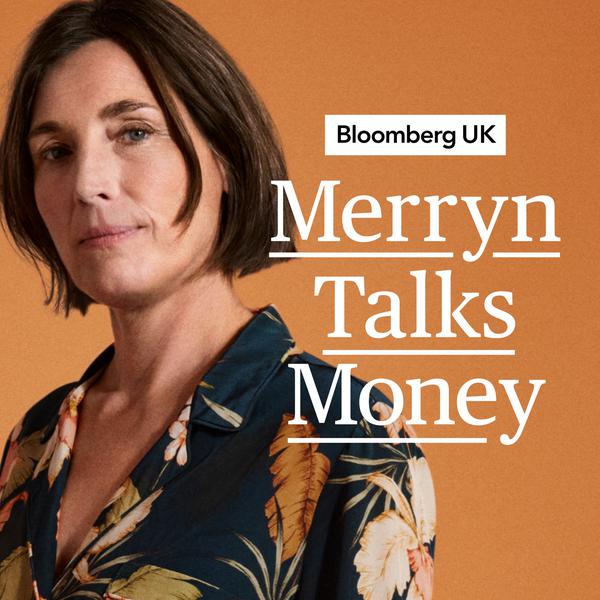
Merryn Talks Money
Bloomberg
Merryn Talks Money with Bloomberg senior columnist Merryn Somerset Webb is your key to understanding how markets work – and how you can make them work for you. Every episode features a relaxed but in-depth conversation with a fund manager, a strategist, a Bloomberg expert or just someone Merryn finds particularly interesting in any given week. Listen in for the kind of insights and explanations everyone can use to help them make better saving and investing choices.
- 23 minutes 5 secondsSilver’s Surge, Oil’s Bounce, London Flat Prices and the Quiet Gilt Rally
On this week’s market round-up edition of Merryn Talks Money, Bloomberg senior reporter and author of the award-winning Money Distilled newsletter, John Stepek and Bloomberg Opinion columnist Marcus Ashworth discuss why falling London flat prices but rising costs mean bargains may still be illusory. They also dissect the latest moves in commodities and UK Chancellor Rachel Reeves's cunning plan to quietly reshape the gilt market.
See omnystudio.com/listener for privacy information.
16 January 2026, 5:00 am - 27 minutes 38 secondsYou’ve Spent Your Life Saving. Now Learn How to Spend
Most people spend their working lives earning and saving toward a financial goal. This goal can be a number or something more tangible like a paid-off mortgage. But when you’ve spent decades feeding the same frugality habit, entering retirement and reversing that addiction can be an unfamiliar challenge. Retirement also has a tendency of throwing up questions of status, belonging—and of course, mortality.
In this week’s personal finance edition of Merryn Talks Money, hosts Merryn Somerset Webb and John Stepek confront a difficult listener question on the topic of retirement spending. How can a person start spending freely when their attitude toward spending has been the opposite most of their life? Chartered financial planner and Director at Flying Colours Advice, George Agan joins this episode to share his insights on what to do.
Resources from George to check out if you want to learn more:
This is a video with an overview on how to build your own model:
https://youtu.be/7Wkr5QtY-G8?si=5ev22MOHQhl5QvgqCourse to consider:
https://meaningfulacademy.com/rp-1/And a link to George's firm:
https://fcadvice.co.uk/See omnystudio.com/listener for privacy information.
14 January 2026, 11:00 am - 41 minutes 17 secondsVenezuela’s Oil Reserves Versus Reality: Why Output Can’t Jump Overnight
Societe Generale Head of FIC and Commodity Research Michael Haigh joins Merryn Somerset Webb to break down why the US attack on Venezuela and any subsequent attempt to reboot its energy industry is unlikely to change oil prices near-term. He explains why markets are more influenced right now by OPEC’s supply decisions and China’s rapid strategic petroleum reserve buying—and warns prices could fall if China slows purchases. The conversation then turns to a bullish outlook for copper, driven by electrification, artificial intelligence and data centers, as well as defense spending. Plus, Haigh argues gold and silver still have upside—gold on sustained central-bank demand and silver on persistent deficits—while noting key risks if central-bank buying or global uncertainty meaningfully eases.
See omnystudio.com/listener for privacy information.
12 January 2026, 5:00 am - 21 minutes 1 secondFTSE 100 Hits 10,000 as Defence, Commodities and Gold Lead Market Themes
On this week’s markets roundup, hosts Merryn Somerset Webb and John Stepek discuss the strong performance of the FTSE 100, which has finally closed above 10,000. While it may not remain at that level, it marks a bright start. They also explore the key investment themes of 2025 and explain why equities in these areas are likely to remain elevated throughout 2026, driven by geopolitical tensions—particularly in defence, commodities, and precious metals.
See omnystudio.com/listener for privacy information.
9 January 2026, 11:45 am - 24 minutes 3 secondsYour 2026 Money Reset: Practical Steps to Be Better Off by Year-End
Merryn Somerset Webb and senior reporter John Stepek kick off the year by arguing that, amid political pessimism, personal finances remain one area where individuals can still take control. They run through six practical financial resolutions for 2026, from budgeting time for regular money check-ups and avoiding costly mortgage and insurance traps to improving tax efficiency, understanding pensions, and making sure wills and paperwork are in order. The message is clear: small, proactive steps now can make a meaningful difference to long-term financial security.
See omnystudio.com/listener for privacy information.
7 January 2026, 5:00 am - 40 minutes 31 secondsFrom Q-Day to Mars: The Market Shocks That Could Define the Year Ahead
Merryn Somerset Webb is joined by Saxo Bank’s Chief Macro Strategist John Hardy to unpack Saxo’s annual list of “outrageous predictions” — unlikely events that could still shake markets if they hit. They explore a potential “Q-Day” quantum-computing breakthrough that could undermine encryption and trigger a crypto-led confidence crisis, alongside space-economy scenarios like a SpaceX IPO and even lunar real estate mania. The conversation also turns to the ripple effects of widespread GLP-1 weight-loss drugs — including cheaper pill forms and the possibility they expand beyond humans into the pet world.
See omnystudio.com/listener for privacy information.
5 January 2026, 5:00 am - 43 minutes 41 secondsJohn Law: The Gambler Who Invented Modern Money (Part 2)
Here it is! The second in our special two-part series, where John Stepek and Merryn Somerset Webb tell the extraordinary story of John Law: a fugitive Scots gambler who became the most powerful financier in France and helped invent the modern monetary system.
From murder and exile to paper money, banking revolutions and spectacular collapse, Law’s life reveals why today’s financial system works the way it does—and why it sometimes blows up. It’s history, scandal and monetary theory rolled into one irresistible tale.
Correction: In an earlier version of this podcast, John suggested that the term "bougie," meaning a wax candle, gave rise to the modern-day slang term "bougie," meaning "fancy." In fact, "bougie" is derived from the term "bourgeoisie". Our sincere apologies for this error.We used a range of sources for this podcast but two key books to read if you'd like to find out more are:
John Law: A Scottish Adventurer of the Eighteenth Century (2018), by James Buchan
John Law: Economic Theorist and Policy-Maker (1997), by Antoin MurphySee omnystudio.com/listener for privacy information.
2 January 2026, 5:00 am - 33 minutes 13 secondsJohn Law: The Gambler Who Invented Modern Money (Part 1)
In this special two-part series, John Stepek and Merryn Somerset Webb tell the extraordinary story of John Law: a fugitive Scots gambler who became the most powerful financier in France and helped invent the modern monetary system. From murder and exile to paper money, banking revolutions and spectacular collapse, Law’s life reveals why today’s financial system works the way it does—and why it sometimes blows up. It’s history, scandal and monetary theory rolled into one irresistible tale.
We used a range of sources for this podcast but two key books to read if you'd like to find out more are:
John Law: A Scottish Adventurer of the Eighteenth Century (2018), by James Buchan
John Law: Economic Theorist and Policy-Maker (1997), by Antoin MurphySee omnystudio.com/listener for privacy information.
22 December 2025, 9:25 am - 17 minutes 12 secondsGold’s Shine, Small Cap Hopes and What to Watch in 2026
On this week's markets roundup, hosts Merryn Somerset Webb and John Stepek look back at an unexpectedly strong year for global markets, with equities, gold and even silver delivering standout performances. They dig into whether 2025’s surprising rotations—from US mega-caps to value, energy and long-ignored small caps—could carry into next year, and what persistent inflation, UK rate cuts and shifting attitudes toward net zero might mean for investors.
See omnystudio.com/listener for privacy information.
19 December 2025, 5:00 am - 25 minutes 7 secondsHow Much Should You Really Give Your Kids? Inheritance, Incentives and Money Mindsets with Hamish Leng
In this episode of Merryn Talks Your Money, Merryn Somerset Webb sits down with veteran financial planner Hamish Leng to unravel one of the trickiest issues in personal finance: how to pass wealth to your children without undermining their drive, confidence, or future independence. From the psychology of raising financially capable kids to the smartest, tax-efficient ways to gift money, Hamish shares four decades of insight into what actually works for families.
See omnystudio.com/listener for privacy information.
17 December 2025, 10:49 am - 49 minutes 43 secondsPermira's Kurt Björklund: Where Are We in the Private Equity Cycle?
Merryn Somerset Webb speaks with Kurt Björklund, Executive Chairman of Permira, about where we are in the private equity cycle after several tough years and why he still believes in the asset class for the right kind of investor.
They discuss what “real” private equity is, how governance and long-term value creation—not just leverage—drive returns, and the impact of higher rates, tech and AI on future opportunities. Kurt also explains who private equity is (and isn’t) suitable for, and what the shift from public to private markets means for savers, pension funds and wealthy individuals.
Not yet a Bloomberg subscriber? Subscribe now!
www.bloomberg.com/podcastofferSee omnystudio.com/listener for privacy information.
15 December 2025, 5:00 am - More Episodes? Get the App