- Friendships, Learning, Improving (Ryan Singel)
Subscribe on: Apple Podcasts | Spotify | Android | YouTube
Ryan Singel is a journalist and entrepreneur based in San Francisco. As a journalist he has covered tech policy, privacy, social networking, startups, and many other technology topics. He co-founded the award-winning Threat Level blog at Wired. Ryan is the founder of Contextly, a company that makes editorial tools for news sites and other publications.
Transcript:
ES: This is 5 Minute Mentor, a podcast where you’ll get advice from prominent engineers, authors, artists, and more, in 5 minutes or less.
ES: Today’s mentor is Ryan Singel, a journalist and entrepreneur based in San Francisco. As a journalist he has covered tech policy, privacy, social networking, startups, and many other technology topics. He co-founded the award-winning Threat Level blog at Wired. Ryan is the founder of Contextly, a company that makes editorial tools for news sites and other publications.
ES: Ryan’s advice:
RS:
Hopefully this will be helpful for you. Number one: when you work at a company, be more invested in your coworkers and people who are like you, even if they don’t work for your company, than you do the company you work for. Companies don’t last very long. Friendships, mentors, colleagues in other companies last much longer. That’s the people that are eventually going to help you get a job someplace else. Also the people maybe that you want to hire when you start your own company. Be loyal to the people around you even if they aren’t in your company, than the company that you work for.
Two: as you look for jobs, find jobs that force you to learn new things, right, rather than jobs that will pay you the most. Jobs that pay the most get boring. You get stuck in a rut you don’t know where to go. Jobs that force you to try something new, whether that’s learning podcasting or, economic forecasting or, how to use spreadsheets or, how to do you know complicated tax things. Whatever they are, you want to be in a job that challenges you and forces you to learn something new and that keeps you, also able to jump to other jobs much more easily. Related to that, when you’re at a company, you often have sort of repetitive, boring sort of things you have to do. The best thing you can do to eventually either start your own company or to get ahead is to look for things that should be easier or better, but aren’t, and try and figure out how can you make them better. How can you make them easier? What are the ways that you can improve a process in the organization and that in itself is going to be interesting and so it keeps your job interesting. It also gets you the chance to learn something new, right. So trying to figure out why it’s so complicated for, you know it can be as simple as like why is it so complicated for us to file our expenses and figure out a way that like is faster, easier and better to do it. You may end up like, finding a solution that the company should use and saves them 2 million dollars a year, or something. But at least you’ve learned something. And you’re going to learn why is it this slow. Why is it this way? And then also those kinds of things like learning, look at something that’s broken and say, I can fix that and then eventually you’ll find out you’ve just started your own company. And then I guess finally I would say that every industry is interesting in its own way. When I was a journalist, starting to think that they were sort of boring beats or subjects to cover. In particular early on in my career I was offered a job covering telecommunications, which I thought in the early 2000s was really boring. And these days I now work at Stanford Law School working on telecommunication law, specifically net neutrality. The deeper you get into any industry or any sort of thing like construction or, public safety or, gardening, or, you know, automotive emissions. Whatever it is, it’s actually really interesting. There’s politics in there, there’s technical intricacies, there’s all sorts of fun stuff in there, and there’s drama, and so, you know, figure out how to, as you sort of look for things, realize that they can be very interesting, and embrace that. Those things that are sort of challenging and weird and, fun and interesting even about what seems like the most dry subject.
 Ryan Singel
3 May 2021, 5:16 am
Ryan Singel
3 May 2021, 5:16 am - To Learn (Rebecca Parsons)
Subscribe on: Apple Podcasts | Spotify | Android | YouTube
Rebecca Parsons, a technologist with over 30 years of experience. Throughout her career, she’s made significant contributions to software design patterns, system architectures, distributed systems, and best practices in software. Rebecca is currently the CTO of ThoughtWorks. Rebecca Parsons is one of the authors of “Building Evolutionary Architectures”.

Transcript:
ES: This is 5 Minute Mentor, a podcast where you’ll get advice from prominent engineers, authors, artists, and more, in 5 minutes or less.
ES: Today’s mentor is Rebecca Parsons, a technologist with over 30 years of experience. Throughout her career, she’s made significant contributions to software design patterns, system architectures, distributed systems, and best practices in software. Rebecca is currently the CTO of ThoughtWorks.
ES: This is Rebecca’s advice:
RP: Never be afraid to learn something new. So many people when they think of learning, they think of school and the teacher at the front of the desk, and tests and all of that. But learning is so much more than that and if you approach your career and your life as: what’s something new that I can learn today? What are questions that I don’t know the answers to that I can go off and answer or figure out how to answer? It keeps the world fresh. It keeps your career fresh and I think it also helps us address some of the problems that the world has. So just, don’t be afraid of learning just because you don’t know something doesn’t mean you can’t do it. Just go ahead and try anyway.
ES: Subscribe to the podcast on Apple Podcasts, Spotify or wherever you get your podcasts.
 Rebecca Parsons
10 November 2020, 5:57 am
Rebecca Parsons
10 November 2020, 5:57 am - Don’t Limit Yourself (Chris Kluwe)
Subscribe on: Apple Podcasts | Spotify | Android | YouTube
Chris Kluwe is a former NFL player for the Minnesota Vikings. In his eight seasons with the Vikings, Chris set eight individual team records. During this period, he was also an outspoken advocate for same sex marriage and gay rights. Chris is the author of Otaku, a novel that combines his love for science fiction, games, and equal rights.
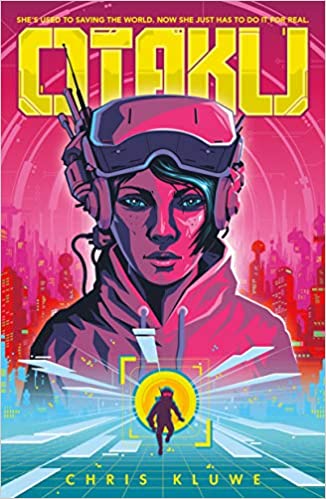 Otaku, a novel by Chris Kluwe
Transcript:
ES: This is 5 Minute Mentor, a podcast where you’ll get advice from prominent engineers, authors, artists, and more, in 5 minutes or less.
ES: Today’s mentor is Chris Kluwe, author and former NFL player for the Minnesota Vikings. In his eight seasons with the Vikings, Chris set eight individual team records. During this period, he was also an outspoken advocate for same sex marriage and gay rights. Chris is the author of Otaku, a novel that combines his love for science fiction, games, and equal rights.
ES: This is Chris Kluwe’s advice:
CK: Hi everyone, my name is Chris Kluwe. Now, I’ve never really given a 5 minute mentoring lesson before so I’m gonna do my best on this. First a little bit about me, I was a professional football player in the NFL for the Minnesota Vikings for eight years. I have written a science fiction book called Otaku that was published by Tor. I competed in a top three in the United States, World of Warcraft raiding Guild, and I have many other diverse hobbies and interests. I guess what the subject of my discussion is going to be is never limit yourself to one thing.
As human beings there’s so much that we can do with our lives. And, growing up, I lived in the world where it was the jock geek dichotomy, that, if you played sports, you couldn’t have nerdy interests. Or, if you had nerdy interests then you couldn’t be good at sports.
And one of the big things that I’ve always wanted to do with my life is show people that you don’t have to be caged in to just this one box. You can be whoever you want to be. Go out and try new things. Don’t be afraid to explore different possibilities because the only thing that’s holding you back is yourself.
For example, when I was playing football in high school my coaches had to tell me to stop reading science fiction books on the sidelines, because during the middle of a game I would be reading a book because I wasn’t currently involved in the plays. And so, they told me, hey, you can’t do that. Looking back, you probably shouldn’t read science fiction books on the sideline of a football game you’re currently participating in, but it’s OK to read them on the bus to and from the game, in the locker room. And, when the other guys on the team asked me about reading science fiction books or having nerdy interests, I would tell them, hey, we’re all geeks about something. For me, it happens to be science fiction fantasy. It happens to be video games and books. You know, for you, it might be hunting, it might be fishing, it might be restoring cars. There’s nothing wrong with geeking out about something. There’s nothing wrong with having an interest or hobby that really makes you excited to do it. And we shouldn’t judge each other in those interests, and those hobbies. That’s what makes us human beings, is that wonderful breadth of diversity.
So, as a young professional, you probably are in a job, and you’re probably told by your bosses or others that, you have to commit fully to this one thing. And that’s going to be who you are. And I’m here to tell you no, that is not who you are. Your job does not define you. There are a lot of things that go into defining you as a human being. And you should never be afraid to pursue those things.
So I guess the overall thrust of what I’m trying to say is, don’t limit yourself, and the job you have now may not be the job you have in the future, and the things that you’re interested in now may not be the things you’re interested in the future. So, try to always hold on to that sense of wonder, that sense of curiosity. And don’t be afraid to get out there and try new things.
I’m Chris Kluwe and you’re listening to the 5 Minute Mentor Podcast.
ES: Check out Chris Kluwe’s latest science fiction novel Otaku, which is out now.
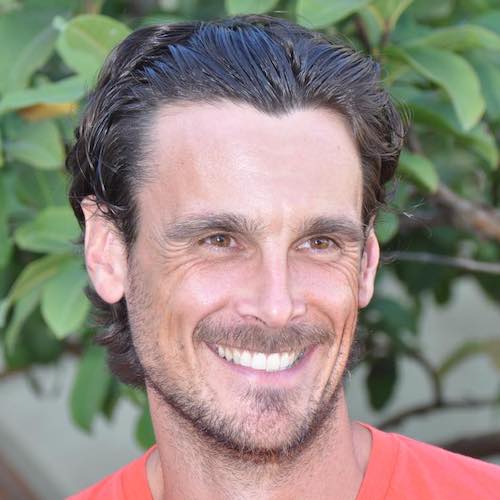 Chris Kluwe
26 October 2020, 6:31 am
Chris Kluwe
26 October 2020, 6:31 am - Take Risks (Kara Swisher)
Subscribe on: Apple Podcasts | Spotify | Android | YouTube
Kara Swisher is a technology journalist and host of Sway, a podcast about power by The New York Times. Kara has been covering technology since the 1990s. She is one of the first reporters on the internet beat in Silicon Valley. She was the co-producer of the technology conference “D: All Things Digital”, where she interviewed major tech figures, including Steve Jobs and Bill Gates. Kara has hosted hundreds of newsmaking interviews with other prominent figures such as Elon Musk, Mark Zuckerberg, Stacey Abrams, Kim Kardashian, and President Barack Obama.
Transcript:
ES: This is 5 Minute Mentor, a podcast where you’ll get advice from prominent engineers, authors, artists, and more, in 5 minutes or less.
ES: Today’s mentor is Kara Swisher, technology journalist and host of Sway, a podcast about power by The New York Times. Kara has been covering technology since the 1990s. She is one of the first reporters on the internet beat in Silicon Valley. She was the co-producer of the technology conference “D: All Things Digital”, where she interviewed major tech figures, including Steve Jobs and Bill Gates. Kara has hosted hundreds of newsmaking interviews with other prominent figures such as Elon Musk, Mark Zuckerberg, Stacey Abrams, Kim Kardashian, and President Barack Obama.
ES: This is Kara’s advice:
KS: I think it’s really important to not be frightened. It’s so easy right now in the pandemic to be frightened about your future, and things aren’t going to turn out. There’s always a chance, a single person can make a great deal of change, and you yourself as a younger person, in an early career can take a lot more risks than you do.
I find too many young people are risk averse or they’re worried about what comes next. They’ve spent their whole life on the wheel, the gerbil wheel of achievement. And they don’t realize they can step off at anytime and try new things. It might risk failure, and I think that’s alright, and I don’t think we teach our kids enough about that. The idea of risking things and trying new ideas and trusting your instincts.
I think we keep them often too much on the same pathway. And I think there’s an expression, I think it was “paths are made by walking”, which means just walk in the direction you want to walk and you will find your path. I think that’s the most important thing, is giving people permission to say no to things and I don’t think enough people say no. I say no all the time. It’s really important to be able to not be quite as inflexible in your career, especially at the earliest part.
 Kara Swisher
12 October 2020, 1:19 am
Kara Swisher
12 October 2020, 1:19 am - Life (Steve Jobs) – “Steve Jobs: Secrets of Life”
Subscribe on: Apple Podcasts | Spotify | Android | YouTube
Steve Jobs was CEO and co-founder of Apple Inc. He was a pioneer of personal computers, entrepreneur, technologist, leader, and designer. He led significant innovations in various areas: music, technology, film, hardware. Steve had a notable impact in changing how we use technology.
This excerpt originally appeared in “Steve Jobs: Secrets of Life”, a film produced by the Silicon Valley Historical Association. Used with permission from the Silicon Valley Historical Association.
Transcript:
ES: This is 5 Minute Mentor, a podcast where you’ll get advice from prominent authors, researchers, engineers, artists, and more, in 5 minutes or less.
ES: Today’s mentor is Steve Jobs. Steve Jobs was CEO and co-founder of Apple Inc. He was a pioneer of personal computers, entrepreneur, technologist, leader, and designer. He led significant innovations in various areas like: music, technology, film, hardware. Steve had a notable impact in changing how we use technology.
ES: This is the last episode of Season 1 of the 5 Minute Mentor podcast. This episode means a lot to me because it’s a piece of advice from Steve Jobs that I occasionally listen to. I heard it recently, and I just really wanted to share it with all of you. I hope you like it as much as I do.
ES: This is Steve’s advice:
SJ: So, the thing I would say is: When you grow up, you tend to get told that the world is the way it is and your life is just to live your life inside the world, try not to bash in the walls too much, try to have a nice family life, have fun, save a little money. But life, that’s a very limited life. Life can be much broader once you discover one simple fact — and that is everything around you that you call life was made up by people that were no smarter than you. And you can change it. You can influence it. You can build your own things that other people can use. And the minute that you understand that you can poke life and actually something will, you know, if you push in something will pop out the other side — you can change it, you can mold it. That’s maybe the most important thing — is to shake off this erroneous notion that life is there and you’re just going to live in it — versus embrace it, change it, improve it, make your mark upon it. I think that’s very important. And however you learn that, once you learn it, you’ll want to change life and make it better because it’s kind of messed up in a lot of ways. Once you learn that, you’ll never be the same again.
 Steve Jobs
Resources:
7 May 2020, 1:43 am - Respect, Kindness, and Friendship (Don Clark)
Subscribe on: Apple Podcasts | Spotify | Android | YouTube
Don Clark is a Musician and Journalist. He’s been writing about technology since 1980. Don is currently a freelance journalist for The New York Times. Previously, he worked at The Wall Street Journal and the San Francisco Chronicle. Don also plays music professionally in several bands such as the Irish band Blind Duck and the rock band Off the Record.
Transcript:
ES: This is 5 minute mentor, a podcast where you’ll get advice from prominent authors, researchers, engineers, artists, and more, in 5 minutes or less.
ES: Today’s mentor is Don Clark, technology journalist and musician. Don has been writing about technology since 1980. He’s currently a freelance journalist for The New York Times. Previously worked at The Wall Street Journal and the San Francisco Chronicle. Don also plays music professionally in several bands such as the Irish band Blind Duck and the rock band Off the Record.
DC: I’ve written about technology for 40 years. And I’ve gotten to interview some of the most amazing people like Steve Jobs, Gill Gates, Larry Ellison, Andy Grove. I’ve also seen many young people come up in the profession and I watched how they progressed. All the while I’ve been a musician, mainly for fun, but in a pretty serious way. I play Celtic music with my wife, and we have a theater company I write music for, and we have a rock band.
DC: If I had to give a piece of advice in both areas, in journalism, remember that the words you end up writing are not the only thing that matters. How you ended up writing them, is just as important. In other words, don’t take any ethical shortcuts, and treat anyone you encounter along the way with respect and kindness. Don’t think of your dealings with information sources as a transaction, but the beginning of a relationship that could bear different kinds of fruit long after you first meet them. You want them all to remember you positively even if you wrote something that they wish you hadn’t. In technology in particular, it’s important to understand and take an interest in what these people are creating. Even if that’s not the point of the article you’re writing at the moment. It’s all about karma. If you’re a jerk to people, there will come a time in your career where that will come back to bite you. Like some important person or company will choose to give an important story to someone else.
DC: In music, I recall something that was said to me and to my friends by a great Irish accordion player by the name of Martin McHugh, who has lived in Minnesota for many years. He said, “you don’t pick people in the band for the gig. Pick them for the ride home”. In other words, the best music is always about friendship. Play the kind of music that attracts the kind of people you want to be with, as well as play with. Give those other players an equal chance to shine. And if you’re lucky, you’ll get some harmony along the way. To me there’s no greater kick than collaborating with a bunch of people who all listen to each other, respect each other, and also have a good time just hanging out with each other. If you do all this, the audience can’t help but enjoy the experience. As Marty knew, the ride home can be wonderful, even if the gig doesn’t go all that well.
 Don Clark, Technology Journalist and Musician22 April 2020, 2:08 am
 - The Power Of The Creative Mind (Celia Stahr)
Subscribe on: Apple Podcasts | Spotify | Android | YouTube
Celia Stahr is an author, art historian and professor at the University of San Francisco. Celia specializes in modern American and contemporary art with an emphasis on feminist art and gender studies. She’s the author of the book Frida in America, a book that focuses on Frida Kahlo’s personal and creative awakening while living in San Francisco, Detroit, and New York during the Great Depression. For more information about the book go to fridakahlojourney.com.
Transcript:
ES: This is 5 minute mentor, a podcast where you’ll get advice from prominent authors, researchers, engineers, artists, and more, in 5 minutes or less.
ES: Today’s mentor is Celia Stahr, author, art historian and professor at the University of San Francisco. Celia specializes in modern American and contemporary art with an emphasis on feminist art and gender studies. She’s the author of the book “Frida in America”, a book that focuses on Frida Kahlo’s personal and creative awakening while living in San Francisco, Detroit, and New York during the Great Depression. For more information about the book go to fridakahlojourney.com.
CS: My advice is to not underestimate the power of the creative mind. You know, don’t ignore your creativity, or your ability to imagine something that hasn’t come into a physical form yet. Albert Einstein said in 1929, quote: Imagination is more important than knowledge. Knowledge is limited. Imagination encircles the world. End quote.
CS: So I say: create. You know, write a song. Make a video. Choreograph a dance. Write a story. You could write about your favorite author, or artist. You could write about yourself. You could make a quilt. You could create a garden. You could paint a design on your bedroom wall. You know, the possibilities are endless. Rather than focusing on what you can’t create, focus on what you can create.
CS: It might seem insignificant, impossible, or difficult. But something magical begins to happen, when we put our focus on an idea, a project, a feeling, an image. It grows. It morphs. And it develops into something you might not even have seen coming.
CS: This is what happened to me when I had the idea for my book: Frida in America, about the Mexican artist Frida Kahlo. A conference paper I presented on this artist’s creative explosion while living in the United States, made me realize, there wasn’t much published information on this significant period of Frida’s creative awakeing. And I began to think, that I might need to write the book I wanted to read. I actually resisted the idea at first. Too much work, But this idea really grew inside of me. I’m a visual person, so strictly speaking the images grew within my mind’s eye. I saw Frida on a train, crossing the border from Mexico into California, and then getting off in San Francisco. I saw her painting. Saw her witnessing the extreme poverty, in contrast to the extreme wealth while in New York. Saw her melting into a ball of pain while in Detroit. But then rising like a phoenix with extraordinary creative powers afterwards. I saw her facial expressions. Her unique walk. Her hearty laugh. Her mischievous twinkling eyes. Her hand moving across the canvas. I saw images as if they were a trailer for a film.
CS: The challenge for me was how to take these images and turn them into a written journey. Could I create this journey allowing the reader to see it within the mind’s eye? Could I create the feeling that the reader was on this journey with Frida? Could I foreground Frida’s creative development, and discuss her art in a style that allowed readers to step inside Frida’s paintings? Almost as if surrounded by them in a room. I wanted this book to appeal to Frida lovers and art lovers. But I also wanted to reach readers who might not have a background in art or art history. Because I think art is important.
CS: When I was first beginning to study art history. A friend asked me: Why is art important? And I didn’t really have a clearly formed answer. But the question never left me. So, why is it important? Well, one: Art opens the mind and heart. Two: Art is primal. Petroglyphs and cave paintings speak to the importance for humans to express themselves through a visual language. And it’s cross-cultural. And three: Art helps us to understand the world. You know, neural scientists have studied neural activity through brain scans while people are creating art. Singing, even rapping.
CS: Dr. Limb at Johns Hopkins found that creative thinking engages the entire brain. Even looking at art engages the brain in similar ways to creating it. And it’s good for the brain. It maintains its neuroplasticity. The more active and engaged we are with creative thinking the better we maintain the plasticity of our brains. Which means our brains retain mental agility. Even into old age.
CS: So, you know, I agree with Einstein in that imagination is more important than knowledge. Because knowledge allows us to learn something. But imagination allows us to create something new with that knowledge, or even something powerful. Like, for example, Van Gogh’s Starry Night. The artist had carefully observed the early morning and night sky. He had an intimate knowledge of it. But the way he imagined it on canvas was completely new. And it forever changed how people viewed a darkened sky. It’s alive, with pulsating, swirling light.
CS: Frida Kahlo achieved a similar feat with her painting: Henry Ford Hospital. She took a common experience for women, a miscarriage, And imagined it as an other worldy, solitary, bloody, industrialized and painful experience. In this act of creation, she drew upon a highly personal incident but transformed it into an image that would go on to speak to women across cultures, who have expressed having had a visceral response to the painting. Both Van Gogh’s and Kahlo’s art affect viewers on a deep emotional level. These intense responses speak to the reciprocal relationship between artists and viewer You don’t have to create a masterpiece to engage a creative mind. You can also fully experience one.
CS: So in addition to creating something, go look at art. Go online. Go find a book. Go to the streets. Go to a museum, go to a gallery. There are numerous possibilities. As Einstein put it: Imagination encircles the world. That’s it.
 Celia Stahr, author of “Frida in America”
 16 April 2020, 12:24 am
 - Identify Opportunities (Tal Rabin)
Subscribe on: Apple Podcasts | Spotify | Android | YouTube
Tal Rabin is Head of Research at the Algorand Foundation. She is a researcher that focuses on cryptography and security. For over 22 years she was the Head of the Cryptographic Research Group at the IBM Thomas J. Watson Research Center.
Transcript:
ES: This is 5 Minute Mentor, a podcast where you’ll get advice from prominent engineers, authors, artists, and more in 5 minutes or less.
ES: Today’s mentor is Tal Rabin, Head of Research at the Algorand Foundation. Tal is a researcher that focuses on cryptography and security. For over 22 years she was the Head of the Cryptographic Research Group at the IBM Thomas J. Watson Research Center.
ES: This is their advice.
TR: People always discuss having mentors and sponsors in the work environment, which are very important things. But that’s not my advice. My advice is the following. I found for myself, that, many times I would identify opportunities. Not through a mentor or sponsor, but myself, that I thought that were relevant for me, and could advance my career. And it would be good if I could get them. But, this was not a self promotion thing that you could do, you really needed somebody to recommend you, or to put you forward. And what I’ve learned, and this is my advice: When you see that, and, if you have, a close colleague that you trust, and you think, can do this on your behalf, you should simply go and ask them. Please put me forward for this promotion. Please nominate me for this opportunity. And so on. So, it’s just very important that you sometimes take the lead yourself. with the aid of others. But try to identify things for yourself and push them forward.
 Tal Rabin, Head of Research at the Algorand Foundation8 April 2020, 9:51 pm
 - Enjoy What You Do (Asya Kamsky)
Subscribe on: Apple Podcasts | Spotify | Android | YouTube
Asya Kamsky started her career in technology in the late 80s. Throughout her career, she’s worked at different companies and held various roles. She’s currently Principal Developer Advocate at MongoDB.
Transcript:
ES: This is 5 Minute Mentor, a podcast where you’ll get advice from prominent engineers, authors, artists, and more in 5 minutes or less.
ES: Today’s mentor is Asya Kamsky. Asya started her career in technology in the late 80s. Throughout her career, she’s worked at different companies and held various roles. She’s currently Principal Developer Advocate at MongoDB.
ES: This is their advice.
AK: Trust your gut, in terms of what job feels right. It doesn’t matter if you’re a phenomenal programmer. If you don’t enjoy doing it day to day, it’s probably not a great long term career for you. Same thing for, you know, you might be good at let’s say, doing presentations, or teaching people things. But if you don’t also enjoy it, you know, I always feel like, the best career is one that’s the closest to the intersection things you’re good at, and things you enjoy, and things that somebody is willing to pay you to do. Right, because we might enjoy some things that we’re very good at, but maybe there’s no market for getting paid, you know, to play games, or goof around somehow. But somewhere between those three axes, and I think that those of us in technology are so superbly lucky because there’s so many companies out there that will need software engineers and technologists, techies in general for the foreseeable future.
AK: So, the key is to find the part of that domain that has that intersection of you know, enjoying your work day to day and getting paid for. That’s kind of the dream, right?
 Asya Kamsky, Principal Developer Advocate at MongoDB1 April 2020, 4:49 pm
 - Stretch Yourself (Bill Barnes)
Subscribe on: Apple Podcasts | Spotify | Android | YouTube
Bill Barnes has been in the tech industry for over 30 years. He also successfully ran the web-based comic Unshelved for 14 years and turned it into a diversified media business. He’s currently Principal Engineering Manager at Microsoft.
Transcript:
ES: This is 5 Minute Mentor, a podcast where you’ll get advice from prominent engineers, authors, artists, and more in 5 minutes or less.
ES: Today’s mentor is Bill Barnes, Principal Engineering Manager at Microsoft.Bill Barnes has been in the tech industry for over 30 years. He also successfully ran the web-based comic Unshelved for 14 years and turned it into a diversified media business.
ES: This is their advice.
BB: The advice I find myself giving the people I mentor the most often these days is to solve the biggest version of the problem possible. And, generally, as people advance in their career, they are able to, conceive of larger and larger problems. Or maybe just, sort of see themselves as solving. So for instance, we work at Microsoft, and at Microsoft our mission is to empower every person and every organization to achieve more. And, like in a perfect world, literally everyone at Microsoft is always trying to achieve that thing.
BB: Now that’s an enormous goal. Literally every person on the planet and every organization is the goal. And it’s really hard on a day-to-day basis to figure out how you could do that. Nonetheless that’s sort of the goal. But if you’re just like starting of out of just college. That’s impossibly large. And in fact, the biggest problem you might be able to solve, is the bug in front of you. And that is fine. So it’s not really about, “I’m overreaching”. But I do find that people tend to put themselves in a box. Like “Oh this is my title,” “I’m a Software Engineer 2”. And so this means I’m able to solve this size problems. And you may, legitimately only be able to solve this size problems. But I love when people stretch themselves, when they push forward.
BB: I’ll give you an example. So, in my previous job, I was working with Microsoft’s team that was developing the bot framework. So this is a framework that helps people write bots. The things that have conversations with you. Which can be silly, but you know, once in a while can actually be useful. And, I talked to a Program Manager who was working on the same product, And he essentially was always trying to, limit himself, to a very narrow definition of the job. And he actually said I just wish I could have a bigger impact, I wish I could do more. And I was just like, why don’t you? Like, what’s the biggest problem you want to solve? Then he kind of sat back. And he said it in a nice sort of big version of the problem he wanted to solve. And I’m like, go do that. He said, And I’m like yeah, but it and it would be your job a lot faster if internally you feel like that’s your problem to solve. The thing I want to acknowledge is, I say this from a very privileged spot. I say this as a distinguished, gray-haired, you know, white guy in software. It’s easy for me to say, I should go around solving the biggest version problem possible. A lot of the people, I think, don’t have permission to do that. Or certainly, they face bigger barriers than I do. So it’s easy for me to say.
BB: Nonetheless, I think it’s a good goal. I mean, in a sense what I’m saying is stretch yourself. But this is just my take on it. Which again, is to solve the biggest version of the problem possible.
 Bill Barnes, Principal Engineering Manager at Microsoft26 March 2020, 6:53 pm
 - Opportunities, with Tracy Stone
Subscribe on: Apple Podcasts | Spotify | Android | YouTube
Tracy Stone has over 15 years of experience in high-tech companies in technical and leadership roles. She’s passionate about inspiring and encouraging girls in science, technology, engineering and math. She’s Global Head of the Tech Women Program at Intuit.
Transcript:
ES: This is 5 Minute Mentor, a podcast where you’ll get advice from prominent engineers, authors, artists, and more in 5 minutes or less.
ES: Today’s mentor is Tracy Stone, Global Head of Tech Women at Intuit.
ES: Tracy has over 15 years of experience in high-tech companies in technical and leadership roles. She’s passionate about inspiring and encouraging girls in science, technology, engineering and math.
ES: This is their advice.
TS: My career advice for technologists is to really embrace those career zig zags. I think a lot of times we try to think about charting out our path, and being very driven, and what’s next and linear and sometimes we could lead us to have our blinders on and not be looking at what might be these new opportunities, new technologies. So with that, be open to all kinds of new opportunities where you might always be learning, and embrace that. Kind of, run toward it, Instead of being afraid of it and, Specially with the way technology is so rapidly evolving. There are so many new opportunities along the way, and if you have that mindset of being open to learning and trying something, putting yourself out there, being uncomfortable, It’ll feel hard in the moment, but when you look back it’ll be very fulfilling. And even if it looks like a zig zag, it’s a wonderful opportunity and specially in tech, it might take you to the next great thing. So really, just embracing those opportunities and being comfortable with that.
 Tracy Stone, Global Head of Tech Women at Intuit29 January 2020, 4:38 am
 - More Episodes? Get the App