Science Facts & Fallacies
Cameron English
Exploring the biotech revolution.
- GLP podcast: Evolutionary mismatch. Is civilization wrecking our health?
 There’s a dangerous mismatch between our biology and the tech-saturated world we inhabit—and it might be killing us. That’s the provocative thesis advanced by a coalition of evolutionary biologists who say it’s time for humans to get back to nature.
The story goes something like this: humans evolved in hunter-gatherer settings, facing acute, intermittent stressors like predator encounters that triggered intense fight-or-flight responses followed by recovery. These environments fostered physiological adaptations suited to natural rhythms, physical activity, and periodic challenges.
In contrast, today’s industrialized, urbanized world—home to over 4.5 billion people, projected to reach 6.5 billion by 2050—imposes a constant stream of low-level stressors, from traffic noise to relentless digital stimulation. Evolutionary anthropologist Colin Shaw of the University of Zurich argues this “mismatch” places a chronic stress load on our bodies, as our nervous systems react to modern pressures “as though all these stressors were lions… you have this very powerful response… but no comedown.”
This mismatch manifests in widespread health declines. Physically, it likely contributes to elevated blood pressure, weakened immune function, rising autoimmune diseases, and plummeting fertility rates, with sperm counts and motility dropping since the 1950s. Mentally, constant stimulation impairs cognitive function and sustains tension.
Shaw and his colleagues speculate that environmental factors like pesticides and microplastics are overlooked drivers of these harms, though they wrongly exaggerate the risks posed by these technologies and, more importantly, the higher living standards they enable—including free time to explore nature.
Follow the latest news and policy debates on sustainable agriculture, biomedicine, and other ‘disruptive’ innovations. Subscribe to our newsletter. SIGN UPHowever, many harmful effects attributed to modern environments are probably amplified by the erosion of traditional social bonds and community structures. The rise of our modern, globalized civilization hasn’t just altered our environment but rapidly weakened intermediate associations—such as family, neighborhood, church, and community groups—that once provided meaning, security, and mutual support.
This complementary thesis suggests that our hardwired need for community remains vital to our well-being, and its increasing absence in contemporary society compounds health declines far beyond environmental factors alone.
Join Dr. Liza Lockwood and Cam English on this episode of Facts and Fallacies as they take a closer look at the risks and benefits of industrialized society:
Dr. Liza Lockwood is a medical toxicologist and the medical affairs lead at Bayer Crop Science. Follow her on X @DrLizaMD
Cameron J. English is the director of bio-sciences at the American Council on Science and Health. Follow him on X @camjenglish
19 December 2025, 5:01 am - GLP podcast: Ketamine—miracle depression treatment, or recreational nightmare?
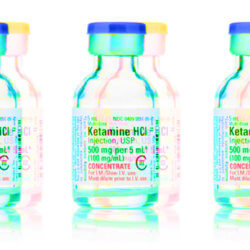 Widely used as a battlefield anesthetic in the later stages of the Vietnam War, ketamine has emerged as a key player in the unfolding drama over psychedelic drugs as last-ditch treatments for severe depression. A tenacious coalition of researchers and patient advocates has defended ketamine’s anti-depressant effects for many years, and their efforts finally began to pay off with FDA approval of esketamine (Spravato) nasal spray in 2019 for treatment-resistant depression (TRD). Off-label use of the drug accelerated during the COVID pandemic as distraught Americans, confined to their homes and denied access to normal life, began experiencing anxiety and depression at alarming rates; some 41 percent of adults reported experiencing high levels of psychological distress in the wake of COVID-19.
While preliminary studies suggest ketamine could reduce—or perhaps even eliminate—depressive symptoms in some patients, critics emphasize its significant risks. As a powerful anesthetic with a history of recreational abuse, ketamine carries high addiction potential, especially for those with substance use histories. Side effects include dissociation, elevated blood pressure and potential long-term issues like bladder damage.
Its benefits may be short-lived, necessitating repeated infusions of IV ketamine therapy, and long-term safety data remains limited, raising concerns about unknown effects from prolonged use. While it reduces suicidal thoughts acutely, evidence for sustained protection is unclear. Accessibility is another hurdle: treatments are costly, require clinic supervision and are not universally licensed for depression.
Proponents rebuff these criticisms, noting that traditional medications can also have serious side effects and often take weeks or even months to relieve depression, if they work at all. If ketamine can help even a relatively small group of people, including those at greatest risk for suicide, then why not allow them to use it? Some patients report life-transforming outcomes, including reduced anxiety and PTSD symptoms after just a few sessions. For individuals unresponsive to standard therapies, ketamine could offer relief where few other treatment options exist, proponents say.
Follow the latest news and policy debates on sustainable agriculture, biomedicine, and other ‘disruptive’ innovations. Subscribe to our newsletter. SIGN UPThe controversy underscores the tenuous balance between innovation and caution. Advocates push for expanded research and access, viewing ketamine as a breakthrough for TRD, while skeptics call for rigorous studies on risks and ethical guidelines to prevent misuse. As of today, ongoing trials aim to clarify its role, but the debate persists on whether benefits outweigh hazards for vulnerable populations.
Join Dr. Liza Lockwood and Cam English on this episode of Facts and Fallacies as they take a closer look at ketamine’s promising benefits and alarming risks:
Dr. Liza Lockwood is a medical toxicologist and the medical affairs lead at Bayer Crop Science. Follow her on X @DrLizaMD
Cameron J. English is the director of bio-sciences at the American Council on Science and Health. Follow him on X @camjenglish
11 December 2025, 7:00 am - GLP podcast: Dr. Strangelove come to life. The anti-fluoride conspiracy, explained
 For 70 years, a persistent minority of academics and activists has claimed that fluoridated drinking water poses a serious but overlooked risk to public health. This hypothesis, almost universally rejected by the science establishment, was treated like a bad joke as far back as the 1965 film Dr. Strangelove, which pilloried opposition to fluoridated water as an anti-communist conspiracy theory.
But fluoride phobia was suddenly mainstreamed after the Journal of the American Medical Association (JAMA) amplified concerns about fluoridated drinking water, publishing a federally funded study in January claiming that “Accumulating evidence suggests that fluoride exposure may affect brain development.” The concern intensified after health and human services secretary RFK, Jr. announced plans in April to tell the Centers for Disease Control and Prevention to stop recommending fluoridation in communities nationwide. CDC has yet to update its guidelines on water fluoridation, and just-published research has confirmed that exposure to trace amounts of fluoride in drinking poses no risk of neurological damage.
Nevertheless, two states have already removed the chemical from their municipal water supplies, and the broader policy debate over fluoridated water continues despite clear evidence exonerating it as a beneficial public health intervention. Skepticism today typically correlates strongly with political identity but spans the ideological spectrum, with left-wing anti-chemical activists and MAHA conservatives finding common cause on this and other alternative health issues.
The question worth exploring is: why are so many people from opposite ends of the political spectrum, who disagree about almost everything, willing to lock arms on these alternative health causes? More importantly, what can scientists do to neutralize this campaign before it gains further traction and causes more harm to public health?
Join Dr. Liza Lockwood and Cam English on this episode of Facts and Fallacies as they take a closer look at the anti-fluoride crusade:
Dr. Liza Lockwood is a medical toxicologist and the medical affairs lead at Bayer Crop Science. Follow her on X @DrLizaMD
Cameron J. English is the director of bio-sciences at the American Council on Science and Health. Follow him on X @camjenglish
5 December 2025, 5:01 am - GLP podcast: Cookies addictive like heroin? Toxicologist dismantles ‘food addiction’
 Enjoying delicious food is a fundamental part of the human experience. Few of us would deny the enjoyment we get from that first bite of pecan pie after Thanksgiving dinner, or the aroma of a perfectly cooked steak coming off the grill. Eating is undeniably pleasurable, in other words, and we certainly do find some choices more appealing than others. This preference is nature’s way of directing us toward safe, nutritious foods and away from toxins that can harm us. In recent decades, however, some scientists have warped this basic evolutionary fact into a convoluted theory of “food addiction,” the belief that people can become dependent on specific foods the same way they do with deadly drugs like heroin.
On the surface, food addiction makes sense. America remains in the throes of an obesity crisis, and heart disease—a condition heavily influenced by poor dietary choices—still kills more Americans than any other cause. Against that backdrop, the addictive nature of our favorite foods seems to explain our ongoing willingness to overindulge despite the often-fatal consequences.
But the food addiction narrative begins to unravel the more experts scrutinize it, raising questions proponents of the hypothesis don’t have good answers for. For example, only a minority of obese people fit the definition for food addiction while a larger share of patients diagnosed with anorexia do. This paradox badly undermines food addiction and goes to a broader point: the diagnostic criteria are not distinct from existing disorders. Indeed, large-scale studies show that food addiction symptoms almost perfectly overlap with binge-eating disorder and normal overeating driven by stress or restriction.
Once those factors are controlled for, an independent “food addiction” syndrome disappears. “Collectively, the present findings support the view that [food addiction] reflects a cluster of preexisting psychological constructs—such as craving, guilt, and disordered eating attitudes—rather than a clearly delineated disorder,” the authors of a July 2025 review concluded.
Follow the latest news and policy debates on sustainable agriculture, biomedicine, and other ‘disruptive’ innovations. Subscribe to our newsletter. SIGN UPPerhaps more importantly, no unique addictive agent has been identified. Decades of searching for a “food drug” (sugar, fat, palatability) have failed. While some mental health experts insist there is an “emerging consensus” about the validity of food addiction, they can’t seem to settle on exactly what quality makes a certain dietary choice addictive. This seriously undercuts any attempt to analogize food addiction to a well-established substance use disorder like alcoholism.
In short, “food addiction” is a metaphor stretched into a diagnosis. It pathologizes common human struggles and distracts from evidence-based drivers of overeating: sleep deprivation, emotional distress, and the modern food environment’s relentless cue exposure. The science has moved on; the label should too.
Join Dr. Liza Lockwood and Cam English on this episode of Facts and Fallacies as they take a closer look at “food addiction.”
Dr. Liza Lockwood is a medical toxicologist and the medical affairs lead at Bayer Crop Science. Follow her on X @DrLizaMD
Cameron J. English is the director of bio-sciences at the American Council on Science and Health. Follow him on X @camjenglish
20 November 2025, 6:02 am - More Episodes? Get the App