- 32 minutes 25 seconds“Is it a disgrace to be born a Chinese?” (Chinese Immigration, Part 3)
 The Tape Family, The Morning Call (San Francisco, CA), November 23, 1892.
(Library of Congress)“You have expended a lot of the Public money foolishly, all because of a one poor little Child. Her playmates is all Caucasians, ever since she could toddle around. If she is good enough to play with them! Then is she not good enough to be in the same room and studie with them? You had better come and see for yourselves. See if the Tape’s is not same as other Caucasians, except in features. It seems no matter how a Chinese may live and dress so long as you know they Chinese. Then they are hated as one. There is not any right or justice for them.”
–Mary TapeAmong the many young girls who arrived in San Francisco in 1868, was one 11-year-old from Shanghai. After five months in Chinatown, she was taken in by Ladies’ Protection and Relief Society on Franklin Street, where she was given the name Mary.
The following year, Chew Diep arrived from Taishan. In 1875, he met Mary while he delivered milk for the Sterling family. They married on November 16, and before long, Chew Diep changed his name to Joe Tape. The Tapes’ daughter Mamie was born the following summer. The Tapes would have three more children: Frank, Emily, and Gertrude.
The Tapes lived in the Black Point neighborhood, now called Cow Hollow, which was predominantly white. Teen neighbor Florence Eveleth taught little Mamie and Frank reading and math. But neither the Tapes’ affluence nor assimilation could protect them from discrimination.
Additional Resources:
“The 8-Year-Old Chinese-American Girl Who Helped Desegregate Schools” (History Channel)
“Before Brown v. Board of Education, There was Tape v. Hurley” (Library of Congress)
“In Pursuit of Equality: Separate is Not Equal” (Smithsonian Museum of Natural History)
The Lucky Ones: One Family and the Extraordinary Invention of Chinese America by Mae Ngai
“The Tapes of Russell Street” (Berkeley Architectural Heritage Association)
Unbound Voices: Chinese Women in San Francisco by Judy Yung
“We Have Always Lived as Americans” (The New York Historical Society)
“What a Chinese Girl Did,” The Morning Call, November 23, 1892, Page 12
21 April 2022, 3:29 am - 46 minutes 13 seconds“I thought I was his wife.” (Chinese Immigration, Part 2)
*This episode discusses child abuse, human trafficking, and prostitution.
 A Mui Tsai in San Francisco (image credit: Stanford Special Collections / California State Library)
“I was nineteen when this man came to my mother and said that in America there was a great deal of gold. Even if I just peeled potatoes there, he told my mother, I would earn seven or eight dollars a day, and if I was willing to do any work at all I would earn lots of money. He was a laundryman, but said he earned plenty of money. He was very nice to me, and my mother liked him, so my mother was glad to have me go with him as his wife. I thought I was his wife, and was very grateful that he was taking me to such a grand, free country, where everyone was rich and happy.”
–Wong Ah SoWhile Chinese men flocked to “Gold Mountain,” many families in the “Celestial Empire” struggled for survival, and girls were the least valuable members. Sometimes they were sold away, and ended up in the United States as prostitutes. But they found refuge in organizations like the Women’s Occidental Board of Missions, led by Donaldina Cameron.
Eventually, Chinese men were able to bring their wives, and San Francisco’s Chinatown became a community of families. The demands of home life kept working-class wives very busy. But middle-class Chinese women formed societies that gave them the opportunity to not only socialize, but develop leadership skills, and advocate for issues that were important to them, including suffrage.
 Emma Leung and Clara Lee were the first Chinese women to register to vote in the US. (Also pictured, Tom Leung, Dr. Charles Lee, and Deputy County Clerk W.B. Smith)
(image credit: Oakland Tribune November 8, 1911)Additional Reading:
Tye Leung and Charles Schulze, an Untold Angel Island Love Story
Unbound Voices: A Documentary History of Chinese Women in San Francisco, Judy Yung
Unbound Feet: A Social History of Chinese Women in San Francisco
21 March 2022, 3:20 am - 47 minutes 53 seconds“The Chinese were in a pitiable condition …” (Chinese Immigration, Part 1)The story of large-scale Chinese immigration to the United States begins in the 1850s. Most came from Guangdong Province, wracked for decades by civil and economic unrest. Gam Saan, or “Gold Mountain,” held the promise of wealth that could enrich an entire village. When the Gold Rush subsided, Chinese men found work on the Transcontinental Railroad. They would build 90% of the Central Pacific Railroad, laying track in record time. However, while the Chinese were initially heralded for their industry and efficiency, they would become targets of harassment and violence. In 1882, when Chinese immigrants were 0.21% of the population, Congress passed the Exclusion Act. From 1910 to 1940, the Angel Island Immigration Station played an important role in the enforcement of the law. Poems inscribed into the barracks walls give us a glimpse into life for those waiting to learn their fates.2 October 2021, 2:21 am
- 30 minutes 17 seconds“We were all of us children of polygamous parents.” (Elinore Rupert, Part 13)In this final episode, Elinore gets an education in the Mormon practice of polygamy in the early 1900s. She also recounts her successes growing and raising food on her homestead. She definitely paints a rosy picture, rosier than the one we saw during the Women Homesteader's episode. Was that Elinore having a positive attitude, applying a positive spin, or something else? Maybe we can just say, Elinore being Elinore.3 September 2021, 3:56 am
- 31 minutes 12 seconds“Your pork and beans must be out of a can.” (Elinore Rupert, Part 12)
 Image credit: James Owen on Unsplash
I crossed a ravine with equal frequency, and all looked alike. It is not surprising that soon I could not guess where I was. We could turn back and retrace our tracks, but actual danger lay there; so it seemed wiser to push on, as there was, perhaps, no greater danger than discomfort ahead. The sun hung like a big red ball ready to drop into the hazy distance when we came clear of the buttes and down on to a broad plateau, on which grass grew plentifully. That encouraged me because the horses need not suffer, and if I could make the scanty remnant of our lunch do for the children’s supper and breakfast, we could camp in comfort, for we had blankets.
In today’s letter, Elinore sets out to hire some help, and ends up being a big help herself. She also educates Mrs. Coney about the proper cookware for a camp-fire breakfast. Rupert’s letters are in the public domain.
29 July 2021, 4:25 am - 39 minutes 32 seconds“…She gave him a dose of morphine and whiskey.” (Elinore Rupert, Part 11)
 Sally Hemings’s Quarters (image credit: monticello.org)
Someone On The Internet said, “Studying history will sometimes make you feel extremely angry. If studying history always makes you feel proud and happy, you probably aren’t studying history.”
I must be doing it right!
I had forgotten that Elinore was born and raised in the antebellum South, but she reminded me with her Christmas letter and racist party “game.” As I was trying to figure out a way out of recording it, I remembered why the American Revolution became more interesting to me. It was because I learned more about the Founding Fathers in their full humanity, and not as demigods in bronze and marble. You’ll be glad to know that there are no demigods in this episode. Only fallible human beings.

Additional Reading on the Founders, slavery, and the African Americans mentioned in the episode:
The Founding Fathers on Slavery (battlefields.org)
James Madison and Slavery (including Billey) (princeton.edu)
Thomas Jefferson and Slavery (monticello.org)
Thomas Jefferson and Sally Hemings (monticello.org)
James Hemings (chef) (monticello.org)
Benjamin Banneker (whitehousehistory.gov)
Letter from Benjamin Banneker to Thomas Jefferson (archives.gov)
Letter from Thomas Jefferson to Benjamin Banneker (archives.gov)
Phillis Wheatley (poetryfoundation.org)
8 July 2021, 4:19 am - 17 minutes 33 seconds“The old sorrow is not so keen now.” (Elinore Rupert, Part 10)

It is true, I want a great many things I haven’t got, but I don’t want them enough to be discontented and not enjoy the many blessings that are mine. I have my home among the blue mountains, my healthy, well-formed children, my clean, honest husband, my kind, gentle milk cows, my garden which I make myself. I have loads and loads of flowers which I tend myself. There are lots of chickens, turkeys, and pigs which are my own special care. I have some slow old gentle horses and an old wagon. I can load up the kiddies and go where I please any time. I have the best, kindest neighbors and I have my dear absent friends. Do you wonder I am so happy?
Elinore shares some of the personal joys and sorrows that she has experienced since moving to Wyoming. I appreciate Elinore’s attitude about it all. Even in the midst of heartbreak, there are always things for which we can be grateful.
Rupert’s letters are in the Public Domain.
25 June 2021, 3:12 am - 58 minutes 54 seconds“They told us the Indian ways were bad.” (US Indian Policy: Violence, Displacement, and Assimilation)For decades, before they were forced onto reservations, Native Americans had friendly and even intimate contact with non-natives. But as settlements increased, so did the violence, and death. Eventually, the US government calculated that it was cheaper to kill the Indian way of life than to kill Indians.9 June 2021, 12:56 am
- 28 minutes 33 seconds“Horse-thieves and desperate men seemed too remote…” (Elinore Rupert, Part 9)
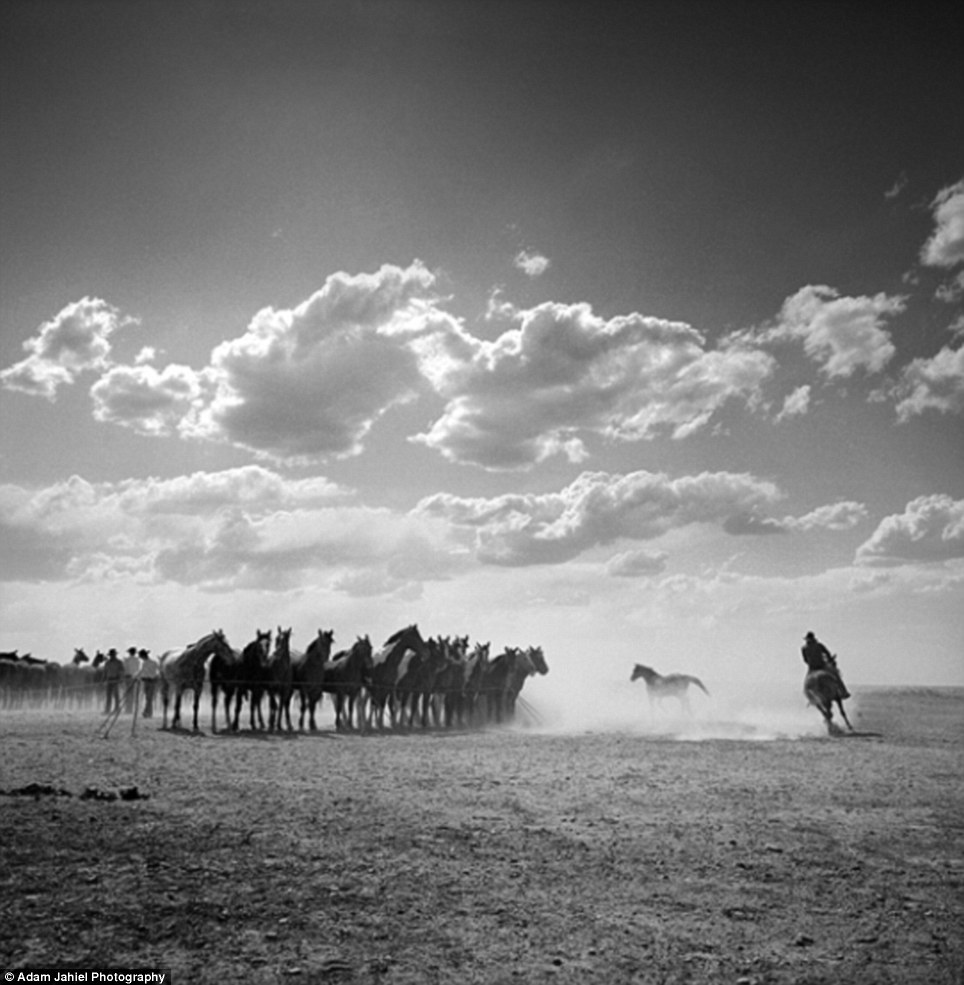 Image credit: Adam Jahiel Photography
Elinore continues her awe-inspiring descriptions of the Wyoming frontier. Her signature humor is also alive and well. This time, Elinore gets a little taste of cowboy living, and of cackle-berries. And though she doesn’t mention the race of the cowboys she meets, it is worth mentioning that at least one in five cowboys was African American. Two of the most famous were Nat Love and Bass Reeves, but there were hundreds of other black men who made their living wrangling cattle on the American plains.
5 African American Cowboys Who Shaped the American West
African American Cowboys on the Western Frontier (Library of Congress)
Black Cowboys (Texas State Historical Association)
The True Story of the Black Cowboys of Philadelphia Depicted in Concrete Cowboy (Time Magazine)
Rupert’s letters are in the Public Domain.
19 May 2021, 3:55 am - 1 hour 11 minutes“See that shack over yonder?” (Women Homesteaders)
 “Miss Mary Longfellow holding down a claim west of Broken Bow, Nebraska”
(image credit: nps.gov)“In about a week we had a cabin ready to move into. It had a dirt floor and dirt roof, but I tacked muslin overhead and put down lots of hay and spread a rag carpet on the floor. I put the tool chest, the trunks, the goods box made into a cupboard, and the beds all around the wall to hold down the carpet, as there was nothing to tack it to. The beds had curtains and there was a curtained alcove between the beds that made a good dressing room. So we were real cozy and comfortable.”
–Emma Hill
Under the Homestead Act of 1862 and its revisions, over 1 million applicants received a plot of land from the Federal government. Thousands of the homesteaders were women. They were black and they were white. Some were recent immigrants from Europe. Some were looking for husbands, others had left husbands, or lost them to death, divorce, or desertion. Quite a few had no interest at all in a husband. But they all worked hard to “prove up” their homesteads.
And most of them realized that the land they were claiming had been home to Native people for centuries.
Further Listening and Reading:
Pre-Columbian Cultures and Civilizations, The History of North America Podcast
Before Wyoming: American Indian Geography and Trails
African American Homesteaders in the Great Plains
Journals, Diaries, and Letters Written by Women on the Oregon Trail 1836-1865
Land of The Burnt Thigh: A Lively Story of Women Homesteaders on the South Dakota Frontier by Edith E. Kohl
6 May 2021, 5:08 pm - 21 minutes 40 seconds“… We were almost starved.” (Elinore Rupert, Part 8)Today, Elinore gives us a peek inside her humble abode, and then tells us about a literature-inspired dinner. Once again, there's snow involved.21 April 2021, 3:16 am
- More Episodes? Get the App