- 2 hours 12 minutesWhy Americans Refrigerate Eggs and Most Countries Don't, How Much Caffeine Can a Human Take and More
In the video today, we're looking at why Americans refrigerate eggs and most other countries don't, the Canadian who invented Hawaiian Pizza, why people say twice boiled water is bad for you, why pineapple kills jello, how much caffeine the human body can take, and much, much more. 0:00 Why Do Americans Refrigerate Their Eggs and Most Other Countries Don’t 12:38 The Very Canadian Origin of “Hawaiian” Pizza 23:59 Why Are You Not Supposed to Use Twice Boiled Water for Tea? 37:50 Why Can’t You Put Pineapple in Jello? 43:38 How Much Caffeine Would It Take To Kill You? 54:55 Why is Ham Traditionally Eaten on Easter? 58:07 How Were Raisins Made Before Seedless Grapes? 1:02:59 Why Some Cheeses Come in Wheels and Others in Blocks 1:07:14 The Surprisingly Heartwarming Story of the Man Who Invented Sriracha Sauce 1:16:23 That Time Campbell’s Put Marbles in Their Soup 1:28:57 An Ode to Glorious Chips (And Who Invented Nachos) 2:02:12 What Happens to Big Food Made to Break World Records?
Learn more about your ad choices. Visit megaphone.fm/adchoices
29 May 2026, 7:00 am - 26 minutes 10 secondsIncredible Engineering- Inventing the Transistor
The tiny transistor revolutionized modern electronics, from radios to supercomputers. Discover its fascinating origins, unexpected twists, and the minds behind this world-changing invention. Watch now!
Learn more about your ad choices. Visit megaphone.fm/adchoices
28 May 2026, 7:00 am - 18 minutes 46 secondsThe Greatest Act of Political and Economic Spite in History
Nations can often be petty and spiteful when it comes to post-war relations, but rarely, if ever, in history did one nation get more petty with not an enemy, but their former ally than when the U.S. military created what is known today as "Million Dollar Point" out of sheer spite. 1,750 kilometres or 1,090 miles off the coast of Australia in the South Pacific Ocean lies the island nation of Vanuatu. Just off the southeast coast of the island, on the outskirts of the main settlement of Luganville, lies a truly remarkable sight: a giant underwater junkyard containing thousands upon thousands of pieces of WWII American military equipment, from tanks, artillery pieces, and bulldozers down to rifles, pistols, food tins and Coca-Cola bottles- all slowly rusting away on the ocean floor. Known as “Million Dollar Point”, every year this submerged museum of wartime logistics attracts hundreds of curious snorkelers and scuba divers from around the world. But what is all this abandoned equipment doing here? Are these the remains of an epic naval battle? A tragic shipwreck? Some gigantic whoopsie-doodle? Nope! The origins of Million Dollar Point are far, far sillier - and pettier - than that! This is the story of one the greatest acts of political and economic spite in modern history and how it helped inspire a Naked Cult that in turn helped lead this region to independence. The islands that make up modern Vanuatu, formerly New Hebrides, were first settled around 1300 BCE by peoples from Melanesian islands to the west such as New Guinea and the Solomons, followed by successive waves of migration by Polynesian peoples from the East, with later European overlords arriving and variously controlling the islands. For example, at one point the region had a complex and unwieldy bureaucracy, with separate British and French police forces and a judicial system presided over by a neutral judge appointed by the King of Spain - and by the way, while most commonly used today to describe a building with multiple individually-owned living units, the term condominium can also refer to a geographic area where multiple sovereign powers agree to share administrative duties. But for most of its history, Vanuatu remained a quiet colonial backwater, subsisting mainly on the trade of coconut meat, fish, sandalwood, and other natural resources. However, in the wake of the Imperial Japanese Navy’s surprise attack on Pearl Harbor on the morning of December 7, 1941 and the subsequent Japanese blitzkrieg across southeast Asia and the Pacific, the archipelago suddenly found itself in danger of invasion. In May 1942, American forces arrived on the islands, setting up a command post on Efate. Engineers from the U.S. Navy’s 1st Construction Batallion - better known as the Seabees - were soon dispatched to Espiritu Santo to construct a crushed-coral airstrip to support the then-ongoing battle on Guadalcanal. In an incredible feat of wartime logistics the Seabees, working round-the-clock, constructed Turtle Bay Airfield in only 20 days. Soon more CB detachments arrived and constructed three more airstrips, one of which is Santo International Airport today. Throughout the war, thousands of bombers, fighters, and other aircraft from the U.S. Navy, Marine Corps, and Army Air Corps as well as the Royal New Zealand Air Force operated from these airfields in support of operations throughout the South Pacific. In addition to the airstrips themselves, the Seabees also built extensive supporting infrastructure including barracks, repair shops, hangars, hospitals, fuel and ammunition depots, and water desalination plants. Espiritu Santo also served as a major supply and repair depot for U.S. Navy ships, stocking millions of tons of the fuel, food, ammunition, spare parts, and other materiel needed to fuel the gruelling island-hopping campaign against Imperial Japan. In particular, Espiritu Santo Naval Base was home to USS AFD-1, one of four Auxiliary Floating Dry Docks stationed in the South Pacific to repair and maintain U.S. Navy ships. Author: Gilles Messier Host/Editor: Daven Hiskey Producer: Caden Nielsen
Learn more about your ad choices. Visit megaphone.fm/adchoices
27 May 2026, 7:00 am - 42 minutes 56 secondsLook, Ma- No Wings! The Strange World and Incredible Engineering of Lifting Body Aircraft
A real-life sci-fi experiment! The bizarre wingless aircraft from The Six Million Dollar Man was not a Hollywood invention. This is the incredible story of NASA’s lifting body program. 🚀
Learn more about your ad choices. Visit megaphone.fm/adchoices
26 May 2026, 7:00 am - 1 hour 28 minutesThe Nightmare Nurse
In this episode of The Brain Food Show, we’re looking at the story of an intelligent, sweet little girl who was given up to an orphanage and then grew up to have a rather successful career as a nurse… and just so happens to be one of the most notorious female serial killers in history.
On another note, if you could do us a huge favor and rate and review this show in whatever podcasting platform you’re using (including hopefully giving us some feedback related to the new format), we would be extremely grateful. Thanks!
Learn more about your ad choices. Visit megaphone.fm/adchoices
25 May 2026, 7:00 am - 3 hours 3 minutesWhat Actually Defines an ‘Assault Rifle’, The Truth About Getting Shot, and Much, Much More
In the video today, we're looking at who invented the assault rifle, why do people drop when shot, can you make a gun that shoots around corners, how dangerous are rubber bullets and stun guns, the Canadian genius who attempted to launch satellites using an absolutely massive gun, a deep dive into the bullet proof vest and how they work, the story of the Tommy Gun, shooting guns in space, how to shoot two guns at once, how pilots shot through propellers in WWI, and the longest sniper shot. 0:00 What Actually Defines an ‘Assault Rifle’ and Who Invented Them? 18:14 Why Do People Suddenly Drop When Shot? 28:21 Can You Really Make a Gun Shoot Around Corners? 52:38 How Dangerous are Rubber Bullets and Stun Guns? 1:03:38 The Canadian Genius Who Attempted to Launch Satellites Using an Absolutely Ginormous Gun 1:17:48 A Deep Dive Into The Bullet Proof Vest and How They Work in Reality vs Hollywood Depictions 1:46:44 The Story of the Iconic ‘Tommy Gun’ 2:07:48 Has Anyone Ever Fired a Gun in Space, Space Cannons, and the Guns Designed for Astronauts? 2:26:34 Is There a Proper Way to Fire Two Guns at Once? 2:40:58 How Did WWI Pilots Shoot Through Their Aircraft Propeller? 2:54:26 The Longest Sniper Kill
Learn more about your ad choices. Visit megaphone.fm/adchoices
22 May 2026, 7:00 am - 20 minutes 6 secondsThe Greatest Archaeological Rescue Mission in History
Discover the incredible story of how the world's greatest archaeological rescue mission saved Egypt’s ancient wonders from destruction—engineering marvels, lost temples, and an unprecedented battle to preserve history.
Learn more about your ad choices. Visit megaphone.fm/adchoices
21 May 2026, 7:00 am - 20 minutes 53 secondsThe Sun is Finally Setting on the British Empire This Year
While there are a few dates that could be pointed to for the sun setting on the British Empire, in fact, it's never literally been the case... But all that's set to change- after centuries of the sun always shining on some part of the British realm, this year, that will end. Here now is the story of the origin of the expression "the sun never sets on..." and the twisting, turning way it's been true for Britain and how it's about to end. While now commonly associated with the British Empire, slogans like “the sun never sets on our territory” have been used since antiquity. For example, Mesopotamian texts from the rule of Sargon of Akkad, who reigned from around 2334 to 2279 B.C.E, declare that the king: “…[rules] all the lands from sunrise to sunset.” While in his foundational 430 B.C.E. work The Histories, Ancient Greek historian Herodotus quotes Persian Achamaenid king Xerxes I as declaring: “We shall extend the Persian territory as far as God's heaven reaches. The sun will then shine on no land beyond our borders.” However, the territories controlled by these rulers were very small by modern standards, and it was not until the explosive expansion of overseas exploration, trade, and conquest in the Early Modern Period that the first truly global empires began to emerge. And among the very first was the Spanish Empire, which by 1780 covered 13.7 million square kilometres or 5.3 million square miles and included most of South and Central America and the West Indies; a large swath of what is now the Southwestern United States; various African colonies like Fernando Po, Oran, Ceuta, Guinea, and Rio Muni; and Asian and Asian and Pacific territories like Palau, New Guinea, the Marianas Islands, Guam, and the Philippines. This led contemporary writers like British polymath Francis Bacon to write: “…both the East and the West Indies being met in the crown of Spain, it is come to pass, that, as one saith in a brave kind of expression, the sun never sets in the Spanish dominions, but ever shines upon one part or other of them: which, to say truly, is a beam of glory…” Interestingly, for 60 years the Spanish Empire was even larger. In 1580 King Henry of Portugal died... Author: Gilles Messier Host/Editor: Daven Hiskey Producer: Caden Nielsen
Learn more about your ad choices. Visit megaphone.fm/adchoices
20 May 2026, 7:00 am - 13 minutes 23 secondsThe Brink of Starvation- The Inspiring Tale of Inventing Instant Ramen
Instant ramen: a global staple born from postwar hardship. Discover how Momofuku Ando revolutionized fast food, from Chikin Ramen to Cup Noodles, shaping history one slurp at a time! 🍜
Learn more about your ad choices. Visit megaphone.fm/adchoices
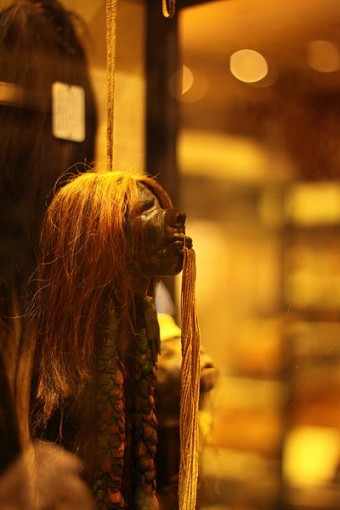
19 May 2026, 7:00 am - 1 hour 3 minutesHow Shrunken Heads Were Made
In this episode of The Brain Food Show, we begin by discussing a random quick fact involving the parents of Ferris Bueller on Ferris Bueller’s Day Off.
Next we move into the main content for today’s episode which is discussing how exactly people used to get human heads to shrink and why they did this in the first place.
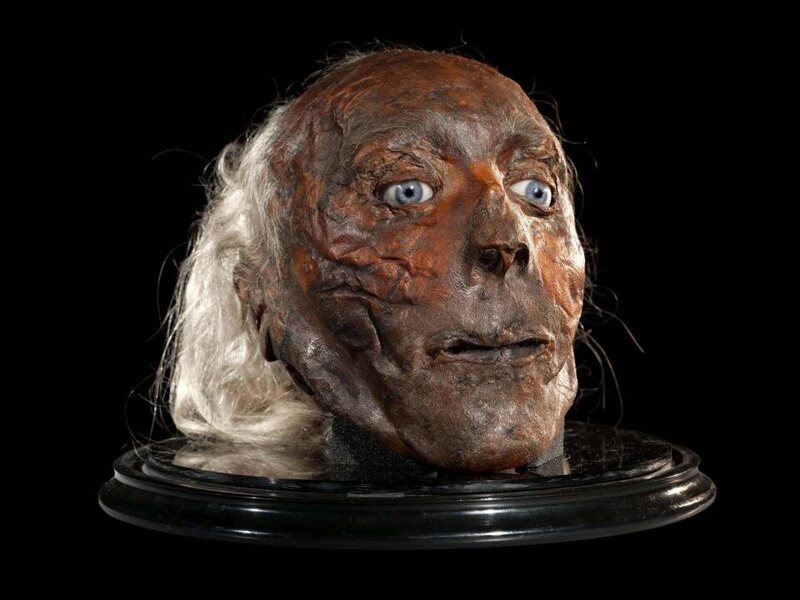
Moving on from that, we look at the fascinating saga of famed philosopher Jeremy Bentham’s head and body.
Finally we move into some feedback and then an interesting Star Trek Fact related to skeletons.
And for those interested:
- Picture of Jeremy Bentham’s Head
- Our mentioned video on the history of passwords: Who Invented Passwords and the Guy That Made Them Suck
- A sampling of Marina Sirtis talking at various conventions:
- The Riker Maneuver
- Riker and Picard Badass Walk Loop
On another note, if you could do us a huge favor and rate and review this show in whatever podcasting platform you’re using (including hopefully giving us some feedback related to the new format), we would be extremely grateful. Thanks!
Learn more about your ad choices. Visit megaphone.fm/adchoices
18 May 2026, 7:00 am - 1 hour 37 minutesWhat Happens When You Find Buried Treasure, Stick Your Head in a Particle Accelerator & Much More
In the video today we're looking at what happens in the real world when you find a buried treasure. What happens when someone objects during a wedding and why ministers ask. What happens if you commit a crime aboard an aircraft or in International waters. What happens when you give a homeless person $100,000. What happens if a cemetery goes under. What exactly happens to animals swallowed alive. What happens if you accidentally damage or destroy a priceless work of art in a museum. What happens when a town votes for a dog or a cat to be mayor. What really happens when someone enters the witness protection program. And, finally, what happens when you stick your head into a particle accelerator. 0:00 What Happens in the Real World if You Find a Buried Treasure? 11:09 What Happens When Someone DOES Object During a Wedding and Where Did This Practice Come From? 16:37 What Happens if You Commit a Crime Aboard an Aircraft or in International Waters? 32:25 What Happened When You Give a Homeless Person $100,000 43:08 What Happens If a Cemetery Goes Under? 48:39 What Exactly Happens to Animals Swallowed Alive and Do Any Animals Ever Get Out Alive After? 1:00:25 What Happens if You Accidentally Damage or Destroy a Priceless Work of Art in a Museum? 1:09:49 What Happens When a Town Votes For a Dog or Cat to Be Mayor? 1:15:25 What Really Happens When Someone Enters the Witness Protection Program 1:19:59 What Happens When You Stick Your Head Into a Particle Accelerator
Learn more about your ad choices. Visit megaphone.fm/adchoices
15 May 2026, 7:00 am - More Episodes? Get the App