Quantum Harry, the Podcast
B. L. Purdom
Why did Hagrid bring Harry to Surrey, or Hermione get a cat in her third year? Why are Ron and Dumbledore oddly similar? And why was there all that camping in the seventh book? Quantum Harry, the Podcast looks at the unifying theme of the HP series, shedding new light on JK Rowling's narrative choices and forever changing the way you read Harry Potter.
- The Alchemical Harry Potter

PUBLICATION NEWS: The Alchemical Harry Potter is now available for purchase from McFarland! (My chapter is in Part III, below.)
From the publisher:
When Harry Potter first boards the Hogwarts Express, he journeys to a world which Rowling says has alchemy as its “internal logic.” The Philosopher’s Stone, known for its power to transform base metals into gold and to give immortality to its maker, is the subject of the conflict between Harry and Voldemort in the first book of the series. But alchemy is not about money or eternal life, it is much more about the transformations of desire, of power and of people—through love.
Harry’s equally remarkable and ordinary power to love leads to his desire to find but not use the Philosopher’s Stone at the start of the series and his wish to end the destructive power of the Elder Wand at the end. This collection of essays on alchemical symbolism and transformations in Rowling’s series demonstrates how Harry’s work with magical objects, people, and creatures transfigure desire, power, and identity. As Harry’s leaden existence on Privet Drive is transformed in the company of his friends and teachers, the Harry Potter novels have transformed millions of readers, inspiring us to find the gold in our ordinary lives.
Chapters/Authors:
I—The Resurrection Stone and the Transfiguration of Desire
Why I Read Harry Potter Books Again and Again by Sophia Imafuji, age 8
The Literary Alchemy of J.K. Rowling by John Granger
Harry Potter and the Transfiguration of Desire by Anne Parker-Perkola
Re-Reading Harry Potter, Re-Creating Ourselves: Harry Potter as Resurrection Stone by Isaac Willis
Out from the Shadows into the Light: Persona and Shadow in Harry Potter by Alicia L. Skipper and Kate Fulton
An Anti-Oedipal Reading of Harry Potter and Alchemy by Robert Tindol
II—The Elder Wand and the Transfiguration of Power
My Harry Potter Journey by Ella Victoria Greer, age 13
The Missing Element: The Alchemy Experiment Inside the Chamber of Secrets by S.P. Şipal
On the Transmutation of Voldemort’s Love of Power into Harry Potter’s Power of Love by Lawrence W. Farris
Auror Magic: An Almost Alchemical Process by Lorrie Kim
Tapping on Just Another Brick in the Wall by Sean Paulsgrove
III—The Cloak of Invisibility and the Transfiguration of Self and Community
And All Was Well by Tamyra Dixon-Rankin
The Snitch, the Stone, and the Sword: Harry Potter the Alchemical Seeker by B.L. Purdom
Alchemy as a Metaphor for Learning by Mary Pyle
Harry Potter and the Root of All Evil by Charles M. Rupert
Soul Making and Soul Splitting: Alchemy of the Soul in Harry Potter by Julie Loveland Swanstrom
Ruddy Stargazers: Centaurs, Philosophers, and a Life Worth Living by Anne J. Mamary
Epilogue: Friendship Hallowed, Pure, and Ever-Present
Available in physical form (click HERE) or as an ebook (click HERE).
Enjoy!
4 January 2021, 6:24 pm - Quantum Harry, the Podcast: Special Episode
A SPECIAL EPISODE OF QUANTUM HARRY, THE PODCAST:
JK Rowling and the Essay of Doom
* Blog version *
~ EPISODE GUIDE ~
15 June 2020, 3:59 am - JK Rowling and the Essay of Doom
The link to the podcast version of this essay.
JK Rowling has, of late, been digging an ever-deepening hole concerning her attitudes toward transgender people. As the parent of a trans son, as well as someone who co-led (for 10 years) an interfaith 501(c)(3) educational organization that educated the public and media about the existence of people of faith who support equal rights for sexual minorities, reproductive freedom, and separation of church and state, I have felt the impetus to respond to Rowling’s extremely damaging statements but felt too full of grief, initially, to do so. So, to begin to address this in terms of the most recent statement Rowling has made, I will examine some parts of her statement that particularly moved me to respond. I am working from a Google docs version of it. This is the first problematic statement I found: “…last December I tweeted my support for Maya Forstater, a tax specialist who’d lost her job for what were deemed ‘transphobic’ tweets. She took her case to an employment tribunal, asking the judge to rule on whether a philosophical belief that sex is determined by biology is protected in law. Judge Tayler ruled that it wasn’t.” According to Andrew James Carter: This is the real reason that her
employment contract was not renewed. (She was not an employee, but a contract
worker, an important distinction.) Forstater refused to address trans people at
her workplace using the pronouns of their choice, fostering a toxic work-environment.
I’m sure that if she had been openly racist, few people would have come to her
defense. She simply refused to show the basic civility expected of most people
at their place of work. It’s a fairly low bar, and she not only couldn’t clear
it, she argued against having to, and JK Rowling supported her.
Rowling began to receive criticism because
she “liked” a Tweet of Forstater’s, after this referring to it as her “accidental
‘like’ crime” as if she had accidentally “liked” the Tweet, though it is very
clear that it was not an accident.
That’s part of the problem (but
hardly the only problem) with someone so high-profile taking a stance that puts
lives at risk. For folks who don’t have the kind of platform she does, having
her validate their views carries the same weight as when she was validating the
views of people who were fighting for equal rights (which she still seems
convinced that she’s doing, fighting for women’s rights and equality, despite
women around the world also fighting for the same thing disagreeing strongly with her anti-trans stance).
It is a stamp of approval from someone millions of people around the world look
up to. When she approves of the continued marginalization and negation of a
group of people who have to struggle daily to prove they deserve to exist, that
is dangerous to them, because those who agree with her have repeatedly acted on
that stamp of approval. So, to flippantly complain that someone wrote to her to
say, “I was literally
killing trans people with my hate…” as if that
is a patently ludicrous statement is a complete dismissal of the power that her
approval has in the world.
This is what we’ve seen
every day since the 2016 election. The day after the election, hate-crimes were
already on the rise across the US, and have been ever since. After lying about
George Soros financing “the caravan” at the southern border, which was classic
stochastic terrorism, a Trump follower gunned down 11 people at a Pittsburgh
synagogue. Words have consequences. This is not to suggest that JK Rowling is equal
to Trump when it comes to hateful rhetoric; Trump targets groups with a clear
intent to harm them, and panders to his cult by saying that he hates the same
people they do. I believe that she believes sincerely that she is doing more good
than harm, and I don’t classify what she is doing as pandering, either. But
while the harm is not Trump-level harm—and hopefully it never will be—it is
harm, nonetheless.
Rowling has received a
lot of support from other anti-trans folks; she says that she was overwhelmed
by their support, because, surprise surprise, people like their bigotry echoed
and reinforced by famous people of whom they are fans. (Such as, again, Donald
Trump.) It tells them that they were right to think you were “their kind” of
people. You are validating them by saying what they’re saying.
Historically, bigotry has
been cloaked in “worry”. In Rowling’s case, worry not just about women and
girls (who have a lot more to worry about from a deeply misogynist culture than
from trans folks) but also, supposedly, about trans youth, who are
some of the most outspoken Harry Potter fans who have felt attacked and
abandoned by Rowling for her statements supporting anti-trans bigots. She writes about: “…the dangers to young people, gay people and about the erosion of
women’s and girl’s rights. Above all, they’re worried about a climate of fear
that serves nobody – least of all trans youth – well.”
If anyone is fostering a “climate
of fear” it is Rowling and others questioning the very right of trans people to
exist. This is why it is laughable that she then complains about the TERF
label, including saying, “Ironically, radical feminists aren’t even trans-exclusionary –
they include trans men in their feminism, because they were born women.”
That isn’t irony. That is
just turning anti-trans attitudes against trans men for a change of pace,
rather than trans women, by not recognizing that TRANS MEN ARE MEN. This may
seem like a weird idea, but maybe folks identifying as feminists should regard
all people who support feminism as their allies and not only the people they
deem to be “female” based on their understanding of their biology. There are
plenty of cisgender women who are hostile to feminism. It has become painfully
clear in the last four years that one of our biggest obstacles to moving
forward as a species are women who are misogynists and do not want equality for
women, in spite of being women. Just as biology does not dictate to whom you
are attracted or love and does not necessarily dictate your gender identity, it
also does not dictate your ideology, so continuing to pretend this is true does
not reflect reality. Conversely, many ardent feminists are men, cis or trans.
Their biology is beside the point; their support of feminism is the point.
Then, as if she thinks this
doesn’t make her look even more anti-trans, she says, “Speaking as a biological
woman, a lot of people in positions of power really need to grow a pair (which
is doubtless literally possible, according to the kind of people who argue that
clownfish prove humans aren’t a dimorphic species).”
So, to break this down,
she’s a) equating testicles with courage, a classically misogynist/sexist
trope; b) acting as though trans men who’ve had bottom-surgery don’t exist; and
c) acting as though intersex people don’t exist. Yes, the vast majority of the
human species display particular biological qualities that make us, as a whole,
a dimorphic species. But not all do. And again, trans men and intersex people
exist, as well as non-binary people and those who are gender-nonconforming in
their appearance, behavior, or both.
Rowling lists five reasons
why she is particularly worried now about trans activism. One is her charitable
trust with an emphasis on women and children, as if she is concerned that trans
women could benefit from this without being what she considers “real” women;
the trust also supports survivors of domestic and sexual abuse, which is good,
but trans women also suffer from this and also deserve support. She also cites
her support of MS research as a reason; her mother lived for many years and
then died from multiple sclerosis, which is, in Rowling’s words “a disease that behaves very
differently in men and women,” but she fails completely
to explain how acknowledging the existence of trans people puts MS research at
risk.
The second reason she
cites for her interest now is that she has an interest in “education and safeguarding” as if trans people are not being attacked in educational
settings and in places where their safety is supposed to be protected; the
implication is that the trans folks are those from whom children need to be
protected.
Her third reason is
freedom of speech, which she has in abundance; she has a worldwide platform on
which to vent her spleen. As she herself has noted in the past, freedom of
speech includes the freedom to disagree with someone else’s speech. I know for
a certainty that I have in fact defended Jo Rowling’s freedom of speech when
she has been attacked for doing things like criticizing Trump. Just because people
disagree with her does not mean she no longer has freedom of speech; it just
means the people disagreeing also have freedom of speech.
Then she claims that the
fourth reason is very personal, which I fail to understand; if anything, it is
highly personal to me as the mother of a trans son. She talks about trans men
who detransitioned due in part to regrets about losing their fertility. (And she
fails utterly to note that trans men who have NOT lost their fertility do indeed
still menstruate, and this is part of why the organization she mocked with her
snarky response to the phrase “people who menstruate” used that phrase—to be
inclusive and kind. Her response to that kindness, inclusion, and accuracy was
to be snide and sarcastic.) She also claims that in some cases, trans men being
attracted to women but being afraid of homophobia (in the form of attacks on
lesbians) led them to conclude that to be in relationships with women but not
subject to homophobic attacks, they had to transition to being men, and some of
these trans men later realized this wasn’t what they wanted after all; they
wanted to be with women as women.
First,
here is what Carter has to say about this part of the essay:
This is the real reason that her
employment contract was not renewed. (She was not an employee, but a contract
worker, an important distinction.) Forstater refused to address trans people at
her workplace using the pronouns of their choice, fostering a toxic work-environment.
I’m sure that if she had been openly racist, few people would have come to her
defense. She simply refused to show the basic civility expected of most people
at their place of work. It’s a fairly low bar, and she not only couldn’t clear
it, she argued against having to, and JK Rowling supported her.
Rowling began to receive criticism because
she “liked” a Tweet of Forstater’s, after this referring to it as her “accidental
‘like’ crime” as if she had accidentally “liked” the Tweet, though it is very
clear that it was not an accident.
That’s part of the problem (but
hardly the only problem) with someone so high-profile taking a stance that puts
lives at risk. For folks who don’t have the kind of platform she does, having
her validate their views carries the same weight as when she was validating the
views of people who were fighting for equal rights (which she still seems
convinced that she’s doing, fighting for women’s rights and equality, despite
women around the world also fighting for the same thing disagreeing strongly with her anti-trans stance).
It is a stamp of approval from someone millions of people around the world look
up to. When she approves of the continued marginalization and negation of a
group of people who have to struggle daily to prove they deserve to exist, that
is dangerous to them, because those who agree with her have repeatedly acted on
that stamp of approval. So, to flippantly complain that someone wrote to her to
say, “I was literally
killing trans people with my hate…” as if that
is a patently ludicrous statement is a complete dismissal of the power that her
approval has in the world.
This is what we’ve seen
every day since the 2016 election. The day after the election, hate-crimes were
already on the rise across the US, and have been ever since. After lying about
George Soros financing “the caravan” at the southern border, which was classic
stochastic terrorism, a Trump follower gunned down 11 people at a Pittsburgh
synagogue. Words have consequences. This is not to suggest that JK Rowling is equal
to Trump when it comes to hateful rhetoric; Trump targets groups with a clear
intent to harm them, and panders to his cult by saying that he hates the same
people they do. I believe that she believes sincerely that she is doing more good
than harm, and I don’t classify what she is doing as pandering, either. But
while the harm is not Trump-level harm—and hopefully it never will be—it is
harm, nonetheless.
Rowling has received a
lot of support from other anti-trans folks; she says that she was overwhelmed
by their support, because, surprise surprise, people like their bigotry echoed
and reinforced by famous people of whom they are fans. (Such as, again, Donald
Trump.) It tells them that they were right to think you were “their kind” of
people. You are validating them by saying what they’re saying.
Historically, bigotry has
been cloaked in “worry”. In Rowling’s case, worry not just about women and
girls (who have a lot more to worry about from a deeply misogynist culture than
from trans folks) but also, supposedly, about trans youth, who are
some of the most outspoken Harry Potter fans who have felt attacked and
abandoned by Rowling for her statements supporting anti-trans bigots. She writes about: “…the dangers to young people, gay people and about the erosion of
women’s and girl’s rights. Above all, they’re worried about a climate of fear
that serves nobody – least of all trans youth – well.”
If anyone is fostering a “climate
of fear” it is Rowling and others questioning the very right of trans people to
exist. This is why it is laughable that she then complains about the TERF
label, including saying, “Ironically, radical feminists aren’t even trans-exclusionary –
they include trans men in their feminism, because they were born women.”
That isn’t irony. That is
just turning anti-trans attitudes against trans men for a change of pace,
rather than trans women, by not recognizing that TRANS MEN ARE MEN. This may
seem like a weird idea, but maybe folks identifying as feminists should regard
all people who support feminism as their allies and not only the people they
deem to be “female” based on their understanding of their biology. There are
plenty of cisgender women who are hostile to feminism. It has become painfully
clear in the last four years that one of our biggest obstacles to moving
forward as a species are women who are misogynists and do not want equality for
women, in spite of being women. Just as biology does not dictate to whom you
are attracted or love and does not necessarily dictate your gender identity, it
also does not dictate your ideology, so continuing to pretend this is true does
not reflect reality. Conversely, many ardent feminists are men, cis or trans.
Their biology is beside the point; their support of feminism is the point.
Then, as if she thinks this
doesn’t make her look even more anti-trans, she says, “Speaking as a biological
woman, a lot of people in positions of power really need to grow a pair (which
is doubtless literally possible, according to the kind of people who argue that
clownfish prove humans aren’t a dimorphic species).”
So, to break this down,
she’s a) equating testicles with courage, a classically misogynist/sexist
trope; b) acting as though trans men who’ve had bottom-surgery don’t exist; and
c) acting as though intersex people don’t exist. Yes, the vast majority of the
human species display particular biological qualities that make us, as a whole,
a dimorphic species. But not all do. And again, trans men and intersex people
exist, as well as non-binary people and those who are gender-nonconforming in
their appearance, behavior, or both.
Rowling lists five reasons
why she is particularly worried now about trans activism. One is her charitable
trust with an emphasis on women and children, as if she is concerned that trans
women could benefit from this without being what she considers “real” women;
the trust also supports survivors of domestic and sexual abuse, which is good,
but trans women also suffer from this and also deserve support. She also cites
her support of MS research as a reason; her mother lived for many years and
then died from multiple sclerosis, which is, in Rowling’s words “a disease that behaves very
differently in men and women,” but she fails completely
to explain how acknowledging the existence of trans people puts MS research at
risk.
The second reason she
cites for her interest now is that she has an interest in “education and safeguarding” as if trans people are not being attacked in educational
settings and in places where their safety is supposed to be protected; the
implication is that the trans folks are those from whom children need to be
protected.
Her third reason is
freedom of speech, which she has in abundance; she has a worldwide platform on
which to vent her spleen. As she herself has noted in the past, freedom of
speech includes the freedom to disagree with someone else’s speech. I know for
a certainty that I have in fact defended Jo Rowling’s freedom of speech when
she has been attacked for doing things like criticizing Trump. Just because people
disagree with her does not mean she no longer has freedom of speech; it just
means the people disagreeing also have freedom of speech.
Then she claims that the
fourth reason is very personal, which I fail to understand; if anything, it is
highly personal to me as the mother of a trans son. She talks about trans men
who detransitioned due in part to regrets about losing their fertility. (And she
fails utterly to note that trans men who have NOT lost their fertility do indeed
still menstruate, and this is part of why the organization she mocked with her
snarky response to the phrase “people who menstruate” used that phrase—to be
inclusive and kind. Her response to that kindness, inclusion, and accuracy was
to be snide and sarcastic.) She also claims that in some cases, trans men being
attracted to women but being afraid of homophobia (in the form of attacks on
lesbians) led them to conclude that to be in relationships with women but not
subject to homophobic attacks, they had to transition to being men, and some of
these trans men later realized this wasn’t what they wanted after all; they
wanted to be with women as women.
First,
here is what Carter has to say about this part of the essay:

And: And:
And:

Further down the thread:
And:
Now, there have been a handful of anecdotal studies, from the points of view of both trans men and trans women, testifying to how very differently they live in the world after transitioning. Trans women mainly report having to learn to do all of the things most women are accustomed to, feeling the burden of these behaviors to secure their safety and well-being against predators, as well as frustration with men who dismiss and disregard women on a daily basis. Trans men report people paying more attention to their opinions and valuing these opinions more, plus having the freedom to exist in spaces where they wouldn’t have felt safe before. If homophobia (specifically against lesbians) and misogyny sometimes make being male seem attractive, it shouldn’t be surprising; men still very much rule the world. This doesn’t mean the rights of people who genuinely feel that their bodies need to be male to reflect who they are inside should be disregarded because some people thought the prospect of moving through the world as a man was more appealing than doing so as a woman, specifically, as a lesbian. (And, again, this is a surpassingly small fraction of those who transition.) But even if, for argument’s sake, there are scads of trans men regretting their decision to transition instead of remaining lesbians (THERE AREN’T—see above), this means we need to fight harder against homophobia and misogyny. Being “concerned” about trans men who transition and regret it doesn’t mean we should make it harder to transition. It means we should support all of our youth and try to rid our society of the type of discrimination and oppression that could lead to someone who isn’t a good candidate for transitioning feeling like that’s what they need to do to have the life they want. That’s not a failure of trans-activism; that’s a failure to eradicate the oppression from which people are attempting to flee. Rowling goes on to talk about how rampant misogyny is right now. This is true, but not because of trans people. If anything, the testimonies we’ve had from trans people about how differently the world responds to them pre- and post-transition have been incredibly eye-opening and helpful to highlight how much work we still need to do. She writes, “From the leader of the free world’s long history of sexual assault accusations and his proud boast of ‘grabbing them by the pussy’, to the incel (‘involuntarily celibate’) movement that rages against women who won’t give them sex, to the trans activists who declare that TERFs need punching and re-educating, men across the political spectrum seem to agree: women are asking for trouble. Everywhere, women are being told to shut up and sit down, or else.” First, in this passage she seems to be calling “trans activists” men, which means that she’s calling trans women activists men. She is so dedicated to the idea that trans women are not women (and that trans men are not men) that she seems to be incapable of not misgendering trans folks. (Is it any wonder that people are upset?) Also, anyone advocating against rights for trans folks does need re-educating (though punching is never an effective way of doing that.) Second, as mentioned earlier, one of the biggest problems in the fight against misogyny is that too many women are enamored of the status quo. If all women were in favor of equality, plus all men who identify as feminists, we’d be in a great position to move forward, but this is not the case. Then she writes: “I’ve read all the arguments about femaleness not residing in the sexed body” which is her disingenuous way of coming back to her “sex is sex” argument. She is neglecting to acknowledge that for cisgender people, their bodies and brains match, but just because that is their experience, it is not everyone’s. This is like white folks claiming racism doesn’t exist because they don’t experience it. I’ve seen JK Rowling telling off people who have suggested exactly that. We all experience the world differently. I don’t know why this is so hard for her to grasp when it comes to this topic, since she has shown, in other cases, that she gets it. When those who are supportive of trans folks say trans people have a different experience of this, they are not saying (and I hate this term) “biological women don’t have common experiences.” Carter says this about Rowling’s choice of words: Asserting that trans women
deserve to be recognized and affirmed is not synonymous with denying the lived
experiences of cis women; if anything, as noted, trans women have provided a
damning testimony of the misogyny that women live through on a daily basis from
the perspective of people who did not always live that. This only supports the
fight against misogyny from all sources. She refuses to acknowledge this, saying:
“‘Woman’ is not a pink brain, a liking for Jimmy Choos
or any of the other sexist ideas now somehow touted as progressive. Moreover,
the ‘inclusive’ language that calls female people ‘menstruators’ and ‘people
with vulvas’ strikes many women as dehumanising and demeaning. I understand why
trans activists consider this language to be appropriate and kind, but for
those of us who’ve had degrading slurs spat at us by violent men, it’s not
neutral, it’s hostile and alienating.”
There’s so much horrifying
stuff here to unpack. First, trans women know that ‘woman’ is not a costume, a ‘pink
brain,’ or a liking for women’s clothing. Second, the organization she snarked
at for using the phrase “people who menstruate” was being inclusive, kind, and accurate.
It was the furthest thing from dehumanizing and demeaning, which she would know
if she weren’t so against calling trans women women, trans men men, acknowledging
the existence of non-binary people (who are also ‘people who menstruate’) and acknowledged
that women who no longer menstruate or never did for whatever reason are still
women, that menstruation is not the sole way to identify a woman. (She is a
year younger than I am and I’m coming very close to no longer menstruating.
When I do, I will still definitely be a woman. If this has not happened to her
yet, it will eventually. And when it does, like me, she will still be a woman.)
If you see someone else’s
kindness and inclusion as hostile and alienating, that says a lot more about
you than the people you are criticizing for being kind and inclusive (plus
accurate). She continues:
“If you could come inside my
head and understand what I feel when I read about a trans woman dying at the
hands of a violent man, you’d find solidarity and kinship. I have a visceral
sense of the terror in which those trans women will have spent their last
seconds on earth, because I too have known moments of blind fear when I
realised that the only thing keeping me alive was the shaky self-restraint of
my attacker.”
Now, it is horrifying for
anyone to experience this. It is also horrifying to say that you have
experienced solidary and kinship with trans women who have experienced this
after saying the things she has said that dehumanize trans women. She refers to
a serious sexual assault, something no one should ever have to live through; I
know far too many people who have, and I have come terrifyingly close more than
once in my life, knowing that it is only through sheer luck that I escaped,
because there is only one cause of rape: rapists. Just like black folks who experience
police violence, you can do everything “right” and it can still happen. What I
fail to understand is how living through that seems only to have cemented her
dedication to attacking the vulnerable instead of doing more than giving
lip-service to standing in solidarity with trans women. Every attack she makes
on trans folks negates her claim of solidarity and kinship.
She also writes: “Late on Saturday evening…I
forgot the first rule of Twitter – never, ever expect a nuanced conversation –
and reacted to what I felt was degrading language about women.” Again, viewing language that was kind, inclusive, and accurate
as “degrading” says more about her than the people she snarked at. I believe
that if someone is in need of seeing “nuance” here, it is JK Rowling. She seems
particularly offended—and I think that was the point—by this, “You are Voldemort said one person,
clearly feeling this was the only language I’d understand.” While that may seem an extreme response, let me, as she says,
attempt to speak a language JK Rowling might possibly understand.
In the seventh Harry
Potter book, the Ministry undertook a pogrom, essentially, to eradicate
Muggle-born magical people from wizarding society. People who knew for a
certainty that they were magical were deemed inauthentic pretenders and
stripped of their wands. How could anyone who didn’t have at least one magical
parent be a magical person? Rowling depicted this very clearly as an injustice,
a failure to recognize that sometimes magical people cropped up in non-magical
families, that your parentage/biology may have absolutely nothing to do with
your magical ability, and yet, still, YOU ARE MAGICAL. (She also depicts “Squibs”
in the books, people of magical parentage who, despite this, are NOT magical.)
While Rowling may have
meant readers to see this pogrom as analogous to the Third Reich (it works
pretty well for that) plus “one-drop” laws around the world that decreed that
people who had even one-drop of blood from an ancestor who was not considered
Caucasian could not access the rights of white people, it also works well as a
critique of her own bias against trans people. She continues:
“It would be so much easier
to tweet the approved hashtags – because of course trans
rights are human rights and of course trans lives matter –
scoop up the woke cookies and bask in a virtue-signalling afterglow. There’s
joy, relief and safety in conformity.”
In this passage, she’s
being snarky again, but she also already spoke quite warmly of the love and
support she received from people who, like her, are against recognizing that “trans
rights are human rights” and “trans lives matter,” no matter how much she slaps
these slogans onto an essay that states, over and over, that this is absolutely
not what she believes. There is indeed “joy, relief and safety in conformity,” but she’s made it abundantly clear which community she chooses
to conform to, whose approval she seeks and revels in, and it is those who
agree with her when she demeans people for being kind and inclusive, when she
reacts to that kindness with snarkiness, when she misgenders people and, yes,
fails to comprehend the message of inclusivity in her own work.
She continues: “Huge numbers of women are
justifiably terrified by the trans activists; I know this because so many have
got in touch with me to tell their stories. They’re afraid of doxxing, of
losing their jobs or their livelihoods, and of violence.”
There’s a meme that regularly
makes the round on the internet that goes something like, “Trump supporters were
against Obama because they are racists; we’re against Trump because he’s a racist.”
This draws the distinction between someone being targeted because of identity
versus being targeted because they hold a particular belief. One of these
things can be changed; one cannot. If you choose to target a vulnerable
demographic like trans people, if you choose to be biased against that group
and actively fight to erode their rights, you can also choose to stop believing
those things. If you are trans—or gay, or non-binary, or black—that is who you
are. Being attacked for who you are means there’s never an escape. This is why
black folks march with signs saying, “My black skin is not a weapon.” Being
attacked for what you believe, especially when what you believe is that you
should have the right to attack another group for their identity and deny their
humanity—that’s another story.
We like to believe we are
all tolerant of others’ beliefs, but that tolerance cannot extend so far as to tolerate
the belief that someone’s identity makes them less than human, less than worthy
of equality, less than worthy of existing. Maya Forstater could have behaved
professionally. She could have been respectful of her colleagues and had her
employment contract renewed. She could have refrained from attacking trans
people on Twitter (as Rowling could have also). She chose not to, as Rowling
chose not to.
Rowling also writes, “None of the gender critical
women I’ve talked to hates trans people; on the contrary. Many of them became
interested in this issue in the first place out of concern for trans youth, and
they’re hugely sympathetic towards trans adults who simply want to live their
lives,” but being “sympathetic” in occasional statements is not the same
as putting actions behind those words, or even ceasing to spout words that
wound and that justify policies that make life harder for trans folks. Plus,
the reason they seem to be concerned about trans youth is that they want to
stop them from transitioning. That is not “concern.”
At the moment, the world
is convulsing due to demonstrations all over the world in solidarity with the
Black Lives Matter movement. We have seen and heard, every day, the stories of
black lives being at risk for simply LIVING, for existing, sometimes in spaces
where white people in particular do not wish anyone not-white to exist. For
years, various ethnic groups have been stereotyped in a way designed to make
them seem frightening, Othering them, keeping them on the margins and somehow “justifying”
(it didn’t) the treatment they received for merely existing. That happened very
memorably with LGBTQ+ people during the Stonewall riots, a response to
persistent persecution by the police against sexual minorities. Trans women of
color led that rebellion, and JK Rowling used the name Stonewall High for the secondary
school Harry Potter was to have attended, if he had not gone to Hogwarts.
Evidently, she didn’t know of the connection between Stonewall and trans women
or she might have chosen something else.
Demonizing all members of
any demographic for the behavior of a few people in that demographic is what we
are fighting against. A particularly vocal group that has been dedicated to
this is the HP Alliance, inspired by the principles of equality Rowling
enmeshed in the Harry Potter series. The HP Alliance has repeatedly made
statements refuting Rowling’s anti-trans stance and does not wish anyone to
think that they share that stance because they evidently believe that it is
antithetical to the values of the Harry Potter series.
They are not alone when
it comes to people linked to the series, whether it’s people, like me, who have
written books or created podcasts about it, or actors from the franchise’s
films. Below are a number of links to helpful articles and statements from people,
who, like me, are disappointed in JK Rowling’s doubling-down on this issue, not
least because, in the new essay, she indicates not only a stubborn refusal to
consider, for a moment, that her stance might hurt people (especially those who
thought a great deal of her and feel that her work changed their lives for the
better), but an even more stubborn refusal to try to learn, to see that the way
she speaks about trans people is indeed not dissimilar from Umbridge’s work to have
“inauthentic” magical people banished from the wizarding world. That time,
Harry set them free. Would that Jo Rowling could see the similarities and
follow the example of her creation. Until that day comes—if it comes—many of us
will continue to delve into the Potterverse on many levels—as independent
scholars, literary analysts, podcasters, fanfiction authors, wizard rock bands,
and HP alliance activists, among other things—because it is bigger than its
creator now. Harry belongs to all of us, and we won’t let anyone take that away
from us with divisiveness and bigotry.
Even
JK Rowling.
----------------------------------------------------------------------------------
Links:
Asserting that trans women
deserve to be recognized and affirmed is not synonymous with denying the lived
experiences of cis women; if anything, as noted, trans women have provided a
damning testimony of the misogyny that women live through on a daily basis from
the perspective of people who did not always live that. This only supports the
fight against misogyny from all sources. She refuses to acknowledge this, saying:
“‘Woman’ is not a pink brain, a liking for Jimmy Choos
or any of the other sexist ideas now somehow touted as progressive. Moreover,
the ‘inclusive’ language that calls female people ‘menstruators’ and ‘people
with vulvas’ strikes many women as dehumanising and demeaning. I understand why
trans activists consider this language to be appropriate and kind, but for
those of us who’ve had degrading slurs spat at us by violent men, it’s not
neutral, it’s hostile and alienating.”
There’s so much horrifying
stuff here to unpack. First, trans women know that ‘woman’ is not a costume, a ‘pink
brain,’ or a liking for women’s clothing. Second, the organization she snarked
at for using the phrase “people who menstruate” was being inclusive, kind, and accurate.
It was the furthest thing from dehumanizing and demeaning, which she would know
if she weren’t so against calling trans women women, trans men men, acknowledging
the existence of non-binary people (who are also ‘people who menstruate’) and acknowledged
that women who no longer menstruate or never did for whatever reason are still
women, that menstruation is not the sole way to identify a woman. (She is a
year younger than I am and I’m coming very close to no longer menstruating.
When I do, I will still definitely be a woman. If this has not happened to her
yet, it will eventually. And when it does, like me, she will still be a woman.)
If you see someone else’s
kindness and inclusion as hostile and alienating, that says a lot more about
you than the people you are criticizing for being kind and inclusive (plus
accurate). She continues:
“If you could come inside my
head and understand what I feel when I read about a trans woman dying at the
hands of a violent man, you’d find solidarity and kinship. I have a visceral
sense of the terror in which those trans women will have spent their last
seconds on earth, because I too have known moments of blind fear when I
realised that the only thing keeping me alive was the shaky self-restraint of
my attacker.”
Now, it is horrifying for
anyone to experience this. It is also horrifying to say that you have
experienced solidary and kinship with trans women who have experienced this
after saying the things she has said that dehumanize trans women. She refers to
a serious sexual assault, something no one should ever have to live through; I
know far too many people who have, and I have come terrifyingly close more than
once in my life, knowing that it is only through sheer luck that I escaped,
because there is only one cause of rape: rapists. Just like black folks who experience
police violence, you can do everything “right” and it can still happen. What I
fail to understand is how living through that seems only to have cemented her
dedication to attacking the vulnerable instead of doing more than giving
lip-service to standing in solidarity with trans women. Every attack she makes
on trans folks negates her claim of solidarity and kinship.
She also writes: “Late on Saturday evening…I
forgot the first rule of Twitter – never, ever expect a nuanced conversation –
and reacted to what I felt was degrading language about women.” Again, viewing language that was kind, inclusive, and accurate
as “degrading” says more about her than the people she snarked at. I believe
that if someone is in need of seeing “nuance” here, it is JK Rowling. She seems
particularly offended—and I think that was the point—by this, “You are Voldemort said one person,
clearly feeling this was the only language I’d understand.” While that may seem an extreme response, let me, as she says,
attempt to speak a language JK Rowling might possibly understand.
In the seventh Harry
Potter book, the Ministry undertook a pogrom, essentially, to eradicate
Muggle-born magical people from wizarding society. People who knew for a
certainty that they were magical were deemed inauthentic pretenders and
stripped of their wands. How could anyone who didn’t have at least one magical
parent be a magical person? Rowling depicted this very clearly as an injustice,
a failure to recognize that sometimes magical people cropped up in non-magical
families, that your parentage/biology may have absolutely nothing to do with
your magical ability, and yet, still, YOU ARE MAGICAL. (She also depicts “Squibs”
in the books, people of magical parentage who, despite this, are NOT magical.)
While Rowling may have
meant readers to see this pogrom as analogous to the Third Reich (it works
pretty well for that) plus “one-drop” laws around the world that decreed that
people who had even one-drop of blood from an ancestor who was not considered
Caucasian could not access the rights of white people, it also works well as a
critique of her own bias against trans people. She continues:
“It would be so much easier
to tweet the approved hashtags – because of course trans
rights are human rights and of course trans lives matter –
scoop up the woke cookies and bask in a virtue-signalling afterglow. There’s
joy, relief and safety in conformity.”
In this passage, she’s
being snarky again, but she also already spoke quite warmly of the love and
support she received from people who, like her, are against recognizing that “trans
rights are human rights” and “trans lives matter,” no matter how much she slaps
these slogans onto an essay that states, over and over, that this is absolutely
not what she believes. There is indeed “joy, relief and safety in conformity,” but she’s made it abundantly clear which community she chooses
to conform to, whose approval she seeks and revels in, and it is those who
agree with her when she demeans people for being kind and inclusive, when she
reacts to that kindness with snarkiness, when she misgenders people and, yes,
fails to comprehend the message of inclusivity in her own work.
She continues: “Huge numbers of women are
justifiably terrified by the trans activists; I know this because so many have
got in touch with me to tell their stories. They’re afraid of doxxing, of
losing their jobs or their livelihoods, and of violence.”
There’s a meme that regularly
makes the round on the internet that goes something like, “Trump supporters were
against Obama because they are racists; we’re against Trump because he’s a racist.”
This draws the distinction between someone being targeted because of identity
versus being targeted because they hold a particular belief. One of these
things can be changed; one cannot. If you choose to target a vulnerable
demographic like trans people, if you choose to be biased against that group
and actively fight to erode their rights, you can also choose to stop believing
those things. If you are trans—or gay, or non-binary, or black—that is who you
are. Being attacked for who you are means there’s never an escape. This is why
black folks march with signs saying, “My black skin is not a weapon.” Being
attacked for what you believe, especially when what you believe is that you
should have the right to attack another group for their identity and deny their
humanity—that’s another story.
We like to believe we are
all tolerant of others’ beliefs, but that tolerance cannot extend so far as to tolerate
the belief that someone’s identity makes them less than human, less than worthy
of equality, less than worthy of existing. Maya Forstater could have behaved
professionally. She could have been respectful of her colleagues and had her
employment contract renewed. She could have refrained from attacking trans
people on Twitter (as Rowling could have also). She chose not to, as Rowling
chose not to.
Rowling also writes, “None of the gender critical
women I’ve talked to hates trans people; on the contrary. Many of them became
interested in this issue in the first place out of concern for trans youth, and
they’re hugely sympathetic towards trans adults who simply want to live their
lives,” but being “sympathetic” in occasional statements is not the same
as putting actions behind those words, or even ceasing to spout words that
wound and that justify policies that make life harder for trans folks. Plus,
the reason they seem to be concerned about trans youth is that they want to
stop them from transitioning. That is not “concern.”
At the moment, the world
is convulsing due to demonstrations all over the world in solidarity with the
Black Lives Matter movement. We have seen and heard, every day, the stories of
black lives being at risk for simply LIVING, for existing, sometimes in spaces
where white people in particular do not wish anyone not-white to exist. For
years, various ethnic groups have been stereotyped in a way designed to make
them seem frightening, Othering them, keeping them on the margins and somehow “justifying”
(it didn’t) the treatment they received for merely existing. That happened very
memorably with LGBTQ+ people during the Stonewall riots, a response to
persistent persecution by the police against sexual minorities. Trans women of
color led that rebellion, and JK Rowling used the name Stonewall High for the secondary
school Harry Potter was to have attended, if he had not gone to Hogwarts.
Evidently, she didn’t know of the connection between Stonewall and trans women
or she might have chosen something else.
Demonizing all members of
any demographic for the behavior of a few people in that demographic is what we
are fighting against. A particularly vocal group that has been dedicated to
this is the HP Alliance, inspired by the principles of equality Rowling
enmeshed in the Harry Potter series. The HP Alliance has repeatedly made
statements refuting Rowling’s anti-trans stance and does not wish anyone to
think that they share that stance because they evidently believe that it is
antithetical to the values of the Harry Potter series.
They are not alone when
it comes to people linked to the series, whether it’s people, like me, who have
written books or created podcasts about it, or actors from the franchise’s
films. Below are a number of links to helpful articles and statements from people,
who, like me, are disappointed in JK Rowling’s doubling-down on this issue, not
least because, in the new essay, she indicates not only a stubborn refusal to
consider, for a moment, that her stance might hurt people (especially those who
thought a great deal of her and feel that her work changed their lives for the
better), but an even more stubborn refusal to try to learn, to see that the way
she speaks about trans people is indeed not dissimilar from Umbridge’s work to have
“inauthentic” magical people banished from the wizarding world. That time,
Harry set them free. Would that Jo Rowling could see the similarities and
follow the example of her creation. Until that day comes—if it comes—many of us
will continue to delve into the Potterverse on many levels—as independent
scholars, literary analysts, podcasters, fanfiction authors, wizard rock bands,
and HP alliance activists, among other things—because it is bigger than its
creator now. Harry belongs to all of us, and we won’t let anyone take that away
from us with divisiveness and bigotry.
Even
JK Rowling.
----------------------------------------------------------------------------------
Links:
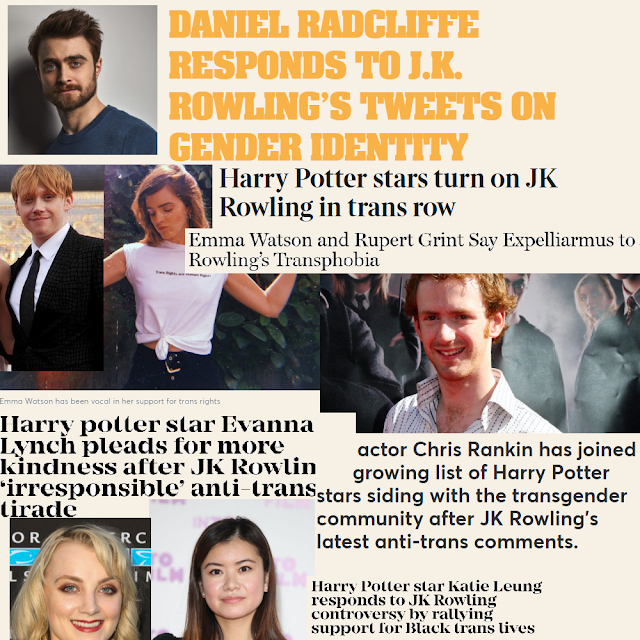
Daniel Radcliffe
Emma Watson and Bonnie Wright
Rupert Grint
Chris Rankin
Evanna Lynch
Katie Leung
Jackson Bird
Jackson Bird’s author page
The HP Alliance
Further reading:
J.K. Rowling and the White Supremacist History of "Biological Sex"
Everything Wrong with JK Rowling's Open Letter
How JK Rowling Betrayed the World She Created
Addressing the Claims in JK Rowling's Justifications for Transphobia
Opinion: Harry Potter's Magic Fades When His Creator Tweets (NPR)
14 Harry Potter Things to Love that Have Nothing to do with JK Rowling
Thread unroll: Andrew James Carter’s Thread: “Since JKRowling has blocked any reply to this litany of half-truths and transphobic dogwhistles, I thought I’d catalogue them properly here”
On Hermione transforming into Harry via Polyjuice Potion in Deathly Hallows
On sex as a social construct
Stop Using Phony Science to Justify Transphobia
Why these Harry Potter fans are standing with the LGBTQ community against a JK Rowling Tweet
How British Feminism Became Anti-Trans: A surprisingly mainstream movement of feminists known as TERFs oppose transgender rights as a symptom of “female erasure.”
JK Rowling is so worried about men using women's bathrooms that she...wrote a book about boys using a girls' toilet
Robert F. Kennedy Organizational Statement About JK Rowling's Transphobia
11 June 2020, 10:45 pm - Essay: Horcruxes and King's CrossesPart I of The Tarot Hallows essays:
Horcruxes and King’s Crosses

In the last ten Quantum Harry essays I’ve been writing about each of the seven columns in the grid of Tarot Major Arcana cards numbered one to twenty-one, with three rows and seven columns (see Quantum Harry, the Podcast, Episode 30: Harry and Tarot) aligning with each of the seven books of the Harry Potter series, as well as the seven sets of sequential cards (1-3, 4-6, 7-9, etc.) also aligning with each of the seven books, in order. The last essay will actually be four essays, as this is the blog version of the final episode of Quantum Harry, the Podcast, which is an extra-long installment. This will be the first of four essays. The seventh column, the one aligned with Harry Potter and the Deathly Hallows, has the Chariot (card #7) at the top, Temperance (card #14) in the middle, and the World (card #21) at the bottom. In the first book of the series, the Magician (#1) was the top column card and first sequential card. (See Quantum Harry, the Podcast, Episode 31: The Devil you Know and Episode 32: The Mirror and the Stone.) In the fourth book of the series, the column and sequential cards intersect at Force or Strength (card #11), forming a cross. (See Quantum Harry, the Podcast, Episode 37: The Goblet of Memory.) There is a final intersection: the sequential cards for the seventh book, the last set of three in the cards numbered one to twenty-one, are the Sun (card #19), Judgment (card #20), and the World (card #21). All roads lead to the World card in this book, symbolizing wholeness, completion, and home.

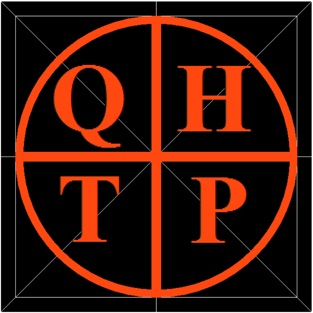
The Chariot card being the ruling card for this book sheds new light on the seemingly-endless travel in Deathly Hallows: it shows a figure who might be a prince, king or magician using a wand, not reins, to drive a chariot with dark and light draft-animals, sometimes shown as a black sphinx and a white one, but often as a red horse and a blue horse. In addition to representing the opposing forces shaping Harry, making him Liminal (see Quantum Harry, the Podcast, Episode 8: Have You Tried Not Being Liminal?), these horses can stand for Hermione and Ron, Harry’s best friends, who are opposites in some ways but learn to “pull together.” He could not make the journey without them, and when Ron is away for a little while, Harry and Hermione are nearly killed at Bathilda Bagshot’s house in Godric’s Hollow. Red also happens to be Ron’s emblematic color and blue is Hermione’s, while Harry’s is green, like his eyes and the Killing Curse that repeatedly fails to kill him. (See Quantum Harry, the Podcast, Episode 7: Fountain of Youth.) The light and dark horses can also symbolize Harry’s journey to wholeness; he cannot achieve this by ignoring his “dark side,” the Voldemort in him. He carries a piece of his enemy; his understanding Voldemort helps him to succeed, even as it sometimes frightens Ron and Hermione. The Chariot is another archetype Harry embodies, a union of opposites, a Tarot version of the archetype of the Liminal Being, as well as pointing to the extreme level of travel in the seventh book. But in addition to symbolizing the archetypal Liminal Being and travel, the Chariot may also be a link to the Horcruxes. The word “Horcrux” was coined by JK Rowling, and could have multiple origins. In a paper presented at Phoenix Rising in New Orleans in 2007 (“Of Horcruxes, Arithmancy, Etymology and Egyptology: A Literary Detective’s Guide to Patterns and Paradigms in Harry Potter”), Hilary K. Justice suggests that one possible etymology combines hors, a French root meaning “out of” or “outside of” with crux, meaning “essence,” as in “the crux of the matter.” This gives us an object holding part of one’s “essence” (or soul) “outside of” the body. I engaged in some etymological digging of my own and found that the hor part of “Horcrux” is close to the hora, a circle dance in Israel and Romania, which may relate to hor also being the Latin root for hour, pointing to another circular image: a clockface. Crux means “cross” in Latin, and combining a circle and cross results in a simple wheel with four spokes (like the logo for Quantum Harry.)

This circle divided into four quadrants has long been a symbol of the Earth, suggesting a compass and the cardinal directions: north, south, east and west. It is the symbol used for Earth by astronomers, including those at NASA, who prefer to say that the cross represents the equator and a meridian. This is also the shape of an ancient race game that evolved into Pachisi, Parcheesi and Ludo, among others (it is also the format for an early Harry Potter trivia game, pictured above). All of these games share the goal of reaching the center of the cross, a center often called home, which relates again to the Chariot card because this card is linked to the astrological sign of Cancer, which is focused on issues related to the home. This symbol is also reminiscent of medieval labyrinths, like the cross-and-circle design of the labyrinth in Chartres Cathedral, seen in the photo below. (See Quantum Harry, the Podcast, Episode 18: The Wide World.)

Earth is the element out of the four alchemists recognized—Fire, Air, Water and Earth—linked to Voldemort, since his birth-sign, Capricorn, is an Earth-sign. Earth is also the element of the Devil archetype, which Voldemort embodies, and in turn, Capricorn is the astrological sign linked to the Devil card in the Tarot Major Arcana, which depicts a rather goat-like Devil. (Capricorn means horned like a goat.)

In another combination of opposites, the circle with an embedded cross was also called a Sun Cross, Solar Cross or Solar Wheel; it is linked to prehistoric cultures, particularly the Neolithic to the Bronze Age periods in Europe. Thus, a wheel with four spokes can also be linked to the Sun card and therefore to death, resurrection, and the phoenix. Voldemort’s wand, until almost the end of his life, contains a feather from a phoenix, and the purpose of his making Horcruxes is to make him like a phoenix, one who cannot die. For a symbol that could mean “Horcrux”—a circle with a cross—to be equated with the Sun also fits with the locket Horcrux being a symbolic sun, like the golden ball in the Grimm fairy tale of the Frog King. (See Quantum Harry, the Podcast, Episode 28: The Grimm Campaign.) The locket happens to be the Horcrux aligning with the fifth book, Order of the Phoenix, the one aligned with the fifth column of Tarot Major Arcana cards, which has the Sun card at the bottom. (See Quantum Harry, the Podcast, Episode 38: The Order of the Heretic.) Finally, this symbol is also called a “Chariot Wheel” because of the Sun god’s chariot linking heaven and earth in the myths of many ancient cultures, connecting this both to the ruling column card for the book, the Chariot, and its first sequential card, the Sun. This is another reason that the Tarot archetype of the Chariot is the equivalent of the mythic archetype of the Liminal Being, one who crosses thresholds and is an axis mundi, a link between worlds.

Thus two possible etymologies for Horcrux may both be something Rowling intended: a word meaning that a person’s essence is elsewhere, outside their body, and a word combining circle and cross, pointing to the Earth, which Voldemort hopes to rule over; the Chariot, a Tarot archetype embodied by both Harry and Voldemort, as it is the Tarot equivalent of the Liminal Being; and the Sun, which in turn is linked to the phoenix, once a source of Voldemort’s power, and an entity he wishes to emulate by creating Horcruxes, so that, like the phoenix, he will be impervious to death.

The card linked to the Chariot (#7) is the Tower (#16, since 1 + 6 = 7). In Deathly Hallows, the Lightning-Struck Tower, the title of the Half-Blood Prince chapter in which Dumbledore dies, is least symbolic of all. Hogwarts is under attack; giants are literally tearing down the walls. It is a cataclysm, a violent rupture in the fabric of wizarding reality. However, we can see the Tower card as both upright and inverted here, since Hermione and Ron visit the Chamber of Secrets, the inverted Tower of the second book, to retrieve basilisk fangs. (See Quantum Harry, Episode 33: The Inverted Tower of Secrets.)

Below the Chariot in the seventh column of cards is Temperance (#14), which was also a sequence card for the fifth book. The back-and-forth of the liquid between the vessels on this card shows the mixing of water and wine; watering wine ‘tempers’ it, makes it less potent, and wine makes water more potent. It is another union of opposites, like the Chariot’s dark and light draft animals, and, as such, it is also about balance. Voldemort, in contrast, would eject all Muggleborns from the wizarding world, seeing no value in diversity. He is clearly incomplete because he has repeatedly ripped his soul to make Horcruxes, but also because he rejects both the Muggle part of himself and his link to Harry; as a result, he can no longer send even misleading images to Harry’s mind, as he did in Order of the Phoenix, because he recoiled in horror when he was exposed to Harry’s prodigious power to love. This ability to bridge worlds is the power Harry has that Voldemort does not, and is well summed-up by love.
Luna is again the Angel Temperance, an archetypal Crone, when she helps Harry cope with Dobby’s death, as she helped him cope with Sirius’s death in Order of the Phoenix. However, Harry also embodies the Angel Temperance in Deathly Hallows; the ‘third eye’ on this card links to his “seeing” through his enemy’s eyes, an ability he integrates into his skill-set. Harry’s being a Pope or High Priest (card #5) is linked to Temperance as well (#14, since 1 + 4 = 5). He has been a holy man ever since he was a bishop in the life-sized chess game; here he transcends worlds by seeing through the eyes of the Other (Voldemort) and by dying and returning to life, an intercessor for the entire wizarding world. As Master of Death, Harry understands the cycle of life, instinctively summoning the shades of his parents, godfather and Remus Lupin with the Resurrection Stone, presenting himself to die because it is necessary to save his world, to protect those he loves and those he doesn’t. Harry-the-Hero does not just die for people he loves; his love protects everyone. Harry, High Priest, Liminal Charioteer and Angel Temperance, refuses to run, as Aberforth suggests; the Master of Death transcends life and death and bestows his grace on all.

The first sequential card aligned with the seventh book in the series is the Sun (card #19), symbolizing another integration of opposites—life and death, since the Sun daily dies and is reborn, linking this to the dying-and-reborn phoenix. Harry dies and is resurrected in this book, but a doppelganger for him, Neville, also evokes the twin children seen on some versions of the card.

Neville could have been the Prophecy Boy, and after Harry returns from death, he echoes Harry’s actions in the second book by stating his faith in Dumbledore as Harry did, with a cry of, “Dumbledore’s Army!” Instead of Fawkes bringing the Sorting Hat, Voldemort summons the Hat, which he plans to destroy because he only wants there to be Slytherins at Hogwarts in the future. He puts the Hat on Neville and sets it on fire, a substitute for Fawkes, who was the symbolic fire of the Holy Spirit on Harry’s head in the Chamber, evoking the story of Pentecost. (See Quantum Harry, the Podcast, Episode 13: Deus ex Machina.) The Hat is described as looking like “a misshapen bird,” again evoking Fawkes, a phoenix representing the Holy Spirit, instead of a dove, another bird symbolizing the Holy Spirit, who appears when John the Baptist baptizes Jesus. After this symbolic confirmation, Neville’s coming-of-age ceremony, he breaks free of the curse binding him and slays Nagini, whose head spins “high into the air”—imagery suggesting again a similarity to a ball, like a Snitch, which all of the Horcruxes resemble in some way, large or small, physically or symbolically. (See Quantum Harry, the Podcast, Episode 29: The Horcrux and Hallows Game.)

The cards linked to the Sun (#19) are the Magician (#1) and the Wheel (#10). Throughout this book, the influence of the archetypal Magician, Dumbledore, is keenly felt. His backstory’s extremes are given before the truth. First Rita Skeeter gets her say in a vitriolic biography, then Elphias Doge gives his version. The truth is worse than Doge’s hymn of praise and not as bad as Rita’s smear job; Harry finally receives a complete picture of the man in whose footsteps he has walked on the path to death from his brother, Aberforth. The archetypal Magician dogs Harry’s footsteps from the beginning, when he reads excerpts from Rita’s biography, and he is with Harry at the end, at King’s Cross, which was always where he crossed a boundary between the “real” and numinous worlds. Now he finds himself on the platform in a misty afterlife where he speaks to Dumbledore (who may or may not be just in his head).

Rowling’s choice of King’s Cross for Harry’s brief afterlife could be another circle-and-cross reference. A sovereign’s orb in Latin is globus cruciger, part of the British Crown jewels. A globe symbolizes the earth, a 3-D circle, and the orb is topped by a cross, another union of circle and cross, on an orb that could be called a King’s cross. This is an alternate earth sign to the circle with the cross inside it and both are used as Earth symbols by astronomers.

The lore surrounding King’s Cross may offer clues as to why Harry goes there after his death. Where the King’s Cross-St. Pancras Station sits today may have been the site of a crossing for the Fleet River in Roman times, outside the Roman settlement of Londinium. In Christian lore, dying is often spoken of as “crossing the river” (Jordan). This may also have been the site of a battle between Queen Boadicea and Roman invaders; legend has it that she is buried beneath Platform Nine in the station—rather close Nine and Three-Quarters.

However, the name “King’s Cross” didn’t arrive until the nineteenth century, when a statue of King George IV was erected at the Battle Bridge crossroads. In folklore, crossroads are places where the fabric of reality is “thinnest”, where travelers may meet spirits and have paranormal experiences. It is a place of liminality. In Greek myth, crossroads were associated with Hecate and Hermes, both psychopomps, entities who accompanied spirits to the Realm of the Dead. Food was left for Hecate at crossroads during the new moon; one of her titles was “goddess of the crossroads,” and she was a goddess of witches and magic as well. Combining this intersection of roads with the king’s statue gave it the name King’s Cross, which persisted even after the statue was pulled down. After he dies, when Harry is at King’s Cross with Dumbledore, who seems to serve as his psychopomp, it is clear that this is a crossroads for Harry; he can choose to “go on”—which ghosts like Nearly Headless Nick never did, so Nick has no idea what comes next—or go back (not as a ghost). This place has always been a threshold, inherently liminal, where Hogwarts students leave the mundane world and enter the world of magic (even if they are from magical families). Thus it is the perfect place for Harry to make his choice. Once again, nothing is carved in stone for Harry; his choices make him who he is, in life and in death, and Harry, the liminal charioteer, chooses to return to the world to save it.
Adapted from the script for Quantum Harry, the Podcast, Episode 40: The Tarot Hallows. Copyright 2019 by Quantum Harry Productions and B.L. Purdom. See other posts on this blog for direct links to all episodes of Quantum Harry.
~ PREVIOUS ESSAY ~26 August 2019, 7:30 pm - Episode 40: The Tarot Hallows
Which Tarot cards are aligned with the Deathly Hallows and why? What are the three Hallows with which JK Rowling begins the first book? How are Horcruxes linked to the Chariot, Wheel, and Sun cards? And why is the Battle of Hogwarts on the second of May?
Episode 40: The Tarot Hallows
Watch the Episode 40 video on YouTube.
~ EPISODE GUIDE ~31 July 2019, 6:26 am - Essay: The Half-Dead Headmaster

In the grid of Tarot Major Arcana cards numbered one to twenty-one, the sixth column, which aligns with Harry Potter and the Half-Blood Prince, has the Lovers (#6) at the top of the column, Death (#13) in the middle row, and Judgment (#20) at the bottom. In the book with the
most romance, it’s fitting that the Lovers card is prominent here. In Harry Potter and the Half-Blood Prince,
love moves to center stage. Harry and Ginny’s relationship, foreshadowed by the
Lovers being a sequential card in the second book, and by the Lovers card being
linked to a sequential card in the previous book, finally blossoms in the sixth,
but they are not the only Lovers in the sixth book of the series. A person torn
between two partners is shown on many versions of the card, and we can see the torn
person as more than one character: for instance, Ron’s romantic choices are
Lavender or Hermione; Hermione’s are Ron or Cormac McClaggen; Ginny’s are Dean
or Harry; and Harry’s are Ginny or Romilda.
In the book with the
most romance, it’s fitting that the Lovers card is prominent here. In Harry Potter and the Half-Blood Prince,
love moves to center stage. Harry and Ginny’s relationship, foreshadowed by the
Lovers being a sequential card in the second book, and by the Lovers card being
linked to a sequential card in the previous book, finally blossoms in the sixth,
but they are not the only Lovers in the sixth book of the series. A person torn
between two partners is shown on many versions of the card, and we can see the torn
person as more than one character: for instance, Ron’s romantic choices are
Lavender or Hermione; Hermione’s are Ron or Cormac McClaggen; Ginny’s are Dean
or Harry; and Harry’s are Ginny or Romilda.

The Lovers card doesn’t just depict a choice between potential partners, however; the women on the card could be a Mother and Maiden, with a Youth, the ruling mythic archetype for the sixth book in the series (see Quantum Harry, the Podcast, Episode 7: Fountain of Youth), choosing between leaving childhood and dependence on a parental figure behind, moving to the next stage of development, when his mother will no longer be the central figure in his life, or staying with his family and postponing choosing a romantic partner. Faced with a choice of his mother on the one hand, representing his family, or Pansy, Draco chooses Narcissa, protecting her and his father. His mother doesn’t want Draco to have to bear this burden, though, which is why she goes to Snape to ask him to take it from her son’s shoulders. It would be easy to read about this and respond by saying, “But he’s from a rotten family and he’s being asked to murder to keep them safe!” However, Dumbledore is sympathetic to Draco’s plight. He wants to protect the entire family and offers his mercy to Draco not to avoid his own death, since he has already asked Snape to kill him, but so Draco will not rip his soul by committing murder. Dumbledore does not fear death; he knows he is dying and is attempting to control the manner of his death as much as possible. He fears Draco irrevocably damaging his soul more than his own demise. Harry has a choice similar to Draco’s: his duty to the wizarding world or romance with Ginny, which he calls “blissful oblivion”. After experiencing a little happiness with her he decides he cannot turn his back on his duty, so he breaks up with her to protect both her and the rest of the Weasleys. The archetypal Youth growing up and away from his family is a necessary, healthy development, but needs to be well-timed; first he must fulfill his obligations. The Youth on the Lovers card is on the cusp of that very choice.
The card linked to the Lovers (#6) is the Devil (#15), which is Voldemort’s chief Tarot archetype. This was the last sequential card for the fifth book (see Quantum Harry, the Podcast, Episode 38: The Order of the Heretic) and is at the bottom of the column aligned with the first. (See Quantum Harry, the Podcast, Episode 31: The Devil You Know.) Voldemort is tied to both Harry’s and Draco’s choices; everything they consider must take into account what he has done and might do. Death (#13), in the middle of the sixth column, is also at the center of the sixth book. Voldemort has ripped his soul repeatedly, creating Horcruxes through murder so that he can use them to hold fragments of his soul. In the memories in Dumbledore’s Pensieve, Harry sees one victim after another, not realizing that Dumbledore is also slowly dying because of the cursed ring that is both a Horcrux and a Hallow; ironically, a stone that brings back the shades of loved ones to an undead existence is killing the headmaster. Dumbledore wields the Elder Wand, another Hallow, and it is possible that this is the reason that he wants Snape to be the one to kill him. Since Snape would be doing Dumbledore’s will, Dumbledore would not be defeated by Snape, and therefore the true master of the Elder Wand would be dead and the wand without a master. Snape grows more and more reluctant to perform this duty, though it is a mercy-killing for someone already slowly dying. It is also the only way, short of Dumbledore killing himself, for the wand to be without a master upon his death. More importantly, it is the only way to keep Voldemort from becoming Master of the Elder Wand, since he would be defeating the headmaster if Dumbledore were to die from the cursed ring, and Voldemort would then be the wand's master. Both Snape and Voldemort embody the Tarot archetype of Death, the one who cuts the thread of life, in addition to their other Tarot archetypes, but Snape does so only reluctantly.
The cards linked to Death (#13) are the Emperor (#4, because 1+3=4) and the Fool (#22, because 2+2=4), even though the Fool does not fit into the grid of twenty-one Tarot cards laid out in three rows and seven columns; the Fool makes his presence felt from time to time despite this, and in fact he can pop up at any time, just as the Fool card can be played at any time during a Tarot game; it functions as a “wild card” in games of trumps. (See Quantum Harry, the Podcast, Episode 30: Harry and Tarot.) As with Cedric in the fourth book (see Quantum Harry, the Podcast, Episode 37: The Goblet of Memory), Harry plays the Fool to Dumbledore’s Emperor, obeying his orders without question in private lessons, but especially when they go to the cave to seek the locket Horcrux. But, also like Harry and Cedric, Harry and Dumbledore trade places; Dumbledore becomes the faithful retainer to Harry’s Emperor, preparing him to take his place after he is gone. This swap does not take place once—Harry and Dumbledore go back and forth in these roles throughout the book. Dumbledore has embodied both the mythic archetype of the Wise Old Man and the Tarot archetype of the Magician (see Quantum Harry, the Podcast, Episode 2: This Old Man and Episode 31: The Devil You Know). Despite some people thinking that he has foolish ideas, and his loving jokes, toys, sweets, games and fairy tales, Dumbledore has not embodied the Fool before. He takes Harry, again playing the Emperor (as he did after Cedric’s death) to visit Slughorn, the Potions Master before Snape, to ask him to resume this position while Snape becomes the Defense Against the Dark Arts teacher in Harry’s sixth year of school. A Fool is not always utterly foolish; sometimes he is “…like a Zen master who clarifies with riddles and cuts through misconceptions with ease,” as Robert M. Place writes in The Tarot: History, Symbolism and Divination. [New York: Jeremy P. Tarcher/Penguin, 2005, p. 90] This aptly describes Dumbledore seeing through Slughorn’s deception at the beginning of Half-Blood Prince, when he tries to fool Dumbledore into thinking he has come to an empty Muggle house, only to have Dumbledore reveal his hiding place, and again when Dumbledore and Harry penetrate Voldemort’s defenses at the cave where they seek the locket Horcrux. Harry as the Fool who sees through artifice to aid his Emperor is a theme running throughout the book; he echoes Dumbledore’s earlier actions when he successfully convinces Slughorn to give Harry the real version of the tampered memory he originally gave to Dumbledore, a memory that confirms that Voldemort first began pursuing information about Horcruxes while he was still the Hogwarts student known as Tom Riddle. Because Dumbledore is slowly dying throughout the sixth book, it is fitting that the Fool is linked to both the Emperor and the Death cards. It is also fitting that Harry, in the role of the loyal Fool, follows Dumbledore’s orders faithfully, and, like the Fool in King Lear, he witnesses his sovereign’s “fall”. Afterward, he is heir to the task of bringing down Voldemort, the mission for which Dumbledore has been training him.
On the Judgment card (#20), at the bottom of the sixth column, an angel blows a trumpet, calling the dead to rise. In the cave that formerly held the locket Horcrux, the dead rise horrifyingly, and Dumbledore and Harry must fight Inferi grasping at them from the churning water. The Judgment card is also about finding a true calling, as Harry does by the book’s end, but it is about letting the past go as well, which he does after seeing the past in the Pensieve and learning from it. The cards linked to Judgment (#20) are the High Priestess (#2, because 2+0=2) and Strength (#11, because 1+1=2). Ginny, who embodies both the archetypal Maiden and archetypal High Priestess, is a huge Strength for Harry (“his best source of comfort”) and is the choice he must set aside now. Instead he chooses a quest (another sort of game) that Dumbledore has bequeathed to him before he can be concerned with romance and his future.
The sequential cards for the sixth book are the Tower (#16), the Star (#17) and the Moon (#18), which have also influenced previous books. Here the Tower in question is above-ground, not inverted, underground, as the Chamber of Secrets was in the second book and the entrance to the Shrieking Shack was in the third. (See Quantum Harry, the Podcast, Episode 33: The Inverted Tower of Secrets and Episode 35: Prisoner of Time). Draco confronts Dumbledore on a Tower and disarms the headmaster, becoming master of the Elder Wand. However, Snape, embodying both the archetype of the Crone (see Quantum Harry, the Podcast, Episode 6: A Murder of Crones), and the archetype of Death, the center column card for this book, is the one who kills Dumbledore, who falls from the Tower like the figures on the “The Lightning-Struck Tower” card, a common name for the sixteenth card of the Tarot Major Arcana and the title of the twenty-seventh chapter of Harry Potter and the Half-Blood Prince.

This is also the name Professor Trelawney gives the sixteenth card of the Tarot Major Arcana when she rants about it turning up in her readings repeatedly, presumably upright and not inverted, which points to doom and gloom (and which is probably why she goes through so many bottles of sherry in Half-Blood Prince). It cannot be easy to believe that you are Seeing a future that is so very gloomy and feeling like you cannot do anything about it—it will come, regardless of whether you tell people about it or not. JK Rowling did not choose to include Tarot in the curriculum Trelawney taught to Harry in his third, fourth and fifth years, but she evidently could not resist pointing very clearly to her own personal game of Tarot with the title of this particular chapter. Though “the Tower” as a symbol seems self-evidently to refer to the Tower from which Dumbledore falls, it can also symbolize Hogwarts as an institution, since Hogwarts is under attack from Death Eaters at the end of the book. Because of that, it can also symbolize Dumbledore himself, a god-figure, an axis mundi, a link between worlds, just as Trelawney teaching Divination in her tower is a symbol of her being a link between worlds in a slightly different way, since she is an archetypal Crone who sees what others cannot. (See Quantum Harry, the Podcast, Episode 6: A Murder of Crones.)
Thus, while Dumbledore embodies a god-figure, in the sixth book it is a specific god: Odin, the All-Father of Norse mythology, in which gods can die. In Chamber of Secrets, Harry echoes the actions of Thor, Norse god of thunder, simultaneously slaying a supernatural serpent and being poisoned by its venom. (See Quantum Harry, the Podcast, Episode 13: Deus ex Machina.) Dumbledore’s death in Half-Blood Prince is nothing less than JK Rowling’s Götterdämmerung, the twilight of the gods, a story from Norse mythology that also involves a cursed ring. While Dumbledore speaks to Draco on the tower, Harry sees him grow weaker and weaker, either from the potion he drank in the cave or that and Dumbledore having been dying all year from the cursed ring, whose deadly effect Snape only manages to slow down, not halt altogether.

Götterdämmerung is German for Ragnarök, the name for the story in Old Norse. In this tale, Thor kills and is killed by the world-serpent, but Odin is swallowed by the great wolf called Fenrir. Rowling does not have her werewolf, Fenrir Greyback, kill Dumbledore, but it seems uncoincidental that she includes this exchange when Death Eaters join Draco on the tower:
“Is that you, Fenrir?” asked Dumbledore. “That’s right,” rasped the other. “Pleased to see me, Dumbledore?” “No, I cannot say that I am.”
Greyback also suggests that he will physically attack the headmaster, saying, “I could do you for afters, Dumbledore.” And when Draco hesitates to kill Dumbledore as Death Eaters egg him on, Fenrir volunteers to do it. When Snape finally arrives, Dumbledore pleads with him, a clear request to kill him, which Dumbledore already asked him to, but now it also seems like a plea to save him from Greyback’s brutality. Though as a Master of Death he has chosen the time of his dying, Dumbledore seems to dread repeating Odin’s death too precisely. The Tower card also symbolizes old, false beliefs falling apart, suddenly and violently, so that the protagonist of the Tarot story can build afresh on truth. A prominent role in this book for an upright Tower card, rather than an inverted one, implies that we cannot expect the inverted meaning, a bad situation ending well; Dumbledore’s death means that there is no way Harry can consider this to be a happy ending, which is clearly why Trelawney is alarmed by the card turning up repeatedly in her readings. A new, unknown world is the result of pushing past the upheaval of the Lightning-Struck Tower.

The card linked to the Tower (#16) is the Chariot (#7), a fitting card for Harry’s travels with Dumbledore, since the Chariot is the Tarot equivalent of the archetype of the Liminal Being. (See Quantum Harry, the Podcast, Episode 8: Have You Tried Not Being Liminal? and Episode 9: We’re Here, We’re Metaphorically Queer.) When Harry and Dumbledore are together, the young Metaphorically Queer Liminal Hero is with the old (not-just) Metaphorically Queer Liminal Hero, two axis mundis, links between worlds, who will both, during their lives, conquer a Dark Lord. In the third book of the series, when it was the first sequential card, the Chariot was about travel and transportation. Harry learns to Apparate in the sixth book, which is the final type of magical travel he experiences. This foreshadows the Chariot being at the top of the column for the next book, which is ruled by this card, a book in which travel is an almost constant activity for Harry, the Liminal Being embodying the Chariot card, who spends the book journeying “home” to Hogwarts. The Star (#17) follows the Tower in the sequence of Tarot cards and points to Harry needing to find his path, follow his star, find his true calling. This is more likely now that the (metaphorical) Tower of Lies is gone. The Star card shows a young woman with vessels of liquid that she pours evenly on land and into a body of water, and potions, poisons and other liquids—such as the Pensieve—play a key role in this book.
Someone Harry has never met also embodies the Star: Sirius’s brother Regulus Arcturus Black. Like Sirius, which is the name of the Dog Star, Regulus is named for a star, one that happens to be in the “heart” of the constellation of Leo the Lion. Thus, while Sirius is a Gryffindor with a Slytherin background, Regulus may be a Slytherin with the heart of a Gryffindor. Regulus has stolen the locket Horcrux before Harry and Dumbledore go to the cave to retrieve it, though JK Rowling does not reveal this until Deathly Hallows. Like Harry, Regulus was the Seeker on his house team, but though he catches the locket “Snitch” and is a Slytherin, he cannot say “Open” in Parseltongue and destroy it, just as only Harry can speak the “magic words” to the Snitch from his first match to open that and receive the Resurrection Stone before going to his death. The card linked to the Star (#17) is Justice (#8), an issue that arises repeatedly in the Pensieve memories Dumbledore shows to Harry. This was also true when Harry entered Dumbledore’s Pensieve in the fourth book. All of the memories Harry witnessed then took place in courtrooms in the Ministry of Magic. Voldemort commits many crimes to make Horcruxes, but this card does not only point to Justice in terms of comeuppance for Voldemort, delivered by Harry-as-Justice.

Dumbledore seems to feel that it is just that he is slowly dying after he puts on the ring with the Resurrection Stone, since he yielded to temptation. In a similar vein, Harry is appalled by the result of his cursing Draco in the bathroom with Sectumsempra, though Draco is someone he has hated for years and believes is working for his mortal enemy. In spite of this, Harry accepts the Justice meted out by Snape: a long series of detentions. Voldemort, in contrast, not only does not feel that he is escaping Justice, but that his actions are justified by his goal: everlasting life. He also believes it is just for him to expel all Muggleborns from the wizarding world, and anyone who sympathizes with them. Dumbledore and Harry recognize that they are in the wrong, though Harry does not give the Potions book to Snape as he demands, instead hiding it in the “Junk” Room of Requirement. He eventually remembers seeing Ravenclaw’s diadem there when he hid the book, so it is actually a flaw of Harry’s that helps to bring about Voldemort’s defeat. The landscape that Harry and Dumbledore encounter on their way to the cave could come straight from the third sequential card, the Moon (#18), with dark waters separating them from their goal. The moon, wolf and dog on this card can also point to Fenrir Greyback, the werewolf who bit Remus and who bites Bill Weasley when the moon is not full, making him a pseudo-wolfman (in other words—a bit like a dog). The Moon’s reflectiveness also links to the watery Pensieve, with its many memories.

The card linked to the Moon (#18) is the Hermit (#9), which again could point to Harry and Dumbledore leaving the school, a place of scholarly pursuit, and going into the world, like the card’s wandering hermit. The Hermit is one of the depictions of a holy man in the Tarot Major Arcana, which both Harry and Dumbledore have been since the first book; Dumbledore, the old Hermit, trains his heir to hunt Horcruxes to make Voldemort vulnerable to death. It is an esoteric education conducted in secret, on a soon-to-be Lightning-Struck Tower, under a merciless Moon, with Death (and Death Eaters) poised to strike at any moment.

As with all of the previous books, there is again a link between the Horcrux aligned with the sixth book in the series and the Defense Against the Dark Arts teacher for the sixth book that can be illuminated by the Tarot cards aligned with this book. The Horcrux aligned with the sixth book is one of two that Voldemort made from living beings: the snake Nagini (the other being Harry). Paired with Nagini is the Defense Against the Dark Arts teacher in Harry’s sixth year: Severus Snape, head of Slytherin house, whose symbol is a snake. Harry’s ability to speak Parseltongue re-enters the plot in Half-Blood Prince when he understands the snake-language spoken in the Gaunt house in the Pensieve memory that introduces Voldemort’s family to Harry, including Voldemort’s mother, and when Harry first sees their house, a dead snake hangs on the door like a horrible talisman that the Gaunts no doubt hope will ward off potential visitors.
 The Lovers card (#6),
linked numerically to the Devil (#15) can refer to both Nagini and Snape. She is
a symbolic mother to Voldemort, her venom serving as mother’s milk to nourish him
before he regains his body. Voldemort clearly feels more connected to his
mother’s heritage than his father’s and it is through her family that he can speak
to snakes. Plus, on some versions of the Lovers card there is not a Youth
choosing between two women but Adam, Eve, and the Tree of the Knowledge of Good
and Evil, around which a snake is twined.
This represents the serpent form that Satan used to speak to Eve, convincing
her to eat the fruit of the Tree of Knowledge, which led to the Fall in the
Genesis story, bringing us back to Voldemort embodying the archetype of the
Devil.
The Lovers card (#6),
linked numerically to the Devil (#15) can refer to both Nagini and Snape. She is
a symbolic mother to Voldemort, her venom serving as mother’s milk to nourish him
before he regains his body. Voldemort clearly feels more connected to his
mother’s heritage than his father’s and it is through her family that he can speak
to snakes. Plus, on some versions of the Lovers card there is not a Youth
choosing between two women but Adam, Eve, and the Tree of the Knowledge of Good
and Evil, around which a snake is twined.
This represents the serpent form that Satan used to speak to Eve, convincing
her to eat the fruit of the Tree of Knowledge, which led to the Fall in the
Genesis story, bringing us back to Voldemort embodying the archetype of the
Devil.

Severus Snape, on the other hand, seems to be using a Tarot deck with a Lovers card showing the Youth and two women. In his life choices, he opts for the younger woman: Lily Evans Potter, the reason he faithfully serves Dumbledore and spies on Voldemort. However, Snape’s mother is also important, since she is where the title Snape creates for himself comes from, “the Half-Blood Prince”, based on her maiden name being Prince and Snape’s father being a Muggle, which makes Snape a half-blood, like Voldemort. Also, when Hermione discovers Eileen Prince in an old library book, without knowing that she was Snape’s mother, the reason Eileen Prince is in the book is her membership in the Gobstones Club—a club dedicated to a game, a link, once again, to the central theme of the series. (See Quantum Harry, the Podcast, Episode 1: The Kids’ Table.) The Death card (#13) is at the center of the sixth column, and Nagini is how Voldemort kills Snape. Thus, both Snape and Voldemort are linked to at least one mother figure, seen on the Lovers card (the version with a Youth and two women). Snape kills Dumbledore at the top of the Lightning-Struck Tower, the first sequential card for this book. As he is a Slytherin, one could say that Snape was channeling Nagini, the real, not metaphorical serpent, who eventually kills him. The one Snape kills, Dumbledore, has been his guiding Star (#17), the second sequential card for this book. On this card, the woman pouring liquids onto land and into a body of water, treating them equally, sends a message about balance and duality. This could be another reference to Snape’s proficiency with Potions, but perhaps also a reference to his dual life, in which he pretends to be a loyal Death Eater while working as a spy for the Order of the Phoenix. Nagini has another link to potions; in ancient Greek the same word is used for potion and poison, and Nagini’s venom seems to share this dual nature. To most people her venom is fatal, but while Voldemort is on the path to again having a corporeal body, it is the equivalent of a balm for him, of mother’s milk. Finally, while he is dying in Deathly Hallows, Snape gives Harry memories, which are linked to the Moon, the last sequential card for the sixth book. Harry views these memories in Dumbledore’s Pensieve, a body of liquid from which one can see bodies rising, like those on the Judgment card at the bottom of the sixth column. This means that Snape and the snake that kills him, a living being that is a Horcrux, like Harry, both connect to all of the column cards and all of the sequential cards aligned with this book. The relationship between these cards, this book’s Horcrux and the DADA teacher makes it even easier to see why Snape’s death occurred the way it did, though it was entirely wrong-headed for Voldemort to think killing Snape was the only way for him to be Master of the Elder Wand. (See Quantum Harry, the Podcast, Episode 25: The Wand Game.)

JK Rowling could have written a DADA teacher in the first book who was not pursuing the Philosopher’s Stone, protected by the Mirror of Erised, a double for the ring with the Resurrection Stone, the Horcrux for the first book; this book aligns with the first column of Tarot Major Arcana cards, at the bottom of which is the Devil card, showing minions in chains made from linked rings. In the second book
she could have written a DADA teacher who did something prior to working at
Hogwarts other than write books, the Horcrux for Chamber of Secrets being
a book, also seen on the Tarot Major Arcana card at the top of the second
column of cards, which rules the second book.
In the second book
she could have written a DADA teacher who did something prior to working at
Hogwarts other than write books, the Horcrux for Chamber of Secrets being
a book, also seen on the Tarot Major Arcana card at the top of the second
column of cards, which rules the second book.
 Rowling could have
had a DADA teacher in the third book who was not connected to the dictatorial
round of time represented by the starry diadem on the Empress card, a diadem
like that book’s Horcrux.
Rowling could have
had a DADA teacher in the third book who was not connected to the dictatorial
round of time represented by the starry diadem on the Empress card, a diadem
like that book’s Horcrux.
 There could have been
a DADA teacher in the fourth book who was not convicted of committing a crime
with the family whose bank vault hid Hufflepuff’s cup, that book’s Horcrux, and
Harry could have learned about that trial through some other medium other than Dumbledore’s
Pensieve of memories, memories being intimately linked to the Moon, the card at
the bottom of the fourth column of Tarot Major Arcana cards.
There could have been
a DADA teacher in the fourth book who was not convicted of committing a crime
with the family whose bank vault hid Hufflepuff’s cup, that book’s Horcrux, and
Harry could have learned about that trial through some other medium other than Dumbledore’s
Pensieve of memories, memories being intimately linked to the Moon, the card at
the bottom of the fourth column of Tarot Major Arcana cards.
 And
Rowling could have had the Slytherin locket, the Horcrux for the fifth book and
a symbolic Sun (see Quantum Harry, the Podcast, Episode 28: The Grimm Campaign),
the bottom card of the fifth column of Tarot cards, end up anywhere in the
world other than with the fifth book’s DADA teacher, Dolores Umbridge.
Likewise,
Rowling could have had Voldemort use the Killing Curse, or poison, or any
number of murder methods, such as setting Greyback on Snape. But no—he chose Nagini, the Horcrux aligned with the
book in which Snape is the title character other than Harry, and in which he is
the Defense Against the Dark Arts teacher. Instead she connects Snape with the
Horcrux for the book in which he holds that position and to the Lovers card at
the top of the sixth column that shows a snake entwined around the tree in the
Garden of Eden, continuing her elaborate Tarot game and again bringing us back
to the theme of games, toys, fairy tales, children and childhood in general
that unifies her seven-book series.
And
Rowling could have had the Slytherin locket, the Horcrux for the fifth book and
a symbolic Sun (see Quantum Harry, the Podcast, Episode 28: The Grimm Campaign),
the bottom card of the fifth column of Tarot cards, end up anywhere in the
world other than with the fifth book’s DADA teacher, Dolores Umbridge.
Likewise,
Rowling could have had Voldemort use the Killing Curse, or poison, or any
number of murder methods, such as setting Greyback on Snape. But no—he chose Nagini, the Horcrux aligned with the
book in which Snape is the title character other than Harry, and in which he is
the Defense Against the Dark Arts teacher. Instead she connects Snape with the
Horcrux for the book in which he holds that position and to the Lovers card at
the top of the sixth column that shows a snake entwined around the tree in the
Garden of Eden, continuing her elaborate Tarot game and again bringing us back
to the theme of games, toys, fairy tales, children and childhood in general
that unifies her seven-book series.
Adapted from the script for Quantum Harry, the Podcast, Episode 39: Love, Death, and Judgment. Copyright 2017-2019 by Quantum Harry Productions and B.L. Purdom. See other posts on this blog for direct links to all episodes of Quantum Harry.
~ PREVIOUS ESSAY ~
~NEXT ESSAY~
23 July 2019, 5:35 pm - Episode 39: Love, Death, and Judgment
How does JK Rowling explicitly link the Tarot to Harry Potter and the Half-Blood Prince? Which Tarot archetype do Snape and Voldemort share? And what links Dumbledore’s death to Harry killing the basilisk?
Episode 39: Love, Death, and Judgment
Watch the Episode 39 video on YouTube.
Related Essay:
The Half-Dead Headmaster
~ EPISODE GUIDE ~9 July 2019, 5:08 am - Essay: The Crone and the Heretic

Harry Potter is a bishop in the life-sized chess match in the first book of the series, the fourth obstacle to the Philosopher’s Stone. He is a holy man and intercessor again in the Chamber of Secrets, when he has his spiritual coming-of-age (see Quantum Harry, the Podcast, Episode 13: Deus ex Machina), a symbolic confirmation or bar mitzvah, embodied by his statement of faith in Dumbledore bringing Fawkes-the-Phoenix to him (a symbolic Holy Spirit). In Order of the Phoenix, Harry is on the front lines of a political and religious war, a church-state conflict. He is still loyal to Dumbledore, the High Priest or Pope figure; both he and Harry are labeled heretics and traitors, fighting in the spirit of the perpetually burning and reborn Fawkes—both Dumbledore’s pet and his namesake, the most notorious traitor in British history: Guy Fawkes.
 In the grid of Tarot
Major Arcana cards numbered one through twenty-one, the column of cards aligning
with the fifth book in the Harry Potter
series has the Pope, #5 at the top of the column, the Hanged Man, #12, in the
middle row, and the Sun, #19, at the bottom of the column. In the second book
of the series, cards 4, 5 and 6 were sequential cards, and the fifth card in
particular, the Pope or High Priest, was linked to Harry’s spiritual coming-of-age
and his role as an intercessor for others, a link between worlds. The figure on
this card sits on a throne with two monks or priests kneeling, facing him.
These figures are even more important in this book than the second, with a metaphorical
pope-figure who is also a rebel leader; they are his comrades, his lieutenants
in the rebellion.
In the grid of Tarot
Major Arcana cards numbered one through twenty-one, the column of cards aligning
with the fifth book in the Harry Potter
series has the Pope, #5 at the top of the column, the Hanged Man, #12, in the
middle row, and the Sun, #19, at the bottom of the column. In the second book
of the series, cards 4, 5 and 6 were sequential cards, and the fifth card in
particular, the Pope or High Priest, was linked to Harry’s spiritual coming-of-age
and his role as an intercessor for others, a link between worlds. The figure on
this card sits on a throne with two monks or priests kneeling, facing him.
These figures are even more important in this book than the second, with a metaphorical
pope-figure who is also a rebel leader; they are his comrades, his lieutenants
in the rebellion.

Harry and Dumbledore both fill the role of High Priest at different times in the fifth book. Dumbledore’s death in the sixth book is foreshadowed as he segues from filling this role himself to Harry doing it, something for which Dumbledore trains him formally in Half-Blood Prince, though Harry has started to play the role of Dumbledore’s successor in Order of the Phoenix. The role Dumbledore fills and passes on to Harry is notably not that of a political or military leader, like the Emperor with the symbols of war on his throne, but that of a religious leader. Harry trades places with the headmaster as spiritual leader of Hogwarts when Dumbledore departs the castle upon Dolores Umbridge’s discovery of Dumbledore’s Army, the “evidence” the state needs to label Dumbledore as a traitor, a role in which the Ministry’s propaganda has already cast him. Umbridge also hopes to expel Harry from Hogwarts, but the group’s name—Dumbledore’s Army—means that the headmaster is able to take the fall for Harry. As metaphorical Pope of the “old religion” Dumbledore is the one to whom Harry owes his loyalty. (See Quantum Harry, the Podcast, Episode 20:The Order of the Rebel; Episode 21: Remember, Remember; and Episode 22: The Phoenix Games.) These are the book’s themes, now in Tarot form. Harry and Dumbledore are not just Popes/High Priests but also Hanged Men. Sallie Nichols writes in Jung and Tarot: An Archetypal Journey: ...any person whose individual conscience is in opposition to the collective viewpoint can appear as a traitor to the Establishment. Such an individual is subjected to many trials, the least of which is that held in a court of law. [p. 218] Fudge tries to have Dumbledore arrested, but the headmaster has no intention of “coming quietly” and goes on the lam. He knows that the last thing the Ministry will do is give him a fair hearing, and he must continue to operate behind the scenes as head of the Order of the Phoenix. Harry is on trial at the start of the book and is cleared thanks to Dumbledore. However, defending himself for performing magic in front of a Muggle and outside of school is soon the least of his troubles. Dumbledore and Harry each embodying card #5, the Pope/High Priest/Hierophant, and both embodying card #12, the Hanged Man merges into one archetype: The Heretic. They are both seen as apostates who embrace beliefs that run afoul of the establishment, making their conflict with the Ministry more like a religious war than a political one. Harry is specifically in trouble with Umbridge because he is not willing to alter his beliefs. With the zeal of a martyr, he goes to one detention after another consisting of actual torture, which is designed to convince heretics to recant heretical beliefs. Harry takes on the role of a heretical revolutionary leader when he heads Dumbledore’s Army and Dumbledore accepts this mantle when he learns of the group’s name; he’s eager to shift blame onto himself, more willing to be a martyr than to make Harry into one. He no doubt feels that Harry being literally martyred will happen soon enough. Nichols describes the clerics on the fifth card as near-twins. In Chamber of Secrets, when this was a sequential card, the Weasley twins, Fred and George, come to Privet Drive in a flying car, to rescue Harry from his metaphorical Hermitage, which relates to the Hermit, the middle column card for that book. Rowling now uses the Weasley twins, loyal to Harry and to Dumbledore, as able lieutenants in a rebellion against the “new religion”. Umbridge’s reign of terror includes the confiscation of artifacts, such as the Quibbler with Harry’s interview (the “gospel” according to Harry Potter). This is similar to the English Crown confiscating rosaries and “popish” items before and after the discovery of Guy Fawkes and the gunpowder beneath Parliament in November of 1605, the event commemorated ever since as Guy Fawkes Day or Bonfire Night. Fudge and Umbridge also spy on Ministry employees friendly with Dumbledore, just as the English Crown spied on known Catholic sympathizers, especially those suspected of hiding renegade priests who still declared that their first allegiance was to Rome, not to the Crown. The Weasley twins make Umbridge’s job impossible as their parting gift to Hogwarts. Their “weapons” in this war are linked to a central element of the celebration of Bonfire Night: fireworks. The unpredictable influence of the Fool card, which can be played at any time, adds to this chaos when the Fool incarnate, Peeves, does his bit, escalating the mayhem abetted by Professor McGonagall, a woman who embodies the Father archetype. (See Quantum Harry, the Podcast, Episode 5: Our Father.) The Father is equal to the Emperor in the Major Arcana, who is in turn numerically linked to the Fool (see Quantum Harry, the Podcast, Episode 34: Emperors, Fools and Angels), so perhaps we should have expected all along that McGonagall and Peeves would turn out to be kindred spirits.
The card numerically linked to the Pope (#5) is Temperance (#14), the Tarot equivalent of the archetypal Crone. This is why the Crone is the fifth mythic archetype, which rules the fifth book in the series. (See Quantum Harry, the Podcast, Episode 6: A Murder of Crones.) The figure on a Temperance card is often winged, like an angel, and this figure has a “third eye” in the center of the brow, indicating that this person can see across barriers, like the archetypal Crone. The character who best embodies the Crone in the fifth book is Luna Lovegood, who also “sees” what others cannot, including Thestrals and that they are the best way to quickly reach the Ministry of Magic when Harry believes Sirius is in danger. It is significant that Harry, a Pope/High Priest/Hierophant, and Neville, who takes Harry’s place as intercessor at Hogwarts for anyone at Hogwarts who doesn’t follow Voldemort, are the others who go to the Ministry to rescue Sirius who can see Thestrals. Luna is also instrumental in helping Harry cope with Sirius’s death near the end of the book. The Crone archetype and the Tarot archetype of the Pope as interchangeable entities makes sense historically, since “Wise Women” in many communities sometimes continued to observe holy days and rituals dedicated to local gods or other supernatural entities after the advent of Christianity in Europe, and as a result were often accused of being witches. The Wise Women in most villages were healers and links to the Mother Goddesses in many pre-Christian religions. The “new religion”, Christianity in this case, often displaced Crones/Wise Women who were links to the “old religion”, so Rowling making the Crone the ruling archetype in the fifth book is another case of an “old religion” triumphing over a new one, in addition to the allegorical church-state battles in the book also depicting this type of conflict. Rowling effectively reinstating the Crone in the Realm of the Gods, the first row of seven cards, as the equal of the Pope, rounds out the six gender-and-age-related archetypes. The creators of the Tarot Major Arcana relegated her to the Realm of Equilibrium, the second row of cards, but it’s worth noting that her placement in the fourteenth position means that she “trumps” or triumphs over Death, at number thirteen. Other connections between the Pope and Temperance are Harry’s role as heretic/rebel and his link to Voldemort. In each case he sees what others don’t, like a Crone, or someone with a third eye. However, what he has seen—Voldemort’s resurrection—works against him, since Umbridge forbids him to tell the truth about Voldemort’s return. Voldemort also takes advantage of his link to Harry—the meaning of which seems to escape him, that Harry is a Horcrux—by making Harry believe he is torturing Sirius at the Ministry, a lie designed to lure Harry to the Hall of Prophecies.

The cards linked numerically to the card in the center of the fifth column, the Hanged Man (#12) are the Empress (#3, because 1+2=3) and the World (#21, because 2+1=3). As the best embodiment of the Mother archetype and equivalent Tarot archetype, the Empress, Hermione helps Harry establish Dumbledore’s Army. Cho Chang, another Mother/Empress, is linked to another Hanged Man: Marietta Edgecomb, who betrays Dumbledore’s Army. The World card, a symbol of integration and completion, points to Harry’s opposition to Occlumency, at which he was bound to fail because it required him to divide his mind. His Occlumency tutor, Severus Snape, embodies both the archetype of the Crone (though he is neither female nor elderly, at only 35 years of age) and the archetype on the Temperance card, which shows not only a messenger, as Snape is when he spies for the Order of the Phoenix, but a figure pouring what could be considered “potions”, Snape’s specialty, between two vessels. However, Harry is whole and integrated; he cannot and should not be dividing his mind, despite both Dumbledore and Snape being convinced that this is necessary. Harry’s inherent wholeness and love for Sirius, symbolized by the World card, protects him and drives Voldemort from his mind. The fifth column’s bottom card, the Sun, #19, has not been a column or sequential card in previous books, though it is numerically linked to the Magician and Wheel. The Sun links directly to the title of the book, since the phoenix is a symbol of the sun in ancient myth due to the sun metaphorically ‘dying’ each night and being ‘reborn’ in the morning. Phoenix lore includes tales of a reborn phoenix sealing its ashes in an egg that it takes to the altar of the sun god, Ra.
 Pages from the Aberdeen Bestiary
In the Middle Ages,
the phoenix entered Christian lore as a symbol of the Resurrection and emblem of
immortality. Fawkes-the-phoenix, named for Guy Fawkes (a traitor or freedom-fighter,
depending on your perspective), provides Dumbledore’s escape. The historical Fawkes
was sentenced to death because of his loyalty to a literal pope, while Rowling’s
Fawkes is loyal to a symbolic Pope, a Guy Fawkes figure. On Bonfire Night, Guy
Fawkes is burnt in effigy, and the holiday was also called “Pope’s Day” or “Pope’s
Night”, when it was common for the pope’s
effigy to also be burned (or for his effigy to be burned instead of Guy
Fawkes’s).
George Washington was so worried about
alienating the largely Catholic French-Canadian troops who joined in the fight
against the British during the American Revolution that he banned the practice
of celebrating Pope’s Day/Night and burning an effigy of the Pope amongst the
troops of the Continental Army. This probably contributed to the holiday not being
observed in the United States, though it also makes sense for the leader of a
rebel army to discourage an observation that grew out of a squashed rebellion.
Pages from the Aberdeen Bestiary
In the Middle Ages,
the phoenix entered Christian lore as a symbol of the Resurrection and emblem of
immortality. Fawkes-the-phoenix, named for Guy Fawkes (a traitor or freedom-fighter,
depending on your perspective), provides Dumbledore’s escape. The historical Fawkes
was sentenced to death because of his loyalty to a literal pope, while Rowling’s
Fawkes is loyal to a symbolic Pope, a Guy Fawkes figure. On Bonfire Night, Guy
Fawkes is burnt in effigy, and the holiday was also called “Pope’s Day” or “Pope’s
Night”, when it was common for the pope’s
effigy to also be burned (or for his effigy to be burned instead of Guy
Fawkes’s).
George Washington was so worried about
alienating the largely Catholic French-Canadian troops who joined in the fight
against the British during the American Revolution that he banned the practice
of celebrating Pope’s Day/Night and burning an effigy of the Pope amongst the
troops of the Continental Army. This probably contributed to the holiday not being
observed in the United States, though it also makes sense for the leader of a
rebel army to discourage an observation that grew out of a squashed rebellion.
 The Sun card could
be called the Phoenix card. Many modern decks show a phoenix on this card and
call it the Phoenix; the image above is one example. On older versions of the
Sun card, there are two children who appear to be twins, making twins prominent
in the top and bottom cards in the fifth column. This can, again, point to Fred
and George’s roles in the war on Umbridge, especially since their fireworks can
look like suns rolling through the sky, particularly their Catherine Wheels, named
for a martyred Catholic saint.
A phoenix is reborn from its ashes. At the Ministry,
Fawkes takes the brunt of the Killing Curse for Dumbledore while he duels Voldemort,
and Fawkes is reborn from his own ashes. Sirius, in turn, is a symbolic phoenix. Named for the Dog Star,
a minor sun, Sirius is killed by the life-ending archetypal Crone Bellatrix
Lestrange, and Harry is reborn from Sirius’s ashes. His love for Sirius ejects
Voldemort from his mind, ensuring that he will never again venture into Harry’s
thoughts, lest he encounter the overwhelming love that is integral to Harry.
The Sun card could
be called the Phoenix card. Many modern decks show a phoenix on this card and
call it the Phoenix; the image above is one example. On older versions of the
Sun card, there are two children who appear to be twins, making twins prominent
in the top and bottom cards in the fifth column. This can, again, point to Fred
and George’s roles in the war on Umbridge, especially since their fireworks can
look like suns rolling through the sky, particularly their Catherine Wheels, named
for a martyred Catholic saint.
A phoenix is reborn from its ashes. At the Ministry,
Fawkes takes the brunt of the Killing Curse for Dumbledore while he duels Voldemort,
and Fawkes is reborn from his own ashes. Sirius, in turn, is a symbolic phoenix. Named for the Dog Star,
a minor sun, Sirius is killed by the life-ending archetypal Crone Bellatrix
Lestrange, and Harry is reborn from Sirius’s ashes. His love for Sirius ejects
Voldemort from his mind, ensuring that he will never again venture into Harry’s
thoughts, lest he encounter the overwhelming love that is integral to Harry.

The Sun card (#19), at the bottom of the fifth column, is numerically linked to the Wheel of Fortune (because 1 + 9 = 10, and 1 + 0 = 1). It is also linked to the Magician (#1). The Wheel card brings us back to Fred and George’s rebellion-by-fireworks, in which they make prominent use of Catherine Wheels, named for the patron saint of fireworks, because of the “breaking wheel” that was used to torture her. In heraldry, a Catherine wheel in a coat of arms points to a willingness to undergo great trials for one’s faith. Harry encounters a horizontal wheel in the Department of Mysteries, a circular room of doors that spins, disorienting Harry and his friends and making forward progress or escape difficult. Hermione marks doors they’ve gone through with flaming crosses (an obvious Christian symbol) and once they’re marked, the spinning flaming crosses become another Sun or a Catherine Wheel—a wheel of light with Harry and his friends at the center. Each time they try an unknown door they’re playing a real-life Wheel of Fortune game. Dumbledore is the epitome of the Magician, Pope of the “old religion”; because of this, the Sun card evokes not only death, resurrection and phoenixes, but the archetypal Magician himself, as well as spinning wheels of light (evoking the Sun and Wheel cards), both at the Ministry and cavorting through Hogwarts’ corridors in a rebellion with game-like qualities.

The sequential cards for this book are Death (# 13), Temperance (#14), and the Devil (#15). Sirius Black dies in this book, which seems like an obvious link to Death, but this card is also about new beginnings. Like a phoenix. Harry rises from Sirius’s ashes by the end, no longer a Hanged Man, heretic, and traitor, which is what people once thought Sirius was. Death is a constant companion for Cho Chang in the fifth book, who doesn’t cope well with Cedric’s death. This comes between her and Harry almost as much as her sympathy toward her friend Marietta, who betrays everyone in Dumbledore’s Army. In contrast to Cho, Harry’s eyes aren’t veiled by tears due to witnessing death; instead they’re opened to the new, to Thestrals. In addition to the third eye, the winged figure on the Temperance card, #14, often called the Angel Temperance, holds two goblets with a stream of liquid flowing between them. An angel is a messenger (the meaning of ἄγγελος in Greek, which is where “angel” comes from) and a “messenger” is a good label for Luna Lovegood, the means for Harry’s interview to appear in The Quibbler. She is a messenger in another way when she helps Harry cope with Sirius’s death by talking about her late mother; though chronologically a young woman, Luna, an archetypal Crone, is an apt representative of the Angel Temperance. The third sequential card, #15, is the Devil. This obviously refers to Voldemort, but another character also fills the role: Dolores Umbridge. Like Voldemort, Umbridge requires everyone to be in agreement with her; no diversity of opinion or deviation from what she deems acceptable is permitted. She is not a Death Eater but is a kindred spirit to Voldemort, despite her fearful denials that he has returned to power. In the seventh book, she fully supports the campaign against Muggle-born wizards; when Harry meets her again it is in a hellish underground Ministry courtroom where she is in the process of condemning Muggle-born wizards for a lack of magical ancestry.

The card linked to the Devil (#15) is the Lovers (#6, because 1+5=6). One version shows a young man, a woman who might be his mother, and a young woman. This could be seen as Harry choosing between Cho and Ginny. Cho and Hermione are repeatedly contrasted in this book as permutations of the Mother/Empress, but Cho and Ginny are also contrasted: Cho comes up with ‘DA’ for the name of the secret society Harry is asking people to join, but Ginny suggests it stand for ‘Dumbledore’s Army’, rather than ‘Defense Association’. Ginny dates Michael Corner at the beginning of the book but by the end he’s seeing Cho Chang. Most significantly, in the Quidditch final, Ginny catches the Snitch, a symbolic Harry, from “under Cho’s nose”, winning the match and Quidditch cup, but also winning Harry. He hasn’t chosen yet, as the young man on the Lovers card is still choosing, but this card shows what his choices are; in the next book, with this card is at the top of the column, he does choose.

The Horcrux aligned with the fifth book is Slytherin’s locket, which first appears in Order of the Phoenix (when Harry, Hermione, Sirius, and the Weasleys spend the summer cleaning Grimmauld Place). The Sun card is at the bottom of the column aligned with the fifth book, and the locket is another reason that the symbolism of this card is central to the book, since it plays the role of a metaphorical Sun in Deathly Hallows when Harry, Ron, and Hermione go to the Ministry to retrieve it from Dolores Umbridge, the DADA teacher in this book. Umbridge is consistently described as “toad-like” in the fifth and seventh books, and Harry has no doubt that she has the locket when Mundungus Fletcher, who bribed Umbridge with it, describes her this way. For him to know her name is unnecessary; Harry knows it cannot be anyone else. The incident in which they take the locket from her in a courtroom JK Rowling compares to a well (where one usually finds water) is a retelling of part of the Grimm fairy tale of the Frog King/Prince, which begins with a princess getting help from a frog to retrieve a symbolic sun from a deep well. (See Quantum Harry, the Podcast, Episode 28:The Grimm Campaign.) The locket Horcrux could have ended up anywhere after it was stolen, but it went to Umbridge, the fifth book’s DADA teacher. In one of Rowling’s many ironies, Umbridge bans Harry from Quidditch for life, but he still “catches” the locket from her. Like the other Horcruxes, including Harry, it is a symbolic Snitch, proving that no one, not even the High Inquisitor, can keep Harry from playing Quidditch, real or metaphorical, or from being the ultimate Seeker. As the last of the three middle books in the series, this book, like the previous two, has five more alignments: #3 - its house is Slytherin and #4 - its element is Water; #5 - Sirius is the Marauder aligning with this book; #6 - Ron is the Trio member aligning with the book; and #7 - Viktor Krum is the Champion of whom Ron was jealous.
There are many pointers to Slytherin being this book’s house, alignment #3: the locket Horcrux was Slytherin’s; Umbridge puts only Slytherins on the Inquisitorial Squad; Sirius, who dies in this book and is the Marauder aligning with it is a virtual Slytherin, just as Viktor, alignment #7, the Champion for this book, was a virtual Slytherin when he sat at that table in the Great Hall. In fact, until Sirius went to Hogwarts, all members of the Black family were in Slytherin. Sirius’s Slytherin cousin Bellatrix kills him; and his Slytherin brother Regulus—another Seeker—stole Slytherin’s locket from the cave where Voldemort hid it. Water, the element for this book, alignment #4, is also linked to Sirius, alignment #5, the Marauder for this book, because he is Harry’s Godfather and an embodiment of the Godfather-variant of the Wise Old Man archetype. (See Quantum Harry, the Podcast, Episode 2: This Old Man.) In the book with Water for its element, which is used for baptisms, Harry loses his Godfather, which is reflected in the fifth threshold that Harry crosses with Hagrid or with his help in the first book: crossing the lake upon arrival at Hogwarts, a symbolic baptism. (See Quantum Harry, the Podcast, Episode 20: The Order of the Rebel.) Harry and Dumbledore (and Regulus and Kreacher before them) must go through both water and the potion in the bowl in the cave to reach the locket that is the Horcrux aligned with this book (or its doppelgänger, since Harry and Dumbledore discover that someone else has already taken the locket). The obstacle to the Philosopher’s Stone aligned with this book, the troll, is conquered by Quirrell for Harry, but he and his best friends are bonded together earlier by an interchangeable troll incident, in a girl’s bathroom, with quite a lot of spraying water. (See Quantum Harry, the Podcast, Episode 22: The Phoenix Games.) And, as mentioned above, the courtroom where they must go to obtain the locket is described by Rowling as a well, a place where one obtains water, though she uses this description for Ministry courtrooms at no other time in the seven-book series. The third book’s element of Air links to the destruction of that book’s Horcrux, since Harry flies on a broom in a mock-Quidditch match to destroy the diadem; the fourth book’s element of Earth relates to the destruction of Hufflepuff’s Cup, that book’s Horcrux, since Harry, Ron and Hermione go underground to the Lestrange vault to retrieve it, and Ron and Hermione then go underground to the Chamber of Secrets to retrieve a basilisk fang to destroy it. When Ron, the member of the Trio aligned with this book, alignment #6, returns to Harry and Hermione in Deathly Hallows, he must go into Water, this book’s element, to save Harry, who is being strangled by the chain on which he wears the locket, the Horcrux aligned with the fifth book (alignment #1). Ron retrieves both Harry and the Sword of Gryffindor from the water, Harry and the Sword again being equated here, as they are both necessary to destroy the locket. After Harry speaks the word “Open” in Parseltongue, Ron uses the Sword to destroy the Horcrux. In this episode, Ron morphs from being a plain archetypal Wise Old Man to the Godfather variant of the Wise Old Man, like Sirius; he plays John the Baptist to Harry’s Christ-figure when he pulls him out of the pool.
AlignmentPrisoner of Azkaban
Goblet of Fire
Order of the Phoenix
HorcruxDiadem of Ravenclaw Hufflepuff’s Cup Slytherin’s Locket DADA Teacher
Remus Lupin Barty Crouch, Jr. Dolores Umbridge House
Ravenclaw Hufflepuff Slytherin Element
Air Earth Water Marauder
Remus Lupin James Potter Sirius Black Trio member
Hermione Granger Harry Potter Ron Weasley Champion
Fleur Delacour Cedric Diggory Viktor Krum
Each of the three Champions who are not Harry have a link to a Snitch-equivalent analogous to the Horcrux for each book; Viktor, a Seeker, catches actual Snitches, and the locket is a mock-Snitch captured in a mock-Quidditch match (in a courtroom); Cedric, another Seeker, takes the Tournament cup with Harry in the book whose Horcrux is Hufflepuff’s cup; and Fleur wears a tiara/diadem at her wedding to Bill Weasley, who is equated with Remus Lupin at the end of the sixth book, after he is bitten by Fenrir Greyback. Remus is the DADA teacher for the third book, with the diadem as its Horcrux. Through the cards at the bottom of each column for these three books, the Star, the Moon and Sun, the Horcruxes can be matched to each book, though other cards also provide links between the aligned items and these books. Rowling again juxtaposes three with seven, like the three Deathly Hallows and seven Horcruxes, but here it is three books and seven items aligning with each book, another part of her incredibly complicated Harry Potter Game.
Adapted from the script for Quantum Harry, the Podcast, Episode 38: The Order of the Heretic. Copyright 2017-2019 by Quantum Harry Productions and B.L. Purdom. See other posts on this blog for direct links to all episodes of Quantum Harry.
~ PREVIOUS ESSAY ~
~NEXT ESSAY ~2 July 2019, 11:36 pm - Episode 38: The Order of the Heretic

What links the World card to Harry's Occlumency lessons? How does Luna Lovegood embody the Temperance card? And why is the locket the Horcrux that aligns with Order of the Phoenix?
Episode 38: The Order of the Heretic
Watch the Episode 38 video on YouTube.
Related Essay:
The Crone and the Heretic
~ EPISODE GUIDE ~18 June 2019, 4:59 am - Essay: The Spirit of the Emperor

Harry Potter and the Goblet of Fire begins in a setting that does not, at first, seem to include Harry. The opening description of Little Hangleton is similar to the introduction of the town of Pagford in The Casual Vacancy, JK Rowling’s first post-Potter novel. The village in Goblet of Fire is also a conservative, hide-bound outpost of prejudice and social stratification; in this village, a man accused of murder fifty years earlier is still a pariah, tormented by teenage vandals, forever guilty in the court of public opinion, despite a lack of evidence linking him to the murders of his former employers. The village pub in Little Hangleton is THE HANGED MAN, the name of the twelfth card in the Tarot Major Arcana and the third sequential card for Goblet of Fire, the group of three cards, in order, aligned with this book. (The first nine cards, in three groups of three, were aligned with the first three books in the series.) This is the first overt mention of a Tarot card in the seven books; there was abundant evidence in the first three books that JK Rowling was aligning the vertical columns of the Major Arcana with each book—due to the High Priestess being at the top of the second column, with her open book (see Quantum Harry, the Podcast, Episode 33: The Inverted Tower of Secrets), and the Wheel of Fortune card aligning with the book in which Harry begins to study Divination, among other things. (See Quantum Harry, the Podcast, Episode 35: Prisoner of Time.) Calling the Little Hangleton pub the The Hanged Man implies that she is also aligning each book with the sequential cards for each book, since the Hanged Man is in the fourth set of three cards and she names it explicitly. The only other card she mentions in the series—the Lightning-Struck Tower, in Harry Potter and the Half-Blood Prince—is also named in the book that corresponds with where that card falls in the sequential cards. (It is the first card in the sixth set of three cards, the set of three aligning with the sixth book.) Frank Bryce, de facto caretaker of the Riddle House, is a Hanged Man in his community, a presumed traitor to the Riddles and persona non grata, which shows that the twelfth card of the Major Arcana would be an apt description for him even if it were not the name of the village pub. This is just one way in which Tarot relates to the fourth book of the Harry Potter series. In our grid of
twenty-one Tarot Major Arcana cards, laid out in three rows and seven columns,
the column of cards aligning with the fourth book, Harry Potter and the Goblet of Fire, has the Emperor, #4, at the
top, Strength, #11, in the middle row, and the Moon, #18, at the bottom. When
the Emperor was the first sequential card for the second book, Arthur Weasley,
an archetypal Father, embodied the Emperor archetype in that book, which is
equivalent to the Father archetype. (See Quantum Harry, the Podcast, Episode 34: Emperors, Fools, and Angels.) He was largely responsible for acquainting
Harry with the wizarding world outside of the scope of the first book. Now Harry
is exposed to even more of wizarding society, learning about other countries
and schools, coming into contact with witches and wizards from those countries,
with their own governments and laws.
In our grid of
twenty-one Tarot Major Arcana cards, laid out in three rows and seven columns,
the column of cards aligning with the fourth book, Harry Potter and the Goblet of Fire, has the Emperor, #4, at the
top, Strength, #11, in the middle row, and the Moon, #18, at the bottom. When
the Emperor was the first sequential card for the second book, Arthur Weasley,
an archetypal Father, embodied the Emperor archetype in that book, which is
equivalent to the Father archetype. (See Quantum Harry, the Podcast, Episode 34: Emperors, Fools, and Angels.) He was largely responsible for acquainting
Harry with the wizarding world outside of the scope of the first book. Now Harry
is exposed to even more of wizarding society, learning about other countries
and schools, coming into contact with witches and wizards from those countries,
with their own governments and laws.

This fits with the number four, the Emperor’s number, also being the number that has governed how humans describe the world—North, South, East and West. It is the number of the major regions of the British Isles at the time Hogwarts was founded: England, Scotland, Ireland and Wales, which also align with the four Hogwarts Houses. (See Quantum Harry, the Podcast, Episode 18: The Wide World.) The number four is associated with the four seasons, four elements, the four Evangelists, the four suits of the Tarot Minor Arcana, and so on. Four is used to describe the world and is a number of completion. It is therefore appropriate that Harry is the fourth Triwizard Champion, making the roster more complete than when there were only three, though that would usually seem to be a complete set of Champions for a competition called The Triwizard Tournament. Like Arthur Weasley, a literal and archetypal Father, Cedric is an archetypal Father as well, and thus also embodies the Emperor archetype. (See Quantum Harry, the Podcast, Episode 5: Our Father.) The spirit of the Emperor colors the entire fourth book. The war-imagery on this card is important: rams’ heads are on the arms of his throne on some cards, which links the Emperor to the astrological sign of Aries, as well as linking the Emperor to the Greek god Ares, the god of war, known as Mars in Roman mythology. In the first book, Harry and Hagrid grow increasingly impatient with Centaurs who repeat, “Mars is bright tonight,” over and over. This was clearly meant to indicate the advent of war.

The Emperor is the first of the three sequential cards aligned with the second book, when Hogwarts is under attack from the Basilisk; in the fourth book, which is ruled by the Emperor, Mars is not just bright but flaming hot. War is no longer just on the horizon: war is here. As the epitome of the Emperor in Goblet of Fire, Cedric, a sixth-year Hufflepuff, is painted in broad, grand terms: he is handsome, the captain of and Seeker on his house Quidditch team (which Harry will also be in his sixth year), a prefect, and the son of a Ministry official. Cedric has conquered the world of school academically, athletically and socially. He is popular with faculty and students. The Goblet of Fire itself rules that he is the best person who put his own name into the Goblet to be Hogwarts Champion in the Triwizard Tournament.

The Emperor card (#4) is numerically linked to the Fool (which, when it is numbered at all is labeled #22), hovering above the grid of twenty-one cards. Many depictions of the twenty-two cards in the Major Arcana show most of them in a three-by-seven grid with the Fool in its own row, right above the Emperor. In the Harry Potter books, the Fool is often embodied by Peeves, though Arthur Weasley also had a Fool/Emperor aspect in Chamber of Secrets. (See Quantum Harry, the Podcast, Episode 34: Emperors, Fools and Angels.) However, in Goblet of Fire, the Fool is often embodied by Harry. Shakespeare depicted close, symbiotic relationships between kings and their Fools, who are almost like “shadow kings”, responsible for advice that may take their countries into war or alliances that change the course of history. The superficially derogatory term “fool” belies how valuable this person is to the ruler, how much wisdom is brought to the job of the Fool.
 King
Lear and the Fool in the Storm by William Dyce (1806-1864), oil on
canvas, circa 1851
King
Lear and the Fool in the Storm by William Dyce (1806-1864), oil on
canvas, circa 1851
When Harry’s name comes out of the Goblet after everyone believes that the Champions have all been named, he becomes a “shadow Champion”, Hogwarts’ second Champion. Draco Malfoy was unlikely to be the only one who considered Cedric to be the “real” Hogwarts Champion; everyone in Hufflepuff no doubt felt that the “real” Hogwarts Champion came from their house. In Goblet of Fire, Cedric embodies the Father archetype, which rules the book, and is the character best embodying this archetype in the book. Harry, the protagonist, steps into his shoes during the climax, which he does with all of the characters who best embody the ruling archetype in each book. (See Quantum Harry, the Podcast, Episode 5: Our Father.) Cedric also embodies the Emperor, the ruling Tarot archetype for the fourth book. It is fitting that someone who bears the title of “Champion” should play this role, since a king or emperor should be a Champion for his people. At first Harry feels like a Fool and a pretender to the “Champion” title, living in Cedric’s shadow, including learning that Cho Chang, whom he had hoped to take to the Yule Ball, is going with the “real” Champion. Harry becoming the second Hogwarts Champion comes out of the blue, like the actions of the archetypal Fool, who does not fit into the grid of twenty-one cards. (See Quantum Harry, the Podcast, Episode 30: Harry and Tarot.) Harry could no more have predicted his name coming out of the Goblet, since he did not put it in, than he could have predicted the Tournament cup being a Portkey. The Death card (#13) is also linked to the Emperor (since 1+3=4), and this is how Cedric’s reign ends: with Death. As a loyal retainer, a royal Fool (in the best sense), Harry brings Cedric’s body back to Hogwarts after fighting valiantly as Cedric’s “second”, effectively. Harry uses the Disarming Charm against Voldemort, which some might consider the act of a Fool, to not go for the kill. It is also the act of an anti-soldier, one of Harry’s chief roles, a key part of his being a holy man and intercessor throughout the series.

The middle column card, Strength or Force, #11, shows a woman holding a lion’s jaws open, bending it to her will. The figure on this card takes control, as Harry must to survive the Tournament. As a Gryffindor, he could be the lion or the woman; he repeatedly takes steps to control situations in this book, using his broom in the first task, and attempting to save all of the hostages in the lake, which was considered the act of a Fool. He asks Cho and then Parvati to the Ball; he takes the cup with Cedric; and he steps out from behind a tombstone, casting the Disarming Charm, of all things, against Voldemort’s Killing Curse. Harry’s choices show his strength of character, which is why his wand, when linked to Voldemort’s, forces the other wand to produce shadows of its previous spells.

The shadows that emerge from Voldemort’s wand bring to mind the Judgment card, #20, which is numerically linked to Strength (1+1=2 and 2+0=2). The Judgment card shows the dead being resurrected, but when the shades of Cedric, James and Lily Potter and Frank Bryce appear, they are judging, not judged; they judge Voldemort, they distract him and this helps Harry to escape.

The other card linked to Strength is the High Priestess (#2, because 1+1=2). This Tarot archetype is again embodied by Ginny, but not just Ginny. Parvati is also an archetypal Maiden, like Ginny (see Quantum Harry, the Podcast, Episode 3: Iron Maiden) , who goes to the ball with Neville and does the same things as Harry’s date Parvati. This includes meeting up with a boy from Ravenclaw, while Parvati meets with a boy from “virtual” Ravenclaw, the French school, Beauxbatons. This parallel structure foreshadows Harry’s and Ginny’s eventual relationship in the sixth book and makes her growing friendship with Harry in the fifth book possible.

The center cards in the first three columns—Justice, the Hermit, and the Wheel— were intercessors between the top and bottom cards in those columns, and Harry’s Strength/Force is the intercessor between the darkness of the bottom card, the Moon (#18) and the top card, the Emperor (#4), which is chiefly embodied by Cedric. The Moon is an omen of dark times but is also important for the series’ overall structure as well as applying to details in the fourth book. The lobster or scorpion emerging from water in the foreground on this card felt like a symbol for Snape in the previous book, pursuing the dog and the wolf also depicted on the card, embodied in the third book by Sirius and Remus. (See Quantum Harry, the Podcast, Episode 36: Chariots of Justice.) However in the fourth book, for no obvious reason—or rather, no other obvious reason—JK Rowling introduces Blast-Ended Skrewts. The creature on the card looks remarkably the way the text describes a Skrewt, which are at first small, disgusting things, but later a monster-sized lobsterish creature Harry confronts in the last task’s maze. There are again towers in the distance on the Moon card, looking rather like a castle, but also looking a bit like tombstones in a graveyard, where Cedric meets his fate and Harry confronts Voldemort. The Moon is a fitting symbol for the fourth book because it functions as a mirror in the series, as the moon reflects sunlight; there are many inversions between the second and sixth books, the first and seventh books, and the third and fifth books. Likewise, many elements are mirrored between the beginning and end of this book. At the beginning, Harry takes a Portkey with Cedric Diggory to a wizarding competition (the Quidditch World Cup) that at one point includes Death Eaters. At the end, Harry takes a Portkey with Cedric from a wizarding competition that also has an international flavor: the Triwizard Tournament. Harry encounters Death Eaters in the graveyard, but rather than seeing the Dark Mark, conjured using his wand at the World Cup camp, he encounters the human incarnation of the Dark Mark: Voldemort. The Dark Mark was conjured by one servant of Voldemort, Barty, Jr., while it is as if Voldemort was conjured by another servant: Peter Pettigrew.

Rowling has used mirrored book structures before, notably in the first book, when representatives of the seven obstacles to the Philosopher’s Stone are introduced earlier in the book in reverse order. (See Quantum Harry, the Podcast, Episode 28: The Grimm Campaign.) This structure is particularly fitting in the central book of the series, with the Moon card at the bottom of the column of Major Arcana cards ruling the book. The Moon is also connected to sleep and dreams. The opening scene at the Riddle House in Little Hangleton is witnessed by Harry while he seems to be dreaming, though he really sees it as it is happening due to the link between him and Voldemort, because Harry is the accidental Horcrux. The Moon represents a dark night of the soul, watery and mysterious, dangerous and scary. This points to the resurrection of Voldemort, someone who is the opposite of the Emperor, a symbol of civilized order, which Voldemort wants to topple.

Linked to the Moon (#18) is the Hermit (#9, because 1+8=9). This wandering mendicant, wearing what could be an invisibility cloak, might point to Barty Crouch, Jr., the imposter who pretends to be Mad-Eye Moody, the ex-Auror hired by Dumbledore to be the Defense Against the Dark Arts teacher in Harry’s fourth year. Barty Jr. hides under an Invisibility Cloak at the World Cup, though he is usually more of a home-bound hermit, hiding under this cloak in his father’s house. Now he is out in the world, like the card’s wandering Hermit. During most of the book he uses Polyjuice Potion as a cloak, to hide his true identity, and despite being an imposter, teaches the students some useful things, the light of the Hermit’s lantern being a symbol of wisdom. (Barty Crouch, Jr. was accomplished academically; he received twelve OWLs, like Bill and Percy Weasley.) The Hermit card could point to two people: Barty Crouch, Jr. and the man he displaced, Alastor “Mad-Eye” Moody, described as an eccentric loner, as Hermits often are: alone, paranoid, but also possessing a store of valuable wisdom. Moody was returning to the world when he accepted Dumbledore’s job offer, but Barty Crouch, Jr. did this instead, relegating Moody to the shadowy, hermit-like existence he formerly endured at his father’s home.

The fourth set of sequential cards, aligned with Goblet of Fire, are cards 10, 11 and 12: the Wheel of Fortune (#10); Strength, (#11), which is also a column card; and the Hanged Man (#12). The Wheel of Fortune reflected Harry’s up-and-down fortunes in the previous book, when it was the center of the third column; Harry hardly ever seemed in control until he overcame his desire to hear his parents’ voices and conjured a Patronus that saved him, Hermione and Sirius. His fortunes rise and fall again in quick succession in the fourth book, but the double influence of card #11, Strength, points to his having better control now. He is less at the whim of fortune, handling what fate throws at him with confidence, even when he is caught out of his dormitory with his golden egg. Another link between the Wheel card and this book is that a sphinx rules over the Wheel. Like Oedipus, Harry answers a riddle posed by a sphinx in the maze during the last task, and, like Oedipus, he desires an archetypal Mother (Cho Chang) and contributes to her partner’s death, the archetypal Father Cedric Diggory. (See Quantum Harry, the Podcast, Episode 5: Our Father.) Unlike the father of Oedipus, Harry is not caught up in a fate he enacts while trying to avoid it; that is Voldemort’s role.

The Wheel (#10) is linked to the Magician (#1, because 1+0=1) and to the Sun (#19, because 1+9=10 and again 1+0=1). The Sun card is associated with the phoenix; some modern decks have Sun cards depicting a phoenix. Phoenixes were also associated with the temple of the Sun god at Heliopolis, which means "City of the Sun". (See Quantum Harry, the Podcast, Episode 14: The Devil’s Game.)
 A
Sun card depicting a phoenix (not in the public doman).
A
Sun card depicting a phoenix (not in the public doman).Source: Pinterest
During Harry’s duel with Voldemort, Harry is thoroughly master of his wand, like an archetypal Magician (#1) and like someone channeling the formidable woman on the Strength card (#11). The linked wands, which both have phoenix-feather cores, create a golden cage of light resonating with phoenix-song, as if channeling sunlight. As a result, the last four people killed by Voldemort’s wand—Cedric, James, Lily, and Frank Bryce—appear in the graveyard, virtual resurrections, foreshadowing Harry using the Resurrection Stone before he walks into the forest to die. During the final task Harry becomes Master of the four elements of fire, air, water and earth, and master of the four corners of the earth, symbolized by the maze growing on the Quidditch pitch but also in his mastery of the “point me” charm, a compass spell he uses to navigate the maze. By doing this he becomes master of the cardinal directions and finally embodies the Emperor, having evolved into a true Champion, not just a shadow Champion/Fool, as well as the archetypal Magician, master of the four Tarot suits linking that card to the four elements, four cardinal directions and four Hogwarts houses, which is fitting for a true Hogwarts Champion.

The column and sequential cards for this book intersect at #11, Strength, creating a cross in the grid of cards. This is appropriate for Goblet of Fire because Harry is symbolically crucified in the graveyard when he is bound to a tombstone. However, it is not the time for him to submit to literal death; that will come in Deathly Hallows. His use of the Disarming Charm in the graveyard foreshadows how he ultimately defeats his enemy and is an echo of Viktor Krum’s sacrifice play in the Quidditch World Cup at the beginning of Goblet of Fire, which is in turn an echo of Ron’s sacrifice during the life-sized chess game, the fourth obstacle to the Philosopher’s Stone, which aligns with the fourth book. (See Quantum Harry, the Podcast: Episode 19: Not Playing to Win.) The Hanged Man points to another symbolic but temporary crucifixion. As with many things mirrored at the beginning and end of the book, there are characters who embody the Hanged Man at each “end” of the story. Frank Bryce, the loyal Riddle family servant, was the most likely suspect when the Riddle family was killed, though Muggle authorities could not build a case against him. The Hanged Man, also called “The Traitor”–Il Traditore in medieval Italian decks—shows a figure hanging upside down, which was called “baffling”, an Italian punishment for traitors. Frank was considered a traitor to the Riddles. In Jung and Tarot: An Archetypal Journey, Sallie Nichols writes that hanging a traitor upside down “...is a mark of ignominy, of censure and public ridicule.” [p. 216] This was not unlike crucifixion under Roman rule; the imagery on this Tarot card is also associated with St. Peter, who was crucified upside-down. The Hanged Man at the end of the book is Harry, who witnesses Frank’s murder at the beginning through his connection to Voldemort. Like Frank, who reappears as a ghostly figure, Harry is upside-down compared to the rest of the world; he knows he did not put his name in the Goblet, but most people do not believe him. He is also literally upside down at one point in the hedge maze, another image from a Tarot card that figures in the last task (the others being the Skrewt-like creature on the Moon card and the Sphinx on the Wheel card). Frank Bryce knows he did not kill the Riddles but no one believes him. Unlike Frank, Harry does not die. This is another case of the Moon as a magical mirror, flipping elements at the book’s start and finish. And while the Hanged Man is significant in Goblet of Fire, it is even more so in Order of the Phoenix, when it is the middle column card for that book. Harry’s inability to convince Fudge of Voldemort’s return prepare the reader for his almost-constant inverted state during the fifth book of the series, when he is the Hanged Man incarnate. Cards linked to the Hanged Man (#12) are the Empress (#3 – because 1+2=3) and the World (#21, because 2+1=3). Again playing the Empress, Hermione prepares Harry for the Triwizard Tournament tasks. Cho Chang also embodies the Empress, an archetypal Mother desired by Harry, which Hermione is not, Rita Skeeter’s muckraking notwithstanding. (See Quantum Harry, the Podcast, Episode 4: Mother, May I? and Episode 5: Our Father.)

The World card, whose figure holds two wands, is key during the climax of the fourth book, when the cage of golden light vibrates with phoenix-song and Harry is master over his own wand and in control of Voldemort’s. The linked brother-wands represent another moment of wholeness and completion for Harry, as well as foreshadowing Harry being master over both his and his enemy’s wands at the climax of the seventh book in the series.

In the previous essay, I began to write about how, in the three “middle” books of the series—Prisoner of Azkaban, Goblet of Fire, and Order of the Phoenix—the Tarot cards aligned with each book help to illuminate the relationships between seven alignments that occur in each of these three books, another case of a three-by-seven grid, like the grid of Tarot Major Arcana cards numbered one to twenty-one. To recap, these alignments are: 1- a Horcrux aligned with each book; 2 – the DADA teacher for the book; 3 – the non-Gryffindor house aligned with each book; 4 – the element aligned with that house; 5 – the Marauder aligned with each book; 6 – the member of the Trio aligned with each book; and 7 – the non-Harry Champion aligned with each book (the Champion of whom the Trio-member was jealous). In Prisoner of Azkaban, the Tarot cards that help to illuminate JK Rowling’s narrative choices also illuminate the alignments for that book: the Empress card points to the diadem Horcrux; the Hermit card points to the aptness of Remus Lupin being the DADA teacher; both the Empress and the Justice card point to Ravenclaw being the non-Gryffindor house; Justice, linked to the astrological sign of Libra, an Air sign, points to Air being the element for third book; the Moon card links to Remus Lupin being the Marauder aligned with the third book; the Empress points to Hermione being the member of the Trio aligned with this book; and the Empress and Star point to Fleur Delacour, of whom Hermione was jealous and who wears a diadem/tiara at her wedding, being the non-Harry Champion aligned with this book. Hufflepuff’s Cup is the Horcrux aligned with Goblet of Fire, which is somewhat obvious due to the “goblet” in the title, and Cedric, the “real Hogwarts champion”, being from Hufflepuff. However, there are many other cups and virtual cups in the book. There is the Tournament cup Harry takes with Cedric. The Defense Against the Dark Arts teacher, Barty Crouch, Jr., the second alignment, carries a flask (a kind of cup) with Polyjuice potion to maintain his disguise as Mad-Eye Moody. This is not the only link between the Cup Horcrux and Barty, Jr. When Harry goes into Dumbledore’s Pensieve (another large cup) Harry sees Barty Crouch, Jr. on trial at the Ministry with Bellatrix Lestrange, her husband, and brother-in-law. And where does Harry find the cup Horcrux in the seventh book? In the Lestrange vault at Gringotts. Dumbledore uses a Pensieve to “reflect” on memories. Memory is also linked to the Moon, a key tie between Barty, Jr., the Lestranges, and Hufflepuff’s cup. The fourth column of cards has the Emperor at the top and Moon at the bottom. The gang of four that was Barty Jr. and the Lestranges went to prison for torturing the parents of Neville Longbottom (an archetypal Father/Emperor) so severely that they lost their memories. Neville, who embodies the same archetypes as Cedric, is also linked to Hufflepuff: he excels at Herbology, taught by the head of Hufflepuff, Professor Sprout, whom he will eventually succeed, and his future spouse is the Hufflepuff Hannah Abbot. Rowling reveals in the sixth book that Voldemort acquired Hufflepuff’s cup to turn it into a Horcrux by altering the memory of a house-elf to so she believed she had killed her mistress. The Moon card, a mirror to the Sun and the entire series, as well as symbolically linked to dreams and memory, links the Cup to this book and to Barty Crouch, Jr., who also sees Dumbledore, McGonagall and Snape coming for him in Mad-Eye’s “foe glass”, another non-mirroring mirror, one of many that appear throughout the series. The third alignment, due to the cup Horcrux, but not that alone, is the house for this book: Hufflepuff. At the Leaving Feast, Dumbledore lifts his cup to a Hufflepuff, the Father/Emperor figure Cedric Diggory, and bids us all to remember. The moon, memories, Hufflepuffs and virtual Hufflepuffs, cups and a DADA teacher who stole the Longbottoms’ memories are all linked indelibly to the Moon card at the bottom of the column for this book. It reappears as a sequential card in the sixth, which is the next time Harry will explore Dumbledore’s memories, this time with permission. The fourth alignment, the element for this book, is Earth, the element for Hufflepuff. James Potter, another archetypal Father/Emperor, reappears at the end of the book as a shadow emerging from Voldemort’s wand. He is the Marauder aligned with this book, the fifth alignment. Finally, Harry himself is the member of the Trio aligned with the central book in the series, and Cedric is the Champion of whom he was jealous, the sixth and seventh alignments. Earth is not only the element of Hufflepuff but of the final task, held in a hedge maze grown in the earth of the Quidditch pitch. It is the element of death and graveyards, where Harry and Cedric go via the Tournament cup. James, Harry’s father, is a doppelgänger for Cedric; they are both Father/Emperor archetypes, and Cedric’s death is a re-enactment of James Potter’s death.

All of these alignments are easiest to discern through examining the Tarot cards linked to this book, especially the Emperor and Moon, the top and bottom cards in the fourth column of Major Arcana cards, the one aligning with the fourth book of the series: Harry Potter and the Goblet of Fire.
Adapted from the script for Quantum Harry, the Podcast, Episode 37: The Goblet of Memory. Copyright 2017-2019 by Quantum Harry Productions and B.L. Purdom. See other posts on this blog for direct links to all episodes of Quantum Harry.
~ PREVIOUS ESSAY ~
~ NEXT ESSAY ~11 June 2019, 6:51 pm - More Episodes? Get the App