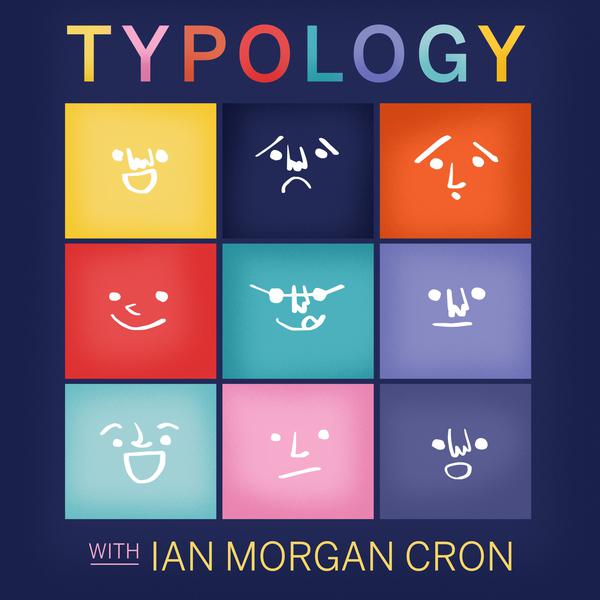
Typology
Ian Cron
- 39 minutes 36 secondsRediscover the Christmas Story You Thought You Knew, with AJ Sherrill (Replay)
This Christmas, we're delighted to bring back one of our most beloved conversations with Enneagram Three, pastor, and author AJ Sherrill. In this replay, AJ joins me to revisit the Nativity story—not as the sentimental tale we often breeze past each year, but as a rich, multilayered narrative pulsing with mystery, courage, vulnerability, and divine surprise.
AJ shares his own journey into spiritual direction, what it's teaching him about listening, presence, and compassion, and how the Enneagram continues to shape his inner world. We explore why the season invites us to slow down, pay attention, and resist the frantic pace that so easily numbs our capacity for wonder.
Together, we dig beneath the familiar Christmas imagery to uncover the often-misunderstood characters who surround the manger—the homeowner who offered radical hospitality, Zechariah rediscovering awe through silence, and even Herod, whose shadow side has more to teach us than we might expect. Their stories echo our own desires, fears, and growth edges in striking ways.
We also have some fun speculating about the Enneagram archetypes present in the Christmas narrative—Mary, Joseph, John the Baptist, and others—and how their unique postures toward God can inspire our own transformation.
This episode is thoughtful, illuminating, and sprinkled with the kind of laughter and honesty that always seems to show up when AJ is with us.
A perfect listen for Christmas Day.
Settle in, take a breath, and join us as we rediscover the story beneath the story—and the God who meets us there.
25 December 2025, 6:59 pm - 41 minutes 19 secondsCaring for Every Type at Christmas: A Holiday Conversation with Christina Wilcox (Replay)
With the holidays just around the corner, we're bringing back a conversation that continues to deliver relational gold. Whether you heard it the first time or you're discovering it now, this replay with author and Enneagram teacher Christina Wilcox offers a beautifully practical and deeply compassionate look at how the Enneagram can transform the way we show up for one another during the most emotionally charged season of the year.
In this episode, Christina shares her journey of discovering herself as an Enneagram Six—along with the courage, clarity, and self-understanding that followed. Together, we explore how each type navigates holiday stress, joy, expectation, and connection…and how you can care for the people you love in ways that truly meet them where they are.
You'll learn:
-
How to support friends and family of every Enneagram type through the busyness and emotional intensity of the holidays
-
Practical tools for managing social anxiety, especially for Sixes
-
Why presence and gratitude matter so deeply, particularly for Fours—and how all of us can cultivate them
-
Simple, insightful practices for building healthier, more attuned relationships this time of year
Whether you're hoping to deepen your emotional intelligence, strengthen your closest relationships, or simply bring more kindness and awareness into your holiday rhythms, this episode is a gift worth unwrapping again.
Lean in, listen well, and let the Enneagram help you love the people in your life a little better this Christmas.
------------------------------------------------------------------------------
P.S. For a limited time, take 40% off all Enneagram Courses through the holidays. Use the discount code HOLIDAY40 here.
18 December 2025, 5:20 pm -
- 53 minutes 1 secondAwakening in the Second Half: Jen Hatmaker on Loss, Love, and Letting Go
What happens when the life you built—carefully, faithfully, and publicly—splits down the middle in a single night?
On this episode of Typology, I sit down with bestselling author and beloved cultural commentator Jen Hatmaker to talk about her stunning new memoir, Awake. Jen, an Enneagram Three with a courageous streak that can look a whole lot like an Eight, opens up about the "before-and-after date" that changed everything—July 11, 2020—when her 26-year marriage ended, and her whole world cracked open.
Together, we explore what it means to wake up in midlife:
-
to grief and betrayal,
-
to leaving behind scripts you never chose,
-
to freedom from needing to be liked,
-
to discovering what really matters in the "second half of life."
We dive into the Enneagram and the unique way Threes navigate identity, image, success, and failure—especially when life doesn't cooperate with the plan. Jen shares how therapy, embodiment work, and raw honesty helped her rebuild, and why this memoir isn't about spectacle, but about hope.
This is a conversation about midlife transition, spiritual awakening, and the quiet miracle of becoming more fully yourself—right when you thought everything was falling apart.
If you're navigating change, heartbreak, faith shifts, or a midlife renaissance of your own, this episode will feel like a hand on your shoulder and a light on the path.
----------------------------------------------
ABOUT JEN HATMAKER
Jen Hatmaker is a bestselling author, award-winning podcaster, speaker, and fierce advocate for women living in freedom and agency. With 14 books—including four New York Times bestsellers—along with her beloved For the Love podcast, Jen Hatmaker Book Club, and more, she reaches millions with her signature mix of humor, vulnerability, and wisdom. Her newest book, AWAKE: A Memoir, (released on September 23, 2025), chronicles her raw, real-time journey through the shocking end of her 26-year marriage and surprising reinvention. She lives in a creaky old farmhouse, loves 90s country, and drinks Almond Joy creamer like it's a personality trait. Find her at JenHatmaker.com.
CONNECT WITH IAN
Follow Ian on Facebook or Instagram at @ianmorgancron and @typologypodcast. Check out Ian's website at www.ianmorgancron.com
**Interested in a 30-minute one-on-one virtual coaching session with Ian? Fill out this intake form and we'll be in touch.
11 December 2025, 3:47 pm -
- 59 minutes 41 secondsLynn Smith on Leadership Confidence and Overcoming the Brain Bully (Enneagram 3)
This week on Typology, we welcomed the incomparable Lynn Smith—former national news anchor turned communications strategist, executive coach, and proud (and newly discovered) Enneagram Three with a Two wing. And friends… buckle up. This conversation is a masterclass in emotional intelligence, presence, and what it means to pursue success without losing yourself in the chase.
Fresh off taking the Typology Assessment, Lynn joined us in that familiar Three-ish blend of humor, candor, and high-octane energy, joking that the results made her want to immediately call her therapist. What unfolded from there was a remarkably vulnerable exploration of people-pleasing, approval-seeking, identity, and the hidden costs of a lifetime spent earning applause.
Lynn pulled back the curtain on her years in broadcast news—an industry where worth is measured in seconds, headlines, and flawless delivery—and revealed the deeper story beneath her polished exterior: a lifelong drive to achieve, a tenderness inherited from her family's immigrant narrative, and a powerful desire to help others communicate with confidence and authenticity.
But the real gem of this episode is Lynn's groundbreaking work on what she calls "the brain bully." That inner critic. That saboteur whispering that you're one misstep away from failure. That internal voice Threes know far too well.
Lynn not only names it—she teaches you how to outsmart it.
Her framework for dismantling fear and building resilient confidence is practical, empowering, and deeply human. And when she reveals her own brain bully's name—"Bob"—you can't help but laugh and exhale. Sometimes the most powerful breakthroughs come with a wink.
We also wandered into a juicy conversation about magnetism versus authenticity, why your energy enters a room a full tenth of a second before you do, and how the Enneagram can radically improve communication across teams, industries, and families.
Connect with Lynn Smith at www.lynnsmith.com or on socials at @lynnsmithtv
CONNECT WITH IAN
Learn more about the Enneagram at www.ianmorgancron.com or follow Ian at @ianmorgancron and @typologypodcast on Instagram and Facebook
P.S. Interested in a 30-minute one-on-one virtual coaching session with Ian? Fill out our interest form here.
4 December 2025, 4:28 pm - 25 minutes 15 secondsGratitude for each Enneagram Type
German-born spiritual teacher and self-help author Eckhart Tolle once wrote, "Acknowledging the good that you already have in your life is the foundation for all abundance."
I found this to be true in my life as well, and as it turns out, expressing gratitude isn't just a sound spiritual practice. It's essential to our emotional and physical well-being.
According to a recent study performed at Harvard Medical School, "Gratitude is strongly and consistently associated with greater happiness. Gratitude helps people feel more positive emotions, relish good experiences, improve their health, deal with adversity, and build strong relationships."
How can you reap the benefits? While there are many beneficial exercises that can help you cultivate an attitude of gratitude, such as journaling, morning or evening reflections, and performing acts of kindness, many people focus their thoughts outward (Ex: I'm grateful for my children, a roof over my head, my job, etc.).It's easy to lose sight of the good in ourselves.
Instead, let's focus inward. Tune in as Anthony and I share what we're grateful for about each Enneagram type and why you should be too.
28 November 2025, 4:48 pm - 55 minutes 6 secondsThe Sacred Ache and Beauty of Becoming with Heath Hardesty
What happens when an Enneagram Two (or…maybe a Four?) takes a deep dive into the ache beneath our desire to be good, loved, and whole?
This week, I sit down with Heath Hardesty, pastor and author of All Things Together: How Apprenticeship to Jesus Is the Way of Flourishing in a Fragmented World. What begins as a conversation about the Enneagram Two's longing to help soon unfurls into an exploration of the soul — the ache for beauty, the mystery of shame, and what it means to live authentically before God.
Together we explore:
-
The difference between helping and hiding
-
Why our "ache" might actually be a form of divine homesickness
-
How beauty, poetry, and the transcendent lead us toward wholeness
-
What dies — and what's reborn — as we grow older and surrender our false selves
-
The sacred invitation to move from doing ministry to stewarding mystery
It's equal parts theology, therapy, and literary love letter. Whether you're a Two, a Four, or simply a human being trying to make sense of your inner world, this episode will remind you that becoming whole is less about striving and more about awakening.
🎙️ Listen now and discover the sacred ache that pulls us home.
ABOUT HEATH HARDESTY
Heath Hardesty is the author of All Things Together: How Apprenticeship to Jesus is the Way of Flourishing in a Fragmented World (Multnomah; 10/14/25). He serves as the lead pastor of Valley Community Church and is the founder of Inklings Coffee & Tea in the heart of downtown Pleasanton, California.
Heath grew up in a blue-collar home and was a plumber's apprentice in Colorado before becoming a pastor on the edge of Silicon Valley where he, his wife, and four kids now reside.
He holds degrees in literature, leadership, biblical studies, and theology from the University of Colorado Boulder and Western Seminary in Portland. Visit him on IG@heathhardesty.
20 November 2025, 4:16 pm -
- 54 minutes 43 secondsSteve Taylor on Maturity, Mindfulness & Meaning (Enneagram 7)
In this heartfelt, humorous, and deeply human conversation, Ian sits down with longtime friend — artist, filmmaker, professor, and Enneagram Seven — Steve Taylor. You may know him as the legendary provocateur who "invented irony for Christians," but in this episode, we explore the terrain beneath the creativity, the energy, and the relentless forward motion that has defined so much of his life.
Together we wade into the deeper waters of the second half of life — aging, character, grief, spiritual maturity, limitations, and the sacred invitation to move from doing to being. Steve speaks candidly about the shifting landscape of life at 67:
-
the habits that no longer serve him
-
the tender emergence of compassion
-
learning to sit with grief rather than outrun it
-
the uncomfortable art of slowing down
-
how filmmaking and teaching have reshaped his inner life
-
and the courageous (and often comical) struggle of a Seven learning to live in the present moment
We talk about marriage, mortality, the ache of unfinished dreams, the sweetness of gratitude, the pains and gifts of aging, and the spiritual practices that are slowly rewiring Steve's relationship with presence.
Tune in to hear this rich conversation about Enneagram transformation, emotional intelligence, creativity, and the inner work of becoming whole.
ABOUT STEVE TAYLOR
Steve Taylor is a filmmaker, writer, producer and recording artist who earned his "Renaissance Man" stripes (Prism Magazine) from a body of work that's garnered him multiple Grammy, Billboard, Telly, Addy and Dove awards and nominations. A southern California native, he was raised in Denver, Colo., and studied music and film at Colorado University. In 1983, Taylor began a career as a recording artist that spanned 12 years, selling over one million albums worldwide and garnering him two Grammy nominations for "Meltdown" (1984) and "Squint" (1993). In the process, he made history as the only artist to twice win Billboard Music Video Awards for self-directed music videos. As a concert artist, Taylor headlined four international tours, including acclaimed appearances at L.A.'s Universal Amphitheater and London's Hammersmith Odeon. He was also lead singer in the MCA-signed modern rock band Chagall Guevara.
Follow on Facebook or Instagram
13 November 2025, 3:04 pm -
- 1 hour 3 minutesWild Courage and the Heart of the Enneagram Three, with Jenny Wood and Carlina Daugherty
What happens when two high-achieving Enneagram Threes sit down with an Enneagram Four? You get an electric, honest, and surprisingly tender conversation about ambition, fear, and what it really means to live courageously.
In this episode, Ian sits down with Jenny Wood, former Google executive and author of Wild Courage: Go After What You Want and Get It, and her Chief of Staff, Carlina Daugherty, for an unfiltered look at the drive and depth behind the Enneagram Three. Together, they explore:
· Why fear — not talent — is often the real barrier to success
· The nine "wild" traits that fuel courageous leadership (and how to keep them from derailing you)
· How two Threes with different subtypes actually make the perfect team
· Jenny's raw reflections on control, comparison, and rediscovering what "enough" really means
· The second half of life — and why it's less about achievement and more about awakening
It's an episode packed with laughter, candor, and the kind of vulnerability that reminds us: success without self-awareness isn't success at all.
🎙️ Listen in and learn how to move from human doing to human being — with a dash of wild courage.
6 November 2025, 6:09 pm - 55 minutes 9 secondsJoel Miller on the Inner World of the Enneagram Five and the Power of Ideas*]:pointer-events-auto [content-visibility:auto] supports-[content-visibility:auto]:[contain-intrinsic-size:auto_100lvh] scroll-mt-[calc(var(--header-height)+min(200px,max(70px,20svh)))]" dir="auto" tabindex="-1" data-turn-id= "request-WEB:6abe4ba0-b777-42de-8a2f-aabdd0742ee1-0" data-testid= "conversation-turn-2" data-scroll-anchor="false" data-turn= "assistant">
In this week's episode of Typology, I sit down with my dear friend and fellow book lover Joel Miller—an Enneagram Five through and through, and author of The Idea Machine: How Books Built Our World and Shape Our Future.
Joel embodies the mind of a Five: curious, analytical, fiercely independent, and endlessly fascinated with ideas. But as we explore in our conversation, that intellectual brilliance can also become a refuge—a way to manage anxiety, avoid dependence, and retreat from life itself. Together, we unpack what it means for Fives to move from "information to intimacy," from hoarding ideas to sharing their hearts.
We talk about why books are "technologies of connection," how Joel's marriage to a Four helps pull him out of his head and into his heart, and why he believes faith is meant to be experienced, not simply understood.
If you've ever wondered how to balance thinking and feeling, solitude and connection, this episode will resonate deeply.
About Joel:
Joel J. Miller is a former publishing executive with a twenty-year career in writing and editorial. Today he serves as chief content officer of Full Focus (FullFocus.co) and publishes Miller's Book Review (MillersBookReview.com), a popular Substack celebrating literary culture.
He is the author of several books, including The Idea Machine: How Books Built Our World and Shape Our Future (forthcoming, November 2025). His writing has appeared in Reason, the Washington Post, American Spectator, and National Review. He lives outside Nashville, Tennessee, with his wife, kids, dogs, and more books than space.
Available now for pre-order: The Idea Machine: How Books Built Our World and Shape Our Future
Follow Typology Podcast on Apple Podcast, Spotify, or your favorite podcast player to learn more about the Enneagram and personal growth. *]:pointer-events-auto scroll-mt-(--header-height)" dir="auto" tabindex="-1" data-turn-id= "486bef2f-b9fb-4777-a1b7-ac32cae04a9c" data-testid= "conversation-turn-3" data-scroll-anchor="false" data-turn="user">30 October 2025, 4:56 pm - 1 hour 6 minutesBad Thoughts: When a Preacher and a Shrink Team Up to Heal the Mind and Soul, with Judah Smith and Dr. Les Parrott and
On this week's episode of Typology, I'm joined by two remarkable guests who sit right at the intersection of faith and psychology: Dr. Les Parrott, a clinical psychologist and author, and pastor Judah Smith, who brings a preacher's honesty and a comedian's timing to our conversation.
Together, they've written a new book called Bad Thoughts: A Preacher and a Shrink's Guide to Reclaiming Your Mind and Soul. It's a lively and deeply honest dialogue between theology and therapy—between the pulpit and the couch.
We dive into what Les calls the five "toxic thought patterns" that keep us stuck—guilt, shame, insecurity, entitlement, and unworthiness—and how reframing those internal narratives can lead to genuine healing. Judah opens up with surprising candor about his own inner critic, the pressure of ministry, and why he believes the future of the church might look a lot more like AA than Sunday morning at 10 a.m.
It's part Enneagram session (spoiler: Judah's possibly a Seven), part theology class, and part group therapy—equal parts laughter, humility, and grace. You'll hear Les explain why awareness is curative, Judah describe what it's like to feel "freer in his soul," and me wrestling right alongside them with what it really means to change our minds.
If you've ever wondered how psychology and spirituality can work together to transform our lives—and not against each other—this conversation is for you.
ABOUT OUR GUESTS
Judah Smith is the lead communicator of Churchome, a thriving community with multiple locations and a global app, known for its cultural relevance and deep love for Jesus. He is the New York Times bestselling author of Jesus Is __. Judah and his wife, Chelsea, live in Seattle, Washington.
Dr. Les Parrott is a #1 New York Times bestselling author and psychologist who has been featured on Oprah, CBS This Morning, the Today Show, CNN, and The View, as well as in USA Today and The New York Times. His books, which include Saving Your Marriage Before It Starts and many others, have sold over five million copies. Les and his wife, Leslie, a marriage therapist, are the creators of BetterLove.com, a resource for couples. Les and Leslie live in Seattle, Washington.
23 October 2025, 1:49 pm - 44 minutes 27 secondsHow Empathy Helps Us Experience Love Deeply, with Drs. Bill & Kristi Gaultiere
What if the real key to spiritual transformation isn't trying harder—but receiving love more deeply?
In this heartfelt conversation, I sit down once again with Drs. Bill and Kristi Gaultiere—spiritual directors, therapists, and founders of Soul Shepherding—to explore what it means to truly receive and reflect God's empathy.
Drawing from their new book, Deeply Loved, the Gaultieres invite us to consider a radical truth: that spiritual transformation begins not with striving or self-critique, but with allowing ourselves to be seen, known, and loved—just as we are.
Together, we unpack how shame, unconscious resistance, and old emotional wounds can block us from receiving love—from God, from others, and even from ourselves. Through vulnerable stories and spiritual wisdom, Bill and Kristi reveal how empathy heals the deepest fractures in our souls, allowing us to move from performance and perfectionism into grace-filled presence.
We explore:
-
Why self-empathy is essential to emotional and spiritual health.
-
How each Enneagram type misses empathy in distinct ways.
-
The difference between tactical and transformational empathy.
-
How empathy, truth, and responsibility work together to produce growth.
-
What it looks like to experience God's empathy even in suffering and loss.
16 October 2025, 4:28 pm -
- More Episodes? Get the App