- 34 minutes 2 seconds6 Things a Cheating Husband Says: What You Need To Know
If you’ve been betrayed by your husband, you’ve probably replayed every conversation in your head. What he said. What it meant. Here are six things a cheating husband says that may seem innocent, or even remorseful, but are actually manipulative and abusive.
You deserve safety. Clarity. Truth. Take my free emotional abuse quiz to see if you’re experiencing this.
1. Cheating Husband Says, “It’s because you were pregnant.”
At first, this sounds like a confession wrapped in vulnerability. But let’s be clear: blaming betrayal on your pregnancy is a covert form of abuse.
He’s saying, “You made me do this.” He’s shifting responsibility for his betrayal onto your body, and your vulnerability.
This isn’t guilt…it’s manipulation.
2. “I’ve had this addiction since I was a kid.”
If your cheating husband says this, it might trigger your compassion, and that’s the point. Yes, trauma is real. But past trauma is not a free pass to traumatize others.
When a man uses his childhood as a shield against accountability, he’s not trying to heal. He’s trying to keep you from leaving.
3. “Let’s” get help.
This one is tricky. At first, it seems like progress. Counseling. Support groups. Healing.
But what if he’s lying in those sessions? What if he’s telling the therapist half-truths, or worse, repeating the kind of things a cheating husband says to shift blame onto you?
Many women spend years in therapy trying to “fix” the marriage, when the real issue is that he’s abusive, not confused.
4. “You’re just not supportive enough.”
If your cheating husband says you’re the problem, he’s counting on you to believe him.
Women in these situations often over-function, working double-time to prove they’re loving, patient, faithful. Meanwhile, he’s lying, gaslighting, and keeping secrets.
This isn’t a marriage. It’s a mind game.
5. “I’m sober now.”
He might say he’s changed. That he’s not using anymore. But his actions don’t match. He’s distant. Emotionally cold. You feel invisible in your own home.
But in public? He’s pouring your coffee. Smiling like the perfect husband.
This tactic, acting loving in front of others while rejecting you in private, is covert emotional abuse.
6. “You’re emotionally Abusive.”
This one is the hardest. When you finally draw a boundary or leave, the cheating husband says you’re the toxic one.
He tells your church, your family, your friends:
“She’s crazy.”
“She ruined the marriage.”
“I tried everything.”This tactic is called DARVO: Deny, Attack, Reverse Victim and Offender. And it’s one of the most psychologically damaging parts of betrayal.
Why It Hurts So Much
When your cheating husband says things like this, the trauma goes deeper than infidelity. It’s not just about sex or secrets. It’s about emotional coercion and psychological manipulation.
And if you feel confused, isolated, or like you’re slowly losing your grip on reality, you’re not crazy. You’re experiencing betrayal trauma.
This interview dives deeper into one woman’s story. Pay attention and you’ll hear how her husband used every one of these to make her thing his cheating was her fault.
Transcript: 6 Things Cheating Husband Says
Anne: Kathleen a member of our community is on today’s podcast. She’s going to share her story. Welcome, Kathleen.
Kathleen: Hi Anne. Thanks for having me on today.
Anne: We’re grateful that you’re brave enough to share your story to help other women. We’re talking about how your cheating husband says that it’s your fault. So why don’t you start with your backstory? What was your situation?
Kathleen: I guess from day one of my marriage, I felt like something wasn’t right and I could never put my finger on. We were, I thought, happily married, had a child. Then shortly after my second child was born, I just felt that something wasn’t right.
Discovering His Infidelity
Kathleen: I found out, unfortunately, that my husband was into exploitative material, and that was just devastating. I felt like everything was over. Although I didn’t want to end the marriage, I felt like my perfect world with my newer marriage, my two sweet children, our sweet little family was just ruined.
It just was not what I thought it was. We immediately tried to get help. Unfortunately, he was lying to me. He blamed it on my pregnancy with my first and second child—something I later realized is exactly the kind of thing a cheating husband says to avoid taking responsibility. For years this went on with him dabbling in help. I just kept with it, trying to stay strong, trying to stay in the marriage. I never even thought this type of infidelity was abusive.
We kept going and we had our good times and then our bad times. When things were bad, they were very bad. Things were good sometimes, but it was really not much to hold on to. So, we went on like this for probably fourteen to fifteen years until we got help together. Through working with them over about a two year period, I started to see, that my husband just did not want to do the work to get better.
Which made us pretty much come to a halt. We separated about two summers ago for three months. He was able to come back and about two months after that, he was out for good. Since then, he blamed everything on me.
Realizing The Infidelity Was Emotional And Psychological Abuse
Anne: Let’s talk about those years of thinking he has an addiction and going down that route for a while. Did you ever consider you were dealing with an emotional and psychological abuser?
Kathleen: I had no idea.
Anne: And did anyone ever mention it to you? Like he’s been unfaithful, he’s abusive?
Kathleen: No, never. If anything, it was the opposite. It was, let’s help him. Let’s see what we could do to help him.
Anne: Or he’s such a good guy. We can’t understand why he’s doing this thing. Let’s get him some help.
Kathleen: Absolutely. Yeah. Or his past, you know, he had a rough upbringing, so this is why he’s doing it.
Anne: Right. Yeah. I often say, I know several people who have had a really super hard upbringing and they’re not abusers. So it’s not really a reason to be abusive
Challenges With Clergy Who Don’t Recognize Abuse
Anne: . He went for years to a well known Catholic counselor and men’s purity groups. Do you feel like they really understand that infidelity is abuse?
Kathleen: Absolutely not. We started with this one counselor, the well known Catholic counselor in infidelity expertise, and I felt like I was blamed in this situation, the same way a cheating husband says things that shift responsibility, and I just bailed quickly. Something in my gut told me, get away. Then, the last year or so, I heard that he might have changed the way he helped women and couples. I decided, let me give it another try. It was at least 15 years later. Unfortunately, it was just the same thing.
It was one session and done. No, there’s no change. It’s very unfortunate because these seem to be the people we turn to when you have a problem. It just causes more trauma for the women.
Anne: Right, what are some of the things that the priests said to you or did that was so traumatizing that blamed you?
Kathleen: In my parish? Yeah, so my parish priest actually supported me.
Anne: When you mean support, when you say supported, do you mean financially?
Kathleen: Not financially, there’s really no financial support. It was just an emotional support. He listened, he understood. He suggested I might have to separate with my husband, which I took that very seriously. Maybe four months later, we separated. After my husband went and talked to the pastor and the parish priest, both decided to take sides with him, which I don’t even know why a side had to be taken.
Cheating Husband Says OTher’s Should Stay Neutral
Anne: I can tell you why.
Kathleen: Go ahead.
Anne: A side does need to be taken. A neutral party will always benefit the perpetrator. The problem is, most of the time, they side with the perpetrator. instead of the victim. Because in an abuse situation, there’s a perpetrator and a victim. If you stay neutral and say, well, she’s got her side of the story and he has his side of the story and the truth is somewhere in the middle, that means that you believe what he is saying a little bit. These are some of the confusing factors when deciding if you should stay married after infidelity.
Maybe she’s lying a little bit rather than recognizing, no, this is a perpetrator. He’s going to do everything he can to avoid accountability and blame his victim. And a victim who’s telling the truth, who’s trying to get to safety. So, it’s really important for people to take sides, but they need to take sides with the right party.
They need to protect the victim. Any type of neutrality or even thinking, well, he couldn’t be that bad, is harmful to the victim. Since infidelity is abusive to partners, taking the right side is important.
When Cheating Husband COnvinces Others It’s Your Fault
Kathleen: Right. And that’s a lot of what I’ve been experiencing. He’s been getting into the ear of anybody who knew us and telling them how horrible I have been, the same kind of story-spinning a cheating husband says to protect himself. Getting back to the priest, the priest was the one who was spreading that I was a liar and I have manipulated the entire situation. Anybody in this situation that I was in would have taken the advice he gave. Which, I don’t even know what help he was talking about.
Anne: This is one of the ways abusers manipulate their victims. People don’t understand that an abuser claiming that his victim is the abuser is abuse.
Kathleen: Absolutely. So, this abuse has not only extended to him lying to everybody about you and blaming you, but also roping third party people. Like a priest in your parish or other people, to also abuse you through blaming you.
When CheatinG Husband Says It’s Because of You
Kathleen: That’s exactly what’s happening now. I can honestly say that this secondary abuse is way worse than what I experienced directly from my husband.

Anne: Why would you say that is? I agree with you. I’ve experienced it as well. And I agree. But for our listeners, in your opinion, why do you think that is?
Kathleen: Well, I think, first of all, it’s my own healthy pride. I want to be an upstanding Christian and a good person. Now people see me as a liar and a manipulator, which I’m not. The other part of it is that, I’ve lost my community. I had to leave my church and go to a different church. It’s very hard because I feel like a lot of people look down their nose at me and I just try to hold my head high and have faith in God to get me through.
Recognizing The Full Extent of His Infidelity
Anne: When did you realize that all these years of, “Something’s not quite right.” When did you realize that was just flat out emotional and psychological abuse and coercion?
Kathleen: I always knew that it wasn’t right. I knew it wasn’t healthy, but I didn’t realize it was abuse until after our second separation. When surfing the internet one night looking at abuse and decided to call our local abuse shelter.
I called and said, I don’t know if I’m being abused. From the information that I gave them about what happened to me, they assured me that I was absolutely being abused. They also helped me to see that other behaviors that had happened in our marriage were abuse that I didn’t even realize were wrong, not just the things my cheating husband says, but the patterns behind them. I mean, I’ve been emotionally, psychologically, financially, and even physically abused. I didn’t realize I was also being physically abused.
Anne: Did that shock you because you’d never called an abuse specialist before, right? You’d always called maybe a marriage counselor or, some type of clergy or some kind of addiction specialist. Were you shocked that immediately right out of the gate, these people never talked to you before? We’re like, yeah, this is super abusive and that you’d never heard it from anyone else.
Kathleen: I was, and I felt it was such a disadvantage. Going through this, it was always focusing on his infidelity. I was always searching for addiction services for spouses, the help for that, and I couldn’t find anything to help with what a cheating husband says. But all the behaviors surrounding it make it abuse.
Finding Support and Betrayal Trauma Recovery
Kathleen: It was mind boggling and maddening to know that there was nothing out there.
I never wanted to go to marriage counseling for some reason. I knew in my gut, it was not a marriage issue. It was infidelity and it was his problem . So I was grateful for that, but it was hard to find help.
Anne: When did you find Betrayal Trauma Recovery?
Kathleen: I think I found it probably about a year and a half ago, maybe two years ago. Just found BTR online and saw there was The Betrayal Trauma Recovery Podcast and religiously started to listen because it was the only place that got it.
Anne: What did you think after years of the, help him, be gentle with him because he has these childhood problems. Let’s try not to trigger him, don’t shame him, are you a good wife? Are you giving him it when he needs it? What did you think after coming to BTR and listening? What did that feel like for you?
Kathleen: I just felt like there was a place that understood what it really was and I knew that it was the right place to get the information that I needed to educate myself.
Lying, Manipulation, Gaslighting ARE Infidelity
Anne: It’s like you know it in your gut, but you don’t have words for it. You don’t have a place to process it appropriately. If you try to process it with the addiction people and they tell you, no, it’s you and you need to be patient then it halts your processing, it stops you. It’s like floating around, but you can’t ever grab it. It’s like foggy and you can’t quite get out of that fog.
Kathleen: Right. I always knew, I always had the gut feeling and I would thankfully go with my gut feeling, but I could never put my finger on where things were going wrong. I mean, I never caught him using it again, I always was asking myself the question is he using or is he not? He claims sobriety. Those claims, the things a cheating husband says, kept me doubting myself.But based on what I know now and looking back, I know he was still using. I know he was because I know the way he behaved, it’s obvious because infidelity is abuse. I know the way that he kept me at a distance.
He wouldn’t engage with me at all emotionally, which devastated me. It was like I was a stranger in our house, but outside he acted like husband of the year. He would get coffee for me in front of other people. He would act like he was just so in love when he was with me in public, which is part of the reason why people just don’t understand the situation and they believe him that I’m the liar and the manipulator.
Secrecy Of Infidelity Makes It Traumatic
Anne: When you changed your outward talk from did the third party people get more angry with you? Are they like, whoa, wait a minute. You’ve said he’s a addict. Now you’re claiming he’s an abuser? Did they get more upset?
Kathleen: Well, not really because nobody knew he was a user. That was secret. It was my own private secret that I lived in. My family didn’t know. Our friends didn’t know. Nobody knew. I didn’t tell people. I was very much ashamed that was in our marriage.
Anne: Okay, did you tell people when you recognized it was abuse, did you start saying, he’s abusive?
Kathleen: Once we were separated for the second time and it was pretty much out there that we were no longer together. Yes. I told people that he had abused explicit online media and that he was abusive. I was trying to get myself to safety.
My family is so supportive, tremendously supportive, even more than I even thought that they could be. I’ve had friends that I wasn’t that close with, but they understood because of their own experiences through their life. They are like a rock to me, but then a lot of people that I thought I could count on, just disappeared or sided with him.
People Who Are Uneducated About Infidelity Don’t Know It Causes Trauma
Anne: Yeah. I’ve seen that happen too. It’s really interesting. Even a couple of friends that we had that her husband is also a user have decided to side with my ex. They’re still married. I wonder if they think, well, if we talk to Anne, she’s so intent on saying infidelity is abuse, maybe our marriage would be in jeopardy, so we don’t want to go down that route.
I’m not sure why they’ve decided to do that, but he’s still exhibiting abusive behaviors from my perspective, but of course they can’t see that. Why would you want to be friends with an abuser? That makes no sense to me,
Kathleen: Right.
Anne: Also I think we can clearly see that they’re lying and manipulating people, but they can’t see it.
Kathleen: No, and there is a part of me that has a little sympathy for the third party people. I believed my husband’s lies for years. I mean, my whole relationship was based on the lies a cheating husband says to protect himself.
Anne: Yep, and if we couldn’t see it, they don’t even live with him. Of course it would be hard for them to see it too.
Kathleen: Right, he’s good at lying.
Anne: Good at manipulation, good at grooming, really.
Kathleen: Absolutely.
Anne: A lot of women are hoping that their relationship will work out and hoping that once he’s confronted about his abusive behaviors he will get into some type of program and get help.
Importance of Truth & Full Disclosure In What A Cheating Husband Says
Anne: If they go down the addiction recovery route, many programs do what is known as a full disclosure. Where the abuser is supposed to outline all of his indiscretions, but doesn’t necessarily include all abuse episodes. Since you went down that route for a little while, did you ever have a quote unquote full disclosure with the help of an addiction specialist? Then you have to figure out if your husband’s apology is genuine.
Kathleen: No, unfortunately I did not. Anything that I found out about my husband was either me finding out by catching him or him over the years, basically, drip feeding me information and I would figure things out.
Anne: You say unfortunately. Is that something that you think would have helped you or why did you say unfortunately?
Kathleen: I say unfortunately because without any truth, there is no basis for your relationship and I never received truth. That’s part of the reason or a main reason why my marriage fell apart. If he was truthful with me, I feel like maybe we could have fixed things and worked on it better.
Anne: A lot of people get a full disclosure, but it’s not a full disclosure. So there are times where a cheating husband says he’s told the whole truth, but it’s not the full truth. And that, fake full truth is very difficult for victims because they think, oh, finally we have the whole truth.
Discovering The Truth Is Difficult
Anne: But they don’t. The other thing I think is interesting is, fake histories that they might give as excuses. I am not about to say that your husband wasn’t actually abused, but some of them do say things like that as an excuse. For example, I know of one abuser who told his victim that he was abused by a neighbor, but she is now 100 percent convinced that he abused the neighbor.
Kathleen: I believe there could be some truth to that. I took what my husband told me with a grain of salt, but he said he was abused, I took it seriously to protect my children.
Anne: Yeah, absolutely. I think that’s one thing that’s difficult to know when you’re dealing with an abusive and manipulative man who is willing to lie at all costs, is that truth that you think you know might not be the truth at all.
A full disclosure might not be a full disclosure. I want to give women who think, I wish I could have gotten a full disclosure and he would have told me the truth. If someone does not want to tell you the full truth, they might pretend to give it to you.
That might be as harmful as not knowing anything. When we’re dealing with someone who lies at this scale, What worries me is the fake truth that women think that they receive and then they feel safe because they feel like they’ve received it all when it’s just the tip of the iceberg.
Women Feel Betrayal Trauma Because Cheating Husband Says It’s Her Fault
Kathleen: That’s a good point and I think that with my husband, the way he is, nothing that ever came out of his mouth to me was truthful. Early on, I did pray to God to let me know what I needed to know. I guess I’ll just be grateful that I know what I know and that’s all I need to know.
Anne: Isn’t that interesting. As women of faith who decided to divorce, can we talk about your decision to divorce or are you divorced?
Kathleen: Not officially. I actually separated from my husband with the intent for him to go get help. Through that time, he chose to go live with his, suspected abuser, or at least who he claims abused him. He went to live with him for over a year. It was his brother.
Anne: His brother. Okay. So he chooses to go live with the person who he has told you abused him?
Kathleen: Yes, which was a huge red flag to me.
Because he claimed this, but then went to live with him. Then he decided about a year ago that he wanted to file for divorce.
Anne: That sounds really similar to my story, by the way. My ex claimed that he was abused by his parents and that his parents were really abusive, but hangs out with them all the time, without saying that their behaviors have changed. There is no claim, they’re totally different now.
Navigating Community Judgment And Isolation WHEN A CHEATING HUSBAND SAYS YOU’RE THE PROBLEM
Kathleen: Right now I’m really struggling with the community thing. It’s really tough to live in a community of people. It’s even where I work. The school that I teach at is where my children attend and it’s part of a small Catholic community. There I am working amongst people who think what my cheating husband says is true…that I’m the liar and manipulator and the marriage ruiner. So, it’s tough.
Anne: That is really, really hard. I am very sorry. I pray often that the truth is known to people somehow. There are days, do you ever do this? Where you read the local newspaper, thinking that you’ll see him in the newspaper? Do you ever do that?
Kathleen: I feel like someday I will hear that he has like either a DUI or was arrested or something.
Anne: Yeah.
Kathleen: He works at a local high school, so. Always worried about that as well.
Anne: It’s so strange to think that someone who has not taken any accountability is still just walking around. Not only just walking around, but affecting your life at such a level. Especially when you are the victim of his abuse without people really acknowledging or being compassionate or empathetic about your situation. Instead, being more judgmental, it feels more isolating.
Kathleen: Right, yeah, it does. Then, you get your wishy washy people who say, I don’t want to choose a side. That’s probably one of the worst things you can say to somebody who’s abused. Especially if her abuser has covert narcissist traits. Because it’s like, “I don’t take you seriously.”
WHEN OTHERS SIDE With WHAT A CHEATING HUSBAND SAYS
Anne: Yeah, I don’t believe you. I confront people about that. I would not recommend it, by the way. But I say, you need to pick a side. Because I’m a victim of abuse and he’s a perpetrator. Would you like to stand with a victim and stop enabling a perpetrator, or not?
Kathleen: Right.
Anne: They don’t like that one bit. People feel very uncomfortable about that. Then they think, Oh, she really is crazy.
Kathleen: It’s amazing how their crazy look makes us look more crazy.
Anne: Instead of thinking, Oh, they don’t like us, or they don’t like what we say about abuse, or they think we’re going too far when we call these guys abusers.
I think it’s more strategic to have a surprised posture, in your head. You don’t want to like insult people, like, that’s surprising to me. I didn’t know that you were here from 1830. In a time machine and that you didn’t know abusers do this and that what you’re saying is an extension of his abuse. Well, weird.
I mean it’s more strategic to have an attitude or an energy about us that is more surprise than traumatized. It’s impossible to not be traumatized when someone says something triggering, that’s obviously harmful, that’s not empathetic, or not caring at all. It’s impossible not to be hurt by that.
I wonder if we all took this, I’m shocked. A therapist wrote and said, I don’t agree with BTR’s model. I don’t think it’s abusive. So I can’t associate with you. My first email to him back was like, I’m so sorry. That makes sense. I wish you the best.
EMOTIONAL ABUSE AND WHAT A CHEATING HUSBAND SAYS
Anne: Then I thought, wait a minute. I’m not going to write this. I’m writing, Oh, I’m surprised to hear that lying and manipulation are emotional and psychological abuse. That’s what I wrote. He wrote back and said, Oh, I do. I recognize it’s abuse. I just don’t agree with what BTR says. And I’m like, Hmm? He said, I don’t think infidelity is abusive, is what he said. This is a prominent therapist out there.
Kathleen: Wow.
Anne: And I was like, Okay, whatever.
Kathleen: That’ll leave me to believe. Well, what’s going on in your world? Why are you, defending it?
Anne: Yeah. Why would anyone think that viewing someone abusing isn’t participating in abuse in some way? Or at the very least sending your energy somewhere other than your wife. What do you want to call that? If you don’t want to call it abuse.
Kathleen: I call that infidelity.
Anne: Infidelity is also abusive, right? Why are you so afraid of the word abuse?
Kathleen: I guess because it’s so strong and so many people think of it as hitting their wife, instead of what a cheating husband says. It’s so just extreme to call something abuse. I think that’s part of the problem. People need education on it.
Anne: What you went through is extreme. To say that, it’s too extreme to call it abuse. You went through years of psychological and emotional abuse and coercion. You are still a victim of abuse in your community from a perpetrator who is talking to your community about you and lying about you.
The Ongoing Struggle With Abuse
Anne: If you don’t call that extreme, what is? In terms of the way it affects you on a daily basis, that is extreme. It’s abuse. There’s no other word for it.
Kathleen: Right.
He’s still able to be in contact with me, unfortunately, because of our children, which leads the door open for him to continue to abuse me.
Anne: Exactly. You do your best to set boundaries, you do your best to heal, all those things that are healthy. It’s not impossible. You will live an amazing life, and things will get better for you over time. But they don’t understand that there’s no way to stop him from abusing you.
Kathleen: Right. It’s a shame because, our judicial system and even co-parent counseling, they just don’t understand how what a cheating husband says can hurt you. And it’s difficult because the boundaries that you set up are torn down or changed because you have to follow.
Anne: The parenting plan or something.
Kathleen: Yeah. Parenting plan or some kind of legal plan.
Anne: This is why I created my Clarity After Betrayal Workshop. Have you ever talked to the legal system or your attorney about being emotionally and psychologically abused and you need a parallel parenting plan?
Kathleen: He is very well aware. We just started a second co-parent counseling and I do want to ask if we could do a parallel parenting plan.
Anne: Yeah, it’s a difficult situation, and it’s ongoing, divorce doesn’t stop the abuse. It can protect us from a lot of things, but it can’t stop the things a cheating husband says. So that’s what’s really difficult. And so many victims now are praying and praying and praying for justice all over the world.
Faith And Frustration In the Face Of Abuse
Anne: It feels like we pray and pray and pray and that our prayers aren’t answered.
Kathleen: It’s kind of like any relationship. There are times I feel like God is right by my side and that’s what gets me through the day. Then there are times that I’m asking, “Lord, where are you? I don’t feel you.” So, it’s hard, I always have faith in our Lord, I know He is there, but to feel Him just makes it so much more doable to get through the situation.
Kathleen: It’s tough, I couldn’t do it without my faith, I couldn’t do it without God, and I am grateful for that, but it’s hard, and I too pray for truth, I’m like, Lord, I need truth to come out soon. I need it soon. So, hasn’t been answered yet, but I know that God is always working in mysterious ways. I’m just living in hope that it will come out at some point.
Anne: Yeah, I had a discussion with God the other day. He was like, I answer so many of your prayers. You just don’t notice because you’re focused on these other ones, you know, kind of like that. And I was thinking, but I don’t care about those other ones. These are the ones I want you to answer. Answer them now. Why are you not answering them? I’m so mad at you.
Hopes For Divine Intervention
Anne: It is frustrating to feel like he helped me with this and he helped me with that, but why can’t he help me so I don’t have to have any more contact with my abuser, which is a really big thing.
Kathleen: Right, That’s one of my prayers as well. I find it going to, like, sinful thoughts sometimes, which I try not to do.
Anne: Like him getting hit by a bus?
Kathleen: Totally, it is an accurate answer, it also, to me would be protection for my children because they are abused as well.
Anne: Exactly, yeah, I wonder about all those Old Testament stories of the wicked being smitten. I don’t know, but I know that the best we can do, if we’re women of faith, is to be obedient. Obedient to the commandments and do the best we can under a very difficult situation.
Kathleen: Right, and hopefully in God’s time, it will all come out.
Anne: If you could go back in time and share with your younger self what would you tell her?
Kathleen: I guess to go with your gut feeling. If you are doubting anything about what a cheating husband says, don’t second guess it. Look into it a bit more, be sure of who you marry and spend the rest of your life with.
Educating Future Generations
Anne: It’s interesting though, if you don’t know what you’re looking for, you could spend time with them and not see it. We all spent years with our abuser and we didn’t recognize we were being abused. That’s why it’s important to me that women know that you’ll experience if your cheating husband says it’s your fault.
Kathleen: Right. And that is what happened. And I had some odd dreams that happened and I pretty much ignored them. Which I wish I didn’t do.
Anne: Yeah, when you have no context for it, it’s difficult to see.
Anne: That’s one of the goals of our daily online support group for betrayal trauma is to educate women all over the world about abuse, about what it looks like so that we can educate our children, so if they have a dream, they have context for what they’re experiencing.
Kathleen: Right. Yeah, hopefully it’ll be easier for my children down the road.
Anne: Kathleen, thank you so much for being brave and sharing your story.
Kathleen: Anne, thank you for the opportunity to share my story. It’s, definitely helpful to know there are other women out there that understand, and I’m not alone in this.
26 May 2026, 11:00 am - 20 minutes 44 secondsThe Truth About Signs of Emotional Manipulation in Marriage
For many women, signs of emotional manipulation don’t stop with their husband. It often spreads outward, into families, faith communities, friend groups, and even professional support systems.
Emotional manipulation can be especially destabilizing when it comes from people a woman expects to be supportive. Friends, family members, clergy, therapists, or neighbors may unintentionally reinforce harmful patterns, leaving her feeling isolated, blamed, or unsure where to turn.
Here are seven signs of emotional manipulation that often appear after a woman reaches out for help:
7 Signs of Emotional Manipulation When SEeking Marriage Help
1. Advice that centers on him instead of your emotional safety
Comments like, “He needs your support” don’t take into account that he might be lying or manipulating you.2. Spiritual or moral language used to silence you.
Phrases like, just forgive or don’t keep score, pressure women to look on the bright side, when really they need to seek emotional safety.3. Undermining reality.
Statements such as “it’s not that bad” or “you’re overreacting”, erase facts and blur the truth.4. Discomfort disguised as reassurance
Often when someone is uncomfortable with hearing the truth, they rush to shut it down with statements like, “Everything will be okay.” When really they’re just pressuring a woman to stay silent.5. Protecting his image over the truth
If you go for help and the people you ask for help are more worried about protecting his image than they are the truth, they might say something like, “You shouldn’t talk about your husband like that.”6. Isolation through niceness
Well-meaning nice responses can leave you feeling alone, misunderstood, and less likely to reach out again.7. Pressure to explain, convince, or educate
Being expected to justify why emotional manipulation is harmful drains energy that is needed for healing.Recognizing these patterns is an important step toward clarity. Emotional manipulation becomes even more powerful when it is reinforced by others, especially at the moment a woman is seeking understanding and support.

How Education Helps You Recognize Signs Emotional Manipulation Sooner
Many women have found answers listening to The FREE Betrayal Trauma Recovery Podcast.
Our BTR.ORG Group Sessions are a safe place to ask questions, process trauma, and express your emotions.
If you’re unsure if what you’re experiencing is normal or toxic, take our free emotional abuse quiz to see if he’s using any one of the 19 different types of emotional abuse.
TRANSCRIPT: Signs of Emotional Manipulation in Marriage
Anne: I love hanging out with my good friend, Kate.
Today we’re talking about signs of emotional manipulation, not just from your husband, but from other people he’s using to manipulate you.
Because if he is manipulating you, he’s sometimes saying things in a loving, kind way and so he’s gonna talk to other people that way, and they’re gonna be like, “He seems so nice.” This is something that almost all 200 of the women that I’ve interviewed have faced, and Kate is really good at explaining why this happens.
Kate: It’s not just religious. All culture is like, “Oh, you got to support your husband. You got to be the good wife.” I’m just like, “Support? What kind of support are you thinking? You mean like the first two years we were married where I just gave him so much love and support and it was amazing?” and then he lied.
Anne: Sometimes really well-meaning people don’t realize that he’s been manipulating them.
It’s extremely destabilizing when they don’t know what’s happening.
Kate and I are going to focus on the manipulation that comes from outsiders like therapists, clergy, friends, family, whose responses, even though they’re well-meaning can leave women feeling isolated, blamed, or unsure of where to turn.
So if you’re having marriage trouble, you need to hear this. We’re gonna talk about how you might respond to these comments.
A lot of these responses might be for our own entertainment or benefit, like in our own head. We wouldn’t necessarily say this out loud, right, Kate?
Kate: Yes!
Anne: We need to be strategic in the way that we speak. If you’re interested in learning strategy, please take my workshop, go to btr.org/workshop where I give detailed instructions about strategic ways to respond to manipulators.
Emotional Manipulation Through Well-Meaning But Hurtful Comments
Kate and I aren’t necessarily doing strategy today. We’re more doing like what you can think in your own head so that you can feel better.
So Kate, What’s a really common thing that betrayed women hear from outsiders who don’t actually understand the situation?
Let’s just start with like rapid fire stuff we might hear from outsiders who have been manipulated.
Kate: “Oh, you shouldn’t out your husband.”
Anne: When they say, “out”, they mean you shouldn’t tell people the truth about what’s going on.
Kate: If I say at church or anywhere that my husband is a addict, I’ve had people tell me, “Oh, you shouldn’t out your husband like that.” I’m like, “What? If he didn’t want to be outed, he shouldn’t have done it.”
Anne: I know, and I shouldn’t have married him apparently.

Kate: I love my story, I get to say whatever I want. It happened to me. He made his bed.
Anne: And he shouldn’t have looked at it. So we’re even.
Kate: If he didn’t want it, he shouldn’t have done it.
Anne: Here’s another one a lot of people say, “He just needs your support.”
Kate: Blech!
Anne: Yeah, when we’re going for help, we’re telling people what’s going on, and they come back at us with a statement. Like if someone’s in addiction, they’re going to need your support and help. It feels terrible. I think in my head. Like what matters right now is what I need. I need his honesty. I need his fidelity.
Kate: I’m like, “Support? What kind of support are you thinking? You mean, like the first two years we were married, where I gave him so much love and support, and it was amazing? And then he lied.”
The Reality Of Supporting An Emotionally Manipulative Husband
Anne: I supported his butt out of the house.
Kate: I supported him by doing what was best for me.
Anne: Which was best for him.
Kate: Yes.
Anne: This one I’ve actually said to people, but I couldn’t say it with a smile on my face. I was saying it out of pain. I said something like, “No one should ever ask a victim to support their abuser, ever.” It is important to point this out so women know how to recognize victim blaming.
Kate: It’s so true. What do you mean to support him? You mean what I’ve already done for so long and it didn’t work? We’ve given them so much support.
Anne: Yeah for me, I was managing things, so well. Supporting him so much that I didn’t realize how bad it was. Also those general principles that everybody tells us, like love, serve, forgive and support that are principles I believe into my core. I wasn’t willing to ditch those right off the bat and go with safety. I mean, I had to try supporting him.
So I had to try making his therapy appointments and all that to get, to gain my own realization. That it was not going to work. What do you think? Have you ever met a woman who just went straight to boundaries.
Kate: No, actually. I think it’s kind of normal. And I don’t necessarily see it as a bad thing. I see it as you have to try this one way to know it doesn’t work. It’s not just religious. All culture is like, “Oh, you got to support your husband. You got to be the good wife.” We are loving people, and we try it. Of course, we’ll want to help someone.
Signs Of Emotional Manipulation: The Chocolate Cake Analogy
Kate: Let’s say our husbands were healthy people and struggling. It would be good for us to help them. But yeah, we have to learn that our help will not help them like we think it will.
Anne: Let’s say you bought a giant chocolate cake from Costco once a week. And your husband. Is like, Hey, I don’t want to eat chocolate cake anymore. Would you mind helping me? You’re like, “Sure, what can I do?” And he says, “Would you mind not buying chocolate cake from Costco every week?” And you’re like, yeah. No problem, happy to do that. And then he’s grateful. and he says, “Thank you for not buying chocolate cake. I super appreciate it.”
And that’s it. You don’t buy the cake. He doesn’t need it. No big deal. When he ate chocolate cake, it didn’t hurt you. And it’s no big deal to not buy it. But with viewing explicit content he’s essentially gaslighting you and victim blaming you saying. “I need help not hurting you,” which is essentially saying, “If you did something different, I wouldn’t hurt you”.
Kate: Exactly, it comes from the entitlement and resentments, so frustrating.
Unhelpful Reactions From Others
Anne: Another one I encountered was a woman who lived in my ex’s neighborhood, and I knew her from before. ” I said, I’m concerned about my kids. Can you keep an eye out for them?” I told her a little bit, and the whole time she looked uncomfortable. Instead of saying, “Of course, I’ll keep an eye out for them. This must be stressful to you!”
She said, “It’s okay. I don’t know why you’re freaking out. Your kids are going to be fine.” I couldn’t think of anything to say in that moment. I don’t know if I should have said anything. I think I might’ve said, “It’s not okay. It’s not okay.” Then I just walked off because I was super mad.
Kate: That makes no sense. I think I would have been like, “Thank you, I feel so much better! Yes, that is so helpful. Okay, not freaking out now.” Then just walk away with this ridiculous fake smile.
Anne: You know what’s crazy? You saying it’s gonna be okay erases all the facts. I appreciate you waving your magic wand of the words, it’s okay, which apparently in your mind are magic and they make facts disappear, thank you.
Kate: “You just magically made my husband better. Thanks!”
Anne: “Or the situation, is now fine. Yeah, thanks.” Other things you can think of?
The Misuse Of Forgiveness
Kate: Forgiveness, “Just have a little more forgiveness for your husband.”
Anne: When people say ‘forgiveness’ now, do you know Hamilton?
Kate: Yes.
Anne: ♫Forgiveness♫ I’m not singing it right because I can’t sing, but that word, when they sing it like that, it’s like this burst of peace coming through and happiness. It feels cool in the musical. For those familiar with Hamilton, you might know what I’m talking about. If you don’t, sorry, I didn’t mean to ruin it for you.
Kate: Actually, when you said Hamilton, I was thinking of the stand up comedy from Katherine Ryan. I don’t know if I can watch Hamilton now because I will be thinking of her the entire time.
Anne: Wait. When I said Hamilton, you were thinking who?
Kate: Katherine Ryan does a stand up about Hamilton. She calls out the misogynistic crap in some of the parts. It is so funny. Anyway, sorry, sidetracked… the forgiveness. I’m like, “What do you mean forgiveness?” If it was something that was in the past and the threat was over, I could maybe understand. Even then, it’s still nobody else’s business. Forgiveness is not like all of a sudden, “okay, I’m done.”
Sometimes it’s like baby steps. There are so many little things to forgive. It’s not just one big lump thing. So when someone says forgiveness, I’m like, “yes, maybe when the threat is over and I’ve had time to cool down.”
Anne: Like how is me forgiving him going to stop him from harming me? This is the truth about forgiving abuse.
Kate: Yeah, it doesn’t make any sense.
Anne: I think this is a useful exercise. Forcing forgiveness is an effect of spiritual abuse.
Signs Of Emotional Manipulation From Unsafe People
Anne: There are safe people who we could actually have a conversation, explain how we feel, and talk about these things. They would be like, “Oh, yes. I’ve never thought about that before and I totally see it. I’m so sorry.”
I have a super good friend who when neither of us knew what was happening, she said all the wrong things. But when I started talking to her about it and how I felt, she got it. She’s a safe person because she understood. She was like, “I can’t believe I said that stuff to you. I am so sorry. I was only trying to be helpful and I totally missed the boat.”
The problem with trying to have a witty comeback or just the right thing to say to someone when they don’t understand is number one, you could hurt a safe person. Like if you’re snarky or sarcastic, it could actually hurt their feelings, and then it could push safe people away. The second thing is that if they’re never gonna be a safe person, you’re just setting yourself up for your abuser to groom other people around you that it’s your fault. They’ll think, “What is wrong with her? She’s rude.”
Or, ” She doesn’t forgive. She doesn’t live a biblical life. Doesn’t she know she’s supposed to submit?”
Kate: ” She’s must be so mean. Oh, the poor husband!”
People Feel Sorry For Husbands
Anne: I think in, at least our church culture, Kate and I have the same faith, a very outspoken woman, sometimes people feel sorry for her husband. Do you think that?
Kate: Oh my gosh, yes. A million times over, yes. They will always feel way more sorry for the man than the woman. It’s obnoxious. Even my own family has done it. Everybody knows, it’s not a secret,
Anne: But
Kate: There was one time I mentioned in front of family members. He’s sitting right next to me. He knows this. I know this. It’s like my husband is enmeshed with his family in a bad way. But my sister ended up telling me, “You called out your husband?” They were feeling so bad for him, because he just sat there and didn’t say anything. He looked so embarrassed. I ended up asking my husband, “Were you embarrassed?” He’s like, “What? No.” He ended up actually writing them all a email.
I mean, he sent it before he even told me he was going to do it. He basically was like, “No, I have ruined her life. I’ve done this, I’ve done this, I’ve done this. She’s still allowed to tell whoever she wants.” It was very validating, but it’s still frustrating, because even though he sent that email, I guarantee most people would still be like, “Yeah, but she must be so controlling. Maybe she forced him to write that email?” Or, “Oh, poor, poor man.” It’s frustrating.
Go To A BTR Group Session To Process Hurtful Comments
Anne: In our faith, it seems like a lot of the men might go in and confess to their clergy or something, and instead of getting some type of, “Whoa, this is serious. You are not following Jesus at all. Maybe we need to protect people from you because your behavior is pretty atrocious.” Instead of saying that a lot of times they’ll tell these abusers, “Oh, you’re not really that bad. You’re great.”
Kate: “Oh, you just need more church. Go to the temple. Here, we’ll give you a calling; this will help you.”
Anne: “Volunteer more. ” Yeah, exactly. If you need to process your own trauma through thinking, “Okay, these are the things I could have said.” Talk to your friends. Talk to Betrayal Trauma Recovery Group Session clients in a group session. because When someone says something like that to you, it causes an injury. Sometimes it can be pretty extreme. Sometimes it can be minor. It depends on where you are in your trauma healing process.
Like now when people say stuff to me, the injury to me is a lot less than it used to be. But, to validate people who are like, “Why do these little comments the nice, 80 year old woman at church tells me, or my neighbor hurt me so much?” Maybe to just validate women and say, “Of course, they’re going to hurt you. Of course, you’re going to need to process it.”
You’re going to go through this time in your head where you think, “What could I have said back to this person that could have either educated them or put them in their place?”
Strategies To Respond To Signs Of Emotional Manipulation
Anne: You don’t want to put an 80 year old woman in her place, that’s just not nice. And if they really, truly don’t want to get it, then educating them isn’t going to work. So validate that we need to process it. Then, to consider that it’s not our job, and we don’t have to worry about educating other people or putting them in their place.
Kate: I think it’s beneficial to come up with the witty comments, but not necessarily to say them, because it doesn’t ever really help. I love coming up with the funny comments, but it’s more fun to then tell it to friends afterwards. It’s more funny then because that way you’re not hurting other people. But you can still find some humor in it so it doesn’t feel so heavy.
I know that in some circumstances it is best not to say much. Because they’re going to try to make you in the wrong no matter what. There are many circumstances where I prefer to be vulnerable, not necessarily for them, but for me. Even if it’s just as simple as, “Oh, that kind of hurt my feelings.” Or, “Well, he’s hurt me a lot. I’m still processing.” I like to be vulnerable. That’s empowering for me. It actually gets the better responses from people, where they’re not defensive.
Anne: Rather than a snarky, sarcastic one.
Kate: They’re still not going to always want to learn, but it might help them think twice. But again, that’s not the reason. The reason is because it empowers me to be honest.
Anne: I think being honest is always a good idea. My concern is safety.
Engaging In Conversations About Trauma
Anne: Could you put yourself in a place where you could be harmed by that person? We might think, “Oh, I’m not safe to say this to someone.” If we say, “I’m super sad because my husband is abusive.” If they don’t like us, however they felt before is how they’re going to feel after. It’s not like suddenly they’re going to be like, wow, I like you now, or I don’t like you now.
You’re not going to change someone who really liked you and cared about you to someone who doesn’t like you and cared about you.
Kate: Yeah, it does. I also think when it comes to safety, a lot of times I find that safety within me. Yes, somebody might make me feel unsafe, but it doesn’t make me feel unsafe to the point where I’m not going to say, “Hey, that hurt my feelings.” I’m still safe enough to do that, because it’s more empowering for me later on. It’s hard to explain. It’s hard to put this in words.
I have not come across a time where I have been honest and vulnerable, and it made me more unsafe. And I was like, I shouldn’t have done that. Because I always learned from it. This isn’t going to work for everybody. I’m not saying everybody should be like this, because there are some horrible people out there. Sometimes the best thing is to not say anything.
Deciding If It’s Safe To Share Trauma
Anne: I think I was like that more at the beginning when I discovered about my ex husband’s addiction. I’d see somebody at Costco and they’d be like, “How are you?” I’d be like, “Really bad, I just found out my husband lied to me for six years, and he’s using pornography, and it stinks. But it’s super good to see you. How are you doing?”
After that, they’d be like, “uh?” So I would do this quite a bit in the beginning, and now I’m less like that. Number one, because I’m not living in my trauma as much anymore. If they asked me, how am I doing today? I’d be like, “Great, I’m doing great. I ate a vegetable.”
You know, it’s not like the thing on my mind. So it would be easy for me to talk about something else. I think I’ve learned to be a little more guarded, because I thought shouting it to the world would bring safety. If everybody knew, how could he do it? I realized that did not keep me safe. So for that reason, I think about safety a little differently than I thought before.
Kate: It doesn’t go over too well when you’re like, “You know what? My husband just lied to me, and so I’m a little upset. I just found out he’s a big fat liar.”
Anne: It goes over super well in Betrayal Trauma Recovery Group Sessions, or with a close friend, like Kate, who understands it.
When Experiencing Signs Of Emotional Manipulation, Balance Honesty & Safety
Anne: So if you have a safe place to go, then yeah, share it there.
Kate: I think you can still be honest in those circumstances without actually saying all of it. You could just say, “You know what? Eh, I’m so so. I’m alive. I’m okay.” You don’t have to be like, “I’m great.” Then be like, “I’m dying inside.” You can still find ways to be honest.
Anne: Saying something like, “Things are really, really hard for me right now.” And if they say, “Oh, what’s wrong?”
Be like, ” I can tell you want to help and you care about me by asking me, but talking about it’s not going to help. You know what would help? If you fix my sprinklers. Or, bring me a pizza.
Kate: That one would be great.
Anne: We’re just exploring this together and that’s what the podcast is for.
19 May 2026, 11:00 am - 32 minutes 41 secondsWhat Happened When I Googled “Celebrate Recovery Near Me”
If you’re typing “Celebrate Recovery near me” into Google because you’re desperate for help after discovering that your husband has been lying to you about his infidelity or his use of inappropriate material, you’re not alone.
BEFORE GOING TO CELEBRATE RECOVERY NEAR ME, CONSIDER THIS:
1. Recovery Programs Only work If He’s Honest
A recovery environment only works if your husband is completely honest about his behavior. Even in cases where he’s willing to attend a program, some women discover their husband takes “chips,” confesses slips, or shares breakthroughs in group without ever telling her. Not because he’s changing, but because he’s using the system to make it look like he’s changing.
2. celebrate recovery near me Can’t Fix Emotional Abuse
When women search “Celebrate Recovery near me,” they often think the program will help heal their marriage by helping their husbands understand the root causes of their addiction and behaviors, especially if he seems willing to go meetings. But the root issue isn’t addiction, it’s entitlement, control, and dishonesty. Most recovery programs aren’t designed to assess or confront coercive control.
So instead of getting safer, some women end up feeling more confused.
Before you invest your hope in any program, you deserve to understand the full picture. To discover if your husband is emotionally abusive, take this free emotional abuse quiz.
3. Some Men Use Recovery or Language as a Shield
Many women report that once their husband joined a recovery group like Celebrate Recovery near me, he just learned to speak the language of recovery without actually changing. Instead of becoming more honest, some men become more skilled at hiding, using the right words, sharing at the right times, and appearing accountable…while the underlying patterns stay the same.
This isn’t necessarily the program’s fault. Recovery culture tends to take disclosures at face value. But for some men, it becomes a stage rather than a mirror.
4. If He Gets Praise in Group but You Get Hurt at Home, Pay Attention
The applause of a group like Celebrate Recovery near me can unintentionally reward performance. Your lived experience matters more than his report. If his recovery looks great publicly, but privately you feel scared, confused, dismissed, or blamed, that’s a sign to step back and observe what’s happening. You don’t have to announce this to anyone
5. RECOVERY Programs Don’t Replace Betrayal Trauma Support
A program like Celebrate Recovery near me often uses a model that focuses on his trauma from childhood or his triggers. They may encourage couples to build routines that reduce his stress or triggers, sometimes placing more responsibility on her to monitor or support his progress. These might be good tools for people who genuinely want to heal. But they don’t address lying, manipulation and entitlement.
A woman in an emotionally abusive marriage needs support that centers her emotional safety, not his recovery timeline.
6. If You Feel Worse After the Program Starts, That Matters
Many women assume feeling worse is a sign that they’re a part of “the problem,” or they need to be “more supportive.” When his patterns of behavior become a shared problem…something you’re both expected to manage…it often creates more emotional chaos for her.
Her emotional safety needs to be addressed separately, not tied to how well he’s doing or how much effort he appears to be making. Feeling confused, blamed, responsible for his recovery, or pressured to forgive and move forward…is a sign something else is happening.
7. Your EMOTIONAL SAFETY COMES BEFORE HIS RECOVERY STORY
If you’re searching “Celebrate Recovery near me” to save your marriage, here’s the most important thing: his recovery is not the foundation of your emotional safety. Your clarity is.
It’s important to have your own support community in place that is educated in the dynamics of emotional and psychological abuse and can help you decide what you need for emotional safety.
If you need support in addressing what’s really happening, and whether a recovery program can help, you can start with the Living Free Workshop or BTR Group Sessions. They’re designed to give you immediate clarity.
Transcript: What Happened When I Googled “Celebrate Recovery Near Me”
Anne: I’ve talked to hundreds of women who have typed things like “Celebrate Recovery near me”, or “addiction recovery program” into Google. Especially when their husband said he was an addict and he is willing to go to a program. So if he’s willing and goes to this program, it’s totally normal for a woman to think that things are gonna get better. But over the years, I’ve interviewed countless women who tell me things actually got worse.
And I’m interviewing one of those women today. We’re gonna call her. Nancy. Here’s part of her story.
Nancy: His coworker called me. She told me she was out with some friends. And he flirted with her and tried to pick her up. We were Going to Celebrate Recovery. He supposedly had been sober for months.
Anne: We’re gonna get to her whole story, but before we do, I wanna stress that it’s important to understand that a manipulative man can use anything, a recovery program, therapy, even meeting with clergy to manipulate a woman further, and that causes a lot more harm and trauma. So before you start searching for a recovery program for your husband, it is important to consider what his recovery would be for and how abusers manipulate their victims. Most of the time, the therapist will say something like childhood wounds or addiction recovery.
When really what you’re actually experiencing is emotional and psychological abuse. And I’ve even interviewed women who have tried to find an abuse program for their husband, and they still tell me the same things. So as you listen to Nancy’s story, I think it will help put into perspective what’s really going on and what steps you wanna take next.
When I met him I thought he was a good guy
Anne: That’s why I created the Living Free Workshop. It helps women know what’s going on, if he’s really abusive or not. Some women find out he’s not. And then what steps to take to create emotional safety in your life. It’s much faster to figure that out first, before spending tons of time and money in therapy or a recovery or Celebrate Recovery near me program.
Living Free total run time is about two hours and 50 minutes, which is much shorter than three or four years to find out it’s not working.
So Nancy, thank you so much for sharing your story today. Welcome, can you tell us how you met?
Nancy: When I met him, he went to church. He served on the worship team, and he could talk like a preacher. So I thought he was a good guy. It was confusing, because we were play wrestling, and I wouldn’t have remembered this except I had written in a journal and I read it after everything fell apart. He held me down and said some things like, did you think you were stronger than me? Did you think I would let you go? It really scared me.
I was very close to breaking up with him, but he actually cried and apologized. So I thought, he’s sorry. It’s not gonna happen again, and that sort of thing never happened again. He realized he had to be more subtle. He did tell me about his past sexual history.
Mirroring my desire to serve missions
Nancy: He was in the Navy and with several prostitutes. And he was honest, it felt like to me at the time. That he struggled with porn. I thought after we married, that wouldn’t be an issue. And honestly, I don’t know that anyone would’ve told me anything different.
I wanted to serve in medical missions. He didn’t seem interested in this, so I prayed and left the relationship in God’s hands. I told him about how I prayed. And the next time we got together, he said, “He had been thinking and praying, and he really felt God moving his heart to missions. That everyone always thought he should be a missionary. It really blew me away, because I thought God had answered my prayer really fast. He knew that he was not only lying to me, he was also lying about God, and he chose it. Which makes him a really evil person.
In pre-marital counseling, I was clear that I didn’t see myself as a housewife. I wanted things to be equal, and I didn’t plan to stop working. He acted like he was on the same page and that he was fine with this. So we married. Things were not good. In less than a year, he turned me down for sexual intimacy. Which was surprising and incredibly hurtful. Especially when I realized he was looking at porn.
We went to see the movie Fireproof, and afterwards he admitted he was taking off his ring to flirt with people. I was trying to be very understanding, but I did feel hurt, and he got angry at me. He said this was the thanks he gets for staying away from porn for a couple weeks, which is not funny, but I’m laughing at the audacity.
He Pushed Me to Quit Working While Avoiding Any Real Recovery or Celebrate Recovery Near Me Programs
Nancy: I think I blocked a lot of it out, because somehow things were good enough back and forth between nice, the Christian thing, and when he would be not so nice. I didn’t recognize abuse. The only thing I could put my finger on was the sexual things.
We never could solve how things were to be run. And now that we had children, he could step away and I would be forced to do more house duties, cooking, cleaning, et cetera. Because someone had to do all the things for the children. I would tell him what we had agreed before marriage, and he said, “Yeah, but I thought you would change after we had kids.”
Anne: I said the same thing. I said, I’m not gonna cook. And he was like, no problem. Then later told me, I thought you would change. And I’m like, I was so clear.
Nancy: Exactly, we’re both honest and open. It’s like, that doesn’t mean I have to change, just ’cause you thought I would change. Well, it did because we had children now that needed to be taken care of.
Anne: Right.
Nancy: The same thing I said, I didn’t wanna stop working.” And he would constantly try to get me to stop working. I was only working part-time. He wanted me to not have an escape route. We separated, but I was so exhausted and overwhelmed with a baby, 2-year-old, and a 5-year-old. We got back together pretty quickly.
Discovering he was flirting with coworker
Nancy: A year later, we separated again and went to couples counseling, ’cause I still had not seen how that was harmful. I was really hopeful, which seems funny after just like a week or two of separation. But his coworker called me and told me she had been out with some friends, and he was flirting with her and trying to pick her up.
I thought this would be his rock bottom, because he’s almost lost his family. Anyway, we got back together and things were up and down. I was dealing with a lot of anger and depression, social anxiety. At the time, I thought I needed counseling to deal with my issues. We were going to Celebrate Recovery near me. His stated problems in Celebrate Recovery were sex addiction and anger. It’s so crazy knowing that, how could everybody there not believe anything I was saying?
He supposedly had been sober for months because of all the addiction model stuff. We agreed that he would tell me if he ever had a slip within a certain amount of time. So at Celebrate Recovery, he went forward for a one-day chip, and that really shocked me because he wasn’t ever gonna tell me. When we agreed that he would.
After that we had sex that was definitely, obviously coercive. I don’t think I had the words at the time, but I definitely felt that way because we had an agreement and he didn’t follow it. That was the last time we ever were together.
He said he would throw me a 30th birthday party
Nancy: I took a step back, and I was observing him because I felt like we were at the best place, and I’m actually an okay person. That means there’s nothing I’ve done wrong, literally. And there’s nothing I can do to change this. It just became increasingly clear to me.
So I started looking for more information and came across BTR, but I didn’t listen to the episodes because I saw the word abuse. And thought that doesn’t apply to me. And I found a couple other podcasts. They didn’t fully explain everything, and then a really bad incident happened when I turned 30, a big birthday.
Anne: They always do it on birthdays and holidays.
Nancy: I know, I had always thrown him birthday parties. He’s an extrovert and that was something that he enjoyed and I didn’t mind, he didn’t throw me anything because I’m more of an introvert. So when I was going to turn 30, I told him that I’d like a birthday party and would like him to throw it for me. I said if he didn’t want to, let me know. ‘Cause it was important enough to me that I would throw it for myself. He said he would throw me the birthday party.
But when I wasn’t seeing any preparations, I checked in with him. And the motions he made came across like he was planning a surprise birthday party.
Anne: Like, let’s not talk about it. Or you might ruin your surprise.
Nancy: Exactly, I had said, “I will throw it for myself.” I repeated that again, that time. He knew.
He Claimed He ‘Forgot’ My Birthday While Pretending Recovery Through SAA and Celebrate Recovery Near Me Groups
Nancy: So my birthday comes up. I expect a surprise party around any corner. I come to the end of the day and nothing happened, nothing. And his excuse was forgetfulness.
Anne: I never gave you the impression I was gonna throw you a party.
Nancy: Yeah, It was always that gaslighting and blame shifting. I feel like I dissociated a little bit around that time. ‘Cause it was really hurtful, because I would have thrown it for myself.
Anne: And he knew that and he gave you the impression that he was throwing you a party on purpose to ensure that you didn’t have a party.
Nancy: Exactly, I actually believed him that it was on accident, but that was just as hurtful. Now, I believe it was fully on purpose. At the time I was going to COSA and he was going to an SAA group.
Anne: When she says COSA or SAA, she’s talking about 12-Step recovery for pornography addicts or sexual addicts. There are other programs like Celebrate Recovery near me. And the COSA is a co sex addict’s 12-Step for a wife of an addict, where she basically does the same program he does and tries to fix her character defects.
Nancy: Yeah, I’d been talking about giving him another chance to throw me a party, and they said if he already didn’t do it, you should not do that. So I ended up throwing myself a party. After that 30th birthday, I would get down around my birthday every year. I ended up telling him that, not in a way to blame him, because like I said, I didn’t think he had done it on purpose. I just thought I should let him know I wasn’t myself.
Recognizing Gaslighting in real time
Nancy: And it was the first time I recognized what he was doing in the moment, he started to say. “That had not happened. That didn’t sound like something he would’ve done, that my memory must be a little off.” So many different ways he was trying to convince me that it hadn’t happened, and he couldn’t convince me because I knew it had happened. So he switched tactics and said that maybe he should get counseling for being abused.
Anne: He’s claiming that you’re abusing him.
Nancy: Exactly, I was so confused. I asked him, “Abuse, what are you talking about? Am I being abusive right now?”
And he goes, “No, the abuse I’ve had to endure for the last how many years.” And then I realized oh, that was gaslighting. That’s blame shifting, and I ended up leaving the room and cried on my own.
It shook me up that he could take something very vulnerable and turn it on me like that. I was talking about that incident and how he was saying I was abusive and I heard myself saying, “It was surprising he would call me abusive when he’s been so much worse.” And that was the first time I thought maybe he is abusive, and that reminded me about BTR. I thought, let me listen to that, ’cause maybe I can get some insight. That brought me back to listening to the BTR podcast.
And I vividly remember I was binging all these episodes, hearing women’s stories. It felt like my life. And it just blew my mind to realize I’ve been abused this whole time.
Anne: I’m so sorry. You were experiencing Betrayal Trauma and were not aware that recovery or Celebrate Recovery near me programs wouldn’t help you.
Addict model says he’s struggling, he’s not in control
Nancy: It made sense. It felt like everything clicked into place. Everything else I was told didn’t make sense. I always talked about stuff. I was always looking for answers. And I never felt like I was codependent or that I needed codependents anonymous. None of that stuff seemed to fit. In fact, the advice I was given, “Don’t pay attention to what he’s doing. Only work on yourself.” While they’re also saying, “Don’t be codependent, ignore what he’s doing,” which just doesn’t work.
The addict model, like he’s struggling, he’s trying, he’s not in control. I mean, that’s like step one. You’re powerless to control your behavior. He accepted the addiction model early on, and we were in and out of groups the whole time. But I don’t believe now that he’s an addict, and I don’t think he even thinks he’s an addict. It’s a great excuse to keep doing what you’re doing. Because there’s no accountability, and everyone applauds your efforts. Even if you’re not reaching the goal, you actually have a choice.
He would say to me that he could not promise that he would never do any of the sexual stuff again. So it was like basically just saying, I’m gonna be doing this my whole life.
Anne: My ex wouldn’t promise either. He said if I promised, “I wouldn’t be on my toes. Like I don’t want to think I couldn’t do that, because then maybe I would be in danger of doing it.” Which doesn’t even make sense. Like I can legit say, I will never have an affair.
finding BTR helped me wrap my head around the abuse, Celebrate Recovery near me didn’t
Nancy: Right, yeah. I found BTR. And the abuse model is they have a choice, and they’re choosing to be harmful and abusive. All these years he had been a liar. I stepped back and observed behavior for me to fully wrap my head around it.
I believe he feels entitled to do what he wants. He doesn’t see people as people. Or maybe it’s just women as women. Objectification is a huge thing. I don’t think he ever saw me as an equal partner or a person. And I don’t believe he ever loved me. I was a desirable object he acquired, and that was it.
When I started listening to BTR, it helped me understand abuse and the subtleties of it. Because before, I had only been thinking physical abuse or yelling insults, which my ex did not do. Listening to the stories helped me see how this plays out in marriage, even in a Christian marriage.

It was helpful to see the ways men could twist faith things, because many of these men and my ex are very manipulative. Like it has to slowly play out over time to see what they’re doing. And a lot of it goes back to intent, and it’s hard to see intent. It was hard for me to imagine my husband is lying to me.
So that was a shift too, to start looking at actions instead of words. BTR gave me a lot of insight into what I was living through and what was helpful, especially getting into the BTR groups. Celebrate Recovery near me didn’t do that.
It helps build you up so that you can go through the hard stuff. We were going to counseling around the time I started going to BTR group.
Going to couple counseling
Nancy: Because of BTR, I had the words for it. I was able to express better what was happening. The counselor didn’t help my situation, of course. Individual counseling and couple counseling are unhelpful, because an abuser’s goal, my ex’s goal, was not to get better. His goal is to get whatever he wants. He’ll say whatever he needs to say to get what he needs from the counselor. We’ve gone to quite a few couple counselors. We would go into a new counselor, and he would bring up a new issue. He had never told me about me.
Anne: Suddenly you’re a kleptomaniac or something.
Nancy: Yeah, things that he thought I did that were hurtful to him, that I had never heard of before. But I felt so bad that I was hurting him without knowing it. What a callous person I am.
Anne: Not knowing he was bearing false witness and that he literally made it up.
Nancy: Yeah, completely distracted from why we went to counseling in the first place is sexual issues. Like I would have to be a safe person so he could be honest with me. Because I’m an actual caring person, I would feel like this was an actual issue that I needed to fix. And that is the part about the psychological abuse that is hard to describe. Because a lot of it could sound valid, and I thought these things were valid. But later realizing they were lies. They were lies, because he would’ve said them before.
Anne: Exactly.
creepy experience with new counselor
Nancy: We did an in-home separation, At first. His abuse escalated the freer that I was getting. I never completely stopped working. I got a job and started after the in-home separation. He actually shut off the internet. Luckily, I prepared ahead of time. I had my own phone plan with the hotspot, So I could just switch over and just didn’t even engage with him.
It has been a process of combing through my life, and I have wondered that how many lies I won’t even know about or remember. Because, I believed him and he was so good at lying. One of the new things he said was I wasn’t being vocal enough in bed. It felt so humiliating for him to say that to the new counselor. When he had never said that before.
This male counselor wanted us to do an exercise right then on the sofa in front of him. He wanted my ex to touch like my foot or my leg, and then slowly move closer to my private areas. And as he moved closer. I was supposed to make more and more noise.
Anne: No.
Nancy: Isn’t that crazy?
Anne: That’s so creepy.
Nancy: I did feel incredibly creeped out, and I refused to do it.
Anne: Good for you.
He said there would be no equality in our marriage – Celebrate Recovery near me didn’t help with that
Nancy: I wish I had just walked out, But after we left, I said, “I will never go back to that counselor again.” And we never did. I said, “What I would need to continue in the marriage was for him to be seeing his own personal counselor, to have a full disclosure with a lie detector test.” Which he said no to. And I know now it wouldn’t have been helpful. Just like Celebrate Recovery near me wasn’t helpful.
Anne: I know, thank goodness.
Nancy: Right.
Anne: Mine never did that either. And I think I would’ve just been in the abuse for so much longer had he said yes.
Nancy: Right, and then the second thing I said is that, “I wanted equality in our marriage.” And he said no.
Anne: He said no, he didn’t want equality?
Nancy: Correct.
Anne: Wow.
Nancy: So I was like, then literally that’s the end of it. And I was going to BTR group. I remember one of the coaches said to me, “It was a blessing that he actually had been honest.” At the time, I didn’t understand, now I do. And I’m so glad I asked those questions. I don’t know why he was honest. There are two possibilities. He didn’t think I would leave, because I hadn’t yet. We’d been married for almost 14 years, and he was only saying what was already true.
You don’t need to be perfect to be loved
Nancy: I just didn’t realize it was true. Or maybe he did want me to leave. I had some conversations with his mom. Because I found BTR, and surprisingly, she said it made her realize she was in an abusive relationship with my ex’s dad. However, she still felt like I should stay. Because she felt like the Lord had taught her so much and she had grown through all these trials.
I have sympathy for her, but it’s so wrong. All of a sudden it just became very clear to me that if I stayed for the kids, it was actually putting them more at risk. And honestly, that conversation solidified that I had to leave for the kids. If you’re not sure yet if your partner is abusive, Just listen to some BTR stories and see what jumps out at you.
You are a worthy human being that does not have to be perfect to be loved and treated with respect. Reconciliation is not necessary for forgiveness, and you don’t have to forgive anyone. It’s more of a process that can happen on its own time, and no one should force it. Pay much closer attention to someone’s actions over time than the words they say. And it’s never too late to make different choices when you learn or understand new information.
I feel like having to make a choice that is wildly unpopular with people around you. Church, that I had to learn in a new way. Maybe for the first time, to not let what people thought about me affect the decisions that I make that part has been really hard because a church we were going to was not supportive at first.
Call from somebody in Celebrate Recovery near me group
Nancy: Some of them seemed supportive, and even the ones I thought were supportive, in the end weren’t. I actually got a phone call from somebody in my Celebrate Recovery near me group. She called me up to ask me if I was seeing a counselor. Because I still seemed angry. I was speechless, of course I’m angry.
Anne: Yeah
Nancy: I didn’t even know how to respond to her. I just told her yes, I’m in BTR group and got off the phone. There’s nothing wrong with being angry about the situation. I feel like church tells women they shouldn’t be angry. But Jesus was angry. There’s nothing wrong with being angry.
Anne: Yeah, I feel like if you’re not angry, something’s wrong.
Nancy: Right.
Anne: I mean, nothing is wrong with you. You might be numb, you might be sad. I went through periods where I wasn’t super angry. I was just really depressed, but on the whole oppressed, abused, exploited people, their anger is from God to help liberate themselves from the oppression. But of course, the abuser does not want you to liberate yourself. He said flat out he didn’t want you to be equal. That is infuriating.
Nancy: And now he wanted 50/50 custody. It was very upsetting, because my ex had been very non-helpful around the house and with the kids. It was hard to think that he would want 50/50.
Anne: But of course he did.
Nancy: I didn’t see that coming, and I wish I had been more prepared and could have been more strategic.
Listening to him lie in the courtroom
Nancy: I could not wrap my mind around that at the time. I had seen more and more abuse as my eyes were open. So I couldn’t wrap my mind around 50/50 custody. I was under the delusion that justice was in the court system. I found out, even though I know he lies, it was a big shock to listen to him lying in the Courtroom. It’s hard to witness.
It’s something I wish I had processed before, because I’m sure that was pointed out to me. But I couldn’t process that as a reality back then. The Living Free Workshop was so helpful. And going to group and getting help constantly. The Living Free Workshop is so different than anything you’ve ever been taught.
I don’t know how I would’ve made it through this, honestly. That was another thing that was really helpful. There were some scripts in Living Free to get him on Our Family Wizard, and he actually got on it easily. I was surprised. I didn’t think he would get on as easily as he did, and just not responding in any other way.
Anne: That’s the thing, they’re desperate to talk to you. With the workshop, everybody says, how am I gonna make him go on OFW? And if you do the script and stick to it and do not deviate. Legit, don’t deviate. Once you’re on Our Family Wizard, literally block him on your phone, so he has no other way of contacting you. He is desperate to get your attention and your belief, like Living Free says, yeah, they’re so transactional. And if you respond through Our Family Wizard, he will find a way to do it.
he performs for others in groups like Celebrate Recovery near me and in court
Anne: They’re like, well, this is what I gotta do to talk to her, because I’m blocked otherwise. They will move. It might take a month. I’ve had it take the longest six weeks with one woman that I was working with. Every single time he texted, she said, “Hey, I’ve responded on Our Family Wizard.”
Nancy: Right. It felt overwhelming, because he kept sending me long, manipulative messages, but I responded on Our Family Wizard. It only took me once for him to switch. Being on OFW was better.
Oh, one of the books BTR recommends, The Woman They Could Not Silence. I read it and that was awesome. It helped open up my mind to spiritual abuse. It’s been inspiring to me this whole time. What she went through being separated from her children. That book has been really inspiring.
The thought of leaving them with him, terrifying to me. We went through two rounds of court. He would make it sound like I was controlling and not letting him do things. Like why wouldn’t I let him take the kids to half of the doctor’s appointments when he never came to a pregnancy appointment? And same with field trips. He’ll go on field trips now, and I feel like it’s just to keep me from going. It. He never wanted to before.
Anne: If he was actually a good dad, he would’ve been doing it before, but since he’s only doing it now, he is just performing.
Nancy: Yes, it’s a performance because he’s getting something out of it from other people, like in in celebrate recovery near me, and it’s punishment for me because he knows how much I like being there for the kids.
Reluctance to support anything he can’t control
Nancy: When we married, he didn’t want us to do extracurricular activities. He didn’t even want free after school activities, much less anything you would have to pay for. He was only okay with youth group attached to his job, not the free after school activities.
But since we’ve been divorced, he has them interested in hockey, which is one of the most expensive and time consuming sports there is. It’s very strange from my entire experience with him. He never talked about hockey, and he never wanted them involved. At the same time, he is not wanting to pay half of necessary expenses, like medical or orchestra uniforms. For a long time, I was not asking for half of necessary expenses. Because I didn’t wanna have to deal with him because he makes it such a struggle.
Anne: My ex is exactly like that, exactly. When my book comes out, I’m anxious for you to read it, because it was all about control. Like, if I’m paying you anything or if I’m involved in any way, I have to control it.
Nancy: Yeah, like my youngest wanted to do karate. His dad would not participate even when I offered to pay the whole thing. Other son was invited to concert band, and his dad said no.
Anne: Think about the power trip that gives him that he’s able to manipulate them away from their natural interests. And maybe hockey is something that he wants to do. Like he thinks karate’s dumb, but he thinks hockey’s interesting.
Draining my bank account and controlling my time
Nancy: It is a huge expense that is very draining. When he won’t even pay half of an AP test.
Anne: And that might be part of it. He’s, let’s pick the most expensive thing to drain her bank account.
Nancy: Yeah, it was a double bind to drain my bank account and control my time. And at the same time, if I have to back out of it. He’ll say, sorry, kids, Mom won’t let us go to hockey.
Anne: He’s calculating ways to set you up to be the bad guy.
Nancy: Yes, he is an expert at setting up situations, so my bank account is being drained, and I cover a hundred percent of their insurance.
Anne: With a lot of these post-separation abuse situations. They get the benefits, but they don’t have any of the responsibilities, and they can use it against you, but it never works for you. They can bend the rules in order to benefit them, but you can’t bend the rules.
Nancy: In the Living Free Workshop. It was helpful to see how to deal with narcissistic abuse in marriage and how it plays out in separation, to find a way out of it. There was one thing you said, and this is when you’re moving away from his harm. You said, “If he escalates, remember that protecting yourself from the harm is not the cause of the harm. Just like evacuating a building was not the cause of the exploding gas lines.”
He still wants to get together
Nancy: That really hit me. One of the things that keeps haunting me is did I do the right thing? He still tries to get together personally with me. It constantly comes up that he wants to get together for coffee, or would I go to counseling with him, co-parenting counseling. I mostly ignore it at this point because he’s asked so many times. I don’t even answer him. Then if something goes wrong with the money situations or if there’s a point of disagreement, he will say, if you would’ve only met with me like I’ve asked, then this would’ve already been stopped.
Anne: Yeah, we could’ve worked it out somehow, no. He would still lie.
Nancy: It’s a trap. There’s that little 2% of me left that feels like, well, maybe I should meet with him, but no, it’s a trap.
Anne: Yeah, no.
Nancy: Because he never intends to do a nice thing. He just wants to get me in front of him again. I don’t think any good would come of it.
Anne: A hundred percent, no. It might seem good, ’cause once you get there, it might seem good. He might like to turn on the manipulative lies to make you feel like he cares. I think one of the most abusive things people can say is, I love you or that I care. So manipulating you in that way is actually dangerous, and that’s probably what would happen.
Nancy: I don’t think I could keep a straight face. It would skive me out so bad to be around him and hear stuff like that.
Everything he says is the opposite of the truth
Anne: Well, it’s just further evidence of his controlling nature, because he desperately wants to hang on to control. And so he’s increasing his lies because it’s getting away from him. That’s definitely a sign that he’s been lying the whole time.
Nancy: I completely agree. I know that this is better for them in the long run, but in the short run, that sentence helps me right now. That was probably one of the hardest things for me to come to terms with, is that he never loved me. He doesn’t love the children. None of it’s real. It’s all lies, and he still does it. It’s mind-boggling. Everything he says is the opposite of what the truth is. He continues lying as he did in programs like Celebrate Recovery near me.
As we were moving through the separation process, the boys did not want to leave and crying and like holding onto the car seats. It was horrible. I knew if I said anything to him, he wouldn’t care. Any altercation would be scary for the kids. So I started getting third party exchange people through a new church.
I actually found a church with a woman pastor, which is quite lovely. The new church was helpful and supportive, and there were several people that would help me with exchanges. And things changed, like taking the Living Free Workshop, and suddenly I felt a lot stronger. I had a new understanding and confidence, so I stopped doing the third party exchanges.
He actually met with the principal to try to get the principal to agree with him that I’m not allowed to go into the school on his parenting weeks.
like in celebrate recovery near me, A clear example of him lying, controlling and abusing
Nancy: Which isn’t true. You’re allowed to visit your kid in the school.
Anne: Absolutely.
Nancy: Unless there’s a restraining order, which there’s not. We have shared custody, but he made it sound like the principal agreed with him. I didn’t think it was the truth, but it scared me at the time. And we were about to have a party, and I signed up to bring food, so I worried I would be kicked out. But the principal didn’t say anything. Isn’t that a clear example of parental alienation?
Anne: It’s a clear way of him undermining your relationship with your kids, lying, controlling, and abusing you. This is how he’s literally abusing you and your children.
Nancy: Everybody heard about this incident, and it didn’t matter. He made it sound like he had just been concerned for the children’s wellbeing.
Anne: Yeah, no.
Nancy: My being around them upset them.
Anne: Lies. That’s the issue they lie in programs like Celebrate Recovery near me and fool the leaders.
Nancy: It’s lies at times it is possible that they might be upset, but it’s not because they’re scared of me. It’s more that they’re sad about the situation.
My one son, he told me, it makes him sad to see me when he knows he has to go back to his dad’s. My daughter had a phone before we separated, but he wouldn’t allow communication between the boys and me ever. Once, my son called me using his sister’s phone. He was crying. I was only on the phone for about two or three minutes, and then the phone cut off. And they told me when they came back that he had been mad at them for calling me.
Even if there is a court order they will find away around it
Nancy: He wouldn’t allow them to have a watch phones either. That’s one of the reasons we went back to court.
Anne: That’s the problem with court. You think if we get it in writing, then he’ll do it, but it doesn’t matter. He is not gonna do it no matter what.
Nancy: This is what I have learned. I don’t ever wanna go back to court again, because it doesn’t help. No matter what you do, they’ll find a new way to cause harm. So there’s no point in any kind of new order. ‘Cause then they’ll find a new way around it.
Anne: Exactly.
Nancy: I’m still glad I went, because before I had been worried I had to do everything exactly perfectly or something would go wrong. And then I realized he’s doing wrong things on purpose. He just says stuff to get what he wants and nobody cares. So that has relieved a lot of fear.
Anne: What would you share with listeners about what you’ve learned so far about finding help, maybe from Celebrate Recovery near me or elsewhere?
Nancy: You know, hearing other people’s stories have meant so much to me, Living Free and the BTR coaches set me up for success. They told me to transfer half of our money to a separate bank account before I even told him that I might be leaving. That was incredibly helpful because I’m not sure if it would’ve been easy for me to get the money. I never used the word abuse or narcissism to him. That played out well, because he would’ve twisted it against me.
Anne: A hundred percent.
Kids need to know what a safe place feels like
Nancy: Getting on the parenting app, super helpful, third parties for switches. Finding people to help with the things you need is just a lifesaver. I do feel like it will be better for the kids in the future, because they can be in a peaceful setting that’s not manipulative.
So when they’re making decisions. About how they want to live and their future partners, that they know what it feels like to be in a safe place and being able to have discussions with them about men’s and women’s roles.
Anne: Nancy, thank you so much for sharing your story today. And helping others who are searching, to find something truly helpful.
Nancy: Thank you.
12 May 2026, 11:00 am - 26 minutes 1 secondBetrayal Trauma In Marriage, When It’s Not Getting Better
I hear this over and over again: betrayal trauma in marriage doesn’t just come from discovering a husband’s lies. For many women, it deepens when they reach out for help, and aren’t believed, supported, or protected.
Most women respond to betrayal the way they’ve been taught to respond. They…
- seek counseling.
- ask spiritual leaders for guidance.
- work on themselves.
- try to explain their pain more clearly, more gently, more compassionately.
And instead of finding relief, they find silence. Or minimization. Or subtle pressure to endure. For so many women, the most painful betrayal isn’t only what happens at home, it’s what happens when they finally ask for help and realize there’s nowhere safe to land.
Before you spend one more day confused, you need a clear, simple framework for understanding what’s happening. That’s why I pulled together Clarity After Betrayal. It’s the starting place women told me they desperately needed before they wasted years trying to make sense of mixed messages, gaslighting, and chaos.
When Years of Betrayal Trauma in Marriage Takes a Toll
Nikki’s husband betrayed her for years: infidelity, lies, constant emotional attacks. He convinced her she was “too sensitive” and “too needy,” when the real issue was his pattern of betrayal.
If you’re thinking his behaviors might amount to emotional abuse here’s some examples of emotional abuse to check out.
Transcript: Betrayal Trauma In Marriage
Anne: Today we have a member of our community, we’re going to call her Nikki. She’s from Australia. Welcome Nikki. So, tell me your story. Did you recognize your husband’s abusive behaviors at first?
Nikki: Not at all. Goodness me, no. I was 15, just had my 16th birthday when I met my husband. I was in the UK. And we’ve been together ever since. I was six months pregnant with our first child. And he bought this little black bag home. And I hadn’t seen it before. We weren’t living together at the time. And he brought it back into my little flat, and being curious, opened it, and there was all this horrible material in there.
And said to him, this is not what I want as part of my life. I knew this wasn’t what I wanted, and he said, “Oh, I’ll get rid of it, I’ll get rid of it.” And there were other bits in this bag, which just baffled me. I was just horrified, and the next day I went into labor because I was just that traumatized, I guess.
So from that point, it kind of never stopped. I would continually find magazines under the couch. I mean, we tried getting help before we’d gone to several pastors who were basically just more about the codependent model. But I’d done nothing except to protect myself from betrayal trauma in marriage.
Anne: And try to protect your marriage, right? It creates betrayal trauma from infidelity, there are so many things a cheating husband says that harm.
Nikki: Yeah, and I didn’t want our children to spend time with me and then time with him, because he’d gone down the rabbit hole. I didn’t want there to be a point where he was left with them alone.
Life in Australia, Lack of Support & Self-Education
Anne: Where do you live in Australia?
Nikki: I live in Melbourne, Victoria, but I’m from Tasmania.
Anne: Okay, how do you feel like the support is there?
Nikki: None, I have struggled to find anybody in this field that can help. So no, I never recognized the abuse, not until I started educating myself. And then it was when I came across the Betrayal Trauma Recovery Facebook page that I knew that what he was doing was abuse, and I was experiencing betrayal trauma in my marriage.
Anne: Before you found BTR, when you were trying to get help, what types of things did you do to try and like, improve?
Nikki: Yep, I thought if I looked better, if I tried harder, if I loved him more, you know, I learned the love languages. I was always trying to improve myself, and even going to counseling to try and improve something. Yeah, I took it on board, but I think that’s much more to do with how I was raised to be a better wife. And then he wouldn’t do this thing.
Anne: There is so much you don’t know, there are so many powerful truths about emotional abuse. So you knew about the watching stuff online. Did you recognize the other types of abusive behaviors, like lying, manipulation, and gaslighting as betrayal trauma in marriage? Could you identify those back in the day? Or did you not realize all that was going on too?
Nikki: I knew there was lying and manipulation. Because that kind of goes hand in hand with sneaky behavior, doesn’t it? Yeah, it wasn’t until the internet came about and you could Google this kind of stuff that I became aware of it. It wasn’t until much later in our marriage.
Realizing Common Advice Doesn’t Work With Betrayal Trauma In Marriage
Anne: So when did you realize that common marriage advice, look good, love, serve, forgive, make sure dinner’s on the table, make sure the house is clean, you know, that sort of thing? People say marriage is hard work, and unless it’s abusive it’s just not true. And when did you realize that common marriage advice was not working and that the betrayal trauma in your marriage was not improving?
Nikki: Probably about 20 years ago.
Anne: And how long have you been married?
Nikki: We’ve been married about 27 years.
Anne: Okay, so seven years in, you realize, wait a minute, this isn’t working. What helped you realize that?
Nikki: I think it was shortly after we’d had intercourse, and I walked in and found him looking at stuff. I actually thought he deliberately tried to hurt me.
When Betrayal Trauma in Marriage is Getting Worse
Anne: And when you thought that, he deliberately attempts to hurt me, you also didn’t think abuse way back then.
Nikki: No, not at all. It’s only the abuse part has been, I think, the last six years that I’ve seen his actions as being abusive.
Anne: Why do you think it takes so long for victims of emotional and psychological abuse and this type of coercion (probably because no one knows: what is victim blaming) to understand the reality of their situation.
Nikki: Trauma, I think our brain sits in trauma because the person you most trust, the person you think will never hurt you, is doing it.
And I think it’s protection. I mean, I can’t speak for everyone, I can only speak for me. Because whatever your circumstance is, there’s a part of you that needs to protect your own mind and yourself from the betrayal trauma in marriage. Your brain or your body is just not ready to realize that this is what it is.
Crisis Point & Finding Betrayal Trauma Recovery
Anne: There’s also this education factor. You don’t have an abuse class in high school. Along with math and English, right? So many people think they understand abuse because they’ve seen a TV show where a guy beats up his wife, and they’re like, that’s what abuse is. And they don’t recognize all the different covert ways in a marriage that you can be abused and end up with betrayal trauma.
Nikki: I think it’s the gaslighting as well. Because it’s been so long in my marriage. It’s like, oh, no, I must have misunderstood what he said. Oh, no, he’s right. I’ve got that wrong. Oh, okay. I thought you meant this, but you actually meant this way. Oh, all right. So you’re second guessing yourself all the time.
Anne: What were you looking for online when you found Betrayal Trauma Recovery on Facebook?
Nikki: I hit a crisis point. The crisis point brought me to the fact that I was trying to seek some kind of support basically anywhere, because here in Australia it’s like, oh you’ll be right mate. So whoever you spoke to thought you were being prissy. It just wasn’t cutting it. I just felt so deeply ashamed and hurt that I needed some kind of support and wasn’t getting it in the real world. So when I came across the group, it changed the way I view my whole life.
Anne: So you started attending the Betrayal Trauma Recovery Group sessions, can you tell us about your experience?
Knowledge Is Power With Betrayal Trauma In Marriage
Nikki: Knowing that I’m not alone. Because I’ve always taught our children that knowledge is power. Once you have power, you can change the way you operate, change the way you do things. So for me, that’s been the greatest thing, being informed. And then being able to research that and having the facts behind it. Which has been a great thing.
Anne: Being educated about betrayal trauma in marriage brings so much confidence. It really helps you recover from betrayal. Because the gaslighting, you’re like, Is this me? Is this real? What’s going on? And if you don’t have words for it, you can never fully define it to someone else. And so, they’ll give you typical things, like, Well, you just must be stressed.

Or maybe, don’t worry, it’ll get better. Things like that. Because you’re not able to say what’s happening with betrayal trauma in marriage. So getting educated, you can actually talk about it. Having words to describe it immediately helps people understand what’s happening. It also helps victims understand what is going on. Because there’s so much confusion.
Nikki: Yeah, for me, what I’m experiencing now, because I’ve been in this for a long time. And there’s been a lot of game playing. on his behalf, and I’ve just realized my body is actually physically, it’s started coming out. I’ve developed really bad tinnitus, which is a physical representation of what’s going on in the outside world.
Betrayal Trauma In Marriage Has An Impact on Physical & Mental Health
Nikki: And also, I find my brain is not working the same. As I’ve got older. And I think that’s because of the trauma that’s gone on throughout our whole marriage and childhood. My brain’s got to the point where it’s like, I don’t want to work anymore. I don’t want to hold this memory, or it just phases out or disassociates, which I know is part of the trauma. But it’s frustrating.
Anne: I can imagine. How old are you now?
Nikki: I’m 47. We have five children. They’re all adults now. Thank you, God, they survived. They’re pretty good people, but we’ve got four boys, one girl. And my children growing up, they’d ask him a question, and he wouldn’t respond. They’d always be, Oh, we’re going to go to the sensible parent. Meaning that we’re gonna go see mum.
Anne: He wouldn’t respond because he was distracted or he just couldn’t focus?

Nikki: I don’t know if he didn’t know the answer. So he didn’t want to look silly, so he’d muck about. Because I think his use of online material stunted his intellectual growth. He must have been about 14, I think. And I always developed critical thinking in our children. You know, I told them to think about the wheres, whys, and what fors of any situation.
And because he didn’t develop that skill, the children kind of overtook him in their thinking and emotional development. He just really frustrated them.
Anne: That makes sense. In terms of Betrayal Trauma Recovery, the education and support you’ve received helped you make different choices about how you interact with him.
Taking My Power Back With Betrayal Trauma Recovery
Nikki: I no longer buy into his BS. Like, if I ask him a question and I know he’s done something, I know that whatever comes out of his mouth will be a lie. I state my case, I drop it, I walk away, and I allow him time to be truthful, and no longer check up on him, because I found that, oh my goodness me, it was driving me nuts. I felt like I was chasing my whole life, and I was trying to catch him out playing detective, and it just doesn’t work.
It just, for me anyway, and I understand there is some control, especially early on when you’re still buying into the gaslighting. But now I’m at a point where it’s like, you know what, you do you. I’ve gone out and I’m back in to work full time. I’m just living my life. to the best of my ability. And the group, like the conversations in the group, and the information in the group, helped me see that betrayal trauma in marriage doesn’t mean I stop living the best life I can.
And so yeah, I’m grateful for that, because it’s given me my life back, and enabled me to take my power back as a woman, if that makes sense.
Anne: It makes sense. So we talk about boundaries to help yourself heal from betrayal trauma in your marriage a lot at Betrayal Trauma Recovery and in the BTR group. Many people who don’t listen to the podcast, I would say, or misunderstand what we do, accuse me of being pro divorce or a man hater or something like that. Or that Betrayal Trauma Recovery is just a place where if you go there, you’re going to end up bitter and angry.
Boundaries & Misconceptions With Betrayal Trauma In Relationships
Anne: You are still married. Would you speak to that a little bit and talk about how do you see Betrayal Trauma Recovery? Like, I see us as a safety first organization, right? Your safety is the most important thing, and you can figure out what that looks like in your own life. But could you talk to that point?
Nikki: I’ve never seen you say get a divorce or be a man hater. You lay the facts out as they are. Whatever a woman does with that is their choice, their option after betrayal trauma in marriage. Yeah, what you promote though is, are you safe? Are you okay?
Anne: We have to walk this fine line, because when we talk about abuse, many people want to say, well, you should only encourage them to leave, like immediately.
Then there’s the addiction recovery people. They’re like, no, you should be nice and understanding. Don’t shame them, don’t make any decisions. And know they’re sick. And how can you help them? So we’re not on that side for sure, but I’m right in this section where I want to give people correct information and say, your safety is the most important thing.
And I am not living in your shoes. I’m not living in your home. I don’t know all your specific circumstances. So I trust every woman, every victim, to make. The best decisions about her particular situation. So I think that’s one thing that I’m wondering is, do you feel supported in your circumstances and where you are right now in the Betrayal Trauma Recovery group? Do you feel accepted for the decisions you’re making?
Complexities Of Abuse Will Cause Confusion
Nikki: Yeah, people will always speak from their own inner knowledge or feelings, I think. So whatever you put out on a group. Expect that response from that aspect. You take what you can and leave what you don’t need.
Like you said, you’re the only one who knows what’s happening within the relationship. So yeah, I feel supported because I take what I need from it, because I am the only one that knows what’s happening and why I stay within my marriage. We’ve got a lot of financial obligations together. You know, we still have grandchildren that would visit, Grandad, and I’d much prefer to be around.
So I know why I stay within my marriage. And I think it’s up to every individual person to make that decision.
Anne: People who haven’t been through it, or people who have, I mean, it’s just a lot more complex than I think anybody can even wrap their head around. It’s such a complex situation and it unfolds over time. So not everything can be decided in a split second.
Nikki: Everything feels split second when you’re in it though, doesn’t it?
Anne: It does. And it feels like you have to, it feels like you have to decide or know everything. There’s this overwhelming desire to resolve things as quickly as possible, whatever resolution means or whatever fixing it means, but it’s impossible to resolve or fix quickly, right? This is a very, very long-term complex problem.
Nikki: You know, we’ve found a therapist, we’ve thrown all the money we can at him.
Anne: So you’re still with a man who’s continuing to exhibit emotionally abusive behaviors.
Future Hopes To Make The Best Of My Life
Anne: How do you feel right now?
Nikki: Oh boy, okay, so we’ve just had an episode, so everything’s a little bit raw for me just now. Because he’s what I think of as a surface person. He wants everything to look great on the outside, that everything’s going well, and that he’s doing underhanded things, and he gets off knowing that he’s getting away with it. So when he becomes overly nice, I then become on guard, and I wait for the next influx of abuse, emotional abuse.
He doesn’t yell, he doesn’t do any of that, he just becomes very quiet. We had, we’ll say, six months of nice. And so I was waiting for it. So we just discovered, and so we’re just going through that now, and he hasn’t gone back to see his therapist. So he’s just waiting to go back to see her, but it’s difficult, because I don’t know what she’s saying to him, or whether he’s telling her partial truths.
Have I reached some kind of peace within myself? There is peace around our marriage and our life? No, there isn’t peace. I’m making do with what I’ve got because of circumstance. And that’s awful to say, because it feels like a half life.
Anne: Do you feel like you’re progressing toward something? Even though current circumstances are what they are? Do you hope for the future?
Nikki: I’ve got a lot of hope for my future, because I’ll make the best of my life no matter what. For our marriage and for us together, we will have to make a step either away, and I don’t think it’s going to be too long down the road. There will be a conversation with my grown children.
There Will Always Be Complexity In A Marriage With Betrayal Trauma
Nikki: They know about his addiction. I just don’t think they realize how far he’s gone within that addiction. Yep, I’ve got peace in me, but within our marriage, not sure. We’ve got a few big decisions ahead of us, which will affect many outcomes for myself, my daughter, and him.
Anne: Well, that is what is so awesome. If I can praise Betrayal Trauma Recovery about BTR, is that we get it. We get it. We get how complex it is, we get that it takes a long time, sometimes. You know what the right thing is or what the thing is you want to do, not necessarily the right thing, but it’s not the right time or other factors, right?
There are so many complexities. And having someone who understands and be supportive is helpful. Should we call it that with a long-term trial like this? What should we call it? A long-term problem.
What would you tell other women? Let’s say what you went through in your early 30s, so if someone’s listening. And that’s where they’re at. Let’s say they’ve just discovered pornography for the first time.
Nikki: Oh my goodness. I’m sorry this is your journey. Get help. Get immediate help. Find a good support network. Find somebody you trust. That you can tell absolutely anything to. And will not judge. And will just be there for you.
Find that one person. And walk beside them, and let them walk beside you. Because that’s the best thing you can do for you, to heal you. And know that it’s not your fault. Know that he made choices that have affected both of your lives. It’s just not your fault, though.
Knowing About Abusive Marriages Helps With Betrayal Trauma
Nikki: And don’t try and fix him.
Anne: Oh, we’ve all done that.
Nikki: Yep, if we just do this, if I look a bit prettier if I wear this lingerie. If I do that risky behavior that he would like me to do, that’ll make him happy, and he won’t do it anymore.
Anne: When women go down that road, they end up doing it more. Or he wants it more, right? There’s no end to it.
Nikki: Oh, he wants a bit more freaky. The indulging of their immature behaviors, their man child silliness. And I think that’s something we don’t realize, isn’t it? Is it that they get themselves stuck emotionally at the age they start using? So what you’re actually doing is complying with a teenager, a child. And so, and what happens when a child doesn’t get what it wants?
It tantrums. And unfortunately, a man tantrum has a bigger impact, because they’re disposable, to play with like income or whatever it is, you know, that’s protecting the family.
Anne: Yeah, well, and also their tantrums are way more sophisticated, right? They might not scream, yell and punch the wall, although some of them do that. But their tantrum might look nice and kind when behind your back they’re spending $10,000 of their retirement.
Nikki: Yeah, or they’ve got a hidden phone, so they’re happy to show you the phone they’ve got. And all the while feeling proud of themselves that they’ve got a hidden phone, and that’s what gets them off.
Anne: Exactly.
When You Need Love, Attend Betrayal Trauma Recovery Group
Anne: Well, thank you so much for sharing your story and spending time with us today.
Betrayal Trauma Recovery Group is that amazing place where you can be yourself and understood. Is there anything else that you would like to share about the group or about BTR that you have found helpful?
Nikki: For me, in the early stages of betrayal trauma in marriage and now as sort of, I won’t say a veteran, but I’ve been there for a while. This is the place you go to when you need to feel heard, you need to feel safe, you need to reach out. You know, or you just need somebody to say, Hey, I’m here for you. Or you need to feel loved. Because this group, for me anyway, has provided that. Get in contact. You know, try and join the group, because it’s just, if you want to feel loved, this is where it’s at.
Anne: That’s good to hear. Betrayal Trauma Recovery is love. They can make choices due to that love and confidence to get them to safety. That’s the whole goal.
Nikki: To know you’re not alone and that the crazy making that happens, sometimes this group, has helped me unravel that craziness. This is going on, and in your head, because they’ve gaslighted you so much, you’re forever double guessing your own mind, to notice that you go in there and somebody says, yep, that’s normal. My husband does that.
It’s like, it’s what they do, it’s one of their little tactics, and you just come away thinking, Oh, okay. And you can take a big sigh of relief to think, Oh, I’m not that crazy after all.
There is Hope After Betrayal Trauma In Marriage
Anne: Yeah, no, you are not. You are beautiful, amazing, competent woman. It’s a cool place to be, right? It’s a cool club to be in. With all these awesome women. Well, thank you so much for taking the time to share your story today, and we’ll see you in Betrayal Trauma Recovery Group.
Nikki: Thank you, Anne.
5 May 2026, 11:00 am - 30 minutes 2 secondsWhen Your Husband Is Constantly Angry: What It Really Means
If your husband is constantly angry, you’ve probably tried everything to calm the tension. You stay kind, patient, careful, and endlessly understanding. But what if his irritation and outbursts still never make sense? When his anger erupts out of nowhere, it can function as a tactic to control you.
Sudden anger knocks you off balance and makes you doubt yourself. It quietly trains you to walk on eggshells. The more unpredictable he becomes, the more power his anger holds over your choices, your home, and your peace.
This pattern feels confusing for many women. He often cycles back to being sweet, apologetic, or even tender. That emotional whiplash erodes your instincts. You start wondering if you imagined the problem, if he is “just stressed,” or if you somehow caused the tension. If you are wondering about emotional abuse take our free emotional abuse quiz.
Why Your Husband Is Constantly Angry: The Hidden Purpose Behind His Rage
Anne: Today’s guest, Faith, a member of our community, experienced her husband’s anger and she tried everything she could to help him. Here’s part of her story.
Faith: His yelling and everything just got to be so much and I thought why is my husband yelling at me? We went to two different Christian counselors. I remember very distinctly, this is not helping. It was like trying to dissect my childhood. And I don’t understand how this is on me when my husband is constantly angry.
Anne: If your husband’s anger makes no sense, listen up. Maybe something little sets him off, something that didn’t set him off yesterday or the day before. Or maybe it comes out of nowhere. Like he says, you have the wrong tone, or you used the wrong word. And no matter how calm or kind you are in your attempt to avoid pushing his buttons. He’s still irritated, snappy, or raging, blaming you for something.
Control, The Real Reason For His Anger
Anne: A lot of women tell me they thought their husband’s anger was about work, stress, financial pressure, but underneath those “reasons”, there’s usually something deeper going on. If he’s constantly angry, his frustration isn’t about any of those things. It’s actually about control.
For example, he might use anger to shut down your questions when he hides secret spending or late night behavior he doesn’t wanna explain. He might use it to make you doubt yourself, so you stop suspecting something’s wrong. Or train you to stay quiet, careful, and small, because that keeps him in charge.
And just when you start to notice the pattern, he switches. He’s nice again, apologetic, sweet. The man you thought you married. So of course you’re gonna think things are getting better or it won’t happen again. But that’s part of how the lies work. When your husband is constantly angry, his anger controls you through fear, and his apology controls you through hope.
Faith lived through this pattern.. From the start of our marriage, his anger got worse. And every time she tried to help, the focus somehow shifted back to her, her childhood, her reactions, her supposed part of the problem. Like so many women, she kept asking, what am I doing wrong? She tried everything, counseling, caregiving, and prayer. While he twisted her every effort to keep her confused about what was going on.
Transcript: When your husband is constantly angry
Anne: Faith, welcome.
Faith: Thank you Anne, it’s good to be here.
Anne: So let’s start with your story.
Faith: I met my husband in the summer. He was a member of my faith community. And while we were dating, I ignored so many silent red flags in our relationship. I actually even know he had mentioned that he used porn at somebody else’s home, that was a Christian family. And it just all seemed so weird to me.
Anne: He’s part of your faith community, what did you think of him at that time?
Faith: He was very dynamic, very outgoing. I actually knew that I was lowering my standards as far as some of the things I was looking for by being with him. I knew he had sexual partners prior to me. And that was something important to me. I didn’t want to marry someone who was already sexually active. So I lowered that standard. But I don’t understand why my husband is constantly angry.
He drank, he smoked. All those things I wasn’t looking for. But I felt like God wanted me to be with him. Maybe if I influenced and impacted him and his life. Then he would also be a better person.
Anne: Let’s talk about the manipulation from the very beginning for a minute.
The manipulation begins
Anne: Thinking back, when you’re going through it, you don’t recognize this. So this is not something that you would’ve known then. You didn’t do anything wrong, and you were doing the best you could. So when I say this, I’m actually trying to look more at his behaviors than what you were doing. Was there something he did in the beginning to manipulate you to think that? The reason I’m asking is, ’cause in the beginning a lot of men will say things like, “You’re so incredible. You make me a better person. You’re such a good example.”
Faith: Well, he did make comments like, I was a good example in his life.
Anne: That’s just something that I wanna point out to women. Sometimes you think that it was like a failing on your part, but it’s manipulation on their part from the very beginning. And knowing that helps you heal. ‘Cause you’re like, wait a minute, I didn’t do anything wrong. Part of what we’re going through is trying to realize what actually happened.
Faith: We actually broke up twice while dating. We argued a lot, and there were several times that I just couldn’t do it anymore. And again, I felt ignored. There was a lot of anger in him. I always wanted to marry and start a family, I was very young when I met him. I was probably about 19 and I just felt like starting over. This sounds ridiculous, at 21, 22, would just set me back in my timeline. I still felt strongly that I was supposed to be with him. There were some weird, quirky things that we had in common that I took as signs that we should be together.
PATTERNS OF CONTROL WHEN A HUSBAND IS CONSTANTLY ANGRY
Anne: Did those end up being true later or was he mirroring?
Faith: I don’t think that they were enough reason to marry a person, looking back. We had the same first birthday cake, smash cake. We grew up for the first year of our lives on the same street, and didn’t even know it. It was just very weird.
Anne: Like it felt cosmic at the time.
Faith: But really silly now. It was a whirlwind. I guess I just got caught up in him. Everything became about him. I just thought my husband is constantly angry at me, and it was always something that I did.
And I remember one instance where we were at church together, but he was separate from me. He was standing towards the back and I just motioned for him. It was natural to me to just motion and like point to where he could sit next to me. And he became livid with just that simple action, acting like I was treating him like a dog, telling him where to sit.
There was an instance where he was very angry. He had an old car that didn’t have air conditioning. He refused to put the windows down for me. We weren’t far from my house, so I remember vividly. I will suck it up. And I’m not letting him know that this gets to me. I could not breathe in the car.
I always took blame for his anger
Anne: Back then, did you think it was you when your husband is constantly angry? Like if you were different then he wouldn’t be angry, or did you just think like he’s a little crazy?
Faith: No, I always viewed it as me. That I made a mistake or I did something, or I did too much, or I was too much.
Anne: The whole time you’re trying to improve the situation, you’re doing what any good person would do. You’re like, how can I improve our relationship? So can you talk about the things you tried? It could be anywhere from wearing makeup, to going to couple therapy, to making dinner. It could be any one of various things that we try. Would you take us through all that? Before you discovered his lies.
Faith: When he proposed to me. He wanted a quick turnaround. We were engaged for about a year and a half. I actually had some cold feet. But like everything is paid for, and I just kept pushing through. And I got a job and moved out, and he was gonna then move in with me once we were married. Automatically that set me up as a provider. Once we were married, it was about five months in, he worked in a cemetery. He fell into a grave and hurt his back very badly.
Anne: Wow, that’s kind of an intense story, sorry. I fell into a grave.
Faith: I should also include that I got pregnant right away. There were conversations about him wanting to have a child and immediate.
conflict about when to have children
Faith: And it was like, no, we should wait. Just get used to being married and being with one another first. I ended up pregnant, and I honestly don’t know how. I don’t know as far as birth control and stuff like that goes. It was a surprise, it was a shock. So here we are, probably a month and a half into our marriage, I find out I’m pregnant. And then five months in, he is hurt. And I’m his caregiver. I can barely even put on my own socks, and I’m having to shower him, wash him, put on his socks, and take him to therapy.
And he was on medication. And so I started to blame everything on the medication. I ignored all the signs prior to that. But the medication seemed to make everything worse. I called the police to my house before, because of his verbal aggression. My husband is constantly angry and he’s yelling, and everything just got so much worse. Even after we had our baby, it was awful. My in-laws are emotionally abusive. We actually went to our church. And our pastor recommended a Christian counselor. So we went to two different Christian counselors. I remember first a male and then a female.
And I honestly don’t remember, it’s been so long that I don’t remember why we made the switch. But I remember very distinctly, this is not helping. It was like trying to dissect my childhood and stuff like that. And I don’t understand how this is becoming turned around on me when my husband is constantly angry.
Manipulation Continues with outbursts of anger when your husband is constantly angry
Faith: So there were several more outbursts, I would say. I don’t remember what we were fighting about. Our daughter was probably about three years old, and I had her in the shower. He was so angry that he ripped the shower head from the shower. It was one of those hanging ones. I could no longer rinse her or anything like that. Then he left. I didn’t know where he went. That was probably the last outburst I remember as a big fight. And then I think I just learned I’m not gonna push his buttons. Like if I remain calm and stop being the trigger for his anger, then he won’t be angry.
Anne: That is so hard, because none of us realize this, that is a form of control. So you’re then living in this box or this glass house a little bit or something. These parameters that you can’t cross, because those are the ones he set up. He built it around you, without you even realizing what had happened. So that you’re limited in what you can do, what you can say, and what you can express. He built all those limitations around you, manipulating you through his anger, because your husband is constantly angry.
And that’s not how we view it when we’re going through it. Because we view it as like, if I don’t do this, he won’t get angry. Rather than he got angry on purpose about these things in order to control me. So that control that you were living under, of course you did not realize it. Was he calling you controlling? How was he lying about you at this time?
Faith: I definitely know that there were times where he was saying that I was questioning him too much.
calling the police didn’t help
Anne: The questioning him too much is very common for someone who’s lying a lot. Then your husband is constantly angry. Because they don’t want a lot of questions. They’re very annoying to liars.
Faith: Honestly, I can’t remember even what caused the fights. He makes sure now, he even told our kids, that I hit him three times. I do remember fighting him once, I don’t even think I would call it a slap. I think it was more like a push away kind of swat. But I always recognized that I was becoming someone I didn’t like. Regardless of what was going on in the relationship.
And I also wanna mention that I learned pretty quickly. He punched a hole in a door. He had threatened verbally to bury me in my backyard. At that point, I did call the police, and he would go outside and wait for them to come. And looking back on that, I can see where police would come see a calm man, and the irrational, crazy woman is in the house, so upset, emotionally distraught.
Eventually I also learned not to even call them. Several times it was offered to me to file a PFA, but I knew it would be over. And at that point I think I was in protection of children mode. I knew that if, I filed a PFA…
Anne: For our listeners who aren’t aware of what a PFA is, could you define that?
Faith: It’s an order of protection from abuse. And my husband told me that if I did that, the relationship would be over. There would be no repairing it. And to have a young child in that, I felt very protective of her.
How Anger, Apology, and Control Create a Cycle of Confusion
Faith: He was military background, military trained, and so he could disappear with her. There was a strong desire to keep my family together. And a religious belief that was anti-divorce, like divorce was not in the vocabulary.
Anne: Did you do any other counseling other than the Christian counseling that you talked about?
Faith: No, at some point I called our female counselor late at night one night. And talked with her over the phone because I was so upset. It seemed like I’m just tattling on him and getting no help. It’s not helping. And then, like I said, there was a period where things calmed. It actually seemed like it improved. I tricked myself into thinking everything healed, because his anger lessened. We actually had another child. During that time, I would’ve categorized our relationship as pretty good. There were still gaps.
There were still things like he was staying up late at night, not going to bed with me. We weren’t communicating that great. There were missing things. There were pieces of the puzzle of our relationship. It seemed like a big hole that I could not fill. I couldn’t figure out what it was. So we went to Family Life Weekend to Remember, one geared just to us. Then we went back and volunteered.
When we volunteered, I thought, and this is it. We could be like a power couple and tell what our story was and how we got through it. How we came about healing, and that was not true at all.
Financial Abuse takes off when your husband is constantly angry
Anne: He was good at pretending and playing the part.
Faith: Yes, and we would come home from those things, like we would learn all of these ways of connection and we would come home from those things and he might get up in the morning and gimme a hug before I left for work the next day. And then nothing after that. I just felt like an invisible person in my own home.
Anne: And at this time when your husband is constantly angry, were you still the sole provider?
Faith: Yes, I have always been the primary breadwinner. He eventually owned his own business after he got fired. It was a couple years after he started his own business where financial abuse took off. It became apparent that he was paying himself into our joint account for a couple of years. And then suddenly, he actually didn’t discuss it with me. He said, I opened up my own account. And that’s to protect us in case I am sued by anybody.They can’t come after what we have. They can only come after what I have.
But that was very much part of what he spent on things. His money was his money. And my money was our money.
Anne: Our money, these stories unfortunately all have similar patterns. So I’m guessing, it’s so typical of a man who lies like this. Who’s taking these steps to protect his lies, that the next thing that happens is that you find something out. I’m not sure if that’s where you were going.
How He Used Anger to Cover His Lies and Confuse the Truth
Faith: Yes, I was.
Anne: Okay, so let’s talk about that. Like how did you find out what he actually did with his unaccounted for time?
Faith: So ironically, I was going to counseling with my pastor at the time, me individually because something feels off. Feel off, meaning I feel like something is wrong. Something was missing, and it had to be within me. It was my problem to deal with. And so I came home from a counseling session. It probably would’ve been around the fall, Which was the same time my mom was diagnosed with cancer.
So all kinds of things in my own personal life are going on. And my husband tells me point blank that he no longer loves me anymore. But he’ll still protect me and die for me. So I take that as a twist on scripture, because in our faith, the man is to be the protector.
And I was devastated to hear that. Then shortly after that he told me that he had an issue with porn and that he needed me to help him with that.
Anne: What did he say? What lie did he tell, that you needed to help him with? Was it that you needed to give him sex when he wanted, so he didn’t look at porn. How, did he lie to you in that way to manipulate you?
Faith: The fact that I had a low drive. I wasn’t giving him enough, so I needed to be there for him when he needed me, So that he didn’t view porn.
Finding out about him betraying me
Anne: Was this backed up by like the pastor or therapist or anyone else that enabled this type of lie to take root?
Faith: I honestly don’t know. Because at this point, I was going to talk with someone. But we were not seeing anyone together. And this was so devastating and embarrassing. I remember feeling so embarrassed. Like who do I talk to? I told my best friend. And I told the pastor that I was talking with for counseling.
I’m not gonna say that it didn’t seem like a big deal to them, but it’s like their hands are tied. There’s nothing out there. It was just like, there’s nothing out there for help. I felt so alone. I had nothing. It started to feel like, this is Every Man’s Battle.
Anne: Yeah.
Faith: And that’s like, yeah, I do have to step up and help him. So I took it upon myself that I communicated with him. I’m just not gonna tell you no. I often slept downstairs. I have several health issues, migraines, vertigo, and it would be compounded sleeping in the same bed with someone else.
So I just slept downstairs and he woke me up one night. I was in a dead sleep, so it was like, no. And he went upstairs at that point I’m awake and I decided to follow him and he was in our bedroom with a tablet and I just lost it. I was like, it doesn’t even matter, and I actually left the house for the night. And slept in my car, in my church parking lot.
When your husband is constantly angry His deep character shows through
Faith: We never discussed our issues. So when I surfaced the next day, I put on a happy face and pretended to be the happy family. He didn’t even ask where I went. There was no worrying, no concern for my wellbeing of where I was for the night. He blamed me that he had to take the kids to soccer hungover. I took that pretty hard too, because his drinking always bothered me. He would use scripture to say, “As long as I’m not drunk, I’m not breaking scripture.”
Like you can drink in moderation and be okay. But here he admits he was drunk, and blames me. For having the responsibilities he had as a dad the following day and for his behavior the night before. That’s when some things started to unravel for me as far as his deep character. Who he claims to be is not who he is. I started to definitely put up some walls. I was still not saying no, I just know that it was like a checklist. Just something I have to do.
I guess the phrase I wanna use is not rock the boat when my husband is constantly angry. And then, I’m going to give all the credit to God, because the scales started to fall off my eyes. I know many people criticize Focus on the Family in our circles. But God can use anything. I’m a firm believer in that. There was a man named Brant Hansen who was on Focus on the Family on my way to work. And he was talking about men being keepers of the garden, and he came to the conclusion that he was, who his wife needed protection from.
Things Start to unravel
Faith: It was something about the phrase. That he was willing to die for her, but did he truly cherish and love her? And boy did that phrasing wake me up after hearing what my husband had told me. The Lord started to use that to wake me up to what I was actually living in. And once you see it, you can’t unsee it.
Anne: Right.
Faith: Things started to unravel from there. I couldn’t go back. My husband was amping it up as far as like, blaming me for erectile dysfunction. When he was on many medications. He was drinking heavily, none of that could have influenced his inabilities. But it was all my fault. I had actually called off work one day to spend the whole day with him. I came down the steps and he said, “It would be really nice if you put on red lipstick.”
So it was funny to me that you mentioned makeup, because I actually don’t wear makeup. It’s never been something I’ve been comfortable doing. I just never liked it. That’s not part of who I am. I don’t even own red lipstick. So nothing happened that day because I was so upset.
Anne: Yeah.
Faith: I said, I feel like you don’t wanna be with me. You’re asking me to become someone else so that you can be turned on, or whatever it is that you’re looking for. It is not me.
Anne: He didn’t even know you well enough to know that you didn’t have any.
Faith: Right.
Anne: Or alternatively, maybe he did, and he was lying to really hurt you. That could be true too. Wow, I’m so sorry.
Feeling like a failure as a wife
Faith: I ended up doing the things that he asked me to do. I went and bought lipstick. I went and got some lingerie, and believe it or not, it still did not go well.
Anne: Sorry, I believe you.
Faith: So that was the last time that we were intimate and I use intimate in the loosest term because there was definitely no real true intimacy probably the entire marriage. I could no longer open myself up and I actually didn’t know the language, so I didn’t know that I was putting in place boundaries.
Because I was uncomfortable sharing myself with him. I didn’t know that. At that point, it was like, I’m just a failure as a wife. I can’t do anything to please him, because my husband is constantly angry. Nothing was ever pleasant. So if we were on a date night, he would always bring up a rough topic. On this particular date night, he told me he was looking into getting a penis pump, so that he could do whatever he needed. And prevent prostate cancer. And I have a medical history of HPV, which he’s been my only partner.
Anne: Oh, yeah.
Faith: So considering that could cause cervical cancer. I seriously couldn’t even believe what was coming out of his mouth.
Anne: Right.
Finding BTR when your husband is constantly angry
Faith: It’s all self, everything that came out of his mouth just sounded so selfish to me anymore.
Anne: Yeah, for good reason ‘ cause it was selfish.
Faith: So I came across BTR and Betrayal Trauma Group sessions.. I really don’t know how, I think I was just searching best betrayal trauma resources online. I didn’t even know what betrayal trauma was. And I didn’t know that’s what was going on with me.
It was definitely a God thing, because it seemed like it came out nowhere and was a much needed resource. Because you were the first to tell me exactly everything that was my experience. And I listen to you when I’m driving. I just found myself crying with you, laughing with you at times too. And I just wanna take this time right now to thank you for putting yourself out there to help others. Because without you, I would still probably think I am crazy. Because many of the groups I participate in still don’t talk about porn use as that betrayal piece.
Yes, they recognize it, I think, as contributing to a destructive relationship, would be their terminology. But the pieces that you hit on, it’s exactly everything I experienced, and it just made it all make sense. I’m not crazy.
Anne: You’re surviving crazy, but you are not crazy, and so much of it, even the parts that you think maybe you missed, or that you think maybe you allowed it, or something like that. That’s not true. It’s what he’s manipulated you to think because he’s a liar, but not because it’s actually true. And it takes a while to separate all that manipulation from the truth, when your husband is constantly angry,.
His problems have nothing to do with you
Anne: I’m so grateful my podcast was helpful. Is there anything that you would you like to share with women who are listening?
Faith: I think what I would wanna say is that you are worth so much. And it’s not your fault. It’s not on you, that you don’t have to carry the burdens on your shoulders.
Anne: Yeah, it is such a burden, when your husband is constantly angry and he’s manipulating you. But then all the extra burden society puts on you. Or therapists who don’t understand the situation or other people who give you the impression that you had something to do with it or that you played a role and you didn’t.
The first step to emotional safety is to recognize that it has literally nothing to do with you, even though it affects you very much. Because I think those two juxtaposition things where it’s like it doesn’t have anything to do with you, so it shouldn’t bother you very much.
There’s that and that’s not true either. Even though it has nothing to do with you, it does hurt you and it affects you on a very deep level. Well, thank you so much for sharing part of your story. I would love to have you come back in six months or a year to let us know where you are then.
Therapy never works with a liar
Anne: So are you still married now? What’s your current situation?
Faith: My current situation, he actually suggested couple therapy again. I filed for divorce, last year. Our oldest daughter just turned 19, and our youngest is 15. In my state, everything is a 50/50 split. They don’t care what your story is. My daughter started to refuse to go to his house, and so I’m now fighting for her. So far, the judge has heard her without even seeing her, that 50/50 is off the table. And although they are supposed to do counseling, that’s all starting right now, is them doing counseling.
Anne: No one should ever, ever be suggesting, not the court, not anyone. Ever, ever be suggesting counseling if a husband is constantly angry or with someone who is abusive.
Faith: I know how it went for me. I feel like they’re never going to label him as abusive. It’s never going to happen. It doesn’t matter like what my experiences have been.
Anne: No, and it doesn’t matter what anyone’s are. Sorry, I just get livid about it.
Faith: I know.
Anne: Therapy never works with a liar. It never ever does. It never ever will. You’re only putting someone in harm’s way. Even if you don’t wanna call him an abuser, at the very least he’s a liar. So he is never gonna benefit from therapy.
Taking off the mask and finding Family Support when your husband is constantly angry
Faith: I have been fortunate to have a dad who believes me and supports me, because I know I lived a lie. I lived with a mask that I presented to the world. And I said, “I’m not going to do that anymore.” When I investigated how bad the situation was to get a divorce, I sat my kids down and I said, “I’m going to be the one who tears our family apart.” I was crying. They looked at each other, smiled and said, “Mom, it’s about time.” So, kids see, kids definitely see.
Anne: Well, Faith, you are incredible. Thank you so, so much for coming and sharing your story, and I look forward to you coming back on the podcast to let us know how you’re doing. Thank you so much.
Faith: Thank you Anne.
28 April 2026, 11:00 am - 18 minutes 40 secondsCoercive Control Examples: The Hidden Ways He Undermines Partnership
Coercive control is a sustained pattern of controlling a domestic partner. However, coercive control inherently means that it’s not a partnership at all. Here’s why.
Coercive Control Definition
Coercive control is a sustained pattern of control in marriage through deception. It’s a system of deception and manipulation meant to give one partner power while maintaining the appearance of normalcy, even goodness.
The key word is pattern.
Often, the spouse being controlled doesn’t recognize it. From the outside, all she sees is a husband who seems kind, composed, spiritual, or self-aware.
And coercive control can continue both during marriage and after separation or divorce.
If your husband starts to exhibit behaviors he never exhibited before marriage, it’s likely that the man you fell in love with was a mask he wore to coerce you to marry him. This means you may have been experiencing emotional and psychological abuse the entire time.
Learning the 19 different types of emotional abuse is essential. Our free emotional abuse quiz will help you see if what you’re experiencing is harmful to you.
Why Coercive Control Is So Hard to Identify
When your marriage isn’t functioning as a partnership, it can be incredibly difficult to name why.
That’s because coercive control isn’t just manipulation, it’s an entire hidden structure.
Many men who use coercive control work very hard to conceal it. They may appear:
- Calm
- Rational
- Faithful
- Engaged in therapy
- “Trying”
- Accountable
Meanwhile, their wives often feel:
- Confused
- Anxious
- Emotionally exhausted
- Responsible for everything wrong
- Like they’re “too sensitive”
I’ve interviewed over 200 women who have experienced coercive control in marriage. Many are highly educated. Some work in mental health, law, social work, or education. They understand trauma and communication systems.
And almost all of them say:
“I don’t know how I missed it.”
Here’s the truth:
If it’s happening to you, you didn’t miss it. It was purposefully hidden from you.
The fundamental tactic of coercive control is deception.
Transcript: Coercive Control in Marriage
Anne: Controlling and coercive men maintain power over their wives through deception. Wendy, a member of our community, is here to share her story. Welcome Wendy. Why don’t you start wherever you feel comfortable?
Wendy: I was married for about 15 and a half years, and found out a couple years in that he was viewing exploitative content. I was crushed. I remember the first time I found out I went downstairs, and I curled up in a ball on the living room floor. And just crying, and it’s like the only time I remember being that devastated. My husband wouldn’t stop lying to me.
He disclosed every so often that he viewed this. And of course, it seemed like it was just that one time. I’m a heavy sleeper, and I distinctly remember waking up a few times, feeling like I had had intercourse, but I didn’t remember.
I remember feeling worthless, and I felt like everything in our relationship that was wrong was my fault. Because I didn’t enjoy it with my husband. And that’s when I discovered this whole new world. And I found out way more than I guess I ever wanted to know.
The Miserable Experience Caused By Coercive Control you Can’t See
Anne: I totally understand. At 30 I was a virgin and so excited. I’m not a prude by any stretch. We married, and after two days of, I was like, this is miserable. I felt like an object. The whole experience, everything around it was awful too. I just felt used and worthless. And then afterward I’d say something like, what are you thinking about?
Hoping that he would connect with me in some way. And talk about me or us or something. But pretty much every time he’d say something like bike parts, and he’d be like staring into space. It felt completely disconnected. and. After a while, I was like, this isn’t fun for me at all. And this has nothing to do with me. It’s all about him.
From then on, I didn’t want to, but I continued to initiate because I thought I had to. I thought it was my job. I thought it’s like a chore that I check off the list. And I did not realize that that was coercion.
Wendy: Right, I enjoyed it when we first married. But then I suffered from what I thought was postpartum depression.
Searching For Answers After Marriage Feels Off
Wendy: I couldn’t even sleep in our bed. I slept on the couch. So I went to counseling and was better for a while. But I always felt like everything was my fault, and any issues were my fault. And there were people around me saying the same thing. Someone even told me that I should have it with my husband anytime he wanted. And that made me feel terrible. And I didn’t tell my husband about that. I kept that to myself. I just felt so worthless.
For a while, I was like, Oh, well, my husband never abused me. I really thought that and then. In the school library online, I was looking for studies on abuse in marriage, and I was coming up empty.
I just did a Google search and put in emotional abuse and marriage, and this study came up where they called it wife ##e. And that’s when it hit home, that’s what it was. Once I had that, I found a few more studies on it. I ended up on the National Domestic Violence Hotline website, and it actually has definitions of coercion.
Defining What’s Happening To You as Coercive Control
Wendy: It talked about coercion. I had mostly experienced the coercion. And then it led me to other resources. As I learned more about this topic, I thought, that is exactly what happened. My husband did do this to me, but it was the coercion part that struck me and hit home. And then he admitted to doing this to me in my sleep. I don’t want other women to experience the same thing I experienced for so long.
Anne: It’s absolutely is, and a man can do this to his wife for years without her understanding what’s actually happening.
Let’s go back to coercion. Cause it’s something I talk about so much here on the podcast. What did you learn about coercion in your research?
Wendy: Sure, the first thing they mention is making you feel like you owe them because you’re married to them. You’re in a relationship, they spent money on you, they bought you a gift. They give you drugs and alcohol to loosen up your inhibitions, playing on the fact that you’re in a relationship. Saying such things as it is a way to prove your love for me.
Examples Of Coercion
Wendy: If I don’t get it from you, I’ll get it somewhere else. Reacting negatively with sadness, anger, or resentment. If you say no or don’t immediately agree to something. Continuing to pressure you after you say no. Making you feel threatened or afraid of what might happen if you say no. And trying to normalize their expectations. For example, I need it, I’m a man. Mostly it’s like trying to make you feel obligated. to have it with them.
Anne: So many women feel obligated to have it with their husbands. They don’t want to, but they’re worried about the consequences if they stopped.
Wendy: Right, yeah
Anne: On the flip side, they could be abusive to you because they’re hiding things, and maybe hooking up with people. And they’re not initiating with you at all. Because they are spending all their energy outside the marriage
Wendy: Right, and actually one of the studies I looked at mentioned that withholding can be a form of abuse.
Anne: That’s something the abuser will do. The abuser will say she’s withholding. She’s abusing me. But withholding is completely different than not having it with someone, because they are emotionally and psychologically unsafe.
Wendy: Exactly.
Anne: This is why this issue is so difficult with therapists or clergy or other people who don’t understand coercion. Is they’ll say, well, wife, you’re the abusive one because you are withholding. Then, because they believe men need it or they’re going to die or something. If you feel uncomfortable having it with him. That justifies him having it with prostitutes or multiple affairs.
The Myth of Male “Needs” When Justifing Abuse
Anne: A man will not die if he does not have it. If so, what, all boys would die instantly when they were 12 or something?
Wendy: Right, yeah, it doesn’t make any sense.
Anne: So when you feel unsafe and don’t want to have it, and so you don’t. Why would you want to be intimate with your husband if he was yelling at you, for example? The addict or the abuser will accuse you of withholding. A mutually beneficial relationship is coercive. I don’t love the word consent. You might’ve heard a podcast I did about it previously, where we talk about how consent isn’t exactly the right word to use. Abusers think it’s the yes that matters, not how they get the yes. So they’re willing to lie to you to get a yes.
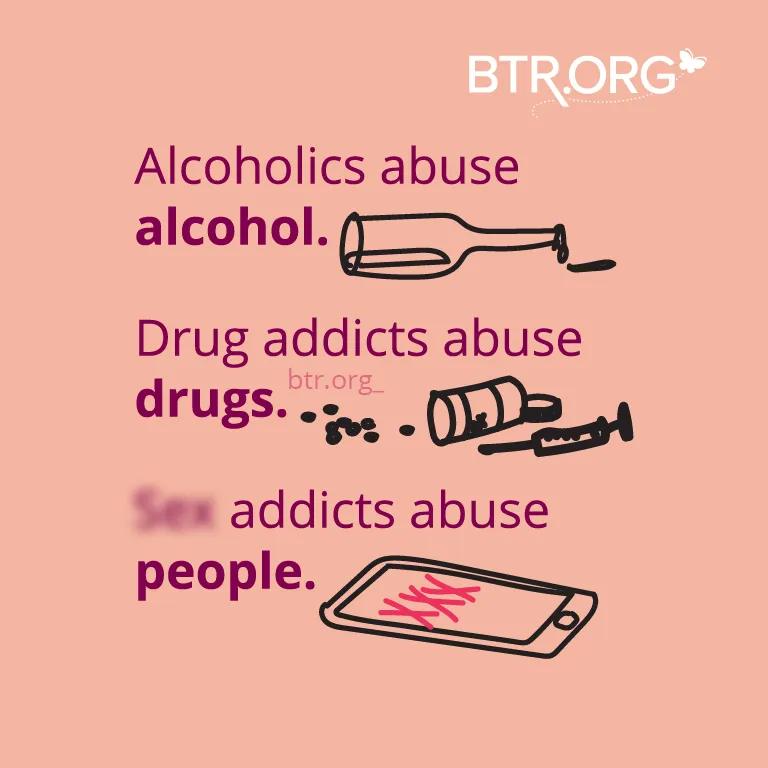
Wendy: Personally, I didn’t realize that a mutual agreement between the partners about what they want needs to happen every time, and just because you’re in a relationship doesn’t automatically give consent. One of the things you talk about is safety.
Anne: Yeah, safety is huge. If you want it to be mutually beneficial and emotionally and psychologically safe. Then you need to know the truth. That’s information you’d want to know just to be in a relationship with him, let alone have it with him.
Wendy: Right, exactly. And there are lots of women that end up with an STD or an STI, and a lot of times the husband’s like, I don’t know how you got that. You got that from the toilet. You know, Anne, there’s one thing the National Domestic Violence Hotline website says sticks out.
Recognizing Manipulation
Wendy: It’s not consent if you’re afraid or unable to say no. So it’s not consent if you’re manipulated, pressured, or threatened to say yes. It’s also not consent if you’re unable to legitimately give consent, which includes being asleep, unconscious, or under the influence of conscious altering substances like alcohol. Some prescription medications and other drugs.
Anne: Or if he’s purposefully hiding information from you. If he’s lying to you, that’s manipulation. If you think he’ll sleep with someone else, if you don’t have it with him, that’s a threat. And If you think he’ll divorce you if you don’t have it with him, that’s a threat. If you think he’ll be sulky all day, if you don’t have it with him, that is a threat.
So when it says manipulated, pressured or threatened. To see us think about all the different ways, they threaten us most of the time, extremely subtly.
Wendy: Yes, that also goes on in the manipulation. Because they’re already manipulating you. I thought it was interesting, because a lot of times they just talk about the abuses and physical assaults. That’s what TV and movies show.
They don’t show this other stuff. And so I thought it was really interesting that the National Domestic Violence Hotline includes that in their information about consent and abuse by coercion.
Anne: Yeah, I received a review from a man who said this podcast wasn’t great. Because my definition of abuse is different than the standard definition. And it’s legit, the definition of coercion we use here is the basic definition of coercion that the National Domestic Violence Hotline uses. I think he just doesn’t want to admit that this can happen to women for years by their own husband and not know.
Recognizing Marital Coercion
Anne: Here’s an example of how women don’t know they’re being harmed by this. I have a wonderful friend. She believes in not having it until marriage, and she was dating someone. And she said something about how she’d gone too far. I was like, what do you mean?
And then she said, well, I don’t know. I didn’t want to have it. I kept saying, no, I tried not to, but then we did have it. and she just had this confused look on her face. And I told her what had been happening. And it was like I had punched her in the stomach. It was not until that moment that she realized this, and not just once. Multiple times over the three years she dated him. And I hugged her, and she backed away from me.
She was obviously extremely traumatized, and this was a trauma response. And she was having maybe a panic attack. She was breathing heavily. She put her hands on the counter, and it took her a while to calm down. When she did, she said, I didn’t realize until this moment that my boyfriend had done this to me for three years. And so many women tell me the same story about what their husband chose to do to them.
Most of the time when I talk to women before they realize what’s happening. I ask, are you being abused? They tell me no. We have a rough marriage, we have communication issues. We have intimacy issues.
Educating Women On Emotional Abuse & Coercion
Wendy: And I think it makes it harder, because my husband didn’t punch walls. If we got into an argument, he would shut down completely and keep it all in. And so it took me a while to realize that I had been abused. You know, there was gaslighting. He always minimized my feelings, because he didn’t think I should ever be angry about anything. It never dawned on me, I would have answered the same way. I would have said, no, I don’t think I’m being abused.
Anne: We need to educate women about this type of abuse, so that women can have words for what’s happening to them. Many people discourage women from thinking their husband is abusive in this way. Because they’re worried about her reporting and then going through a very difficult legal situation. I don’t want anyone to think I am suggesting you report this. You can, if you would like, but the likelihood of him actually being prosecuted or pleading guilty is extremely remote.
Learning About Coercive Control
If this discussion makes people uncomfortable because they’re like, well, then you have to report. Nothing about this episode is about reporting it. You don’t need to report it. I think knowing what’s happened to you is helpful for healing. The most important thing is that you know what happened. And, that you know the truth. And that’s why it’s so important for women to have a place where they can talk about it.
Or talk about when they realized their husband had been doing this to them for years and they didn’t know. The question of whether you’re going to report it or not doesn’t even have to come into the discussion.
I created my workshop for women to know what strategic actions to take if they’re experiencing coercive control.
Seeking Support & Healing
Wendy: Finding somebody to talk to who is going to be supportive, that’s not going to say, “Well, you’re just making that up.” or “There’s no way, because he’s such a good guy.” Reaching out for support is helpful. Really, understanding what it is and what you’ve been through, and knowing that you’re not alone. I think those are the two biggest things that are helpful.
Anne: Yeah, I couldn’t agree more. At Betrayal Trauma Recovery, your emotional and psychological safety. is our absolute top priority. Our coaches can help you process what you’ve been through and support you as you make your way to emotional safety. In whatever way that’s going to look like in your specific situation. Everybody’s journey looks different, and they’ll support you in what you decide. It’s just so important that when you go for help, you get it from a safe person.
Wendy, thank you so much for contacting me. You are so brave, and you can talk about this difficult topic in such an unflinching way. It’s so important that we do. It’s one of the most important things to know about coercive control. And your example will help so many women. So thank you so much for the suggestion to talk about this and for being willing to share your story. I appreciate it so much.
Wendy: Awesome, thanks for having me.
21 April 2026, 11:00 am - 42 minutes 47 secondsHe Says I’m Controlling But I’m Not – What You Need To Know
Have you thought to yourself, “He says I’m controlling but I’m not.” If so, he’s likely emotionally and psychologically abusive. Here are 3 things to know.
There are 19 different types of emotional abuse. To see if he’s emotionally abusive, take our free emotional abuse quiz.
1. But What If I’m Actually Controlling?
If a man is emotionally mean and wants to keep hurting someone, he might call her actions to feel safe “controlling” to trick her into stopping.
This doesn’t mean you should stop looking for the truth or setting boundaries for your emotional safety. To learn about the most strategic ways to deal with his control, check out The Betrayal Trauma Recovery Living Free Workshop.
https://www.youtube.com/watch?v=-mfE5cABLp4You’re not controlling if your desire is simply to keep yourself and your children safe and healthy.
2. Why Does He Say I’m Controlling?
An abuser tricks people by lying to his victim and he says i’m controlling but i’m not. Is lying emotional abuse? Yes. It works a lot, and others around him believe his lies. But it’s not controlling to state your opinion or ask another adult to do their share.
Do you know what is controlling? Lying and manipulation. The truth is, his accusation is really an admission. He’s the one controlling the narrative through his deceitful communication.
3. His Friends and Family Say His Ex Was Crazy Controlling
If a man tells you that his ex was controlling (and has manipulated his friends and family the same way), it’s likely he’s grooming you to not ask too many questions. He usually wants a woman to give him enough space to do secret things he knows are outside her boundaries, like pornography, soliciting prostitutes, or other harmful, abusive behavior.
If someone tries to make you leave them alone because they’re hiding things, it could be a warning sign of emotional or mental abuse. They might also try to pressure you into doing things you don’t want to do.
If He Says You’re Controlling, You Need Support
At Betrayal Trauma Recovery, we understand what’s really going on when he says things like this to create confusion. We’d love to support you in your journey to emotional safety.
Listen to The FREE Betrayal Trauma Recovery Podcast to learn more.
Transcript: He Says I’m Controlling But I’m Not
Anne: In marriage, what’s the difference between controlling and expecting reasonable behavior? If he says I’m controlling but I’m not, here are three signs that he’s actually saying this to maintain control.
1. He calls your boundaries controlling. When you refuse to participate in behavior that you think is unacceptable, whether it’s believing his lies or not asking him questions when you don’t know where he has been, he’s trying to control the way you perceive him.
2. If he’s lying. The purpose of lying is control. And so if he’s lying, he’s the one trying to control you, not the other way around.
3. When your desire is for equality and peace, and his desire is to do what he wants.
So if he told you that his ex was controlling when you met, it’s likely he was grooming you to not ask too many questions. Because then, later, when he says ‘I’m controlling, but I’m not,’ he can flip the script and accuse you of being controlling whenever he’s not getting his way. That’s the crazy thing about controlling men. Most women married to men like this don’t want power over, payback or revenge. They just want reasonableness, like honesty and equality.
Coercive Control 101: When he says I’m controlling but I’m not
Anne: Today I’ll interview Dr. Emma Katz. Here’s a preview of what she’s going to talk about today:
Dr. Katz: What victim survivors want is just a restoration of reasonableness. They just want to interact with that person in a reasonable way and get reasonableness back again. And then they’re constantly dealing with the coercive controller. And they don’t want reasonableness or fairness, they want control. He says I’m controlling but I’m not because he wants to enjoy watching you suffer, to manipulate people for their own ends, to their own advantage. An entirely different, malicious agenda motivates them.
So if people wonder, could I be a coercive controller? For most people, if you’re even asking that question, it’s unlikely.
Anne: Dr. Katz is a senior lecturer in criminology at Edgehill University in the U.K. Her work has shaped understandings of coercive control across the globe. Her book, Coercive Control in Children’s and Mother’s Lives by Oxford University Press is the first academic book to focus on children and coercive control. She brings her research to the public in an accessible and influential way on her platform, Decoding Coercive Control with Dr. Emma Katz, where she writes articles that are read by tens of thousands of people in more than 100 countries around the world.
Welcome Dr. Katz.
Dr. Katz: Thanks so much for having me.
Definition of Coercive control
Anne: Thank you for being here. Dr. Katz, let’s start with the definition of coercive control.
Dr. Katz: Coercive control is when one person sets up a dynamic in a relationship of “do what I say, or else.” That’s it in a nutshell. To go into it in a bit more detail, it’s when one person is subjecting another to persistent and wide-ranging controlling behavior, controlling multiple aspects of their life. Even though he says I’m controlling but I’m not. And this goes on for a significant period of time, and the perpetrator makes it clear that if you don’t cooperate with them, if you don’t obey them, they’re going to make life very unpleasant, very difficult for you.
And within that, there’s a whole range of different things that they’ll do to you if you are not cooperating, from physical violence to sexual violence, to psychological and emotional abuse. To isolating you, to draining you economically, to hurting your loved ones, and many forms of punishment that they’ll inflict on you, if they don’t think you’re cooperating enough with them, obedient enough to them.
Anne: Sadly, listeners to this podcast understand this issue on a very personal level, including myself in terms of counter parenting, that I dealt with for eight years post-divorce. It was very, very difficult. Thank goodness I’m past that now. For our listeners, who are victims of their husband’s lying or their ex-husband’s lying, and he is lying a lot to control the narrative. You talk about the difference between that and say, a loving mom who might get angry with her kid for not doing his homework.
Control that parents exert over children
Anne: I’m just thinking of myself as a single mom. I have two teenage boys, and right now there’s a lot of, get your butt off the couch right now and do your homework right now. And their dad is so nice to them. Like the sticky sweet, super nice. But the way he really does try to control what they do, like actually undermining their homework, getting them not to take baseball, or dropping their instrument lessons. ‘Cause so many of our listeners have been accused.
Dr. Katz: So firstly, certainly when we’re a parent, we need to have some control over our children. So, if someone needs to have some control over their children as a parent, that’s healthy and normal. Because obviously children don’t have the development to always make the healthiest and smartest choice. Sometimes they need some guidance on that. And on how to effectively contribute to the household. So as long as what the parent expects is reasonable and in the child’s best interests. That’s fine.
Anne: Like going to bed.
Dr. Katz: Going to bed, brushing their teeth.
Anne: Doing their homework.
Dr. Katz: Yeah, not eating junk food all the time, that sort of thing. And being nice to each other, treating each other in a reasonable, fair way. So then, let’s talk about a controlling person.
He says I’m controlling but I’m not: Characteristics of A Controlling person
Dr. Katz: They may have some controlling tendencies, but you shouldn’t be terrified of them, because if you’re terrified of them, they’re way more than controlling, they’re abusive. A controlling person, you may need to stand up to them quite firmly, and you may need to set some boundaries with them, but they shouldn’t respond by punishing you maliciously, making your life hell. Because again, if they’re punishing you for standing up to them, we’re getting way beyond controlling. We’re getting into abusive.
So now let’s talk about coercive controllers. They are way beyond a person with some controlling tendencies, because they are driven to have a lot of control over multiple domains of your life. And they’re not doing it in your best interest, but rather because they want to undermine you. A coercive controller wants to chip away at their targets. We’ve heard expressions like chipping away at a person, death by a thousand cuts. That’s what a coercive controller is trying to do.
They’re trying to basically take a person and turn them into a hollowed out puppet on a string who just exists to please and serve them. They view it as their right and entitlement to turn you into a kind of puppet on a string who will just exist to please and serve them and have no needs, rights, dreams or wishes of your own.
That’s the difference between like healthy parenting and then being a controlling person.
Reasonableness vs. Abuse: What it really means when he says I’m controlling but I’m not
Dr. Katz: But you shouldn’t scare people with how controlling you are, and then being a coercive controller, which is highly abusive.
Anne: And when he accuses you of being controlling, it’s not because you actually are, it’s because you’re not doing what he wants. He says I’m controlling, but I’m not, simply means he’s losing access to the compliance he expected.
Dr. Katz: No, I’m sure they’re just setting reasonable boundaries. So let’s talk about the vast difference in intention between somebody who’s being coercively controlled and a coercive controller. So, somebody who’s being coercively controlled wants fairness. They want the person to behave in a reasonable way that a reasonable person would accept as reasonable. Obviously, it depends on who you are asking.
Some people might have unreasonable ideas about how people should behave. So that might be tricky. Like if you’re not sure about it and ask your parents, but your parents aren’t reasonable. And then they say, “No, you sound like you’re being unreasonable.” But you can think about it and think, oh, okay, maybe my parents actually aren’t that unreasonable.
Anne: An example with my son, it should not take two hours to empty the dishwasher.
Dr. Katz: Yeah.
Anne: That’s pretty reasonable.
Dr. Katz: Reasonable, yeah. It shouldn’t take two hours to empty the dishwasher.
Survivors want a restoration of reasonableness, When Both Care and have respect
Dr. Katz: So fairness, we’re talking about, I put into the relationship, and so do you. I can discuss my worries constructively with you, and you can discuss your worries constructively with me. We both care about how each other feels. We both generally want the best for each other. Even when we’re having a big argument, we still respect each other as human beings. We still see that we’re human beings here who just fundamentally have dignity and rights. And we each have a level of respect for each other, even if we don’t like each other much in that moment.
So, reasonableness, yeah. What victim survivors want is just a restoration of reasonableness. They just want to interact with this perpetrator, who obviously they may not be seeing as a perpetrator in that moment. It might be your husband or ex-husband, but they want to interact with that person in a reasonable way and get reasonableness back again.
And then they’re constantly having to deal with the coercive controller pushing and pushing and pushing them, and not doing anything reasonably. So, obviously they’re going to get upset, agitated, and frustrated about that, but that doesn’t mean they’re a bad person.
They’re just dealing with a very unreasonable person who has no respect for them. And it’s hard to deal with someone like that. Now the coercive controller, they don’t want reasonableness. They don’t want fairness, they want control and want to enjoy watching you suffer. They want to manipulate people for their own ends, to their own advantage.
Coercive Control is Domestic Abuse
Dr. Katz: They don’t care about how people feel or the impacts of their behavior on the person, beyond being able to manipulate them to get what they want out of them. So an entirely different, malicious agenda motivates them. So if people wonder, could I be a coercive controller? Well, I think for most people, if you’re even asking that question, it’s unlikely. Because a coercive controller is usually pretty convinced they’re in the right, and they wouldn’t even stop to self-reflect most of the time on whether they were doing anything wrong.
Because they only see their own entitlement to control, and they don’t stick to any reasonable behavior perhaps agreed upon. Don’t blame yourself. These people are just some of the most difficult people on the planet to deal with. Coercive control is part of domestic abuse. And another term coined to try and describe it is intimate partner terrorism or ex-partner terrorism.
You could also say, so it’s like they’re your own personal terrorist, trying to control you through fear, trying to control you through power games, trying to stop you from living the normal life that citizens in your community normally live. So when you hear something like “He says I’m controlling, but I’m not,” that’s exactly the type of upside-down dynamic they create. It’s very severe and serious behavior.
So perpetrators have to get quite sneaky about what they’re doing. If they really acted as though they were their own dictator, 24 hours a day, seven days a week, just forever. Then they would lose a lot of their power to keep that going, because ultimately it would be so horrific to go through all the time that the victim survivors would just run away.
Coercive controllers never take proper accountability: he says i’m controlling but i’m not
Dr. Katz: They would rather be homeless on the street than deal with it. So if they want to keep control of the victim survivor as long as possible. Particularly while the relationship’s still happening. So, they have to disguise what they’re doing by claiming they’re doing it out of kindness, out of protectiveness, out of care.
I only do this because I love you. I only do this because I worry about you. I’m doing this in your best interests. You are not very good at doing that. I’m happy to take that burden off you and do that for you. I have to look out for you, et cetera, et cetera. So that it can often be disguised in these ways.
And they’re very good at putting blame on the victim survivor, saying things like, “Well, I wouldn’t have reacted that way if you hadn’t been so dah, dah. dah.” So it’s always turning around and blaming the other person. They can never take proper accountability for what they’ve done. They can never just say, yes, that was my fault, and then shut up. Post-separation, they’re just on this mission to punish you as much as possible. For daring to have the strength and bravery to break free of them.
Their sense of entitlement cannot bear that you’ve broken free of them. So they’re just on a mission to punish you post-separation. And they just wanna keep up that ability to punish you for as long as they can. And it’s horrific post-separation for victim survivors, because they’ve done what society now tells victim survivors to do and separated.
What if the perpetrator won’t leave you alone
Dr. Katz: That didn’t used to be the advice. The advice used to be stay in your marriage at all costs, and don’t you dare break up your family. Now, we tend to say, most of us, to victim survivors, the way to go is to separate. But then what if you do that and the perpetrator will not leave you alone? And they won’t leave you alone for five years, for 10 years, 15 years, and so on.
We, as a society, have not grappled with that yet. We don’t want to grapple with it. And we don’t want to do anything to inconvenience our predominantly male perpetrators. Because if society wanted to inconvenience them, we would see that happening. We would see a much stronger response to what they do. But we see very little response to what they do. Victim survivors have a terrible difficulty getting any kind of response from the authorities post separation abuse. So it’s enormously difficult to endure and survive.
Anne: It’s very interesting, because in some ways it looks like the same to an outsider. For example, many women who come on this podcast share their stories, including me. We wanted that reasonableness. And so insisting on it, or even fighting for it, not physically, but with a verbal, “Hey, we need to do this.”
“It might seem to an outsider like we’re haranguing them or refusing to give up, the way coercive control is often misunderstood, and that’s how when he says I’m controlling, but I’m not, it looks reasonable to people who don’t understand what is happening.
Abusers are always doing something for a reason
Anne: But if the situation is inherently unfair, and if this situation is inherently nonsensical. And she’s trying to make sense of it, and she won’t let go of equality, fairness, or logic. And he wants her to let go of that, so he says I’m controlling but I’m not. From the outside, it looks like the same or almost exactly the same. And people cannot tell the difference. And I like to have people consider what is the aim of it.
Like for example, exploitation. Many of these men just don’t want to pay child support, for example. And so because they don’t wanna pay child support, but they can’t technically do that. They’re like, well if I have to pay child support, then I’m going to make it as miserable as possible for her.
And maybe someday she’ll just give up and not ask me for child support anymore. No one’s gonna say to the victim, “Hey, maybe let go of the child support.” Because she needs that money. And she’s also legally entitled to it. But he does not think that she is. And so there’s one thing to consider as victims in this scenario is what is their real intent.
They’re making your life a living hell, because they don’t want to do something. They don’t wanna pay child support, they don’t wanna pay alimony, they don’t want their son to play baseball, because if their son plays baseball once a week or twice a week, they have to sit and watch this game that they don’t enjoy watching. And they would rather undermine it and tell him, you’re bad at baseball, baseball’s bad for you.
Dr. Katz: Yeah, abusers are highly functional in what they’re doing. They’re always doing it for a reason.
Lying is central for perpetrators: he says i’m controlling but i’m not
Anne: Yeah, and usually the way they do it is through lies. Rather than saying to the kid or the mom or whoever, I don’t enjoy watching my kids’ baseball games, so I’m not going to go.
But yeah, shine on, do whatever. They lie and say, baseball’s not good for you. You don’t really wanna play baseball. Your mom is coercing you to play baseball. It’s all this other stuff. I always come back to the lying is the real problem. Because if they told the truth, I don’t want to pay child support, and if I have to, I’m going to wreak havoc on you. Then if they said that in court, then everyone would be like, okay.
Dr. Katz: Absolutely right. Yeah.
Anne: It’s the lies that are the problem, all the abuse is the problem too. But they just wouldn’t get very far in their abuse if they did not lie.
Dr. Katz: You’re so right. They would not get far in their abuse if they did not lie. And lying is so central to what they do. I think we don’t talk enough about how perpetrators are, as you say, tremendous liars. They just lie all the time, and they construct a narrative based on lies, distortions, and twisting things. And in this narrative, they’re a good person, and they’re doing nothing wrong. Everyone else is crazy, unreasonable, and horrible to them.
And as you say, they’re not admitting to what they’re doing. Imagine, people say, “Oh, you picked the wrong guy.” But imagine if they stood up on a first date and said, “My intention is to hollow you out, to enrich myself at your expense.
When He says I’m controlling but I’m not: D.A.R.V.O. explained in real life
Dr. Katz: So after 10 years with me, you would be very poor and have few economic assets, and I would be much richer and would’ve siphoned off your assets. That should been yours.
Anne: Right, exploited you.
Dr. Katz: Yeah, I’m going to exploit you for 10 years, yeah. I’m going to expect far more with you than I’m willing to give myself. My plan is to ensure that you never have a strong relationship with your children, because that would make you too happy, and I don’t want to see that.
So if we have children together, I’m going to make sure to sabotage your relationship with your children as often as possible. Imagine if they made that speech on the first date, and that is their intention, and they’ve probably done it before. Then obviously everyone would get up and run for the hills, but they lie and disguise. So lying is so central to what they do. And also, we see this use of DARVO. So hopefully most of your listeners are familiar with this concept of DARVO: deny, attack, reverse victim and offender, D-A-R-V-O. Again, this lying is central to DARVO.
The perpetrator will deny that they were abusive. Say, “Oh, I never did that.” Or, “I only did that because I was provoked.” And then they’ll turn around and try and attack the victim’s character so that people won’t find them credible anymore. And very often that’s along the lines of, she’s crazy. She’s my crazy, psycho ex.
They attack the credibility of the victim
Dr. Katz: She’s unreasonable. She’s got a mental health disorder. They’ll throw around all these sort of mental health labels. Like she’s got narcissistic personality disorder, bipolar disorder, borderline personality disorder, et cetera. Even though she wouldn’t have been diagnosed with any of these things. And oh, she’s mean, she’s a really nasty person. Everyone hates her, etc. So they attack the credibility of the victim. So that people won’t take them seriously, won’t believe them, will have major doubts in their minds about their believability.
And then they try and reverse victim and offender. So, I’m not the bad guy here, but she is. She’s the one who’s actually been horrible to me for all these years. And then a big long list of twists and distortions of things, or just outright lies of things that they think the victim survivor’s done. Meanwhile, constantly playing down what they’ve done. So by the time people hear all this DARVO narrative from perpetrators. Some people can see through it, but most of the time people don’t know what to believe, and they don’t know how to unpick all this.
And what people usually do in response to DARVO is think, that sounds messy. It sounds like they were both horrible. So I’m just not going to get involved, and I’m not going to stand up for this victim survivor, and I’m not going to stand against this perpetrator. Because I can’t even tell who’s right and who’s wrong. So I’m just gonna walk away. And then when people do that, they leave the perpetrator with all the power.
The victim has no one to support her
Dr. Katz: And the victim survivor, with no one supporting them. And that power imbalance between them that the perpetrator’s been so clever as to build up over the years, there’s no one there challenging that. Because everyone’s been put off from getting involved by the DARVO. So that can often be the case. That can often be what ends up happening. It’s devastating to people. So one message I would always give people is to try and educate those around them on DARVO tactics. So when it happens, people will be more able to see through it. .
But I think if we all have more awareness of how common DARVO tactics are, then they’ll be a little bit less effective.
Anne: Yeah, one thing I try to do here at BTR and through our services is give women confidence. So often when women sense something’s wrong. But they don’t know that he’s lying, and no one else does either. They don’t recognize they’re a victim of his emotional and psychological abuse. No one else does, either. They may go to a couple therapist, or often sex addiction or pornography addiction recovery. That makes things even more complex and they get blamed even more. And they’re going because they need help.
Most of the time it’s the victims who set these appointments. It’s women who wanna know what’s going on? How can I fix this? I would love for everyone listening to know that you know enough in your own heart and in your own mind, and it’s great to get validation. And hopefully you can get it from this podcast and from Dr. Katz and all the other wonderful domestic abuse advocates out there and feel that.
Couple therapists or addiction therapists can’t identify the abuse: he says i’m controlling but i’m not
Anne: If you don’t know what’s going on, and go to a couple therapist or addiction therapist or some program, like a marriage intensive. They will not identify this for you. And rather than confirming what you already know, what you sense. The gaslighting that’s going to occur, and the DARVO will start to knock down your sense of confidence. And he keeps you in the dark longer when he says I’m controlling, but I’m not.
Dr. Katz: That’s so true. I wrote one of my Substack articles in February about how family therapy and coercive control is a match made in hell. And I would also say couples counseling, and anything like that. Because most therapists have had very little or indeed no training on coercive control as part of their degree they took in psychology. Or any kind of qualifications they did to enable them to practice counseling or psychology or whatever it’s that they’re doing. So it’s unlikely they have any knowledge of coercive control.
And if they do, it may not be sufficient knowledge. It may not be from good sources. So they might think they know something about it, but what they know is maybe old fashioned stuff, maybe quite victim blaming. It’s just not good information to base practice upon in the current day. So yes, if you go to somebody wearing the hat of a professional, but they know nothing about coercive control. They can’t recognize it, can’t see that it’s happening right there in their office. They don’t have the training necessary to make sense of what they’re seeing.
Then yes, that’s just going to leave the victim survivor thinking they were wrong to ever think this was a serious and abusive situation that their perpetrator was subjecting them to.
The premise of couple therapy is that both partners contribute to the problems in the relationship
Dr. Katz: They’re just gonna walk out thinking, it sounds like maybe I’m to blame and maybe I can fix this. Maybe I need to compromise more, sacrifice more, and try harder. Because that’s what the therapist probably will be set up to suggest. So, couples therapists are not there to deal with abuse. They shouldn’t be seeing people where one person’s abusing the other. They really shouldn’t be doing that. The whole premise of couples therapy is that both partners contribute to the problems in the relationship, and also that both partners are willing to deal with the problems.
And that they both want to get to a healthier place, so it is not set up for coercive control situations at all. And the same with family therapy. The idea of family therapy is that everyone who’s going to that is contributing to the problem and everyone has a sort of genuine good intention to try and sort it out. And when you have an abuse perpetrator, that is not the case whatsoever.
Anne: No, and if they’re lying they’ll go to couple therapy and they will say they are there because they want to improve the situation. Again, if they went in and said, “There’s no way I’m gonna change my tactics. I’m a liar and it works really good and I can exploit her all the time.”
It doesn’t matter what proof you have. It doesn’t matter if you’ve got some checklist and you’re like, look at all these things on the checklist, you’re doing all these. They never will do that because they are inherently a liar.
Couple therapy with an abuser can keep you stuck
Anne: So in that session, they’re like, of course I’m here. Of course I wanna make this better, of course I’ll compromise. I will do this and this, and then I really need her to do this, this and this. And he says I’m controlling, but I’m not. He’s never gonna do the thing he just said he is gonna do, but the therapist is like, wow, he really wants to be here. He cares about his marriage. He wants to make this work. They don’t have the frame of reference to understand that he is literally lying to her and the therapist. So, it’s a very dangerous situation when she also does not know.
Luckily, I’ve had a few people tell me they listened to my podcast. They weren’t sure, but in the back of their mind they were thinking, “Okay, He says I’m controlling but I’m not. And she said it’s bad, but I don’t really know.” Thank goodness, because they had that heads up, they could see what was going on. Whereas other women who don’t know what’s happening and the therapist doesn’t know what’s happening. Sometimes get stuck in that gaslighting world for five years, 10 years, 20 years of this type of couple therapy, until they realize he’s been lying the entire time.
Dr. Katz: That’s so true. I think that going to therapy with your abuser can keep you stuck for another five or 10 years. It can be devastating. It may keep you stuck forever. You may never recover from it. Hopefully, that’s infrequently the case. But for some people, we know they never escape. And they’re with that perpetrator till the day they die.
women are profoundly impacted by coercive control: he says i’m controlling but i’m not
Anne: Yeah, and I think a lot of times it’s ’cause they don’t know. I wanna credit all women for doing that, because they believe couple therapy will improve it, because everybody says that. It’s common advice. So they’re trying to get help. They are trying to improve their situation. They’re not dumb, they’re smart. That’s what a smart person does. A smart person knows they’re in over their head, and a smart person goes for help. The problem is that they don’t say I am an abuse victim, ’cause they don’t know. The therapist also does not identify it, and that is not the victim’s fault.
Dr. Katz: Especially if the perpetrator’s clever to never be physically violent. Most perpetrators are intimidating. They shout in your face, they glare at you. They might kick the furniture, they might throw objects around, but not actually at you. But they send you the message, you better cooperate with me, or else next time I’ll be kicking you, not this sofa. But if they don’t actually cross the line into attacking you, then a lot of women are uncomfortable labeling that abuse.
Because we’ve been taught for so long that abuse is violence, black eyes, broken bones. And abuse needs that physical element to be real. And that’s not the case at all. We see that women are just as profoundly impacted by non-physical coercive control. That is really severe, and limits their life to a great extent. We’re seeing these women with the same kinds of distress and trauma as those who’ve been physically hurt.
Women do their best with the information they have
Dr. Katz: So it’s as you say, women who are going through this, I would never ever say they were dumb. On the contrary, they’re smart. They’re doing the best they can with the knowledge they have and the pieces of the puzzle they can see. They’re not a mind reader. They can’t tell what their perpetrator is actually thinking. So they do their best with the information they have. Meanwhile, he says I’m controlling but I’m not.
I’m adamant that victim survivors are simply ordinary people who had the misfortune to meet a perpetrator and maybe to meet more than one perpetrator, because for lots of people, this happens more than once in their lifetime. And that’s not because there was something wrong with them, but just because there are an extraordinarily high number of abusers out there. Our society is frankly flooded with them. For example, one in five men in America admits physically attacking their partner or wife.
Research and surveys have found that one third of college men would have sex with a woman against her will if nobody found out, and there wouldn’t be any consequences for them. So that’s one third of our college men who say yes. They would actually be happy to rape a woman if they could get away with it.
One third of college men would coerce women
Dr. Katz: Researchers didn’t use the word rape, because that’s a very particular word that makes people have a very particular reaction. But they said sex against a woman’s will, which is rape. And a third of them said, yes, they’d be happy to do that if they could get away with it. if you’ve had the misfortune to be in a marriage with one, that’s not because there was something particularly wrong with you. You were just an ordinary person who had the misfortune to meet one of these abusers.
Anne: Yeah, in my opinion, lying is the most common type of sexual coercion. They know that if they said, “I’m gonna take you on this date, I’m gonna fake I like everything you like, I’m gonna look you in the eyes. I’m gonna give you compliments. I only want to have sex with you, and then I never wanna see you again.”
Then when he gets “consent.” She says yes to sex under the guise of him actually liking her. That is sexual coercion. She never hears from him again, and it’s like that was confusing. We hit it off. He seemed to like me. We had everything in common. I would submit that in many of those cases it was that he was just mirroring, grooming, lying to get you to say yes. Thinking the yes means it’s okay. If you say yes, then win-win, right? It’s what everybody wanted. It’s not wrong if she says yes, kind of an idea. And it’s very wrong, and it’s sexual coercion, which is rape, essentially.
Dr. Katz: Yes, there are all sorts of circumstances in which people can say yes, and it’s valid or invalid.
When someone is lying to you it’s not a valid yes: he says i’m controlling but i’m not
Dr. Katz: So, if you’re saying yes, because you have the genuine information about what’s going on, and you’re saying yes of your own free will because you are enthusiastic about what’s gonna happen. And if you’re gonna participate in that with enthusiasm, then that’s a valid yes. But if you don’t have all the information, if someone’s lying to you and deceiving you, and so you’re actually acting on false information with your, “Yes.” Your yes is coming from a place where you don’t understand the full picture of what’s going on, then I don’t think that’s a valid yes.
Anne: No matter how enthusiastic she is. Because she might be extremely enthusiastic based on his lies. But that doesn’t mean anything.
Dr. Katz: No, like you say, it needs to be based on correct, truthful information to be valid. We might be enthusiastic about signing a contract for a new phone, because we think we know what this contract says. But if we actually read the contract and found it was full of lies, something very different’s gonna happen. And we’re going to be robbed of our money, given a bad deal, and ripped off for this phone. Then obviously, our enthusiasm would not have been there had we known that.
Anne: Right.
Dr. Katz: And also, to give a valid yes, you need to be comfortable to say no.
If you’re scared of saying no, that’s coercive
Dr. Katz: If you’re in any way scared of saying no. If saying no will lead to hours and hours of sulking, guilt tripping, pushing, asking you over and over again, trying to turn your no into a yes. Then if it’s in those sorts of circumstances, you don’t have the option to say no easily. So a lot of the time people will say yes, because they know that saying no is too hard. There’s too much pushback. So they say yes. But if they really had a free choice, they wouldn’t be saying yes. And for me, the yes is invalid, because you didn’t have the proper choice.
Similarly with sexual coercion, if you really wanted to say no, but you couldn’t because the pushback would be so bad, then it’s not a proper yes. And then it is rape, or sexual assault, depending on what then happens. I think that’s a tough conversation.
Anne: Yeah, I think there’s another element to this, which is how abusers gaslight victims & advocates. That is, maybe even if he’s not pressuring her, if she thinks it’s my duty as a wife to have sex. It’s often maybe a faith that might tell her, “You need to submit to your husband’s sexual desires.”
Or maybe someone who’s like, “If he doesn’t have sex regularly, he’ll maybe go have an affair.” Or, “He’ll have sex with someone else.” Or something like that.
So even if he’s pressing her and he says I’m controlling, but I’m not. If she has absorbed some of that societal or religious gaslighting, she is 100% not coercing herself. That is absolutely not what I’m saying.
If he chooses to have an affair, that has nothing to do with you saying no
Anne: But hear those voices in her own head, not realizing they’re not her own voice. Not realizing it is from this religious or societal scripting, and not realizing that is just not true. Even if he’s not pressing her to do it, if she has absorbed some of that societal or religious gaslighting, she is 100% not coercing herself. That is absolutely not what I’m saying. But hear those voices in her own head, not realizing they’re not her own voice. Not realizing it is from this religious or societal scripting, and not realizing that is just not true.
If you don’t wanna have sex for any reason, it doesn’t even matter. If he chooses to use porn or have an affair, that literally has nothing to do with you saying no, because you didn’t wanna have sex. But this, it’s your fault that he did this thing that hurt you when you said no. So many women in our community are told like, “Well, what did you think was gonna happen if you didn’t wanna have sex with him? Of course, he was gonna go use porn or solicit a prostitute or have an affair or whatever.” Not realizing that what he does is his choice completely independently.
This doesn’t happen that often. ‘Cause I, I don’t interact with single men very much, but if I do and they say something like, “Oh, my ex-wife, she was just frigid and she wouldn’t give me sex.” I always say, “Oh, I am so glad. That’s great. ‘Cause women should never have sex when they don’t want to.I’m glad you were married to such an awesome person.”
he says i’m controlling but i’m not: I’m the terrible person when I refuse
Anne: And they literally have no idea what to say. They’re like, I don’t even know how to react.
Dr. Katz: That’s awesome. I wish I could be there to see that when they react that way. Because I think this is a related point. Which is, what is wrong with men who are having sex with women who are not enthusiastic about what’s happening? That is so disgusting. Why would you want to be intimate with another person’s body in that way? When they’re just lying there and thinking when it’s going to be over. You know that even if they’re putting up an act to seem enthusiastic.
But you just coerce that act out of them, because before you’ve complained, they’re just lying there. So that you pressured them to give an appearance of enthusiasm. When you know they’re not enthusiastic genuinely. What is wrong with people who want to have sex under those circumstances? I will never understand that, and I find it so gross and awful.
Anne: I remember telling my ex, ’cause sex with him was just miserable. And I told people about it, and that made me the terrible person, because I was like, “Yeah, sex with him stinks.” And that really hurt his feelings. And I was like, “It’s not that fun.” I didn’t realize what was going on. So I was kind of flippant about stuff. But I was very open about it.
Do all of the reasons or excuses make sense?
Anne: So just to skip ahead for a minute, when I realized it was abuse, no one took me seriously because I was so open about everything. They were like, “Well, you can’t be an abuse victim because you’re not mousy or quiet or anything.”
But I told him once, “Do you think I could just read a book? Do you think I could maybe prop it open and you could be having sex, but I could be reading.” And I was a little bit joking, but not really. And instead of being like, wow, what’s going on? I don’t remember what he said, but he didn’t respond in a way that made me feel like he really would care that much if I was reading. And I think that’s the point you’re getting at. Is like what? Like that is so crazy.
The conversations that women in this situation have. Whether it be about sex or about him yelling or weeding or whatever. You think about the conversations and if women are still in it and maybe they’re going to couple therapy. Maybe someone is saying, “Well, let’s get to the heart of his childhood trauma.”
And maybe why he said this or something. But if you can take just one step back or have a little bit of an objective point of view and realize like, this is crazy pants. Anyway, thinking about that, it’s important as women listen to think, wait a minute. All these reasons or excuses, do they even make sense when he says I’m controlling but I’m not?
Dr. Katz: It’s so hard to see it when you’re in proximity.
Perspective from depersonalizing the situation
Dr. Katz: Maybe something that might be helpful is to imagine this conversation among hypothetical friends you might make up in your head. And run this conversation. My hypothetical friends who are married, they had this conversation that mirrored the conversation I’ve just had with my partner or husband. What would I make of this if this was happening to other people? What would that mean if somebody said this? So, what does that say about them as a person, where they’re at, and what their mental state is?
And if someone else says this, how would I understand that if it was not me, but someone else? And just to try and take that kind of, like you say, that step back, depersonalize it a little bit, that can be useful. I think I’ll reiterate that. The people being abused have done nothing wrong. And I don’t think there’s anything abnormal about them. Sometimes we hear the most appallingly victim blaming things, even from people who say, “Oh, I’m not victim blaming.” And he says I’m controlling but I’m not.
People say you need to take accountability for your part in the abuse. No, you don’t. You were looking for a normal, healthy, loving relationship, and you got served a load of lies and loads of abuse. And nothing to do with you. It’s not your fault, you don’t need to take accountability for any of that. Human nature binds us. So for most of us, we’re bound by the messages that we get from our society.
women are encouraged by society to be kind: he says i’m controlling but i’m not
Dr. Katz: It will take us a long time to figure out that we’re being abused because we don’t want to think that’s happening to us. We don’t want to think that particular script is suddenly running in our lives. We don’t want to reinterpret a situation that we thought we understood through the lens of, well, maybe this is abuse, because that’s tough. Most people, understandably, don’t want to do that. So it takes people a long time to get to that place. That’s human nature, and that’s the way our society is set up.
People are not encouraged to make that assumption quickly, “Oh, this is abuse.” They’re encouraged to be kind and considerate, to have empathy even if your husband has no empathy, and to be self-sacrificing, and to try and make things work. Especially women are encouraged to be like that, and there’s nothing to be ashamed of or to blame yourself for if it took a long time to get to that place. You’re not alone, because that’s what happens to pretty much everyone.
I just think people say things like, “Oh, you must have attracted the abuser into your life,” or “you teach people how to treat you.” Or he says I’m controlling, but I’m not. And I think those things are horribly victim blaming statements. And I reject them completely. I think that, as I say, we’re all doing our best here in a society that is pretty much flooded with abusive people. There are far too many of them. They’re not one in a hundred, they’re perhaps one in two, one in three, one in four. There are many abusive people out there, especially unfortunately, men willing to be abusive to women.
Obviously, it can happen the other way around, but coercive control is a male dominated crime.
Coercive control is a crime in the UK
Dr. Katz: I’m speaking to you from the UK, where we have made coercive control a crime. I think that is the case in a handful of American states and a couple of Australian states. It’s patchy, in a lot of places it’s not a crime yet. But I see it as a crime. I just wanna say all that. I think victims and survivors really deserve so much more credit than they’re given. Like you say, people are often very negative about victim survivors.
Actually, you’re just a completely ordinary person who’s had to survive something really horrific. And anyone who survived that I think is doing amazing. Even if you’re only hanging on by your fingernails, even if you feel like you’re only surviving by a very thin margin, the fact that you are still surviving in any circumstances in my book means you are awesome.
Anne: Well, thank you so much, Dr. Katz. I really appreciate your work, and it’s so wonderful to meet another woman in this fight to protect victims and help them when he says I’m controlling but I’m not. So thank you so much.
Dr. Katz: Ah, well, thanks so much for having me on. It’s a pleasure. Thank you.
14 April 2026, 11:00 am - 54 minutes 23 secondsHow ‘Prayer For My Husband’ Became the New Gaslighting
You’re not wrong for wanting things to be better. If you’re searching for a ‘prayer for my husband’ because you’ve been told that if you have enough faith, you can change him, you’re not alone. But here’s what most people don’t tell you…
5 THINGS TO CONSIDER AS YOU FIND A ‘PRAYER FOR MY HUSBAND’ TO HELP HIM CHANGE
1. You’re Faith is Enough
There’s something many faithful women are never told.The problem isn’t your faith. The problem is how your strong and incredible faith is being used, by people or systems, to confuse you instead of help you feel the love God has for you.
2. Prayer is Always Good, and God Loves YOU
God hears your prayers. He wants YOU to be emotionally safe and have a peaceful home. He may be leading you to see that this might not be possible if your husband is lying and refusing to follow the principles if he’s only pretending to believe.3. The Harmful Message Behind “Pray Harder”
When spiritual leaders or loved ones say, “Just have more faith” or “You’re not a victim, you’re a co-creator”, it’s spiritual bypass. It minimizes real harm and leaves you powerless. The interview below will cover why this is so harmful.4. You’re allowed to be angry.
Your anger about your husband’s mistreatment of you isn’t a lack of faith. It’s likely God’s way of warning you of danger.5. God Hasn’t Abandoned You
If you feel like God isn’t answering your prayers for your husband to change, it might be because your husband doesn’t want to change, but he’s lying to you about it. That means he’s lying to God too. Your husband may be blocking you from feeling God’s love for YOU.If you have heard this kind of messaging and need help getting out of the fog, my workshop will help you determine if you’re husband is lying about his faith in God to keep you from knowing his true intentions.
“The More I Pray The Worse My Husband Gets”
For many women, it might feel like “the more I pray the worse my husband gets.” If you’re feeling this way, here are 8 things to consider.
1. If Your Prayers Aren’t Being Answered, Maybe They ARE Being Answered
In the silent moments of prayer, many victims of emotional abuse question, “Does God even care about me?” or “Why won’t He answer my prayers?”
It’s a painful place to be, feeling as if divine help is just out of reach. However, expressing raw, honest emotions through prayer, including anger, can be a powerful way to stay spiritually connected and grounded in your reality.
If you’re husband is getting worse, consider that perhaps God is SHOWING you your husband’s true character. Perhaps God wants you to see who your husband really is, so you can make decisions that will lead to your emotional safety.
2. Telling a Victim of Emotional Abuse That Prayer Alone Can Change Her Husband is Victim Blaming
Victims often hear clergy or friends say things that aren’t helpful. Telling a victim of abuse that prayer can change her abuser, is so wrong, that’s why it’s so important to recognize victim blaming.
If a victim hears this, she may feel like it’s her fault she’s emotionally abused by her husband. Nothing is farther from the truth. Consider that God may be trying to tell you that there’s nothing you can do about his character if you’re praying and feeling like God isn’t answering.
3. God Doesn’t Want You to Reconcile With Wickedness
Reconciliation with an emotionally abusive person isn’t safe for you emotionally.
Throughout scriputure, God continually asks the righteous to separate themselves from wickedness.
If you feel like, “the more I pray, the worse my husband gets,” consider studying these concepts in scripture: deliverance, separation from wickedness, and departing from wickedness. What do the scriptures say the righteous should do when they encounter evil?
4. Praying The You Can Forgive Might Mean Something Different Than You Think
In the scriptures, there are multiple times where the word forgiveness is paired with the concept of debt. Matthew 6:12 –
forgive your debtors.If your husband owes you fidelity, love, and loyalty, what happens if you forgive him of that debt to you? That would enable you to move away from him (not closer).
Consider the debt your husband owes you, and how forgiving him of any debt will help you create distance between yourself and the harm he causes in your life.
5. Try Praying For Yourself
Shift the focus of your prayers from your husband to yourself. Ask for strength, courage, and clarity.
This self-focused prayer can empower you to make decisions that are right for you and your children.
We’ve also been commanded to pray for our enemies and those who despitefully use us, but scriptures admonishing us to do that don’t ask us to be in proximity to our enemies or subject ourselves to those who despitefully use us.
6. Pray For Emotional Safety
Pray for the emotional safety.
To be emotionally safe means to exist in an environment where one feels supported, understood, and accepted without fear.
If someone is lying to you, it’s not an emotionally safe situation. Trust and respect are necessary for emotional safety. If your husband lies to you, consider how limiting your exposure to his lies could help you.
7. Pray To Be Shown Correct and True Information
Many women who are being emotionally abused by their husband are unaware of what’s going on because they haven’t been educated about abuse.
To paraphrase Hosea 4:6 – My daughters are destroyed for lack of knowledge.
Clergy and therapists are sadly not aware of how to assess for emotional abuse and genenrally give bad counsel to women with emotionally abusive husbands.
The FREE Betrayal Trauma Recovery Podcast is a great way to learn about what an emotionally abusive husband looks and sounds like, so you have the right information.
8. Pray to Be Led To The Right Support
Feeling abandoned by God can make life seem impossibly dark. It’s easy to feel as though the suffering will never end. You’re not alone. His emotional abuse has isolated you, but reaching out for support can bring light back into your life.
Seeking support is vital for healing. Pray for guidance to find the right people and resources that can help you on your journey. Whether it’s a support group, therapist, or community resource, the right support can make all the difference.
Our online support group for victims of betrayal meet daily in every single time zone to provide the community, validation, and compassion that victims need.
You deserve peace. That’s why the Savior came – to deliver us from evil and bring us peace.
Transcript: When Praying For My Husband Isn’t Working
Anne: We have a member of our community on today’s podcast. Her name is Tracy, and she is a passionate advocate for betrayed wives. Discovering her husband’s addiction set her on a course of education about betrayal trauma, abuse, spirituality, and healing. Tracy is a devoted mother of four children, a compassionate friend, and an avid runner. Mountains and lakes are her happy place. Mountains and lakes are also my happy place, so we have that in common.
We’re going to start by talking about spiritual bypass. One of the most common ways it shows up is when abusers—sometimes supported by clergy or even therapists—frame the solution as simply offering prayer for my husband to change. That’s why there are so many effects of spiritual abuse as well.
PRAYER FOR MY HUSBAND WHEN I DIDN’T KNOW WHAT ELSE TO DO
Tracy: Absolutely. I’ll just give an example for myself. So my first D-Day was a month after I married. It was very traumatic, very, very traumatic. I didn’t know that I was in trauma. I didn’t know anything about trauma. There was so much I didn’t know. I didn’t have any support system or any real education.
So basically, all I knew was that I was in so much pain, in such a place of darkness. The only way out, it took me two or three days, I don’t remember. Truly being in this dark, dark pit before I realized the only way out was God. And so I went to God in prayer and said, I cannot keep feeling this. I felt like it was going to kill me.
Thinking, “I need to forgive my husband, but don’t know how to forgive him?” I am incapable of forgiving him, but I want to forgive him. And I know you can help me immediately. The darkness lifts, and I fill up with incredible comfort, warmth and peace. Now, I wasn’t healed from trauma. Of course, I didn’t understand trauma or what it meant to thoroughly heal from trauma.
Understanding HOW Prayer for My Husband BECAME SPIRITUAL BYPASSING
Tracy: Here’s where prayer for my husband got tricky. While it worked for me at that time and helped me, ultimately it became a form of spiritual bypassing and it kept me stuck in the trauma. It didn’t help me to better understand it or to come to a better understanding of my situation.
I want to compare that now to my second D-Day, about 15 years in. I found out that this was going on my entire marriage regularly. That obviously my husband had been lying constantly about it, and hiding it. Then all those pieces start to fit together. That explains so much of my experience in this marriage that I did not understand.
That happened on a Sunday night, I still remember it late at night. We were in bed talking. And as he began to disclose the reality, my situation started to descend upon me, as I came to terms with that.
I didn’t sleep that night. I think I fell asleep at 6 a.m. and slept for one hour.
And I said, I will not do this again. Because I realized I’d only been through one big cycle of this. I could see that handling it the way I did the first time wasn’t going to cut it. All that was going to do was set me up for more D-Days, and more D-Days, and more D-Days.
And so my whole approach to healing was different than that first time.
This was not going to be an event or an arrival. This was going to be a long process. I was going to let myself feel angry for as long as I needed to feel angry.
WHAT I LEARNED ABOUT Prayer for My Husband: the Second D-Day Reality Check
Tracy: You know, it’s interesting because I felt more betrayed by God after the first D-Day than the second. I don’t know what it was, but something after that second D Day, I instinctively knew some truths right away. And one of them was that this isn’t God. God did not betray me here. My husband did. And I realized that many things started fitting into place quickly. One of those was God was there for me all along.
The lesson I learned was actually good and true. From the first experience, God is real.
He was warning me. After that first D-day, prayer for my husband became a constant in my life. I would pray to know if my husband was honest with me or if my husband’s lying to me. And I always thought that since I could never find evidence, or my husband would never admit anything, I guess that meant he was telling me the truth because God wasn’t putting something in my lap, right?
THE IMPACT OF DECEPTION ON MY RELATIONSHIP WITH GOD
Tracy: Like throwing the evidence out in front of me. But in reality, I knew in my gut that something was wrong for years. And I knew after that second D-day, God was talking to me all along. It’s not God’s fault. It’s my husband’s fault. My husband interfered with my relationship with God.
I was a spiritual person before I married. I came to my spirituality as a kid. And strengthened it as a youth and that was always a strong point for me. It was strange for me that after I married my spirituality started to decline. And I started to feel more distant from God. And I couldn’t figure out why. Because I was doing all of the same things I’d always done.
My heart turned towards God. I wanted that relationship, but I couldn’t figure out why I was feeling so distant. And I would come up with reasons. Well, maybe it’s because I’ve had kids now and I don’t have the time to pray the same way I used to. I don’t have the time to spend as much time in the scriptures as I used to. So I guess I’m not prioritizing right. Because motherhood is difficult, but that wasn’t the reason.
Prayer for MY Husband BEFORE MARRIAGE: When Something FeLT Off
Tracy: I was careful and cautious about marrying, and I was very prayerful about it. I studied the subject and ultimately I decided, okay, I love this guy. No, I’ve got to take a leap of faith. So, you know, I said, yes. Well, I started to feel uneasy during our engagement, like something was off. There were various things that happened in a relatively short period during our engagement. That really moved me to confront my husband and ask if he had ever had any issues with pornography.
She was also feeling kind of uneasy. We were like, is this normal? Is this just like engagement jitters? But we didn’t want to be like that crazy girl who likes to give back the ring, right? And changes her mind and goes back and forth. And so we made a pact with each other, me and my friend. That if we started to feel that uneasiness, we wouldn’t act on it unless it stayed with us for more than 24 hours.
Because it might just come and go, the butterflies. I also prayed about that. I said to God, I understand that this might be normal feelings of anxiety, so I’m not going to take them seriously unless they stay with me for more than 24 hours. At one point, they did stay with me more than 24 hours. But still, I didn’t have any reason why something should be off. I didn’t have anything specific to point to.
And he looked me in the eye and he said, no, never. And I may have asked one follow up question. He maintained, no, never. I didn’t push it. I just accepted his answer, but I still had these feelings of uneasiness. My best friend, at the time, was also engaged.
When Others’ Advice Overrides Intuition and Prayer for my Husband
Tracy: So I went to my Dad, who I love and is a wonderful, wonderful man, full of lots of goodness and wisdom. But, he basically just talked me out of my feelings.
And he convinced me that I was being silly and too emotional. He said, “Your fiance is a great guy.” He’s got great career ambitions. He’s going to take good care of you. And he loves you. There’s no reason not to marry him. Spiritual bypass again. After, I found out a month into marriage. Which, the way I found out, is because my husband lost his job. He was caught using it at work.
It was awful. But I did briefly feel betrayed by God. I was like, I prayed about this, I asked about this. But again, through spiritual bypass, I let go of all those feelings. Well, after my second D-Day, 15 years in, when I tried to put all the pieces back together and make sense of it. I realized God answered my prayer for my husband.
Trusting God When THE Answers TO PRAYER FOR MY HUSBAND ChangeD
Tracy: I knew in my gut that something was off. I can trust my gut. And I can trust God. I realize my husband is the one lying to me. My Dad talked me out of my feelings when I went to him, saying I feel like something is off. I’m nervous.
I’ve never had to work through a intense or long lasting feeling of betrayal by God. I’ve realized he’s been with me. It’s people getting in the way.
I want to add one quick thing I would encourage women to consider is that sometimes we may get an answer, right? Maybe, this was not my experience. I did not get a definitive, yes, marry this guy. That was not my experience in prayer for my husband. But some women I have talked to say they have had that experience.
And so they feel betrayed when they find out. That’s understandable. Like, sometimes we can get an answer to something, but that doesn’t mean it’s necessarily the answer for the rest of our lives.
Things can change. People can still make choices that change circumstances. I like to think about life as not something totally planned out. Where God is pulling these puppet strings. But rather, those change-your-ending books.
Endings CAN Change & God Doesn’t Want Abuse
Tracy: I don’t know if you ever had any of those. But you would start to read the story, and then there was a choice that you would have to make. Then depending on that choice, you would skip to a certain point in the book. And then you’d come to another choice. So depending on the choices made, the ending of the story would change.
I can pray about something and get an answer that is good for me right now. But tomorrow, my husband can make a choice that changes circumstances, and the answer to prayer for my husband may change. Does that make sense?
Anne: It does. Because many women think back to the answer to their prayers and think, but I’m supposed to be with him.
Instead of saying, I need to set this boundary, because I’m not safe. They think God wants me to be tolerate abuse. God never wants you to be abused, ever. So if you’re trying to sort that out. I’m telling you here, that God does not want you to be abused regardless of what answers you had from prayers in the past.
Anne: For me, I never asked whether I should marry my ex-husband. But I definitely felt like it was the logical right decision, which I made happily. And now looking back, I can see that my life’s work would not be possible without him.
He introduced me to everything I needed to know, to run Betrayal Trauma Recovery and to continue to run BTR. So I’m actually super grateful for the experiences. Because I would never do what I do now without the experiences he gave me. Which were all horrific, but also now I have a PhD in evil.
SPIRITUAL PERFORMANCE V. REAL CHANGE
Anne: Let’s talk about how prayer for my husband is problematic when a man exhibiting abusive behaviors.
Tracy: So my husband, leading up to that second big D-Day, threw himself into spirituality. He was becoming involved in our church community, very service oriented. And was reading the scriptures for like a certain amount of time every day.
He was, on his commutes to work. He was listening to sermons and keeping track in his little calendar journal, of acting out points. And he convinced himself that this was all serving him well. Because he had longer periods of abstinence between acting out events than ever before in his life.
He was going a whole two weeks between acting out, for a period of months. And he was convincing himself, because he was doing all these things, that he was progressing. But did they actually help him progress? No.
He fooled himself into thinking he was making progress. But he still lived in lies, secrecy, and abusing me. See, he told himself, no, this is good. Because I will tell what’s been going on after I’ve like six months or a year of sobriety under my belt. And it will be this awesome thing, and she’ll be so excited for me.
But the thing is, he was just spiritual bypassing me and keeping me stuck in abuse.
PRAYER FOR MY HUSBAND AND A False Sense Of Recovery
Tracy: In about the period of one to two years post that second D-Day, He was doing all of the right things on paper for recovery. He’d done a formal disclosure. He had gone to a 12-step group, and was still going to it. He’d done the repentance process through our ecclesiastical leader. He was doing all of these right things, but that was just it. He thought that he was done.
Like, that’s all taken care of, so can we just put a bow on it and lock it up in the closet and never talk about it again? So addicts can even use “working recovery” as a form of spiritual bypass. Where they convince themselves that they’re doing so great, but they’re really not.
Anne: A lot of women are manipulated to ask, “Is he in recovery?” Because that answer can be manipulated to be yes with box checking. So victims are like, he’s in recovery because he goes to his weekly 12-step meeting and he’s going to therapy every week, but then you’re not safe yet.
Instead of setting a boundary immediately and saying, okay, I need to get to safety now. And then watch from a safe distance to see if these abusive behaviors stop. I’m still in prayer for my husband and hoping that they’ll stop sometime in the future.
Tracy: Yeah, when we’re in that terrible trauma and we just want relief. It’s easy to latch on to the idea of there’s a cure or a fix or a place of arrival. Well, once my husband gets to this place, like this many years of recovery or whatever, then we’ll be good. This really will be all behind us.
WHEN PRAYER FOR MY HUSBAND IS USED TO DISMISS ACCOUNTABILITY
Tracy: When I think about am I safe, it’s am I safe now? Am I safe to say, engage in this conversation? My question is not, am I safe to recommit to my husband that we’re going to be together forever, and divorce is never on the table? No, it’s am I safe right now to continue engaging in the relationship the way that I am right now?
Anne: Yeah, that makes much more sense. Figuring out if you should stay together after infidelity isn’t necessarily the most important thing. So let’s talk about some other examples. A man exhibiting abusive behaviors may use to manipulate his victim, in terms of spiritual bypass. It might be, “I used the atonement, Jesus took away my sins. What, you don’t believe in Jesus?”
They’re imposing what seems to be their devotion to their religious beliefs into prayer for my husband as a legitimate solution to abuse. In this case is simply taking the name of God in vain.
Tracy: Well, that’s spiritual abuse. Why haven’t you forgiven yet? Can’t you move on? Why are you being so un-Christ like? I mean, it’s just straight up spiritual abuse.
The day after my last D-Day, I was expressing how much pain I was in. He looked at me and said, I can’t tolerate this cruelty and walked away from me. Calling me cruel, suggesting that somehow I’m devoid of compassion, so I’m falling short of some spiritual standard. Me expressing my pain is actually a good healthy thing for me to be doing. It doesn’t mean I’m not compassionate.
WHEN SPIRITUAL LEADERS’ ADVICE EnabLES Abuse
Tracy: And this can happen with ecclesiastical leaders as well, both for the abuser and the victim. Bishops or pastors who tell men, well, you just need to pray this away. And they tell wives to pray harder. Or you need to immerse yourself in the scriptures, and then that will give you strength to overcome this.
Like, why haven’t you forgiven yet? You just need to forgive.
Anne: As if the forgiveness is the problem rather than the ongoing abuse.
Tracy: And that’s why we need to separate ourselves to a degree or to several degrees. To get a level of safety, but asking someone who is literally living in abuse. And being currently and continually harmed to just forgive as if that’s going to make them not be affected by the abuse.
FORMS OF VICTIM BLAMING IN PRAYER FOR MY HUSBAND
Tracy: New Age teachings can go wrong too. It’s the same teaching. What you just said, the way we create our own reality, is a form of victim blaming. There is the teaching that everything I feel or experience originates with my own thoughts, so that I am creating my feelings with my thoughts and prayer for my husband. That nothing is happening to us from the outside.
That can be very victim blaming, and victim blaming is very dangerous because that will make it more difficult for them to find safety and heal.
So these are some common things you might hear. It happened for a reason. Nobody can hurt you without your consent. I wonder why you created this experience. It’s just your karma. There are no accidents, no victims. There are no mistakes. Don’t look back. What’s done is done. Don’t be a victim. Your feelings are an illusion. Be strong.
Debunking THE MYTH “We Create Our Own Reality” THROUGH PRAYER FOR MY HUSBAND
Tracy: We create our own reality, so you shouldn’t do that. You should not write or think about something so negative, or else you will draw negative things into your life. The faulty thinking is that somehow if our belief is strong enough, if prayer for my husband is good enough, if our energy is high enough, like our vibration is high enough.
Then we will only attract good things, and we can somehow avoid attracting negative things that will bring us down. That’s magical thinking, because we exist within these human systems. And these natural systems that we don’t have control over everything within those systems. We can have the most positive thoughts, be kind, and take all kinds of precautions for our safety, and still be deceived, or still be victimized in another way.
Trauma symptoms are not the result of negative thoughts. New Age People think it happens like this. You have a negative thought, it leads to negative feelings and perceptions, which leads to bad things happening. But if I had been more skeptical and thought about negative potential consequences. It can help us do things within our power to help us stay safe.
Anne: This would be like if you feel anger, that’s a negative emotion, so you’re going to draw more anger to you. An idea like that. Rather than realizing anger is a gift to us that can help us take action to keep us safe.
Gratitude Is Not The Cure-All For Abuse: Understanding The Meaning
Tracy: Absolutely. That’s at the core, recognizing we have great power within our humanity and within ourselves. There’s so much light within us, and if we tap into that, there’s so much empowerment there. And that’s great, but that we also have limitations.
And so with spiritual bypass, like prayer for my husband, with this new age bypass especially, there’s this emphasis on we can transcend the human experience, basically.
Learning to disassociate and fooling ourselves into believing that’s transcendence. That we’re beyond pain. But that’s not the point. We’re not meant to transcend the human experience.
Anne: It reminds me of a lunch with a gratitude coach. she wants to partner with BTR and at this lunch, she said, “If you can be super grateful, then any experience you go through is beneficial to you, useful to you. And I was like, that’s not helpful women stuck in this abusive situation, and all they’re trying to do is be grateful for their situation. And what it’s teaching them, rather than actually getting to safety.
So I told her this would never be a good fit for my audience. Although it’s good when you’re in trauma to see the things worth being grateful for. You know, y I’m grateful that I have food today. I’m grateful that I don’t have to sleep on the street. I’m grateful that I have a blanket that I enjoy. You don’t have to say, I’m so grateful to be in this abusive situation.
Tracy: No. No, you don’t. In fact, there’s power in recognizing that you’re not grateful to be in that situation.
THE Danger OF TOXIC POSITIVITY IN PRAYER FOR MY HUSBAND
Tracy: This is a common thing, is this toxic positivity, which is the excessive or ineffective overgeneralization of a happy and optimistic state all the time. Denial, minimization, and invalidation of genuine emotional human experience. So, that would manifest as hiding what we feel behind a positive front. Dismissing my emotions, feeling guilty for the negative emotions I feel, only positive prayer for my husband, and minimizing other people’s experiences.
Trying to distract them from what they’re feeling, encouraging ourselves or others to reframe their experience. Which, that’s not always a bad thing. Sometimes that can be very helpful, but we have to be mindful of timing. And then also shaming others for feeling negative emotions.
When I was in serious trauma. I just found out about everything that had been going on in my marriage for 15 years a month before. So something triggers me, and I cry, and I left the room because I was with family. I was with extended family, my parents, and a sister and, you know, her family, and it was embarrassing.
I didn’t want to make them uncomfortable, so I left the room. But I could not stop crying, just sobbing. And my Mom followed me, and she said, “You know Tracy, you just need to put a smile on your face for the sake of your children.” And that was not helpful.
The Need For Safety & Stability
Tracy: So now I’m a bad mom because I’m crying in front of my children? Because I’m obsessed with internet filters like cleanbrowsing. And I had no control over that trigger in that moment. The trauma was too fresh. It was too recent. Not only was it not helpful, it was also very shaming. Also, she told me in the same conversation, “You just need to put the past in the past and look to the future in prayer for your husband”.
Anne: Let’s skip right to, Oh, put on your happy, positive attitude about it and everything will be okay. But if you keep crying, then it’s for sure not going to be okay. But that is another way of telling a victim it’s her fault. A month after you don’t know if it really is in the past.
Tracy: You’re still living it. Yeah, I was still not safe. She wanted me to skip healing. She wanted me to pretend nothing was wrong. Whereas what I needed was safety and stability. And after I’d found safety and stability, I need to go through the long, messy process of grieving to go back to the past. And acknowledge it, validate it and feel what we need to feel.
Pressure To Move On IN PRAYER FOR MY HUSBAND
We have this societal intolerance, this cultural intolerance for feelings of helplessness and loss of control, which leads to victim blaming. People who have an inability to tolerate their own difficult emotions are not capable of tolerating the pain and suffering in others.
So, they’re impatient for us to just move on, or just pretend everything’s fine. Victims remind us of our own vulnerability. If she was victimized, I could be victimized, and that’s scary. So I pretend she wasn’t victimized, she just made a bad choice, or she just put herself in a bad situation.
And so if I cannot make that same bad choice or put myself in that situation like she did, I won’t have to feel helpless.
Victim Blaming & Self-Blame
Tracy: Victim blaming is a convenient way to avoid taking responsibility for our own actions if we have played a part. So often, abusers will do this, or people who have contributed to secondary trauma, exacerbated the trauma. They’ll continue to blame the victim because it’s a way to avoid taking responsibility for their own part and the victim’s pain or injuries.
And then also that there’s self-blame that happens oftentimes. Where we as victims desiring a sense of control, blame ourselves. Because then we’re like, well, if I had just done this, then that wouldn’t have happened. So, if I can change my husband or change the way that I am or the things that I do going forward, then this won’t happen to me again.
And we see this oftentimes, I think, in a betrayal trauma community. They’re safety seeking behaviors, essentially. It’s, if I am just the perfect wife in all of these different ways, then he won’t betray me again.
Anne: In some 12-step circles, women are told you have to keep coming to 12-step meetings for the rest of your life or this will happen to you again.
Tracy: Yeah, as if doing that has any bearing whatsoever on his choices. Like it doesn’t.
Anne: I think it’s ironic because they talk out of both sides of their mouth. They’ll be like, you have no control over him, I have no control whether or not I am over him, but this will happen to you again if you don’t keep coming to meetings the rest of your life. I’m like, what?
Tracy: It doesn’t make sense. Like, you can’t have all of these things be absolutes at the same time.
Perception Vs. Reality
Anne: Rather than thinking, how can I change my inner thoughts so that I can change reality, I think if victims are most interested in truth. What is the truth? In our case, what we’ve been perceiving incorrectly is that we’re in a relationship with a really good guy, who has a few small problems rather than the reality that he is an abusive person.
Is it true? Regardless of how he looks at church, regardless of how good of a provider he is, are these behaviors that I’m experiencing abuse?
Tracy: Yes, exactly.
Positive Thinking As A Form Of Spiritual Bypass
Tracy: More important than positive thinking. Because while positive thinking can be helpful sometimes, it can keep us in dangerous situations.
I know a woman who experienced incredible betrayal trauma. A very sad story. And a friend wanted to be helpful. Let me help you reframe this experience to just look for the positive, imagine the good that can come of this.
That’s not what she needs right now. Because I knew enough about her situation that what she needed was safety. She was not safe. Immediately jumping to, what are the lessons? Or what are the blessings that could come from this?
Worst Case Scenario: Abuse & Minimization
Anne: Everyone wants a happy, safe marriage. And so women have already been operating on that for years, where they’re like, okay, he can change. I will be patient as he changes. I will believe in Christ’s atonement. So they’re saying, I will be patient. Because I want this positive outcome. But when it comes to abuse, the worst case scenario is not divorce.
You’re currently in the worst case scenario, abuse. And nothing will feel good. There’s nothing that’s going to feel peaceful. There’s nothing that’s going to feel right when it comes to abuse. Every effort you make to work towards safety will feel like, ugh, I don’t want to do this.
Tracy: Truthful thinking is often painful. The reality of our situations hurts. So, it is tempting to minimize the pain of it and pretend it’s not as bad as it is.
Post-Traumatic Growth Vs. Spiritual Bypass
Tracy: For me, allowing myself to feel as broken as I was, that’s a starting place. And then diving into learning to have more compassion for myself. And giving myself grace for the things I’d been through. Where I had been victimized, and then integrating the story. So it’s like I can think back on my story, even the story I’m in right now, still, and not feel ashamed of it.
Not feel this intense pain about it. It’s part of who I am now, and I wouldn’t be who I am now if I hadn’t been through that. This new humility where because I feel so much compassion for myself, it naturally extends to others.
I just feel compassion for all my fellow human beings, whatever struggles they’re going through. It’s changed my perspectives on almost everything. It affected basically every part of my life.
Using Spiritual Bypass Means Post Traumatic Growth Isn’t Possible
Tracy: Surround yourself with safe people who can be patient with you, who can see you up close and personal, and not turn away.
Anne: I think when women realize they were a victim. They don’t have to go to 12-step for the rest of their lives. There is no way to heal when using prayer for my husband as spiritual bypass. There’s nothing they did or can do that would have avoided it. And then learning new skills, learning new things about themselves. This can be a reason to learn and grow more.
Trigger Warning: Positive Post
Tracy: Exactly. And it’s not a straight and narrow path. It’s a long, winding, loop de loop kind of path. When I was in deep trauma, it was difficult for me to hear overly positive reflections on betrayal trauma from people at the other end of the tunnel. It felt painful and unrealistically optimistic. Like I couldn’t trust that these women were actually at peace with all that had happened. And I resented they were not giving justice to the pain they had endured.
For me, for hope to feel legitimate, I have to hear and feel how dark it was before. If I just see an after picture, then I doubt the reality of the before picture. I have to see them side by side to fully appreciate and trust the miracle of the healing that has taken place.
Not everyone here knows my story, or is witness to the depths of the pain and trauma I have experienced. The hopelessness, fear, confusion, paralysis, anger, loneliness, anxiety, depression, and deep sorrow. I do not ever want to minimize the pain and trauma of anyone, by glossing over the struggle and only celebrating the healing.
Growth From Betrayal Trauma
Because the struggle is real, and it is hard. And I believe in honoring the moment we are in, and the emotions that we are feeling. Because doing that is a key part of finding genuine peace and healing. But it’s hard to accept and honor where we’re at from a place of self compassion and love if we feel that others are not honoring it with us.
Tracy: So, please know that I still hold a place for those of you in the depths of the struggle. It’s okay to struggle. It’s okay to feel whatever you are feeling. And I don’t judge you for any of it. I see you and I love you. So, after that lengthy disclaimer, I can finally say that I am grateful for my betrayal trauma.
I woke up at 5 a.m. after a disturbing dream and couldn’t go back to sleep. And I was lying in bed and realized that I am grateful for it. I never thought I’d get to this point. I wasn’t sure if I ever even wanted to get to this point. But I am here, and I am glad.
I am grateful for the person I am becoming because of what I have experienced. And I like me. I have learned things and grown in ways I am not sure I could have without experiencing the trauma of betrayal. Does this mean I would go back and choose to do this again? I don’t know. I’m not sure.
Does it mean I would wish anyone else to be blessed with betrayal trauma? Hell no. I wouldn’t wish it on anyone. Does it mean God predestined me to be betrayed by my husband, assigning this trial to me? No, I don’t believe that for a second.
The Good & Bad Of Betrayal
Tracy: He hasn’t condemned me for missing those warnings. He has loved me and helped me learn from the experience. And through the experience, I have learned that he wants me to be safe and to know happiness, and I have learned how to trust and rely on him to keep me safe and at peace. And if I miss another warning and fall into darkness again, he will be there to lift me up and guide me back to light and healing.
None of the good that has resulted for me through this trauma takes away from the bad. I view them side by side. If I didn’t give full validation to the bad, I wouldn’t fully appreciate the good. Why would I want to cheat myself of greater joy by glossing over or denying the darkest parts of my journey?
I will do my best to honor whatever moment I am in, knowing that things can always be changing. And I am not defined by any one moment. I don’t have to feel sad, or lonely, or angry forever. Just as I don’t expect to feel happy and positive all the time for the rest of my life either. The beauty is in the flow.
Choosing safety
And I think the gratitude and joy that we can feel if we allow it to come naturally, as opposed to chasing it is more genuine. That’s my experience. It was not helpful for me growing up as a child in a culture and family where I was constantly told I needed to choose to be happy. To choose not to let things bother me, and that I just needed to smile more. The ultimate spiritual bypass.
It wasn’t helpful. It didn’t help me to be a happy kid. And in trauma, when I was legitimately a victim of a terrible thing, it was re-traumatizing and therefore actually stunted me a little bit. Until I recognize what goes on and set boundaries around people who were not safe.
First of all, my own experience growing up, there was an absolute aversion to the word “feminist”, to the point that I never did any learning about it, I accepted that feminism was a bad thing. I grew up hearing the word feminazi used by people close to me. Which is a really derogatory, mean thing to say.
Even in my adulthood, when I started opening myself up a little bit to some ideas in feminism, I thought, is there another term we can use? Is there another term? Is there another word we can use? But now, I have come to embrace and love the word. I consider myself a feminist. Not just a feminist, I consider myself a radical feminist.
Feminism Vs. Spiritual Bypass
Let’s see what Sarah Bessey says about it. She says, page 13 of her book, Feminism is complicated, and it varies for each person, much like Christianity. It’s not necessary to subscribe to all the diverse and contrary opinions within feminism to call oneself a feminist. God is the source of truth.
Christians can still thank God for the good works associated with feminism, such as the gaining of status for women as persons under the law. Voting, owning property, and defending themselves in a court of law against domestic violence and rape. As Canadian theologian John D. Stackhouse, Jr. says, Christian feminists can celebrate any sort of feminism that brings more justice and human flourishing to the world.
No matter who is bringing it, since we recognize the hand of God in all that is good. Modern Christian feminism is alive and well, from social justice movements to seminaries and churches to suburban living rooms worldwide.
The Radical Notion Of Equality
Tracy: At the core, feminism simply consists of the radical notion that women are people too.
Anne: I was talking to someone about it. They were uncomfortable about the word feminist. And they said, well, I just don’t want it to swing too far. And I said, the pendulum cannot swing too far on equality. Like what? That we always have to keep women a little below men. No, it can swing as far as it needs to swing. Currently speaking, women are not believed. Women are not taken seriously.
When they experience this extreme emotional and psychological abuse and oppression, they are blamed for it. If we talk about our experience, we shouldn’t talk about it in that way. And if we complain about it, we’re complaining too much about it. If we stay silent about it, we are in denial. There’s no way right now to appropriately protest it without being blamed in some way.
Tracy: Right. Because it sounds radical.
Anne: Yeah, it sounds extreme, right? Oh, she’s using this word abuse. It’s not that extreme. And you’re like, no, that’s actually what it is. And I’m not being extreme. As far as I’m concerned, I don’t think it can go too far when it comes to equality. So until women can be equally believed, as equally understood, as equally taken seriously. The pendulum has not swung far enough.
Tracy: I love Sarah Bessey, she names one of her chapters: “Jesus Made a Feminist Out of Me”
Feminism: Women Are Equal To Men
Tracy: This was part of the transformation, the post-traumatic growth. It was tapping into this truth. That society had been suppressing in me for most of my life leading up to that point. On page 111, she’s talking about a difficult experience for herself, which had to do with pregnancy, but for me, it was betrayal trauma.
And she says, but the truth remains, regardless of the circumstances unique to us. The voice of God has a habit of breaking through the noise of our lives, giving us a turning point. So that we mark the rest of our lives differently from that moment on. When we talk about these moments in our lives, we begin our stories with the words, and then everything changes.
And that was betrayal trauma. And I’m a feminist now. Jesus made a feminist out of me. That was a natural result of healing in my life. It was a result of stopping the spiritual bypass.
Anne: For women uncomfortable with this word feminist, I want you to consider who is telling you that feminists are bad? What is that about?
Tracy: It’s because it’s a disruption of the status quo. It infringes on power structures as they are. It’s a threat to patriarchy.
Patriarchy & prayer for my husband
Tracy: I agree, though, with Sarah when she says patriarchy is not God’s dream for humanity. For a while, even after I began to embrace feminism. I still was like, but is there a way to make it work within patriarchy?
Is there a way that patriarchy is still the right way and like, and we just have to tweak this or tweak that in prayer for my husband? And ultimately, no, I believe that patriarchy is the result of the fall, like that’s not how God intended men and women to interact.
Men are legally in charge, they’re the organizers of society. And for most of human history, women didn’t have much power. I mean, they weren’t counted as humans. You’re literally treated as property. Which is the ultimate spiritual bypass. You don’t have freedom because God made it that way.
You can’t vote, you have no say in how the laws are actually written that affect you. Results in a terrible, terrible experience for women and girls. But I would say it’s not healthy for boys and men either. Like, it’s not what God intended. It also sets these strict gender roles. I don’t think they’re helpful to men either.
It’s comfortable for them because it was made to be more comfortable for them, but it’s still not the way God intended it.
HOW RIGID “Gender Roles” KEEP WOMEN STUCK
Anne: So you’ve got the class in charge, men. They can define these roles. So they want to define the situation that is the most comfortable for them. And so they’re telling women, well, you would be most comfortable if you acted like this. If you did this, rather than letting the women have a voice. The most logical way of doing a partnership with a husband and wife, would be, okay, we’re going to marry.
Let’s sit down and talk about each of our talents. What are the things we enjoy and what are the things we’re good at? So I might say, I’m good at yard work. I’m excellent at gardening. I love being outdoors. I’m not so good at cooking and organizing food. That’s just not one of my talents. It’s not something I’m interested in, right? And then he would say, okay, these are the things I like. I also like being outdoors. I also like doing yard work.
Great. We can do that together. And I also don’t like cooking. At that point where there’s this thing that’s like, huh, we both don’t like cooking, then the answer is not, well, you’re the girl. So you have to do it. Sometimes it sounds spiritual…like telling women the answer to their marriage issues is simply prayer for your husband. It still removes shared responsibility.
Protecting Women’s Choices For Their Lives
Anne: We want to protect women’s ability to choose the kind of life they want. That includes freedom from the idea that prayer for your husband is her primary job. Many people can hold a job, be a parent, and take a shower. And doing their laundry and eating.
So this idea that women must do basic household tasks. Like laundry, cooking, cleaning and stuff like that. Because a human isn’t capable of doing basic self care things. And having talents, exploring their talents, and doing anything else is ridiculous.
But everyone should be free to explore their own talents and what they’re good at. And what they’re interested in, and also be able to do regular household tasks. A person’s mission in life should not be just basic household tasks that everyone needs to know how to do.
Tracy: Right, and if both the husband and the wife approached marriage in that way. Approached life in that way, then they could work that out together and form some sort of equilibrium. But forcing people into these specific gender roles, there are plenty of men who don’t feel comfortable being shoehorned in that way either.
Anne: They don’t know how to fix the air conditioner. And so what do you do? You call an AC guy to fix your air conditioner. But then to say to a woman, well, you’re a woman, so you should be forced to cook.
Working Out Marital Tasks
Anne: It’s like, no, you’re not forcing me to fix the air conditioner. So what can we do to work this out? There are so many other options. If we’re willing to accept that God created each of us as individuals with talents to do his work. He hasn’t just said all women I created you with one job, domestic labor and prayer for your husband. Sorry, it’s your only option.
Tracy: Once you move beyond, when her children are young and at home, women talk about feeling empty. Like, where’s my purpose anymore? How sad is that?
Anne: My Mom, she’s only worked outside the home for a very short time, but she’s very handy. She knows how to tile, she’s a kitchen designer, she does electrical and plumbing and all kinds of things. And she remodeled our house a ton. She’s helping me remodel my house right now. In fact, that is the construction you can hear in the background if you’ve heard any of it. My Mom is out hammering and finishing my basement right now.
She’s interested in construction. She loves it. Is she the best person at making dinner every night? No, that’s not one of her talents. But that doesn’t make her a bad mom. If she couldn’t explore her talents, and told to just be happy making dinner, that’s spiritual bypass.
the Role “Biblical” Womanhood in prayer for my husband
Anne: She’s an excellent, amazing mom, and loves construction. I’m grateful that even if she didn’t work in the construction industry, she could explore her talents. Even not working outside the home. So I’m not trying to say that women have to do it in a certain way or a way that they feel uncomfortable with. But having a man look at you and say, well, you have to clean the toilet because you’re a woman. That’s your job, is crazy.
Tracy: It is.
Anne: It can be anyone’s job.
Tracy: Yeah, she talks a lot about this in Chapter 6, Patron Saints, Spiritual Midwives, and “Biblical” Womanhood. She says, the phenomenon of being a stay at home mother is relatively new and unique to the prosperous. Right along with daycares to provide child care.
It’s a mark of our privilege to decide. Or to adjust our household budget to keep one parent at home full time with the children. I believe it is a worthy pursuit, good work, holy work. I hope so, it’s my own daily work. But it’s not the same thing as Biblical womanhood, is it?
If a woman can enjoy the title in Haiti, or even by the woman hailed in scripture. The same way it can be by a middle class woman in Canada, then Biblical womanhood must be more than this.
Jesus Defends Women’s Choices
Tracy: I love the example she gives of Mary in the story of Mary and Martha. I had never read this story before. Mary was sitting at the feet of Jesus as a pupil. This is on page 19. She says, “The daughters had never had that spot. Even after Martha tried to remind her of her duties and responsibilities to their guests, Jesus defended her right to learn as his disciple.
He honored her choice as the better and said it will not be taken away from her.”
And what is she doing right there, but defying gender roles and cultural standards. Christ is honoring and encouraging her in that. So I never understood the story that way. Because in the church culture I grew up in, it was very much, no, to be a good woman, you do it this way. You fit this role, you think this way, you feel this way. You know spiritual bypass.
Anne: This is similar to spiritual bypass and new age bypass. Religion and society tell women As a strong woman, I should bypass painful things and remain in prayer for my husband.
Benevolent Patriarchy And Spiritual Bypass
Anne: If you’re a real, true, righteous woman, then your husband wouldn’t be looking at porn, because your prayer for your husband would be powerful enough, and he wouldn’t want to do that. If you had enough faith in Jesus, you can create miracles in your family. There’s this intersection here between spiritual bypass and feminism.
Tracy: That actually reminds me of benevolent patriarchy, which is what exists in my church organization. It says, “we’re going to put women on a pedestal. We’re going to talk them up. We’re going to talk about how wonderful they are, how spiritual they are, how incredible they are, how they are more inclined to righteousness than men are.”
“They don’t have to work as hard for it. It just comes more naturally to them. But we don’t want to hear what they have to say. We don’t want their unique experiences. Because if their unique experiences contradict what we’re saying their experience should be, they’re not valuable anymore.”
Anne: They’re more spiritual and better, but they can’t be trusted to lead.
Tracy: Exactly. It doesn’t make sense. It’s very much a, as long as you’re falling in line and holding up this system, then your voice is valuable. And we will let you speak in prayer for my husband.
But if that same woman says, well, this is my experience, and this is what God is teaching me. But it contradicts the status quo or infringes on the comfort of men. Then, suddenly, her voice is not valuable anymore. Suddenly, her access to the spirit must is impinged a form of spiritual bypass.
Asking Too Much & Holding Men and Women To The Same Standard
Anne: Wonky, she’s gone off the deep end. She’s a little cray cray. When women get labeled crazy or gone too far, usually it’s when they’re saying something that is right in line with church doctrine. So for example, most churches say abuse is wrong. But then they’ll be like, well, this woman is making this up, or she’s being too loud, or she’s talking about it in a way that’s not the right way. It’s like, but what I’m saying is exactly in line with what you profess to believe.
Tracy: Stepping outside the church for a minute, just into a secular place. That reminds me that we had the first wave of feminists with suffragettes, getting the right to vote.
Then we had the second wave feminists in the sixties and seventies. And then we had the third wave feminists a few decades later. We’re really just saying, look, we want to hold men to the same standard that we’ve been held to all along.
And men resisted that, society resisted that, and labeled the feminists as a problem.
Women In The Workforce
Anne: On that note, I want to talk about women in the workforce. So many women, when they divorce or are considering a job or something.
Many women think, okay, well, I want to be a therapist. Or they think, well, I’ll work at the library or at the school, or something that fits with, how can I be a mom? And I just want to shout out to women considering, how can you become more independent or use your talents better, or wha tever you feel like you need to do. There are so many needs for women in politics, in policing or in law, like becoming lawyers, becoming judges.
I want women to open their minds to like, you can do anything, and you can help the world in so many ways.
Pursuing Ambitions Despite Spiritual Bypass
Tracy: As a kid, I had all those kinds of ambitions. I remember wanting to be a doctor, lawyer, teacher. Wanting to be an architect. I wanted to be a writer.
But as I got older, I forgot about all of that. Because at my core, I believed that I couldn’t. And because of the way it was talked about, it was the way it was modeled for me. I was told, yes, you need to go to college and get a degree, so that you can get a job if your husband gets hit by a truck someday. That’s literally what I was told. It wasn’t so that…
Anne: …so that you can fill the measure of your creation.
Tracy: Exactly. It was always a backup plan. Like I had all these ambitions, and yet I felt these limitations made it very difficult to actually pursue any of that. because i was focused on prayer for my husband.
Spiritual Bypass And The Struggle For Independence
Tracy: And I ended up doing what my culture told me to do, which was get married young and focus on prayer for my husband. I barely graduated from college before my first baby was born. And didn’t get any real work experience, so although I have a degree, it’s sad. I feel embarrassed even talking about it, because it feels like a worthless piece of paper to me. Because I’ve never used it, and I have no serious career work experience.
I’ve had little jobs here and there. But I was not set up to think about my life in terms of, oh yes, I could pursue a career. Because that could be a fulfilling thing for me. And beyond that, so many women in our community, for sure, feel so trapped. It’s just another layer to the difficulty of their situations.
Because it’s difficult to see a way out when they have been financially dependent, and they feel so helpless. There are opportunities, and I love when women figure it out. But, oh, it adds so much more difficulty.
Anne: Like, let’s say now at 40, you decided you would go to law school, you could do that, right? But then you’re 15 years behind the man who went to law school at 25. So that’s what makes it difficult, but that doesn’t make it impossible.
It’s Never Too Late
Anne: Women may think they’ve lost they’re chance to do that thing that you feel like in your heart, you always wanted to do. It could be that you want to be a painter, literally like paint people’s houses, not like an artist. It could be that you want to run a yard care business. I don’t know, whatever you enjoy, it is not too late.
Will you be behind your male counterparts, who started when they were 25? Yeah, but I want women to know that if they start now with whatever they want to do. If they want to go to med school and finally graduate when they were 60, they could still be a doctor for 20 years from when they’re 60 to 80. You know, there’s always options. And I want women to realize that it’s not too late for you.
Tracy: I see women go through the struggle because it’s a struggle. But then I see them do it, it’s incredible to see. Also, it sets a wonderful example for your children.
HONORING CHOICES IN PRAYER FOR MY HUSBAND
Anne: Yeah, now that being said, so many women want to stay at home and I honor that choice as well.
I remember when I had my son and I was thinking about going back to work, because at the time my husband didn’t have a job. My son was nursing. And so just the thought of leaving him to work horrified me.
I did not want to do that. So I want to honor women who are like, no, no, I need to be with my children. This is what I need to do.
Supporting Women’s Choices
Anne: Because those things are important, and supporting women in their choices and what they feel they need to do in their lives. Our aim here at Betrayal Trauma Recovery is to support, validate, encourage, and be there for you regardless of what you choose.
We care about you and love you and validate you and want you to do what’s right for you, whatever that is.
Tracy: Yes, for women unfamiliar or a little uncomfortable with the idea of feminism.
You don’t have to align yourself politically with a particular brand of feminism to call yourself a feminist. There are pro-life feminists. If that’s an issue for some women. Yeah, just don’t be afraid of the word. There’s no shame in the word.
Women Deserve Peace & Safety
Anne: It can mean many things to many people, but the cool thing is you can define your own type of feminism. You can define the way you want to promote equal rights for yourself in your own life, and also for women throughout the world. It can help us overcome spiritual bypass.
This podcast more than anything is to help women come out of the fog of emotional and psychological abuse and coercion. And be able to live lives of peace and safety.
That is what women deserve.
7 April 2026, 11:00 am - 27 minutes 17 secondsWhat is the Emotional Cycle of Abuse?
Have you ever felt like your marriage keeps cycling between calm and tension? You’re not alone. Many women spend years searching for answers, while being told to communicate better, manage stress, or meet their husband’s needs. But those explanations don’t solve the issue, because this isn’t random conflict, it’s a repeating emotional cycle of abuse.
This cycle follows a familiar rhythm. Tension builds, an incident erupts, then comes remorse or brief kindness.
The “honeymoon” leads to calm, and the pattern resets, leaving you doubting yourself instead of seeing the manipulation.In this episode of the Betrayal Trauma Recovery Podcast, we show what the emotional cycle of abuse looks like in real life.
You’ll hear a woman’s story who once believed more patience and prayer could fix her marriage, but it never did.This conversation exposes the emotional cycle of abuse and helps women find a path to emotional safety. To discover if you’re emotionally abused, take our free emotional abuse quiz.
Transcript: What is the Emotional Cycle of Abuse?
Anne: If you’ve ever wondered why your marriage feels like a constant loop, moments of peace, followed by tension, followed by something that breaks you. You’re not imagining it. You’ve probably searched for answers. You’ve likely been told it’s a communication issue or somebody has unmet needs, or that you just need to try harder, be calmer, or maybe even pray more. But none of that explains why it always circles back to pain and unresolved issues. What you’re living through isn’t chaos. It’s a pattern, a deliberate repeating cycle,
And when you finally see that pattern for what it is, an emotional cycle of abuse, that’s what today’s episode is about. Today I have a member of our community. We’re gonna call her Jamie. Here’s a part of her interview.
Jamie: I just knew I can’t do this. There’s a concept called Pain for Love, it was the first time I heard anything that sounded close to what I was experiencing. It was that you’re emotionally at a zero, then they would act out. And then you start getting angry and explode, and they realize, oh, I have got to calm you down.
Anne: So the therapist called this Pain for Love, but didn’t explain it as a cycle of emotional abuse. And that’s what we’re going to talk about today. Welcome, Jamie.
Jamie: Hi, thank you, Anne. It’s so nice to be here. Thank you.
Understanding The Early Signs of An Emotional Cycle of Abuse
Anne: Let’s start at the beginning.
Jamie: At the beginning of my relationship, it was amazing. I met my husband through a mutual friend from high school. In phone conversations with her over a couple of years. I knew about him. He knew about me. So when we met in person, it was so much fun. I felt so good.
He seemed to have a lot of energy, I kid you not. Two weeks after we met, he took me with a big friend group to Cancun. And he would buy me things. He seemed interested in the same things. We went to a lot of Christian concerts, and he tagged along with us. It was so much fun, and we enjoyed it. I can say that when we got married, the light switch just flipped and a lot of that stuff stopped. But looking back now. I can see red flags, that I didn’t know or understand.
Anne: When we’re in it, it’s not a red flag. It’s more of a hiccup. It’s not like someone’s screaming, and yelling is not bad. No, it’s not bad. And there’s nothing that we did or didn’t do back then, because even with a good person, like a genuinely good person, you might have a hiccup. They might be some kind of fluke thing that happens. You can’t tell if it’s a fluke or not until you’ve known him for a couple of years.
Jamie: That’s right. It’s a pattern of behavior, and the pattern of behavior only comes with time. For me, we were young, so I expected natural time and maturity to happen, and that those little hiccups wouldn’t be what they turned out to be.
When Affection Turns Into A Control Tactic
Anne: Right, growing together.
Jamie: Yeah. And that never happened at all.
Anne: You’re processing it the best way possible. So, let’s talk about things that you noticed, but maybe didn’t process as red flags. Did you ever notice something was off? Talk about how you defined it at that time, not knowing that you were dealing with the emotional cycle of abuse.
Jamie: One of the incidents that happened, not someone I was in a relationship with, but just dating to go out and date. He ended up holding me against my will for three days.
Anne: Oh, yikes.
Jamie: That was a year and a half before. I had been in therapy. I was in a good place when I met my husband. So three months into dating my husband, we decided to exclusively date. The only thing I noticed was the F-bomb. And my husband used that in conversational speak. I don’t and never have, but he was, and I was like, okay, I don’t want him to think this is him because I’m having a reaction to that. So I actually shared with him what had happened to me.
I was vulnerable and shared this traumatic event with him. And I said, “Hey, when you’re using that, I’m having a reaction. I feel it. It’s probably the last little bit that I’ve got to work through.” And then he turned around and used the F-bomb over and over. He weaponized it, then told me, “Well, you are the one who has the issue with that. I’m not changing the way I use anything. You are the one who has the problem with that. So that’s your problem to work through, not mine.”
He weaponized my vulnerability
Jamie: And at the time I was like, oh, I guess he’s not wrong. At the time, I didn’t think it was that big of a deal because I was like, maybe he’s not using it more. Maybe I’m just more perceptive of it, you know?
But no, he absolutely weaponized it and did it over and over and over. At the same time, I would say to him like, these are actual examples. “I really love it when you open the door for me. That makes me feel good and special. Thank you for doing that.” And he quit. He withheld it. That one he never really had a reason for or excuse other than, well, I’m just not that type of guy to do that.
Anne: So, this was after you thanked him, so he opened the door for you. Then after you thanked him, he was like, because she appreciates this and it means something to her, I’m for sure not gonna do it.
Jamie: I rationalized that away as, I guess that’s not that big of a deal if he doesn’t open the door. It’s kind of weird that I told him that I liked it. Now he is not doing it. But of course at the time I just, okay, no big deal. And didn’t think that type of behavior would continue, but it did. In little ways and in big ways, and still to this day, it is that way.
So he withholds anything that I tell him is good. He continues repeatedly to do something that I tell him is bad, and then blames me for the reaction of pain, hurt, and anger. After that for a really long time.
How an Emotional Cycle of Abuse Keeps Women Off Balance
Jamie: He’s so good at making me believe that. I did believe it was my fault a long time. I thought I was in a good place, but maybe I’m not. And he is a healthcare professional, so I trusted him. He’s gotta know what he is talking about in some things. I didn’t see it as manipulation at the time.
Anne: Each thing that would happen felt isolated. That why betrayal trauma in marriage is so difficult. The F word thing, that’s just about the F word, the door thing. It’s just about doors.
Jamie: That’s exactly right. And still to this day, that’s exactly how he wants to categorize it. We have three kids together. A boy, girl, boy, ages 20, 18, and 15, and the 20-year-old was a baby and in a stroller. I knew something is wrong and I couldn’t put my finger on it, so I found a counselor. I remember going into his office and he was like, okay, y’all hug each other.
Anne: Wondering will couples counseling work? So this was couple counseling.
Jamie: This couples counseling. And so I gave him a hug and he is like, well, I usually see the problem if there’s a problem giving a hug, but y’all don’t seem to have a problem giving a hug. I’m not sure what’s going on here. And then he would give us like little homework assignments. And I would have this hope that maybe if he does the homework assignment and I do my homework assignment, that we would come back and things would get better.
The Role of Counseling and Church Advice in Continuing the Emotional Cycle of Abuse
Jamie: That was a waste of time and money. It ended up hurting me. Because I had expectations that maybe this could help us, and I’m like, what is going on? He told me he doesn’t wanna have sex with me, and it was my fault. I felt, if I left it up to him, we would have sex a handful of times a year, birthdays and Mother’s Day.
All three of our kids were conceived on my birthday or his birthday. I had been trying to engage with him, and I would get nothing from him, blank stare acting, dismissive, silence. He’s pursed his lips so much now over these years that he has wrinkled mad and angry pursed lips, and just sitting there sulking in silence.
And then I discovered some pornography, and I was devastated and in a really bad, bad place. So I reached out to the pastor and I’m like, we need help. And the pastor ends up telling me that I am not letting him lead. I’m like, “I am letting him lead.” And he goes, “You just don’t like where he’s leading.” And he ends up telling me that I am not an obedient wife, that I need to forgive, love, and serve, and that I’m not being obedient.
Anne: Obedient my eye. You were totally loving and serving this man.
Jamie: Yes, in every way possible. And then of course, this whole time he’s so good at spinning it to make it feel like my fault. At those times, I believed it. And like, okay, we need help, and you need to be more obedient. I left completely devastated and had to leave the church. Because I could not return to that pastor until he left.
Emboldened Husband lashes out, calling me a liar
Jamie: I was so brokenhearted and devastated, and my husband was like, “See, I told you you’re the problem. It’s not me.” And things went downhill from there.
Anne: When they are enabled, they go downhill pretty quickly, ’cause they’re given permission to be worse. I wanna point out the stonewalling was a lie. The blaming you was a lie. Even when he goes into the pastor and says that stuff about you, that’s a lie. So it’s lie after lie after lie, but you don’t know that it’s a lie.
Jamie: Most of the time his lying was under the radar, but there were times where I picked up on it. There were times where I’m like, oh, I just caught him and a lie. That’s when he would lash out at me and say, “You are calling me a liar. I don’t know why you’re with me.”
Anne: I’m smiling a little bit. ‘Cause in the Living Free Workshop, that’s one of the strategies I teach. If they try to manipulate you through saying something like, “You just think I’m a liar.” Say, “Oh, I never thought about that.” ‘Cause the reason they do that to us is a manipulation tactic.
So we’re like, “No, I don’t think you’re a liar.” So that we’ll back down. And sometimes they’re saying the exact thing that if we just agreed as a Christian, that “agree with thine adversary quickly.” I’ve found that a simple, “Hmm, maybe I do think you’re a liar. I need to think about that more.” Strategy removes you from manipulation.
Emotional abuse is mentioned in addiction models
Jamie: You’re right, exactly right. And I felt like, I didn’t say that, you said that, but I am pointing out to you right here that you lied. That definitely is a tactic that worked a lot on me for a while.
Anne: It works on all of us.
Jamie: I finally Googled emotional abuse. And the first things that came up were the addiction models. And I’m like, oh yeah, emotional abuse and the addiction model, like pornography addiction, sex addiction.
Anne: Sorry. I’m actually shocked that they talk about the emotional cycle of abuse, because they usually avoid saying it’s abuse.
Jamie: I absorbed that like a sponge. I ordered him the book and the workbook, and I did a phone group, and many videos about pornography addiction. I did find a counselor through that women’s group online, and we started doing counseling with him. He never mentioned anything of it being abuse, ever.
Anne: This is still couple therapy.
Jamie: It was supposed to be, because we were going along the lines of that workbook, following those guidelines where you do dailies with your spouse, and after two times I’m like, I can’t do this. I didn’t know I was seeking safety for myself. I just knew I can’t do this. We shared a lot of the material we were learning.
The “Pain for love” pattern
Jamie: And there’s a concept called Pain for Love. And I just went, oh my goodness, Pain for Love. And the concept there I attached to, because it was the first time I heard or read anything that sounded anything close to what I was experiencing. It was that you’re emotionally at a zero, so you’re fine. But then they would act out, act out, act out, and then you start getting angrier. And then kind of explode and they realize, oh, I have got to calm you down and I’ve got to bring you back down. So he would show up to love me and bring me down, and then return to being his normal self.
Anne: Wait, wait, hold on a minute. This is the first time I’ve heard of this concept before, but you’re essentially describing domestic abuse where he grooms, deescalates the victim so he can maintain control, coercive control.
Jamie: Yes.
Anne: Then as soon as he feels like he can relax because you’re under his control, then you can just go back to being miserable.
Jamie: Yes, when I heard Pain for Love, I felt like you have to get to this big level of pain before they’ll show up and love you, and they’ll love you for a little bit, and then leave and go back to causing pain.
Anne: I’m so shocked that someone would say this to a woman and not realize how she’s gonna interpret it. I don’t know how he intended it, but the way we interpret it is, this is how I get love. Is that how you were interpreting it?
Jamie: Yes
Finding Clarity After Naming the Emotional Cycle of Abuse
Jamie: The concept is that I would have to get in so much pain, and then he would realize, I need to love my wife for a couple of days. Then rinse and repeat. Yeah, I believed until one of the ladies from my group suggested you and your podcast. I had the podcast on my phone, and then one day I’m like, I’m gonna listen to all this.
And my mind was blown. Now, I’ve listened to every one of your podcasts. It was eye-opening. No one had ever told me to seek safety for myself before. Everybody puts the emphasis on him. We gotta help him, love him, encourage him, and we’ve gotta give him the space to do what he needs to do all while hurting me, and nobody ever addressed that, ever.
And then I started my Betrayal Trauma Recovery group sessions. I’ve been in now for about 16 months. Only through what I’ve learned through BTR do I know that I’ve been doing a lot of safety seeking behaviors and that it was the best way to get yourself back after emotional abuse.
Anne: Yeah, the whole time you are doing the right thing. You are going for help, but it’s insane how no one we ask for help, except for BTR, knows it’s abuse or defines it that way. You found that emotional abuse article that led you to sex addiction therapy, but then they didn’t continue to talk about that.
They didn’t say, oh, you found us through emotional abuse, because this is the emotional cycle of abuse. And if you’re emotionally abused, we need to make sure that you’re safe. That that doesn’t even enter the conversation is so crazy to me.
Jamie: Yeah, me too.
Finding out about an affair
Jamie: I came across you, and my life is now completely changing in the direction it needs to change. But only because of what I’ve learned here. I have started seeking safety for myself, and it’s changed everything. And seeking safety. I now feel more confident. When we were dating, he mirrored me and love bombed me.
He wasn’t being his genuine, authentic self. He was doing whatever he needed to do to convince me he was the guy for me. Now I look back and I can see there was a lot of abuse and betrayal trauma in my marriage.
Anne: It’s been a lie, just an emotional cycle of abuse. Once you see it, you can’t unsee it.
Jamie: Yes, I wish I’d known this a long time ago, but I know it now. My youngest son wanted to go shopping. My husband had told me he was going to go into the business earlier that morning. We own our own healthcare business together. My son says, Hey, I forgot something in dad’s car. Can we go get it? We stopped by, he had locked the doors and taken my key off my key chain.
My son called him, he answered the phone, but then put us on mute for like two minutes, and then two minutes later he’s like, hello, hello, can you hear me? So he comes and opens the door, and we went in. We heard the back door open. My son headed back there, and I immediately knew then that my husband was having an affair. My first thought was to protect my son, so I just said, Hey, let’s go. We are leaving. We get in the car and my son says, “Mom, aren’t you gonna confront Dad?”
Seeking safety for myself
Jamie: No, this is not for you to be a witness of, and I care about you and we’re gonna go. And he just didn’t understand why I didn’t wanna confront Dad. About a month later, he walks into my room and says, “We need to talk about divorce.” About a month after that, he hands me a handwritten piece of paper with a settlement offer. The bare, bare minimum and wants to walk away with our business free and clear without giving me a dime. He thinks that’s fair.
He was like, I think this is fair. If I didn’t think it was fair, I wouldn’t have written it and handed it to you. So during this time, I’m still in groups. I’m still getting support. And there’s financial abuse in the divorce process. I had an appointment with an attorney, and the attorney tells me, “Oh, he filed.” Which I didn’t think he would do, but makes sense if he’s trying to start a new life with his affair partner.
He’s still in the house, but in the next day or two, we’ll have a temporary hearing for him to move out. I put boundaries into place that I’ve learned from the coaches at BTR from your podcast. From the Living Free Workshop, I’ve learned so much, and it has totally changed my life. And although I wouldn’t wish this on anybody, because this is so hard. I’m grateful and thankful that I have the tools I need to move on and get safe for my kids.
I feel like since I’ve learned everything through BTR, I’ve been on a fast track to healing. I haven’t had that. BTR has been a godsend to me to escape the emotional cycle of abuse.
Feeling thankful for a changed life
Jamie: He isolated me 22 years ago in the middle of the country, and BTR has reached me and changed my life and my kids’ lives. I’m so thankful, I’m thankful for the coaches.
I’m thankful you have the courage to turn this around and be a light for other women. I want all of them to know, like you say in the podcast, you didn’t want another woman on earth to go through this. And I don’t either. I know that I have to walk through some pretty big storms and fire before I’m on the other side, but I’m here and it’s what I’ve been waiting for. I’ve learned how to handle those trauma responses better that I was trying to do with the other therapist, and it never worked ’cause it wasn’t addressing the real issue. It’s changed my life.
Anne: I’m so grateful to hear that. ’cause I have, of course, my bad days. It’s really hard to do this work, as you can imagine. I’m so sorry about what you’re going through. And then also so grateful that what we’re doing is making a difference. It’s drastically different than anything you’ll get from a therapist or a couple therapists or a sex addiction therapist, because we can see what’s really happening.
And it’s crazy to me that like no matter how hard a woman tries. No matter how smart she is, and no matter how resourced she is, if she can’t see what is really happening, no one else will help her. It’s so heartbreaking to me.
Jamie: Right. For so many years, I was trying to tell my truth. I said it, and nobody got it. And then I come to BTR and this is the truth.
On the fast track to healing
Jamie: This is what’s going on, and it’s changed my life and my family. I say I’ve been with the group for 16 months and listening to the podcast for almost two years. That two years compared to 25, that feels like fast track. I think I got the tools I needed to handle what was coming, because I have always said, God knows what we need well before we know we need it. And I think he put this into place to help me, ’cause I feel like I’m not alone.
There are so many other women going through this, I’ve have been through it. I’ve listened to their stories, virtually held their hand and given them hugs. The coaching has been amazing, and it has changed my life. I couldn’t be more thankful. I know that’s a God thing.
Anne: I think so too. I feel like every day we hear about miracles of someone who says a prayer or something and finds us randomly somehow. It’s not that we’re not here, it’s not that we don’t have the tools to help women, it’s that there are so many other options for therapists or influencers or whoever else, and so finding the right information is so difficult to find a way out of the emotional cycle of abuse.
I’m grateful to all the listeners who helped. Other women find out about it. I’m trying to get Living Free into every woman’s hands. ’cause at least for me, if I had it at the beginning or if you would’ve had it 25 years ago, can you imagine the difference that would’ve made?
Jamie: Oh yes, very helpful. Always everything is geared towards it’s a we problem. Or he has this problem that we have to help him through.
Getting over the shock of a calculating husband
Jamie: Never addressing my pain, ever. And now, like you said, I can’t unsee it.
Anne: It’s just so calculated. It’s actually really shocking if you’re listening right now and you’re like, is my husband like that? Is this an emotional cycle of abuse? Living Free will help you see what he’s like, and then you can make the decisions based on that.
Jamie: Absolutely, that’s exactly what happened with me too. That helped me see exactly. And it helps me process moving forward, and especially the whirlwind I’m going through right now. What to expect, because I now can see him for what he is. And my husband is also one of those who wants to place intent over impact.
Anne: It was their intent to do whatever they wanted without worrying about the consequences.
Jamie: That’s right.
Anne: I actually think intent matters more, and this is the reason. Someone who really genuinely cares about you, who doesn’t wanna hurt you, they’re thinking about you. And maybe they get a gift, and it’s a little offensive, and they’re like, I’m so sorry. I was trying so hard. And I missed the boat. But their intent was good. With these guys, they’re like, well, I bought you a present, didn’t I? Like, why am I not getting points? They don’t actually care about us.
Jamie: That’s exactly right. There is no thought of me.
Finding a safe place
Anne: It’s like my sweet 12-year-old, I love him, and he is gigantic. His arms and legs are so big. If he thinks about where he’s going, he’s not gonna hurt anybody, because he’ll be aware of where his arm is, and it’s not gonna whack someone accidentally. But if he’s just clumping through the house, not thinking about anybody, someone will get hurt.
So if you are not aware of the people around you and what you’re doing, you’re going to hurt people and. If you don’t think about other people at all, that is intent. And it is the basis of the emotional cycle of abuse.
Jamie: I agree.
Anne: Thank you so much, and thank you for your support. It’s because of clients like you and other women who listen to the podcast that we can continue to do this work. So thank you. Thank you. Thank you.
Jamie: Thank you. The work you’ve done and are doing is a godsend. BTR is a safe place, and they’ll take you where you are, how you are. At the moment, they’ll give you tools, you can use them, and be safe. Just having a safe place is priceless. It is so worth it.
31 March 2026, 11:00 am - 29 minutes 35 secondsIf Your Husband Lies About Small Things, You Need This
If your husband lies about small things, here’s why it’s not a small problem. Many women in our community describe the same beginning: they start noticing little lies, inconsistencies, or half-truths, but they dismiss them because, overall, he seems like a good guy. He’s involved. He apologizes. He’s trying. So the lies get minimized, explained away, or pushed aside.
One of the hardest parts of living with deception is that clarity doesn’t usually arrive with a big confession or undeniable proof. It comes in fragments, small moments that are easy to dismiss, especially when your goal is to hold your family together. When a husband lies about small things, it often points to something much bigger, but that pattern can be hard to see while you’re still inside it. In this episode, Anne shares the French Fry Analogy to explain why lying, gaslighting, and blame-shifting about “small things” can be a major red flag.
Before reading on, here’s something many women don’t realize: lying can be an emotional abuse tactic. That truth explains why so many thoughtful, capable women stay confused for so long—not because they’re in denial, but because it’s nearly impossible to see clearly when you’re living in a pattern that alternates between hurtful behavior and reassuring gestures, between small lies and moments that seem like progress.
To discover if he’s using any one of the 19 different types of emotional abuse, take our free emotional abuse quiz.
Transcript: When He Lies About Small Things, This Brilliant Analogy Offers Insight
Anne: I have a member of our community on today’s episode. I’ve been calling her Jenna to protect her identity. You’ll hear in this interview that Jenna didn’t come to clarity because her marriage suddenly got worse. She found clarity when she finally had language for the patterns and she could see how the small lies really revealed something much bigger.
So let’s get into it. Welcome, Jenna
Jenna: Thank you, Anne.
Anne: Jenna and I have been interacting on social media for a long time. On social media, we take the concepts I teach here on the podcast and make visual representations of these concepts, usually through infographics. But every once in a while, I do a video. One of the infographics I posted was an epiphany for Jenna. It helped her see that her husband had been lying about small things, which distracted her from realizing he was also lying about big things.
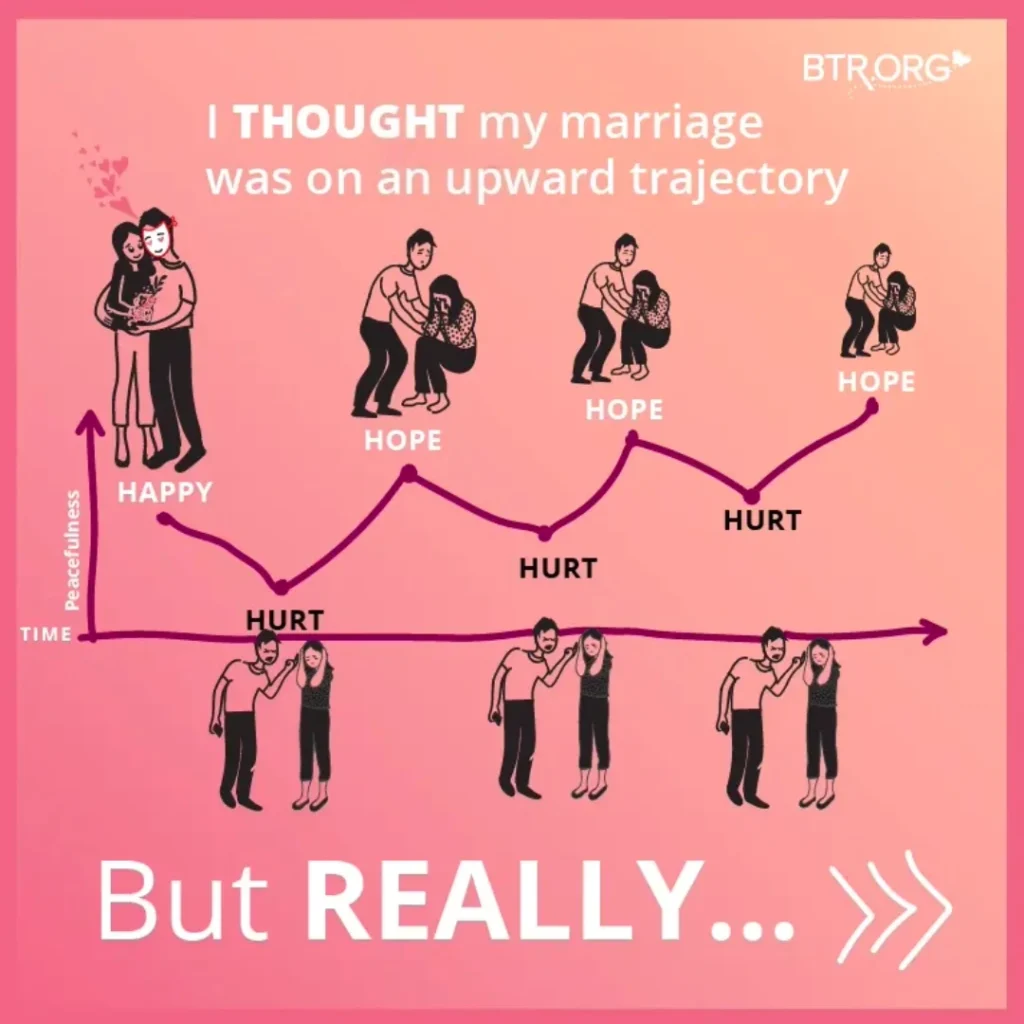
Speaking of social media, on Facebook. I’m also on Instagram @btr.org__, TikTok @btr.org, and if you search btr.org on YouTube, you’ll find me there. If you want to comment anonymously on any particular episode, let’s say this one, go to our website, btr.org and in the search bar put in the title of the episode. So for this one, it would be, my husband lies about small things.
This episode will come up. You can see the transcription and scroll down to the bottom. And comment anonymously about what you think. I always love your comments. And I interact with women on the website all the time. I also interact with women on social media.
My Marriage Was Not Healthy
Anne: So you’re following me on social media, we’re interacting online and then you see this infographic. What happened next?
Jenna: It resonated instantly with me. I thought we had hard times, but things are still getting better. I thought we were on that upward trajectory. But when I saw it on Instagram. It just suddenly clicked for me. It has two different graphs. One says, “What I thought my marriage was” and it shows a graph that goes up and down, but it has a trajectory that’s going up. Then, it says, “healthy, hard, healthy, hard.”
Anne: Yeah, it’s kind of like a stock market graph. It’s going up in general and healthy is when it goes up and hard is when it dips down. And when it goes back up, it goes even higher.
Jenna: It captures the experience I had exactly. Then, underneath what I thought my marriage was, it says what it really was. Instead of the healthy and hard healthy and hard points, it’s actually grooming and abuse, grooming and abuse. The grooming just gets more extreme, and the abuse stays the same. So it’s not that the marriage is improving. It’s that the grooming is just improving, and abuse is still there.
Anne: The abuse is actually probably getting worse, but you can’t go lower in a graph. So I created this infographic because that was my experience.
RECOGNIZING EMOTIONAL ABUSE PATTERNS WHEN MY HUSBAND LIES ABOUT SMALL THINGS
Anne: I thought as we did addiction recovery, and we went to all these therapists, and we did 12 step for wives of addicts…. all the stuff that we would take a step forward and then two steps back. Because the addiction recovery industrial complex told me “He’s going to have relapses” and “progress, not perfection.” I thought, “Oh, we are improving over time, but of course, it’s not just going to be a perfectly straight line to success. We’re going to have ups and downs along the way.”
But when I finally took a step back and realized it was abuse, and that my husband lies about small things as part of that pattern, I saw that we weren’t actually moving forward at all. I was just going around in circles. What I thought were setbacks were really just more lies, more grooming, and more emotional abuse.
Let’s talk about the factors that would lead a woman to think that these are the regular ups and downs of either marriage in general, or the ups and downs of being in a relationship with a man addicted to exploitative material or maybe has a mental health issue.
Jenna: I think the actions he did were positive. He was going to church. And he participated in an addiction recovery group. He did all the things that you would think of when you think of improving. Even times when he would apologize. Or times when he would not gaslight me. I thought that was positive and thought maybe that was improvement.
Anne: Congratulations, you didn’t lie. I’m so proud of you!
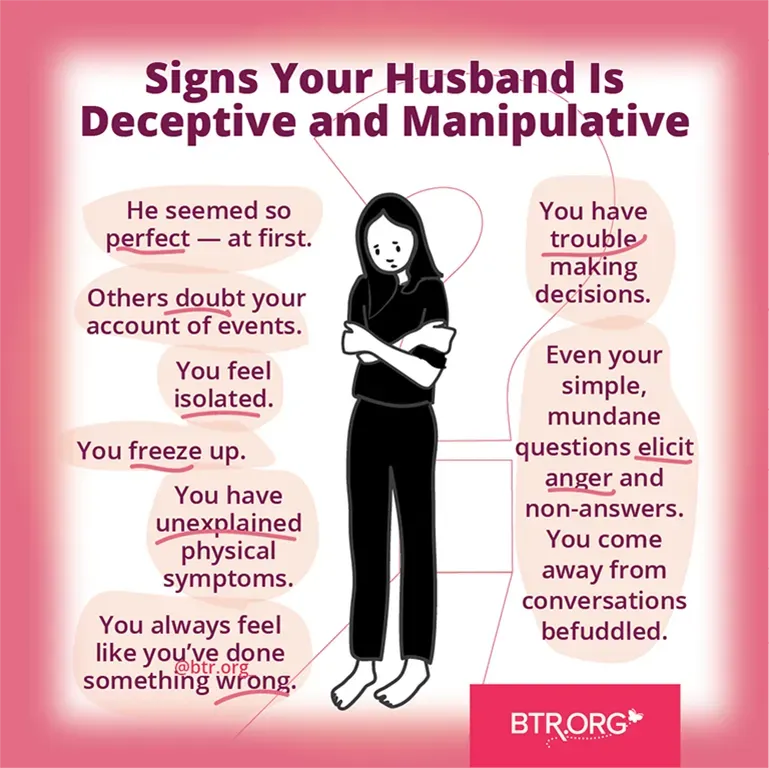
My Husband Was Lying & I Was Sticking It Out
Jenna: Seriously, it would be like, oh wow, he took money out of my wallet. And didn’t think I saw, but he didn’t try to convince me that he didn’t do that. As long as you’re going to a group, to therapy, to church, there’s this idea that just doing those things equals I’m a good person.
Anne: I think there’s also the societal idea that everything is fixable. As long as you’re willing to work on it and go to therapy. Of course, there’s going to be a solution. Many people go straight to whether their abusive husband needs therapy or an addiction recovery program. Rather than thinking, “Whoa, we need to get you emotionally and psychologically safe.”
Why Does My Husband Lie?
I was talking to my uncle the other day about my ex, telling him some details. And he was shocked. And then at five o’clock in the morning, the next day he emailed me and said, “Anne, your ex needs a treatment program.”
I just laughed, I was like, “That’s what I thought. And so that’s why I got him into a treatment program.” Because he’s abusive and he lies, treatment didn’t help him. And no one told me it was abuse, which is why I’m doing this podcast.
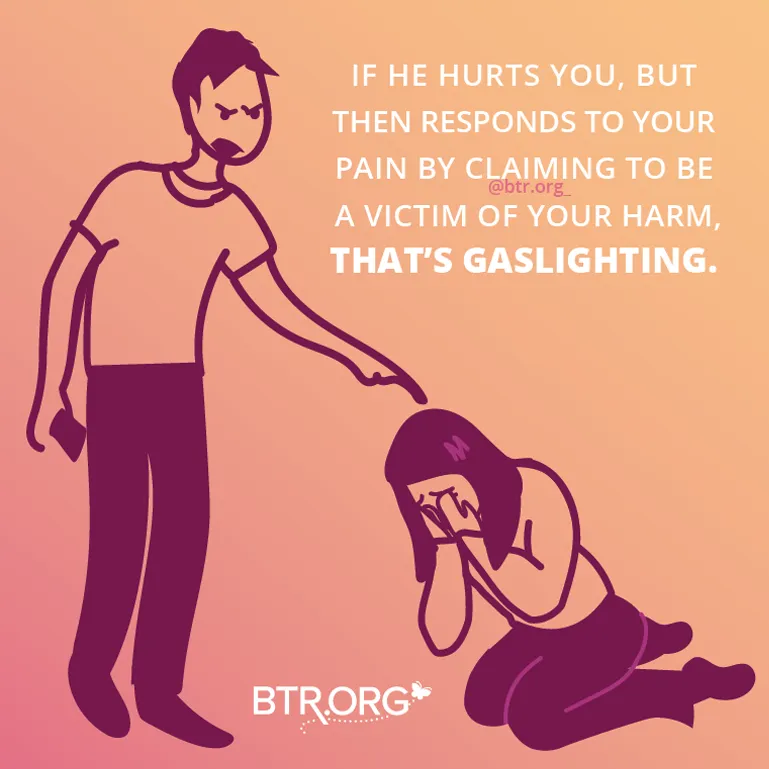
Jenna: Yeah. I think there’s an idea that marriage is hard. No one’s perfect. As long as he’s working on it by going to a treatment center or going to therapy or whatever he may be doing. As long as he’s doing those things, you just have to stick it out. Those kinds of ideas, at least, were in my mind, and made it difficult for me to even consider the option that maybe not all marriages are this hard. Maybe not all marriages are abusive. I think that’s one idea that kept me stuck.
I Learn His Lies, Gaslighting & Manipulation Are Abuse
Anne: Even if you know it’s abuse, then you’re like, “Wow, it’s abuse? Okay, we need to get him into therapy because he’s abusive because he has childhood trauma or he feels shame.” I don’t think they realize that’s not why he’s abusive, number one, and therapy will not help. Most therapists think, “Oh, I can help.” They don’t realize they’re going to get manipulated and gaslit themselves.
I don’t know if it’s an ego thing, but therapists don’t tend to realize they are unable to help abusers. Because the prevailing opinion of everyone is that therapy will solve this, I work so hard to educate all women about this.
So I hope the infographics help. I took many of them, and I put them in the back of Trauma Mama Husband Drama, which is my picture book for adults. And it’s also available on Amazon. It’s a picture book. So it’s also this visual representation of what it’s like to be emotionally and psychologically abused and coerced, and not realize what’s happening because of his lies.
Teaching these concepts in a way that women can actually apply is my top priority. And social media is so important, because I can post those visual representations there. As you’ve been interacting with me on social media, what’s your take on why these are so helpful for victims?
I Seek & Find The Truth
Jenna For me, learning the term betrayal trauma was incredibly validating and empowering. It gave me language for what I was experiencing—especially in moments when my husband lies about small things and I couldn’t explain why it affected me so deeply.
The infographics do something similar. They capture my experience in a way I sometimes can’t put into words. They give me a simple, visual way to understand what I’m feeling and to share that understanding with others. It’s therapeutic, clear, and approachable—and the fact that they’re visually engaging makes them even easier to take in.Anne: Yeah, having it be cute doesn’t hurt. So the process is like, I have an idea in my head, I podcast about it. Then I draw like a pathetic stick figure. And then my amazing friend, who’s an illustrator and graphic designer, brings these to life. She’s incredible. And then she and I go back and forth through so many different iterations to make sure the concept is clear,
And then I always revisit them. Maybe six months, or a year or two years later, I look at it again and I’m like, “Oh we need to alter this a little bit.” I’m always getting feedback on them and making updates. So when you say an infographic I created that I posted, it helped you realize your husband’s lies about the small things. Indicated a much bigger thing, that warms my heart.
Infographics Helped Me See Reality
Jenna: It was so easy for me to overlook the experiences I’ve gone through that were emotionally abusive, and think, he doesn’t punch me. He doesn’t hurt me physically, but emotional abuse affects your body and spirit immensely. It’s not that bad. But when I see it in the infographic, it’s so obvious. It’s apparent what I am experiencing is emotional abuse. It’s damaging, and I’m being sucked into this abuse cycle of grooming and devaluing. It just makes it so clear for me and helps me navigate my next steps to safety.
I took the Betrayal Trauma Recovery Workshop. The workbook that comes with the workshop had so many visuals and beautiful artwork. It captures the reality of my situation. It’s simple and easy to understand, and helps me digest my own experience. I appreciated that.
Anne: I’m so glad to hear that. That’s awesome. I’ve taken so many trainings or workshops. And I was so confused most of the time. I always felt like, Am I doing it wrong? Is it me? And then I realized, no, it’s just not detailed. It’s unclear. It doesn’t give me a way to process it. It doesn’t give me a way to interact with it. And so just like everything else at Betrayal Trauma Recovery, I test everything for years, years, and years.
With the Betrayal Trauma Recovery Workshop, I first used the strategies myself to deliver my kids and myself from abuse. I wanted to make sure it wasn’t a fluke. So I duplicated that success. With other victims, we created a workshop out of it. We ran that workshop live for a few years to get feedback, to know where were victims getting stuck? What parts weren’t clear?
The Betrayal Trauma Workshop Is Invaluable
Anne: Then we created all the videos for the format. It’s now online, and those videos are incredible because it has visual representations for all these concepts to help women get it. And then I continue to tweak it, tweak it, and tweak it. I have a master’s degree in curriculum and instruction. So I’m obsessed with making sure the content we produce is clear and helpful. And that the services we provide are exactly what women need.
Jenna: Yeah, the workshop for me was invaluable. I felt like I learned so much about specific actions I could take and specific situations. It was super helpful.
Anne: I am so glad to hear that. I hear that every day from women, how much it helped them. If you’re listening and interested, you can learn more about workshop for betrayal trauma.
The French Fry Analogy
Anne: As Jenna and I were interacting on social media, she shared something that made me realize the French fry analogy would really help her name what was happening in her marriage. This analogy illustrates why, when a husband lies about small things, it’s often evidence that something much bigger is going on.
He comes up to you and says, “You know what? I have been eating at McDonald’s too much, and it’s not healthy for me. It’s bothering me. I don’t like it, so I’m just letting you know that I’m not going to ever eat at McDonald’s again, ever. You, as the supportive wife, would be like, sounds great, honey. This is not that important. You’re like, okay, you do you. Good for you. He doesn’t say anything else about it.
Three weeks later, you have to use his car for something. You get in his car, you’re fumbling around with a quarter, and it falls down in a crack. And as you’re trying to get the quarter, you find a French fry. That French fry is unmistakable. It is a McDonald’s French fry. You get your quarter out, you get the French fry out, and you go to your husband and you say, “Hey honey, I lost this quarter and when I found it, I also found this French fry.”
Now if he’s a super healthy person, he might say, “I know I told you I want to stop eating at McDonald’s, but I went to McDonald’s three days ago when I had that long drive. And yeah, one of them fell down in the crack. And as far as me falling off the wagon, I feel really stupid about it.
AN ANALOGY FOR EMOTIONAL ABUSE WHEN A HUSBAND LIES ABOUT SMALL THINGS
Anne: This is not an abuse episode. The situation where he wanted to stop eating McDonald’s and then he fell off the wagon is not that big of a deal. He wasn’t trying to deceive you. He wasn’t trying to hide it from you on purpose. When you asked him about the French fry, he readily admitted he fell off the wagon and went to McDonald’s.
Now let’s pretend the whole scenario is the same, but instead, when you find the French fry. And you take it to him and say, I found this French fry. He says. “I don’t know what you’re talking about, I don’t see a French fry.” And then you’re like, “This French fry, this one right here. I found this in the car.”
And he’s like, “Well, one of the kids must’ve got in my car and dropped it in there.” With that same scenario, if he starts to gaslight he lies, he’s not a healthy person. Even if this is just about a French fry. Deceit, gaslighting, and turning the tables would be psychological and emotional abuse.
And to take it even further, if he said, “Why are you going through my car? Why are you trying to check up on me?” Maybe even, “I never told you I wasn’t going to eat at McDonald’s. Of course, I’m going to eat at McDonald’s. Why would you even think I wouldn’t eat at McDonald’s?” So there’s the French fry analogy. How has this analogy helped you?
Experiencing Your Husband’s Lies
Jenna: I think it captured what was happening for me. Like you said, they were small, or they felt small at the time. When my husband lies about small things, it didn’t immediately register as something serious. Back then, I didn’t even know he was using exploitative material.
He would make up stories about hobbies or abilities he actually did not have. Then, to me, he would deny he had made up those stories. So I would just let his lies go. Now I realize how big they were. But I can look back and see the pattern of different French fries I found.
Anne’s EXAMPLE: WHEN A Husband Lies ABOUT SMALL THINGS
Anne: My ex did that too. There was this period where we were at dinner parties or social events. I would look out of the corner of my eye. And he was like doing these Tai Chi moves. And he would talk to people about how much he loved Tai Chi. Like he was some kind of Tai Chi master. So after a while, I was very curious.
So I said, “How do you know so much about Tai Chi?” And he kind of avoided answering me. And so I got real specific and I said, “Did you take Tai-Chi in college?”
“No.”
“Did you take it in high school?”
“No.”
“Did you take it at a gym?”
“No.”
“Have you read a book about Tai Chi?”
“No.”
“Have you ever taken a Tai-Chi class anywhere in any way, shape or form?”
“No.”
“Have you done Tai Chi in a park?” You know how there’s like those old people in a park? “Have you done Tai Chi in a park?”
“No.”
“Maybe on vacation?”
“No.”
Ah, I was dumbfounded. He lies, so I don’t know why he didn’t just lie, but in this moment, for some reason, he wanted me to know. I still don’t know why he wanted me to know, because he had no problem with lies when he wanted to. And finally, and maybe this was a lie too. He said, “I read an article about at once.” Like one article is what he said. And he lies about that? Maybe he never even read one article about it. It was crazy.
So, instead of just saying, I read an article about Tai Chi and I’m interested in maybe taking a class sometime. No, one article apparently made him an expert in Tai Chi.
WHEN YOUR HUSBAND LIES ABOUT SMALL THINGS, IT’S NOT HARMLESS
Anne: So if he lies about traveling to London or Tai Chi or French fries, it indicates something serious is happening, but it’s so hard for us to recognize that.
Jenna: For me, I feel like I didn’t have proof. Everything inside me said something here is wrong. It is not normal that my husband lies about small things, like going on a trip to London. My brain would say he’s not using exploitative material, because he’d said he wasn’t using it. I can think of way worse things he could be doing. Maybe this isn’t that big of a deal.
I think it was easy to rationalize it, to say, this isn’t necessarily a good thing, but because he’s told me he loved me, it’s still progress. Back to that upward trajectory graph in the infographic.
Anne: Yeah, totally. After I was separated, I was talking to my dentist. And I said, “I didn’t realize it was abuse. I mean, he had stopped screaming and yelling in my face. And I saw that as progress.”
And my dentist was like, “What? What are you talking about?”
I know my dentist well. I went to high school with him. He just looked at me and he was like, “A good person would never do that”. Like ever. My dentist couldn’t wrap his head around the fact that victims are manipulated to think he lies about this one thing. He realized he couldn’t scream and yell in your face. So then he lies to you. That’s not progress.
But now taking a step back, it’s a gut punch to realize that he wasn’t changing and things weren’t improving. That upward trajectory wasn’t happening. He was just changing up his abuse tactics.
I Struggle To Create Safety
Jenna: When I look back on my experience, I thought these little breadcrumbs were big improvements. The little things he would do I would see as progress. I imagined myself standing outside my house in a hurricane, like lightning, rain and crazy wind. My hair is flying everywhere and debris flying all around me. I imagine the storm around me being the abuse I experienced.
Then I imagine putting my hands over my head, just a little bit as progress. That’s a small improvement from not having any protection, but it’s something. The only thing that created safety for me was walking to my house, stepping inside, and closing the door. I could look out the window and see the crazy storm that was going on outside, but it wasn’t hurting me anymore.
I think that’s the only time I could see the abuse for what it was. Because in the moment, I felt that at least my hands are over my head, I’ve got a little protection. I didn’t understand how much danger I was in until I was safe. And I could look back and see how dangerous it actually was.
Anne: Oh, I like that analogy. I wonder if part of it is the adrenaline of the chaos. Like you might not realize how cold you are until you get inside. And then you’re like, “Oh, I was really cold and miserable.” But in the moment, you’re just trying to make it down the mountain or survive.
One Day At A Time Survival Mode
Anne: Which is why people call abuse victims survivors. Because every day they’re surviving in this mental, emotional, and psychological life and death situation. Even if they’re still in the abuse, because they’re surviving one day at a time.
We need to ask ourselves. “Wait a minute, do I just want to be in survival mode every day? Do I want to be in that type of chaos all the time? Or do I want to actually be safe and rest in my warm house with a cup of hot chocolate?”
And so to help us make our way to safety, that French fry analogy comes in handy especially when a husband lies about small things. Because if something happens, we can think to ourselves, “Okay, if this were just about a French fry, would it still be severe and intense, emotional and psychological abuse?” If someone is willing to completely deny, he lies, gaslights, and blame shifts about a french fry, which is not that big of a deal. That’s a big warning sign that they are emotionally and psychologically dangerous.
I want all the listeners to consider things that you may have thought, that’s not that big of a deal. When he lies and denies you had a conversation about changing the oil or picking up milk from the store. Not only is lying emotional abuse in and of itself, it’s only the part of the iceberg you can see, and there is a way, way more beneath the surface that you can’t see.
Social Media’s Role In Figuring Out EMOTIONAL ABUSE WHEN A HUSBAND LIES ABOUT SMALL THINGS
Anne: Why has following Betrayal Trauma Recovery on social media, interacting with me and engaging with other women, been useful to you?
Jenna: I love listening to the podcast, and getting bite-sized pieces of information. I can get on, take in one small topic, a quote, or a thought, and sit with it. It gives me something to think about and helps me understand emotional abuse in a way I can actually process, especially when my husband lies about small things.
Anne: That reminds me of one of my good friends in real life. We were friends long before I started podcasting. She’d been in several abusive relationships, but for me, talking to her was always awkward. Because for her, it felt safer to pull away from the pain and not consider it could be emotional abuse. So as we would talk, I would think, “I have the perfect podcast about this. I should tell her about it.” But I would hold back as much as possible.
Our sons were on the same baseball team. So we’d sit together every week and chat while our sons played baseball. And at one game, she told me about her ex, and I was thinking, “Oh, this is abuse. How can I help her understand, since she’s not interested in listening to the podcast?” She loves Instagram. So I said, “Hey, I’m on Instagram. Let’s follow each other.” And the next week at the baseball game, she was like, “Oh, I’ve been learning all this stuff. I realized my ex is abusive.”
And in my head I’m thinking, I know. I’ve been trying to tell you that. I was actually a little frustrated and confused, apparently she wasn’t interested in listening to me to educate her about abuse in person.
I Start Healing With Daily Instagrams & The BTR Workshop
Anne: When it came down to it, the only thing that mattered to me was that she started opening up to the idea that these men she had been dating were abusive. Then I saw the beauty of it.
Because she’s not into podcasts. For her, the little bite-size pieces helped her realize what’s happening when her husband lies about small things. Some women have a hard time leaning into the pain, because that doesn’t feel safe. And so just a little bit at a time is helpful to them. Every woman is different. On social media, we’re all equal. We can interact with other women who’ve been through it. Thanks for sharing that story about how my post on Instagram helped you.
What else has helped you connect with yourself?
Jenna The Betrayal Trauma Recovery Workshop was super helpful. I found them healing and so sacred. They helped me connect with myself and visualize stepping into safety, when that’s scary for me in real life. It helped me visualize myself becoming empowered and accepting that I don’t know what’s going to happen. Also loving myself. There’s one where you revisit your younger self and express love. I felt like it was so healing and powerful for me. I love and value the meditations.
Anne: Yeah, I remember you messaged me right after you did the, “I am just right” meditation. And you said you were crying. I assume those were good tears?
Jenna: Oh, definitely. Yeah, it was the healing tears, where you just had that moment. You feel love for this part of yourself that needed that love. I just loved it.
Anne: I wanted to do those betrayal meditations so that women could process their emotions differently. Which is similar with the infographics and metaphors.
Abuse Education Is Available Through the BTR Podcast & Workshop
Anne: Different types of content or services speak to women in different ways. I’m proud of Betrayal Trauma Recovery. Through Betrayal Trauma Recovery, we’ve created so many avenues for women to get educated about abuse. This podcast is obviously the best way to educate yourself about abuse. Because this podcast is mostly victim stories. And hearing other women’s experience. And realizing. Holy cow, my husband lies about small things, too. It’s so validating.
Then having those visual representations of the concepts I teach on the podcast with the infographics on Instagram and on our social media channels is so helpful. The interaction is what makes social media so powerful. And Betrayal Trauma Recovery is the only organization that teaches the strategies of how to get to safety in such a detailed and practical way in The Betrayal Trauma Recovery Workshop.
And then, of course, we never leave any woman alone in this journey. To get help implementing the strategies you learned in the workshop, to get help actually applying the concepts you learn on social media or through this podcast.
We have online group sessions with coaches that I personally trained. In our Betrayal Trauma Recovery Group Sessions, women share from the heart and get real-time face-to-face feedback from our coaches and other women in the group session. Our team is incredible. We are here for you!
Our Whole Goal Is To Help Women Understand Abuse
Anne: We really care, and it’s my goal and the goal of the whole Betrayal Trauma Recovery team to help every woman understand this. We don’t want anyone trapped in abuse. Like you, Jenna, you’ve been able to apply this stuff and get shelter from the storm. I’m so honored to hear your story. Thank you so much for coming on today.
Jenna: Anne, thanks for all you’ve done for creating Betrayal Trauma Recovery. I love this community. It’s been so helpful to me. I’m really grateful.
This episode makes sense on it’s own. However, if you want to hear more episodes with Jenna:
1: Is It Wrong To Check Your Husband’s Phone? – Jenna’s Experience
2: The Best Way To Explain Betrayal Trauma
3: How To Recognize Victim Blaming – Jenna’s Story
4: When He Lies About Small Things, This Brilliant Analogy Offers Insight (THIS EPISODE)24 March 2026, 11:00 am - 33 minutes 1 secondTherapist for Trauma Bonding? What No One Tells You
Are you looking for a therapist for trauma bonding because someone told you that you’re trauma bonded with your emotionally abusive husband (or ex)? Here’s what no one will tell you:
What People Get Wrong About “Trauma Bonding”
People often use the phrase “trauma bonding” to describe a victim’s attachment to an abusive partner.
But traditionally, a trauma bond refers to something very different.
True Trauma Bonding Examples
A trauma bond forms when people go through a traumatic event together, such as:
- Siblings growing up in the same abusive home
- Friends surviving a violent घटना together
- A family experiencing a natural disaster
In these cases, shared trauma created a bond. Both people were victims of the same event. That’s not what’s happening in an abusive relationship.
Why “Therapy for Trauma Bonding” Can Be Misleading
If you’re thinking about getting a therapist for trauma bonding, you may be trying to understand why you feel attached to someone who hurts you. But labeling your experience as a “bond” can unintentionally shift responsibility onto you.
It can make it seem like:
- You’re choosing this connection
- You’re emotionally dependent in a way that’s your fault
- You need to “break your attachment”
But what if the attachment isn’t something you created? What if he manufactured it?
The Manufactured Relational Tether
Instead of a trauma bond, what many women experience is something different: A manufactured relational tether.
This happens he creates a cycle of:
- Chaos
- Confusion
- Emotional harm
- Intermittent relief
He destabilizes you…then becomes the one who soothes you.
Not because you chose it.
But because it was engineered. It’s actually emotional abuse. To find out if you’re experiencing this, take my free emotional abuse test.
https://www.youtube.com/watch?v=QleyqobSRCQHow to Break a Trauma Bond without Therapy
If you’ve been told you need therapy for trauma bonding, you may feel…
- dependent on him, even when you don’t want to
- both drawn to him and repelled by him
- confused by his words vs. his actions
- frustrated with yourself for not “just leaving”
- like this must somehow be your fault
- relief when he’s kind—even if it’s brief
That doesn’t mean you’re “bonded” to him. But it does mean that he’s lying to you by creating cycles of harm and relief. If you’re trying to heal from your marriage without therapy, there’s another way. I’ll share it with you below.
14 Signs You Don’t Need a Therapist for Trauma Bonding
He withdraws, then gives affection when you’re distressed when he…
- isolates you from supportive people
- makes you doubt your perception of reality
- alternates between kindness and cruelty
- controls resources like money or access
- undermines your confidence
- creates problems he later “fixes”
- pushes your boundaries repeatedly
- positions himself as the victim
- uses other people to provoke insecurity
- gives approval only sometimes
- acts different in public vs. private
- promises change but doesn’t follow through
- blames you for his behavior
- witholds affection
This isn’t a mutual bond. It’s a pattern of control.
Why This Distinction Matters
If you believe you’re “trauma bonded,” you may think, I need to heal myself to break this bond.
But if what you’re experiencing is manipulation, then the path forward is different. You don’t need to fix yourself.
You need clarity.
One woman shared:
“I thought I was the problem because I couldn’t detach.
But once I understood the pattern, everything changed.”
Moving Forward (Without Blaming Yourself)
Here’s the think, I don’t think you need therapy for trauma bonding, but that doesn’t mean you don’t need support. You may need someone to help you:
- See the pattern clearly
- Understand emotional and psychological abuse
- Learn how to protect yourself
- Rebuild trust in your own perception
At Betrayal Trauma Recovery, women learn how to step out of confusion and into clarity.
And once you can see it clearly, you can begin to move forward—with truth, with support, and with your sense of self intact.
So how do you break free…
- Open up to a safe person or safe group, check out my online trauma bond support group.
- Become educated about betrayal trauma and what causes it
- Practice radical self-care daily
- Take my Living Free Workshop.
 “Best information source for betrayal trauma. Instead of unhelpful trauma bonding examples, this gave me hope that I could move forward. Thank you, Anne, for writing this.“
Many women don’t realize how dangerous this type of manipulation is. In fact, experts who work with trafficking victims describe the exact same cycles:
- grooming
- confusion
- emotional dependency
- intermittent kindness
- fear of leaving
- hope that he’ll change
Understanding trafficking dynamics can help women recognize why his emotional abuse can feel so psychologically impossible to untangle.
That’s why I interviewed Dr. Stephany Powell, an expert who spent decades working with trafficking victims through the LAPD and the National Center on Sexual Exploitation.
Transcript: Therapist for Trauma Bonding? What No One Tells You
Anne: I have Dr. Stephanie Powell on today’s episode. She is Vice President and Director of Law Enforcement Training and Survivor Services at the National Center on Sexual Exploitation. Dr. Powell gained insight into exploitation and trafficking through her 30 years with the Los Angeles Police Department, coupled with her passion for education and her heart for community.
She’s an incredible leader who uses her considerable skills and insight to educate the community about the complex and often misunderstood world of trafficking. And to create positive change for victims. She’s a powerful speaker, tenacious educator, advocate for change, and one of the premier experts in this field. She’s been featured on CNN, HLN, and local media in the Los Angeles area. We will be talking about trafficking examples. Welcome, Dr. Powell.
Dr. Powell: Yes, thank you so much for having me.
Anne: On social media, we saw a post from Fight the New Drug, where you talked about how trafficking is not only when victims are held against their will, and a lot of people don’t understand that. So can you start with the definition of trafficking?
Dr. Powell: Well, when we talk about trafficking, it needs to be understood that when you’re under the age of 18, and someone has used you for commercial s**, that by age alone, you’re automatically considered a victim of trafficking.
In a court of law, if you’re over 18 years of age, you have to prove fraud or coercion. I think what happens oftentimes is that people only think of trafficking victims with the force and the fraud, because sometimes that coercion piece is a little hard to understand because people go, well, why didn’t they just leave?
Emotional Bonds In Trafficking
Dr. Powell: What needs to be understood is that there is an emotional bond that one may have with their trafficker. So that emotional bond may be because their trafficker was a boyfriend or family member. It’s like brainwashing. I’m coercing you because if you leave, something bad will happen to somebody you love. And by the way, this is your fault anyway, because you chose to do this. So that’s what human trafficking looks like.
Someone can enter at the age of 11 or 12, but someone can also enter at the age of 21. It’s not so much where people will think it only happens with children. It happens with adults.
Anne: When you say any commercial act of someone younger than 18, that age automatically says this is a victim of trafficking. Could that be perhaps a boyfriend and a girlfriend? Let’s say they’re 17. Let’s say he’s got a camera, and then he records her and posts it online without her knowledge. Under any circumstances, if she’s under 18, is that a commercial trafficking example?
Dr. Powell: It could be considered a commercial act if they’re getting money by the posting, but by the mere posting of itself and they’re under the age of 18, you’re looking at CSAM.
Anne: Right, child abuse material.
Dr. Powell: Yes.
Anne: So do you find that some children under 18 unknowingly participate in trafficking? They don’t realize what is going on?
Dr. Powell: Yes, under the age of 18, they could be unknowingly participating in, CSAM.
The Dangers Of Sharing Images
Dr. Powell: So that’s why when I talk to teenagers, I tell them, if you’re sharing pictures that you wouldn’t want to share with your grandmother, once you push send, you don’t have any control over that picture. The person who told you they would not share it with anybody else could possibly share it with somebody else. So unfortunately, that image has gone viral.
Anne: And they can also post it without your consent or without your permission anywhere online for non commercial or commercial purposes.
Dr. Powell: Exactly. And then the scary part is that once it goes to one source, other sources can scrape it off, and that’s how it ends up going viral. The image could now be on different social media sites.
Anne: In several cases, I’ve heard of women who are married and their husband records them without their knowledge. And they don’t find this out for sometimes years. Then they also find out that he has been posting these videos of them perhaps in their bedrooms or in their shower online for profit. She has been trafficked in her own home by her own husband. Can you talk more about why this is one of the trafficking examples and why it’s so dangerous for women?
Dr. Powell: That photo or video has been used for commercial acts and exploitation. Unfortunately, women may blame themselves. If only I had known. Really, understanding that it’s not your fault. You’ve been exploited. Someone took advantage of you. The worst part, it was somebody they trusted. When it’s somebody you trusted that used you in that way.
Victim Blaming & Self-Worth In Trafficking
Dr. Powell: It’s no different than a victim of trafficking dealing with a trafficker or a pimp. Because many times those women, it was their boyfriend that pimped them out, they got talked into it. The bottom line is, it could make one feel worthless. What I want to say to them is, you did what you were supposed to do. You trusted the person closest to you. You were a wife. And this is no fault of your own. It is something they did. Meaning the husband, that shouldn’t have been done.
Anne: In your experience with the LAPD, did you ever see any cases like this? And if you did, what types of legal ramifications were there for victims when their husband was the trafficker?
Dr. Powell: I have had cases where the husband was the trafficker and he was pimping out his wife.
Anne: Did it make it harder to prosecute when she was married to him? Were there complications due to the relationship?
Dr. Powell: When it is a husband or a boyfriend, there is an emotional bond. Because of that emotional bond, oftentimes women did not want to testify. It’s no different than when you’re dealing with domestic violence. Where they felt that what their husband did to them was wrong. But they don’t want to see them go to jail. They don’t want to see them punished.
And the woman ends up taking the hit, meaning I will sacrifice myself. I’ll just deal with my own pain internally, but I don’t want to see anything happen to him.
Anne: At least from the women I’ve observed, they wonder if he can get better or get treatment and not be that way anymore.
Exploitation & Emotional Manipulation
Anne: So in testifying against it, or even taking the evidence to authorities to have him charged. They don’t want to do that just in case he’s going to get better. Then they can stay married, and their family can stay together. For you feel love toward him. But for him, it was an opportunity to exploit you, and he’s been exploiting you in that way and probably a bunch of other ways.
Perhaps you should consider it an opportunity for exploitation. And maybe talk about what exploitation is in these trafficking examples.
Dr. Powell: In this circumstance, the exploitation is that somebody took videos without someone’s knowledge and exploited them by benefiting from it financially. Or share it for comments or whatever it may be. It’s using an individual. Sure, there are women who do not want to see that person go to jail, because they think they might get better. And we’ve all been through something.
It may not be that, but as women, we’ve been through something where we stay with a person and think they’re going to get better.
Anne: Yeah, an example I’ve been using lately is the idea of someone with a severe contagious disease, like Ebola . They’re saying, I want to be in close proximity to you, because I want to ensure that our family stays together. You would be like, you need to stay away from me, because if you’re close to me, I could get this infectious disease. I will interact with you again when you are completely healed and there’s no danger.
The Importance Of Self-Preservation
Anne: Can he get better? That isn’t the question that I think victims should ask or survivors should ask. With Ebola, are they currently safe enough to be in close proximity? Is this person non contagious right now? Not, can they get better? If they’re telling you all the right things, and doing all the right things to groom you and exploit you. That is dangerous for women in these trafficking examples.
Dr. Powell: With the Ebola example, it’s not him telling you I’m safe. The idea of it’s safe, not coming from the person who’s infected, because that’s the same person that says, I won’t do this again. And then they do it again. Sometimes we don’t want to hear this, but you got to look out for yourself.
I think we’re taught as women that unconditional love is important to be a wife. You always put your husband first. We got to reserve a little bit of ourself for ourselves. I can’t give you everything and then have nothing of my own.
Anne: Acknowledging that it is your life. It’s your life. Your life is not actually about him. It’s about yourself. And if you choose to share it with him, that’s fine, but you don’t owe him anything. It’s not like your two circulatory systems are combined, and if you get some physical distance from this person, he’s going to drop dead. You are your own person, and this is your life. If you choose to share it with him, it does not necessarily mean he’s become part of you, even though it feels like it.
Recognizing Manipulation & Grooming Isn’t a “bond”
Anne: Especially when women separate, and me included, it seemed like I was cutting my own leg off. It felt awful, but I did survive. My circulatory system was not combined with his. You’re the only person who will advocate for your life the way you will, because you’re the only person whose life it is. Especially when your life could be one of the trafficking examples.
Dr. Powell: Yeah, absolutely. At the end of the day, you are all that you have. And if you give everything of yourself to a person, when that person walks out the door, they have taken all of you with them. And if you don’t have enough of you to get strength, it’s going to be devastating. I’m not coming from a standpoint of, this is easy. It’s not easy. And it goes back to, you did what you were supposed to do.
In terms of loving and trusting someone you wanted to spend your life with. You did your part. They didn’t do their part. And understanding that, what I think is important, ladies, is you are the prize. Thank you, they messed up, they tried to crush the prize, so at the end of the day, even though you may feel it’s your loss. It really is their loss. And you probably won’t feel this way at first. But you’re going to be fine, because you kept you intact.
In terms of my experience when I first ran my vice unit. I thought when I saw the women walking up and down the street, I assumed they were there because they wanted to be there.
The Reality Of Exploitation
Dr. Powell: But when I started working with them, not only in my law enforcement end. But in the advocate end of it, I quickly learned. These women were doing it because, and I’m going to talk about the ones who felt they had a relationship, because I think people can understand this. I’m talking about the ones who, it was their husbands or their boyfriends. They were in love with them and bought into, I’m doing this for them. I’m doing it for us. They’re in love.
That’s one lesson I learned. Love is a strong emotion that can get people to do almost anything. And we always hear these stories. But it’s so true. Not everybody out there is out there because they choose to be out there in and of itself. You choose to be out there when you don’t have any other choice. But some of them were in love with these guys because they had lost themselves.
In that other person. And so when you see it from that view, it helps you understand from the lens of a woman where there’s that commonality. If you’ve ever been in love and burnt. So I learned that these women were no different from me. We may have made other choices, but when it came to falling in love with the wrong person, they were no different than me.
Anne: They were in that situation due to marital coercion. Through no fault of their own, through thinking they were doing something for their spouse or their boyfriend. Can you talk about the logic of that? Was it like they needed money? And so he was like, this is a good way for us to get money, babe in these trafficking examples?
The Grooming Process
Anne: If you do this, we can earn enough money to buy a house, for me, that doesn’t seem super logical. Could you help put together the pieces of how they would coerce them into thinking that? Being exploited and physically putting themselves in danger, having it with multiple people for money, what would be of benefit to her.
Dr. Powell: It doesn’t start like that. There’s a grooming process in it, making that person fall in love with them first. A pimp once said, when he meets a girl, he’ll find a weakness. If he can’t find a weakness, he will create one. So, finding that weakness may be that you need someone to tell you that you’re pretty. Or you need to be in a relationship. There’s everything you need. Until, it goes sideways. So they have them fall in love with them first.
And then they broach the idea of, I’ve given you all these things, now I’m running out of money, if you could just do this one time for us. Then that one time becomes two times, it’s not because they want to have it with all these men. It’s because now they’re in a position where they don’t want that man to leave them. Or if they leave them, that’s what I was talking about, resources. They don’t have anything else, no family, no education and no job.
All being in the name of love. I would assume the same woman who knows their husband watches exploitative material, and think, eh, I don’t like it. That’s what he does. No harm, no foul until he starts taking pictures of her and uploading it. And she is one of the trafficking examples.
She Doesn’t Need Therapy for Trauma Bonding
Dr. Powell: He doesn’t start that way for the most part. It’s that manipulation of gaining trust. Here’s a good example: that guy we fall in love with, and your mother, your family members, and sisters say he’s not the one. And we will argue all the reasons why he’s the one. Until we figure out that he’s not, and then the question becomes, now is it too late? So if you can understand that, you can understand this.
Anne: The grooming is important, because in these trafficking examples, that was the trafficker’s intention the entire time. He wanted her to fall in love with him, so that she would be loyal, so that she would be willing to do what he wanted. So that he could exploit her. In that case, her thinking, okay, I’m doing this for us. She does not realize that. It’s never been about “us.” But the grooming occurred to exploit her, and that is how it has always been.
There’s never going to be a time when you earned “enough money” to purchase that car for us. Then he says, Oh, great, I appreciate it. Now that we have our car, we can get decent upstanding jobs. I will go to school, we’ll move into a house with a white picket fence. You never have to do that again. That’s not the end goal they have. She’s chasing peace and being settled, but never getting there. Because that’s not his goal. In these trafficking examples, their goal is to make money.
Dr. Powell: Yeah, can you imagine how hurtful that could be? Or, if we’re talking about the situation that maybe some of your listeners are in, when he gets caught. Because he’s uploaded a video.
The Pain Of Realization
Dr. Powell: Then he tells you I’m not going to do it again. You hope and pray that he doesn’t, and you believe him. But when he tells you that he knows he’s going to do it again. He just doesn’t want you to leave, because there might be kids or he might lose half his pension. But he knew when he told you he’s not going to do it again, that he’s going to do it again. He just doesn’t want you to leave.
Anne: Because if you leave, he cannot exploit you anymore.
Dr. Powell: Absolutely.
Anne: Because he groomed you to exploit you in the first place. He’s not going to want you to leave, because then he’ll lose access to exploiting you. From my point of view, and I did this, so this is common. I want all the women listening who have done this, because I’m pretty sure everyone has, to not feel bad.
When I say this, please take a deep breath and be like, okay, this is what everyone has done. To recognize the things happening and be concerned about it. And then take this list of, hey, it’s not okay that you use exploitative material. I feel uncomfortable when you scream in my face. I feel uncomfortable that you leave for periods of time, and I’m not sure where you’re going.
And give their abuser a list. What I have seen is that he is like, thank you. I did not know where the loopholes were, didn’t understand where I was not grooming well enough. I appreciate you giving me this list, because now I can groom you by making sure I tell you where I’m going.
Safety & Observation
Anne: Even though I’m lying, I can make sure you never find out I use exploitative material. It’s basically a list of how to groom me. So when I talk to victims, one of my thoughts is always to say safety is the top priority. Give yourself emotional and psychological space, and observe from a safe distance to see what he’s doing. So we don’t end up as one of the sex trafficking examples.
But you don’t need to tell him. You don’t need to say, hey, I saw you doing this. I’d like you to stop, because then he’d be like, oh, I didn’t realize my mask was cracked. I’m going to make sure to put some super glue right there. So she can’t see through it, but he’s going to continue doing the same things behind the mask.
Dr. Powell: The interesting thing about that is that at the time those conversations are happening, he may not realize what he’s learning. Until he starts to use it, because he knows you so well in the universal you. What’s also interesting about that is aren’t we taught in terms of being in relationships with others that we’re supposed to communicate? It’s almost like a gamble.
I know I’m supposed to communicate. I know I’m supposed to say that when you do this, this hurts me. In the hopes that because I’ve told you, you won’t do it anymore. Not that you’re going to bank it and put it in your toolkit for grooming purposes. So I think it goes back to what we were saying earlier, because we can’t go around life not communicating and then expecting to be in a good relationship, right?
trafficking is A Male-Dominated crime
Dr. Powell: So even though I’ve told you that when you do such and such, this hurts me. Now I see that you have now used that against me. I can say, okay, I gave you that information. You used it against me. So that means I need to go. Realizing that regardless of whether we have someone in our life or don’t, we’re going to be okay.
When I was in law enforcement, I came on when there weren’t that many females. And there were a lot of obstacles. But I had this saying on my desk that I actually heard from Oprah Winfrey. It is, what you say about me is none of my business. What you say about me is none of my business. In other words, I can’t invest in that negativity.
Anne: You worked your way up and became a leader in the LAPD, I would love to hear what you learned as a woman in that environment. Would you mind sharing the ways that you built up your own confidence in the face of men who didn’t think you deserved to be there?
Dr. Powell: With the Los Angeles Police Department, I joined in 1983, and there weren’t that many women. I was an African American woman, so I was often told I had two strikes against me. I’ll never forget the day I walked into my first police station, and one of the training officers looked at me and he says, you have three strikes against you. You’re black, you’re female, and you’re short.
Overcoming Obstacles In The LAPD
Dr. Powell: And the first thing that popped in my head was, and I said this to him, wow, those are three things I can’t do anything about, but I’m here. Keep in mind, I was like 25 years old. What it taught me was that I can’t do anything about what you think. All I can do is be the best I can be.
What I also realize is that they were afraid of me being female and short. That I would not be able to handle myself in the field dealing with bad guys, and I wouldn’t be able to protect them. And so once I proved that, the issues started to diminish a little bit, but every time I went to another station, it would be the same thing. You know, society has taught us as women that we may not be smart enough or we’re too little. We’re too frail, it’s just like we’re never enough.
And that’s why I keep saying that we have to tell ourselves and our daughters that we are enough. Someone else doesn’t determine whether you are enough. You’ve got to realize that you are enough. And walk into that room with confidence, if it’s a man who wants an equal partnership and wants somebody confident and not afraid of your confidence. That’s what you want. Not someone who’s figuring out a way to manipulate you, and use you for trafficking.
You know, another thing that I also realize is that sometimes people will stand on top of you to make them taller. And if that’s the case, you need not be that footstool.
Exploitation & Manipulation
Anne: Isn’t that, in a nutshell, the definition of exploitation, using someone else for your own gain? You’re not so concerned about them, but you’re just trying to use them.
Dr. Powell: Absolutely, standing on top of them to make you better. If this has happened to you, it doesn’t mean you weren’t smart enough. You should have seen it. Don’t blame yourself. It’s not because you’re dumb. If anything, it was because you were open enough and vulnerable enough.
And you loved enough that happened. So it’s not you. It’s the person who is doing the manipulating. They’re at fault, not you. So stay who you are. Just know that not everybody deserves your love and openness.
Anne: And you don’t owe it to them either. I mean, many men will give women the impression that because you’re a woman, you owe it to society, to men, to be “nice.” Or to act or look a certain way. This happens in narcissistic abuse in marriage. I had a man tell me, you’re too cute to be single. And I was like, so my cuteness is for men, apparently? It’s not just for me? So apparently you have to be owned or on someone’s arm to make your cuteness worthwhile?
I can’t just be cute by myself. I found that to be telling of how women should act or what they should be like. Rather than thinking, I don’t need to date even if I am cute. What are you talking about? What does that have to do with anything? Why is it any of your business what I’m doing with my cuteness?
Societal Expectations Of Women fuels Trafficking
Anne: Women tend to want to be liked, we want to fit in. So using those social norms to coerce us to say, hey, you’re supposed to be service oriented. Rather than realizing that women don’t always have to make choices that sacrifice their own well-being for other people. One thing that has helped women is reading scriptures on betrayal and harm.
Dr. Powell: Yeah, you’re not other people’s property. You’re not. So what if you’re not married? So what if you don’t have a boyfriend? It doesn’t make you any lesser of a person, but society will make it seem that way. You’re cute. Why are you single? What’s wrong with you? There’s nothing wrong with me. I have standards. People have to earn my trust and love. Ladies, I’m no different than you. I am a work in progress.
Many things I’ve learned personally and professionally have been because of bumps and bruises, not in the physical sense. Some of us learn this way. Some of us learn ahead of time. The bottom line is whatever has happened to you. It’s not your fault that you may have been trafficked. You learn from it, you move forward. But what I want to impress upon everyone is, be you, be your loving self, and just know that not everyone deserves your loving self.
Anne: Thank you so much for taking the time to talk to us today.
17 March 2026, 11:00 am - More Episodes? Get the App