- GTADA ep12: Evangelism
Evangelism

This week we discuss evangelism.
14 November 2016, 7:23 am - GTADA ep11: 2016 Election Reactions
2016 Election Reactions

We are back from the summer hiatus again! This week we discuss the results of the 2016 and some of our reaction.
14 November 2016, 7:18 am - GTADA ep10: American Imperialism! Exciting.
American Imperialism! Exciting.

We are back from the summer hiatus! This week we discuss American Imperialism- American foreign policy- and the justification (or not) of war, support, and global aide.
The majority of the discussion stemmed from the results of this survey. Feel free to take the survey and see how you compare with us! Also, here is a link to the google doc with the full breakdown of research.
Based on Micah 6:8:
“With what shall I come before the Lord, and bow myself before God on high? Shall I come before him with burnt offerings, with calves a year old? 7 Will the Lord be pleased with thousands of rams, with ten thousands of rivers of oil? Shall I give my firstborn for my transgression, the fruit of my body for the sin of my soul?” 8 He has told you, O man, what is good; and what does the Lord require of you but to do justice, and to love kindness, and to walk humbly with your God?
- Aversion to “politics” stops us from discussing controversial issues in the church and with Christians and puts up a protective security cloak between our government and us.
- Being an American Christian, typically means supporting aggressive U.S. foreign policies for some inexplicable reason.
- Most both Democrats and Republican candidates accept the “special” role of the United States in world foreign policy typically without question.
- The assumption that the safety and security of U.S citizens is more important than the security of others is a dangerous one. Are Americans worth more to God then other people?
- U.S. Christians are mostly ignorant of the havoc that our Government and our now Global Corporations wreak on the rest of the world. In order to do justice, love kindness, and walk humbly with your God, we must take an interest outside of our own borders and do whatever little thing we can to stop the suffering to which we contribute.
9 July 2016, 10:49 pm - GTADA ep9: Self-Actualization
GTADA ep9: Self-Actualization
To what extent should a Christian follow their own dreams and passions, as opposed to always seeking to supplant them with Christ's dreams and passions for our lives and our world?

Here are the links to the videos we watch at the beginning of the podcast:
Video 1: https://www.youtube.com/watch?v=PCzth7Vz_bM
Video 2: https://www.youtube.com/watch?v=DvtxOzO6OAE
Carl Rogers defined self-Actualization as "the curative force in psychotherapy – man's tendency to actualize himself, to become his potentialities... to express and activate all the capacities of the organism."
Thought for the evening:
To what extent should a Christian follow their own dreams and passions, as opposed to always seeking to supplant them with Christ's dreams and passions for our lives and our world?
There are many stunning examples today of men and women who have chased self-actualization - the pursuit unto realization of your dreams and goals. We have all been given, in some way, the American dream - that through hard work and relentless pursuit we can achieve our dreams and goals in life. Who doesn’t admire the small business owner, the self made man, the entrepreneur?
But then where is hope in Christ? Is it possible to work relentlessly and tirelessly for your dreams, and yet consider it “garbage” compared to knowing Christ? To what extent should we even try to change our position in this world, which is wearing out like a garment? Is there any place in the Christians life for earthly ambition?
Philippians 3
7But whatever were gains to me I now consider loss for the sake of Christ. 8What is more, I consider everything a loss because of the surpassing worth of knowing Christ Jesus my Lord, for whose sake I have lost all things. I consider them garbage, that I may gain Christ 9and be found in him, not having a righteousness of my own that comes from the law, but that which is through faith ina Christ—the righteousness that comes from God on the basis of faith. 10I want to know Christ—yes, to know the power of his resurrection and participation in his sufferings, becoming like him in his death, 11and so, somehow, attaining to the resurrection from the dead.
1 Corinthians 7
29What I mean, brothers and sisters, is that the time is short. From now on those who have wives should live as if they do not; 30those who mourn, as if they did not; those who are happy, as if they were not; those who buy something, as if it were not theirs to keep; 31those who use the things of the world, as if not engrossed in them. For this world in its present form is passing away.20 May 2016, 5:46 pm - GTADA ep8: Knowledge and Questioning

Group Notes - May 5, 2016National Day of Prayer
The National Day of Prayer is an annual observance held on the first Thursday of May, inviting people of all faiths to pray for our nation. It was created in 1952 by a joint resolution of the United States Congress and signed into law by President Harry S. Truman. Since its inception, this day has continually united Americans from all socio-economic, political, and ethnic backgrounds in prayer while also encouraging personal repentance and righteousness in the culture. The National Day of Prayer belongs to all Americans and is a day that transcends differences, bringing together citizens to celebrate our most beloved freedom; the freedom to humbly come before God and seek His guidance in prayer.
At this crucial time for our nation, we can do nothing more important than pray.
Our theme for 2016 is Wake Up America, emphasizing the need for individuals, corporately and individually, to return to the God of our Fathers in reverence for His Holy Name. To further highlight our theme, we’ve chosen Isaiah 58:1a as our Scripture for this year: “Shout it aloud, do not hold back. Raise your voice like a trumpet.”
Excerpts and prayer from: http://www.nationaldayofprayer.org/
National Prayer
Dear heavenly Father, we come to You today as a humble people desperate for Your supernatural intervention on behalf of our beloved nation. First, we thank You for all the blessings You have bestowed on our land, blessings that have allowed us to bring so much good and benefit to not only our own citizens but also to the rest of the world. The very ideals upon which this country was founded were based on biblical truths, no matter how some try to rewrite history to deny that very fact today. This is why our hearts are so broken over how You continue to be marginalized and dismissed by both our people and our institutions. We are also saddened by the fact that Your people have contributed greatly to the spiritual apathy that now engulfs us. Our satisfaction in remaining religious without being fully committed to living out the truths of Your Word has caused us to become co-conspirators with the forces of evil that are destroying us as a society. It is for this reason that we personally and collectively repent of our carnality and recommit ourselves to becoming visible and verbal disciples of Jesus Christ. Enable us, by Your Spirit, to no longer be secret agent Christians but rather to publicly declare and live out Your truth in a spirit of love so that You feel welcome in our country once again. Thank You for Your promise to hear our prayers when we call to You with hearts of repentance and obedience, which is how we are appealing to You today, Father. On behalf of Your church, we affirm afresh the priority You are to us that You would fill every dimension of our lives as we seek to bring You glory through the advancement of Your kingdom in our personal lives, our family lives, and in the lives of our churches and our government leaders. We confidently invite heaven’s intervention into all the affairs of our nation and we praise You in advance for Your answer. In Jesus’ name we pray. Amen.
Knowledge
What is knowledge
“The Bible is clear that the knowledge of God is the most valuable knowledge a human being can possess. But it is also clear that simply being aware of God’s existence is not sufficient; the knowledge of God must encompass the deep appreciation for and relationship with Him.” http://www.gotquestions.org/Bible-knowledge.html
Deut 8:3, Matthew 4:4, “Man shall not live on bread alone, but by every word that comes from the mouth of God.”
Why is it important
A house is built by wisdom and becomes strong through good sense. Through knowledge its rooms are filled with all sorts of precious riches and valuables. The wise are mightier than the strong, and those with knowledge grow stronger and stronger.
Proverbs 24:3-5 NLT
The words of the wise are like cattle prods—painful but helpful. Their collected sayings are like a nail-studded stick with which a shepherd drives the sheep. But, my child, let me give you some further advice: Be careful, for writing books is endless, and much study wears you out. That’s the whole story. Here now is my final conclusion: Fear God and obey his commands, for this is everyone’s duty. God will judge us for everything we do, including every secret thing, whether good or bad.
Ecclesiastes 12:11-14 NLT
Questioning
To question
- From a place of faith not doubt: James 1:5-6 ESV, “If any of you lacks wisdom, let him ask God, who gives generously to all without reproach, and it will be given him. But let him ask in faith, with no doubting, for the one who doubts is like a wave of the sea that is driven and tossed by the wind.”
- In pursuit of God: Psalm 10:1-18 ESV, “Why, O Lord, do you stand far away? Why do you hide yourself in times of trouble? In arrogance the wicked hotly pursue the poor; let them be caught in the schemes that they have devised. For the wicked boasts of the desires of his soul, and the one greedy for gain curses and renounces the Lord. In the pride of his face the wicked does not seek him; all his thoughts are, “There is no God.” His ways prosper at all times; your judgments are on high, out of his sight; as for all his foes, he puffs at them.” Along with numerous other Psalms
- When in need; truthful, honest questioning: Psalms 22:1, ”my God, my God, why have you abandoned me? Why are you so far away when I groan for help? “ Still from a place of faith
-
O Lord, how long shall I cry for help, and you will not hear? Or cry to you “Violence!” and you will not save?
Habakkuk 1:2 ESV -
But who are you, O man, to answer back to God? Will what is molded say to its molder, “Why have you made me like this?”
Romans 9:20 ESV -
But as for me, my feet had almost stumbled, my steps had nearly slipped. For I was envious of the arrogant when I saw the prosperity of the wicked. For they have no pangs until death; their bodies are fat and sleek. They are not in trouble as others are; they are not stricken like the rest of mankind.
Psalm 73:2-5 ESV
Or not to question
- Refer back to James 1:5-6
- Don't “test Him” as a challenge: Deuteronomy 6:16, “you shall not put the Lord, your Good to the test.” Corroborated by Jesus: Matthew 4:5-7
-
So are wise people really better off than fools? Do poor people gain anything by being wise and knowing how to act in front of others?
Ecclesiastes 6:8 NLT -
I [Solomon] said to myself, “Look, I am wiser than any of the kings who ruled in Jerusalem before me. I have greater wisdom and knowledge than any of them.” So I set out to learn everything from wisdom to madness and folly. But I learned firsthand that pursuing all this is like chasing the wind. The greater my wisdom, the greater my grief. To increase knowledge only increases sorrow.
Ecclesiastes 1:16-18 NLT
Application
- Thirst for God, the living God Psalms 42:2
-
Their [the Proverbs] purpose is to teach people wisdom and discipline, to help them understand the insights of the wise. Their purpose is to teach people to live disciplined and successful lives, to help them do what is right, just, and fair. These proverbs will give insight to the simple, knowledge and discernment to the young. Let the wise listen to these proverbs and become even wiser. Let those with understanding receive guidance by exploring the meaning in these proverbs and parables, the words of the wise and their riddles. Fear of the Lord is the foundation of true knowledge, but fools despise wisdom and discipline.
Proverbs 1:2-7 NLT
-
Don’t worry about anything; instead, pray about everything. Tell God what you need, and thank him for all he has done. Then you will experience God’s peace, which exceeds anything we can understand. His peace will guard your hearts and minds as you live in Christ Jesus.
Philippians 4:6-7 NLT
-
So I decided there is nothing better than to enjoy food and drink and to find satisfaction in work. Then I realized that these pleasures are from the hand of God. For who can eat or enjoy anything apart from him? God gives wisdom, knowledge, and joy to those who please him. But if a sinner becomes wealthy, God takes the wealth away and gives it to those who please him. This, too, is meaningless—like chasing the wind.
Ecclesiastes 2:24-26 NLT
-
As you enter the house of God, keep your ears open and your mouth shut. It is evil to make mindless offerings to God. Don’t make rash promises, and don’t be hasty in bringing matters before God. After all, God is in heaven, and you are here on earth. So let your words be few. Talk is cheap, like daydreams and other useless activities. Fear God instead.
Ecclesiastes 5:1-2, 7 NLT
Group Foundation/Mission/Creed/Purpose
Doug's thoughts
Better to be criticized by a wise person than to be praised by a fool. I have seen everything in this meaningless life, including the death of good young people and the long life of wicked people. So don’t be too good or too wise! Why destroy yourself? On the other hand, don’t be too wicked either. Don’t be a fool! Why die before your time? Pay attention to these instructions, for anyone who fears God will avoid both extremes. Wisdom is always distant and difficult to find.
Ecclesiastes 7:5, 15-18, 24-25 NLT
So go ahead. Eat your food with joy, and drink your wine with a happy heart, for God approves of this! Wear fine clothes, with a splash of cologne! Live happily with the woman you love through all the meaningless days of life that God has given you under the sun. The wife God gives you is your reward for all your earthly toil. Whatever you do, do well. For when you go to the grave, there will be no work or planning or knowledge or wisdom.
Ecclesiastes 9:7-10 NLT6 May 2016, 7:06 pm - GTADA ep7: The Meaning of Jesus' Death and Resurrection
The Meaning of Jesus' Death and Resurrection
 For those of us who have heard the gospel- the good news- of Jesus' death and resurrection on our behalf, the meaning behind his sacrifice is life-changing and profound.
We discuss what this means for us in our day to day lives and dive into some practical applications of what it means to be a Christian who has accepted what Jesus did for us on the cross.
We launch the talk from Hebrews chapter 2:
A Warning against Drifting Away
1So we must listen very carefully to the truth we have heard, or we may drift away from it.2For the message God delivered through angels has always stood firm, and every violation of the law and every act of disobedience was punished. 3So what makes us think we can escape if we ignore this great salvation that was first announced by the Lord Jesus himself and then delivered to us by those who heard him speak? 4And God confirmed the message by giving signs and wonders and various miracles and gifts of the Holy Spirit whenever he chose. Jesus, the Man 5And furthermore, it is not angels who will control the future world we are talking about. 6For in one place the Scriptures say, “What are mere mortals that you should think about them, or a son of man that you should care for him?
7Yet you made them only a little lower than the angels
and crowned them with glory and honor.
8You gave them authority over all things.”
Now when it says “all things,” it means nothing is left out. But we have not yet seen all things put under their authority. 9What we do see is Jesus, who was given a position “a little lower than the angels”; and because he suffered death for us, he is now “crowned with glory and honor.” Yes, by God’s grace, Jesus tasted death for everyone. 10God, for whom and through whom everything was made, chose to bring many children into glory. And it was only right that he should make Jesus, through his suffering, a perfect leader, fit to bring them into their salvation.
11So now Jesus and the ones he makes holy have the same Father. That is why Jesus is not ashamed to call them his brothers and sisters. 12For he said to God,
“I will proclaim your name to my brothers and sisters.
I will praise you among your assembled people.”
13He also said,
“I will put my trust in him,”
that is, “I and the children God has given me.”
14Because God’s children are human beings—made of flesh and blood—the Son also became flesh and blood. For only as a human being could he die, and only by dying could he break the power of the devil, who had the power of death. 15Only in this way could he set free all who have lived their lives as slaves to the fear of dying.
16We also know that the Son did not come to help angels; he came to help the descendants of Abraham. 17Therefore, it was necessary for him to be made in every respect like us, his brothers and sisters, so that he could be our merciful and faithful High Priest before God. Then he could offer a sacrifice that would take away the sins of the people.18Since he himself has gone through suffering and testing, he is able to help us when we are being tested.
Holy Bible, New Living Translation copyright 1996, 2004, 2007 by Tyndale House Foundation. Used by permission of Tyndale House Publishers, Inc., Carol Stream, Illinois, 60188. All rights reserved.
25 April 2016, 9:44 pm
that you should care for him?
7Yet you made them only a little lower than the angels
and crowned them with glory and honor.
8You gave them authority over all things.”
Now when it says “all things,” it means nothing is left out. But we have not yet seen all things put under their authority. 9What we do see is Jesus, who was given a position “a little lower than the angels”; and because he suffered death for us, he is now “crowned with glory and honor.” Yes, by God’s grace, Jesus tasted death for everyone. 10God, for whom and through whom everything was made, chose to bring many children into glory. And it was only right that he should make Jesus, through his suffering, a perfect leader, fit to bring them into their salvation.
11So now Jesus and the ones he makes holy have the same Father. That is why Jesus is not ashamed to call them his brothers and sisters. 12For he said to God,
“I will proclaim your name to my brothers and sisters.
I will praise you among your assembled people.”
13He also said,
“I will put my trust in him,”
that is, “I and the children God has given me.”
14Because God’s children are human beings—made of flesh and blood—the Son also became flesh and blood. For only as a human being could he die, and only by dying could he break the power of the devil, who had the power of death. 15Only in this way could he set free all who have lived their lives as slaves to the fear of dying.
16We also know that the Son did not come to help angels; he came to help the descendants of Abraham. 17Therefore, it was necessary for him to be made in every respect like us, his brothers and sisters, so that he could be our merciful and faithful High Priest before God. Then he could offer a sacrifice that would take away the sins of the people.18Since he himself has gone through suffering and testing, he is able to help us when we are being tested.
Holy Bible, New Living Translation copyright 1996, 2004, 2007 by Tyndale House Foundation. Used by permission of Tyndale House Publishers, Inc., Carol Stream, Illinois, 60188. All rights reserved.
25 April 2016, 9:44 pm - GTADA ep6: The Destiny of the Unevangelized - Part 2Destiny of the Unevangelized (Main Source: Across The Spectrum)
 Grace on display
Show Notes for Episode 5 - The Destination of the Unevangelised
Grace on display
Show Notes for Episode 5 - The Destination of the Unevangelised
Voices: Tim, Matt, Doug, Ben
- “Even the demons believe” (James 2:19)
- Great Divorce by CS Lewis
- Across the Spectrum by Greg Boyd & Paul Eddy
- Annialationism - is a Christian belief that at the Last Judgment those not receiving salvation are destined for total destruction, not everlasting torment.
- Restrictivism/Traditionalism/Exclusivism - refers to the fact that orthodox Christian doctrine maintains only faith in the Jesus Christ of the Bible leads to salvation or heaven.
- Universalism - is a school of Christian theology which includes the belief in the doctrine of universal reconciliation, the view that all human beings will ultimately be restored to a right relationship with God in Heaven and the New Jerusalem.
- Pluralism - As acceptance of the concept that two or more religions with mutually exclusive truth claims are equally valid.
- Universal Opportunity Before Death - Universal opportunity is the idea that anyone who has a heart to receive the gospel will indeed come to receive the gospel by the power of God.
- Ethiopian Eunuch (Acts 8:26-40)
- Peter and Cornelius (Acts 10)
-
Scripture regarding God blinding people
- 2 Cor 3:14, 4:4
- Jn 12:40
- Is 6:7-13, 29:10
- Lk 8:10
- Rom 11:8
- Deut 29:4
- Eph 4:18
- 1 Pet 3:18-21
- Hope After Death/postmortem evangelism - another chance to choose to follow Christ after death.
- Love Wins by Rob Bell
- Inclusivism - one of several approaches to understanding the relationship between religions, asserts that while one set of beliefs is absolutely true, other sets of beliefs are at least partially true. It stands in contrast to exclusivism, which asserts that only one way is true and all others are in error.
- Parable of Sheep & Goats (Matt 25:31-46)
- The Greatest Commandment (Matt 22:37-40)
- Romans 10:9-10
- Lazarus & the Rich man (Luke 16:19-31)
- Arminianism
- Calvanism
-
Verses on Everlasting torment
- Lk 13:28
- Rev 20:10; 14:11
- 2 Thess 1:8
- Lk 16:24
- Jude 7
- Dan 12:2
- Matt 25:46, 30; 13:42,50; 8:12; 22:13; 24:51
- Verse on the one who can kill the soul (Matt 10:28)
17 April 2016, 2:12 pm - GTADA ep5: Destiny of the Unevangelized - Part 1
Destiny of the Unevangelized (Main Source: Across The Spectrum)

Show Notes
Voices: Tim, Matt, Doug, Ben- “Even the demons believe” (James 2:19)
- Great Divorce by CS Lewis
- Across the Spectrum by Greg Boyd & Paul Eddy
- Annialationism - is a Christian belief that at the Last Judgment those not receiving salvation are destined for total destruction, not everlasting torment.
- Restrictivism/Traditionalism/Exclusivism - refers to the fact that orthodox Christian doctrine maintains only faith in the Jesus Christ of the Bible leads to salvation or heaven.
- Universalism - is a school of Christian theology which includes the belief in the doctrine of universal reconciliation, the view that all human beings will ultimately be restored to a right relationship with God in Heaven and the New Jerusalem.
- Pluralism - As acceptance of the concept that two or more religions with mutually exclusive truth claims are equally valid.
- Universal Opportunity Before Death - Universal opportunity is the idea that anyone who has a heart to receive the gospel will indeed come to receive the gospel by the power of God.
- Ethiopian Eunuch (Acts 8:26-40)
- Peter and Cornelius (Acts 10)
-
Scripture regarding God blinding people
- 2 Cor 3:14, 4:4
- Jn 12:40
- Is 6:7-13, 29:10
- Lk 8:10
- Rom 11:8
- Deut 29:4
- Eph 4:18
- 1 Pet 3:18-21
- Hope After Death/postmortem evangelism - another chance to choose to follow Christ after death.
- Love Wins by Rob Bell
- Inclusivism - one of several approaches to understanding the relationship between religions, asserts that while one set of beliefs is absolutely true, other sets of beliefs are at least partially true. It stands in contrast to exclusivism, which asserts that only one way is true and all others are in error.
- Parable of Sheep & Goats (Matt 25:31-46)
- The Greatest Commandment (Matt 22:37-40)
- Romans 10:9-10
- Lazarus & the Rich man (Luke 16:19-31)
- Arminianism
- Calvanism
-
Verses on Everlasting torment
- Lk 13:28
- Rev 20:10; 14:11
- 2 Thess 1:8
- Lk 16:24
- Jude 7
- Dan 12:2
- Matt 25:46, 30; 13:42,50; 8:12; 22:13; 24:51
- Verse on the one who can kill the soul (Matt 10:28)
Posing the Question - Why is this question so important
You have been a missionary for a couple of years. You have just started seeing fruit from your labor. One of your first converts asks to speak to you in private:
He tells you how happy and grateful he is God sent you to share the news about Jesus. But he wants to ask you a question that has been plaguing him for months. His father died a few years ago before you ever came to this village. His father was a good man, respected in his village and loved by everyone, but he died without ever hearing the gospel.
The new Christian asks you, Does my Father have any chance of being in heaven or will God send him to hell just because he was born in the wrong place at the wrong time?
Outside of the fold - Views typically considered to be outside of mainstream Christianity
We arent going spend much time on these since they are fairly easy to refute either logically or through scripture, but they are at least worth mentioning:
Annihilation - Agnostics and Atheists
Pluralism
Universalism
In the fold - Inside Mainstream Christianity
Restrictivism
More Lenient Views
God Does All He Can do (Universal Opportunity Before Death)
Hope Beyond the Grave
He has not Left Himself without a Witness (Inclusivism)
CS Lewis and Inclusivism
Emeth
The Great Divorce - Hell is a choice We should mention this only in passing as being our main competition in modern secular culture. So of course there is no heaven or hell if there is only the material life. Many people regard themselves typically as too scientific and not superstitious enough to believe in anything other than what they can materially prove exists and therefore it is logical from that point of view to regard that there is nothing after death. A sub point here worth discussing at some other point is whether or not those who go to hell are annihilated, but that is more concerned with what happens in hell whereas this particular topic is more centered around who goes there and under what circumstances
Jesus is only 1 of many paths to God/Enlightenment. Jesus is neither ontologically nor epistemologically necessary for salvation.
Since most religions have very conflicting views on how one would be saved, pluralism seems very silly. I would be interested in meeting someone who was truly a sincere pluralists.
Most people at least in the United States who pretend to be pluralists really mean that they don’t really believe in anything. They accept all views as equally valid like a parent who accepts their child pretending to be a fireman or a basketball player as equally valid. Someone who goes about saying everything is true is basically saying nothing is true.
is the doctrine that all sinful and alienated human souls—because of divine love and mercy—will ultimately be reconciled to God.[1] In other words, everyone would go to heaven.
Christian Universalism while usually being considered heretical is the closest to the mainstream Christian views in that it relies both upon a monotheistic God and a Savior, Jesus Christ, in order to save. A couple of big problems with Universalism are 1. It conveniently ignores all scripture in regards to hell. 2. It does not adequately explain how this view could be reconciled to God’s sense of justice. Even the most liberal minded believer would have a difficult time squaring with certain human beings being automatically granted heaven. IE Hitler, those who torture, rape, abuse children, etc.
1 Source: Wikipedia
Not all of these views are necessarily in contradiction and since they are all supported by 1 form of scripture or another, you have to figure out how to reconcile them all together.
Salvation is restricted to those have heard the gospel and have made a conscious decision to accept it. What they should have known is sufficient to condemn them.-
Scriptural Argument
- Romans 1:18-22
- Acts 4:12
- 1 Timothy 2:5
- John 14:6
- John 3:18
- 1 John 5:11-12
- John 17:20-21
- No hope after death - Hebrews 9:27
-
No hope for “sincere” people of other religions
- They are deceptive and under God’s judgement (Exodus 20: 3-6, Chronicles 13:8-9, Isaiah 37:18-19, Acts 26: 17-18
- Sincerely religious people in the Bible still needed Jesus - Acts 9:2, 10:30-33
- Majority of people are lost, “For the gate is narrow and the road is hard that leads to life and there are few who find it (Matt 7:13-14)
- Church History: Augustine, John Calvin, Jonathan Edwards, Carl Henry, R.C. Sproul, Ronald Nash
Objections-
This view is unfair
-
Response:
- People are judged on the basis of what they should have known, not on the basis of what they did not know. They are left without excuse because the glory of God is revealed throughout Nature and is available to all.
- We can’t call God unfair. To what standard of justice can we hold God to.
- Calvinist position already holds to an election. This is not really different. Opportunity to believe is a part of that election
- The fact that it is not fair is what makes it true. Life is not fair.
-
Response:
-
According to this view, babies and mentally disabled cannot be saved
-
Response:
- If people cannot make responsible decisions, they cannot sin.
- Again we must resist making ourselves judges for God. God may elect some babies and mentally disabled while passing others by.
-
Response:
The next 3 views find restrictivism problematic. They all draw from similar verses to make their inferences on God’s justice but they draw from different verses and different viewpoints with their conclusions.
- God is all powerful. He uses humans when it pleases them, but does not need them to get the job done.
-
The Bible teaches that God wants everyone to be saved He takes no delight in the destruction of any soul however wicked
- Takes no delight in the destruction of the wicked - Ezekiel 18:32, 33:11
- Wants all people to be saved - 2 Peter 3:9, 1 Timothy 2:4
- Holds out welcoming arms all day long - Romans 10:21
- Protect Jerusalem as a hen gathers her chicks - Matt 23:37-39
- Rewards those who seek him - Matt 7:7-8
- God loves all (John 3:16, 1Tim 2:4) and wants none to perish (Deut 30:15-20, 2nd Peter 3:9).
- He has Power over Death and Keys to the grave (Revelation 1:18)
This view agrees with Restrictivism in that a person is not only is a person saved by Christ (Eschatological) they must know him in order to be saved by him (Ontological).
If a person is willing to accept Christ as Lord, the all powerful God will find a way to give that person the opportunity to so. He will send a missionary, a dream, a vision. One way or another they will hear. People will not be damned who would have believed had they been placed in different circumstances. One way or another God will give them a chance to come to a saving faith.
Scriptural References- Ethiopian Eunuch - Phillip physically transported - Acts 8:26-40
- Cornelius - Messengers and Visions - Acts 10:1-48
- Dreams, Visions, Angels - Gen 20, Daniel 2
- Church Tradition - Thomas Aquinas, Jacob Arminius, John Henry Newman
-
Reason
- The notion of a person going to hell because he or she was never given the chance to hear the gospel violates reason. What kind of loving God would wager eternal happiness or misery based on where and when someone was born? People cannot control those factors
- The only view that affirms the logical consistency of God’s loving character with the requirement of necessity of believe in Jesus Christ for salvation.
-
Objections
-
Inadequate Evidence for this view - Lacks adequate grounding in the New Testament, Visions were always accompanied by a missionary.
-
Response:
- Not everything that happened in the early church is recorded in scripture - John 21:25, God obviously could use visions and dreams to bring people to him
- We have recent examples of this
-
Response:
-
This view compromises the urgency in missions
-
Response:
- God will make his own choices, but we are to be obedient. Not proceed on the assumption that God will take care of it.
-
Response:
-
Inadequate Evidence for this view - Lacks adequate grounding in the New Testament, Visions were always accompanied by a missionary.
This view holds that people who die without knowing Jesus will be given a chance to choose after the grave. From this view’s standpoint , there is no reason we would think that people would be limited in their choice after they die.
Salient points:-
Logical Inference
- God loves all (John 3:16, 1Tim 2:4) and wants none to perish (Deut 30:15-20, 2nd Peter 3:9).
- Takes no delight in damnation of anyone (Ezekiel 18:32, 33:11)
- He has Power over Death and Keys to the grave (Revelation 1:18)
-
Scriptural Reference
-
1 Peter 3:18-21
- After being made alive,[a] he went and made proclamation to the imprisoned spirits— 20 to those who were disobedient long ago when God waited patiently in the days of Noah while the ark was being built.
-
1 Peter 4:6
- 6 For this is the reason the gospel was preached even to those who are now dead, so that they might be judged according to human standards in regard to the body, but live according to God in regard to the spirit.
-
Ephesians 4:8-9
- 8 This is why it says: “When he ascended on high, he took many captives and gave gifts to his people.” 9 (What does “he ascended” mean except that he also descended to the lower, earthly regions? Psalm 68:18
- Romans 10:7 - 7 “or ‘Who will descend into the deep?’”[a] (that is, to bring Christ up from the dead).
- John 10:16 - Many tribes outside of the house of Israel
- Matt 12:32 - one sin will be unforgivable in the age to come
- Revelation 21:25 - Gates of the New Jerusalem will never be shut
-
1 Peter 3:18-21
-
Supporting Arguments
- View can be found in church history
- Significant to note that Christs desension into hell is noted in the Nicene and Apostles creed
- Freewill defense
Major Objections-
Objection: Scripture rules out the possibility of an offer of salvation after death
- Hebrews 9:27 And just as it is appointed for mortals to die once and after that the judgement.
- Response: Scripture reads too much into a text. The author is simply drawing a parallel between Christ’s death once and for all and our own death. This verse rules out reincarnation, but nothing more.
-
Objection: View undermines urgency of missions
- Response: Calvinism also undermines urgency of missions by defining the elect. The motivation for evangelizing the world is rooted in our desire to obey God, have more people glorify God and help people to stop a life filled with sin and separation from their God and Savior
Adherents of this view, along with all the others within mainstream Christianity, believe that Jesus is the only Savior, the one mediator between God and humans (1 Timothy 2:5-6). They believe there is no other name given to humans whereby we must be saved (Acts 4:12). They agree that no one can go to the Father except Jesus Christ (John 14:6).
They do not believe that a person must explicitly know about and believe in Jesus to be saved by Jesus. All must be saved through Jesus whether they know him or not. People cannot be saved apart from Jesus, but they can be saved apart from knowing about him. Salvation is inclusive for all who have a heart that is open to Christ, whether they know him by name or not.
Biblical Argument- Acts 14:17 - 16 In the past, he let all nations go their own way. 17 Yet he has not left himself without testimony
-
God judges people based on the witness they do have.
- Romans 2:14-16 14 (Indeed, when Gentiles, who do not have the law, do by nature things required by the law, they are a law for themselves, even though they do not have the law.15 They show that the requirements of the law are written on their hearts, their consciences also bearing witness, and their thoughts sometimes accusing them and at other times even defending them.) 16 This will take place on the day when God judges people’s secrets through Jesus Christ, as my gospel declares.
-
People are judged on the basis of what they know
- Luke 12:47 47 “The servant who knows the master’s will and does not get ready or does not do what the master wants will be beaten with many blows. 48 But the one who does not know and does things deserving punishment will be beaten with few blows.From everyone who has been given much, much will be demanded; and from the one who has been entrusted with much, much more will be asked.
- Acts 10:34 Then Peter began to speak: “I now realize how true it is that God does not show favoritism 35 but accepts from every nation the one who fears him and does what is right. 36
- Acts 17:26-27 and he marked out their appointed times in history and the boundaries of their lands. 27 God did this so that they would seek him and perhaps reach out for him and find him, though he is not far from any one of us.
-
To believe otherwise undermines a fundamental sense of morality. If God wagers a person’s eternal destiny on election or on the contingent vicissitudes of where and when a person happens to be born it is difficult to confess with integrity that God is loving and Good. This violates something that is true about God and fundamentally more important than this debate. Salvation is available to all and God genuinely wants all to receive it.
- Calvinists Restrictionists - People condemned due to no fault of their own were not the elect
- Arminian Restrictionists - Simply unlucky, born to a place where gospel was not preached
The Bible offers a number of suggestions that God accepts all who have faith, whatever their level of understanding-
People throughout Bible were praised not only when they didnt know Jesus, but couldn’t have known even Yahwheh: Melchizedek, Jethro, Job, ahab.
- They were sinners. Unable to have explicit faith in Jesus. There is no doubt they were saved.
- 1 Timothy 4:10. “We have our hope in the living God, who is the Saviour of all people, especially of those who believe.” This passage reveals that the scope of God’s saving activity encompasses more than just those who believe.
-
Sheep who do not belong to this fold.
- John 10:16
- Matthew 25. Sheep in the parable of the sheep and the goats did not know Jesus explicitly?
Supporting Arguments-
This view has never been dominant, but is well represented.
- Justin Martyr, Ulrich Zwingli, John Wesley, C.S. Lewis
- God’s love and Justice. God sees the hearts of people perfectly and applies the reconciling work of Christ to all fairly.
God includes people under the work of Christ on the basis of their heart and not their head.
It is there that Emeth encounters Aslan himself, who explains that he and Tash are opposites: With any virtuous act done in Tash's name is actually accepted by Aslan as Tash can only accept acts of evil. Thus Emeth's devotion to Tash, founded on noble motives, was actually to Aslan himself Aslan's words to Emeth, in which he ratifies the good deeds the latter did even under the name of Tash are the subject of this controversy. I take to me the services which thou hast done to Tash [the false God]... if any man swear by him and keep his oath for the oath's sake, it is by me [Christ] that he has truly sworn, though he know it not, and it is I who reward him."[2] The implication is that people who reflect a righteous heart are to some degree justified, regardless of misbelief. This is a cornerstone of Christian theology: one party cites the Christian paradigm that faith in Christ alone saves, and the other wants to account for the fate of those born and raised into another faith. There has been extensive commentary on the question. In a letter from 1952, Lewis summarized and explained his position: I think that every prayer which is sincerely made even to a false god, or to a very imperfectly conceived true God, is accepted by the true God and that Christ saves many who do not think they know him. For He is (dimly) present in the good side of the inferior teachers they follow. In the parable of the Sheep and Goats those who are saved do not seem to know that they have served Christ.[3] Lewis cites this view as derived[3] from the parable of the sheep and goats in Matthew 25:34-40, from Paul's speech to the Athenians in Acts 17:23: "What you now worship as something unknown, I am going to proclaim to you", and from 1 Timothy 4:10: "God, the Savior of all men, especially of those who believe" (all references NIV). https://en.wikipedia.org/wiki/Emeth
“There are only two kinds of people in the end: those who say to God, "Thy will be done," and those to whom God says, in the end, "Thy will be done." All that are in Hell, choose it. Without that self-choice there could be no Hell. No soul that seriously and constantly desires joy will ever miss it. Those who seek find. Those who knock it is opened.”
Objections-
This view constitutes a drift towards religious pluralism
- Misunderstanding of position. Big difference between saying not Epistemologically necessary for salvation vs not Ontologically necessary
-
This view undermines missions. Since people get more judgement based on the knowledge they are given.
- Only view totally free from this objection is Arminian Restrictionists, they are the only ones who literally believe someone salvation hangs in the balance whether Christians evangelize them. This view is so problematic that few people hold it.
- We were commanded to share the Gospel.
- Only those who explicitly know Christ can have confidence.
- God is the living water. Why would we want people to live apart from Him.
Personal - Tim The point of this discussion was not to much to compel you into a different point of view and certainly not to convince you of mine. I have been pretty open that I probably can be placed most easily in the Inclusivism camp.
Here are the truths which I know and must hold in the balance:- God is love.
- God is just.
- God has given man freedom.
- God is sovereign.
- God sent Jesus Christ as the mediator between God and humans.
I would say as C.S. Lewis once said regarding Free Will and Predestination that you should not lose track of which truth is the deeper truth.
If my interpretation of the sovereignty of God or the exact formula for salvation infringes too much upon the first 3 truths, then for me I must assume that I am in some way mistaken in my interpretation. To do anything other than to hold on to the deeper truths would truly put my own soul in peril because I would no longer trust God.
I accept that to some I can be accused both of trying to judge God or of not having sufficient faith. I accept this criticism without any difficulty...I would prefer to live where my faith in the character of God is not out of sorts with the sense of morality and conscience which He seems very clearly to have given me. If I find out I was wrong when I die then so be it.
At this point, at least for me personally whichever one of these is true or which combination of them is true is less important than it was. It got me through a difficult time. These more lenient views certainly helped me through a time where I briefly considered the entire faith as a fable, but they may not be the best place to set up shop. There are really good reasons to lean back towards Restrictivism. There is a very good reason that Universalists don’t ever become Missionaries.
Summary
All the debate in the world on this topic or any other doesn't really matter in one way because we won’t really know the answer to these questions very likely until it is too late to do anything about it. What I would certainly not recommend doing with this information is deciding that you don’t need to either A. follow the two greatest commandments- Love the Lord your God with all your heart soul and mind.
- Love your neighbor as yourself
Hebrews 10:29-32
29 How much more severely do you think someone deserves to be punished who has trampled the Son of God underfoot, who has treated as an unholy thing the blood of the covenant that sanctified them, and who has insulted the Spirit of grace? 30 For we know him who said, ‘It is mine to avenge; I will repay,’[a] and again, ‘The Lord will judge his people.’[b] 31 It is a dreadful thing to fall into the hands of the living God.10 April 2016, 6:11 am - GTADA ep4: KU Basketball and Proverbs
KU Basketball and Proverbs
We ran through SOAP (scripture, observation, application, prayer) on a randomly picked proverb during halftime of the sweet 16 KU Basketball game.
 Subscribe in a reader25 March 2016, 6:38 pm
 - GTADA ep3: It's A Miracle?
It's A Miracle?
This week begins by going through some listener feedback as well as some clarifications to the previous discussion.
We then discuss what makes something a miracle, whether or not we believe they exist, and experiencing the miraculous.
Subscribe in a reader14 March 2016, 8:37 pm - GTADA ep2: Naturalism/Evolution vs. Intelligent DesignSubscribe in a reader
Naturalism/Evolution vs. Intelligent Design
This week's discussion goes through the weighty topics of Naturalism/Evolution vs. Intelligent Design. Beginning with the Big Bang and moving up to when humans came around. This one is abnormally long, due to the depth of material and discussion.
Update!
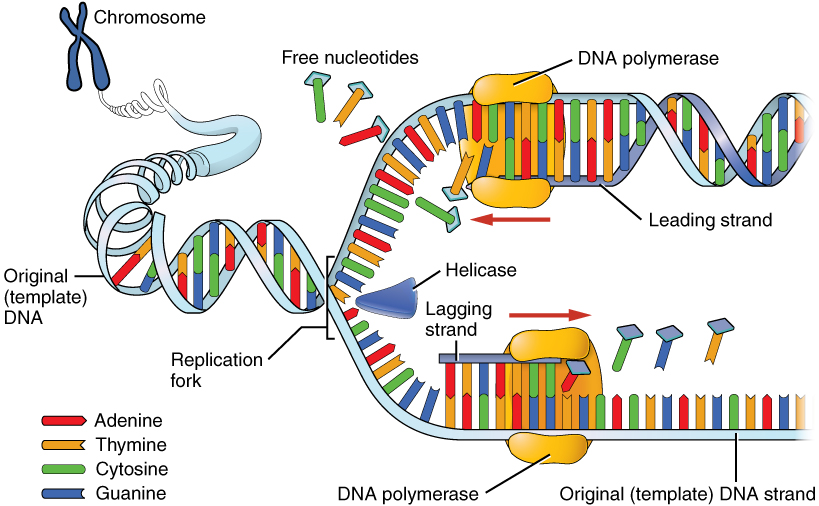
I (Doug) mis-spoke A LOT during this session. I basically was intermixing details between DNA replication, DNA transcription into mRNA, and Translation (from mRNA -> Protein). Below are pictures I found online which really show a high-level overview much better than I did with my explaining.
 Less-detailed overview
 More detailed overview
 DNA Replication in detail
Further update 3/4/2016:
Here is an article posted today about "Red Shift" and peering into history (in a manner of speaking).
28 February 2016, 6:39 am - More Episodes? Get the App